Christ
Religious Pluralism: The Argument Assessed
 “If you were born in India, you’d probably be a Hindu.” “What of those sincere believers in other faiths, are you suggesting they are wrong?” “Jesus is just one of the many ways towards salvation/bliss/righteousness/etc.”
These are the types of “bumper sticker” quotes Christians often get in our pluralistic society. I’ll be focusing on only one of the many problems with views such as these:
The argument against theism from religious pluralism rests on the implicit assumption that all religions are equally veridical.
The religious pluralist (or the objector to religious belief) who uses arguments like these unjustifiably makes the assumption that all religions are on equal ground (epistemically–on equal footing in the realm of knowledge). That this assumption is made is fairly evident, but we can illustrate it with a thought experiment (ignore some of the disanalogies–this is for example only):
Suppose Bob believes that he is reading a book, An Introduction to Philosophy. Now, suppose Steve else comes along and says “You can’t be sure that you’re right in your belief that you are reading An Introduction to Philosophy–after all, there are billions of people who read books which are not An Introduction to Philosophy. And they think they know what they are reading. How can you be sure that you are reading An Introduction to Philosophy? You may be reading a book on psychology, or a novel!”
Bob responds by saying, “Well, I can look at the cover and see the title. I can open it up and see the ISBN and confirm by searching for the ISBN online that it is only tied to An Introduction to Philosophy. The contents certainly seem as though they would match a book of that title. Also, I know the authors name is Jane Doe and this is the only book she’s ever written.”
The key point is that Bob has some very good reasons for thinking that he is reading An Introduction to Philosophy. Steve’s objection assumed that there was no way to determine what book Bob was reading.
Religious pluralists often do the same thing. They ask “How can you know you are right?” or “How do you know yours is the only true religion?” The assumption seems to be that there are no criteria for determining whether one religion is to be favored over another (again, using these terms in an epistemic sense–the sense having to do with knowledge). SO, let’s revisit the scenario:
Bob is sitting contemplating the universe. He’s a Christian, and Steve knows it. Steve comes along and says “Bob, how do you know you’re right? The Hindu, the Buddhist, and the Muslim all think they are just as right as you.”
Bob responds, “Well, I think there are very good reasons to think Christianity is true. There are cosmological, teleogical, and ontological arguments which I believe are quite successful. If they are successful, Buddhism and Hinduism are wrong. And I think the Gospels are quite reliable due to the standard historical criteria such as the principle of embarrassment and multiple attestation. But if the Gospels are reliable (and Jesus died and rose again), then Islam is wrong too. So I don’t think those other religions are on equal footing with my own faith. Christianity seems to me to have the most explanatory power.”
The assumption that all religions are on equal footing seems patently false. Why should we think that Hinduism = Buddhism = Islam = Christianity = Jainism (etc.) when it comes to whether or not we can evaluate their truth? The religious pluralist simply assumes we cannot. However, in light of the evidence for Christianity, it seems the world religions are not all on equal epistemic ground.
Finally, the pluralist objection assumes that it is, itself, on a higher epistemic ground than its rivals. The pluralist believes that, while all religions are equally veridical, pluralism itself is true. Yet pluralism’s truth entails the falsehood of large portions of theistic, pantheistic, and atheistic belief. Pluralism must chop away the incompatible components in the world’s religions in order to make way for a distorted view of reality. What reason do we have for holding on to pluralism when we have much better reasons to think Christianity is true?
SDG
———
The preceding post is the property of J.W. Wartick (apart from citations, which are the property of their respective owners) and should not be reproduced in part or in whole without the expressed consent of the author. All content on this site is the property of J.W. Wartick and is made available for individual and personal usage. If you cite from these documents, whether for personal or professional purposes, please give appropriate citation and provide a link to the original URL. By viewing any part of this site, you are agreeing to this usage policy.
Kamal Saleem: A Muslim Cries Out to Jesus
Check out this awesome video of a former Muslim’s religious experience of Christ our Lord:
The Case for Christianity in 15 Minutes (or less)
 Recently, the need for defending Christianity in a short time period has come to light. I was in a discussion with some acquaintances and was asked to outline why I believe what I believe, but we were on a time crunch so I only had about 15 minutes. Thankfully, I have had access to some wonderful resources that allowed me to memorize some quick, but useful arguments.
This post is intended to provide other Christians with a case for their beliefs that they can memorize and share with others. Note that the study cannot stop here. Most people will not be convinced by the basics outlined here. The goal of this post is to provide a springboard for discussion and keep people engaged in the idea that God exists and Jesus is Lord. Each section is intended to flow directly into the next. I encourage my fellow Christians to memorize a “case for faith” in a manner like this, so they may be prepared with a reason for the hope within them (1 Peter 3:15).
The arguments are necessarily short and simple due to time constraints, but they offer a short defense that will, hopefully, spur further conversation (again, don’t forget to do more research!). Greg Koukl says we don’t need to convince someone right away–we just need to “put a rock in their shoe” so that we can keep the discussion going later. As always, the most effective apologetic is a prayerful, Christ-reflecting life. May the Holy Spirit guide you all.
1. God Exists (7 minutes)
There are many reasons to believe God exists, let me share a few:
Kalam Cosmological Argument
1) Everything that began to exist has a cause
2) The universe Began to exist
3) Therefore the universe has a cause.
It seems intuitively obvious that 1) is true. Things don’t just pop into and out of existence. 2) follows from modern scientific discoveries like the Big Bang, which implies a single cosmological beginning. 3) follows via modus ponens (the most basic form of argument) from 1 and 2. This argument shows a transcendent cause of the universe. The cause must also be personal because [it] brought the universe into existence at some point, which requires a choice. Choices can only be made by persons, so this entity is personal. (See William Lane Craig in “On Guard”, linked below, for more.)
[For more reading on the Kalam Cosmological Argument see my posts linked below.]
The Moral Argument
4) If there are objective moral values, then God exists
5) There are objective moral values
6) Therefore, God exists.
“Objective moral values” here means that moral values are true regardless of what anyone thinks. For example, “murder is wrong” would be wrong even if every single human being thought murder was the way to achieve greatest happiness and encouraged it as an extracurricular activity for teenagers. But the only way to hold that objective moral values exist is to grant God’s existence, because objective laws require an objective lawgiver.
Without God, however, morals reduce to “I don’t like that.” It seems ludicrous to believe that murder is wrong just because we don’t like it. It is something actually wrong about murder that makes it wrong. That which makes it wrong is, again, the commands of the Lawgiver: God. People have a sense of moral objectivity built into them, which also suggests both the existence of objective morals and a God who created in us this conscience. (See Craig “On Guard” and C.S. Lewis, “Mere Christianity”.)
2. Christianity is Unique (3 minutes)
Religions are not all the same:
1) Many religions have contradictory truth claims. (Some forms of Buddhism say: There is no God; Christianity argues: There is a God; Hinduism states: there are many gods)
2) Even among theistic religions, there are contradictory claims (Christianity: Jesus is God; Judaism: Jesus is not God; Islam: Mohammed is prophet; Christianity: Mohammed is not a prophet; Judaism: Mohammed is not a prophet; Islam: Jesus is not God; etc.).
3) The Law of Noncontradiction (actual contradictions like “square circles” or “married bachelors” cannot exist and are not real) shows us that therefore, these religions cannot all be true.
4) Christianity is unique in that its central religious claim is a historical one: that the person Jesus Christ died and rose again from the dead. This is a historical event which can be investigated just like any other historical event. Yet exploration of this event leads to the conclusion that…
3. Jesus is God (5 minutes)
1) The Gospels are reliable. They demonstrate many criteria for historical truth: multiple attestation (four Gospels telling the same story, but with enough significant differences to demonstrate they didn’t copy off each other), principle of embarrassment (the authors of the Gospels included details which would be embarrassing either to themselves or culturally, such as the fact that women were the first witnesses to the risen Christ in a culture in which women were not trusted), the writers died for their belief in the historical events (while many religious believers die for their beliefs, it seems unfathomable that the Christian Gospel writers would willingly die gruesome deaths for things they made up–which is what alternative theories argue), etc. (See Strobel, “Case for Christ”)
2) Jesus made divine claims “I and the Father are one” John 10:30; “Before Abraham was, I am” John 8:58; etc.
3) The miracle of the resurrection is God’s confirmation of Jesus’ divine claims. If the Gospels are reliable (per 1), then Jesus is divine.
Conclusions
There is good evidence to think that God exists. There are even other arguments that could be presented, such as the teleological, ontological, transcendental, argument from religious experience, and more. We can also see that not all religions can be true. Furthermore, there are good reasons to think the Gospels are reliable and that Jesus claimed to be God and had His claims authenticated by God Himself in Jesus’ resurrection.
Remember, this is not even close to a full defense of Christianity. It is simply a condensed, easy to remember defense designed to be ready at a moment’s notice for when the Holy Spirit leads people into our paths. We need to do more research, offer more arguments, and continue to witness as the Holy Spirit works through our testimony. This defense is by no means a total apologetic; it is meant only as an introduction to spur further conversation. Always have a reason.
Later Edit:
Some have objected to this post on various grounds, most of which are reducible to my arguments not being developed enough. I emphasize once more, this is supposed to be used for a 15-minute defense of the faith, not an entire survey of the field. See my links for more reading, and continue to investigate for yourself.
Further Reading
If you are interested in further reading on these topics, I suggest:
1) On my site, check out the posts on the existence of God: here. Specifically, for the Kalam Cosmological argument:
The Kalam Cosmological Argument
Dawkins and Oppy vs. Theism: Defending the Kalam Cosmological Argument
“The Multiverse Created Itself” and “Who made God after all?”- The Kalam Cosmological Argument
The Leibnizian Cosmological Argument (not developed in this post).
2) On Guard
3) The Case for Christ
4) Mere Christianity
———
The preceding post is the property of J.W. Wartick (apart from citations, which are the property of their respective owners) and should not be reproduced in part or in whole without the expressed consent of the author. All content on this site is the property of J.W. Wartick and is made available for individual and personal usage. If you cite from these documents, whether for personal or professional purposes, please give appropriate citation and provide a link to the original URL. By viewing any part of this site, you are agreeing to this usage policy.
The Life Dialogue: Geocreationism Guest Post 2
This is part 2 of a thought-provoking series of guest posts by Mike Trutt on Geocreationism. Check out other posts on the “Life Dialogue” within Christianity here. View Part 1 here.
Mike Trutt is an evangelical Christian with a Jewish background. He believes the Bible is inspired by God, recorded by man, and given its life by the Holy Spirit. You can read about and discuss his Old Earth views on scripture, science, history, and other topics at his blog,http://geocreationism.com.
Geocreationism – Evolution and God
As the reader proceeds, I request an open mind. With many of my theories on Creation, I often get the question of “why”? I cannot always answer. But consider how often God does not explain Himself to you. Quite often, He tells us what He did and what He will do, and we have only to believe Him. Abram was promised a son in His old age. He believed God and it was accounted to Him as righteousness; Zechariah on the other hand laughed, and God shut him up mute until his son John the Baptist was born. And so I take a risk with Creation, attempting to be righteous and not mute, and trusting God’s hand will be gentle if I am wrong. If in the end you still need an answer as to “why” then I offer you this: whatever God did, it was for His glory.
= = =
Evolution is not an easy topic for Christians. Whatever the version, Evolution does not appear to require God any more than God requires Evolution. It is enough to keep atheists and Christians apart, but do not be fooled into picking sides. Such thinking is a trap of the enemy, as either choice is the result of a common theological fallacy… that God would not create using natural or “random” means. But, what if scripture showed otherwise?
Consider this passage in 1 Chronicles 14:15-16…
15 And when you hear the sound of marching in the tops of the balsam trees, then go out to battle, for God has gone out before you to strike down the army of the Philistines.” 16 And David did as God commanded him, and they struck down the Philistine army from Gibeon to Gezer.
God went before David to strike down the philistines; David’s armies went and struck down the philistines. God and David took separate actions, yet accomplished the same defeat. To say then that Evolution is false because God created everything is like saying that David did not achieve victory over the Philistines, because God obviously did. This not only limits God, it contradicts the plain meaning of scripture. If Evolution is true, then Biblically speaking, it is as much God’s instrument as David’s armies above. But, just as a secular historian may study the defeat above and see only David’s army, a scientist studying the species will only see mutation, adaptation, and Natural Selection… but the blindness of man does not negate what he sees any more than it equates to an absence of God.
= = =
On Day 1, God hovered over the deep. As recorded in the size and age of the moon’s craters, meteor strikes devastated the earth’s early oceans, causing clouds and torrential rains throughout the world. From where God hovered in Genesis 1:2, the sun’s still-dim light could not be seen through the rain and clouds, and while the meteors continued it would be so. With His pronouncement to “Let there be light,” the meteors ceased and the light of the sun pierced the darkness. This was 3.9 billion years ago. The rains would not yet stop, but an atmosphere would begin to form. There would now be sunlight, though the sun itself remained unseen.
On Day 2, the torrential rains continued to fall so hard, there was no perceivable separation between the clouds above and the seas below. With God’s declaration to “Let the waters separate from the waters,” the rains started to let up. Was Moses aware of these conditions when he wrote of them? Given their parallels with Egypt’s creation myths, I would say not. However, their alignment with modern secular scientific theories should be enough to give one pause.
On Day 3, the skies were still hazy and the world was still covered in water. God said to “let the water gather together in one place, and let dry ground appear.” Plate tectonics began around 2.4 billion years ago, as the earth hardened beneath the water and earthquakes thrusted the earth’s crust above the seas. God then said to “Let the land produce vegetation: seed-bearing plants and trees on the land that bear fruit with seed in it, according to their various kinds.”
According to their various kinds? Most people take it to mean that the vegetation will be capable of reproduction. But examine the King James translation: “And God said, Let the earth bring forth grass, the herb yielding seed, and the fruit tree yielding fruit after his kind, whose seed is in itself, upon the earth: and it was so.” God specifically listed seeded plants. What of the non-seeded, specifically succulents and spores?
The Bible says the land produced seeded plants at God’s command. It reminds me of David’s victory above. God went before the land to produce seeded plants, and then the land went forth and produced seeded plants. And if the land’s production was as physical as David’s victory, then why be surprised that it left behind some trace? Why be surprised that production of seeded plants required spores and succulents to develop first, each giving way to the next? Why be surprised that God didn’t even wait for the seeded plants to appear before He moved into the sunset and starting His work on Day 4? That’s right. Seeded plants did not appear until 300 million years ago, long after Day 4, which we discuss below. But once again, God’s work for Day 3 was done. It was time for the land to do its work.
On Day 4, as algae and fungi made significant inroads on the land, God said “Let there be lights in the heavens to separate the day from the night.” Scientists believe the Oxygen of these primitive plants cleared up the sky around 1.9 billion years ago. The sun, moon, and stars could be seen clearly in the skies, when they had been completely obscured before.
Day 5’s pronouncement reads, “Let the water teem with living creatures, and let birds fly above the earth across the skies.” Day 6 reads, “Let the land produce living creatures according to their kinds,” and it goes on to list their groups. If interpreted as the initial appearance of sea life, birds, and land mammals, then Days 5 and 6 must overlap, because whales appeared after land mammals in the fossil record. Such overlap of Days is not Biblical, but through scientific discovery we can find a meaning that explains it.
65 million years ago, a giant meteor struck the earth. It is referred to as the KT impact, and it nearly decimated all life on the planet. It killed nearly every dinosaur, bird, sea creature, and mammal around the world. According to the fossil record, the first to recover was sea life. Placing Day 5 after the KT impact, a time when mere life was scant but there, God’s pronouncement becomes apropos, “Let the water teem with living creatures.” Next would be the birds. Why? It was the first time in their existence when they had no natural predators. And, just as Day 3 began a process leading to seeded plants, so Day 5 began a process eventually leading to whales. But wait. This required a recovery of mammals on the land, because they are what eventually led to mammals in the seas. What of the mammals of Day 6? The most comon theories have these days overlap.
According to the fossil record, the mammals that evolved on Day 5 were almost wiped out around 33.5 million years ago, after the whales appeared. The event is called the Grand Coupure. Then, almost as suddenly, the mammals that survived gave way to new varieties, the ones we see today, the ones listed in scripture: “Let the land produce living creatures according to their kinds: the livestock, the creatures that move along the ground, and the wild animals, each according to its kind.” Once again, the specificity of scripture, when compared with the discoveries of science, provides an answer.
= = =
It was hard to fit my treatise on Evolution into the word limitation of a blog, but I hope the point comes through, that secular science is useful and God is sovereign. The next installment will discuss the doctrine of Original Sin, and why death before Adam is compatible.
The Virgin Birth?
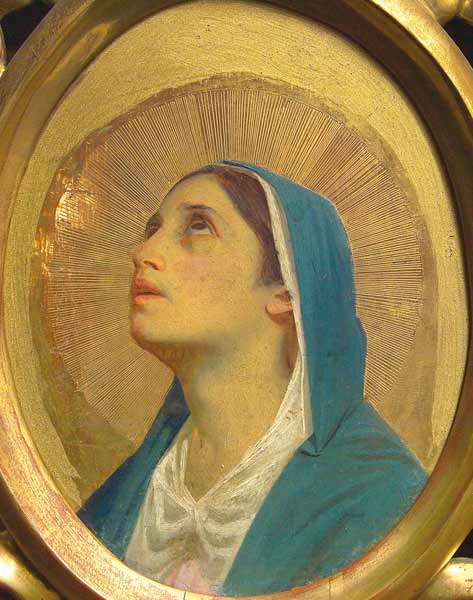 Was Jesus born of a virgin?
The question has many facets and nuances. I’m going to focus briefly on two: the possibility of virgin birth, and the question of whether or not the prophecy of Christ was a prophecy about a virgin birth.
Is virgin birth possible? The question centers around one’s worldview. It is intuitively obvious that if God exists, then a virgin birth is possible; while if God does not, then the virgin birth seems highly implausible, at best. Therefore, the question of whether a virgin birth is possible centers around whether or not God exists. On the face of it, this doesn’t seem like a very important point. However, I believe that this kind of point is central to many questions about the validity of the Scriptural accounts and other things which anti-theists often bring up in debates with theists.
Very often, the question of whether God exists is what is paramount in such debates. For example, the question of whether the moral imperatives in Scripture are right or not betrays metaethical questions lurking in the background: does God exist, and is He the grounding of ethical theory? Similarly, whether or not a virgin birth is possible, whether or not the Flood happened, whether or not Moses parted the Red (Reed?) Sea, and other questions really reveal a metaphysical question: does God exist? If God does exist, then the accounts mentioned are much more likely epistemically than they would be if theism is false. Because I believe there are good reasons to believe in a theistic God (see here for some), I find the question of whether virgin birth is possible more likely epistemically than not.
The second question references a charge that the writers of the Gospels were relying on a mistranslated Hebrew word which did not mean virgin. The argument hinges around the Hebrew word, almah, which is used in the prophecy in Isaiah 7:14, “…the virgin (almah) will conceive and give birth to a son…” This prophecy is used by the Gospel writers to refer to the virgin birth of Christ. The word means “young woman.” But, as is the case in English, in Hebrew, words can have more than one meaning. Almah in Hebrew is not the common word for virgin, but it is always used for an unmarried woman (McDowell, 391). The assumption of an unmarried woman was that she was also a virgin (393). Unfortunately, today it is hard for us to see this assumption, for too often young, unmarried women are giving birth.
Further evidence for the use of “virgin” for the word stems from its usage in Isaiah 7:14. The key here is that the prophecy was fulfilled immediately in the context. The King of Judah was told that the virgin birth would be the sign for him from God. The fact that it was to be a miracle signaling God’s unique work in the world as a sign for the King helps further support the idea that the passage is referring to a virgin birth rather than simply any birth, which, one can guess, was not terribly uncommon in Judah.
Even more evidence comes from the fact that the translators of the Old Testament into the Greek Septuagint took the word in Isaiah 7:14 and used the Greek word specifically used for virgins. This wasn’t due to a mistake, but because they were familiar with the prophecy itself. It would be a fantastical claim on the part of the objector here to argue that those who were translating the Old Testament into Greek were so unfamiliar with Hebrew that they wouldn’t have recognized the nuance. Such a claim would demand evidence; and no evidence exists.
Therefore, it seems that it was prophesied that Christ would be born of a virgin, and it also seems at least possible that such a birth could happen, on theism.
Merry Christmas.
SDG.
This is part of a series I’ve entitled “Jesus: the Living God,” which explores Jesus from Biblical, theological, and apologetic levels. View other posts in the series here.
McDowell, Josh, Evidence for Christianity: Historical Evidences for the Christian Faith (Nashville, TN: Thomas Nelson, 2006).
——
The preceding post is the property of J.W. Wartick (apart from citations, which are the property of their respective owners) and should not be reproduced in part or in whole without the expressed consent of the author. All content on this site is the property of J.W. Wartick and is made available for individual and personal usage. If you cite from these documents, whether for personal or professional purposes, please give appropriate citation and provide a link to the original URL. By viewing any part of this site, you are agreeing to this usage policy.
Original Sin and the Metaphysics of the Soul
Original Sin Defined
The writers of the Augsburg Confession (found in the Book of Concord) defined Original Sin as the belief that “…since the fall of Adam all human beings who are propagated according to nature are born with sin, that is, without fear of God… [we] teach that this disease or original fault is truly sin, which even now damns and brings eternal death to those who are not born again through baptism and the Holy Spirit” (BOC, 39).
One Objection
Ezekiel 18:20a states, “The soul who sins is the one who will die. The son will not share the guilt of the father, nor will the father share the guilt of the son.”
The word used for “soul” in this passage is the Hebrew word, nephesh. This passage leads to the objection that original sin cannot be true as I have outlined it, because it involves the son inheriting the guilt of the father.
The Question of the Soul: A Metaphysic of Original Sin
Three views of the soul are prevalent in Christianity. All of them presuppose metaphysical dualism. They are:
1) Our soul is constructed just as our physical body: Our soul is a half-and-half combination of the souls of our mother and father.
2) God specially creates each soul for each person when he/she is conceived/born/etc. Alternatively, God has already created every soul for everyone who will ever live, and puts them in a body when one is needed. The main problem with this view is that it would seem that if original sin is true (in the sense I have outlined it above), then God creates sinful souls for us.
3) Our soul is from Adam. There are no new souls for mankind, rather, we all share, in some sense, Adam’s soul.
I tend to favor 1) (now, anyway). But I favor a version of 1) which is not so much a half-and-half combination of souls, but a union of the totality of the souls we inherit. I originally wrote this post for my new site, but an insightful commentator lead me to heavily edit my views here. Just as we become one in the union of sex, so do our souls become one when we conceive a child.
What this means, then, is that the soul we inherit from our ancestors includes the inheritance of the guilt of sin. I must note the distinction here between sins which require action and those that do not. I have been pondering this idea for some time–is it possible to have sins for which we are guilty that we don’t commit? The answer I lean toward is “No”, but that doesn’t preclude original sin. The reason is that through the soul, we have literally participated in the original sin of Adam. When we are told that we have the “Old Adam” in us, this should be taken in a more literal sense than it often is.
We are told by Paul that there is a natural and spiritual body (1 Corinthians 15:44). These are both the inheritance of our ancestors. In a literal sense, then, there is the “old self” (Romans 6:6) and the Old Adam (1 Corinthians 15:45) which, from birth, enslave us to sin (Romans 6:6). Metaphysically I think this means that our soul has literally participated in, and is therefore held accountable for, the original sin. Original sin is a substantive entity–it corrupts our very nature. This is no mere inclination to sin, but a bondage to sin and a separation from God. It only makes sense to me on a metaphysical level to argue that this sin is inherited through our soul, which, like our body, maintains the union with Adam himself.
So how does this answer the objection from Ezekiel 18:20? Initially, one may argue it seems to purge the passage of all meaning. This is not the case, however. What Ezekiel is referring to is the sin of commission. That is, it refers to a sin which requires an action. Ezekiel is telling us that the actions of the father do not condemn the actions of the son. This does not, however, preclude the original sin in the metaphysical sense in which I have outlined it, because we have each participated in the action which causes original sin.
One final note is required, however. This is again a modification of my original thoughts due to enlightening discussion with my good friend’s comments. We must remember that this stain of sin, this original sin, has passed away for those who have faith in Christ. For, though the passages I quoted above discuss the nature of our original guilt, they immediately turn to salvation which is through Christ. Our New Adam replaces the Old (1 Corinthians 14:42-57), and our enslavement to sin is no more (Romans 6:6-14). Our original guilt, received through our sharing in the action of Adam, and our shared spirit with him, is no more.
Source:
The Book of Concord. Augsburg Fortress. 2000.
——
The preceding post is the property of J.W. Wartick (apart from citations, which are the property of their respective owners) and should not be reproduced in part or in whole without the expressed consent of the author.
Book Review: Horrendous Evils and the Goodness of God
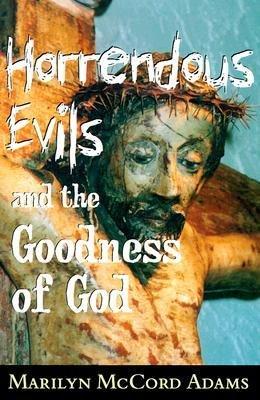 The problem of evil is often seen as the greatest threat to theistic belief. Analytic Philosophers have struggled with the issue on both sides of theism–from Plantinga’s innovative “Free Will Defense” to the claim of the positive irrationality of theism issued by the late J.L. Mackie. This issue doesn’t show signs of slowing down, either. It has dominated philosophy of religion for millenia.
In Horrendous Evils and the Goodness of God
Adams’ account has the kind of honest, penetrating discussion of real evil in our world about which philosophy would do well to take notice. The little child kidnapped and murdered; the innocent family killed by the drunk driver; the millions murdered by Hitler; these examples all demand answers for the individual occurrences of evil, according to Adams (see her discussion on pages 17ff). Specifically, she writes that “At a minimum, God’s goodness to human individuals would require that God guarantee each a life that was a great good to him/her on the whole… God would have to… [give each person’s life value]… by giving it positive meaning through… great enough good within the context of his/her life” (31, emphasis hers). This stunning claim will likely make the theistic philosopher rock back on his/her heels for a moment. Surely, we cannot be called to account for every individual evil!
Adams believes that the Christian theist can indeed do so, not by taking the unconvincing (in my opinion) route of arguing that such persons are having their character built by suffering, but by appealing to God’s goodness to each individual person (55). Specifically, this goodness of God is demonstrated within Christianity by Jesus Christ. After a penetrating discussion of purity and defilement on Christianity and Judaism (see 86ff), Adams argues that in Christ, God “takes the… approach of joining us in our defilement [that is, our suffering of horrendous, individual evils]” (98). This act of Christ means that our defilement from sin, evils, and even horrendous evils has the possibility of becoming holiness (99). Thus, through Christ, and the power of the Holy Spirit’s redefining rebirth of baptism, God offers the greatest good to every individual (102).
Through this self-defilement which leads to holiness, God invests meaning by “…being good to all created persons–that is, in seeing to it that each gets a life that is a great good to him/her on the whole, one in which any participation in horrors is not merely balanced off but defeated” (126, emphasis hers). Adams’ thesis, then, is that in Christ, God provides the defeater for horrendous evils by ensuring that each person’s life is a great good. Here Adams rides a fine line of universalism (it seems as though she may be saying every person is indeed saved through Christ, eventually), but her account can be easily modified by those who reject universalism–for one can argue that God provides the defeater simply by offering the possibility of such goods to each person. And God is good to each person by providing such an opportunity.
Adams uses the rest of her work to argue further how God’s participation in suffering demonstrates that God has been immeasurably good to each individual.
I find Adams’ argument particularly enlightening. Her emphasis on the individual evils of the world is a breath of fresh air as well as a new challenge to Christian philosophers. We do need to address individual atrocities. This doesn’t mean we need to go through, case-by-case, and provide theodicies for each event. Rather, as Adams urges, we can address this by arguing that God is good to every individual through his redemptive act by Jesus Christ.
My main critique of Adams in this work is that while I find her issues with abstracting the problem of evil to hit the mark some of the time, I think she underestimates the value of some of the analytic responses to the problem of evil. Certainly, taking evil as a sum total and arguing that God could have some reason for permitting this much evil to occur downplays the importance pf the evil actions towards individuals , but there is a place for such defenses within philosophy. Rather than jettisoning these types of answers, then, I think we would be best suited adding Adams’ defense to the many-faceted response to the problem of evil from Christian philosophers of religion.
Source:
Adams, Marilyn McCord. Horrendous Evils and the Goodness of God
——
The preceding post is the property of J.W. Wartick (apart from citations, which are the property of their respective owners) and should not be reproduced in part or in whole without the expressed consent of the author.
The Covenant and Christ
This post is part of a series on Jesus: The Living God. View other posts here.
Recently I wrote a guest post for a fellow Christian blogger (an excellent site, check it out), Chris Reese, on N.T. Wright’s Climax of the Covenant. I wanted to re-blog it for my site and add a bit to it.
A subject that is often ignored within discussions of who Christ is involves Covenant theology, specifically, the theology of the Torah. How exactly does Christ relate to the Covenant that God made with the people of Israel? N.T. Wright discusses this very issue in his book, The Climax of the Covenant.
First, what is the Torah? The Torah, in Wright’s usage, is not just the Mosaic books of the Bible or the Law, but the promise of God to His people, Israel. He states that “…the law… was regarded not merely as a general code of ethics, but as the charter of Israel’s national life” (24). The problem was, of course, that God demanded perfect obedience to the Torah, to the Law. As His covenant people, Israel was to keep the Torah and to cherish it. But Israel constantly strayed. Thus, the power of the Torah became death, the consequence of sin (209).
So how could Israel fulfill the Torah? The short answer is that Israel simply could not. It demanded perfection, and the people of Israel could not be perfect. God had to intervene directly in history in order to accomplish His covenant with His people, and to open this covenant up to all people.
And how did this happen? First, note the relationship between Christ, Adam, and humanity. Wright notes that “Adam has [for the rabbis of Israel] become embodied already in Israel, the people of the Torah, and in her future hope” (25). This, in turn, must be viewed in light that “Israel, the family of Abraham, is God’s true humanity. Her land is God’s land. Her enemies are God’s enemies” (23). This reflects back on the Torah, as discussed above. It is the “charter of Israel’s national life” (24). So there is a relationship between Adam and Israel–Adam, Wright argues, is to be understood as Israel. Jesus Christ, then, became a New Adam for a New Israel. By acting as the New Adam and redeeming Israel, He fulfilled the Torah and seal the charter of Israel. Not only that, but He opened this charter, this Covenant, to all people.
“Jesus, as last Adam, had revealed what God’s saving plan for the world had really been… by enacting it, becoming obedient to death, even the death of the cross” (40). The resurrection confirmed Jesus as Christ–Messiah.
Finally, how could God keep this promise in light of the failure of Israel (and mankind at large) to keep the Torah? Christ, argues Wright, is the “Climax” of the covenant. “The Messiah is the fulfillment of the long purposes of Israel’s God” (241). How does this happen? Wright argues that the “…answer must be that sin, by causing death, stood in the way of the divine intention of giving life; when, on the cross, God condemns sin… then sin is powerless to prevent the gift of life” (209). God’s plan of salvation “always involved a dramatic break, a cross and a resurrection written into the very fabric of history” (241, emphasis his). Thus, Torah and Covenant Theology can be summed up by saying that “Christ on the cross is thus the goal of the Torah” (243, emphasis his). It is in Christ that we become the people of God.
Source:
Wright, N.T. The Climax of the Covenant. Fortress Press. 1991.
——
The preceding post is the property of J.W. Wartick (apart from cited material which is the property of its respective owner[s]) and should not be reproduced in part or in whole without the expressed consent of the author.
Walking in Faith as a Christian Philosopher
Okay, we all knew that there’s no way I could keep this blog limited entirely to apologetics.
Thus, here is the first non-apologetic post (other than the obviously satirical Evolution of the Rock)!
It is easy as someone who focuses so much on the philosophical proofs of God and the constant defense of Biblical inerrancy, the resurrection and Godhood of Christ, etc. to get completely overtaken in faith life by the scholarly side of faith. It’s so easy to stray from the narrow door that Christ opens. That verse, Luke 13:24 “[Jesus said]’Make every effort to enter through the narrow door, because many, I tell you, will try to enter and will not be able to,'” is one of my favorite things Jesus says in the Bible.It’s a reminder during those times that I tend to lose focus. The way is narrow. The door is narrow. And the only way to stay on that path or enter through that door is Jesus Himself.
It’s sometimes interesting to be aware of the spiritual warfare that is occurring, especially around one’s own life. It’s scary sometimes to realize that the minions of Satan will use anything, even one’s undying interest in Christian philosophy, to pull them away from Christ. I have plainly seen sometimes how I’ve been tempted away from diligent reading of Scripture or seduced into reducing faith utterly into philosophical arguments. It is in those times that I realize how real the battle is. It is in those times that God the Father never ceases to call me to return, and the Spirit never ceases to fill me. The life of a Christian Philosopher is one of continual effort. One must constantly fight the urge to reduce that most important thing–salvation through faith by grace–to philosophy.
There is nothing more wonderful than being called by God. Nothing can match the glory of the Holy Spirit’s presence. Those nights in which Christ calls me home to Him are the best nights of my life. Each day there are so many blocks placed in my path, but it is always the Lord’s call, His hand bearing me across the hard times, that upholds and uplifts me. There is nothing to do at times like this than rejoice and sing His Name. Jesus Christ is Lord over all!
[P.S.: The verse discussed in context, for the more insistent exegetes among us:
Then Jesus went through the towns and villages, teaching as he made his way to Jerusalem. Someone asked him, “Lord, are only a few people going to be saved?”
He said to them, “Make every effort to enter through the narrow door, because many, I tell you, will try to enter and will not be able to. Once the owner of the house gets up and closes the door, you will stand outside knocking and pleading, ‘Sir, open the door for us.’
“But he will answer, ‘I don’t know you or where you come from.’
“Then you will say, ‘We ate and drank with you, and you taught in our streets.’
“But he will reply, ‘I don’t know you or where you come from. Away from me, all you evildoers!’
“There will be weeping there, and gnashing of teeth, when you see Abraham, Isaac and Jacob and all the prophets in the kingdom of God, but you yourselves thrown out. People will come from east and west and north and south, and will take their places at the feast in the kingdom of God. Indeed there are those who are last who will be first, and first who will be last.”‘]

 J.W. Wartick - Reconstructing Faith