christian apologetics
Book Review: “Taking Pascal’s Wager” by Michael Rota
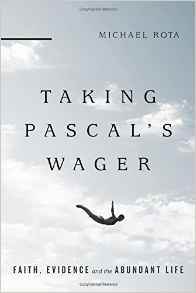 Michael Rota’s Taking Pascal’s Wager is an introduction to the defense of Pascal’s Wager, one of the most maligned arguments for the truth of Christianity.
One of the things that makes Pascal’s Wager most intriguing is the fact that, unlike many theistic arguments, the Wager seems uniquely suited for reasoning with the skeptic. That is, it is intentionally put forward in such a way as to convince the skeptic that Christianity is a good idea. Rota highlights this aspect of the Wager, particularly in two places: first, where he analyzes the probability behind the argument to demonstrate that, on the whole, the Wager is more beneficial taken than not, and second, in the last section of the book which shows practical outcomes of taking the Wager.
The sections on the probability behind the Wager are excellent. Rota condenses down a lot of probability theory and philosophical reasoning based on probability in ways that are easy to understand. This alone makes the book worth a read because it will allow those interested to explain and defend the Wager much better than they may otherwise. Rota also addresses some of the most common objections to the Wager, noting that things like the many gods challenge fail to make a convincing case against the Wager.
The last part of the book utilizes people like Dietrich Bonhoeffer to highlight the practical consequences of the wager. Bonhoeffer lost his life in the pursuit of Christian faith. Was it worth it? Rota’s examples give insights into lives that readers might not otherwise know about, and show that even lives that are full of sorrow are worth it, supposing God does exist.
I did think that the book somewhat seemed to get off track in the middle section, as Rota proceeded from speaking of Pascal’s Wager into discussion of various reasons to think Christianity is more likely true than not. I understand that this was part of his project, but given the amount of works that have been offered with a general introduction to things like the moral, cosmological, and other arguments, I think the space would have better been filled with a deeper look at Pascal’s Wager and the probability theory behind it. Further, more space dedicated to objections to the wager would be helpful.
Taking Pascal’s Wager is a worthy read. It introduces readers to the strength of Pascal’s Wager while also providing–uniquely, I think–a look at the practical outcomes of taking that wager. Although it could be improved by a deeper discussion of the probability behind the Wager and various objections to it, I believe this is an important book for anyone who wants to become more acquainted with one of the most unique arguments for Christianity. Readers interested in Pascal’s Wager ought also check out Jeff Jordan’s phenomenal Pascal’s Wager: Pragmatic Arguments and Belief in God.
The Good
+Real-life examples of the cost of discipleship highlight message
+Solid analysis of probability theory behind the argument
+Provides broad-spectrum defense of the Wager
The Bad
-Uses endnotes instead of footnotes
-Not quite as focused as one might like
Disclaimer: I received a copy of this book for review from the publisher. I was not required to provide any specific kind of feedback whatsoever.
Source
Michael Rota, Taking Pascal’s Wager (Downers Grove, IL: InterVarsity, 2016).
Links
Be sure to check out the page for this site on Facebook and Twitter for discussion of posts, links to other pages of interest, random talk about theology/philosophy/apologetics/movies and more!
Book Reviews– There are plenty more book reviews to read! Read like crazy! (Scroll down for more, and click at bottom for even more!)
Eclectic Theist– Check out my other blog for my writings on science fiction, history, fantasy movies, and more!
SDG.
——
The preceding post is the property of J.W. Wartick (apart from quotations, which are the property of their respective owners, and works of art as credited; images are often freely available to the public and J.W. Wartick makes no claims of owning rights to the images unless he makes that explicit) and should not be reproduced in part or in whole without the expressed consent of the author. All content on this site is the property of J.W. Wartick and is made available for individual and personal usage. If you cite from these documents, whether for personal or professional purposes, please give appropriate citation with both the name of the author (J.W. Wartick) and a link to the original URL. If you’d like to repost a post, you may do so, provided you show less than half of the original post on your own site and link to the original post for the rest. You must also appropriately cite the post as noted above. This blog is protected by Creative Commons licensing. By viewing any part of this site, you are agreeing to this usage policy.
“Manual of Christian Evidences”- Fisher Chapter 3 Guided Reading

Image from a camping trip I took.
I am leading a guided reading of the Manual of Christian Evidences by George Park Fisher. It is freely available online and will serve as a base for discussing Christian apologetics throughout this series. The chapters are short and readable. I encourage you to join in by reading the chapters and commenting with your thoughts. When I discuss the book, I will be citing page numbers from the edition linked above.
Chapter 3
Chapter 3 is quite short but has some thoughts to chew on. Perhaps the highlight is a brief exposition of the argument from felt need (also commonly called the argument from desire). Let’s talk about this and other issues below!
First, the discussion of the felt need for revelation in humanity (22-24). I wonder if this is an aspect of the argument that could be made stronger. It seems to me that the Bible speaks to the notion of all humanity knowing God, in some sense (Romans 1). But how do we tap into that? Do all people really have this felt need? There are plenty of atheists who deny such a felt need. I wonder if arguments focused on the existential need for Christianity could be expounded and strengthened. This argument is a different type than the more common one (below), but it still appeals to an pparent need within human nature that is met by Christianity. As more discoveries point to the notion of a “God gene” or psychological desire to believe in God, this argument, I think, actually gains more empirical support. Can such needs be reduced to nothing but genetics?
Second, regarding Fisher’s argument for the “way in which Christianity meets the deep wants of human nature” (25ff) is quite engaging. It is just the kind of argument people like us who are interested in historical apologetics are looking for: one that is not so commonly used now. But I think Fisher puts it forward masterfully. It is worth noting that he integrates wide ranges of evidence into his points. The first point is that the main truths of natural religion are put forth in Christianity in a “clear and vivid form” (25). Thus, Fisher is arguing that whatever is revealed in nature should point to the truth of Christianity. I’ve found this to be true time and again. After this first point, Fisher notes several lines of evidence that appeal to human conscience and desires.
I think this is an argument that could have broader appeal in our culture. People want to know that what they believe resonates with reality and pointing to how Christianity relates to desires can make it seem more real.
I do, however, wonder about things like the claim on p 26- “The moral precepts of Christianity are conformed to the dictates of conscience.” I think that this aspect of the argument would meet with vehement challenge as people charge Christianity with teaching against common sense and nature in regards to morality. How might we counter these responses?
Links
Be sure to check out the page for this site on Facebook and Twitter for discussion of posts, links to other pages of interest, random talk about theology/philosophy/apologetics/movies and more!
Apologetics Read-Through: Historical Apologetics Read-Along– Here are links for the collected posts in this series and other read-throughs of apologetics books (forthcoming).
Dead Apologists Society– A page for Christians interested in the works of historical apologetics. There is also a Facebook group for it.
SDG.
——
The preceding post is the property of J.W. Wartick (apart from quotations, which are the property of their respective owners, and works of art as credited; images are often freely available to the public and J.W. Wartick makes no claims of owning rights to the images unless he makes that explicit) and should not be reproduced in part or in whole without the expressed consent of the author. All content on this site is the property of J.W. Wartick and is made available for individual and personal usage. If you cite from these documents, whether for personal or professional purposes, please give appropriate citation with both the name of the author (J.W. Wartick) and a link to the original URL. If you’d like to repost a post, you may do so, provided you show less than half of the original post on your own site and link to the original post for the rest. You must also appropriately cite the post as noted above. This blog is protected by Creative Commons licensing. By viewing any part of this site, you are agreeing to this usage policy.
Ken Follett’s “Fall of Giants” – Deconversion, Hope, and Strife
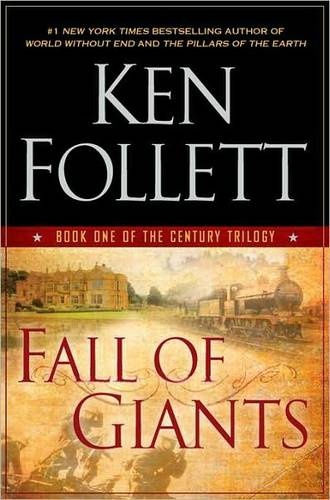
Ken Follett’s “The Century Trilogy” is a sweeping series . I just finished the first book, Fall of Giants, and realized there were several themes found therein that begged comment here. Here, I will analyze the book from a worldview perspective. There will be SPOILERS in what follows.
I will not go over the plot of the book. A brief summary may be found here.
Deconversion
Billy Williams is a Welsh boy who goes to work in a coal mine. The first day on the job he is left alone in the pitch black–his lamp went out. Rather than wandering lost in the tunnels he keeps working until someone comes to get him. To keep himself from being too frightened, he sings Christian hymns and draws comfort from them. At the end, when the light is restored, he sees a fleeting vision of Christ just at the corner of the light and says “Thank you.”
If that sounds like the start of a storyline that will be an example of a life of faith to you, you would be disappointed. After an explosion in the coal mine, he is distressed by the problem of evil–why does God let bad things happen? As he grows older, Billy is exposed to textural criticism. He is disturbed that we don’t have copies of the original texts from which we get the words of the Bible. His father, who often preaches at their worship services, has insufficient answers. Later in life, Billy’s sister gets pregnant and is judged sharply by his father and their town because she is not married. He is strongly put off by the apparent hypocrisy of the people. He never returns to church.
I admit that “deconversion” may be a bit of a misnomer because it is never specifically said that Billy doesn’t believe in God anymore, but the implications are there. He has a deep distrust of and distaste for Christianity, it seems, after this.
The story illustrates the need for a firm foundation. Textual criticism is not something Christians should fear, as it allows us to recover the text of the Bible more accurately. The problem of evil is not unsolvable. And, unfortunately, Christian hypocrisy is actually something to be expected. Indeed, the Christian worldview would expect hypocrisy at times because we are still sinners in this world and will continue to commit wrongs, despite being people of faith. None of this was hinted at in the novel, but I suspect that this is due in part to the fact that Follett is himself an avowed secular humanist. There seems to be an agenda here (and see below).
Unfortunately, Billy’s story is similar to one we can see repeating in churches and families all over. We have not studied our faith. We have not worked out the hard problems related to Christianity, so when we are confronted by them, we are often found with pat answers rather than the truth. We need to actively seek out answers and be aware of our own limitations. Unable to answer every question, we should commit ourselves to a life of faith seeking understanding.
Hope
There is hope found in the darkness throughout the coming World War and the plights of the individual people. Hope is found largely in the actions of other people–the small kindnesses that are done even in the face of evil. As the world seems to be crashing down all around, it is relationships which keep people going. Some of these are vaguely religious in nature, though the persisting theme seems to be that people need to do for themselves whatever they’d like to accomplish.
Religious Leaders?
One persistent theme throughout the book is that those involved in the church are mean, nasty, and most likely sexual deviants. Any time a priest-whether Roman Catholic or Eastern Orthodoxy or Anglican–is mentioned or encountered, it is almost always in context of some offhand remark about how they sexually harassed a child or how someone who is now an adult remembers when they were asked to have sex with the priest, etc. It’s actually quite tiresome. While on the one hand it is important to note that there are those within Christianity who have abused power throughout time, on the other hand, to suggest that everyone in some sort of position in power was a power-hungry sexual predator is uneven, to put it mildly.
Those who are not in established religion–like Billy’s dad–are portrayed as aloof, distant, and largely uncaring. Billy’s dad does get a chance to redeem himself as he accepts Ethel back into the family, but only after he had to consider the possibility of having his whole family fall apart.
Conclusion
Follett has woven an intriguing story with a very strong premise. It is unfortunate that throughout there also seem to be straight polemics against Christianity. A better balance was needed to make it seem realistic and not so much a diatribe against Christianity. Some good takeaways can be had from reading the book, but the worldview it presents is largely bleak and hopeless.
Links
Be sure to check out the page for this site on Facebook and Twitter for discussion of posts, links to other pages of interest, random talk about theology/philosophy/apologetics/movies and more!
Popular Books– Check out my other posts on popular books, including several other science fiction works. (Scroll down for more.)
Source
Ken Follet, Fall of Giants (Signet, 2012).
SDG.
——
The preceding post is the property of J.W. Wartick (apart from citations, which are the property of their respective owners, and works of art as credited) and should not be reproduced in part or in whole without the expressed consent of the author. All content on this site is the property of J.W. Wartick and is made available for individual and personal usage. If you cite from these documents, whether for personal or professional purposes, please give appropriate citation with both the name of the author (J.W. Wartick) and a link to the original URL. If you’d like to repost a post, you may do so, provided you show less than half of the original post on your own site and link to the original post for the rest. You must also appropriately cite the post as noted above. This blog is protected by Creative Commons licensing. By viewing any part of this site, you are agreeing to this usage policy.
Really Recommended Posts 6/10/16- Patrick Stewart, evidence for God, and more!

A picture of a goldfinch I took. All rights reserved.
Thanks for coming by and checking out this week’s “Really Recommended Posts!” This time around, we have a look at what we should expect in evidence for God’s existence, a response to the “9 Marks of Complementarianism,” Patrick Stewart on domestic violence, the “hyperbole” argument regarding the Canaanites, and Aquinas’s metaphysics and arguments for God. Let me know what you think in the comments!
A Look at God’s Existence: Evidence We Want vs. Evidence We Should Expect– We often ear or read about there not being enough evidence for God. How much of that is set up by expectations about what kind of evidence God should provide?
Kevin DeYoung’s 9 Marks of Complementarianism– Recently, Kevin DeYoung posted about what ought to be the 9 marks of complementarianism. Scot McKnight offered a response to these marks from a different perspective.
Patrick Stewart on what he is most proud of– Patrick Stewart is perhaps best known for playing Captain Picard on Star Trek: The Next Generation. A fan at a recent conference asked him what he was most proud of outside of acting, and his response was powerful- working against domestic violence. This is a beautiful video worth watching. Ignore the clickbait title (which I amended here).
Misunderstanding the Canaanite Hyperbole Argument– Clay Jones, a professor at Biola University, notes that there are several misconceptions about what exactly is answered regarding the argument that the “genocide” of the Canaanites is hyperbolic.
Four Causes and Five Ways– Edward Feser outlines a brief look at Aquinas’s metaphysics and its link to his Five Ways (six arguments).
Manual of Christian Evidences: Fisher Chapter 2 Guided Reading
 I am leading a guided reading of the Manual of Christian Evidences by George Park Fisher. It is freely available online and will serve as a base for discussing Christian apologetics throughout this series. The chapters are short and readable. I encourage you to join in by reading the chapters and commenting with your thoughts. When I discuss the book, I will be citing page numbers from the edition linked above.
Chapter 2
In this chapter, Fisher begins his defense of the possibility of miracles. Join me for a reflection on some of the key issues that come up in this chapter.
First, the question of defining miracles. Do you think that Fisher’s definition(s) are adequate? I ask this because I wonder whether there is potential for a false dichotomy between natural/supernatural phenomena. That is, I wonder if defining miracle as “an event which the forces of nature–including the natural powers of man–cannot of themselves produce and which must, therefore, be referred to a supernatural agency” (11) means that any storm, wind, etc. could not be referred to as miraculous. Clearly a wind that arises “out of nothing” without natural possibility of occurring as it did would be miraculous as defined here, but would it be if God just used a “natural” event? I’m not endorsing this theory, but suppose the turning of the Nile to “blood” is a reference to the color of the water being reddened by red mud that ran down the Nile from upriver. The timing was perfect, but the event was natural in this case. Does that make it natural rather than miraculous? Does the timing not factor at all? Would such an explanation remove the Nile turning to blood from the realm of the miraculous?
I don’t propose any specific answer to these questions, but my gut says that such an event would still be miraculous in at least some sense. And if that’s the case, the definition of miracle used here does create the false dichotomy I noted. Am I wrong on this? If so, why?
Second, the question of free will. Let’s not start a debate on the meaning of free will or anything of the sort. What I want to point to is Fisher’s use of free will as a “miracle” (12-13). He notes that the will moves physical forces yet it cannot be detected in a physical way. I think this is an intriguing example, and I wonder if others agree that this may be seen as “miraculous.”
However, I also wonder if his definition of miracles works against his example. After all, there is a clause he puts above: “including the natural powers of [hu]man[s].” Is free will in his example a natural power of humanity? I would think so. But in that case, it is not miraculous by his own definition. Is my reasoning fault here?
Links
Be sure to check out the page for this site on Facebook and Twitter for discussion of posts, links to other pages of interest, random talk about theology/philosophy/apologetics/movies and more!
Apologetics Read-Through: Historical Apologetics Read-Along– Here are links for the collected posts in this series and other read-throughs of apologetics books (forthcoming).
Dead Apologists Society– A page for Christians interested in the works of historical apologetics. There is also a Facebook group for it.
SDG.
——
The preceding post is the property of J.W. Wartick (apart from quotations, which are the property of their respective owners, and works of art as credited; images are often freely available to the public and J.W. Wartick makes no claims of owning rights to the images unless he makes that explicit) and should not be reproduced in part or in whole without the expressed consent of the author. All content on this site is the property of J.W. Wartick and is made available for individual and personal usage. If you cite from these documents, whether for personal or professional purposes, please give appropriate citation with both the name of the author (J.W. Wartick) and a link to the original URL. If you’d like to repost a post, you may do so, provided you show less than half of the original post on your own site and link to the original post for the rest. You must also appropriately cite the post as noted above. This blog is protected by Creative Commons licensing. By viewing any part of this site, you are agreeing to this usage policy.
Really Recommended Posts 5/27/16- Jesus and Horus, to faith and back, and more!
 Hello all! Thanks for waiting it out as I skipped last week because I was on vacation in Kansas. This week I provide you with some very deep reading in three lengthy posts that are each well-worth your time. I hope you’ll take that time to read them and engage with them.
A Pilgrim’s Regress: George John Romanes and the Search for Rational Faith– The story of how a deep 19th century thinker and contemporary of Charles Darwin fell away from faith only to find it again as he searched for the rationality of faith.
Is Jesus like a copy of Horus?– An extensive, expandable examination of the idea that Jesus is a myth based upon Horus. This is a very valuable resource with many cited sources and many avenues for further reading.
A Very Challenging Task: Answering Jewish Objections to Jesus– A serious look at a number of objections to Jesus as the Messiah from Jewish scholars and thinkers.
Manual of Christian Evidences: Fisher Chapter 1 Guided Reading

A picture I took of a path through the woods. All rights reserved.
I am leading a guided reading of the Manual of Christian Evidences by George Park Fisher. It is freely available online and will serve as a base for discussing Christian apologetics throughout this series. The chapters are short and readable. I encourage you to join in by reading the chapters and commenting with your thoughts. When I discuss the book, I will be citing page numbers from the edition linked above.
Chapter 1
It is always important when reading a non-fiction book to find the thesis. What is it that George Park Fisher is trying to accomplish with his Manual?
Spoiler alert (har har): the answer is that he’s trying to establish the veracity of “the New Testament histories” (2). I think a valuable question to follow such a statement up with is “so what?”
Suppose Fisher succeeds, and shows that the NT histories are trustworthy, would not some scholars continue to argue that this doesn’t demonstrate the miraculous contained therein (as I’m sure Tim can attest, given his recent debates with Bart Ehrman)? That is, would not many historians say we can trust the NT documents as history, but we need not trust the miraculous therein?
I think a possible response to this is actually found in another work by a dead apologist, J.J. Blunt. In his “Undesigned Coincidences,” he notes that “by establishing the truth of ordinary incidents which involve the miracle, which compass the miracle round about, and which cannot be separated from the miracle without the utter laceration of the history itself, goes very near to establish it.” (J.J. Blunt, “Undesigned Coincidences in the Writings both of the Old and New Testaments: An Argument of their Veracity” (New York: Robert Carter & Brothers, 1855), 9-10).
Interestingly, this is not so much the tactic Fisher uses going forward. He could defend the value of such a study by noting that because of the way some of the miraculous accounts are embedded in those NT histories, we cannot excise the miraculous without making the whole thing nonsensical. That is, the miraculous is itself part of the history. However, he opts for a different approach, as we will see in the coming chapters.
What do you think of this as a response? What other responses might be possible? Moreover, what other points in this chapter came to mind for you?
Links
Be sure to check out the page for this site on Facebook and Twitter for discussion of posts, links to other pages of interest, random talk about theology/philosophy/apologetics/movies and more!
Apologetics Read-Through: Historical Apologetics Read-Along– Here are links for the collected posts in this series and other read-throughs of apologetics books (forthcoming).
Dead Apologists Society– A page for Christians interested in the works of historical apologetics. There is also a Facebook group for it.
SDG.
——
The preceding post is the property of J.W. Wartick (apart from quotations, which are the property of their respective owners, and works of art as credited; images are often freely available to the public and J.W. Wartick makes no claims of owning rights to the images unless he makes that explicit) and should not be reproduced in part or in whole without the expressed consent of the author. All content on this site is the property of J.W. Wartick and is made available for individual and personal usage. If you cite from these documents, whether for personal or professional purposes, please give appropriate citation with both the name of the author (J.W. Wartick) and a link to the original URL. If you’d like to repost a post, you may do so, provided you show less than half of the original post on your own site and link to the original post for the rest. You must also appropriately cite the post as noted above. This blog is protected by Creative Commons licensing. By viewing any part of this site, you are agreeing to this usage policy.
Really Recommended Posts 4/22/16
A picture of a goldfinch I took. All rights reserved.
Hello dear readers! My apologies for missing this last week. It was a chaotic week and I was tired so I didn’t get around to the Really Recommended Posts. To make up for it, I brought together an awesome selection for you to read, dear friends. I also used a new picture for post this week. It’s spring, and I’ve been watching the goldfinches in my yard. It’s wonderful seeing them all over, and I got this okay shot of one sitting amongst dandelions. As always, be sure to let me know what you think of the posts, and let the authors know themselves.
A Look at the Apologetics of Paul– How did Paul defend the Christian faith? Here is an extensive look at the way Paul does apologetics. I think a careful reading of and interaction with this post would do anyone interested in apologetics good.
Was Bonhoeffer a Liberal?– Some evangelicals have recently taken aim at Dietrich Bonhoeffer to undermine his increasing influence. Here, the question is asked: was Bonhoeffer a liberal? (It could also be asked: why is “liberal” a dirty word among evangelicals?) See also my Bonhoeffer’s Troubling Theology? – A response to an article on Dietrich Bonhoeffer’s theological perspectives.
“Risen” and what makes a good Christian film– “Risen” is coming to blu-ray/DVD in less than a month. It’s the story of Jesus’ Resurrection, told from a perspective that hasn’t been considered that much before–that of a skeptical Roman. Does it make a good Christian film?
Avoiding Extremes Amidst Canada’s Euthanasia Debate– It’s all too easy to get caught up in the most extreme positions when debating a topic. Here’s a good post urging caution with regards to the debate over euthanasia in Canada.
Meme Crush Part 1– A good post taking down the silly absurdity of an anti-Christian meme tweeted by “God.” Check out part 2 as well.
Apologetic Arguments: Let’s not unintentionally weaken them
 J.J. Blunt (1794-1855) gave some advice in his book Undesigned Coincidences (freely available at that link–copyright expired) that ought to be applied by we apologists to every single argument we consider. His own book put forward the argument from undesigned coincidences, which is essentially an argument that looks across the Bible to compare books to each other in order to see if details in one might be confirmed in another. Blunt, however, did not feel every single one he found would be seen as useful to his overall argument, and that is where I think his advice might be applied to apologetics generally. He wrote:
I could add several other examples of this class [referring to an undesigned coincidence], i.e. where allusions in the prophets are very sufficiently responded to by events recorded in the historical Books of Scripture, but still the want of precision in the terms makes it difficult to affirm the coincidence between the two documents with confidence; and therefore I have thought it better to suppress such instances, as not possessing that force of evidence which entitles them to a place in these pages… the internal testimony is not so strong as to carry conviction along with it, of such being really the case; and this failing, it is folly to weaken a sound argument by a fanciful extension of it (253).
Here we see that Blunt has more arguments and instances he believes may carry at least some tiny weight, but that he decides it is better to “suppress” (i.e. not share) them, for doing so might take away from the stronger evidences that carry the proof. This, I think, presents an admirable way to approach doing apologetics, and one that we need to take to heart. It is all to easy to present an argument and then either (1) press the argument’s conclusion so far beyond what is warranted that we undercut the conclusion itself or (2) give continual, weak evidences.
Regarding the first potential difficulty, an argument can easily be pressed beyond its conclusion. Thus, for example, we may argue that a form of the cosmological argument demonstrates a first cause, and go on to argue this first cause is omnipotent, which seems a strong enough inference. But then we may go on and say the first cause must be free, to bring something out of nothing, which involves a choice. And then we may argue this implies omniscience for what could be free and able to create a universe as intricate as ours? One can see how quickly we’ve gone beyond an argument’s conclusion (a cause of the universe) to the point that we need to construct many more arguments to make our case. It may be better to let the cause be what we conclude, and use other arguments to establish other conclusions.
The second difficulty is one that is difficult to nuance. For example, a “cumulative case” approach is a good way to present arguments, but we need to balance that cumulative case with whether the arguments we are using for cumulative effect carry enough weight to be considered. We ought to be careful not to include arguments that, due to their weakness, may distract from the strength of the overall case. This applies even if the “weak” arguments do, in fact, provide some positive evidence. Sometimes it is best to let the case stand as it is. Other times, it is not.
As far as Blunt’s specific instances, I kind of wish he’d at least preserved them somewhere for us to browse, even if they are weak enough he doesn’t think them convincing. That way, we could look them up ourselves and see if 160+ years may have shed more light on the potential coincidence. Alas, we will not know what they are until the hereafter. As it stands, though, Blunt’s work is a giant of apologetics.
We apologists need to be careful not to unintentionally weaken our argument by being tempted to include every possible line of evidence. Sometimes, that can make our case appear weaker than it actually is.
Source
J.J. Blunt, Undesigned Coincidences in the Writings both of the Old and New Testaments: An Argument of their Veracity (New York: Robert Carter & Brothers, 1855).
Links
Be sure to check out the page for this site on Facebook and Twitter for discussion of posts, links to other pages of interest, random talk about theology/philosophy/apologetics/movies and more!
Dead Apologists Society– A page for Christians interested in the works of historical apologetics. There is also a Facebook group for it.
Library of Historical Apologetics– A massive wealth of resources, with links to many, many books freely available (copyright expired) for those interested in historical apologetics.
Forgotten Arguments for Christianity: Undesigned Coincidences- The argument stated– I explain the argument from undesigned coincidences in more detail, with several links for further reading.
SDG.
——
The preceding post is the property of J.W. Wartick (apart from quotations, which are the property of their respective owners, and works of art as credited; images are often freely available to the public and J.W. Wartick makes no claims of owning rights to the images unless he makes that explicit) and should not be reproduced in part or in whole without the expressed consent of the author. All content on this site is the property of J.W. Wartick and is made available for individual and personal usage. If you cite from these documents, whether for personal or professional purposes, please give appropriate citation with both the name of the author (J.W. Wartick) and a link to the original URL. If you’d like to repost a post, you may do so, provided you show less than half of the original post on your own site and link to the original post for the rest. You must also appropriately cite the post as noted above. This blog is protected by Creative Commons licensing. By viewing any part of this site, you are agreeing to this usage policy.
Really Recommended Posts 4/8/16- Lewis, Van Til, headship, and more!
Just got back from vacation in Washington state. Wow, it is beautiful there! Anyway, I have another round of links for you, dear readers. We have free writings from Cornelius Van Til, a problem for post-Flood models of diversification, C.S. Lewis, and discussion of “male headship.” Check them out and let me know what you think!
Cornelius Van Til free downloads– Cornelius Van Til was an advocate of presuppositional apologetics. I have written extensively on presuppositionalism myself. Van Til is probably the best-known advocate of the method. Here are free readings from him.
The Great Genetic Bottleneck that Contradicts Ken Ham’s Radical Accelerated Diversification– Ken Ham advocates a kind of hyper-diversification after the Flood which allows for the number of species we see today. What
Christian Thinkers 101: A Crash Course on C.S. Lewis– C.S. Lewis is one of the greatest Christian thinkers of the 20th century. Here’s a great post (with infographic!) that gives tons of information on his life and thought.
5 Myths of Male Headship– The concept of “headship” is often a product more of our own assumptions than of the biblical text. Here is a post that shows 5 myths about male headship that are often assumed.

 J.W. Wartick - Reconstructing Faith