christian
Really Recommended Posts 5/6/16- creationism and the Grand Canyon, Deborah, and more!
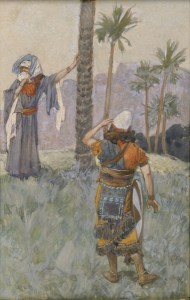
Deborah judging in Israel
It’s another week and I’m here to bring you some more great reading for your weekend. Be sure to let the authors know what you think, and let me know here as well. Topics for this week include the Grand Canyon and the biblical Flood, Deborah as leader, Jehovah’s Witnesses, and more!
Deborah and the “no available men” argument– A refutation of the notion that Deborah was only chosen to lead Israel because there were “no available men” who could or would do so. Unfortunately, this argument is fairly common among those who do not wish to affirm the Bible’s teaching on women’s equal leadership.
The Grand Canyon’s Magnificent Witness to Earth’s History– Often, young earth creationists argue that the Grand Canyon can only be explained (or at least is better explained) by the biblical Flood as a global flood. A new book is challenging that perception. Check out this post to learn more.
7 Things to Know about Jehovah’s Witnesses– It is important to understand others’ beliefs. Here is a post outlining 7 points of belief for Jehovah’s Witnesses.
Calamity (The Reckoners)– Superheroes and villains face off with those who seek vengeance against those villains who destroyed their world. Check out this look at worldview issues in Brandon Sanderson’s latest Young Adult novel, Calamity. Also check out my own reflection on the book.
Manual of Christian Evidences: Fisher Chapter 1 Guided Reading

A picture I took of a path through the woods. All rights reserved.
I am leading a guided reading of the Manual of Christian Evidences by George Park Fisher. It is freely available online and will serve as a base for discussing Christian apologetics throughout this series. The chapters are short and readable. I encourage you to join in by reading the chapters and commenting with your thoughts. When I discuss the book, I will be citing page numbers from the edition linked above.
Chapter 1
It is always important when reading a non-fiction book to find the thesis. What is it that George Park Fisher is trying to accomplish with his Manual?
Spoiler alert (har har): the answer is that he’s trying to establish the veracity of “the New Testament histories” (2). I think a valuable question to follow such a statement up with is “so what?”
Suppose Fisher succeeds, and shows that the NT histories are trustworthy, would not some scholars continue to argue that this doesn’t demonstrate the miraculous contained therein (as I’m sure Tim can attest, given his recent debates with Bart Ehrman)? That is, would not many historians say we can trust the NT documents as history, but we need not trust the miraculous therein?
I think a possible response to this is actually found in another work by a dead apologist, J.J. Blunt. In his “Undesigned Coincidences,” he notes that “by establishing the truth of ordinary incidents which involve the miracle, which compass the miracle round about, and which cannot be separated from the miracle without the utter laceration of the history itself, goes very near to establish it.” (J.J. Blunt, “Undesigned Coincidences in the Writings both of the Old and New Testaments: An Argument of their Veracity” (New York: Robert Carter & Brothers, 1855), 9-10).
Interestingly, this is not so much the tactic Fisher uses going forward. He could defend the value of such a study by noting that because of the way some of the miraculous accounts are embedded in those NT histories, we cannot excise the miraculous without making the whole thing nonsensical. That is, the miraculous is itself part of the history. However, he opts for a different approach, as we will see in the coming chapters.
What do you think of this as a response? What other responses might be possible? Moreover, what other points in this chapter came to mind for you?
Links
Be sure to check out the page for this site on Facebook and Twitter for discussion of posts, links to other pages of interest, random talk about theology/philosophy/apologetics/movies and more!
Apologetics Read-Through: Historical Apologetics Read-Along– Here are links for the collected posts in this series and other read-throughs of apologetics books (forthcoming).
Dead Apologists Society– A page for Christians interested in the works of historical apologetics. There is also a Facebook group for it.
SDG.
——
The preceding post is the property of J.W. Wartick (apart from quotations, which are the property of their respective owners, and works of art as credited; images are often freely available to the public and J.W. Wartick makes no claims of owning rights to the images unless he makes that explicit) and should not be reproduced in part or in whole without the expressed consent of the author. All content on this site is the property of J.W. Wartick and is made available for individual and personal usage. If you cite from these documents, whether for personal or professional purposes, please give appropriate citation with both the name of the author (J.W. Wartick) and a link to the original URL. If you’d like to repost a post, you may do so, provided you show less than half of the original post on your own site and link to the original post for the rest. You must also appropriately cite the post as noted above. This blog is protected by Creative Commons licensing. By viewing any part of this site, you are agreeing to this usage policy.
Sunday Quote!- Explanation as a Zero-Sum Game?
 Every Sunday, I will share a quote from something I’ve been reading. The hope is for you, dear reader, to share your thoughts on the quote and related issues and perhaps pick up some reading material along the way!
Explanation as a Zero-Sum Game?
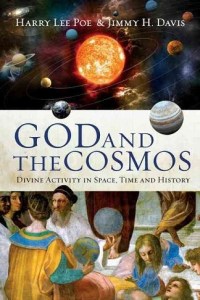
God and the Cosmos by Harry Lee Poe and Jimmy H. Davis offers a deep look at the problem of divine activity in a created world. The authors explore the question from a number of perspectives, providing much insight into an intriguing question. One aspect they address is the notion that explanation is a kind of zero-sum game:
To those who hold the view of scientific naturalism, our explanations of natural events are a zero-sum game. To them a 100 percent natural explanation means a 0 percent divine involvement. (17, cited below)
Thus, the authors argue that many who hold to a non-theistic worldview allege that explanation is a numbers game. If one can fully explain a phenomenon through natural means, that must mean that theism has nothing to say about it. Intriguingly, though the authors don’t note this, a similar view is espoused by many Christians who tacitly grant this premise, arguing against natural explanations due to a fear of deism or other non-Christian beliefs. Yet when we look at the statement on its face, it seems absurd. We know explanations are not zero-sum. My belief that it is raining might lead me to bring an umbrella with when I go outside, but one might also be able to construct a series of physical explanations of the same event (i.e. describe all the neurons fired, muscles moved, etc.).
God and the Cosmos is the kind of book that keeps readers thinking well after reading the content. I’m still working through it, but so far I recommend it. As an interesting aside, Harry Lee Poe is related to Edgar Allan Poe (yes, that one), and also wrote a fascinating book on his relation: “Evermore: Edgar Allan Poe and the Mystery of the Universe.”
Links
Be sure to check out the page for this site on Facebook and Twitter for discussion of posts, links to other pages of interest, random talk about theology/philosophy/apologetics/movies and more!
Sunday Quote– If you want to read more Sunday Quotes and join the discussion, check them out! (Scroll down for more)
Eclectic Theist– Check out my other blog for my writings on science fiction, history, fantasy movies, and more!
Source
Harry Lee Poe and Jimmy H. Davis, God and the Cosmos (Downers Grove, IL: InterVarsity, 2012).
SDG.
Really Recommended Posts 4/29/16- Pascal, apologetics, and more!

A picture of a goldfinch I took. All rights reserved.
Sorry for the late posting of this week’s Really Recommended Posts. I’ve been very busy. That said, I still managed to draw together some great posts from around the web. I hope you enjoy them!
Unexplained Allusions: The sons of thunder– There are so many lines of evidence for the truthfulness of the Bible that it can be hard to even learn about all of them. Here’s a post that explains yet another one of these lines of evidence: unexplained allusions.
7 Places Where Gender Inclusive Bible Translation Really Matters– From the article: “I have often made the point that the King James Version and the pre-2011 New International Versions each include more than 1,000 occurrences of the words ‘man’ and ‘men’ which are not found in the Greek New Testament… gender-inclusive translations such as the NRSV, NLT, NIV 2011, and CEB are taking steps toward the character of the Greek New Testament, not away from it.”
The Unraveling of Starlight and Time– An in-depth analysis of a Young Earth Creationist proposal for explaining distant starlight. The analysis is of the prominent work, Starlight and Time by D. Russell Humphreys, as well as a later revision of his theory.
Christian Thinkers 101: A Crash Course on Blaise Pascal– Pascal is most often known for his (in)famous Pascal’s Wager (I defend this argument here). Yet there is a lot more to this thinker than you may know. Read on for an introduction to the thought of this historic thinker.
Sunday Quote!- You are a Theologian
 Every Sunday, I will share a quote from something I’ve been reading. The hope is for you, dear reader, to share your thoughts on the quote and related issues and perhaps pick up some reading material along the way!
You Are a Theologian
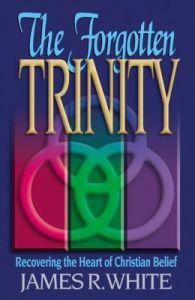
I just finished reading The Forgotten Trinity by James White. I found it to have a lot of good insight into the basics of Trinitarian doctrine. One line struck me as he emphasized the need for Christians to learn doctrine:
If you are a Christian, you are a theologian. You have no choice. Theology is simply knowing about God. (34, cited below)
The logical question we should ask ourselves following this is: “Am I a good theologian?” I don’t mean we all need to be skilled or know all of theology (an impossibility). What I mean–and what White is getting at–is that we need to ensure that we are believing and teaching rightly when we proclaim our faith. And, make no mistake, we are called to proclaim that faith (1 Peter 3:15-16, for example).
The Forgotten Trinity is a helpful read for those wanting to explore the basics of Trinitarian doctrine.
Links
Be sure to check out the page for this site on Facebook and Twitter for discussion of posts, links to other pages of interest, random talk about theology/philosophy/apologetics/movies and more!
Bonhoeffer’s Troubling Theology?- A response to an article on Dietrich Bonhoeffer’s theological perspectives– I have argued elsewhere that the broad evangelical understanding of Bonhoeffer may, indeed, be a misunderstanding of the fact that he is Lutheran.
Sunday Quote– If you want to read more Sunday Quotes and join the discussion, check them out! (Scroll down for more)
Eclectic Theist– Check out my other blog for my writings on science fiction, history, fantasy movies, and more!
Source
James White, The Forgotten Trinity (Minneapolis, MN: Bethany House Publishers, 1998).
SDG.
Really Recommended Posts 4/22/16
A picture of a goldfinch I took. All rights reserved.
Hello dear readers! My apologies for missing this last week. It was a chaotic week and I was tired so I didn’t get around to the Really Recommended Posts. To make up for it, I brought together an awesome selection for you to read, dear friends. I also used a new picture for post this week. It’s spring, and I’ve been watching the goldfinches in my yard. It’s wonderful seeing them all over, and I got this okay shot of one sitting amongst dandelions. As always, be sure to let me know what you think of the posts, and let the authors know themselves.
A Look at the Apologetics of Paul– How did Paul defend the Christian faith? Here is an extensive look at the way Paul does apologetics. I think a careful reading of and interaction with this post would do anyone interested in apologetics good.
Was Bonhoeffer a Liberal?– Some evangelicals have recently taken aim at Dietrich Bonhoeffer to undermine his increasing influence. Here, the question is asked: was Bonhoeffer a liberal? (It could also be asked: why is “liberal” a dirty word among evangelicals?) See also my Bonhoeffer’s Troubling Theology? – A response to an article on Dietrich Bonhoeffer’s theological perspectives.
“Risen” and what makes a good Christian film– “Risen” is coming to blu-ray/DVD in less than a month. It’s the story of Jesus’ Resurrection, told from a perspective that hasn’t been considered that much before–that of a skeptical Roman. Does it make a good Christian film?
Avoiding Extremes Amidst Canada’s Euthanasia Debate– It’s all too easy to get caught up in the most extreme positions when debating a topic. Here’s a good post urging caution with regards to the debate over euthanasia in Canada.
Meme Crush Part 1– A good post taking down the silly absurdity of an anti-Christian meme tweeted by “God.” Check out part 2 as well.
Book Review: “Bonhoeffer on the Christian Life” by Stephen J. Nichols
 Bonhoeffer on the Christian Life by Stephen J. Nichols is part of the “Theologians on the Christian Life” series from Crossway. This volume focuses on Dietrich Bonhoeffer, a German Lutheran theologian who was murdered by the Nazis. What is remarkable about this book is the way it successfully shows the interplay between Bonhoeffer’s theology and his life lived, and then demonstrates this is something we, too, can comprehend.
Nichols balances discussion about Bonhoeffer’s theology with discussion of his life. This is more than simply combining biography with theology. Instead, Nichols demonstrates that Bonhoeffer’s theology of Christian life is acted out by Bonhoeffer. Thus, readers are able to read about Bonhoeffer while learning what it means to lead a Christian life. This is fitting, because Bonhoeffer did act out the core of his theology, which, as the subtitle of the book (“From the Cross, For the World”) suggests, is cruciform. For Bonhoeffer, Christian living is living as Christ to the world, and this includes living and dying with Christ.
The book has chapters on ecclesiology, prayer, confession, and more. The chapters noted are particularly insightful. Nichols draws much from Bonhoeffer’s Life Together to show his doctrine of the church, which itself is deeply connected to a life of spiritual discipline, confession to one another, and willingness to suffer for Christ. Nichols notes well, however, that we in the West are not likely to be asked to pay the same cost of discipleship that Bonhoeffer did: execution for his lived faith. But that, Nichols argues, does not mean that we cannot live Christ-like lives. Rather than making Bonhoeffer a hero–and Nichols notes that Bonhoeffer would have rejected that categorization–we ought see him as a Christian living out the life God called him to.
Nichols balances the excitement of learning about Bonhoeffer’s life with the unveiling of deeper thoughts on the way Bonhoeffer points to a Christian life lived. It makes the book quite readable, despite its often complex subject matter.
There is, however, one glaring hole in the treatment of Bonhoeffer’s theology of the Christian life. That is, Bonhoeffer’s Lutheranism, and specifically his view of the proper theology as one of Word and Sacrament. A search of the book reveals but one reference to baptism, and only two references to the Lord’s Supper. However, Bonhoeffer continually held to the importance of these sacraments throughout his theology. For example, in The Cost of Discipleship, he wrote:
How then do we come to participate in the Body of Christ, who did all this for us? …The answer is, through the two sacraments of his Body, baptism and the Lord’s Supper. (239, edition linked above)
From this and many other references, it is clear that sacraments are central to Bonhoeffer’s understanding of ecclesiology. Yet Nichols doesn’t even mention them in the section on ecclesiology, an otherwise richly rewarding section of the book. Only a passing reference is made to the sacraments, despite their centrality to Bonhoeffer’s Lutheran understanding of grace and Christian living. This is a significant difficulty, for it effectively removes Bonhoeffer’s theology from its context.
Bonhoeffer on the Christian Life is an excellent, practical read. It shows how integrated Bonhoeffer’s theology is with his life, and gives many practical examples for readers to apply to their own lives. The book does, however, de-contextualize his theology by ignoring key aspects of his Lutheranism and their impact on Christian living. Readers will get much good from the book, but perhaps not as much good as they could have had it allowed Bonhoeffer’s Lutheranism to shine through.
The Good
+Focused on Bonhoeffer’s practical theology
+Gives insight into Bonhoeffer’s life with applications
+Excellent annotations for further reading
The Bad
-Little attention paid to Bonhoeffer on the sacraments
Disclaimer: I received a copy of the book for review from the publisher. I was not obligated to write any specific kind of feedback whatsoever.
Source
Stephen Nichols, Bonhoeffer on the Christian Life (Wheaton, IL: Crossway, 2014).
Links
Be sure to check out the page for this site on Facebook and Twitter for discussion of posts, links to other pages of interest, random talk about theology/philosophy/apologetics/movies and more!
Bonhoeffer’s Troubling Theology?- A response to an article on Dietrich Bonhoeffer’s theological perspectives– I look at an argument that Bonhoeffer’s theology is “troubling” to evangelicals and point out how much of it is merely a product of his Lutheran background.
Book Reviews– There are plenty more book reviews to read! Read like crazy! (Scroll down for more, and click at bottom for even more!)
Eclectic Theist– Check out my other blog for my writings on science fiction, history, fantasy movies, and more!
SDG.
——
The preceding post is the property of J.W. Wartick (apart from quotations, which are the property of their respective owners, and works of art as credited; images are often freely available to the public and J.W. Wartick makes no claims of owning rights to the images unless he makes that explicit) and should not be reproduced in part or in whole without the expressed consent of the author. All content on this site is the property of J.W. Wartick and is made available for individual and personal usage. If you cite from these documents, whether for personal or professional purposes, please give appropriate citation with both the name of the author (J.W. Wartick) and a link to the original URL. If you’d like to repost a post, you may do so, provided you show less than half of the original post on your own site and link to the original post for the rest. You must also appropriately cite the post as noted above. This blog is protected by Creative Commons licensing. By viewing any part of this site, you are agreeing to this usage policy.
“Remarkable Creatures” by Tracy Chevalier – Creationism, women, and paleontology
 Remarkable Creatures by Tracy Chevalier is a historical fiction novel based on the lives of Mary Anning and Elizabeth Philpot, early fossil hunters in England. It raises an astonishing number of worldview questions related to women, paleontology, and creationism, and we will here discuss just a few of these issues. There will be SPOILERS in what follows, but it is history!
Paleontology, Creationism, and Controversy
Perhaps the most fascinating aspect of Remarkable Creatures is its survey of the controversies surrounding the discovery of fossils that challenged reigning scientific and religious paradigms. One of the greatest challenges was to come to believe that extinction had occurred. Think about it: if all you ever knew was the living beings around you, what possible reason would there be for thinking that those beings could die out, such that none were left anywhere? Mary Anning and Elizabeth Philpot’s finds of creatures like icthyosaurus challenged even the greatest thinkers of the time to come up with new paradigms for fitting these creatures–which didn’t exist anywhere on earth at their time–into reality.
For a time, it was thought that the bones of icthyosaurus were just those of a crocodile. But then Mary Anning discovered a complete fossil that included huge eyes (eyes that even had bones in them!). This forced people to the realization that these truly were novel creatures.
It’s a fascinating thing to think about, because the problem wasn’t just that it forced them to come up with a new concept–extinction. It also led to theological crises. After all, why would God create creatures that would all die out? One pastor in the book was particularly disturbed by this notion. He argues with Elizabeth Philpot: “All that you see about you is as God set it out in the beginning. He did not create beasts and then get rid of them. That would suggest He had made a mistake, and of course God is all knowing and incapable of error…” (144, citation from large print edition [only one they had at the library]). Philpot then comes back, noting that rock formations change and that if creation is supposed to be without change, how could rock fall or change a cliff face? The pastor ultimately comes back by saying that “God placed the fossils there when He created the rocks, to test our faith…” (145). Chevalier cleverly puts an answer in Philpot’s head: “It is my faith in you [the pastor as interpreter of Scripture] that is being tested, I thought” (145). The pastor, it should be noted, was also using, as was commonplace, Bishop Ussher’s chronology of the world, which put the date of creation “on the night preceding the 23rd of October 4004 B.C.” (144). Philpot wryly remarks- “I had always wondered at his precision.”
Another idea that was prominent at the time was the notion of anatomical laws or conformity with Aristotle’s Great Chain of Being. According to these ideas, there is a kind of hierarchy of being that puts humans at the top (usually) with other creatures in stages below that. It is not evolution, for it predates that idea. Instead, it is a way of ordering those creatures which exist now according to some principles. Mary Anning’s finding of a plesiosaur challenged this chain of being by violating the ways that creatures were supposed to appear or exist.
Late in the book, Elizabeth Philpot is finally questioned on what she thinks about the fossils and God. She is pleased to finally be asked:
I am comfortable with reading the Bible figuratively rather than literally. For instance, I think the six days in Genesis are not literal days, but different periods of creation, so that it took many thousands–or hundreds of thousands of years–to create. It does not demean God; it simply gives Him more time to build this extraordinary world. (391, again note reference from large print edition)
Although this is a work of historical fiction, these debates continue into today. Some groups still use Bishop Ussher’s chronology to date the age of the earth. Although few would argue that there are no extinct creatures, new forms of the same arguments have led to the young earth creationist movement, in which people argue that the Bible requires us to believe that all the creatures that are extinct were alive at the same time as humans. I have personally had conversations with young earth creationists who say that fossils are one way God tests our faith (I know of no young earth organization who would use this argument, thankfully). Scientific findings continue to challenge entrenched religious beliefs.
One is perhaps left to wonder, like Philpot’s thoughts, on how some people get so much precision. The Bible nowhere puts a date on creation. Nor does the Bible demand that all creatures that have ever lived were allowed at the same time. Yet these beliefs persist, and many Christians insist that if one does not hold to them, they are not true Christians, or are perhaps abandoning Scripture. As in Mary Anning’s time, we still have much work to do. We cannot let our external paradigms (things like Aristotle’s Great Chain of Being, or perhaps more germane, our own assumptions about how texts ought to be read “literally” and what the word “literal” means) determine how God is allowed to act or what God may communicate to us.
Women
The book does a good job portraying the way the contributions of women were ignored or even stolen. Mary Anning was an expert fossil hunter–self taught. Yet time and again, men used her expertise to find their fossils and then take credit for the finds. Although her contributions were acknowledged later, her life of poverty is a sad testimony to the way that unequal treatment of women can so easily be perpetuated. The book portrays this unequal treatment in many ways. First, there is the exclusion of both Philpot and Anning from societies of geologists (this was before paleontology was a separate field of study from geology). Second, social norms provide for a simple way to create inequality. When one sex is given the benefit of the doubt (men, in this case) while the other is considered permanently damaged even by gossip about impropriety (women), restraints upon the social movement and capacity of the latter follow by necessity. Third, the contributions of women were ignored.
Unfortunately, parallels to each of these scenarios continue today. Women are excluded from certain groups or positions (such as those who keep women from becoming pastors), thus creating spiritual inequality. Conventions of purity culture, for example, treat women as “impure” or “damaged goods,” putting the onus on young women to abstain while simultaneously removing blame from young men. The power of imagery–objectification of women–continues to impact both women and men in negative ways. We can learn from Remarkable Creatures that much progress has been made, but it also points us in the direction of more work to be done.
Conclusion
Remarkable Creatures is a fascinating read. Although it is dry at times, it provides much insight into a number of discoveries that changed the world. It highlights the careers of two women who contributed much to paleontology in its formative stages. Perhaps most importantly, it challenges us to keep improving, to keep thinking, and to keep observing God’s remarkable world.
Source
Tracy Chevalier, Remarkable Creatures (New York: Penguin, 2010).
Links
Be sure to check out the page for this site on Facebook and Twitter for discussion of posts, links to other pages of interest, random talk about theology/philosophy/apologetics/movies and more!
Popular Books– Read through my other posts on popular books–science fiction, fantasy, and more! (Scroll down for more.)
Mary Anning: Plesiosaurs, Pterosaurs, and The Age of Reptiles– A post that highlights the contributions Mary Anning made to the paleontology. It particularly focuses on how these discoveries pre-dated Darwin.
SDG.
——
The preceding post is the property of J.W. Wartick (apart from quotations, which are the property of their respective owners, and works of art as credited; images are often freely available to the public and J.W. Wartick makes no claims of owning rights to the images unless he makes that explicit) and should not be reproduced in part or in whole without the expressed consent of the author. All content on this site is the property of J.W. Wartick and is made available for individual and personal usage. If you cite from these documents, whether for personal or professional purposes, please give appropriate citation with both the name of the author (J.W. Wartick) and a link to the original URL. If you’d like to repost a post, you may do so, provided you show less than half of the original post on your own site and link to the original post for the rest. You must also appropriately cite the post as noted above. This blog is protected by Creative Commons licensing. By viewing any part of this site, you are agreeing to this usage policy.
Sunday Quote: Dietrich Bonhoeffer as Lutheran
 Every Sunday, I will share a quote from something I’ve been reading. The hope is for you, dear reader, to share your thoughts on the quote and related issues and perhaps pick up some reading material along the way!
Dietrich Bonhoeffer as Lutheran
Dietrich Bonhoeffer is one of the most engaging characters of the 20th century as well as an immensely important and popular theologian. As time goes on, more and more people know who he is and acknowledge his influence on their work and lives. I have noticed, however, a strange lack of awareness or acknowledgement of Bonhoeffer’s Lutheranism. That is, many take what he says about discipleship, ecclesiology, prayer, and the like to heart, but divorce those ideas from their Lutheran context in his thought. Yet, for Bonhoeffer, his Lutheran theology was central to his understanding of Christianity. He wrote in The Cost of Discipleship:
How then do we come to participate in the Body of Christ, who did all this for us? It is certain that there can be no fellowship or communion with him except through his Body, baptism and the Lord’s Supper… The sacraments begin and end in the Body of Christ, and it is only the presence of that Body which makes them what they are. The word of preaching is insufficient to make us members of Christ’s body; the sacraments also have to be added. Baptism incorporates us into the unity of the Body of Christ, and the Lord’s Supper fosters and sustains our fellowship and communion… in that Body. (239, cited below)
These words can be found echoed in Bonhoeffer’s writings. His understanding of the universe was a Lutheran understanding, one which teaches Word and Sacrament. To do justice to his legacy, we need to acknowledge the fact that he isn’t just some theologian we can pull individual ideas from; instead, we must see him as Lutheran.
Links
Be sure to check out the page for this site on Facebook and Twitter for discussion of posts, links to other pages of interest, random talk about theology/philosophy/apologetics/movies and more!
Bonhoeffer’s Troubling Theology?- A response to an article on Dietrich Bonhoeffer’s theological perspectives– I have argued elsewhere that the broad evangelical understanding of Bonhoeffer may, indeed, be a misunderstanding of the fact that he is Lutheran.
Sunday Quote– If you want to read more Sunday Quotes and join the discussion, check them out! (Scroll down for more)
Eclectic Theist– Check out my other blog for my writings on science fiction, history, fantasy movies, and more!
Source
Dietrich Bonhoeffer, The Cost of Discipleship (New York: Touchstone, 1995).
SDG.
Really Recommended Posts 4/8/16- Lewis, Van Til, headship, and more!
 Just got back from vacation in Washington state. Wow, it is beautiful there! Anyway, I have another round of links for you, dear readers. We have free writings from Cornelius Van Til, a problem for post-Flood models of diversification, C.S. Lewis, and discussion of “male headship.” Check them out and let me know what you think!
Cornelius Van Til free downloads– Cornelius Van Til was an advocate of presuppositional apologetics. I have written extensively on presuppositionalism myself. Van Til is probably the best-known advocate of the method. Here are free readings from him.
The Great Genetic Bottleneck that Contradicts Ken Ham’s Radical Accelerated Diversification– Ken Ham advocates a kind of hyper-diversification after the Flood which allows for the number of species we see today. What
Christian Thinkers 101: A Crash Course on C.S. Lewis– C.S. Lewis is one of the greatest Christian thinkers of the 20th century. Here’s a great post (with infographic!) that gives tons of information on his life and thought.
5 Myths of Male Headship– The concept of “headship” is often a product more of our own assumptions than of the biblical text. Here is a post that shows 5 myths about male headship that are often assumed.

 J.W. Wartick - Reconstructing Faith