christian
Sunday Quote!- Beauty of Creation?
 Every Sunday, I will share a quote from something I’ve been reading. The hope is for you, dear reader, to share your thoughts on the quote and related issues and perhaps pick up some reading material along the way!
The Beauty of Creation?
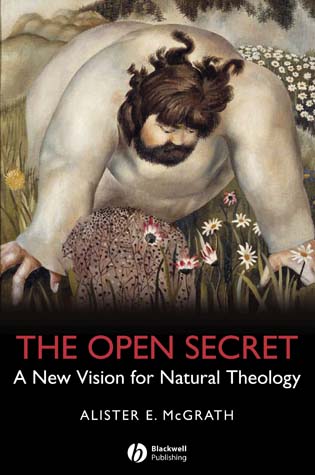
I’ve finished rereading The Open Secret by Alister McGrath. It presents a powerful picture of natural theology as touching every aspect of life.
One of the branches of evidence for the argument from design is the notion that the world in which we live is beautiful. However, many have rightly noted that there seems to be a disconnect between this picture of the world as beautiful and loving and the reality that nature is “red in tooth and claw.” Yet Christian natural theology has a more complete view of the world:
…[N]ature as presently observed, cannot be assumed to be nature, as orginally created… The creation stands in need of renewal from a God who will create all things anew… There is a profoundly eschatological dimension to an authentically Christian natural theology… The fading beauty and goodness of the world are to be interpreted in light of the hope of their restoration and renewal. (208; 206, cited below)
Christianity does acknowledge the notion that creation is “groaning” and that nature may show much disorder and vileness alongside beauty and transcendence. The former attributes are results of the fall, but as McGrath noted, Christian natural theology is eschatological: it looks ahead to a future where all things will be renewed and consummated God’s divine plan.
It seems to me this vision of the future is something which gives natural theology within Christianity a broader explanatory scope which may not be matched by other systems. By orienting this world as it is in between a broader historical scheme of creation, fall, redemption, consummation, this vision of natural theology allows for and even expects many of the observed phenomena.
What do you think? What is your view of how the beauty of creation may be balanced with some of its ugliness?
Links
Be sure to check out the page for this site on Facebook and Twitter for discussion of posts, links to other pages of interest, random talk about theology/philosophy/apologetics/movies and more!
Sunday Quote– If you want to read more Sunday Quotes and join the discussion, check them out! (Scroll down for more)
“A New Vision for Natural Theology” A Book Review of “The Open Secret” by Alister McGrath– I review the book discussed in this post. It presents a vision for natural theology and apologetics.
Doubts about Evidentialism? C. Stephen Evans and a fideistic problem for evidentialists
 I’ve been reading through a few books related to apologetic methodology and epistemology of late. Most recently, I have finished Faith Beyond Reason: A Kierkegaardian Account by C. Stephen Evans. One thing that struck me in the book was a brief discussion of a possible difficulty with evidentialism as an apologetic methodology. Evidentialism is, essentially, the notion that apologetics should be based upon evidences to convince unbelievers of the truth of Christianity.* Evans himself did not direct a specific attack against the method, but some of his work could be perceived as a critique of the method. Specifically, he discussed Kierkegaard’s rejection of evidentialism:
[Kierkegaard] wants to argue that if you want something like an eternal happiness more than anything else, then it may be reasonable to commit yourself wholeheartedly to something that promises to help you obtain it, even if the chances of obtaining what you seek are not high because the objective probability that eternal happiness is truly to be gained in this way is not high either. (Evans, 108, cited below)
The thrust of this point is that one may, perhaps, rationally commit to a belief when the risk/reward is at a certain level. It’s a little similar to Pascal’s Wager, but Evans has more in mind than this: “[I]f your desire for this good is high enough… then even a very low probability would be sufficient to motivate belief” (ibid). The argument is therefore more subtle than a simple risk/reward scenario.** Instead, Evans’ point (or at least his exegetical point regarding Kierkegaard) is that one’s own desires play into commitment to beliefs, and that this is not itself an irrational thing.
Yet this point may seem a bit devastating to evidentialists. After all, evidentialists would generally hold that one should not believe without sufficient evidence, and that theistic arguments are strong enough to convince others to believe. If, however, one may grant that it may be reasonable to hold to beliefs even if there is a very low probability on the basis of one’s desire for a certain end, then it seems that evidentialism may itself be a faulty grasping for rationalistic certainty.
Within Kierkegaard’s own context, he was certainly reacting against rationalism. But evidentialism is not reducible to stark rationalism. Rather, it is a method not only of apologetics but also of epistemic investigation, depending upon one’s usage. Perhaps the evidentialist may acknowledge that one may rationally commit to a position–say, theistic belief–based upon one’s desire for that great good, but that does not preclude evidences for that belief. More importantly, the evidentialist may introduce the concept of a defeater–a belief which may serve to disprove or make another belief more improbable. Once one has been presented with defeaters, one may not rationally cling to one’s belief simply because one desires the truth of it; instead, one must either defeat the defeaters themselves or have sufficient evidence to hold to the belief in spite of possible evidence against it.
It therefore seems to me that arguments like Kierkegaard’s point does not do much to discredit evidentialism. Rather, it merely provides a possibility for people to hold beliefs in the absence of evidence either way. Once one has evidence against one’s belief, however, one should–at risk of epistemic suicide–either ground one’s belief or show that the evidence against that belief is not firmly grounded. Evans seems to acknowledge this as well, for he noted the value of evidence despite the possibility for “properly basic” belief.
Of course the question of whether one “should” think one way or another is itself highly contentious. I’ll leave that debate for another post or, even better, the comments.
*Yes, I do realize I’ve vastly oversimplified here. That’s the nature of writing shortish blog posts! For what I consider the best discussion of different apologetic methodologies, check out Faith Has Its Reasons
**I also acknowledge that Pascal’s Wager is more complex than a simple risk/reward scenario.
Source
C. Stephen Evans, Faith Beyond Reason: A Kierkegaardian Account (Reason & Religion)
Links
Be sure to check out the page for this site on Facebook and Twitter for discussion of posts, links to other pages of interest, random talk about theology/philosophy/apologetics/movies and more!
SDG.
——
The preceding post is the property of J.W. Wartick (apart from quotations, which are the property of their respective owners, and works of art as credited; images are often freely available to the public and J.W. Wartick makes no claims of owning rights to the images unless he makes that explicit) and should not be reproduced in part or in whole without the expressed consent of the author. All content on this site is the property of J.W. Wartick and is made available for individual and personal usage. If you cite from these documents, whether for personal or professional purposes, please give appropriate citation with both the name of the author (J.W. Wartick) and a link to the original URL. If you’d like to repost a post, you may do so, provided you show less than half of the original post on your own site and link to the original post for the rest. You must also appropriately cite the post as noted above. This blog is protected by Creative Commons licensing. By viewing any part of this site, you are agreeing to this usage policy.
Sunday Quote!- Does Science Limit Exegesis?
 Every Sunday, I will share a quote from something I’ve been reading. The hope is for you, dear reader, to share your thoughts on the quote and related issues and perhaps pick up some reading material along the way!
Does Science Limit Exegesis?
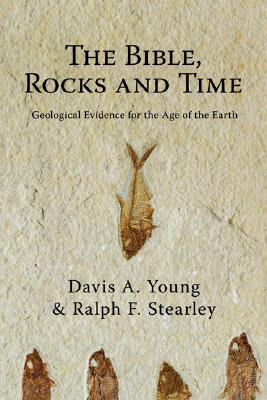
I’ve been rereading The Bible, Rocks and Time: Geological Evidence for the Age of the Earth
[T]he claims advanced in favor of a young Earth or Flood geology remain unacceptable to the scientific community. Thus their claims should also be unacceptable within the church, which… ought to be committed to truth and reality–for the simple reason that the young-Earth creationist claims lack scientific credibility. (161)
Now I think this is a pretty obviously controversial claim for a few reasons. First, the immediate question is how broad Davis and Stearley are intending this to be. After all, one might say that God creating the universe is “unacceptable” depending how one defines the scientific community. Of course, they do qualify the statement by noting that what they mean is that the evidence young earth creationists put forward can often, in principle, be tested for; and when tested, it fails muster. In this sense, I think that one might say the statement is acceptable.
Second, one may object to this noting that science often changes consensus, so what is “unacceptable” today becomes in vogue tomorrow. A problem with this claim is that it flies in the face of the real, overwhelming evidence for an ancient Earth. I’ve examined this and many other arguments YECs put forth in my post on YEC arguments.
Third, one might wonder exactly how Davis and Stearley think science and exegesis are supposed to interact. Though this is a far cry from the purpose of their book, statements like these beg the question of whether science really does limit exegesis.
What are your thoughts?
Links
Be sure to check out the page for this site on Facebook and Twitter for discussion of posts, links to other pages of interest, random talk about theology/philosophy/apologetics/movies and more!
Answering Common Young Earth Creationist Arguments– I evaluate a number of arguments for young earth creationism. There are a large number of biblical, philosophical, and scientific arguments briefly answered here.
What options are there in the origins debate? – A Taxonomy of Christian Origins Positions– I clarify the breadth of options available for Christians who want to interact on various levels with models of origins. I think this post is extremely important because it gives readers a chance to see the various positions explained briefly.
Source
Davis A. Young and Ralph F. Stearley, The Bible, Rocks and Time: Geological Evidence for the Age of the Earth
Really Recommended Posts 5/2/14- Hitler’s Philosophers, Lutheranism, and more!

I’ve once more gone through the internet archives to bring together a slew of awesome posts for you, dear readers! Let me know your thoughts, and feel free to share links you’ve enjoyed. I may even put them on an upcoming RRP!
Why I was Once an Atheist– Pastor Matt was a PK–a pastor’s kid–(like me!) and he had some expereinces in the church which led to his atheism. Reading his thoughts provides insight into what we can do better for our children and beyond.
Sanctification– Imagine a woman hearing these words: “The guys just don’t feel like they would be able to lead you spiritually…” What follows from a view in which men spiritually lead women without question? What roles do men and women play?
Why Pro-Life People Need to Become Amateur Philosophers– It is important to have some philosophical knowledge in order to make the case for the pro-life position. Here, some basics are covered with relevance for the issue.
Ways to be Lutheran– How are Lutheran splinter denominations working? What developments and trends are forming in the U.S.? An interesting background for Lutheranism in the United States. I thought it was worth the quick read.
Review: Hitler’s Philosophers by Yvonne Sherratt– What philosophical motivations lay behind Hitler’s activities? This interesting book review talks about some of them. What are your thoughts?
Bruce Gordon: problems with inflationary multiverse cosmologies– What of the multiverse? Might there be evidence for it?
“Husband of One Wife” – What does this mean?
 A common argument for limiting the pastoral ministry to men only is to cite a number of texts where the requirements for elders/overseers/etc. are given. Among these, one which allegedly shows that women are not to hold positions of authority in the church is the statement that the holder of such a position is to be the “husband of one wife” (1 Timothy 3:2; 12; Titus 1:6).
On the face of it, this seems to be a pretty telling argument. After all, if someone is the husband of one wife, then that would certainly seem to exclude women! So what’s the problem?
Is your pastor married?
You see, if someone wants to take the statement in its most literal sense, it isn’t merely, abstractly stating that the overseer/bishop/deacon/elder is supposed to be a man; it is actually saying he is supposed to be a husband.* So if one wants to take the Bible in its most “literal” reading, then one must argue that not only may women not be pastors; neither may any unmarried (or remarried, or divorced, or widowed, etc.) men. Period.
So what’s the problem with this? The problem is that once we get to this level, it should be pretty easy to see how absurd the argument is. What the phrase is intended to convey is monogamy. That is, church leaders are to be monogamous. The teaching is pretty clear when understood in this light. If one is to be a leader in the church, it should be easily observable that they are monogamous and celibate apart from marriage. There are to be no exceptions.
If someone wants to dispute this and press that the real point is that one must be a man, then they must equally argue that no church leader should be unmarried. Considering Paul himself extolled the values of remaining unmarried (and was himself unmarried), such a reading of Paul is problematic, at best.
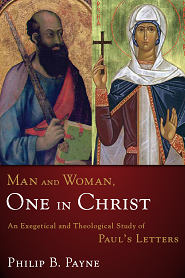
All of this is to set aside the other difficulties with using passages like this to restrict women from the ministry. One example is the excessive addition of male pronouns into the English translations which are not present in the Greek (see Philip Payne, Man and Woman: One in Christ, 445 [I have reviewed this book here]). Another problem is that they seem to be teaching against polygamy as opposed to any type of gender restrictions (ibid). Finally, the lists of requirements are stated in such a way as to make it actually open for women to hold such offices (Payne, 448-452).
Even if one disagrees on the last paragraph, it should be clear that one cannot use these passages to restrict women from the ministry. They simply do not have the data in them to allow for such a restriction.
*(Yes, I am aware that it may be translated “man of one woman,” but that just makes it extremely clear that the meaning is supposed to be referring to husband and wife. After all, what other reason could there be to be “of one woman”?)
Links
Be sure to check out the page for this site on Facebook and Twitter for discussion of posts, links to other pages of interest, random talk about theology/philosophy/apologetics/movies and more!
Check out my posts on egalitarianism (scroll down for more).
Paul Adams has a series of posts on Philip Payne’s work discussed herein. Check out his series, starting with the first post.
SDG.
——
The preceding post is the property of J.W. Wartick (apart from quotations, which are the property of their respective owners, and works of art as credited; images are often freely available to the public and J.W. Wartick makes no claims of owning rights to the images unless he makes that explicit) and should not be reproduced in part or in whole without the expressed consent of the author. All content on this site is the property of J.W. Wartick and is made available for individual and personal usage. If you cite from these documents, whether for personal or professional purposes, please give appropriate citation with both the name of the author (J.W. Wartick) and a link to the original URL. If you’d like to repost a post, you may do so, provided you show less than half of the original post on your own site and link to the original post for the rest. You must also appropriately cite the post as noted above. This blog is protected by Creative Commons licensing. By viewing any part of this site, you are agreeing to this usage policy.
Threshold Belief and Evidentialism- Can evidentialism work?
 The evidentialist school of apologetics is essentially based upon the notion that the evidence for Christianity is such as to make it rationally justified to believe (and perhaps even compel one to believe). Note that evidentialists (generally) do not claim that this means the Holy Spirit plays no part in conversion or that people are fully capable to choose God.* C. Stephen Evans, in his book Faith Beyond Reason: A Kierkegaardian Account, examined evidentialism in light of Kierkegaard’s critique of the method.
One of the primary arguments Kierkegaard had against evidentialism** is that a human being is incapable of considering the whole range of facts regarding a piece of evidence and so may never be justified in holding evidential belief. Evans characterized this argument (following the terminology of Robert Adams) the “postponement argument”:
The idea… is that historical inquiry is never completed, and thus historical beliefs based on such inquiry must always be tentative. It is always possible, at least theoretically, that new evidence will emerge that will overturn any historical conviction. Thus, if religious beliefs were based on such evidence, they would have to be of this tentative character. (Evans, 108, cited below)
Now–this is key–Evans also noted that “Kierkegaard thinks, however, that religious beliefs should have a kind of finality that differs from this kind of scholarly judgment.” With these quotes in mind, we may examine what seems to be a Kierkegaardian objection to evidentialism.
The objection seems to be that faith requires a kind of certainty which may never be provided by historical inquiry; thus, historical inquiry (evidences) may not provide a justifiable grounding for faith. I think the main problem with this is that Kierkegaard seemingly insisted on an impossible level of certainty for evidence. That is, a dismissal of evidentialism based upon this reasoning seems to be only warranted because Kierkegaard has adjusted the level of evidence needed. It is true that historical inquiry may only ever provide probability, but that does not imply we are incapable of believing anything historical.
Of course, one may argue that I have missed the point Kierkegaard is trying to make. It’s not that all historical inquiry must be subjected to the standard of certainty; rather, only on matters of ultimate import must we have certainty. If this were his claim, I think one may rightly respond by questioning why that would be the case. However, it seems, according to Evans, that Kierkegaard was less concerned with a rejection of evidentialism than he was concerned with maintaining a place for the emotions and subjectivity within faith. On that count, I don’t know of any evidentialist who would argue that one cannot have subjective or emotional reasons for faith either.
Now, to return at last to the quote block above. If all that faith were based upon within an evidentialist system were historical evidences, then it seems the quote is correct regarding the tentative nature of faith. But the evidentialist claim is not that faith may only be based upon evidence. Instead, it is that the evidence is such as to justify or ground faith (some would argue it is enough to compel faith). So perhaps Kierkegaard and evidentialism are not irreconcilable after all.
Perhaps the strongest objection which may be derived from the above comments from Evans and Kierkegaard center around the notion of threshold belief. Evans very briefly hinted at this possible problem for evidentialism: basically, the notion is that for the evidentialist method to work, there must be some “threshold” for commitment to a belief. For Kierkegaard, that threshold is certainty, which is why historical evidence cannot satisfy his criterion. However, for the evidentialists themselves, the question remains as to what that threshold is. If this threshold cannot be pinned down, it may be argued, evidentialism as a system cannot work. I think that this challenge is less an arguments against evidentialism than it is an argument for epistemic uncertainty. However, diving into such an argument is beyond the realm of what I want to hit here. For now, I think that I may answer this argument by simply saying that it does not follow that 1) if we can’t pin down an exact threshold beyond which we must be convinced to commit to a belief then 2) we cannot commit to a belief. The argument is simply off target.
Notes
*I say this so as to avoid lengthy debate, one way or the other, regarding how one comes to be saved. My intent in this post is to investigate the apologetic method, not soteriological details.
**I should note that Kierkegaard should be understood within his historical context, in which he was reacting against overly rationalistic faith. Thus, his (sometimes extreme) reaction against rationalism–while overreaching–is perhaps more understandable. There is also, of course, some anachronism in this statement because “evidentialism” is being used in its specific fashion to reference the method of apologetics, while Kierkegaard was reacting against rationalism. I acknowledge this anachronism but simply point out it is for the sake of simplifying terminology in the post.
Links
Be sure to check out the page for this site on Facebook and Twitter for discussion of posts, links to other pages of interest, random talk about theology/philosophy/apologetics/movies and more!
Sources
C. Stephen Evans, Faith Beyond Reason: A Kierkegaardian Account (Reason & Religion)
SDG.
——
The preceding post is the property of J.W. Wartick (apart from quotations, which are the property of their respective owners, and works of art as credited; images are often freely available to the public and J.W. Wartick makes no claims of owning rights to the images unless he makes that explicit) and should not be reproduced in part or in whole without the expressed consent of the author. All content on this site is the property of J.W. Wartick and is made available for individual and personal usage. If you cite from these documents, whether for personal or professional purposes, please give appropriate citation with both the name of the author (J.W. Wartick) and a link to the original URL. If you’d like to repost a post, you may do so, provided you show less than half of the original post on your own site and link to the original post for the rest. You must also appropriately cite the post as noted above. This blog is protected by Creative Commons licensing. By viewing any part of this site, you are agreeing to this usage policy.
Sunday Quote!- Every Story has a Worldview
 Every Sunday, I will share a quote from something I’ve been reading. The hope is for you, dear reader, to share your thoughts on the quote and related issues and perhaps pick up some reading material along the way!
Every Story Has a Worldview
I finished reading Hollywood Worldviews: Watching Films with Wisdom & Discernment
Every story is informed by a worldview. And so every movie, being a dramatic story, is also informed by a worldview. There is no such thing as a neutral story in which events and characters are presented objectively apart from interpretation. Every choice an author makes… is determined by the author’s worldview. (60)
Godawa’s point is similar to what I say quite often, with almost the exact words: every movie has a worldview. The same, as Godawa states, is true for any story. Every time someone tells a story, whether it is one they made up or one they picked up somewhere, it is slanted with worldview. We should be aware of this fact and be ready to critically engage with any story–fictional or non–so that we can bring into light the truths and falsehoods each story may contain.
What’s your best technique for critically engaging worldview in film? What other arts have you critically interacted with? How have you approached these?
Links
Be sure to check out the page for this site on Facebook and Twitter for discussion of posts, links to other pages of interest, random talk about theology/philosophy/apologetics/movies and more!
Engaging Culture: A brief guide for movies– I outline my approach to evaluating movies from a worldview perspective.
Source
Brian Godawa, Hollywood Worldviews: Watching Films with Wisdom & Discernment
Jesus had a wife!? Special Really Recommended Posts Issue
 Today, I have changed the standard “Really Recommended Posts” to be all about the “Gospel” of Jesus’ Wife. Check out the updated list of links for responses to this discovery. Also, it snowed again here (yes, in mid/late April), so I made this an “owl post” edition.
SEE UPDATE: It has become revealed that this fragment is almost certainly a fraud. But, if you’re still bothered by it, check out the links below.
UPDATE 2 (4/17/2014): The case has been reopened as some alleged new evidence has shown that the document might not be a forgery after all, which now makes the links below relevant again! I’ve also added a comedic video I found via Tim McGrew.
UPDATE 3 (5/2/2014): It seems to actually be likely, after all, that it is a forgery! Which is it? Anyway, I added this link to a discussion of the evidence of forgery. (5/4/14): Another update with a post summarizing much of the evidence that the manuscript is a forgery.
There has been a bit of an uproar about a 4th Century Coptic Manuscript which purportedly provides evidence that Jesus had a wife. Apart from the fact that it is 4th century and therefore a few hundred years after the events and during primetime for Gnostics making up facts about Jesus to undergird their own theological leanings, many seem to think this is somehow evidence against Christianity. Well, here are some great responses to the discovery.
Reality Check: The “Jesus’ Wife” Coptic Fragment– Daniel Wallace, an influential NT scholar, comments on the discovery. He really gets into some great textual-critical details here. I would say this is one of the more important responses. I highly recommend this response.
Durham University professor calls the “Jesus had a wife” manuscript fragment a forgery– Yep, folks, we might be cutting this one off pretty quickly. Some analyses are suggesting fragment is actually a hoax, and the arguments seem pretty decisive. See the next post:
The Gospel of Jesus’ Wife: How a Fake Gospel-Fragment Was Composed– This is a very interesting post which you can find Francis Watson, a professor of religion and theology at Durham University making a concise argument in a PDF which argues that the fragment is a fake. It’s a fascinating article, and perhaps destroys the whole controversy at the start. (To be fair, the late purported date of the fragment does little for me, anyway.)
New Coptic Fragment Says Jesus Was Married– A summary of skeptics’ attitudes towards historicity.
The Gospel of Jesus’ Wife?– Glenn Andrew Peoples has a simply fantastic discussion of the implications of this discovery. One of my favorite lines: “Prepare yourself. Suddenly, people are going to read a sensational article about a tiny scrap of parchment and become experts on early church history.”
Did Jesus Have a Wife?– A post which focuses on the authenticity of the document and the implications if it is indeed authentic. Another great response.
SHOCKING New Evidence Reveals 4th-Century Coptic Christians WONDERED If Jesus Was MARRIED!– What is the historical significance of the discovery, assuming it is genuine? A few very good, concise points.
So What if Jesus did Have a Wife?– Definitely an alternative approach. John Byron notes that Christians could grant that Jesus was married without somehow undermining the core doctrines of Christianity. This one is really interesting and I’m sure will be controversial. While not a response to this article, Aggie Catholics has a very different view of the implications of the discovery, while denying that it has historical import other than as showing the beliefs of Gnosticism: Proof That Jesus Was Married?
The Wife of Christ and the Bride of Christ– This post looks at the discovery from a more presuppositional type approach. We know the Bible is reliable, so what should we make of this discovery?
Stop the presses! Jesus was married! Oh no!– Carl Olson at the Catholic World Report comments on a number of issues with jumping to conclusions about the text. I found this one particularly insightful about how the discovery is being portrayed in the media.
Quick Thoughts on the New Jesus Wife Text– Darrell Bock, a prominent NT scholar, shares his thoughts on the implications of the text. It’s highly informative and concise.
Was Jesus Married?– A reflection on the way the media portrays stories like this along with an examination of the importance of the document and apologetics.
Get Ready for A Wave of Gnostic Looniness Again– James White notes that the discovery was made by a woman who loves to sensationalize gnosticism.
Shock! Horror! Jesus’ Wife! (Video)– a satirical video about the discovery and its alleged implications for Christian faith.
Gospel of Jesus’ Wife– New evidence has come up (5/1/14) which may show that the Gospel of Jesus’ Wife is indeed a forgery. This additional analysis suggests the fragment is forged, though the material may be genuine. H/T Tim McGrew for the find.
Wall Street Journal: How the Jesus’ Wife Hoax Fell Apart (5/4/14)- A post summarizing much of the evidence that this “Gospel of Jesus’ Wife” is indeed a forgery. There are a few comments on the end which I think are a tad unnecessary about those who are interested in women’s roles in the church and the like–after all, what one chooses to study does not necessitate certain views–but the summary of the evidence is great.
Book Review: “Faith Founded on Fact” by John Warwick Montgomery
 John Warwick Montgomery (hereafter JWM) is about as evidentialist as they come, and Faith Founded on Fact: Essays in Evidential Apologetics
Central to JWM’s apologetic methodology is the notion that one need not presuppose the truth of the Bible in order to defend it. For him, one may make the appeal to the skeptic by going to the skeptic and battling their reasoning on their own grounds. He states his thesis succinctly:
Few non-Christians will be impressed by arguments… in which the Christian stacks the deck by first defining ‘rationality’ and ‘internal consistency’ in terms of the content of his own revelational position and then judges all other positions by that self-serving criterion. (xix, cited below)
JWM surveys various attacks on the practice of evidential apologetics and argues that they fail (28ff). Although he deals with various liberal objections to apologetics, the core of his concern is for the objections raised by those who feel as though the evidentialist approach does injustice to faith. In response, he notes that any approach which removes Jesus from historical investigation–from hard evidence capable of being explored by all–reduces Him to a “historical phantasm” and does injustice to the reality of the incarnation (34-35).
The possibility of miracles and the argument of Hume engages in “circular reasoning” for Hume’s argument relies upon “unalterable experience” which is, of course his own experience and that of those who agree with him. Moreover, the definition of miracle has been slanted in such a way as to make it either irrelevant or beyond the realm of evidence by various parties (46ff). A case study of the miracle of the resurrection provides proof that miracles may be examined with an evidentialist mentality, for any who wish to deny the notion must relegate history to a place which may never be accessed through evidence (56ff).
JWM analyzes Muslim apologetics and concludes that it provides a number of lessons for Christian apologetists. Among these is the notion that merely showing the falsity of other religions is not enough for an evidential defense (93-94), the notion that “no religion is deducible from self-evident a prioris…” (97), and mere appeal to “try out” a religion is not enough to establish its credibility (98).
One of JWM’s most famous (or infamous, depending upon your view) essays is “Once Upon an A Priori,” in which he launched a broad-spectrum attack on presuppositional apologetics as a methodology. In this essay, JWM argues that when one suggests there is no neutral epistemic ground between two positions whatsoever–as presuppositional apologists do–“Neither viewpoint can prevail, since by definition all appeal to neutral evidencve is eliminated” (115). Because there are no neutral facts, there can be no appeal to facts to make one’s case; instead, all one is able to do is argue in circles against each other… “appeal to common facts is the only preservative against philosophical solipsism and religious anarchy…” (119). Instead, Christians must, like Paul, “become all things to all” people (122) in order to make the case for Christianity.
The practice of apologetics, for JWM, is intended to break down the barriers to belief. But the evidences are so strong that they obligate belief in Christian theism. However, the work of the Spirit is the work of conversion. The “evidential facts are God’s work, and the sinner’s personal acceptance of them… is entirely the product of the Holy Spirit” (150).
After an essay appealing to Christians to continue to use mass communication to spread the Word, JWM turns to “The Fuzzification of Biblical Inerrancy.” By “fuzzification,” he means (following James Boren), “the presentation of a matter in terms that permit adjustive interpretation” (217). In its application to inerrancy, it means the constant adjustment of inerrancy to make it invulnerable to attack in often ad hoc ways. What one is left with is “inerrancy devoid of meaningful content…” (223). In order to combat this, JWM suggests explicit definitions of terms such that one has a firm grasp upon what is meant by inerrancy, rather than a constant modification of the term and meaning.
There are a few areas of disagreement I would express with JWM’s theses. First, his apparent dismissal of the practice of taking the “falsity of one religion” as proof of another (93-94). He is correct in that the falsity of any given religion does not entail the truth of any other one. However, it seems to be the case that the falsity of any one religion does entail that any which have not been proven false are inherently more probable. Second, I think his reaction against presuppositionalism has led him to reject all of its tenets a bit too vehemently. For example, it seems to me that in his rejection of the notion there can be “no neutral ground” he also seems to jettison the notion that facts are interpreted no matter what the facts are. However, at times it is difficult to distinguish whether he is making a statement in a vaccuum or against a context. In relation to “facts,” he clearly holds the facts are determinative enough to demonstrate Christianity; but he also holds that people will not accept said facts other than through God’s action. Thus, perhaps the gulf between his position and that which he rejects is not so wide.
These disagreements aside, I also have enormous respect for and agreement with much of the content of Faith Founded on Fact. JWM effectively disposed of any apologetic method which inherently ignores the value of evidentialist reasoning, and he did so through not only apologetic but also theological reasons (i.e. it turns Christ into an “historical phantasm”). Moreover, his critique of presuppositional methodology–though at times off base (as noted above), does not entirely miss the mark. In particular, his critique that presuppositionalism voids any kind of objective method for determining facts is troubling for those who have presuppositional tendencies (readers should note that I myself think presuppositionalism has some merit–see my posts on the topic).
Faith Founded on Fact, put simply, is fantastic. In this review, I have only surveyed a small number of the areas I found to be of note throughout the work. JWM is witty and clever as usual, but he also raises an enormous number of points to reflect upon whether one agrees with his views or not. He offers a number of ways to approach apologetics from an evidentialist perspective, while also offering some devastating critiques of those who would allege that evidentialism fails. The book is a must read for anyone interested in apologetics.
Links
“How Much Evidence to Justify Religious Conversion?” – John Warwick Montgomery on Conversion– I summarize and analyze an incredible lecture given by John Warwick Montgomery which I had the pleasure of attending at 2012’s Evangelical Theological Society Conference. JWM argues for an evidential view of religious conversion.
Be sure to check out the page for this site on Facebook and Twitter for discussion of posts, links to other pages of interest, random talk about theology/philosophy/apologetics/movies and more!
Source
John Warwick Montgomery, Faith Founded on Fact: Essays in Evidential Apologetics
SDG.
——
The preceding post is the property of J.W. Wartick (apart from quotations, which are the property of their respective owners, and works of art as credited; images are often freely available to the public and J.W. Wartick makes no claims of owning rights to the images unless he makes that explicit) and should not be reproduced in part or in whole without the expressed consent of the author. All content on this site is the property of J.W. Wartick and is made available for individual and personal usage. If you cite from these documents, whether for personal or professional purposes, please give appropriate citation with both the name of the author (J.W. Wartick) and a link to the original URL. If you’d like to repost a post, you may do so, provided you show less than half of the original post on your own site and link to the original post for the rest. You must also appropriately cite the post as noted above. This blog is protected by Creative Commons licensing. By viewing any part of this site, you are agreeing to this usage policy.
Sunday Quote!- The War Between Science and Religion
 Every Sunday, I will share a quote from something I’ve been reading. The hope is for you, dear reader, to share your thoughts on the quote and related issues and perhaps pick up some reading material along the way!
The War Between Science and Religion
I recently finished reading Imaginative Apologetics: Theology, Philosophy, and the Catholic Tradition. I have a review of the book coming in some time, but for now I’ll say it was an uneven experience. Lots of high points; many low points. One high point was Alister McGrath’s discussion of science and religion and the alleged war between the two:
This conflict is often expressed more generally in terms of the phrase ‘science and religion’, which unhelpfully reifies both notions, attributing concrete identity to abstractions. Science and religion are not well-delimited entities, whose essence can be defined; they are shaped by the interaction of social, cultural and intellectual factors, so that both notions are shaped by factors that vary from one cultural location to another… the historical evidence suggests that it was actually [two 19th century works not by Darwin] which crystallized a growing public perception of tension and hostility between science and religion. (144, 145)
I think this quote is particularly thought-provoking due to its two pronged approach to the “science vs. religion” mentality. First, I think McGrath is certainly correct to note that the reification of the terms is unhelpful, to say the least. People often say things like “science says ___” or “religion says ___.” Such statements turn either science or religion into separately existing, distinct entities which somehow make proclamations. In other words, they remove either concept from the people putting for the concepts under the umbrella terms “science” or “religion.” I find this unhelpful, and as McGrath later notes, only use the terms out of convention.
Second, exploring the historical origins of an idea like the “war” thesis between science and religion often has astonishing results. One finds, often, that one’s assumptions are challenged and even overthrown by the evidence.
What do you think? What other concepts might we unintentionally reify through our use of terms? How might we seek to avoid doing this?
Links
Be sure to check out the page for this site on Facebook and Twitter for discussion of posts, links to other pages of interest, random talk about theology/philosophy/apologetics/movies and more!
Source
Alister McGrath, “The Natural Sciences and Apologetics” in Imaginative Apologetics: Theology, Philosophy, and the Catholic Tradition

 J.W. Wartick - Reconstructing Faith