christian
Responding to “Nine Questions for the Old Earth Creationist”
 One of the podcasts I enjoy listening to is “Issues, Etc.,” a conservative Lutheran radio program that addresses a number of different views. As is the case with anything, however, once you talk to someone or listen to something long enough, you find things with which you disagree. Recently, I heard a podcast which was discussing Christianity and Science. During this podcast, the guest alleged that the Bible contradicts things like the Big Bang theory or any interpretation of millions or billions of years. As that is an area of great interest for me, I did a little more digging and found that Pastor Todd Wilken, one of the primary speakers on the radio program, had written a series of questions for Old Earth Creationists in an article titled “Nine Questions for Old Earth ‘Creationists.‘” [Note that he uses scare quotes around the word “Creationists.”]
Here, I shall respond to the Nine Questions asked of Old Earth Creationists. Before I dive in, I want to offer one major disclaimer: these topics are far more complex than one blog post can cover. I fully realize I am leaving objections unanswered and some questions unasked. Feel free to comment to clarify. Second major disclaimer: I realize that there is diversity within old earth creationism. However, I have striven to answer the questions in as broad a manner as possible.
I will be leaving the questions from Todd Wilken in bold and italic font and my answers in this standard font. The questions are direct quotes from his article, and I take no credit for their wording.
1. What in the text of Genesis 1 requires or suggests an old Earth?
I admit that I know of no Old Earth Creationist (hereafter OEC/OECs) who holds that Genesis 1 requires an old earth. I think the question is mistaken to even use that word, but I would be happy to be corrected should someone find an OEC who does allege that the text requires an old earth. Thus, the question must be what is it that suggests an old earth? Well, as readers of this blog may know already, I think this question itself is mistaken. The text is not referring to the age of the universe at all, anywhere. On this view, although an old earth may be permissible according to the text, it is not suggested; nor is a young earth suggested. The text just isn’t talking about the age of the universe.
Now, many OECs do hold that the text suggests an old earth. Hints of this, they argue, can be found in the fact that evening and morning occurs before there is a sun. Moreover, it is not until the fourth day that days may even be measured. Others hold that the terminology in Genesis 1:1, “In the beginning God created the heavens and the earth” suggests that the creation occurred in that verse, and that the rest of the chapter (and chapter 2) narrow the focus to earth or even the Garden of Eden.
2. What are the referents of the words “morning” and “evening” in Genesis 1?
I find it extremely telling that Wilken decided to switch the order of these words around. It absolutely must be noted that the text says “evening” and morning.” Why is this? Well, if the first day is really the first 24 hour period in the history of all that exists apart from God, how is it possible for evening to come before morning? [One insightful reader noted that the Hebrews saw evening as the beginning of the day anyway… but my point is that the fact there is an evening implies there is a sun to set… which isn’t created until later.] That is a question with which the literalistic young earth creationists must contend. If they choose to read the Bible literal[istical]ly, they must be consistent. The fact that they cannot when it comes to things such as evening coming first shows that their reading is self-referentially inconsistent.
Now, to answer the actual question, that really depends on which OEC you are referring to. I would tentatively suggest that most OECs hold that the referents are simply ways to mark the beginning and ends of creation periods.
3. What in the text of Genesis 1:26-27 requires or suggests the creation of man over millions of years?
I admit that this was where I really started to wonder whether Wilken understands the distinctions between OECs and other views of creation. In asking this question of OECs, Wilken betrays an apparent ignorance of the views of major proponents of OEC.
Representative is Hugh Ross, the founder of Reasons to Believe, which is itself the largest Old Earth Creationist organization. In his work, More Than a Theory, he writes regarding human origins: “God created humans in a deliberate, miraculous act” (182, cited below). In other words, Ross (and this is the position of the entire organization, along with every other OEC I know of) holds that humankind was specially created by God in a single miraculous act. “Ah, but wait!” one might cry. “That doesn’t deny millions of years for the creation of humanity.”
Very well, a very small amount of digging shows Hugh Ross again writing, this time with Fazale Rana (also of Reasons to Believe and another Old Earth Creationist) in their work Who Was Adam? “God created the first humans… both physically and spiritually through direct intervention… All humanity came from Adam and Eve… God created Adam and Eve relatively recently, between 10,000 and 100,000 years ago” (44-45, cited below).
Therefore, it seems this question is nonsensical. OECs hold that humankind was created specially by God and not over the course of millions of years. I admit that I think just about any OEC would be scratching their head trying to figure out why this question is even being asked because it is so far off the mark of the actual views of OECs. It is particularly remarkable because this feature is one of the very things which distinguishes Old Earth Creationism from other, non-creationist models. Gerald Rau notes this distinction: “Although differing in the timing, both [Young- and Old- Earth creationists] believe God created two humans… without progenitor. This, of course, is a radically different perspective from the evolutionary models” (147, cited below). Note his wording: “of course”; “radically different.” Frankly, anyone who has done even a cursory study of varying Christian views about the timing and means of creation would know this.
4. Where in the text of the Genesis 2 and following is the transition from epoch-long days to 24-hour days?
This question seems to be a bit strange. The word “day” is only used in Genesis 2:2, 3, 4, and 17. In verse 4 even Young Earth Creationists (YEC) have to admit that the word is being used as more than one day (the text says “These are the generations of the heavens and the earth when they were created, in the day that the LORD God made the earth and the heavens” (ESV).
Verse 17 is also of great interest because it says, “…’but of the tree of the knowledge of good and evil you shall not eat, for in the day that you eat of it you shall surely die'” (ESV).
Did Adam die on the 24-hour day he ate of that tree? No. In fact, he and Eve went on to have children and raise them to some point. So again, we find that “day” is not referring to a 24 hour period.
But where is the transition? I don’t know. I think the question itself is confused because the word is used four times in the chapter, two of which cannot be 24-hour days.
5. What creative actions described in Genesis 1 require more than six 24-hour days to accomplish for a God Who creates ex nihilo?
The use of the word “require” is again extremely problematic. Of course any OEC would agree that God could create in any time period God wanted. God certainly could have created anything God wanted in any amount of time in which God wanted to. So no OEC that I know of would say that God required more time.
However, some OECs do argue that Adam may have needed more time to accomplish everything it is said he accomplished in the allotted times. Naming all the animals, given the untold thousands of species which exist, would have taken quite a bit of time. (Genesis 2:19 is still part of the sixth day because God is still creating and has not yet made woman.)
But, again, I do not think any OEC would say that the text “requires” God to use more than 24 hours.
 6. Where else in Scripture is the word “day” used to designate billions of years?
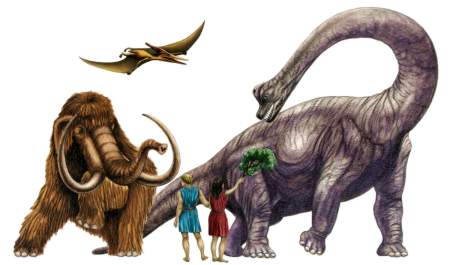
Here we find yet another question that is just so incredibly off base that it is remarkable. Of course, the Bible does use the word “day” to denote that such a period, for the LORD, is like a thousand years. And the meaning of “like a thousand years” is debatable, but surely it is a long period of time [and much longer than 24 hours]. But the question of “billions of years” is just the wrong question. Again, the text is not trying to tell us how old the earth is.
If Wilken desires to dispute this, I would gladly ask him to present me with a verse in the Bible which sets the date of creation.
7. How are we to understand the connection between the six epoch-days of creation and the sanctification of a literal seventh day in Genesis 2:1-3 and Exodus 20:11?
I am often confused when YECs bring up this argument. Yes, Exodus 20:11 parallels Genesis 1-2 by having 7 days and denoting the seventh as a day of rest. Now, what about that somehow entails that they are exactly the same? I mean think about the Biblical categories of typology. Very often things correspond to each other but are not exactly the same. One might think of the use of Hosea 11:1 to Matthew 2:15. The passage in Hosea is clearly discussing the nation of Israel. In Matthew 2:15 it is applied to an individual, the Son of God. Does this automatically mean that in Hosea we must assume that “son” is being used in the same sense as “Son of God”? Obviously not. Then why ignore typological categories in other texts?
Okay, but how would an OEC answer this objection? By pointing out that the words “day” and “Sabbath” are used variably in the Pentateuch, so a direct 1 to 1 correlation is off-base. Sabbath, for example, may refer to the span of an entire year as opposed to just one day (Leviticus 25:4). Day may refer to a thousand years (Psalm 90:4).
8. Are there considerations outside the text of Genesis that require an old Earth?
I’m not sure if Wilken means to express the question of other texts, or whether he wishes to address the issue of extra-Biblical evidence.
Regarding the first possible meaning, again the answer would be “No.” I will continue to maintain that I know of no OEC who holds the Bible requires an old earth. Many would follow my own reasoning and note that the Bible isn’t trying to discuss time periods. That just isn’t a concern of the text.
9. According to the Old-Earth theory, what is the relationship between death and human sin? When did death enter the world?
Frankly, at this point it should be abundantly clear that Wilken has not interacted very much with the works of Old Earth Creationists. As was noted in the answer to question 3, many OECs hold to the special creation of Adam and Eve. Therefore, this question is similarly extremely easy to answer: human death entered the world because of sin.
A Major Issue
I think one of the main problems with Wilken’s comments are that he doesn’t seem to distinguish between Old Earth Creationists, Theistic Evolutionists, and the various varieties of design theorists. This leads him to a few confused questions which he directs towards OECs that make no sense when directed towards them. I admit that the series of questions here leads me to wonder whether Wilken is simply unaware of the distinctions between these groups or just over-simplifying and obfuscating. I suspect the former.*
Conclusion
I have endeavored to provide brief answers for the Nine Questions Wilken asks of Old Earth Creationists. I believe that some of the questions he asks demonstrate confusion about the actual category of Old Earth Creationism. Moreover, the questions that are on target have been answered repeatedly by various OECs. Whether these answers are taken as convincing is another story.
*It should be noted that Wilken’s article was published in 2002, which is prior to the works cited here. Therefore, Wilken could not have known about the works I have cited to show some of the difficulties with his paper. However, I cited these works specifically to show how mistaken these questions are. If one is going to attempt to educate concerned Christians about a topic like this, it is vastly important to be aware of the distinctions to be found within each group, and Wilken fails to show awareness of these distinctions. Moreover, we will explore Wilken’s very recent article next week, in which he continues to make these errors.
Sources
Hugh Ross, More Than a Theory (Grand Rapids, MI: Baker Books, 2009).
Hugh Ross and Fazale Rana, Who Was Adam? (Grand Rapids, MI: Baker, 2005).
Gerald Rau, Mapping the Origins Debate (Downers Grove, IL: InterVarsity Press, 2012).
Todd Wilken, “Nine Questions for the Old Earth ‘Creationist,'” 2002.
SDG.
——
The preceding post is the property of J.W. Wartick (apart from citations, which are the property of their respective owners, and works of art as credited) and should not be reproduced in part or in whole without the expressed consent of the author. All content on this site is the property of J.W. Wartick and is made available for individual and personal usage. If you cite from these documents, whether for personal or professional purposes, please give appropriate citation with both the name of the author (J.W. Wartick) and a link to the original URL. If you’d like to repost a post, you may do so, provided you show less than half of the original post on your own site and link to the original post for the rest. You must also appropriately cite the post as noted above. This blog is protected by Creative Commons licensing. By viewing any part of this site, you are agreeing to this usage policy.
Really Recommended Posts 9/27/13- Star Trek, stem cells, gears, and more!
 A Word of Caution Regarding Induced Pluripotent [Adult] Stem Cells– It is vastly important when debating any issue–but particularly those issues with much emotional attachment–to be careful to make proper distinctions. Here, Matt Rodgers makes a very important clarification regarding the successes and usefulness of induced pluripotent (read: adult) stem cell research. Is it something to be celebrated wildly by pro-life persons? He urges caution. Read the post for why.
Remembering When Star Trek Responsibly Dealt With Disability and Assisted Suicide– Star Trek: The Next Generation is one of my all-time favorite TV shows. In this post, Chelsea Zimmerman analyzes one of the episodes to look at how it thoughtfully deals with some really tough topics: assisted suicide and disability.
First mechanical gear discovered in a living creature– One of the most important arguments for biological design, irreducible complexity, relates to the analysis of systems within lifeforms which, it is alleged, cannot have arisen through undirected processes. The concept of a serious mechanical gear existing within an insect offers a case study for irreducible complexity. Is it the case that this presents a challenge to Neodarwinism? Check out the post.
Cutting the Baby in Half: A review of Neal Shusterman’s “Unwind”– Anthony Weber’s blog, Empires and Mangers, is simply a must-follow if you are interested at all in the relationship between Christianity and culture. Here, he analyzes a work which directly addresses issues related to abortion. What happens when the value regarding human life is shifted beyond recognition? Or… more startlingly, is the dystopia portrayed in this work really a value network which is beyond recognition?
Was there animal death before Adam’s sin?– One of the arguments used by young earth creationists most frequently is the argument that animal death before the Fall decisively shows that any other position is false. William Lane Craig answers this challenge briefly. For my part, I have argued that the young earth view is actually self-referentially false in my post: “Animal Death? A Theological Argument Against Young Earth Creationism.”
“Evermore: Edgar Allan Poe and the Mystery of the Universe” by Harry Lee Poe
 Edgar Allan Poe. His name immediately calls to mind images: a black raven haunting one’s thought, the beating of a heart driving one mad, gruesome, macabre deaths. It also brings to mind thoughts on the man himself: twisted, slightly mad, alcoholic, broken.
Are these images of the man’s work and life accurate? Harry Lee Poe (a cousin of Poe’s) argues that they are not. Instead, this kind of imagery is a result of both the popularization and the character assassination of one of the great American literary giants.
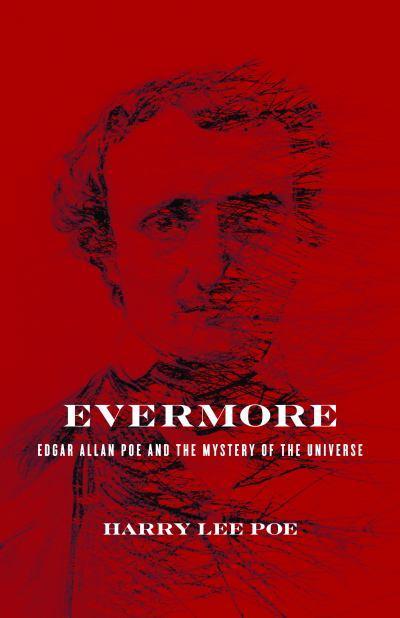
Harry Lee Poe’s work, Evermore: Edgar Allan Poe and the Mystery of the Universe
The Myth of Edgar Allan Poe
It is interesting to note that from the time he died, Edgar Allan Poe’s person was the target of a character assassination which would give rise to the popular portrayal of him as a dark, haunted drunkard. Rufus Griswold, a man who portrayed himself as a minister despite having never been ordained, published a work which has remained in the popular consciousness through the present day. In it, he falsified information about Poe and heavily edited a number of letters from the author in order to portray him as the dark, fearsome man he is often imagined even today. Harry Lee Poe exposes this mythos by noting the work of Arthur Hobson Quinn, who in 1942 published the letters Poe wrote alongside the altered letters Griswold used to make the image he created.
Thankfully, Edgar Allan Poe’s (hereafter EAP) image has been recovering in scholarship, but the damage at a popular level continues to be seemingly ubiquitous. The image of Poe as a brooding man matches what people wish to see when they read his works of horror and thrills. However, Harry Lee Poe (hereafter HLP) notes that there is much more to EAP’s body of work than is often known.
The Broader Poe
EAP’s body of work had its share of horror and mystery, but it also featured humor and satire, science fiction, and beauty. Remarkably, EAP contributed to the formation and even creation of entire genres which are extremely popular today. His science fiction was, at the time, known as “hoaxes” because no actual genre existed in order to encompass them. He also wrote the first detective mystery works to be known in literature. He was innovative and unique in his contributions to literature. He truly stands easily among the literary giants of all time.
The distribution of his works is also worth noting. EAP intentionally wrote in a number of different ways about a number of different things. HLP documents his major tales, numbering each under headings of genre. The results are surprising: EAP wrote more humor and satire than he did horror. Yet he is largely known today only for the latter (24-27). It is worth looking at Poe’s entire body of work in order to understand the man.
Mystery and Reality
One of the central parts of Poe’s work involves the writing of mystery stories. As has been noted, EAP was the first to write in the specific genre of detective mystery stories. EAP’s use of the mystery story shows that he assumed the problem of evil as a very real difficulty. However, the concept of a detective mystery story, in which the reader, through the characters, seeks to solve the mystery and find the one who committed the crime. In short, there is a broader concept of justice involved in a mystery story. Unless there is justice in the universe, the problem of evil cannot present a difficulty for one’s worldview, for evil could just be a given.
EAP, who had written horror stories already, moved the blood and gore from the climax of the story (horror) to the beginning (mystery). The rest of the story would not be about the blood and gore, but about righting a wrong: “injustice cannot be allowed to continue… the sense of justice assumes the basica rationality and order of the universe so that Truth may be discovered. The reader wants to know the truth” (115).
Beauty and Love
The concept of beauty was central to EAP’s work. He used the concept to evoke a particular feeling related to the injustice of crime, but he also saw beauty as a way to point beyond the mundane. “Beauty constituted to Poe evidence that human experience is not bound by time but belongs to eternity” (83).
The different varieties of love are exemplified throughout Poe’s works. Affection, friendship, and passion are developed by HLP to explain EAP’s concepts of how these related to the world at large. Each of these concepts could be forces for the positive or for ill. Affection, friendship, and passion could each become corrupted, and each would lead to devastating results if one allowed this to happen (86ff). Love provided a difficulty for EAP, for he saw that it may tell us about something beyond the world: it may inform us about God. But if it could be perverted, does that suggest an outside source from which love sprang, which we corrupted (107-108).
Eureka
Perhaps the most interesting portion of Evermore is the discussion of EAP’s own views as he expounded them in his work, Eureka. In this work, Poe examined the mystery of the universe. He held that the universe had a beginning and was actually expanding. He argued that light and electricity belonged “to the same continuum.” His view was close to the modern theory of the Big Bang. Yet EAP thought of this around a century before the latter came into vogue. Because the universe began, “Poe concluded that a God exists who created the universe for his pleasure. Love and Beauty provide a glimpse of God… Pain, suffering, evil, and death are the contingencies of physical existence that are left behind” (55). EAP saw the universe as a grand story, which was “the plot of God” (ibid).
The reasoning behind EAP’s amazingly prophetic vision of cosmology was found in his own observations. He noted the difficulties presented by the notion of an infinite universe, including the fact that the night sky had places where there were no stars to be seen (known as “Olber’s Paradox”).
In Eureka, EAP postulated a deity. It seemed intuitively obvious to him that if the universe began to exist, God must exist. Given that his own observational evidence led him to the conclusion that the universe began, he concluded that God exists. Moreover, he posited that this deity would have to design the universe and guide its expansion from a primordial particle (152). However, this deity was essentially pantheistic, which was his solution to the problem of evil. Each individual person would become Spirit individualized. God would become all-in-all, thus bringing holiness to all.
Edgar Allan Poe’s Beliefs?
HLP argues that EAP may indeed have become an orthodox believer late in life. Having already come to the conclusion that God exists and that the universe had a beginning (itself something EAP noted matched remarkably with the Biblical account), Poe would come forward at a Sons of Temperance meeting. HLP notes that such a move cannot be abstracted purely as coming out against alcoholism (something EAP struggled with himself). Instead, the group was explicitly evangelical in nature. Coming forward would be similar to someone today coming forward at a Billy Graham meeting (166). Those interested in Poe’s beliefs must therefore come to one of two conclusions: either he was “the charlatan and scoundrel that Griswold said he was” or “he had a conversion experience.” The Sons of Temperance taught explicitly evangelical Christianity, which would suggest that if EAP was genuine, he had come to accept a more evangelical, orthodox faith before he died.
Conclusion
Few works have intrigued me as much as Evermore has. Edgar Allan Poe has been a favorite of mine for some time, but I admit that I had bought into the stereotypical picture of the man as much as anyone else. Having only really read his horror and some poems, I have not had a complete vision of his actual body of work. Harry Lee Poe does an exemplary job of showing how EAP explicitly viewed his works as a growing body of interconnected themes, seeking to find the mysteries of the universe.
Edgar Allan Poe was a visionary. He was a great American author whose writings paved the way for hundreds of years to come. He was also well ahead of the science of his day, and similarly had already deduced the theological conclusions well before others had attempted to do so. Harry Lee Poe has presented a convincing, thorough look at EAP’s entire body of work. Having done so, he makes the man even more interesting than the myth. Edgar Allan Poe’s explorations of the mysteries of the universe leaves me profoundly interested in the man and his body of work. I highly recommend Evermore: Edgar Allan Poe and the Mystery of the Universe
Source
Harry Lee Poe, Evermore: Edgar Allan Poe and the Mystery of the Universe
SDG.
——
The preceding post is the property of J.W. Wartick (apart from citations, which are the property of their respective owners, and works of art as credited) and should not be reproduced in part or in whole without the expressed consent of the author. All content on this site is the property of J.W. Wartick and is made available for individual and personal usage. If you cite from these documents, whether for personal or professional purposes, please give appropriate citation with both the name of the author (J.W. Wartick) and a link to the original URL. If you’d like to repost a post, you may do so, provided you show less than half of the original post on your own site and link to the original post for the rest. You must also appropriately cite the post as noted above. This blog is protected by Creative Commons licensing. By viewing any part of this site, you are agreeing to this usage policy.
Really Recommended Posts 9/20/13- Apologetics, Textual Variants, Evil, and more!
One Year Ago, Apologetics Saved My Life– A simply wonderful, raw, existential post on the necessity of apologetics for the life of faith.
The Number of Textual Variants: An Evangelical Miscalculation– Humans are fallible, and as such we often get things wrong. Daniel Wallace has written an excellent article to correct a common miscalculation made in apologetics works regarding the number of textual variants. Thankfully, the response from many authors has been to request changes in their works and strive to correct the error. Even better, it is worth noting Wallace’s conclusion: “All this is to say: a variant is simply the difference in wording found in a single manuscript or a group of manuscripts (either way, it’s still only one variant) that disagrees with a base text.”
Why does God allow so much natural evil from phenomena like earthquakes?– Wintery Knight has gathered together a number of resources to present a sound response to the challenge of “natural” evil like earthquakes, tsunamis, and the like.
Natural Selection is Empty– A short but fairly technical write-up on a work by two atheists which argues that natural selection is incapable of being the lynchpin of the argument for the origin of species.
Book Plunge: There was no Jesus, There is no God– A lengthy critique (with great discussion afterwards) of a recent self-published work arguing that there was no Jesus and is no God.

Resource Review: “Flight: The Genius of Birds”
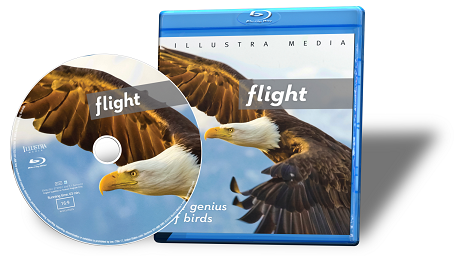 “Flight: The Genius of Birds
The Complexity of Birds
The film traces the incredible development of birds from single cells into babies and the way in which their bodies must work in order to achieve flight. One of the people interviewed in the film notes that flight is not an incremental phenomenon; the entire body must be set up in order to accomplish it. The way feet work, the shape of the wing, the structure of muscles, and the weight of bones are all factors which must come into play in order to make up an animal capable of flight.
Hummingbirds
“Flight” presents a number of different birds as case studies the complexity which the systems that make up a bird show. Hummingbirds’ flight muscles comprise, on average, 43% of the bird’s body mass. This allows the birds to have an enormous amount of precision in order to move in the ways that they can, such as hovering, moving backwards, laterally, etc. The hummingbird generates lift both on the back and the front strokes of their wings. This capability is grounded in the shoulder joints found in the bones which are at the bases of the wings. The hummingbird’s heart must beat at an enormous rate, which means that it also must eat quite a bit in order to sustain the energy level required for the bird’s metabolism and constant movement. The hummingbird’s tongue is particularly interesting, for it has a number of functions on it which allow it to draw up nectar far more efficiently than had been thought.
European Starlings
These starlings, sometimes flying in groups in the hundreds of thousands, move in a stirring, beautiful way, seeming to shift as if they comprised one organism. The way that these birds continue flying without running into each other is by monitoring those starlings which are closest to each other. Rather than monitoring the entire formation, they simply move when those around them move, which lends itself to the movement of a flock as one kind of organism. Their movements must take place within very minuscule spans of time in order to maintain the formation. They follow air flows to minimize the turbulence they encounter, and their formation also serves as a defense mechanism.
Arctic Terns
Arctic terns have the longest migration of any animal on earth. They cross the planet from pole-to-pole to seek out nesting and feeding grounds. From the North Atlantic, they head south, eventually splitting as half go along the African coast while the other half goes along the coast of Brazil. In the south, near Antartica, they feast upon small fish before heading back north. They must arrive back near Greenland and other areas in the north for a nesting period of about 8 weeks. Then, as winter sets in in the north, they head back south.
How did the complexity arise?
The film here presents an argument that a materialist must use Darwinian evolution to explain the unique functions of flight. No design may be invoked in order to explain these things in a materialistic worldview. Dinosaurs were the precursors of birds, and natural selection selected for those dinosaurs which began to develop better means by which to avoid predators and catch prey.
The Feather
One feather may contain around a million individual parts, from the shaft to the individual strands, barbs, which compose the feather, and each of these are made up of barbules. These are constructed in such a way as to interlock with each other. Yet the feather is but one of the many factors which must go into the mechanisms required for flight.
Other Mechanisms
Other than those already noted (muscles, bones, etc.), birds require a navigational system which allows them to migrate and follow food. They must have instincts to cue and direct their movements across continents and even oceans. One could see how these latter functions came into play in the case study of the Arctic Terns.
Natural Selection?
The film makes the argument that natural selection cannot account for the mechanisms required for flight. The primary problem presented by “Flight” is the “lack of foresight.” Natural selection cannot look ahead and select for various factors in order to put them together into an integrated whole. The argument is that the multiple and independent functions needed in order to get a functional bird which would have some chance at survival is impossible to get to by means of a process which is blind.
Evaluation
First, I have to say that there were moments I found myself with my mouth hanging open and the gorgeous imagery in “Flight.” This was particularly the case following the starlings’ movements, the icy regions the terns flew through, and the overall imagery related to the hummingbirds.
The use of particular case studies over the middle section of the film was particularly effective at showing the problems which may come up when trying to describe certain characteristics and behaviors which birds exemplify that cannot be explained so easily by naturalistic mechanisms.
The film also did a good job of noting that there are presuppositions when it comes to the scientific enterprise. Given naturalism, neo-Darwinism is the only game in town. However, as was asked repeatedly throughout the film, if one is capable of acknowledging design and intelligence when it comes to certain things, why should one preclude the possibility of an intelligent agent when it comes to higher orders?
One problem with the film can be found in the format. It is necessarily short, making only the briefest points and only touching upon those things which it discusses. I suspect that those who hold to a naturalistic worldview will be largely unimpressed, while those who hold to the possibility of intelligent agency in biology will see it as backing their own positions. However, those who may be on the fence will see that there are reasons to ask questions.
Overall, “Flight: The Genius of Birds
Disclosure
I was sent a copy of Flight: The Genius of Birds
SDG.
——
The preceding post is the property of J.W. Wartick (apart from citations, which are the property of their respective owners, and works of art as credited) and should not be reproduced in part or in whole without the expressed consent of the author. All content on this site is the property of J.W. Wartick and is made available for individual and personal usage. If you cite from these documents, whether for personal or professional purposes, please give appropriate citation with both the name of the author (J.W. Wartick) and a link to the original URL. If you’d like to repost a post, you may do so, provided you show less than half of the original post on your own site and link to the original post for the rest. You must also appropriately cite the post as noted above. This blog is protected by Creative Commons licensing. By viewing any part of this site, you are agreeing to this usage policy.
Book Review: “For the Beauty of the Earth” by Steven Bouma-Prediger
The practical consequences of… a radical faith are themselves radical. (182, cited below)
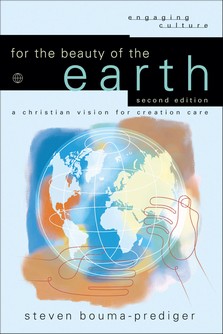
How should Christians think about creation care? More importantly, should Christians even bother with creation care? What is the state of the Earth? What does the Bible say about these issues? These are the primary topics which Steven Bouma-Prediger turns to in his work, For the Beauty of the Earth
Place
We are on Earth, and it is a place full of the glory of God. For the Beauty of the Earth (hereafter FBE) begins with a call to marvel at creation. Bouma-Prediger traces the beauty of the earth through ecological inter-connectedness of animals, plants, and geography in mountains, forests, and lakes. It is truly astounding to think of how the world interacts as a unit; it is still more fascinating to reflect upon how even the–to use a Biblical phrase–“least of these” has an extremely important part to play. I was reading this book while on a camping trip, and it was wonderful to resonate with FBE’s discussion of the wonders of the natural world. But what’s the point?
Bouma-Prediger notes that “We care only for what we love” (21). If we do not love the Earth, we will not care for it. Moreover, he points to the interconnections found throughout the world as a reflection of the importance of all things to creation. He draws ten primary points of importance, including a rejection of the notion that things can be “thrown away”–all things go somewhere; the fact that our actions never affect just one thing; the finitude of resources on the Earth; and the amazing complexity of Creation (19-20).
The Science
Having reflected on our place on Earth, FBE asks: What is the state of planet Earth? Put simply, it is not good. Population is booming while per-capita grain production has not increased, the extinction rates are vastly larger than ever in the past, deforestation is cutting down state-sized holes in the world forests (which leads to a decrease of plants capable of producing oxygen), water consumption is increasing exponentially, topsoil is eroding more quickly than it can be produced, and more.
Bouma-Prediger is careful to present a significant amount of documentation for the claims made in FBE. Consider “Global Warming”- there is an observable upward trend in the average global temperature. There is a real consensus on this topic, although there are always who will disagree with a consensus. It is important to note that “Global Warming” is something of a misnomer because it does not reflect the complexity of the issue. “Climate Change” is a better description, which captures the full range of the impact on the planet.
These issues remain controversial, but those who wish to deny humanity’s impact upon the planet must contend with all the lines of evidence. Bouma-Prediger notes that “The real scientific debate is not over whether global warming is real, but rather is over how much and how fast average global temperature might rise, whether other factors in the climate system will counter or amplify a temperature rise, and what the specific effects will be” (52). [2014 edit: it is interesting to observe that there seems to be some increasing skepticism among scientists over the phenomenon of global warming.]
Finally, he notes that the news is “not all doom and gloom,” for there are many bright spots regarding our care for the Earth as well. Unfortunately, “the case is overwhelming that we humans are responsible for the damage to our home planet” (55). The question it raises is: what now?
Ecological Apologetics
The charge has been made that Christianity is bad for the environment. That is, Christian belief tends to denigrate creation and thus should be rejected, for it cannot provide answers to the ecological crises discussed above. Bouma-Prediger presents a number of ways this objection can be stated and responds accordingly. The complaint ranges from charges that Christian eschatology entails a lack of concern for the current creation to (a very interesting) complaint that because a Christian worldview helped the rise of science, which has itself been the source of many things which harm creation, Christianity is to be blamed for the current crisis.
Bouma-Prediger offers multiple responses. Most importantly, the notion that there is any single root cause for our current ecological crisis is hard to sustain. He offers other responses related to eschatology and more. Christian theology, he argues, in fact gives extremely solid motivation for creation care.
Interestingly, at one point he notes that perhaps substance dualism could be divorced from Christianity (a thesis against which I have argued here). His argument is brief and largely just notes that there are other strands within Christianity which do not rely upon this substance dualism.
Finally, in an interesting spin, the charge is made that materialism actually denigrates the environment. In particular, materialism in the form of economic materialism: when wealth drives worth, the environment will suffer, period. Now, the book does not make the charge that this is the only or even the root cause of our crisis; instead, the point is that when one does value economic gain over other ends, the environment will suffer.
The Question for Christians
Clearly, the most important question is whether or not there is any reason for Christians to care about creation. Interestingly, Bouma-Prediger places this section towards the middle-end of the book as opposed to the beginning. In it, he offers an analysis of several Biblical texts to show that Christians should care for and about creation. Central to this is his conclusion that “Individual creatures and the earth as a whole have an integrity as created by God and as such have more than merely instrumental value” (136). When we view creation as a gift from God–a good gift–we see that no individual part of that creation should be denigrated or seen as merely an instrument.
He goes on to offer a number of ecological vices of excess and deficiency regarding a number of areas related to theology and ecology. These include addiction, belief in autonomy, and more.
A Vision for Creation Care
Finally, Bouma-Prediger presents a brief vision for creation care. He places this squarely within the context of the vice list and Biblical theology. Christians are to act in humility, wisdom, and virtue. As such, they are to care for that which God has given them and be aware that one should not destroy that which sustains oneself. Christians are called to emulate God’s benevolence and love for all creation as illustrated throughout the Biblical text. As such, to be dismissive of individual species or parts of creation does not line up with a Christian worldview.
Conclusion
There are many more themes found throughout FBE and in particular in the area of Christians and the environment. Overall, the book is an astounding, life-shifting read. It raises one’s awareness of the integration of their beliefs with the world around us. It is amazing to immerse oneself in a sense of place–be that a forest, mountain, lake, or elsewhere–and realize that this is truly a great good which God has created for us to enjoy. As embodied creations of God, we are to honor those other created aspects of His plan. We are to care for His creation. The book is commendable in its scope, erudition, and groundedness in those concerns which Christians would perhaps be most interested in. It comes highly recommended.
For the Beauty of the Earth.
Links
Like this page on Facebook: J.W. Wartick – “Always Have a Reason.”
Caring for Creation: A discussion among evangelicals– I write about creation care from a number of perspectives offered at a recent panel of prominent evangelical thinkers in this area.
SDG.
——
The preceding post is the property of J.W. Wartick (apart from citations, which are the property of their respective owners, and works of art as credited) and should not be reproduced in part or in whole without the expressed consent of the author. All content on this site is the property of J.W. Wartick and is made available for individual and personal usage. If you cite from these documents, whether for personal or professional purposes, please give appropriate citation with both the name of the author (J.W. Wartick) and a link to the original URL. If you’d like to repost a post, you may do so, provided you show less than half of the original post on your own site and link to the original post for the rest. You must also appropriately cite the post as noted above. This blog is protected by Creative Commons licensing. By viewing any part of this site, you are agreeing to this usage policy.
Really Recommended Posts 9/6/13- Dystopia, Poetry, and Creationism (+more!)
Another look around the internet this week, as we investigate young earth creationism from a few angles, intelligent design, some dead guys, and dystopian fiction. Let me know what you think!
Christian Virtues in Dystopian Fiction– Look, if you read my blog much you’ll know I am an absolute sucker for science fiction. One recurring theme in sci-fi is that of a dystopia: attempts to make a perfect world gone wrong. Most recently, The Hunger Games is a great example of the genre. In this post, Garret Johnson explores Christian Virtues found in this genre. It is a truly fascinating post, and I highly recommend you follow the blog to see more of the like.
Dead Guys, a poem– A very clever poem with a comic about the need to look at the works of the past in order to understand the present more fully. We stand on the shoulders of giants. I have written about the need to read more of the classic defenses of Christianity and theology, along with several ways to direct reading in my post, “On the Shoulders of Giants.”
A Horse is a Horse According to Answers in Genesis– An analysis of a recent attempt to present evidence for the young earth paradigm, this post looks at the genetic lineage of various species of horse. It is pretty awesome.
Stephen C. Meyer debates Michael Ruse about intelligent design and evolution on NPR– A “snarky” summary of a recent debate between Intelligent Design theorist Stephen Meyer and atheist Michael Ruse. Check out the review and listen to the debate.
Compromising Christians Don’t Like “Evolution vs. God” Film– I am “recommending” this post not because I endorse its contents, but because I think it shows how not to interact in “in-house” debates with other Christians. Ken Ham constantly uses the scare word “compromise” as a descriptor for other Christians. Compromise on what? Ham’s preferred interpretation of the text. It is a word he uses as a weapon time and again. As for the film itself, for some other perspectives (both positive and negative), check out my previous RRP.
**As always my linking to a post does not imply I endorse all or even part of that site**
“Are Miraculous Gifts for Today?” A look at four views in Christian Theology
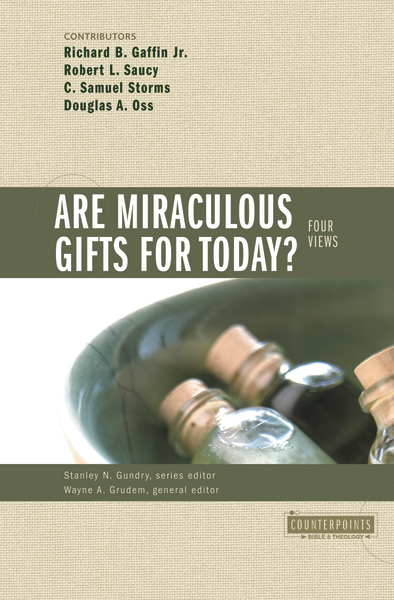 What are we to make of the notion of miraculous gifts today? Have they continued into the modern era, or did they cease after the apostolic age?
I want to preface the following discussion by expressing the fact that I am by no means an expert in this area. I only recently finished reading Are Miraculous Gifts for Today?, which presents four views on the issue of miraculous gifts in the church now. The
Here, I will outline what I understand to be the four views on the topic (as outlined in the book–I am more than willing to concede there are likely more views), along with a few arguments and against each. After that, I will offer a brief analysis. I’m hoping that you, the reader, will help spur the discussion.
Miraculous Gifts?
Before progressing, it is important to know what is meant by miraculous gifts. Essentially, these are the gifts outlined in various passages of the Bible. 1 Corinthians 12 is illustrative. It lists as spiritual gifts the following: speaking in tongues, prophecy, the gift of wisdom, etc.
One must note the issue of the “gift of healing.” What is the “gift of healing” and does it exist today? James 5:14-16 is integral to understanding what is meant by this gift.
Perhaps the most central issue regarding miraculous gifts is this: do they continue into today? A secondary, but still very important question is: if these gifts do continue, in what way?
Cessationism
Cessationism is the view that miraculous gifts essentially ended after the formation of the Apostolic Church. Richard B. Gaffin, Jr. defends this view. He clarifies his position by noting that he is not arguing that all gifts of the Spirit have ceased. Rather, the question is “not whether but which spiritual gifts continue today” (41). He notes that God may choose to miraculously heal persons, but expresses doubt over people being granted a specific gift of healing. His greatest difficulty lies with the “word” gifts such as prophecy, speaking in and interpreting tongues, and the like.
The problem with these sorts of gifts, argues Gaffin, lies in the question of the sufficiency and closedness of the canon. Suppose that prophecy does continue today. What level of authority should be ascribed to it? If it is truly the utterances of the prophet guided by God, he reasons, should we not grant such utterances the same authority as the Scriptures (47)? Gaffin notes that those who hold to the continuation of these gifts generally assert that prophecy may be fallible and thus should not be given the same authority as the canon. Gaffin responds by countering that the Bible does not seem to support the notion of fallible prophecy as a possibility (48-52).
Moreover, the gifts of the Spirit were intended for the Apostolic Church as signs of God’s special activity during that period (56-58).
Open but Cautious
The “Open but Cautious” view is championed by Robert Saucy. He expresses the view that the Bible does not make clear whether specific miraculous gifts continue today or not. Thus, he remains open to continuation of these gifts, but cautious in their application and use.
Central to Saucy’s caution is the argument that miraculous gifts are centered around specific times and purposes within salvation history. Thus, according to Saucy, miraculous gifts act as signs of God’s activity within very specific contexts. The Apostolic Era is to be considered unique, and the expression of spiritual gifts during this time should not be read verbatim onto the present era (100-102). Moreover, the Biblical evidence for periods of miraculous activity is “uneven” and “particularly concentrated at certain times,” specifically “that of Moses and the Exodus, the ministries of Elijah and Elisha, and Christ and the apostles” (103). Miracles are thus to be understood explicitly as a “sign” with a specific purpose in mind to “give credibility to something” (105). Miracles are used to “authenticate” specific individuals in times of need (108).
Saucy appeals to the history of the church to make his point. He argues that throughout the history of the church, there is little miraculous activity noted. Thus, although we should be open to the possibility that such gifts may manifest themselves, we should remain cautious of claims to that effect. Saucy concludes with a discussion of individual gifts and what the Bible teaches about them. Representative is his discussion of prophecy, which notes several clarifications regarding how it should be used and understood (including that it is to be done in an “orderly fashion” and that the content will be “edifying to the community”) (128).
Third Wave
C. Samuel Storms argues that miraculous gifts do continue today, but that the doctrine of “subsequence” should be rejected. Subsequence is the notion that after conversion, there is a “baptism in the Holy Spirit” which is initially experienced by speaking in tongues and manifests itself in various spiritual gifts (176).
Storms argues that cessationists misrepresent those who argue for continuation, for cessationists often appeal to the “infrequency” of the miraculous in order to argue against the notion of miraculous gifts. They argue that this demonstrates that such events are purely the actions of a sovereign God acting whenever God chooses. In contrast, Storms notes that God’s spontaneous action may indeed empower individuals and indeed that the intermittent nature of the practice of such gifts does not undermine their classification as spiritual gifts.
Storms further asserts that although miracles have indeed been used as signs, this fact does not allow one to reduce the miraculous gifts to being only signs and nothing else (188-189). Storms analyzes a number of major arguments for cessationism and finds them all wanting. In particular, Storms presses the notion that the Bible nowhere declares that the gifts found in the Apostolic period would have some cutoff time period.
Pentecostal
Douglas Oss argues that defining Pentecostalism as a “second blessing” theology must clarify what they mean by “second blessing.” He notes that Pentecostals do believe that believers receive the Holy Spirit post-conversion as an empowerment for charismatic gifts. However, this filling is not part of salvation nor is it required for salvation. Instead it is part of sanctification: it is empowerment by the Spirit. Moreover, Oss notes that there may be several empowerments or “refillings” of the Holy Spirit, for there is diversity in the “manifestations” of the Spirit (242-243).
Oss traces the Biblical data and concludes that the Old Testament shows that there is both the “inner-transforming” work of the Holy Spirit and the “empowering” work located therein. In the New Testament, Oss notes that the Holy Spirit works to empower the believers with various manifestations of miraculous gifts.
The gifting of the Holy Spirit is initially observable through speaking in tongues, but again this is not required for salvation. It is merely the pattern of God’s gifting. First tongues, later other gifts, though this is not always the case or even a requirement (260-263). Oss appeals to Joel 2:28-32 to note that the last days will not conclude until Christ’s second coming and so we should expect giftings of the Spirit throughout the present era (266ff).
Analysis
It seems to me that there is little warrant for arguing negatively that the miraculous gifts do not continue today. Gaffin provided no textual basis that I could discern for holding that when the NT authors speak of these gifts within the church, they intended to limit the gifting in their own era. Moreover, I think that Joel 2:28ff does speak of the current age, though some of it seems to be yet future. The future fulfillment left for some of the passage does not seem to imply that it should all be taken is “not yet,” however.
That said, Gaffin’s concerns regarding the authority and inspiration of prophecy should be rightly noted. The issue of the nature and authority of prophecy in the modern period is one which the other offers attempted to address, but it seemed to me they came up short in virtually every case. Moreover, some of the Pentecostal position seemed to be a bit off to me. Why even argue that speaking in tongues comes first, but then qualify that by saying that it doesn’t need to or that it may not always be the case? Would that not suggest that the pattern isn’t much of a pattern after all?
Storms in particular did an excellent job of showing the error of arguing that miracles in the Bible centered only around certain periods of time in which “signs” were needed. Although it seems clear that the Bible is a selection of time periods and parts of history, God’s miraculous activity is observable throughout much of the Bible. To argue otherwise, and to then build a framework for interpreting miraculous gifts for today (as both Saucy and Gaffin did to an extent) seems to be an overreach given the data.
Thus, I would say my position seems to be closest to a synthesis of Storms and Saucy. I think Saucy does not go far enough in his allowing for gifts of the spirit, but I think that Storms struggles with the notion of the authority of such continuing prophecy.
So what do you think of this issue? What is your position? Share your thoughts in the comments below.
Source
Stanley Gundry and Wayne Grudem, editors, Are Miraculous Gifts for Today?
SDG.
——
The preceding post is the property of J.W. Wartick (apart from citations, which are the property of their respective owners, and works of art as credited) and should not be reproduced in part or in whole without the expressed consent of the author. All content on this site is the property of J.W. Wartick and is made available for individual and personal usage. If you cite from these documents, whether for personal or professional purposes, please give appropriate citation with both the name of the author (J.W. Wartick) and a link to the original URL. If you’d like to repost a post, you may do so, provided you show less than half of the original post on your own site and link to the original post for the rest. You must also appropriately cite the post as noted above. This blog is protected by Creative Commons licensing. By viewing any part of this site, you are agreeing to this usage policy.
Really Recommended Posts 8/30/13- Dinosaurs, Mumford and Sons, Design, and more!
 Another search of the internet has turned up a number of excellent posts. I have found another diverse array of topics for you to browse at your leisure. This week, we’ll look at dinosaurs, Ray Comfort’s Evolution vs. God, cave diving, preterism, design, the economy, and Mumford and Sons!
Dinosaurs, Dragons and Ken Ham: The Literal Reality of Mythological Creatures– Often, the claim is made that legends about dragons sprang from humans living alongside dinosaurs. Young earth creationists cite this as evidence for their position. Here, the Natural Historian sheds some light on these claims in a well-researched post with plenty of pictures for those of us with short attention spans. I highly recommend following this blog as it remains an outlet for great analysis of young earth claims.
Evolution vs God– Another issue which has been making the rounds on apologetics/Christian sites has been the recent video by Ray Comfort, “Evolution vs God.” The video is available to watch for free on youtube. Feel free to check it out yourself (you can find a link to it here). My good friend over at No Apologies Allowed seems to endorse it to a limited extent (see his comment on this post), and his comments have touched off a great discussion: [DVD] Evolution vs. God. On the other hand, the Christian think-tank Reasons to Believe has offered their own brief video review (the link will stat playing instantly) of the movie which has a very different perspective. What are your thoughts?
Some Questions Concerning my Preterism– I am not a preterist, but I appreciate well thought out positions and the insights they provide into their positions. Here, Nick Peters shares a number of question-and-answers related to his preterist views. Preterism is the view that the majority of the prophecies found in Revelation and the like have been fulfilled, usually in the destruction of the Temple in AD 70.
The theory of intelligent design (Video)- As one friend sharing this video put it: “A video on MSN featuring Michael Behe narrated by Morgan Freeman? What world did I wake up in?” My thoughts exactly. This video is a very basic exposition of the theory of intelligent design. Check it out.
Cave Diving and Apologetics– I like caves, though I have never done cave diving and almost certainly never will. I found this post to be fairly helpful in regards to drawing out some of the dangers of apologetics and going everywhere at once. I wasn’t terribly appreciative of the explicit appeal to defense of Catholic dogma, but apart from that the post is pretty solid.
Mumford & Sons: Five Songs With All Sorts of Christian Undertones– A really excellent look into several Mumford & Sons songs. I admit I’m not a big fan of the style of music, but I found this post fascinating nonetheless. Check it out.
What happened to the economy after Democrats won the House and Senate in 2007?– People who know me personally realize that I am a complete mishmash of political views. I frankly despise both major political parties because I think they are both ridiculously partisan and do little correctly. That said, I found this post to be a pretty interesting look at the economics of policy. Let me know what you think.
Ben Hur- The Great Christian Epic
 There was a time when Hollywood battled for which studio could churn out the best epic, the greatest film, the most splendor upon the big screen. “Ben Hur” was a film which towered above all the rest. It won 11 academy awards, a feat matched only by two other movies (“Titanic” and “The Return of the King”), but it was also the only one of those three to win for acting (Best Actor: Charlton Heston as Ben Hur and Hugh Griffith won Best Support Actor).
Although best remembered for its famous chariot race scene, the film’s themes continue to echo with our own times. At the heart of “Ben Hur” is a struggle between ways of viewing the world set alongside an epic story which relates that struggle to the cosmic struggle for redemption and salvation of the people of God. There will be SPOILERS for the film in what follows.
Background
It is important to note that “Ben Hur” is based upon the novel of the same name by Lew Wallace. Wallace, a general during the Civil War, was disturbed by a conversation he had with a prominent skeptic of the time, Robert Ingersoll. Ingersoll’s challenge against the historicity of Christianity gave Wallace a great desire to search the historical acconts around the time of Christ and compose Ben-Hur: A Tale of the Christ
A Battle of Worldviews
The question of worldview is explored throughout the film. What is it that makes hte people of the Roman colony of Judea so obstinate? They seek after Messiahs, after a different savior each day of the week. One conversation poignantly illustrates the heart of this conflict:
Sextus, a centurion in charge of the Roman garrison asks Messala, who has come to relieve him, “How do you fight an idea?”
Messala responds “You ask how to fight an idea? Well, I’ll tell you how: with another idea.”
Messala realizes that at the heart of the people’s will is their worldview. Their hope is in the destruction of Rome. They long for a Messiah who will lead them to a successful revolt to throw off the Romans. Yet Messala desires to fight this hope with his own worldview: that of the power of humankind. Rome is power, and for him, the Emperor is that power deified.
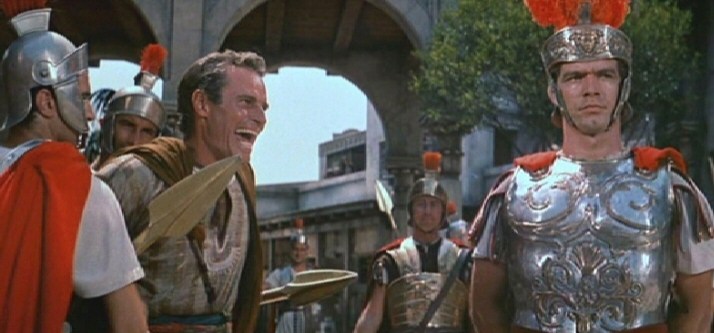 Revenge
Vengeance. It’s a theme which seems initially to drive the movie. Messala betrays his friend, Judah Ben Hur, towards the beginning of the film. The Hur family is thrown into prison to languish there, and Judah is sent to the galleys to row as a slave. Judah swears to Messala that he will take revenge upon him upon his return. In a deeply ironic voice, Messala responds, “Return?” The life of a galley slave is not expected to be long.
But Judah does return. He rescues the Roman Quintus Arius who is in charge of his ship and is eventually adopted into the Arius family. He returns to Judea as the son of a consul, with all the power and privilege his rank implies. After learning of a way to take revenge upon Messala without the possible legal ramifications–by besting him in the circus maximus in a chariot race and leaving Messala destitute from debt–Judah succeeds in the arena.
The climax of the quest for vengeance can be found in the scene in which Judah Ben Hur confronts Messala for the first time since seeming to come back from the dead. He slams his seal–the seal of the Consul QUintus Arius–into a document and stares Messala down. Now, Judah is in the superior position. He is the one whose victory is inevitable. From this point on, his vengeance seems assured.
However, after Ben Hur’s epic defeat of Messala in the chariot race, which leaves Messala not only broke but also leaves his body broken, it turns out that revenge is not as sweet as it may seem. Messala informs Judah “the race goes on”–his family is still alive, but they are lepers, left to flounder on the edges of society as unclean, cursed wretches.
It is not revenge which pays. It may give some kind of satisfaction for the briefest moment, but Judah learns its satisfaction is only fleeting. His glory must be found elsewhere, and it is not a glory he can bring himself.
Redemption
Judah is devastated by his discovery that his mother and sister are lepers. He realizes there is nothing he can do to save them, and it seems Messala’s own plan has achieved victory after all. Judah, moved by compassion, takes up his mother and sister in his arms despite their protests, almost guaranteeing that he, too, will contract the terrible disease.
He and Esther, a servant of his former household, take his family through the streets of Jerusalem. The latest Messiah, Jesus, is set to be crucified, and a crowd gathers there to watch. As Jesus dies, his blood runs through the rainwater as it spreads out symbolically to the world. When it touches the Hur family, they are cleansed of their diseases, washed utterly by the blood of Christ. In a stunning twist, it is not the hero who brings about victory, but rather the Messiah who has only been seen briefly throughout the film at pivotal moments. It is Jesus to whom all glory is given, not to Judah Ben Hur.
We have seen that Messala hoped in a human who took upon deity for himself. But the film (and indeed Wallace’s earlier book) show that this hope is misplaced. The God-man that humans should look to is not the conqueror; he is not god because he has human power; instead, the God-man Jesus Christ took on flesh in order to save, to humble himself and become obedient to death on the cross. It is a subversive tale. It is a story of redemption and salvation. It is an idea against which the powers of humanity and the devil muster all their strength to attempt to overthrow, but the idea lives on. It is the idea which cannot be overcome, cannot be outshined.
Conclusion
“Ben Hur” is my favorite movie of all time. The epic clearly portrays the truth that is above all truths: we are powerless, but God is powerful. Judah Ben Hur is unable to save that which he loves and must ultimately rely upon another, who saves them through the washing of his blood. Ben Hur’s story is our own in many ways. We continually struggle against the powers of the world and we often have motivations which are, at best, questionable. But ultimately, we find that when we rely upon ourselves, we are unsuccessful. Only when we rely upon God do we find success.
Sources
Tim LaHaye, “Introduction” in Lew Wallace, Ben-Hur: A Tale of the Christ
Ben Hur.
SDG.
——
The preceding post is the property of J.W. Wartick (apart from citations, which are the property of their respective owners, and works of art as credited) and should not be reproduced in part or in whole without the expressed consent of the author. All content on this site is the property of J.W. Wartick and is made available for individual and personal usage. If you cite from these documents, whether for personal or professional purposes, please give appropriate citation with both the name of the author (J.W. Wartick) and a link to the original URL. If you’d like to repost a post, you may do so, provided you show less than half of the original post on your own site and link to the original post for the rest. You must also appropriately cite the post as noted above. This blog is protected by Creative Commons licensing. By viewing any part of this site, you are agreeing to this usage policy.

 J.W. Wartick - Reconstructing Faith