christian
Book Review: “Always Ready” by Greg Bahnsen – Presuppositional Apologetics
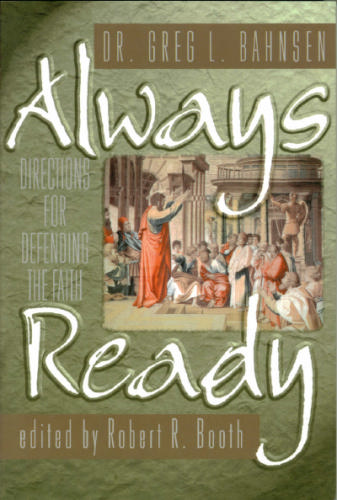 Greg Bahnsen is well-known within the community of presuppositional apologetics (with good reason–see his debate with prominent atheist Gordon Stein). But what is presuppositional apologetics? How is it distinctive from other approaches to defending the faith? Bahnsen seeks to answer those questions (and more) in his work, Always Ready
In section one, Bahnsen introduces one of the most important aspects of the presuppositional approach: the focus upon the impossibility of epistemic neutral ground. Often, in debates over the verifiability of the faith, the believer is encouraged to set aside their neutrality. Bahnsen argues forcefully that to do so is not just to give up a great weapon in the defense of the faith; it actually damages one’s defense irreparably (3ff). Because of the impossibility of neutral ground, Bahnsen urges apologists to begin not with any supposed neutral ground, but rather with “fear of the Lord” (5). What does he mean by this? Simply put, “the Christian presupposes the truthful word o f God as his standard of truth and direction” (19, emphasis his). The Bible, in other words, is the epistemological starting point for the presuppositional apologist. Rather than starting with a defense of the Bible, the apologist is to start with the Bible as given.
Bahnsen realizes that this point is the one which will likely be most contentious for those who oppose the presuppositionalist approach and thus he turns to a defense of the use of the Bible as an epistemological foundation. He argues that “God’s word has… absolute epistemic authority and it is the necessary presupposition of all knowledge which man possesses” (29). One argument against this presupposition is that it is dogmatic. The argument is made that one cannot simply presuppose their own position to take on all comers. Against this, Bahnsen argues that the presuppositional approach is in fact dogmatic because any approach is dogmatic. On a Christian perspective, knowledge without God’s Word is impossible. Therefore, a Christian cannot set that aside as though one could become “neutral”; in doing so, one has in fact rejected the Christian worldview (31, 7-9, 34, 36). Others may object that this seems to make any knowledge of non-Christians impossible. Again, Bahnsen corrects such a view, arguing that unbelievers “cannot but have them [knowledge of God as a presupposition for knowledge] as a creature made as God’s image and living in God’s created world” (38). In other words, he holds that the unbeliever unwittingly holds to Christian presuppositions in order to have any kind of knowledge. In principle, the unbeliever can have no knowledge; in practice, by borrowing from the Christian worldview, unbelievers have knowledge (ibid). Bahnsen does present several more arguments in favor of the presuppostional perspective, including an examination of the Christian perspective of the knowledge of unbelievers and the rebellion of those without God.
Part of the distinctiveness of the presuppositional approach is that rather than approaching the defense of the faith as a cumulative case, it presents Christianity as a worldview to line up against other worldviews in conflict. The importance of this is emphasized by Bahnsen.”The Christian,” he argues, “can never be satisfied to defend [the faith]… by merely stringing together isolated evidences…. [which] will be evaluated… by the unbeliver’s tacit assumptions; his general world-and-life view will provide the context in which the evidential claim is understood and weighted. What one presupposes as to possibility will even determine how he rates ‘probability'” (67). Thus, if one offers an argument for the existence of God, that argument will be evaluated by the unbeliever within their own assumptions. According to Bahnsen, only by destroying those assumptions–only by pitting whole worldviews side-by-side and showing how they rate on coherence with reality–can one adequately do apologetics. Bahnsen then turns to an evaluation of the conditions necessary for successful apologetics (81-106). Largely, this includes God’s soverein control over all things and fleeing from sin.
Perhaps the most illuminating portion of Always Ready is its presentation of various apologetic issues and the way that presuppositional apologetics provides answers to these arguments. For example, regarding the problem of evil, the presuppositionalist approach rests upon its usefulness as a paradigm of “worldviews in conflict.” Rather than trying to provide varied theodicies, the presuppositionalist argues, as does Bahnsen, “If the Christian presupposes that God is perfectly and completely good… then he is committed to evaluating everything within his experience in light of that presupposition” (171, emphasis his). Thus, on a presuppositional approach, the premise that “God has a morally sufficient reason for the evil which exists” is a given (172). For every evil, on the Christian worldview, God has a morally sufficient reason. Only by assuming that Christianity is false can one argue that the problem of evil is truly a problem. Thus, Bahnsen reevaluates the problem of evil as a psychological problem rather than a logical problem. It is a problem of trusting in God that God has good reasons for allowing evil (173).
Challenges to miracles are also assessed in light of presuppositionalism. At the core of the presuppositianalist response is again the centralization of the conflict of worldviews. Only by assuming that miracles do not occur can one exclude them a priori from investigation. Thus, the unbeliever has begged the question and their argument is undermined (225). Bahnsen answers a number of other arguments from a presuppositional perspective, including challenges from the possibility of metaphysics, religious language, faith, and the like.
The work ends with an extended investigation of Paul’s apologetic approach in Acts 17. Bahnsen argues that Paul’s approach was thoroughly presuppositional and that it acts as a model for the presuppositional approach to apologetics.
The strengths of Always Ready are immediately apparent. Bahnsen provides a thorough look at presuppositional apologetics which presents not just the outline of the approach but also several case studies in order to help people put it into practice. The distinctiveness of presuppositional apologetics shines throughout the book
There are a few flaws in the work, however. First, as is often the case, the presuppositionalism presented in this work is thoroughly Calvinistic. Simply being Calvinistic is not a flaw, but the way that Calvinism is presented by many defenders of presuppositionalism (Bahnsen, Van Til, Frame, and the like) is essentially as the one true faith. It is Calvinism or it isn’t Christianity. Frankly, that’s a huge problem. Setting that aside, the weakest point of the work is also its most important one: namely, the presupposition of the Bible as necessary for apologetics. There are a great many who are extremely skeptical of this approach. First, there is the charge of circularity, which presuppositionalists actually accept. Their response is that all worldviews are ultimately circular.The debate remains largely unsettled, but as for this reviewer, it is hard to accept that the entire Bible is a necessary presupposition for the defense of the faith. Finally, the dim view of individual evidences as useful for defense of the faith remains a problem within the presuppositional approach.
That said, even if one rejects the possibility of presupposing the Christian worldview wholesale, one can still utilize the presuppositional approach in their apologetic. By focusing squarely upon defense of the faith as a clash of worldviews, Bahnsen has highlighted the extreme usefulness of pointing out how presuppositions can color one’s outlook on the interpretation of evidences and the investigation of other positions. Although readers may not be ready to embrace the whole of presuppositionalism, after reading Always Ready, they may be ready to integrate a number of presuppositional approaches into their apologetic.
Source
Greg Bahnsen, Always Ready
SDG.
——
The preceding post is the property of J.W. Wartick (apart from citations, which are the property of their respective owners, and works of art as credited) and should not be reproduced in part or in whole without the expressed consent of the author. All content on this site is the property of J.W. Wartick and is made available for individual and personal usage. If you cite from these documents, whether for personal or professional purposes, please give appropriate citation with both the name of the author (J.W. Wartick) and a link to the original URL. If you’d like to repost a post, you may do so, provided you show less than half of the original post on your own site and link to the original post for the rest. You must also appropriately cite the post as noted above. This blog is protected by Creative Commons licensing. By viewing any part of this site, you are agreeing to this usage policy.
Really Recommended Posts 11/02/12

Snowy Owl Post edition of Really Recommended Posts. Why snowy owl? Because it is snowing outside here. This week, I feature a whole range of posts. Yes, they are diverse. Yes, they are awesome. Read them all. Let me know what you think. Share with friends.
Stop Teaching Young Christians About Their Faith– say what!? Yes, you read that right. Stop teaching about faith. Challenge them to more than rote memorization. Check out this fantastic post.
Young Earth Creationism and the intensity of volcanism– Is there a curve of decreasing volcanic activity that supports old earth creationism? The Geochristian investigates.
You Say the Bible Advocates Slavery?– Erik Manning shares some insight into a common ad hominem attack against Christians and the Bible. Does the Bible actually advocate slavery? What kind of morality is that? I highly recommend this post.
A short, humorous video in which William Lane Craig discusses the multiverse.
Mandy Patinkin: 25 Years After ‘The Princess Bride,’ He’s Not Tired Of That Line– No, this is not really related to apologetics. But it is about “The Princess Bride
Four Myths About the Crusades– The Crusades are a hot-button topic. They are used as an easy way to bash Christians. What actually happened? What can history teach us about the Crusades? Check out this post to find some thought-provoking answers.
Biden on Abortion– The VP Debate ended with a question about abortion. I largely think both VP Candidates failed to answer consistently, though Paul Ryan’s answer was slightly better. Biden’s answer was patently absurd. Check out Nick Peters’ response to Biden’s incoherence on the topic of abortion.
The Continuing Influence of the Reformation: Our lives, our thoughts, our theology- Reformation Review
 The Reformation has had a lasting impact upon our lives. You may not realize it, but from the economy to politics, from theology to family life, the debates of the Reformation resonate through to today. Here, we will investigate in very broad strokes the influence the Reformation continues to have on our daily lives.
Family
The Reformation period led to a development of thought about the family. Praise of the family over and against celibacy was ubiquitous throughout the Reformation thinkers (Diamard MacCulloch, The Reformation
The Reformation’s thought on marriage was largely patriarchal. Men were the heads of the family both spiritually and in society. This was less a development of the Reformation as it was a continuation of the view of marriage in contemporary cultural thought. Interestingly, Protestantism led to a relaxation of two aspects of marriage. First, the clergy was allowed to marry; second, divorce was legally established in many Reformation contexts (MacCulloch, 660). By allowing for divorce, the Reformers undercut the notion of marriage as a sacrament (as above), but they also helped draw a distinction between the moral law of the Bible and the law of the land. Whether this was for better or worse, one may debate.
Economy
Capitalism had already begun before the European Reformations, having its renewal start in Italian city states in the 12th Century (for a detailed and extremely interesting discussion of this, see Rodney Stark, The Victory of Reason

The Reformation also paved the way for a “Protestant Work Ethic.” Martin Luther’s notion of the “priesthood of all believers” demolished the hard distinction between the “temporal” and “spiritual” realm which dominated the thought of the church at the time. By breaking down this barrier, hard labor was elevated. It was no longer seen as an inferior life to that of monastic withdrawal; rather, any type of work could be pleasing to God (McGrath, 256-258). In contemporary churches, one can often hear about how the engineer, the retail worker, the auto worker, and the like should all utilize their skills to the glory of God. Such thinking came directly from the Reformation.
 Theology
Clearly, the most pervasive influence of the Reformation has been upon theology. I have already written on a number of these aspects. The Reformation thought necessarily reflected upon the church. How do we define the church, and who belongs in the church? These questions drove the Reformers to a number of views on the role of the church universal. I discuss these at length in my post on the Church Universal. Central to the Reformation was the notion of sola scriptura. However, it quickly became apparent that without any specific way to interpret Scripture, radical individualism would follow. I’ve written on the Reformers views on these topics and the continuing debate today in my post on Sola Scriptura. To try to list all the areas of theology that the Reformation touched upon would be impossible for a post of this size, so suffice to say I will be discussing these more in the future.
Other Aspects
Diarmard MacCulloch, in his magisterial study of the Reformation, aptly named The Reformation
Counter Reformation
It would be remiss of me to write this without noting that one of the huge continuing influences of the Reformation was the Roman Catholic counter-reformation. The Reformation did not go by unnoticed by Roman Catholics, by any stretch of the imagination. Instead, the Catholic Church reacted against the Reformation and, in part, did so by incorporating many aspects of the Reformation.
Interestingly, some of the debates that played out within Protestantism were mirrored within the Roman Catholic Church. For example, a debate similar to the Calvinist-Arminian arguments became pervasive in Banezian and Molinist schools of thought. It is intriguing to note, however, that the Catholics largely allowed these debates to remain internal without dividing. The Catholic Church, it seems favored doctrinal humility over unity on a number of levels (for a discussion of doctrinal humility/unity, check out my post on the Church).
That is not to say, however, that the Roman Catholics were eager to affirm every aspect of the Reformer’s theology. Part of the counter-reformation included the Inquisition and the formation of the Society of Jesus (Jesuits). Ignatius of Loyola founded the Society of Jesus to counter what he saw not as doctrinal aberration but lives that were not conformed to the moral standards of the church (Carter Lindberg, The European Reformations, 333ff).
Finally, it could easily be argued that the modern innovation of Vatican II has its roots within the Reformation and Counter-Reformation. The changes brought about by Vatican II reflect a development of thought that has occurred since the Reformation on many of the issues brought up by the Reformers.
Conclusion
The Reformation’s influence on today’s society is pervasive. Our thinking on family, economy, working, theology, sex and sexuality, and more are all reflections of the influence of Reformation thought. In many ways, these aspects of our lives are just further reforms on the thoughts of the Reformers. The aspects in which we have changed dramatically since the Reformation, it could be argued, are areas in which the Reformation laid the groundwork for exploration. Our thoughts are Reformation thoughts. Our debates are Reformation debates. Our God is the Reformation’s God.
Regardless of your own feelings on the Reformation, these comments are undeniable. The way you think is largely formed by the debates that happened during the Reformation. Your freedom of expression was opened by Reformation developments on the value of every human being. Investigating the Reformation is a worthy endeavor because it opens up new avenues for exploration of our own era.
Links
Please check out my other posts on the Reformation:
I discuss the origins of the European Reformations and how many of its debates carry on into our own day.
The notion of “sola scriptura” is of central importance to understanding the Reformation, but it is also hotly debated to day and can be traced to many theological controversies of our time. Who interprets Scripture?
The Church Universal: Reformation Review– What makes a church part of the Church Universal? What makes a church part of the true church? I write on these topics (and more!) and their origins in the Reformation.
Sources
Alister E. McGrath, Reformation Thought: An Introduction
Carter Lindberg, The European Reformations
Diarmaid MacCulloch The Reformation
Rodney Stark, The Victory of Reason
Thanks
Alister McGrath’s Reformation Thought: An Introduction was a gift from an anonymous donor. I was blown away when I saw it show up at my door and I have to say Thank you so much for being such a blessing! Whoever you are, you made my day. Well, more than just one day actually. This series of posts is a direct result of your donation. Thank you!
SDG.
——
The preceding post is the property of J.W. Wartick (apart from citations, which are the property of their respective owners, and works of art as credited) and should not be reproduced in part or in whole without the expressed consent of the author. All content on this site is the property of J.W. Wartick and is made available for individual and personal usage. If you cite from these documents, whether for personal or professional purposes, please give appropriate citation with both the name of the author (J.W. Wartick) and a link to the original URL. If you’d like to repost a post, you may do so, provided you show less than half of the original post on your own site and link to the original post for the rest. You must also appropriately cite the post as noted above. This blog is protected by Creative Commons licensing. By viewing any part of this site, you are agreeing to this usage policy.
Really Recommended Posts- Halloween Edition 2012
 Halloween is this week. How are Christians to interact with this holiday? Some believe it is a purely evil celebration and caution other Christians against it; some believe it is harmless and enjoy participating. I have gone across the web and collected these links with discussions on the topic from various Christian perspectives.
Halloween and the Fascination with Fear– Stephen McAndrew, author of Why It Doesn’t Matter What You Belive If It’s Not True, comments on how our fascination with things whose existence we generally dismiss points to something beyond our everyday reality.
Sent into the Harvest: Halloween on Mission– Over at Desiring God, check out this post which points out Christians are sent to the world and comments on how that may relate to Halloween.
The Tricky Topic of Halloween– (You’ll need to scroll down to the heading of the same title.) RTB scholar Ken Samples, author of 7 Truths that Changed the World, discusses Halloween. He shares some history of Halloween as well as suggestions to Christians about the holiday. A very useful discussion.
Halloween- The Great Omission?– A phenomenal post on a mission-oriented view of Halloween. It’s also entertaining to read, so check it out!
Hallelujah, Harvest, and Halloween Alternatives– Discussion about how Christians have utilized Halloween and made an alternate celebration or holiday. It has a few suggestions for how to incorporate these alternatives.
A balanced perspective on the topic found at: As a Christian, Should I celebrate Halloween?
Redeeming Halloween– Discussion of the book, “Redeeming Halloween” by Kim Wier and Pam McCune.
Halloween: Fascinated by Spirituality?– Interesting discussion on the motivations of Halloween and Christianity.
Of Halloween and Rubber Tanks– An interesting post talking about whether Christians should be spending time debating Halloween’s “Satanic Origins.”
What is Halloween?– Discusses the background of the holiday and some of the traditions that go with it.
A different perspective (with which I disagree, but respect) is given over at Christian Answers: Should Christians Celebrate Halloween?
A respectful, middle-of-the-road answer to the question “Should Christians Celebrate Halloween?” is given over at Grace Communication International.
Image Credit
Anthony92931 http://commons.wikimedia.org/wiki/File:Jack_O_Lanterns.jpg
The Church Universal: Reformation Review
 Perhaps the most crucial debate of the Reformation Era was over the nature of the universal church. During the Reformation, the church had split into numerous separate bodies. But were each of these bodies truly “the church”? Was salvation only found through membership in the Catholic Church? Finally, how did one determine what church bodies were part of “the church” if there were some new criterion for establishing what counted as “the church”? Having found their origins prior to the Reformation and a spectrum of answers during the Reformation, these questions continue to be debated into our own time.
The Church Universal
The key to understanding the emerging doctrine of the church within the Reformation is to note a distinction in meanings for “apostolic continuity.” On the one hand, one could note a literal apostolic continuity in which the authority of the Apostles themselves was passed from one person to another. On the other hand, some argued that the authority of the church was found in continuity with apostolic doctrine, not with a literal continuity of passed-on authority (McGrath, Reformation Thought: An Introduction
The Protestants began to view church authority as a consequence of right doctrine. This view allowed them to divorce themselves from the Roman Catholic church (and thus potentially lose the literal passing down of authority from one to another from the apostles) while still maintaining that their own churches remained part of the church universal.
Yet this was not the only question facing those trying to distinguish which churches were “true” as opposed to “false” churches. Surely there ought to be some signs of a “true church” to distinguish it from those that had fallen away. Martin Bucer and Martin Luther offered ways forward on this: the marks of the church. Luther insisted that what made a true church was “right administration of the sacraments and true preaching of the Gospel” while Bucer held that there was a third mark: discipline (Diarmaid MacCulloch The Reformation
The Background to the Reformation Debate
Alister McGrath notes how important it is to note the origins of the reformation debate regarding the church here. Specifically, the debate can be traced back to the Donatist controversy in the earlier church (third century). Essentially, this controversy centered around the very nature of the true church. The Christian church had been persecuted, and many had renounced their faith in order to avoid persecution. The question was asked: should these persons be allowed back into the true church? Could they still administer the sacraments and interact with the true body of Christ?
The Donatists said that those who had lapsed had become apostate and could not be allowed back into the church. However this belief was eventually considered to be incorrect and detrimental to the unity of the Church. Augustine argued against the Donatists and pointed out how the church is a “mixed body” of sinners and saints (McGrath, 144ff).
The concept of a sinner-saint was utilized by Martin Luther and other Reformers to note that the church was a body in which the Holy Spirit was actively working sanctification. That is, God was working to make the Church holy, but that did not mean that each individual in the church was absolutely devoid of sin.
How did all of this fit into the Reformation discussions on the true church? Simply put, the Donatists were radically schismatic. They sought to divorce themselves from “sinners” within the church. The Donatists were condemned for their schismatism, and so the Reformers had to deal with the fact that they themselves had either been forcibly removed from or split from the Roman Catholic Church. Thus, the importance of apostolic authority through theological unity became central in understanding the continuity of the Church.
The Modern Debates
The notion that right doctrine delineates the true church as opposed to literal apostolic continuity has a number of interesting outcomes which are very relevant for today’s church bodies.
First, it introduces a great difficulty for many church bodies in determining with whom one can fellowship. If the authority of the church universal is based upon true teachings rather than a passing down of authority from one person to another, then where is the line for how much teaching must be correct in order to remain as the true church?
Different church bodies offer different answers. Some church bodies err on the side of openness and humility and allow many into their fold who hold radically differing views. People in these organizations may hold to different views on things like the ordination of women, the age of the earth, and the like. Other church bodies err on the side of unity in doctrine and restrict membership to those that affirm sound doctrine as taught by their own body. For these church groups, a certain creed or body of work is referenced as the authoritative teaching of the church. If one differs from these teachings, then one is not part of their church body. (For more on the notion of using creeds or bodies of teachings as authoritative interpretations, see my post on “Who Interprets Scripture? Sola Scriptura, the Reformation, and the modern era.”)
To be frank, some Christians fail to recognize the diversity of these answers and simply assume that anyone who has a differing organizational structure is “liberal” or “conservative”–using the words in a derogatory manner. Such an attitude does not contribute to discussions on church organization. By failing to recognize the commendable attitude of humility in the churches that emphasize the unity of faith as opposed to the unity of individual doctrines, some unfairly label other church bodies as unbiblical or apostate. Similarly, by failing to recognize the commendable need for unity of belief in church bodies that emphasize right belief, some unfairly label these church bodies as schismatic or unchristian.
It also seems to me that both of these groups should learn from each other. Too many church groups vary too far one way or the other on these issues. Church bodies that emphasize humility in doctrine can often undermine their own church’s teachings. Similarly, church bodies that emphasize unity in doctrine can undermine their capacity for outreach and cooperation with other church bodies.
The Roman Catholic Church, following Vatican II, officially viewed non-Catholic churches as separated brethren–other bodies of true believers who were practicing independently. Such an affirmation ultimately undermines part of the debate that has raged since the Reformation: are Protestants saved, according to Roman Catholic teaching? This debate was hot during the Reformation and beyond, as the Roman Catholic church continued to deny salvation outside of the Catholic Church. Now, however, it is acknowledged that salvation can be found within Protestant circles as well.
Finally, the options Luther and Bucer offered to describe the “marks of the church” continue to be extremely important. Bucer’s emphasis on independent church discipline has–insofar as I can tell–largely fallen by the wayside, though it remains a point of interest in Anabaptist and other traditions. Although I would be hesitant to make a structured church discipline one of the marks of the true church, it would appear to be greatly important to have a system for disciplining those within the church who do not adhere to basic moral and/or doctrinal norms. However, this must be consistent with the notion that all believers are sinners being formed into saints through the process of sanctification. The modern church in the West perhaps does not have enough emphasis on the importance of church discipline, but caution should be taken so that a reform in this area does not lead the church back to a Donatist-like position.
Conclusion
So what makes a church a true church? The Reformers do still speak to us on this issue. Continuity with apostolic teaching is that which designates a true church. It is not easy to know where to draw the line between unity and humility, but over-emphasizing either leads to great difficulties for a church body. Of utmost importance, however, is the acknowledgement that though not all church bodies agree on every topic (there’s an understatement!), these church bodies are part of the saving body of Christ and therefore part of the salvific work of the Holy Spirit. Remembering this simple fact might help to spur on a bit of humility and unity among the Church Universal.
Links
Please check out my other posts on the Reformation:
I discuss the origins of the European Reformations and how many of its debates carry on into our own day.
The notion of “sola scriptura” is of central importance to understanding the Reformation, but it is also hotly debated to day and can be traced to many theological controversies of our time. Who interprets Scripture?
Sources
Alister E. McGrath a, Reformation Thought: An Introduction
Diarmaid MacCulloch The Reformation
Image: credit to Beatrice- http://commons.wikimedia.org/wiki/File:San_Pietro_e_Ponte_SAngelo_(notte).jpg
Thanks
Alister McGrath’s Reformation Thought: An Introduction was a gift from an anonymous donor. I was blown away when I saw it show up at my door and I have to say Thank you so much for being such a blessing! Whoever you are, you made my day. Well, more than just one day actually. This series of posts is a direct result of your donation. Thank you!
SDG.
——
The preceding post is the property of J.W. Wartick (apart from citations, which are the property of their respective owners, and works of art as credited) and should not be reproduced in part or in whole without the expressed consent of the author. All content on this site is the property of J.W. Wartick and is made available for individual and personal usage. If you cite from these documents, whether for personal or professional purposes, please give appropriate citation with both the name of the author (J.W. Wartick) and a link to the original URL. If you’d like to repost a post, you may do so, provided you show less than half of the original post on your own site and link to the original post for the rest. You must also appropriately cite the post as noted above. This blog is protected by Creative Commons licensing. By viewing any part of this site, you are agreeing to this usage policy.
Really Recommended Posts 10/12/12
 Another great run around the internet today. I noticed that this edition of Really Recommended Posts has a lot on Christianity and Science, Islam, and religious or activist violence. Abortion, biochemistry, the Qur’an, violence in Islam, Mitt Romney, and more are all featured. Check out the posts. If you like them, let me know.
Cataloging the Historical Anachronisms in the Qur’an– Does the Qur’an potray accurately the period that it purports to describe in historical narrative? It does not seem so. Check out some of the anachronisms which crept in.
New peer-reviewed paper in Nature falsifies Darwinian junk DNA prediction– Darwinian Evolution has long used the notion of “junk DNA” as confirmation of its naturalistic processes. However, recent study has confirmed one of the predictions of the Intelligent Design movement: this supposed junk DNA would prove to be useful. I don’t claim to be a scientist at all, but I find this very intriguing. Check out the article.
Hey Atheists, Just Shut Up Please [LANGUAGE WARNING]- I found this article very interesting. An atheist discusses how people can tend to hate the “other” in their over-enthusiastic attempts to refute them. I was pleased with the article in general, but be aware that there is some strong language there. I myself have written about how religion is often used as a mechanism to hate the “religious other.”
Would a Romney presidency boost Mormonism?– Some Christians have come out saying they are afraid to vote for Romney because it would boost Mormonism. A pastor responds briefly to these claims.
Why Abolition Must be Non-Violent– The Abolish Human Abortion blog discusses why we in the pro-life movement must not resort to violence. The struggle is between worldviews, and pro-life persons cannot say they are pro-life while using violence.
Modern Muslims Who Choose the Path of Violence– Nabeel Qureshi discusses violence in Islam and the fact that Islam is not monolithic. The important thing to think about is how and when Islam turns violent. As I have emphasized elsewhere, religion and violence must be analyzed empirically, not with a mind towards demonizing the religious “other.”
Yes, the media does deliberately misrepresent and demonize creationists– Readers of my blog know I do not hold to a young-earth position. However, like Glenn Andrew Peoples I am still offended when the media blatantly misrepresents my Christian brothers and sisters. Check out this thoughtful post.
Reformation Review: A look at the origins of the European Reformations
The Reformation [I am going to use the term “Reformation” to refer to the European Reformations and the Roman Catholic counter-Reformation] is a period of extreme importance for those who seek to understand Christian theology. Many of the debates that are happening now can trace their roots to this period of history.
One of the most important aspects to understanding the Reformation–and, by extension, much of the development of theology after the Reformation–involves looking into the origins of the movements. How is it that the Reformation started? What brought about the notion that it was necessary to reform the Church?
In his Reformation Thought: An Introduction
Social Factors in the Reformation
The organization of cities was one factor that led to the success of the reformation. McGrath notes that individual cities during this period had come to regard itself as a kind of individual state. However, due to the failures of many of these cities to provide for their citizens and their growth over time, there were calls for a broader and representative government (McGrath, 16, cited below).
Cities had become centers of power and experienced “remarkable growth” due to the various agrarian crises and plagues that had taken place in earlier years (Carter Lindberg, The European Reformations
Furthermore, the control of the city council over the general practices and laws of the cities often led to a “symbiotic relationship” between a reformer and the city council. “The reformer, by presenting a coherent vision of the Christian gospel and its implications for the religious, social, and political structures and practices of a city, was able to prevent a potentially revolutionary situation from degenerating into chaos” (McGrath, 19).
Some reformers were very tied to the social aspects of the reformation. For these reformers, “the Reformation involved the identification of ‘citizen’ with ‘Christian’… Thus Zwingli laid great emphasis upon the need to reform and redeem a community, whereas Luther tended to concentrate upon the need to reform and redeem the individual” (McGrath, 20).
Doctrinal and Moral Concerns and the Reformation
One of the primary concerns of the reformers was that the Church could “best be reformed and renewed by returning to the beliefs and practices of the early church” (McGrath, 20). The reformers observed many problems with the Church of their time and felt that it was important to return to the “golden age” of Christianity, which they interpreted largely as the patristic period.
There had been a growth in popular religion which was largely disconnected from that of the Church. “Folk religion” focused upon the “needs of rural communities–such as haymaking and harvesting” (McGrath, 24). A lack of confidence in the pope and the clerical system contributed to the need for reform. Furthermore, the laity was becoming more educated, which led to a problem for the Church. Due to the Roman Catholic church’s system at the time in which positions of authority would be given often to the highest bidder, there were many in the Church who never visited their parishes or had little interest in or understanding of that which they were supposed to preach. The educated laity became increasingly aware of the many errors even parish preachers would make in their renditions of the Latin in the Mass (some of these priests had merely memorized the service without understanding it themselves!) (24ff).
Furthermore, throughout the Scholastic era, the Church had tolerated a kind of doctrinal pluralism. The Church recognized the need for allowing the academics to debate various issues, but this led to a serious question: “[W]hich of these schools of thought [theological schools of thought like Thomism or Scotists] was right?” (McGrath, 28). Yet the Church had suffered from a kind of schizophrenia about centralized authority. Was the authority in the Church found in Councils or in the Pope (Lindberg, 44ff)? Questions like these led to the need for reform. The reformers focused on who had the right to decide doctrine and the need for God’s word in the vernacular of the populace.
Two Primary Movers
There were two primary focuses for the individual reformers: the moral sphere and the doctrinal sphere. While it is necessary to avoid drawing a false either-or dichotomy between these, it is equally important to note that the various reformers focused largely one way or the other. Broadly speaking, several reformers in the Wittenburg/Swiss tradition focused upon the need to reform the very teachings and doctrines of the church, while those in the humanist (not to be confused with modern notions of humanism as atheism, but rather as a system of thought and practice) tradition focused upon the need to reform the moral practice of the church.
Again, neither of these should be seen as exclusive of the other. Moral reform often involved doctrinal reform and vice versa. What must be emphasized, however, is that the reformers differed at points on whether it was more important to have right belief or right practice. Surely both thought both were necessary, but the question was how to integrate these into the Church and furthermore which should come first as important. Such differing emphases can be observed, for example, in the doctrine of Scripture. The humanistic reformers tended to see the Bible as a guide for morals, while the Wittenberg and Swiss reformers tended to see it as a “record of God’s gracious promises of salvation to those who believed” (see discussion in McGrath, 55-57).
More to Come!
Thus, the stage was set for reform of the church. Societal and doctrinal pressures were in place that would lead to the need for reflection on the spheres of belief and practice. The debates that raged through the reformation continue to rage today.
Throughout October and into the next few months (and perhaps beyond, depending on the feedback/readership I get here), I will be exploring various aspects of the Reformation. I will look at some important thinkers of the Reformation period and will also focus on some modern theology which can trace its roots back to the reformation. Why October [and beyond]? Well, Reformation Day is October 31st! Be ready to learn with me, and please ask questions and leave some comments!
Alister McGrath’s book was a gift from an anonymous donor. I was blown away when I saw it show up at my door and I have to say Thank you so much for being such a blessing! Whoever you are, you made my day. Well, more than just one day actually. This series of posts is a direct result of your donation. Thank you!
Links
The Church Universal: Reformation Review– What makes a church part of the Church Universal? What makes a church part of the true church? I write on these topics (and more!) and their origins in the Reformation.
Who Interprets Scripture? Sola Scriptura, the Reformation, and the modern era: Reformation Review– I investigate the notion of “sola scriptura” and its different applications in interpreting Scripture. I particularly emphasize the problem of doctrinal unity and the various ways church bodies have dealt with these difficulties from the Reformation into today.
Sources
Alister McGrath, Reformation Thought: An Introduction
Carter Lindberg, The European Reformations
SDG.
——
The preceding post is the property of J.W. Wartick (apart from citations, which are the property of their respective owners, and works of art as credited) and should not be reproduced in part or in whole without the expressed consent of the author. All content on this site is the property of J.W. Wartick and is made available for individual and personal usage. If you cite from these documents, whether for personal or professional purposes, please give appropriate citation with both the name of the author (J.W. Wartick) and a link to the original URL. If you’d like to repost a post, you may do so, provided you show less than half of the original post on your own site and link to the original post for the rest. You must also appropriately cite the post as noted above. This blog is protected by Creative Commons licensing. By viewing any part of this site, you are agreeing to this usage policy.
A Christian look at “John Carter”
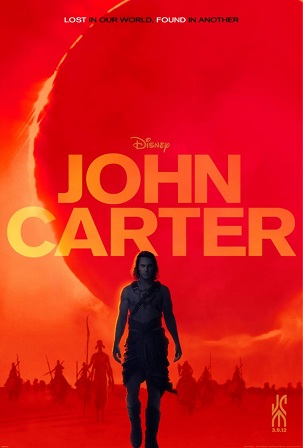
Disney’s “John Carter
Heroism and Just War
John Carter is a hero with a haunted past. The movie, unfortunately, never really explores his history much. From what I could tell, he went to war and came back to find his family had all been killed and his house burned as part of the conflict. He thus swore off fighting for a cause and instead decided to seek his fortune.
Once Carter reaches Mars (Barsoom), however, he is thrown into a conflict in which he realizes that the fate of an entire planet rests upon the victory of the city of Helium. Once he realizes the implications of this battle (and conveniently, finds the princess of Helium particularly attractive) Carter aligns himself with the Tharks, a race of aliens largely viewed as savages by the humanoid aliens on the planet. He is able to seal victory for Helium by making the Tharks realize that they, too, have a place on Barsoom which is influenced heavily by the conflict between Helium and Zodanga.
The movie touches, then, on the notion of a just war. Helium is trying to save the planet, while Zodanga does little but consume and subjugate. The Tharks view both sides as neutral and prefer them to continue fighting, as long as the war stays away from them. Yet it becomes clear that due to the influence of the Thern–an extremely advanced (technologically speaking) race which seeks to orchestrate the destruction of planets–that the conflict has implications for everyone on Barsoom, and indeed, on Earth.
Sin
The Tharks have a tradition in which they brand their people as punishment for their sins. The brands are placed so that they continue to cover one’s skin throughout their lives. If one has committed enough offenses that there is no longer any place for a branding, then one is either killed or thrown into the arena to fight against impossible odds. One’s sins literally cover their flesh. One cannot escape from one’s offenses. There is no redemption.
Christianity affirms that sin is something for which one can make no redemption for themselves. One’s sins are, in a sense, branded onto one’s past. Only by repentance and grace through faith can one be saved. There is no escape from one’s offenses except through the full and free forgiveness through Jesus Christ our Lord. There imagery in the movie of one’s sins being displayed on one’s flesh is powerful, and it resonates with the Christian view that our sins condemn us forever. Only by grace can we be saved. There is no removing the sins–branded onto us–by our own power.
Religion
The Therns are supposedly oracles of the goddess. However, it turns out that they are actually dedicated to manipulating civilizations across the galaxy. It is never discussed whether the goddess and the Therns were ever actually genuine, but it seems fairly clear that those calling themselves Therns are just using the title in order to gain power.
Religion is therefore seen as a kind of way to manipulate and enthrall the masses. All of the sides of the conflict are shown to be dedicated to the goddess, but none seems to have the full truth. However, it does seem that the dedication of the Tharks, in particular, shows a resonance with truth and a genuineness that reaches beyond the mere use of religion as subjugation. The movie, I would say, gives an overall neutral view of religion. In some ways it can be used for ill, but it nonetheless is not inherently evil.
Yet another aspect of religion in the movie, however, is that one can observe the difference between genuine faith and exploitative faith. It is clear that many of the Therns genuinely believed in the goddess and there are scenes which convey a sense of awe over the faith on Barsoom. Religious practice is seen as taking place on a genuine level and being an important part of the lives of the practitioners. These religious persons are seen as genuine and largely trustworthy. On the other hand, those who seek to exploit the faith are seen as inherently evil. Such a view should resonate with Christians, who are instructed to be aware of those within the church who would seek to lead us astray (antichrists).
 Alien Life and social (in)justice
Social justice is an underlying theme in the movie. By portraying the alien Tharks as the outsiders, the movie is able to focus on the notion that the downtrodden and overlooked can rise above the limitations of their position. Although viewed as unequals, they are equals.
One poignant scene early in the film showed a hatchery for the Tharks. They came to collect the hatchlings and it turned out that some eggs hadn’t yet hatched. The Tharks then fired on all the eggs with their gun and destroyed the “weak” young. I couldn’t help but think that this is largely what is happening in the real world with abortion [a topic I have written on extensively].
Here again, worldviews rear their ugly heads. The faith of Barsoom is a bit enigmatic. The goddess seems largely uninterested in the goings-on of everyday life. Furthermore, those who follow her are fully willing to kill their own young in order to ensure the survival of the strongest. One can’t help but think of the prioritization of desires over objective morality in our own world.
Conclusions
The film was a lot of fun. One can easily see how the source material influenced science fiction in a number of ways. As a huge fan of science fiction, I can’t help but love the movie. It is so awesome to see the origins of sci-fi play out on screen. Christians watching the film will find areas to discuss social justice, just war, and heroism. Furthermore, there are some poignant scenes which can bring up issues related to abortion and racism. A final talking point would be to discuss religion as a transcultural entity and see how it has been used in both good and bad ways. I go into this issue in my own post on the “Myth of ‘Religion.'”
“John Carter
Links
Check out another review of the movie over at Sci-Fi Christian, which looks into the background of the movie more, as well as exploring some Bible texts in relation to the movie: Barsoom or Bust!
Engaging Culture: A brief guide for movies– I discuss how Christians can view movies with an eye towards worldview.
Religious Dialogue: A case study in science fiction with Bova and Weber– I look at how science fiction is frequently used to discuss worldviews and analyze two major authors in the field along with their view of religious dialogue.
Alien Life: Theological reflections on life on other planets– What would it mean for Christianity if we discovered life on other planets?
Check out my other looks at movies, including the Hunger Games and the Dark Knight Rises here (scroll down for more).
SDG.
——
The preceding post is the property of J.W. Wartick (apart from citations, which are the property of their respective owners, and works of art as credited) and should not be reproduced in part or in whole without the expressed consent of the author. All content on this site is the property of J.W. Wartick and is made available for individual and personal usage. If you cite from these documents, whether for personal or professional purposes, please give appropriate citation with both the name of the author (J.W. Wartick) and a link to the original URL. If you’d like to repost a post, you may do so, provided you show less than half of the original post on your own site and link to the original post for the rest. You must also appropriately cite the post as noted above. This blog is protected by Creative Commons licensing. By viewing any part of this site, you are agreeing to this usage policy.
The Myth of “Religion”: Constructing the Other as an enemy
The myth of religious violence should finally be seen for what it is: an important part of the folklore of Western societies. It does not identify any facts about the world, but rather authorizes certain arrangements of power in the modern West… The myth also helps identify Others and enemies, both internal and external, who threaten the social order and who provide the requisite villains against which the nation-state is said to protect us. (William Cavanaugh, 226, cited below)

I recently discussed a phenomenal work by William Cavanaugh, The Myth of Religious Violence
The Myth Played Out
The religious other is said to be violent. Religions cause violence due to their scary propensity to link with irrationality, absolutism, and divisive. Religion caused wars and chaos. Religious persons engaged in wars for God over nothing but minute doctrinal differences raged across the time of the reformation and at other times as well. The rise of the secular nation-state and the squelching of religion in the public square allowed for the cessation of violence and for man to live in peace. Such goes the myth of religious violence. Cavanaugh refers to this myth as a “creation myth” of the nation-state (123).
Notice the themes that run through any discussion of religion and violence. The general theme is that religion causes division through doctrinal matters. Because person A believes x and person B believes y, they argue, Furthermore, because neither x nor y has sufficient rational grounds for A and B to resolve the issue, they must fight in order to determine is right. After all, religion deals with absolutes. A and B square off about salvation–their eternal souls are at stake!
Often, religious persons are tempted to come back and counter that those who are non-religious are often violent too. However, this is itself a reaction to the same factors that drive the notion of religious violence. Namely, the myth of religious violence is used to stigmatize the Other. It constructs temporary categories of “religious” and “secular,” groups people based upon that, and then delegates the worst types of violence to that which is called religious. The myth is part of the justification for the nation-state and nationalism. The Nation is that which protects us from the Others in our own society. Without the protection of the State, we would turn to violence to try to subjugate others for our own purposes. Therefore, the State becomes a sacred object. Its symbols become cultic objects, and we ritualize specific aspects of the State. After all, the Nation is our savior from violence of religion. People will willingly lay their lives down in the name of their country, but for their religion? Certainly not! The State is worth dying for because it defends all people, but a religion is an internalized, personal object.
Thus, those things deemed religious are stigmatized and forced into the personal sphere, while those deemed secular are allowed for public debate. As such, specific aspects of a person’s worldview are forcibly separated and parsed. The religious person is expected to act “secular” when it comes to the public sphere, but is allowed to do whatever he wishes in the private realm. The problems quickly become clear.
Religion as a Myth
Religion itself is a social construct. I have seen this personally in a number of works dealing with “religion.” Rarely do authors attempt anything more than a working definition, and even then the definitions do little to outline real differences between that which is “secular” and that which is “religion.” The definitions are either extremely vague or too specific.
A survey of literature on religion shows that this problem is pervasive. The problem is with the notion of religion itself as a category that can somehow cordon off that which is secular. It may be much more useful to speak simply of ideologies or worldviews. Thus, a side-by-side comparison of differing worldviews can indeed be made. There is no fast and hard distinction between secular and religious, for such a distinction is nothing but arbitrary.
How does one define religion in such a way that Taoism, Confucianism, Christianity, Buddhism, Hinduism, and Islam all somehow fit while Marxism, Communism, Nationalism, and the like do not? It seems an impossible task. Some who read my site may notice that I frequently file things under “philosophy of religion” [including this post!]. I’m not suggesting that “religion” is an entirely useless word. What I’m suggesting here is that we must admit that the category is a construction, pure and simple. When I use “religion,” I use it pragmatically to review to an arbitrarily dilineated set of worldviews. Ultimately, “philosophy of religion” is a philosophy of worldviews: putting them side by side for comparison.
By challenging the reigning paradigm of religion as a real, transcultural, category we may thus turn to the question of violence, rationality, and the like as an empirical, philosophical, and existential study. By stripping away the prejudices that come up when someone uses the word “religious” or “secular,” we may focus upon the actual data at hand. Regarding the question of violence, we can ask questions like: “In what circumstances will worldview U turn to violence?” or “Is worldview U more prone to violence than others?” As such, extremism like that of Marxism which has killed untold millions with an atheistic paradigm can be set up alongside extremism like that of Islamicism. Thus, categories outside of “religion” can be used to analyze these cases. Surely divisiveness, absolutism, and irrationality are involved in both cases? What causes them to arise? How do we slow that tide? How do we reason with the Other?
The category “religion” is a construct of the person utilizing it. As such, it can be wielded as a weapon. And, I charge, that is exactly what the category “religion” has been used for.
Controlling the Other
Those who argue that religion causes violence are, in particular, wielding the phrase as a weapon. The religious Other is irrational, violent, and to be feared. It is “us” or “them.” One can observe this in the literature. Some endorse violence against specific religions just because they assume that the myth of religious violence will apply to the view at large.
It is this kind of mentality that the construct of religion perpetuates. It is the Other which we must fear. We, who are rational, need to fear the irrational Other. The Other causes violence, they cannot be reasoned with, and they want absolutist control over society.
The key to this discussion is that the notion of a hard line between “secular” and “religious” is a social construct. The notion of religion is indeed a construction.
The myth of religion is therefore one step towards the myth of religious violence. The key is to construct a “religious other” who is irrational, divisive, and dangerous. Thus, we can feel free to stigmatize and fear this Other. We need to make sure that the Other does not threaten us, and indeed part of this may be to use violence against the Other. After all, they are incapable of reasoning and will not listen to our sound arguments. The only thing they are capable of understanding is violence, which they have used to try to subjugate us to their views.
It is in this way that the myth is used most dangerously. The religious other is a fearsome enemy, one who must be avoided and perhaps even destroyed in order to prevent one’s own destruction. By perpetuating the notion of religion as a transcultural, transhistorical, real entity distinct from that which is secular, the possibility is made to make the religious other the enemy, while glorifying those categories which one decides are not religious. It undermines the empirical study of the way violence comes about on particular worldviews.
An Alternative Way Forward
Rather than using the category of “religion” in order to stigmatize, I suggest that we instead discuss “worldviews.” In this way, all worldviews are on the same plain. Violence may arise in certain worldviews more easily than others, whether it is nationalism or a particular worldview which is deemed “religious.” It may be extremely difficult to avoid using the term “religion” so I will not even attempt to do so. The category is a construction, so it can be used as a useful fiction. Because it is indeed a temporal, cultural distinction, I can use “religion” in a meaningful sense so far as when I say it people will tend to think of Islam, Christianity, Hinduism, and the like.
However, it is just as important to focus upon all worldviews, not those which are somewhat arbitrarily deemed “religious,” when discussing truth claims. As such, it is important to avoid the secular/religious distinction and instead focus upon factual debate and discussion over the coherence of particular views. By doing so, we can advance the discussion about worldviews while avoiding the use of the myth of “religion” to stigmatize the other.
Links
Book Review: “The Myth of Religious Violence” by William T. Cavanaugh– I review the book which has led me to discuss the ways the category of religion is used to stigmatize the other and also forced me to rethink a number of issues. I highly recommend this book.
Source
William T. Cavanaugh, The Myth of Religious Violence
SDG.
——
The preceding post is the property of J.W. Wartick (apart from citations, which are the property of their respective owners, and works of art as credited) and should not be reproduced in part or in whole without the expressed consent of the author. All content on this site is the property of J.W. Wartick and is made available for individual and personal usage. If you cite from these documents, whether for personal or professional purposes, please give appropriate citation with both the name of the author (J.W. Wartick) and a link to the original URL. If you’d like to repost a post, you may do so, provided you show less than half of the original post on your own site and link to the original post for the rest. You must also appropriately cite the post as noted above. This blog is protected by Creative Commons licensing. By viewing any part of this site, you are agreeing to this usage policy.
The Avengers: Sin, Salvation, and Jonah
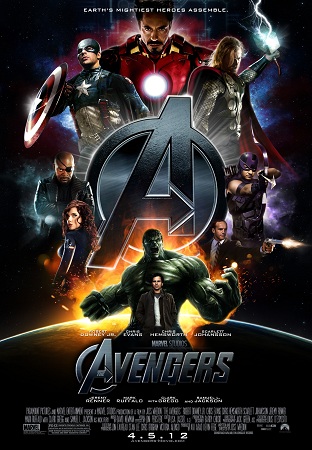 I have already reflected on Marvel’s “The Avengers” from a Christian perspective, but upon watching the recently released blu-ray and DVD
There will be SPOILERS here.
Slavery of all mankind
A thoughtful friend of mine on Facebook pointed to the dialogue between Loki and a crowd of people near the beginning of the film wherein he forces them all to kneel. Loki stands before them and shouts:
Kneel before me. I said… Kneel! Is not this simpler? Is this not your natural state? It’s the unspoken truth of humanity that you crave subjugation. The bright lure of freedom diminishes your life’s joy in a mad scramble for power. For identity. You were made to be ruled. In the end, you will always kneel.
Think of how this resonates with the Christian notion of slavery in sin. We align ourselves with things that we love. Greed. Envy. Pride. Lust. Gossip. These things, while initially pleasurable, ultimately enslave us. Loki’s speech was very discerning, however. For even though these things come to enslave us and take time away from the goods in life, we come to love them, to glorify them, and to become attached to them. We want to be enslaved in sin. We desire it. Sin calls to us, enslaves us, and we love it.
Yet, as in the movie, we are called to rise up against this sin. But we can’t do it on our own. As I discussed in my other post on “The Avengers,” we “need a hero.” We cannot rise out of slavery. Paul discusses this very notion in his letter to Rome:
Don’t you know that when you offer yourselves to someone as obedient slaves, you are slaves of the one you obey—whether you are slaves to sin, which leads to death, or to obedience, which leads to righteousness? But thanks be to God that, though you used to be slaves to sin, you have come to obey from your heart the pattern of teaching that has now claimed your allegiance. You have been set free from sin and have become slaves to righteousness. (Romans 6:16-18, NIV)
Who is it that set us free? We did not do it on our own. After all, we became slaves to sin and offered ourselves freely to it. No, it is Christ Jesus who set us free. He was the “hero” who broke the chains and gave us our freedom in Him.
Debts that Cannot Be Paid
Later on, Loki converses with Black Widow. They discuss the notion that Black Widow has “debts” to others. She owes them for the things they’ve done for her. She says that her ledger is in the “red”–she is on the wrong side of debt. During this conversation, Loki tries to break Black Widow down verbally, “Can you wipe out that much red? …Your ledger is… gushing red.”
Loki’s comments are telling, for they are actually true of not just Black Widow but of everyone. We all have our debts. We have our sins that we commit in private, away from others. We have the anger we have expressed through thought and deed. Our ledgers are overflowing, they gush red. Our sins are too great for us to repay; we cannot wipe away the red.
Yet God has loved us so much that He paid the debt. Jesus, God in human form, came to earth and paid that debt for each and every one of us. Our ledgers were full, but now we’re in the black. We have become co-heirs with Christ and have received salvation by grace through faith. We are justified through Jesus’ death and resurrection. God forgives us our sins and wipes our ledgers clean on His behalf. Loki’s comments are not unlike those of the Devil, trying to convince us that we are still in debt. Can anyone–even God–wipe away all the wrongs we’ve done? Fortunately, that answer is yes. Although we ourselves cannot repay it, God has done so for us.
Jonah
Another great line in the film is when New York City is under attack (seriously, why can’t that city catch a break?). Iron Man comes face to face with a gigantic enemy ship/creature/thing (my wife named it “Leviathan” and I think that’s a great title) and has to take it down. He asks his onboard computer: “You ever heard the tale of Jonah?” He then bursts into the mouth of the Leviathan and flies through it, exploding from the end and destroying it.
No, the reference was never explained. Hey, if you don’t know the story, look it up! It’s one of my favorites in the Bible. Just get out a Bible (or search online) and flip to “Jonah.” It’s short, and I guarantee you it’s worth the read!
Conclusion
It seems to me that there are a number of themes in “The Avengers” that Christians can relate to. The notion of the incredible debt we owe and cannot pay due to our past resonates directly with the Christian worldview. It points towards the salvation we have in Christ. Similarly, our slavery to sin cannot be overlooked. We want to sin, we crave it, but thankfully those bonds are broken in Christ.
Links
A Christian Look at “The Avengers”– I examine a number of other themes in “The Avengers” which Christians and non-Christians can discuss.
Engaging Culture: A Brief Guide for movies– I reflect on how Christians can engage with popular movies in order to have meaningful conversations with those around them.
SDG.
——
The preceding post is the property of J.W. Wartick (apart from citations, which are the property of their respective owners, and works of art as credited) and should not be reproduced in part or in whole without the expressed consent of the author. All content on this site is the property of J.W. Wartick and is made available for individual and personal usage. If you cite from these documents, whether for personal or professional purposes, please give appropriate citation with both the name of the author (J.W. Wartick) and a link to the original URL. If you’d like to repost a post, you may do so, provided you show less than half of the original post on your own site and link to the original post for the rest. You must also appropriately cite the post as noted above. This blog is protected by Creative Commons licensing. By viewing any part of this site, you are agreeing to this usage policy.

 J.W. Wartick - Reconstructing Faith

.jpg)