christian
More Committed to Truth than God.
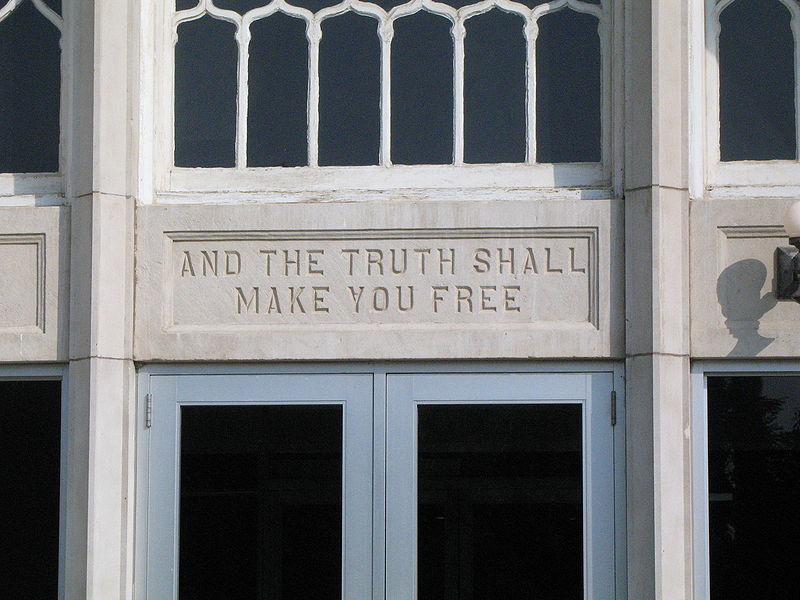 JP Moreland has said that he is “more committed to truth” than he is to God (JP Moreland, “Christianity and the Nature of Science” Lecture).
What he means is that were it shown that belief in God is irrational, he would drop faith belief in God.
I think it is supremely important for all Christians to maintain this attitude. We cannot simply assume the truth of our position, but must rather be willing to follow the evidence where it leads. Notably, the evidence leads us directly to the existence of God.
Such a view is also Biblical. Examine, for the moment, 1 Corinthians 15:14 “If Christ has not been raised, our preaching is useless and so is your faith.” Paul here asserts what Moreland does: if it is shown that what we believe in is false, then our faith is useless. We must remain committed to truth as we examine the universe around us.
It is that commitment to truth which must also leave us unrestrained from examining the deep topics of our faith. We must be open to modifying the doctrinal positions we hold as we scrutinize them with both Scripture and philosophy. There is objective truth, and we are, in some sense, obligated to pursue it–particularly if the alternative is to blindly hold to our position.
Such advice applies not only to believers but also to those who do not believe. Dogmatic atheists who deny God’s existence on principle are no more committed to truth than theists who believe because they “feel it’s right.”
I can put it no better than the words of our Lord: “You will know the truth and the truth will set you free.” -Jesus, John 8:32
SDG.
Image source: http://commons.wikimedia.org/wiki/File:Nwmsu-truth.jpg
———
The preceding post is the property of J.W. Wartick (apart from citations, which are the property of their respective owners) and should not be reproduced in part or in whole without the expressed consent of the author. All content on this site is the property of J.W. Wartick and is made available for individual and personal usage. If you cite from these documents, whether for personal or professional purposes, please give appropriate citation and provide a link to the original URL. By viewing any part of this site, you are agreeing to this usage policy.
Atonement and a Timeless God
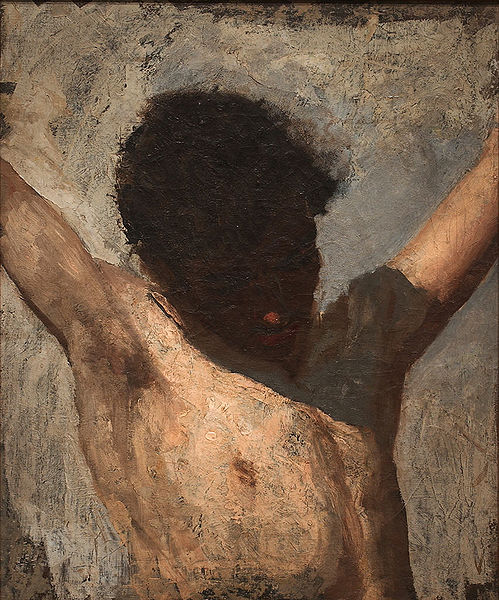 One of my own struggles with Christianity as I began serious contemplation of its core doctrines is the doctrine of atonement. Specifically, I kept wondering how it is that Jesus’ death two thousand years ago could be used as atonement for my sins now. In order to overcome my difficulties figuring this out, I admittedly opted for a fideist type of approach and just assumed that God could do what He wanted, and if He wanted to forgive me because of something two thousand years ago, that was fine.
More recently, however, I’ve been thinking about God’s timeless nature. I touched on these thoughts in my last post, but wanted to get into more depth now.
Consider this: If God is timeless, then God’s existence occurs “all at once”; there is no sequence of events to God, only one eternal “now.” But then it follows that God the Son, Jesus Christ, is eternally crucified, eternally exalted, eternally reigning on high.
In some sense, if God is timeless, then it follows that while I am sinning, Christ is suffering on the cross. As I ask for forgiveness, He is rising from the tomb. As I read Scripture, Christ is speaking. I don’t mean these things temporally, of course, for on this view, god is atemporal–He is without time. Thus, I am not saying that “now”, Christ is dying in a temporal sense; rather, it is meant metaphorically. Christ is crucified in God’s eternal “now”; during which all events are “present.”
What does this mean for atonement? At least in my opinion, it seems to make a lot of sense out of the idea that Christ’s death pays for my sins. For there is no moment at which Christ is not suffering for my sins–a truly horrific thought. On the other hand, there is no moment at which Christ is not glorified with His Father in heaven. All of God’s experience occurs in an instant.
It should be noted again that these considerations are not intended to imply that all events are “simultaneous” in a temporal sense of “occurring at the same time”; rather, they are simultaneous in the sense that from God’s perspective, they have occurred; are occuring; and will occur. All events are eternally present to God. Neither does this mean that God has no sense of the order of events. God’s eternal now sees events in order of logical priority as opposed to temporal progression. Therefore, God knows that one event (x) occurs “before” another (y) in the sense that x is logically prior to y; x had to occur for y to happen. But God experiences all events as “now”; as the changeless, immutable deity, He is eternally crucified, eternally glorified; eternally paying for our sins, and eternally forgiving us for them.
At Communion today (Sunday), I was contemplating the implications of an atemporal God for atonement and justification. I was overcome with emotion as I thought deeply on the issue. As I was eating of the body and blood, Christ was being crucified for my sins; as my forgiveness was declared, Christ was rising.
Powerful thoughts. I think divine temporalists (those who hold that God is temporal) still have to deal with the doctrine of atonement: how does a death thousands of years ago atone for me now? Those who hold God is timeless can answer this question sufficiently: Christ is paying for your sins.
SDG.
———
The preceding post is the property of J.W. Wartick (apart from citations, which are the property of their respective owners) and should not be reproduced in part or in whole without the expressed consent of the author. All content on this site is the property of J.W. Wartick and is made available for individual and personal usage. If you cite from these documents, whether for personal or professional purposes, please give appropriate citation and provide a link to the original URL. By viewing any part of this site, you are agreeing to this usage policy.
“God, Time, and Creation”: A Seminar with William Lane Craig
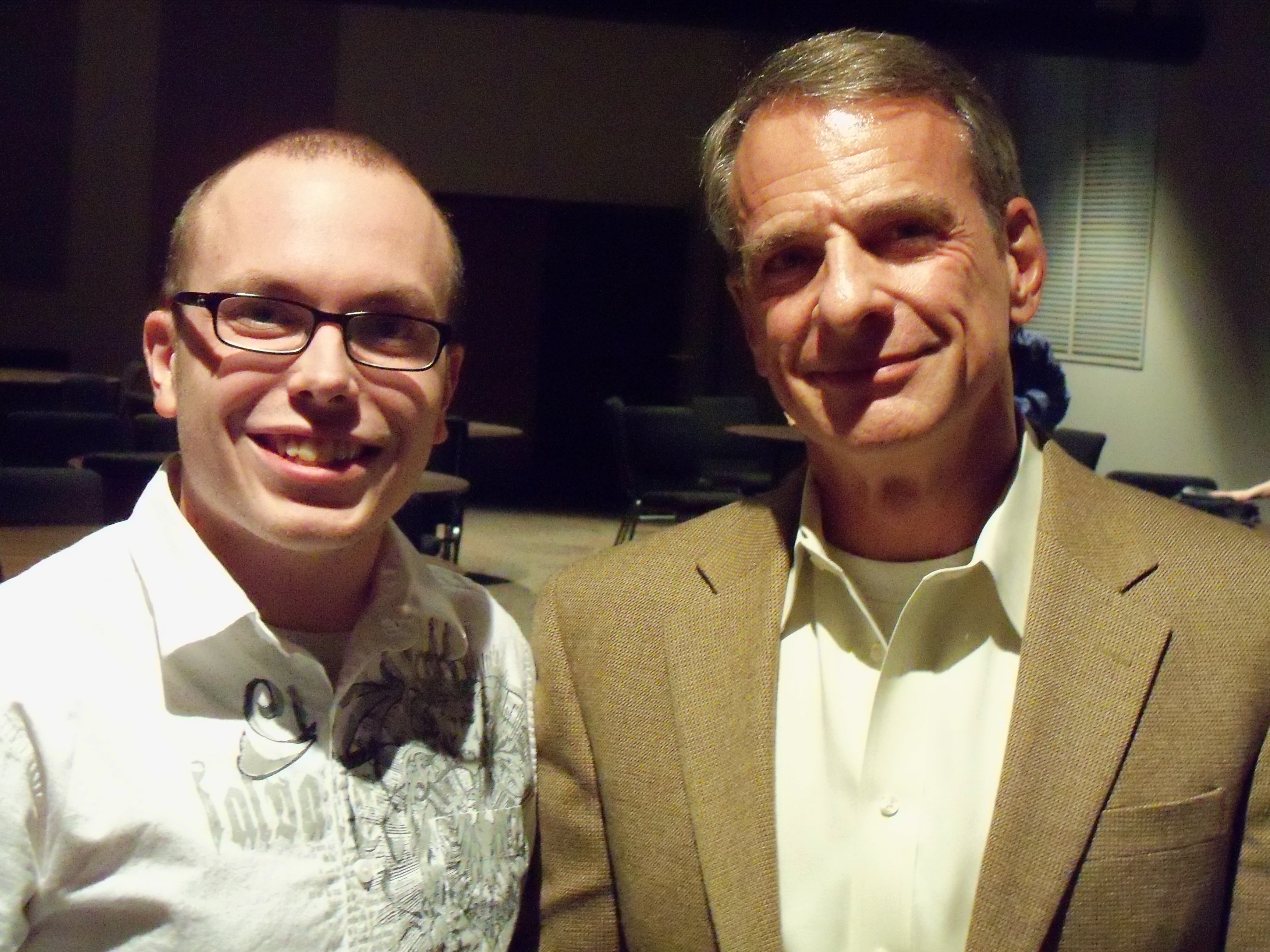 Over the past weekend, I was privileged to spend some time in Georgia (Atlanta area) at the seminar “God, Time, and Creation” with William Lane Craig (in picture next to me). It was part of a class of the same name for the Master of Arts Program with Biola University.
The seminar was a blast. I took approximately 25 pages of notes. Craig’s lecture notes comprised about 440 pages. Awesome!
The seminar focused on God’s relationship to time. Is God timeless, or temporal? Interestingly, Craig holds that God was timeless without creation and temporal subsequent to creation. His book, Time and Eternity, expands on the issues at great length.
First, Craig covered the arguments for and against a timeless God. It seems like a timeless God is not philosophically untenable, and the argument for a timeless God based upon the idea of the imperfection of a temporal life has some plausibility. Then, Craig went over the arguments for and against a temporal God.
After that, we covered the static (B-theory) of time–which holds that all of time and space is a kind of 4-dimensional block–and the dynamic (A-theory) of time–which holds that temporal becoming and passing away is real. It seems that the B-theory of time is, at best, extremely counterintuitive. If the B-theory is correct, our feeling of passing through time is illusory. Further, the theological problems with the view make it really implausible. If time is static, then the J.W. from three hours ago is literally a different entity than the J.W. now, because each is a different “slice” of a four-dimensional “block” of time. So, for example, it would seem as though the J.W. now could not be punished for the sins of a past J.W.–they are, in fact, different entities. Therefore, the doctrines of atonement, justification, sin, etc. seem to be at best vacuous. So a static theory of time, I think, is very implausible for the Christian to hold.
I’m reading through Paul Helm’s Eternal God: A Study of God without Time right now. He holds that God is timeless, and holds that time is static. I’m interested to see if he counters any of these theological issues.
Craig concluded that without creation, God is timeless–there is no change. But once God created, He underwent at least an extrinsic change, which Craig argues means God is temporal subsequent to creation.
This is one of the few areas I disagree with Craig on. I actually think it is more theologically plausible to hold that God is timeless, period. The main problem with this view is that many argue a timeless God entails a static theory of time. If I find on my further study into the area that this is the case, I may be forced to abandon the view that God is timeless. Therefore, I’m looking forward to delving into greater detail on this topic.
I’ve read Brian Leftow’s Time and Eternity and found it extremely interesting and thought-provoking. Craig is highly critical of Leftow’s view and charges that Leftow makes category mistakes throughout his work. As I said, I’m also reading Helm’s Eternal God, so I’ll see how that holds up. This is a very interesting topic which affects the core of study about the nature of God, how God relates to the world, divine providence, and many other areas. I’m excited to continue my research in this area.
On a side note, the Atlanta area is pretty awesome to visit! The weather was gorgeous. It isn’t that much fun driving there, however.
I visited a Christian Bookstore in the area–Lifeway Christian Bookstore–which had a huge sale on CDs. I couldn’t resist picking up some more Christian music (5$ cds!).
SDG.
———
The preceding post is the property of J.W. Wartick (apart from citations, which are the property of their respective owners) and should not be reproduced in part or in whole without the expressed consent of the author. All content on this site is the property of J.W. Wartick and is made available for individual and personal usage. If you cite from these documents, whether for personal or professional purposes, please give appropriate citation and provide a link to the original URL. By viewing any part of this site, you are agreeing to this usage policy.
Book Review: “A Carpenter’s View of the Bible” by Charlie March
 A Carpenter’s View of the Bible (hereafter CVB) by Charlie March is a unique book. It is part memoire, part Bible study, and part an archaeological/carpentry primer.
Throughout the book, there is a palpable sense of wonder with God’s creation. March delights in the hexagonal patterns found throughout nature, from the bee’s hive to the cowfish (7). Moreover, the book is structured around this sense of wonder; filled with the assertion that God is a “builder” (2-3), and our building reflects His.
There is a diversity of topics within CVB, and this sometimes takes away from the cohesiveness of the book, which at a few points seems to flounder. However, March covers the diversity of topics with a flair and insight that keeps it going despite the sometimes disconnected nature of topics.
On the topic of God’s destruction of the peoples of Palestine in the wake of the Hebrews, March writes “God’s perfect justice and righteousness is defined by his treatment toward disobedience and immorality, for which the typical response is his corresponding punishment. He reacts harshly against sin… (28).” He continues on to discuss how Noah’s Ark and the Ark of the Covenant show “divine-human collaboration” which can be seen as a “redemptive act” (29).
The joy of God’s “building” plan interwoven with mankind’s struggles therein is a strand March works throughout CVB. His discussion of the Tower of Babel and idols reflects the kind of interesting interplay between memoir, biblical study, and carpentry I hinted at earlier. The Tower, argues March, can be seen as a kind of attempt at protection from another flood–an attempt to reach above the waters and strike at God. The result is “a humanistic building that challenges God’s law” (41). Rather than reacting with destruction in this case, God confuses the languages, thus resulting in a kind of third chance for mankind as they are forced to rebuild once more. But they fail again, by constructing idols. March points out the strangeness that is an idol: it is something that the craftsman must make himself, and then worship. One might rightly ask, “Dude, how does that chunk of wood you harvested from the forest become a god?” (48).
But humans didn’t always fail. March writes that the construction of altars, ‘heaps’, and standing stones is a “physical act” which serves as a “physical marker in our lives to remind us of the passing of significant events” (49).
The chapter on Jericho is where many of the themes in CVB really come together. March not only makes an interesting argument about the symbolism of the wall, but he also delves into the archaeological research done on Jericho and discusses the faith of Rahab. March argues that the key to the story is the wall (again, the elements of memoir remain as he remembers a show, The Time Tunnel, he used to watch). The wall is a symbol of our lives as well as the kind of barriers we can put up to God (62), but they also symbolize strength. March makes an interesting argument that perhaps the entire purpose of God’s rerouting to Jericho wasn’t so much to eliminate a threat to His people (a plausible argument) as it was a specific salvific act. He argues that God was rescuing the “little lamb who was caught up in the thicket”–Rahab, among the people in Jericho. “[S]imilarly,” argues March, God would “divert the course of history for you and me” (75). One could draw out the implications here and say God did do this in Christ.
Again, March’s discussion of archaeology in conjunction with Sodom is enlightening, and readers will find his discussion there interesting. But March doesn’t leave it with archaeology, he goes on to note that it is important to realize that Sodom was not some ugly town, but a “cool” one which would have the kind of appeal for God’s people that other sinful locales may have for His people today (111-112).
Thinking about Jesus is, of course, a central task of CVB. He is the savior, but we should not forget that “the principle of redemption is not only an event of salvation but an ongoing lifestyle program” (136).
CVB is a fresh, if sometimes disjointed, look at the Bible. March draws from his own life, detailed analysis of archaeology and history, and Scripture in order to weave together an enriching work on the Bible. Interestingly, the book’s central purpose is withheld until it is almost over. March writes that “To live a full life is to build according to the precepts of Scripture drawn to our scale by the Great Architect who set the code from which we should build our lives.” This is the theme throughout the book: our lives are a work in progress, and it is not just God’s work but our own. The book is filled with wonder at God’s creation and insightful parallels between His and our creative acts. Choose wisely how to build.
Disclaimer: I was provided a review copy of this book by WinePress publishing.
SDG.
The Life Dialogue: Geocreationism and Original Sin
This is a guest post by Mike Trutt on Geocreationism. Check out other posts on the “Life Dialogue” within Christianity here. Check out his other posts on Geocreationism here and here.
Mike Trutt is an evangelical Christian with a Jewish background. He believes the Bible is inspired by God, recorded by man, and given its life by the Holy Spirit. You can read about and discuss his Old Earth views on scripture, science, history, and other topics at his blog,http://geocreationism.com.
Original Sin
Whether you believe Adam was physically born or formed directly from dust, most Old Earth Creationists have the following belief in common: animals, plants, and people were alive and dying long before Adam and Eve ate of the apple. Why is this important? Because Original Sin introduced “death” into the world, and Evolution requires you to believe physical death existed before Original Sin.
Consider the following two passages, commonly used by Young Earth Creationists (YECs) to demonstrate that if the Word of God is true, then there was no physical death before Original Sin (emphasis added)…
Romans 5:12 – Therefore, just as sin entered the world through one man, and death through sin, and in this way death came to all people, because all sinned.
1 Corinthians 15:21-22 – For since death came through a man, the resurrection of the dead comes also through a man. For as in Adam all die, so in Christ all will be made alive.
In other words, so the argument goes, physical death could not precede Original Sin because physical death entered the world through Original Sin. It is in part why Christ Himself died for us. Looking at these passages, could it be any clearer? Allow for physical death before Adam, and it means either Christ had no reason to die, or the Word of God is wrong. It makes Old Earth Creationists (OECs) appear not to take the scripture very seriously.
= = =
Christians generally agree that Adam’s body began to deteriorate immediately after the Original Sin, and it eventually led to his physical death. But, is it the corrupting nature of sin that caused the deterioration, and hence death? Not according to 2 Corinthians 5 (emphasis and (comments) added)…
4 For while we are in this tent (i.e., earthly body), we groan and are burdened, because we do not wish to be unclothed but to be clothed instead with our heavenly dwelling, so that what is mortal may be swallowed up by life. 5 Now the one who has fashioned us for this very purpose is God, who has given us the Spirit as a deposit, guaranteeing what is to come.
In other words, God designed us to physically die so that our earthly mortality can be swallowed up by our heavenly immortality. Knowing that God designed us to be mortal while on earth, that same design should be found in Adam, even before his sin. In fact, it is found in Genesis 2:9 (emphasis added)…
The LORD God made all kinds of trees grow out of the ground—trees that were pleasing to the eye and good for food. In the middle of the garden were the tree of life and the tree of the knowledge of good and evil.
Why provide sinless Adam with the Tree of Life, unless his body was otherwise mortal? Without that tree, Adam would die; with the tree, he would live forever. Even after Adam’s sin, God placed angels and a flaming sword to guard the Tree of Life from him, lest he “reach out his hand and take also from the tree of life and eat, and live forever.” (Genesis 3:22b) In other words, before the Original Sin and after, Adam’s immortality depended on the Tree of Life. Like Paul said, Adam was designed to die.
= = =
We could just leave it at that, but there are a few scriptures we should address. For example, if Original Sin was merely the occasion of Adam’s physical death, never the instrument, then what was God warning Adam of when he said not to eat from the Tree of the Knowledge of Good and Evil?
Genesis 2:17b – …for when you eat from [the Tree of the Knowledge of Good and Evil] you will certainly die.
The most straightforward reading of this verse implies that eating the apple would immediately physically kill Adam. In fact, when Eve repeated God’s warning back to Satan in the Garden, she clearly thought God meant immediate physical death. But then Satan corrected her…
Genesis 3:4-5 – “You will not certainly die,” the serpent said to the woman. “For God knows that when you eat from it your eyes will be opened, and you will be like God, knowing good and evil.”
In the Gospels, Satan always tempted Jesus with the truth. That is what made it tempting. Is it not then reasonable to consider that Satan was telling Eve the truth about physical death, even while he deceived her in regards to God’s meaning? After all, when Eve ate the fruit, she did not immediately physically die. In fact, just as Satan predicted, Adam’s and Eve’s eyes were opened to knowing good and evil… and they knew what they did was evil.
What then was Satan’s deception? For one thing, he left out what God really meant by “die”, by making “death” seem like a “coming alive”. Before the Fall, Adam and Eve were in a state of sinless perfection; afterwards they were not. Before the fall, they were naked and did not think twice about it; afterwards they were self-conscious and covered themselves up. The moment they both sinned, they went from being blameless to being in need of redemption. It was a dramatic change, as sudden and jarring as Genesis 2:17 makes it sound. In a very significant and spiritual way, they both died that day.
By the same token, there was another deception. Assuming Eve realized the fruit was keeping her alive, she really had no idea that God was going to punish her by depriving her of it. God may have been promising spiritual death for her sin, but Eve was in fear of physical death. Satan knew God would not immediately kill her physical body, but he failed to tell her that she would eventually die. One possibility is that he didn’t know.
So now we see that both spiritual death and physical death indeed resulted from the Fall. However, it is the immediacy of Adam’s and Eve’s spiritual death that demonstrates the meaning of God’s promise in Genesis 2:17. Yes, they physically died… eventually. Yes, it was a result of their sin. However, the mechanism of their death was through deprivation of the Tree of Life; their tendency to deteriorate was designed into them.
= = =
When Adam and Eve sinned, they died a spiritual death. Original Sin deprived them of the Tree of Life, but the design of their bodies did not actually change. It is in this context that we can review the first proof verse on Original Sin…
Romans 5:12 – Therefore, just as sin entered the world through one man, and death through sin, and in this way death came to all men, because all sinned.
As a proof verse against evolution, YECs are essentially viewing the verse as if it says the following…
Therefore, just as sin entered the world through one man, and mortality through sin, and in this way mortality came to all men, because all sinned.
But, Paul also wrote 2 Corinthians 5:5, which says that mortality is designed into us, providing our path toward immortality with God. Therefore, mortality did not enter the world through sin. Now, Romans 5:12 is clearly a reference to the death in Genesis 2:17b, and we saw above that it was speaking of spiritual death. It is spiritual death that entered the world through sin.
= = =
The other proof verse is similar…
1 Corinthians 15:21-22 For since death came through a man, the resurrection of the dead comes also through a man. For as in Adam all die, so in Christ all will be made alive.
Similar to Romans 5:12, YECs use this verse as follows…
For since mortality came through a man, immortality comes also through a man. For as in Adam all are mortal, so in Christ all will be made immortal.
However, not only is this verse not discussing mortality and immortality, it isn’t even discussing Christ’s saving grace. According to 1 Corinthians 15:12 verses 21 and 22 are trying to explain the resurrection, which the Corinthians were on the verge of rejecting. Daniel explained the resurrection as follows…
Daniel 12:2 – Multitudes who sleep in the dust of the earth will awake: some to everlasting life, others to shame and everlasting contempt.
In other words, both saved and unsaved will be resurrected through Christ. To be sure, judgment will follow, but Paul was only talking about the resurrection itself. To paraphrase our proof verse…
For since spiritual death came through a man, the resurrection of the dead comes also through a man. For as in Adam all earn judgment, so in Christ all will resurrect to face that judgment.
In closing, Original Sin introduced spiritual death, but we were always designed to die.
———
The preceding post is the property of Mike Trutt (apart from citations, which are the property of their respective owners) and should not be reproduced in part or in whole without the expressed consent of the author. All content on this site is the property of J.W. Wartick and is made available for individual and personal usage. If you cite from these documents, whether for personal or professional purposes, please give appropriate citation and provide a link to the original URL. By viewing any part of this site, you are agreeing to this usage policy.
Description is not Prescription: A tale of interpretation
 Imagine someone, let’s call him Jim, reading a chapter from a typical history book written on World War 2. In said chapter, one page says “Hitler was intent upon exterminating the Jews. The Nazis proposed a ‘final solution’ intended to wipe the Jews off the face of the earth.”
Jim stands up, indignant, and reacts to this text, “I can’t believe whoever wrote this book! They actually endorse the ‘final solution’! What evil person would dare to recommend such atrocities!?”
We would obviously be puzzled by Jim’s reaction. We would probably correct him by saying something like “Jim, the author isn’t recommending that course of action, they’re merely reporting what happened. It’s a history book. The author’s intent is not to tell you what to do, but to tell you what happened.”
Now imagine a similar scenario. This time, it’s Jessica reading the Bible. She reads that “Jephthah promised God that if he beat the Ammonites in battle he’d sacrifice the first living thing he saw at his house… He beat the ammonites and the first thing he saw was his daughter, whom he sacrificed after giving her time to grieve.” (A paraphrase of Judges 11. See my discussion of this passage here.)
Jessica immediately stands and shouts “How dare the Bible condone human sacrifice! God Himself told Jephthah to sacrifice his daughter!”
Our answer to Jessica is the same as it was to Jim: “Jessica, the Bible is reporting what happened, the author of Judges reports many horrific incidents and sins that God’s people committed, but that doesn’t mean the author is commending what happened or urging others to do likewise.”
Such reactions are similar to those of many who read the Bible. They read a passage which describes something that happened and jump to the conclusion that the Bible–or the God portrayed therein–is evil. The Bible is a collection of genres and writings from various authors, a point often overlooked by those unable–or unwilling–to fully engage the text. Yet often the Bible is merely describing what happened as opposed to prescribing something for God’s people.
Another problem is that people too often think of the Bible as being exclusively a “rulebook.” I think this really plays into the description/prescription fallacy because if the Bible were just a big rulebook, then everything in it would be taken prescriptively. Such people seem to think that every verse can be taken out of context and genre and used as a command. There isn’t much to say in answer to such people except to point out the obvious: there are different genres in the Bible, not all of it is a rulebook.
Image source: http://commons.wikimedia.org/wiki/File:Geneva-bible-picture.jpg
———
The preceding post is the property of J.W. Wartick (apart from citations, which are the property of their respective owners) and should not be reproduced in part or in whole without the expressed consent of the author. All content on this site is the property of J.W. Wartick and is made available for individual and personal usage. If you cite from these documents, whether for personal or professional purposes, please give appropriate citation and provide a link to the original URL. By viewing any part of this site, you are agreeing to this usage policy.
Book Review: Is There a God? by Richard Swinburne
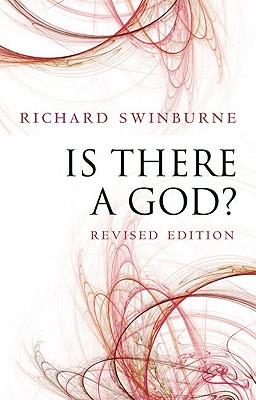 The purpose of Is There a God?
ITG starts off with a chapter aptly titled “God.” In this chapter (modeled after his longer work, The Coherence of Theism), Swinburne outlines the properties and concept of God. It should be noted that Swinburne’s view of God differs from classical theism in two major ways. First, Swinburne’s conception of God does not involve knowledge of the future. His reasoning is that it is logically impossible to know that which does not yet exist (the future), so God is omniscient, but does not know the future. Going into great detail for an argument against that notion would take me too far away from this review, but suffice to say that I find the argument wrong for at least two reasons: 1) There are many coherent ways to envision the future as possible knowledge; 2) A timeless view of God would definitely entail foreknowledge, because all time would be equally present to such a deity. Second, Swinburne’s view of God differs in that he believes God’s existence is contingent, not necessary (he does believe that God is necessary in the sense that his existence does not cease–the necessity/contingence is the difference between modern and Aristotelian contingency–thanks to Tim McGrew and Chris Reese for pointing this out). Again, I disagree, but I find Swinburne’s view coherent.
Swinburne then turns in chapter two to the nature of explanation and argues that we often take personal explanations as valid even within scientific inquiry. Further, he puts much weight upon the simplicity of a theory, which leads into his third chapter, which argues for the simplicity of theism as an explanation for much of our known data. These chapters sum up his work in The Existence of God.
Swinburne then turns to other arguments for the existence of God, such as the cosmological argument and the teleological argument. In chapter 6, he provides a theodicy–an explanation of evil on theism. While I’ve read some pretty harsh critiques of Swinburne’s view on the problem of evil in the past, I found his argument here very compelling, personal, and interesting. His argument is largely a “greater good” type of argument–evils allow for things like heroism–but it is the most compelling version of such a theodicy I have read. I’m still not sure about whether I would incorporate this argument into my own apologetic, but I find Swinburne’s account compelling. (More on this topic can be found in his Providence and the Problem of Evil.)
The last chapter of ITG deals with Swinburne’s discussion of miracles and the argument from religious experience. Swinburne has been hugely influential in the field of arguing for the existence of God from religious experience, and this chapter sums up his argument. He argues that “we ought to believe that things are as they seem to be (in the epistemic sense) unless and until we have evidence that we are mistaken” (115). He then goes on to apply this to theistic experiences and concludes that “the overwhelming testimony of so many millions of people to occasional experiences of God must… be taken as tipping the balance of evidence decisively in favor of the existence of God” (120). (Swinburne’s arguments here are developed in his book, The Existence of God.)
I find two downsides to ITG. First, the concise nature of the work means that those interested in his arguments will need to go beyond the book to fully explore the issues. However, this is barely a downside because that is exactly what the book is meant to be: an introduction.
The second is that Swinburne doesn’t offer a very comprehensive “Guide to Further Reading” in his chapter of the same title. For example, about the question for the existence of God, Swinburne only offers two books arguing against God’s existence for further reading. Furthermore, the two books he suggests are heavy philosophical texts not at all comparable to ITG. I would have liked to see Swinburne offer some suggestions for equally philosophical explorations on the positive side of the theistic question. (I recommend the Blackwell Companion to Natural Theology edited by William Lane Craig and J.P. Moreland and God and Necessity by Stephen Parrish as two “heavier” books on the side of theism.)
Richard Swinburne’s Is There a God?
———
The preceding post is the property of J.W. Wartick (apart from citations, which are the property of their respective owners) and should not be reproduced in part or in whole without the expressed consent of the author. All content on this site is the property of J.W. Wartick and is made available for individual and personal usage. If you cite from these documents, whether for personal or professional purposes, please give appropriate citation and provide a link to the original URL. By viewing any part of this site, you are agreeing to this usage policy.
Harry Potter: A Christian Youth Perspective
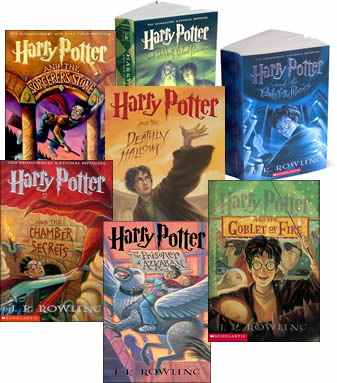 There Will be Spoilers Throughout This Post for the Harry Potter Series.
Alright, maybe I’m stretching it when I call myself a “youth” (I’m 23 now), but I grew up with Harry Potter. Harry was my age when the books came out, and I’ve followed them throughout.
The popularity of the Harry Potter books is undeniable. Few in my generation don’t at least know about the series. The movies are consistently blockbusters, and surprisingly well made.
Christian parents rightly wonder whether these books–which are filled with sorcery, witchcraft, curses, hexes, and the like–are suitable for their children. Let me preface the rest of my discussion with my conclusion: the Harry Potter books are enjoyable literature which will build vocabulary, expand minds, and get children excited about reading.
Synopsis
The series follows Harry Potter through 7 years of his life, starting when he is 11. It is set in modern day England. There are two worlds in the series: the world of “muggles”–those who can’t use magic–and the world of wizards. The wizards go to great lengths to keep their world a secret from any “muggles” who are unrelated to wizards (or in important positions like the Prime Minister). Thus, when the series starts, Harry Potter knows nothing of his wizarding past, having been raised by his aunt and uncle, who hate everything having to do with wizards.
Despite his lack of knowledge about the world of wizards, Harry Potter is himself hugely famous to wizards. He is known as the “Boy Who Lived” because when he was but a baby, an evil wizard known as Lord Voldemort (frequently referred to as “You-Know-Who” or “He-Who-Must-Not-Be-Named”) attempted to kill him and failed. Harry’s parents were killed in the scuffle, but when Voldemort tried to kill Harry, the killing curse rebounded and killed Voldemort instead. Thus, Harry is seen by many as the defeater of the greatest evil wizard of all time. Everyone knows his name; there is a monument to him at his old home; he has a lightning-bolt shaped scar which clearly identifies him, and he knows nothing about this.
Then his life changes when, at age 11, he is invited to attend Hogwarts, a school for wizards. Thereafter, the books follow Harry’s growth as a wizard with his friends, as well as the rumors of and eventual rise to power of Voldemort. It culminates in the final book, The Deathly Hallows, when Harry races against time with his friends to destroy Voldemort. (For a more in-depth synopsis, check out the page here. Check out the links for each book’s plot synopsis on the same page.)
Analysis
The question which has been asked repeatedly within the Christian community is “Are these books appropriate for my children?”
I started reading Harry Potter when I was 11 years old. As each book came out, I devoured it immediately (except for a brief hiatus before book 5). The books do have very scary, and even disturbing, moments. Voldemort is an evil wizard, and he is portrayed as such. He orchestrates murders and he and his cohorts murder with an attitude of nonchalance. The books also have many scenes of “kids being kids”. Harry and his best friend, Ron, often cheat off their mutual friend Hermione in order to complete their homework. Ron’s older brothers are pranksters of the highest level, whose very lives are dedicated to perfecting their antics. Rivalry between youths is also portrayed, as Hogwarts features four “Houses” which compete for top honors at the end of each year. The books also pull no punches in the realm of “magic”; the children are engaged in hexes, curses, charms, astrology, and the like.
Suggestions for Parents
So what should a Christian parent do with this series? It is impossible to issue a blanket statement that will apply to all parents. Instead, I want to offer several suggestions and comments.
First, there are few books which will keep children and youths reading as well as the Harry Potter Series. It has helped to increase literacy in a generation from which appreciation for books seems to be disappearing. (See the interesting article here for some insight on this phenomenon.)
Second, the Harry Potter books distinguish between good and evil to an extent that much other literature does not. There is no doubt that Voldemort is evil and that Harry and friends are the “good guys.” However, this leads me to the third point: the series acknowledges that no human is perfect. Everyone, from Harry’s father to Dumbledore (headmaster of Hogwarts) has things in their past they regret. I don’t think this is a fault of the series (though some people do–arguing that this diminishes the distinction between good and evil); rather, it brings to light something we–as Christian in particular–acknowledge is true: all people are sinners in need of salvation (this is not a theme developed in the books).
Fourth, despite the use of magic of all kinds, there remains a clear distinction between acceptable practice and unacceptable practice. Some have feared that Harry Potter would increase the interest in witchcraft and wizardry in youths. I personally think this is ludicrous. But that leads me to the fifth point.
Fifth, you as parents are responsible for teaching your children the difference between reality and fiction. My parents did a fantastic job on this. Reading Harry Potter never made me want to explore witchcraft, alchemy, or astrology. I knew such things were to be avoided. That is, I could distinguish between reality and unreality. I think that too often, Christian parents in particular underestimate the power of youths to make this distinction. Yet few parents would object to their children reading Star Wars. Perhaps it is the use of “witch” and “wizard” which makes parents leery. But, in my opinion as a Christian who grew up reading Harry Potter, there is no need to fear… unless children have not been taught to realize a difference between fact and fiction.
Sixth, parents need to be informed. When their children are interested in something like Harry Potter, it is too often that parents read only the negative sources. What better way to judge whether something is appropriate for your children than by reading the book yourself?
Questions
Kenneth Samples (cited below) argues that there are three major questions for parents to ask about Harry Potter (and other books). First: “How can Christian parents test their decisions in terms of Scripture, conscience, and reason?” Christian parents should always turn to these sources to figure out whether something is appropriate for their children.
Second: “Is it appropriate to use dark and occult images in fantasy literature to convey a narrative in fantasy literature?” Samples notes that C.S. Lewis and J.R.R. Tolkien both use these images to convey their message. Are these appropriate usages? (I think yes, but the key here is that there is no quick and easy answer for everyone.)
Third: “Does the book use these images at literary devices to propel the broader story, or, rather to promote occult involvement?” Samples argues this is a critical question. If the Harry Potter books simply use the occult images as a literary device, then it seems like there is no problem. The Harry Potter books do seem to be in the former category rather than the latter.
Fourth, “What is the overarching worldview reflected in the books and how does it compare or contrast with the Christian worldview?” This can spur discussion on books and series that aren’t even intended to convey the Christian worldview.
Conclusion
I said earlier that there is no fast and easy way to say “yea” or “nay” for all parents to a series like Harry Potter. I hope that my comments will help concerned parents figure out where to stand on the series. I want to make my own view absolutely clear, here at the close. I think the Harry Potter books are fantastic. They feature memorable characters and exciting plots. Not only that, but they get kids interested in reading. They build vocabulary (I remember personally grabbing a dictionary once in a while when I was younger and reading Harry Potter). The books distinguish between good and evil while maintaining the reality no one is perfect. They will spur discussion. Ultimately, I recommend Harry Potter to parents, but with the qualifier that parents have taught their children about fact and fiction and that they are willing to engage their children in discussion, which may (probably does) require reading the books themselves.
Source
Samples, Kenneth. “To Read or Not to Read: Harry Potter and the Philosopher’s Response.” Straight Thinking Podcast. 10/20/2009.
———
The preceding post is the property of J.W. Wartick (apart from citations, which are the property of their respective owners) and should not be reproduced in part or in whole without the expressed consent of the author. All content on this site is the property of J.W. Wartick and is made available for individual and personal usage. If you cite from these documents, whether for personal or professional purposes, please give appropriate citation and provide a link to the original URL. By viewing any part of this site, you are agreeing to this usage policy.
Enriching your Mind in Apologetics
 (Yes, I know the picture is Brain Coral. I don’t like how brains look, so I put coral in the picture instead. I think you can make the connection.)
My own development as a Christian apologist and philosopher has been bolstered by a number of practices, many of which were learned from others. I wanted to share many of these resources for learning about and growing in faith. Mostly, the idea is to provide resources to others who desire to learn more about Christ. (You’ll find many of the links I use link directly to Apologetics 315. I highly recommend this site!)
Podcasts– Listening to others reflecting on elements related to apologetics and philosophy of religion is an awesome practice. I recommend downloading podcasts and listening to them on the way to work or school. Even with 15 minutes a day dedicated to listening to a podcast, you’ll be surprised by how much you can learn. Some fantastic podcasts can be found at Apologetics 315’s list of “The Best 16 Apologetics Podcasts.”
Blogs– Seek out other people who are discussing apologetics and writing on the issue. Finding other blogs and reading them will help you clarify important issues as well as finding new approaches to the same problems. Check out my “Blogroll” on the side of this page for some of my recommended blogs. Also, check out Apologetics 315’s list.
New Challenges– Always seek out new ideas and things to explore. Often, when you are researching a topic, you can get bogged down. When this happens, pick up a different topic and read a book on it. It will often feel like a breath of fresh air and give you a break. Then, you can return to the area you were reading before.
For example, I was reading several books on historical Christianity and apologetics related to Christ recently, to the point that I was getting a bit tired of it. So, I decided to read a random book from my shelf and read a book called Time and Eternity by Brian Leftow. This was a book about God’s relationship to time. In it, Leftow argued for a timeless view of God (in contrast to William Lane Craig’s Time and Eternity, in which he argues God is temporal post creation). It was a wonderful break and it got me interested in a new area.
You’ll be surprised by how picking up books you may not even think look interesting will lead you to new avenues for discovery in your apologetics research. There is no shortage of topics, but some major areas you could explore are (I’ve included some issues which are not Christian specifically, but that it would be good to have background knowledge about): theistic arguments for the existence of God, the problem of evil, God’s relationship to time, God’s attributes, the Incarnation, the Trinity, theistic metaethics, panentheism, atheism, epistemology, metaphysics, reformed epistemology, Thomistic philosophy, Platonism/neoplatonism, Augustine, Church Fathers various doctrines which are non-essential, and many, many more. Simple searches on amazon for these topics will turn up multiple books of interest.
Read the Bible– It seems like an obvious point, but I’m guilty of forgetting it too often to count: read your Bible. While researching topics related to God and Christ, it is all too easy to forget to read the Bible itself. I cannot underscore how important it is to get into Scripture daily. You’ll be surprised at the things you notice as you read Scripture alongside other studies. Your research into other fields will heighten the interest of Scripture as you find passages which speak to your areas. Not only that, but the Holy Spirit works through the Bible to strengthen faith. It is imperative that you continue to open the Bible, take notes, and meditate on God’s Word.
The Case for Christianity in 15 Minutes (or less)
 Recently, the need for defending Christianity in a short time period has come to light. I was in a discussion with some acquaintances and was asked to outline why I believe what I believe, but we were on a time crunch so I only had about 15 minutes. Thankfully, I have had access to some wonderful resources that allowed me to memorize some quick, but useful arguments.
This post is intended to provide other Christians with a case for their beliefs that they can memorize and share with others. Note that the study cannot stop here. Most people will not be convinced by the basics outlined here. The goal of this post is to provide a springboard for discussion and keep people engaged in the idea that God exists and Jesus is Lord. Each section is intended to flow directly into the next. I encourage my fellow Christians to memorize a “case for faith” in a manner like this, so they may be prepared with a reason for the hope within them (1 Peter 3:15).
The arguments are necessarily short and simple due to time constraints, but they offer a short defense that will, hopefully, spur further conversation (again, don’t forget to do more research!). Greg Koukl says we don’t need to convince someone right away–we just need to “put a rock in their shoe” so that we can keep the discussion going later. As always, the most effective apologetic is a prayerful, Christ-reflecting life. May the Holy Spirit guide you all.
1. God Exists (7 minutes)
There are many reasons to believe God exists, let me share a few:
Kalam Cosmological Argument
1) Everything that began to exist has a cause
2) The universe Began to exist
3) Therefore the universe has a cause.
It seems intuitively obvious that 1) is true. Things don’t just pop into and out of existence. 2) follows from modern scientific discoveries like the Big Bang, which implies a single cosmological beginning. 3) follows via modus ponens (the most basic form of argument) from 1 and 2. This argument shows a transcendent cause of the universe. The cause must also be personal because [it] brought the universe into existence at some point, which requires a choice. Choices can only be made by persons, so this entity is personal. (See William Lane Craig in “On Guard”, linked below, for more.)
[For more reading on the Kalam Cosmological Argument see my posts linked below.]
The Moral Argument
4) If there are objective moral values, then God exists
5) There are objective moral values
6) Therefore, God exists.
“Objective moral values” here means that moral values are true regardless of what anyone thinks. For example, “murder is wrong” would be wrong even if every single human being thought murder was the way to achieve greatest happiness and encouraged it as an extracurricular activity for teenagers. But the only way to hold that objective moral values exist is to grant God’s existence, because objective laws require an objective lawgiver.
Without God, however, morals reduce to “I don’t like that.” It seems ludicrous to believe that murder is wrong just because we don’t like it. It is something actually wrong about murder that makes it wrong. That which makes it wrong is, again, the commands of the Lawgiver: God. People have a sense of moral objectivity built into them, which also suggests both the existence of objective morals and a God who created in us this conscience. (See Craig “On Guard” and C.S. Lewis, “Mere Christianity”.)
2. Christianity is Unique (3 minutes)
Religions are not all the same:
1) Many religions have contradictory truth claims. (Some forms of Buddhism say: There is no God; Christianity argues: There is a God; Hinduism states: there are many gods)
2) Even among theistic religions, there are contradictory claims (Christianity: Jesus is God; Judaism: Jesus is not God; Islam: Mohammed is prophet; Christianity: Mohammed is not a prophet; Judaism: Mohammed is not a prophet; Islam: Jesus is not God; etc.).
3) The Law of Noncontradiction (actual contradictions like “square circles” or “married bachelors” cannot exist and are not real) shows us that therefore, these religions cannot all be true.
4) Christianity is unique in that its central religious claim is a historical one: that the person Jesus Christ died and rose again from the dead. This is a historical event which can be investigated just like any other historical event. Yet exploration of this event leads to the conclusion that…
3. Jesus is God (5 minutes)
1) The Gospels are reliable. They demonstrate many criteria for historical truth: multiple attestation (four Gospels telling the same story, but with enough significant differences to demonstrate they didn’t copy off each other), principle of embarrassment (the authors of the Gospels included details which would be embarrassing either to themselves or culturally, such as the fact that women were the first witnesses to the risen Christ in a culture in which women were not trusted), the writers died for their belief in the historical events (while many religious believers die for their beliefs, it seems unfathomable that the Christian Gospel writers would willingly die gruesome deaths for things they made up–which is what alternative theories argue), etc. (See Strobel, “Case for Christ”)
2) Jesus made divine claims “I and the Father are one” John 10:30; “Before Abraham was, I am” John 8:58; etc.
3) The miracle of the resurrection is God’s confirmation of Jesus’ divine claims. If the Gospels are reliable (per 1), then Jesus is divine.
Conclusions
There is good evidence to think that God exists. There are even other arguments that could be presented, such as the teleological, ontological, transcendental, argument from religious experience, and more. We can also see that not all religions can be true. Furthermore, there are good reasons to think the Gospels are reliable and that Jesus claimed to be God and had His claims authenticated by God Himself in Jesus’ resurrection.
Remember, this is not even close to a full defense of Christianity. It is simply a condensed, easy to remember defense designed to be ready at a moment’s notice for when the Holy Spirit leads people into our paths. We need to do more research, offer more arguments, and continue to witness as the Holy Spirit works through our testimony. This defense is by no means a total apologetic; it is meant only as an introduction to spur further conversation. Always have a reason.
Later Edit:
Some have objected to this post on various grounds, most of which are reducible to my arguments not being developed enough. I emphasize once more, this is supposed to be used for a 15-minute defense of the faith, not an entire survey of the field. See my links for more reading, and continue to investigate for yourself.
Further Reading
If you are interested in further reading on these topics, I suggest:
1) On my site, check out the posts on the existence of God: here. Specifically, for the Kalam Cosmological argument:
The Kalam Cosmological Argument
Dawkins and Oppy vs. Theism: Defending the Kalam Cosmological Argument
“The Multiverse Created Itself” and “Who made God after all?”- The Kalam Cosmological Argument
The Leibnizian Cosmological Argument (not developed in this post).
2) On Guard
3) The Case for Christ
4) Mere Christianity
———
The preceding post is the property of J.W. Wartick (apart from citations, which are the property of their respective owners) and should not be reproduced in part or in whole without the expressed consent of the author. All content on this site is the property of J.W. Wartick and is made available for individual and personal usage. If you cite from these documents, whether for personal or professional purposes, please give appropriate citation and provide a link to the original URL. By viewing any part of this site, you are agreeing to this usage policy.

 J.W. Wartick - Reconstructing Faith

