Christianity and Science
The Life Dialogue: Geocreationism Guest Post 1
This is part 1 of a series of guest posts by Mike Trutt on Geocreationism. Check out other posts on the “Life Dialogue” within Christianity here.
Mike Trutt is an evangelical Christian with a Jewish background. He believes the Bible is inspired by God, recorded by man, and given its life by the Holy Spirit. You can read about and discuss his Old Earth views on scripture, science, history, and other topics at his blog,http://geocreationism.com.
Geocreationism- Introduction
I believe the Earth is old, and God’s Word is true. This is not an easy position to hold. There are Christians today feeling challenged to abandon the church, because long-standing theology requires a young earth that science tells them does not exist. Faith tells them that science and scripture should not be at odds, but if the earth is so old, then what does scripture mean? Why does Genesis say what it says, and science sees what it sees? Christians can agree that science and scripture must somehow align, but disagree as to how. A science that conforms to a young earth requires one to dismiss the scientific basis of established dating techniques, while an interpretation of scripture that conforms to an old earth requires an explanation of why pre-historic death does not unravel the doctrine of Original Sin, and in turn our need for a savior. As an Old Earth proponent and a Christian redeemed from sin, I have found no mainstream theory – on either side – that satisfactorily answers these questions.
Though I consider them my brethren in Christ, the Young Earth scientists whose writings I have read do not appear to understand the science they theoretically embrace. While using science reliably for everyday tasks like keeping airplanes in the sky and maintaining reliable cell-phone signals, the moment you provide evidence of something incredibly old that The Great Flood cannot explain, they say carbon dating is unreliable beyond 5,000 years (which is roughly true), hence rendering any dating technique equally suspect. Why? Because the Bible clearly says to them that the Earth is young. To them, evidence to the contrary indicates a misunderstanding of the evidence. While such strong faith is potentially advantageous to their relationship with God, it dismisses the possibility that Genesis is what we misunderstand. But, if that is the case, and the earth is old, then where is the theory of Old Earth Creation that keeps Christian Theology intact? In all my years of looking for it, it isn’t there. Enter Geocreationism.
Most Old Earth approaches relegate Genesis 1-11 to some form of symbolism, even though every chapter is clearly written in a literal manner. For example, concordist theories (e.g., Day-Age, Progressive Creationism) map the days of creation to overlapping geological eras, even though Genesis 1 clearly discerns a break between creation days. Gap theories fail to account for the fossil record, by acknowledging the age of the earth, but not the development of the species. Theistic Evolution relegates God to the beginning of creation, when Genesis 1 clearly shows God’s involvement at every step. And so it goes, as every mainstream Old Earth theory dismisses the plain meaning of scripture, an unsatisfying response to Young Earth theories, which dismiss the plain meaning of the science. It creates a false dichotomy that puts many in the unenviable position of dismissing their heart or dismissing their mind, when God would have us dismiss neither.
= = =
The first mistake of Old and Young Earth Creationists alike is one of perspective. They read Genesis 1 from the perspective of the earth’s experience being created by God, when it is really telling us of God’s experience creating the earth. If there is any doubt then consider who it is that hovered over the deep in Genesis 1:2. God was there, physically hovering. He had a perspective, and from His perspective the earth had no form and He could see no light. “And God said ‘Let there be light,’ and there was light. God saw that the light was good, and he separated the light from the darkness. God called the light ‘day’, and the darkness he called ‘night.’ And there was evening and there was morning – the first day.” (Genesis 1:3-5) From God’s perspective, hovering over the deep, there was now light separated from darkness. In Job 38:5, God describes it as stretching the line upon the face of the earth. Proverbs 8:27 calls that line the circle on the deep, which we see from space, even today.
The Hebrew word used for day is “yom”, and it refers specifically to the period from sundown to sundown, or from darkness to darkness. In other words, God experienced the end of the day, but it was not specifically 24 hours. This has profound implications for understanding Genesis 1, and it is a perspective I have read nowhere else.
For God to, by choice, physically experience 6 days creating, calling each phase of creation “good”, it suggests an ability to watch the earth rotate beneath Him until the entire earth passed Him by. As Genesis 1:2 says so clearly, God hovered over it, an intentional physical perspective for Him to watch His work. But what would happen after 24 hours, after the entire earth has passed through His view? From the perspective of a point on the earth, one “yom” would certainly pass. However, God was not limited to a point upon the earth. He was hovering above it as the earth rotated beneath Him, hovering in the light, which imposes no arbitrary time limit on when He moves into the dark. Combined with the literal meaning of “yom”, scripture is not requiring a creation day to be a 24-hour period. Sundown for God becomes the time God chose, not a time imposed. It means the earth may be old, and God created it in 6 literal days.
= = =
Another common oversight in Genesis 1:2 is the nature of the deep over which God hovered. What is it? When was it? What if science could find a period in history when the earth was covered in water and darkness, a period that ended with the appearance of light, but no land, no life, and no visible sun? Would that confirm at least the possibility that Genesis 1:2 is recording something that literally happened? I thought it would, and I found it.
About 4.5 billion years ago, the earth is thought to have formed. According to the aging of zircon crystals from as long as 4.4 billion years ago, it strongly suggests the formation of an ocean around the world as it cooled. It would also seem from the moon’s craters that large meteors were hitting earth until around 3.9 billion years ago. The sizes of the meteors were large enough to vaporize any ocean that was forming, and blow away any infant atmosphere as well. But interestingly, that stopped quite suddenly 3.9 billion years ago. This gives us a point in time when the earth, covered in water, vapor, and gas was finally allowed to start settling down, and allow the sky to clear. The sun was dimmer at the time, and what light did reach the earth would have been too obscured to be seen. It is the precise condition described in Genesis 1:2, and would seem to record the result of God’s statement, to “Let there be light.”
= = =
While we’re on the topic of the deep and its formation, I want to jump to Genesis 2:4-7…
4 This is the account of the heavens and the earth when they were created, when the LORD God made the earth and the heavens.
5 Now no shrub had yet appeared on the earth and no plant had yet sprung up, for the LORD God had not sent rain on the earth and there was no one to work the ground, 6 but streams came up from the earth and watered the whole surface of the ground. 7 Then the LORD God formed a man from the dust of the ground and breathed into his nostrils the breath of life, and the man became a living being.
What fascinates me about this passage is verse 5. It describes the state of the earth when God first made it. Does this passage give us a clue as to when that was? Well, look at the description of the earth in verses 5 and 6…
- No shrubs
- No plants
- No rain yet, ever
- No people to work the ground
- Streams gassed up from the earth to water the ground
This is in fact a precise description of the earth 4.5 to 4.4 billion years ago. Scientists call this process outgassing. They believe it is how the deep formed, over which I believe God hovered in Genesis 1:2, and it is described quite accurately in Genesis 2:5-6. Though no mainstream theory will call Genesis scientific, the appropriateness of these verses should no longer be overlooked. Finally, we come to verse 7, which says, “Then the LORD God formed a man from the dust of the ground and breathed into his nostrils the breath of life, and the man became a living being.”
To paraphrase, God started with dust 4.4 billion years ago. He then proceeded through 6 literal days of creation until around 6,000-7,000 years ago, when Adam was born. God introduced Himself and breathed new life into him.
The Life Dialogue: Young Earth Creationism 4
 This is part of a series of posts on the “Life Dialogue” within Christianity. Check out other posts in the series here.
In my last post on Young Earth Creationism (hereafter YEC), I examined the case for the literal 24 hour periods in the Genesis account from the YEC perspective. Now I want to turn to YEC’s case against God using evolution. It should be clear to those following this debate that this post is therefore oriented towards the theological aspect of the dialogue rather than the scientific aspect.
Often, YECs argue against other beliefs in the dialogue by pressing that God would not have used evolution to bring about mankind. (This objection cannot apply to some forms of Old Earth Creationism, in which God does specially create man.) Essentially, the argument goes, “God’s character comes into question” if He used death to bring about these species (Ham, 35). They ask, “How could a God of love allow such horrible processes as disease, suffering, and death for millions of years as part of His ‘very good’ creation?” (Ham, 36).
Such questions make up some of the strong theological arguments for the YEC position. There are only a few ways I know to answer this line of reasoning. 1) One can affirm that the death which entered at original sin has the consequence of spiritual death as opposed to physical death [thus, when sin entered the world, all were condemned to hell through it, but they already died]; 2) God specially created mankind, and humans would not have died if they had not sinned; 3) Deny that such questions actually call God’s character into question.
1) seems a bit implausible from Scripture, though I suppose it is possible to hold this position (many do)
2) allows one to be more in-line with Scripture in my opinion, though one has to sacrifice some of the main reasons to hold a view other than YEC to affirm this (one can’t argue that all life evolved whether guided or not if one affirms special creation of man)
3) This may actually be the most fruitful path, though it must be combined with one of the above reasons. Just as God’s character is not called into question by the fact of death and suffering post-fall, so too is God’s character not called into question on such things pre-fall. One could argue this in a number of ways. Perhaps the possible worlds were limited to those in which God could only bring about mankind through a long process.
Does this YEC position work as intended? I think it does to some extent. It undermines some of the theological foundation of the other positions, while showing that YEC has an answer for the same problem. If there are no good answers to these challenges posed by advocates of YEC, YEC itself gains some strong theological credibility. The options above are capable of handling the challenge, but at what cost? I’ll have to see if there are better answers to be found before I give my final verdict.
——
The preceding post is the property of J.W. Wartick (apart from citations, which are the property of their respective owners) and should not be reproduced in part or in whole without the expressed consent of the author.
Process Philosophy and the Christian (Series)
This post features links to the other posts in my series on Process Philosophy, as well as maintaining a permanent reference for the central doctrines of this Philosophy (at end).
Posts: Book Review: Reenchantment Without Supernaturalism: A Process Philosophy of Religion.
Process Philosophy: The Unity of Science and Religion
Process Philosophy: Nonsensationalism
The central doctrines of Process Philosophy are (quoted at length):
1) “The integration of moral, aesthetic, and religious intuitions with the most general doctrines of the sciences into a self-consistent worldview as one of the central tasks of philosophy in our time” (5)
2) “Hard-core commonsense notions as the ultimate test of the adequacy of a philosophical position” (5)
3) “Whitehead’s nonsensationist doctrine of perception, according to which sensory perception is a secondary mode of perception, being derivative from a more nonsensory ‘prehension’”(5)
4) “Panexperientialism with organizational duality, according to which all the true individuals… have at least some iota of experience and spontaneity (self-determination)” (6)
5) “The doctrine that all enduring individuals are serially ordered socieities of momentary ‘occasions of experience’” (6)
6) “[A]ll actual entities have internal as well as external relations” (6)
7) “[N]aturalistic theism, according to which a Divine Actuality acts variably but never supernaturally in the world” (6)
8 ) “Doubly Dipolar Theism” (7)
9) “The provision of cosmological support for the ideals needed by contemporary civilization as one of the chief purposes of philosophy in our time” (7)
10) “A distinction between verbal statements (sentences) and propositions and between both of these and propositional feelings” (7)
Source:
Griffin, David Ray. Reenchantment Without Supernaturalism: A Process Philosophy of Religion. Cornell University Press. 2001.
The Life Dialogue: Theistic Evolution 4
This is part of a series of posts on the “Life Dialogue” within Christianity. Check out other posts in the series here.
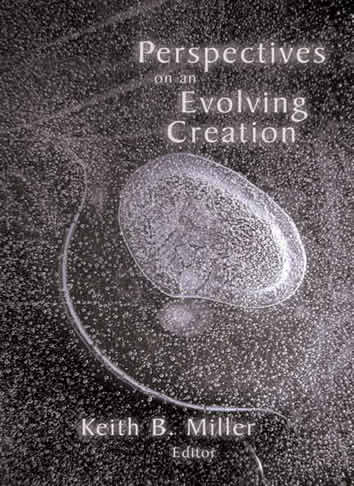 I recently read a very interesting article on theistic evolution by Loren Haarsma and Terry M. Gray entitled “Complexity, Self Organization, and Design.” Interestingly, I found what I think are some of the most interesting arguments for the theistic evolutionist position, but I also found some of the hardest objections to the position (scientifically) that I have stumbled across.
I’ll start with the interesting evidence for their position. First, they note that the word “design” doesn’t belong exclusively to the Intelligent Design theorists, because theistic evolutionists argue that God designed the initial laws which gave rise to evolution and eventually humanity. In other words, God foreknew and intended for mankind to evolve, and set up the laws such that we would (or at least that some sentient beings with which God intended to interact would arise, 289).
They further argue that “With the right set of rules, a random, iterative process can start with a simple environment and self-assemble a complex environment” (293, emphasis theirs). The arguments for this position are interesting to me, and I am no scientist, but it seems to me that the three ways from which they argue for this possibility make more sense to me if there is some kind of intelligence behind the process.
The three strategies for self-organized complexity they argue are:
1) Preprogrammed self assembly– “…pieces are designed so that random interactions between them eventually lead to assembly of the desired complex object(s)”
2) Information transfer from the environment– objects incorporate information from the environment through “a process of random exploration and feedback”
3) Interaction among agents– “random interactions and feedback” lead to “increased productivity or survivability” (290)
It seems to me that 1) could be simply incorporated into laws at the beginning of the universe (but these laws would have to be designed, as the authors point out). 2) seems to me as though it simply couldn’t be totally random. For evolution to work, on the understanding I’ve gleaned from my readings, the complexity would have to aid the survivability of the entity. I think a problem here is that there is no way to determine when/why/how the random interactions suddenly latch onto those things which are helpful. If it truly is a random process, then it would randomly continue to select for characteristics, casting off old ones and making room for new ones.
Incorporating natural selection doesn’t seem like it would help much here either, because then those random selections which are negative would terminate the species. So my problems with 2) are twofold (even granting that God Designed the laws such that these interactions would occur): 1. there doesn’t seem to be an explanation for the process stopping the random selections (and therefore keeping the trait); 2. we aren’t talking about computer algorithms here, we’re talking living entities–if they select the wrong traits, they die.
Ultimately I found these arguments interesting reading, but I just don’t see how they support Theistic Evolutionism more than, say Intelligent Design. The authors do make the interesting point that it could have been the case that God set up/designed the laws such that life would arise, but the ways that complexity is integrated into the process seems to me, at least, to demand further explanation.
Source:
Haarsma, Loren and Terry M. Gray, Complexity, Self-Organization, and Design, in Perspectives on an Evolving Creation, edited Keith B. Miller, p. 288-309.
——
The preceding post is the property of J.W. Wartick (apart from citations, which are the property of their respective owners) and should not be reproduced in part or in whole without the expressed consent of the author.
The Life Dialogue: Young Earth Creationism 3
This is part of a series of posts on the “Life Dialogue” within Christianity. Check out other posts in the series here.
I wrote in my last post on Young Earth Creationism (hereafter YEC) that I had missed one of its primary tenets, which is that the theological, not the scientific, should be the focus of the “origins” debate. This key point means that the challenge to YEC that it doesn’t have a fully developed scientific model doesn’t seem to be as much of a challenge as one may think, for YEC is grounded in theology, not science.
The problem with this is that this makes YEC hard to evaluate in light of the other views (Old Earth Creationism, Intelligent Design, and Theistic Evolutionism) because its advocates rarely try to put forward a competing scientific model. Instead, YEC tends to be a view which focuses on pointing out flaws the arguments of its opponents rather than constructing its own models. While YEC does have some views which are offered for explanations of the world we observe (a catastrophic global flood is one possibility, though one visitor to this site commented on the scientific impracticalities of testing this), its case is largely built on attacking the other views as invalid.
It is to this that we shall now turn. For now, let us focus on YEC’s case against the other Christian views of the age of the earth. First, YEC, because of its theological nature, is absolutely tied to the belief that the Genesis creation account of six days explicitly means six literal 24 hour periods. Ken Ham gives several reasons for taking this belief seriously in The New Answers Book 1. These reasons include the context of Genesis 1, the genealogies of Genesis 5 and 11, Exodus 20:9-11 pointing to six literal days, and that “Jesus was a young-earth creationist”. I’ll outline and critique these arguments below.
The argument about the context of Genesis 1 focuses on the light/dark cycle for the meaning of days (26). This argument has some merit, though I think one of the key problems is that there was no sun for a few of the light/periods, meaning that at least something else must have been going on here. I do think that this argument has some merit, however.
The genealogies of Genesis 5 and 11 would seem to point to the dates that Ken Ham and YECss tend to affirm (though Ham says it is about 6000 years, contrary to other YECs I have read who tend towars 10-15,o00). The problem with this is that it is that semitic genealogies tended to list only key people. Also, the individuals listed could refer to entire families or separate genealogies. I don’t think that the genealogies make a strong case for the YEC view.
Exodus 20:9-11 states (ESV), “Six days you shall labor, and do all your work, but the seventh day is a Sabbath to the LORD your God. On it you shall not do any work, you, or your son, or your daughter, your male servant, or your female servant, or your livestock, or the sojourner who is within your gates. For in six days the LORD made heaven and earth, the sea, and all that is in them, and rested on the seventh day. Therefore the LORD blessed the Sabbath day and made it holy.”
This is a fairly strong argument for the YEC, in my opinion. The parallel meaning of six literal days because of creation order tends to point to a more literal reading of Genesis 1. The only problem I see with this argument is that the 7th day clearly is longer than one 24-hour day according to all the Christian theology I know. What response could non-YECs give? I think one could argue that Exodus 20 is pointing metaphorically or figuratively back to Creation, and that the literal reading is at least slightly weakened by the 7th day.
Finally, was Jesus a YEC? I must say I find it incredibly anachronistic to apply a position in a modern debate over the creation accounts to Jesus. Ham presents the evidence as, among other verses, Jesus saying in Mark 10:6, “But from the beginning of creation, ‘God made them male and female.'” This has some initial plausibility for pointing to a Young Earth, but one immediate problem I see with taking this as literally as Ham wants to is that Jesus says “beginning of creation”, which, if one were to take it very literally, means that Jesus is asserting that man and woman were created first, contrary to the creation account in the Bible. I still do find this verse an extremely strong argument for YEC, however.
So, where does this leave us? I still think the YEC position has the strongest theological stance due to the ability to more easily read the accounts as six literal days. It seems to me, however, that other views have plausibility due to a day being as a “thousand years” for the Lord (2 Peter 3:8). YEC counters to this have not persuaded me that this could not mean that the Genesis account is longer than a literal week. The question I put forth is whether or not the Genesis account was intended as incredibly literal as the YEC position insists.
Source:
Ham, Ken. The New Answers Book 1. Master Books. 2006.
——
The preceding post is the property of J.W. Wartick (apart from citations, which are the property of their respective owners) and should not be reproduced in part or in whole without the expressed consent of the author.
The Life Dialogue: Matt Moss Guest Post Part 2
This post is the second guest post in my series on the “Life Dialogue” within Christianity. See Part 1 here. See other posts in the series here.
PART 2
Thesis 4– Genesis 1 does not address the specific method that God used in material creation, therefore (given T1-3) no specific answer to the questions of how or when is necessary to salvation.
Walton makes an important distinction between material creation and functional creation. Material creation is what modern debates obsess over. How did the material (the animals and people) get here: did they evolve or were they created or both? When did they come about? A quick reading of Genesis 1:1 – 2:3 shows that good, solid answers to these questions are not given. “In the beginning” is hardly a round number. Even those who attempt to date the earth using the various genealogies of the Bible prove their ignorance of ancient Near Eastern family lists which often “telescope” or skip generations of individuals and focus on the most notable. In other words, no one should think that the genealogy from Adam to Abraham is intended to tell us exactly how old the earth is. That was not the purpose of the genealogy and that is not what the genre allows a modern reader to do either.
Now, as for the “how material was created.” Walton argues very convincingly that Genesis 1 remains silent on this. With our modern biases we immediately object, “how can that be!? It says plainly, ‘and God said let there be light.’” Walton backs up to Gen 1:1 and addresses the Hebrew word bara’ (to create). In our understanding we always attach an ex nihilo understanding onto this word. That alone shows how materially minded we are, we have a very material focused cosmology. Walton first demonstrates that all ancient Near Eastern cosmologies were ‘function’ oriented, not material oriented. This means that the neighbouring creation accounts are concerned with the gods assigning functions to what comes about. How and when was not the question they were asking.
Walton then shows a similar mindset in ancient Israel. Even the word bara’ is a functional word. Walton provides a survey (p. 42) that outlines every use of the verb in the Hebrew Bible. The first thing of note is that God is always the subject. The second thing of note is that it nearly always is used in a functional sense, where God is giving something a specific purpose or function. Let’s look back to that light example. Genesis 1 does not stop with, “And God said let there be light.” No, Genesis 1:3-5 says “‘Let there be light,’ and there was light. 4And God saw that the light was good. And God separated the light from the darkness. 5Godcalled the light Day, and the darkness he called Night. And there was evening and there was morning, the first day. (italics mine)”
More than making light is taking place. God is assigning functions to the light and the darkness, he is naming them for their functions! This is seen even more specifically when God creates the Sun and Moon. “Let there be lights in the expanse of the heavens to separate the day from the night. And let them be for signs and for seasons (A more accurate translation is “festivals”- a temple word), and for days and years, 15and let them be lights in the expanse of the heavens to give light upon the earth. (underlining mine)” How and when is not important. Why are they present? That is the question God chose to answer for the people.
Walton does go through these days in detail and then gives brief critiques of the various models out there. The first thing worthy of note is that yom (Day) does mean day… not age. Walton would argue that this hardly seals the deal for Young Earthers since they are completely fixated on material models of creation. Walton seems to take the side that the seven days of Genesis 1 are the seven days in which God assigned all creation its specific function, indeed without function one might hardly say that they exist at all (he uses the analogy of a company- before it is certified it cannot be said to exist even if it has a building and equipment and workers). Thus, Walton, like Genesis 1, remains mute on the hows and whens of material origins before the days when God assigns the functions and Walton sticks with what Genesis 1 does give us, which is the next thesis [coming next week in part 3].
The Life Dialogue: Matt Moss Guest Post Part 1
This post is the first guest post in my series on the “Life Dialogue” within Christianity. See other posts in the series here.
This post was written by my dear friend, Matt Moss, who has just returned from studies in England. Here we go:
JW has asked me to write this guest post for a long time now and I have delayed and delayed due to school and general business. So now I begin what he has asked me to do: present an explanation of creation as it is presented in Genesis 1. One reason this post was delayed was because I came across a book by John Walton entitled “The Lost World of Genesis 1,” which tackled Genesis 1 in a similar way in which I had hoped to. I decided to study it before attempting to write my own piece. While I do not agree with every direction he takes, the work is insightful and challenging. In the end it served to be a very formative work in helping me develop what others (professors) were beginning to form in my mind. Namely, that the cosmology of Genesis 1 is not intended to address 21st century scientific debates on the origin of species and to make it address such debates is shoddy exegesis and an abuse of Scripture.
Precisely speaking, the cosmology of Genesis 1 is a Temple cosmology, a religious document that tells us so much more than how the material of this world came into existence. As this post will hopefully show, Genesis 1 goes beyond the pithy question of how and when everything came into being. Genesis 1 answers who brought it about and why! The when and the how are not answered which tells us two things. 1) The ancients might have been smart enough to realize that the important questions are ones of metaphysical importance: why are we here? And/or 2) God did not tie salvation to having a 100% perfect scientific cosmology and therefore did not deem it necessary to provide the ancients (or us) with a fail-safe scientific model for how and when He did what He did.
Given our ever-present desire to know all things, this will hardly be greeted with joyful ears, but hopefully by the end of this post you will see that there are much better discoveries in the Genesis 1 than what the scientific harmonizers try to glean from the text.
PART 1
Thesis 1: The Bible does not tell us everything we want to know.
I hope this one is self-explanatory, thus I will not waste any more space on it.
Thesis 2: The Bible tells us what it does so that we might believe in Jesus Christ as God’s Son and have life in His name.
For the Christians who read this blog entry, I sincerely hope that this too is unanimously affirmed and needs no more addressing. (Jn 20:30-31)
Thesis 3: Therefore, nothing on which the Bible is silent will negatively or positively affect your salvation.
The implication being- if the Bible is silent on the mechanics of the material creation (as we will explore below) then modern debates over young earth, old earth, design, and all other scientific cosmologies fall into a level of importance far below what the text actually seeks to tell us. Now, I am fully willing to acknowledge that many in the scientific field will take evolution and other aspects of theoretical cosmologies and use them to offer proofs that deny God’s existence. Thus, apologetics serves a valiant purpose in refuting this and affirming the truth that God is creator. However, this post’s main focus is on Genesis 1, which is the chief text wrestled over by all who place themselves under the large umbrella of “creationists.” If Genesis 1 is truly silent on the how and when of creation by God, then Young Earth Creationists should not use Genesis 1 to brow beat Old Earthers into accepting their 21st century model (and vice versa, et al). Let science do its job with integrity, clarity, and truth and let the Bible say what it says. Unduly harmonizing them does injustice to both. 100 years from now science may have developed a cosmology that is 180 degrees different than anything we have today. Think then of how much time would have been wasted force-fitting Genesis 1 into a 21st century cosmology. We would have nothing to show for it but a need to start all over and try and force Genesis 1 into a 22nd century cosmology. I think the better option is to (1) adopt as best we can an ancient Israelite cosmology while we read the text, (2) take out (exegete) what it is truly saying, and (3) learn the lessons that God communicated to His first audience which is what He still desires to tell us.
Part 2- Coming later this week.
The Life Dialogue: Old Earth Creationism 3
This is part of a series of posts on the “Life Dialogue” within Christianity. Check out other posts in the series here.
Hugh Ross has been the subject of the last two posts on Old Earth Creationism (hereafter OEC) I wrote in this series on the “Life Dialogue” within Christianity. His work in fields related to this debate has been invaluable to Christians seeking an understanding of the world and Scripture. Thus, I’m continuing the trend of writing about his works for the OEC side of the debate.
Hugh Ross argues in Why the Universe is the Way It Is that the incredible fine-tuning of the universe shows that God planned the universe specifically for: 1) the rise of human advanced civilization at the earliest possible time, 2) the triumph of God through Christ over evil, while also keeping the natural laws constant and using a process which took literally billions of years.
Ross argues, among other things, that the universe must be quite old. This is the point of contention which is most prevalent in his book, so it is the part I will focus upon.
The universe must be old, argues Ross, for several reasons. First, there is the most oft-cited reason: the measured age of the universe, judging from the latest technology, shows that the universe is about 13.73 billion years old (Ross, 44). Second, heavy elements required for life needed time to build up (44), along with radioactive isotopes (45), while “dangerous events” such as supernova eruptions needed to subside (47). Ross further argues that the earth must be quite old (the latest measurements indicate about 9.2 billion years) in order to sustain life. This was because the sun needed time to stabilize, while there also had to be fewer bombardments from asteroids and the like (48ff). Further, continental landmasses had to form in order to sustain advanced civilizations (50ff).
Further, Ross believes Scripture backs up claims about the universe. He cites Psalm 104:2 and Isaiah 40:22 as passages which describe the universe as “stretching out” like a tent. These verses, he argues, show a divine inspiration of Scripture, as that is exactly what has been happening with our universe since the Big Bang (131). He goes on to cite extensively verses which point to Scripture lining up exactly with current scientific discoveries (cf. particularly p. 126-145).
So what can the Christian take from such an argument? This particular work of Ross’s will (mostly) mesh well with not just OEC but also the theories of Theistic Evolution (TE) and Intelligent Design (ID). It is in Ross’s expansion of his ideas that his view becomes distinct (see this post for a wider exploration of Ross’s arguments). But the conclusions he draws will remain contested by Young Earth Creationists (YEC).
The Christian desiring to combat Ross will have to attack the verses he cites while also attacking his scientific model. Again, the YEC could appeal to differing interpretations of the same evidence, arguing that while it may appear that the universe is as old as 14ish billion years (what’s a few million years when we’re talking billions?), that is only because, as Ross frequently points out, God would know exactly how old the universe would have to be to sustain life. However, God, being all-knowing and all-powerful, could have simply created the universe already capable of sustaining life. Ross would answer by arguing (as he does on p. 147ff) that it may be a false assumption to say that God only wanted to make an environment for humans to live comfortably in (153). Rather, argues Ross, God set the universe up in such a way that humans would not only exist, but also have opportunities to learn, grow, confront evil, explore and wonder at His Divine Nature and His conquest of evil through Christ (153-158).
Ross may be challenged from the “other camp”—that is, ID and TE—that he is arguing anachronistically and trying to read science into Scripture. I’m not sure what answer Ross would provide, but I believe he could counter that if God truly did inspire Scripture, then it seems as though God would know how the universe came to be. Not only that, but he could have left “markers” or “indicators” of inspiration throughout Scripture by revealing various truths about the origins and nature of the universe to the authors of Scripture. Thus, Ross might argue, it is entirely valid to treat the Bible as a “science book”, but only secondarily so. Interestingly, those who desire to read Scripture literalistically and apply it to science often fall under the YEC label, given Genesis 1ff, but Ross argues (rather well, imo), that the Bible can be read fairly literally while discovering an Old Earth scenario.
Source:
Ross, Hugh. Why The Universe is the Way It Is. Baker Books. 2008.
——
The preceding post is the property of J.W. Wartick (apart from citations, which are the property of their respective owners) and should not be reproduced in part or in whole without the expressed consent of the author.
The Life Dialogue: Intelligent Design 2
This is part of a series of posts on the “Life Dialogue” within Christianity. Check out other posts in the series here.
Intelligent Design (hereafter ID) posits that the universe, and in particular life itself, is such that there must be an intelligent cause. I’ve discussed ID in the past and I believe the arguments featured by its advocates are compelling. The challenge to ID is at least twofold: 1. How does one infer design from living organisms without making the assumption that there is intelligence in the first place? and 2. How does this design inference aid scientific discoveries and research?
Paul Nelson utilizes a well-known example of intelligent design to make a case for the ID movement. When one comes upon a pocket watch in a forest, there is no question that it is intelligently designed. It is simply assumed that such a thing is designed. There is no effort to look into a naturalistic cause of the watch, for it is unnecessary. Often, people argue that ID immediately cuts off a path of research–that is, trying to locate a naturalistic explanation for an event. Nelson argues that such a belief is “desperately confused”. Skeptics of ID “[ask] us to pursue the naturalistic program of explanation without reason” (Nelson, 149). Rather, the “design theorist has no responsibility to naturalism” (150). Often, the naturalist has no explanation for the phenomena which the design theorist argues is an indicator of intelligence. Rather, they simply desire to rule out the possibility of ID to begin with (149).
Intelligence can be sought when things such as “biological specification” are present. Biological specification can be defined as “Any element of an organism necessary for viability (meaning survival and reproduction) in any environment in which that organism may exist” (162). Nelson argues from bicoid, a gene which, if absent, spells death for the species of fly in which it is present (150ff). The problem for the naturalist is that such a specified gene is absolutely essential to the survival of the organism. How could it have come about through evolution? Nelson argues that this is evidence against naturalistic evolution, as there is no clear way for a gene like bicoid to come into being, when its absence spells death for the species. It is basic to the creatures that possess it. Without the gene, the creatures lose viability (166ff). Such basic, viability-determining genes seem to point towards ID, as there doesn’t seem to be any other way to explain them.
The problem persists, however, as to how exactly does one get to infer intelligence in biological systems. William Dembski argues that this can be done through an explanatory filter. Whenever an event occurs, whenever a biological entity exists, etc., there are three possible explanations for such an occurrence. These are: 1. A law (here utilizing the refer to something which yeilds highly probable, naturalistic expectations and explanations), 2. Chance, 3. Design. The priority of these explanations follows in that same order. Law takes priority to chance and design, chance to design, and design is the final possibility (Dembski, 94-95). The key to determining design for cases in which this may not be obvious is utilizing probabilities. Simply being improbable does not mean one points to design as the cause of an event, however. Rather, it must be demonstrated that such an event was specified–it was chosen from a range of possibilities. Choice, argues Dembski, is what shows intelligence (109). In order to recognize choice, one must utilize the explanatory filter. If some event, E, is such that it is not highly probable (thus explained by a law) or intermediately probable (explained by choice) and further shows a sufficiently improbable possibility, then design is the likely explanation of E (98ff). The example Dembski uses is that of a combination lock, in which the chances of getting the right combination are 1/10,000,000,000. The exceedingly improbable chances of getting the right combination by guessing implies specification. However, when specification comes into play–in this case, the specification that only one particular combination is correct–then one has an event which reflects intelligence upon the opening of the lock (103-104).
Thus it seems as though there are ways to discover intelligence in events that are not clearly attributalble to intelligence initially. Further, there seem to be events in biological systems which point to intelligence. This, of course, counts as evidence for ID.
It seems to me that ID has a significant case which should not be ignored as often as it is in the scientific community. Dembski alone has done some phenomenal work. One problem so far with ID is that I have yet to see an attempt to reconcile ID with the theological problems that come with assuming evolution to be the case. I still favor Ross’s RTB Model to anything I’ve read thus far, but I see ID as having some strong validity which could be integrated easily into the Christian understanding of the Life Dialogue (discussed in my posts on OEC–visit the link at the beginning of this post to view those posts). This is my second cycle through the sides of the debate. I’ll be posting next on theistic evolution.
Sources:
Nelson, Paul. “Applying Design Within Biology.” Mere Creation. InterVarsity Press. 1998. 148-174.
Dembski, William. “Redesigning Science.” Mere Creation. InterVarsity Press. 1998. 93-112.
——
The preceding post is the property of J.W. Wartick (apart from citations, which are the property of their respective owners) and should not be reproduced in part or in whole without the expressed consent of the author.
The Life Dialogue: Young Earth Creationism 2
This is part of a series of posts on the “Life Dialogue” within Christianity. Check out other posts in the series here.
I realized as I was reading for this post that I, for some reason, have misrepresented and misinterpreted some of the evidences and arguments of Young Earth Creationism (hereafter YEC). I wrote before that a problem with YEC was “Where is the positive case? Rather than attacking all other views, where is the scientific case building bottom up a YEC explanation of the universe? I think this is absolutely essential for YEC to offer any competition [to other theories].” The problem with my questions is that YEC takes it as given that it already has a case. Not that this case is testable by scientific means, but that the case is simply built upon Scriptural interpretation. This is why, I believe, advocates of YEC most often simply attack competing theories rather than presenting their own. It is a presupposition that YEC provides the paradigm case for the origins of life and the universe.
The issue can (and, I believe, should) still be pressed: what is the case for YEC that can be discussed even among those who may not believe Christianity, let alone theism? The answer, I’ve found, is going to hinge upon The Flood (Genesis 6 and following). Von Fange writes that “These two models of what the early earth was like are gradualism for the evolutionist, and catastrophism, such as Noah’s flood, for the creationist” (161). Once again, it seems that it is a matter of taking the same data and interpreting it differently. The difference in interpretation is incredibly vast. Other versions of the “Life Dialogue” (as I’ve dubbed it) rely on long periods of time, whereas YEC argues that it is instead massive, catastrophic events in the history of Earth which have shaped the world geologically, anthropologically, biologically, etc.
The key is granting that The Flood was truly a completely catastrophic, worldwide event. This seems to me to be the most natural and clear interpretation of the Genesis account of The Flood. Granting that there was a worldwide flood of this magnitude, what does that mean for the world? Such a flood would have absolutely destroyed the world. This would have included the leveling of mountains, earthquakes, volcanic eruptions, continents subsiding, and more unimaginable devastation (Rehwinkel, 286ff). Further, the amount of sediment that would be deposited by this worldwide flood would have been incredibly large (Rehwinkel, 288ff). The Flood could have carved canyons and presented the appearance of sedimentation that would parallel that which occurs over long periods of time (Morris). Fossils would be expected throughout this sedimentation for the obvious reason that the entirety of the world was under water. Not only that, but it would have reshaped the planet’s land masses, which would have had catastrophic effects on ecosystems upon the resurfacing of the continents (Rehwinkel, 287).
Thus, again it seems as though YEC depends thoroughly upon the account of The Flood and interpretations of what exactly such a Flood could do to the world. I don’t find this to be a weakness for the YEC position, but rather a great strength. It seems to me as though the YEC position is most capable of dealing with the Genesis account of The Flood, as well as what that would mean to the world. Further, interpreting various scientific discoveries through these lenses is what allows for proponents of YEC to argue for their position. It should also be noted that this proposition of The Flood is taken in conjunction with the belief that God created a “complete world” in the sense that it would have been already prepared for life–which includes the belief that the world was created with continents, bodies of water, and the like already formed (Rehwinkel, 283-284). This conjunction of beliefs provides a powerful theological argument for YEC.
The main problem with such an explanation of the age of the earth is that it seems to contain no ability to establish credibility in the scientific community at large. Such an account cannot be tested as it stands. I think there are prospects for YEC to present a testable model, but I still know of no such model. Such a model, were it to be created, would include predictions related to the effects of the flood, along with predictions for the condition of the universe being pre-made for human habitation. Reading from Rehwinkel in particular gave me much to think about as I’m evaluating all sides of this debate. The conjunction of The Flood with a “complete world” seems to have great explanatory power in theological terms.
Sources:
Morris, Dr. John D. “Lessons from Mount St. Helens.” http://www.icr.org/article/lessons-from-mount-st-helens/.
Rehwinkel, Alfred. The Flood. Concordia Publishing House. 1951.
Von Fange, Erich. In Search of the Genesis World: Debunking the Evolution Myth. Concordia Publishing House. 2006.
——
The preceding post is the property of J.W. Wartick (apart from citations, which are the property of their respective owners) and should not be reproduced in part or in whole without the expressed consent of the author.

 J.W. Wartick - Reconstructing Faith