Christianity
Sunday Quote!- Setting aside Luther?
 Every Sunday, I will share a quote from something I’ve been reading. The hope is for you, dear reader, to share your thoughts on the quote and related issues and perhaps pick up some reading material along the way!
Setting aside Luther?
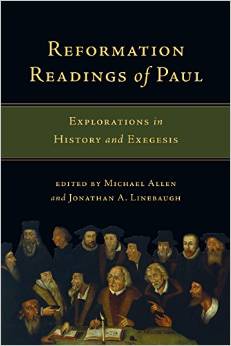
During October each year, I read some books about the Reformation to inform myself about that vastly important time in church history. October 31st is Reformation Day, of course, and so I thought I’d share a quote this Reformation Sunday from one of the books I’ve been reading. This year, Reformation Readings of Paul was high on my list, and I received a review copy from InterVarsity Press to devour.
There is a danger in the Protestant Church to enshrine the interpretations and methods of the Reformers such that the way they read the Bible becomes a new authority or at least lens through which Scripture must be read in order to be rightly understood. There is a fine line between referencing, respecting, and gleaning insight those who have come before as opposed to mechanically sticking to them. David C. Fink points out that even Reformers like Luther would have advised against this:
Luther showed no hesitation in setting aside the views of Jerome, Erasmus, or even Augustine. If we take him at his word, there is no reason to think he would not expect the same handling from modern exegetes today. (33-34, cited below)
Luther referenced these church fathers but did not see them as the authority on exegesis or interpretation of the biblical text. Similarly, Fink notes, we should not be afraid to set aside Luther if we should find that his interpretation of a passage is mistaken.
Links
Be sure to check out the page for this site on Facebook and Twitter for discussion of posts, links to other pages of interest, random talk about theology/philosophy/apologetics/movies and more!
Sunday Quote– If you want to read more Sunday Quotes and join the discussion, check them out! (Scroll down for more)
Reformation Theology- Check out my other posts on the Reformation and its theology (scroll down for more)
Source
David C. Fink “Martin Luther’s Reading of Galatians” in Reformation Readings of Paul eds. Michael Allen and Jonathan A. Linebaugh (Downers Grove, IL: InterVarsity, 2015).
SDG.
Really Recommended Posts 10/23/15- Apologetics, Diatoms and the Flood, patriarchy, and more!
 Hello, dear readers! I have another round of posts that I hope you will enjoy perusing. The topics this week include apologetics, an objection to the pro-life position, patriarchy and biblical sex, and some tiny organisms that pose some big problems. Let me know what you think, and be sure to tell the authors you enjoyed their posts as well!
Apologetics Started in the Bible– Some Christians object to the use or import of Christian apologetics. However, apologetics got its start in and from the Bible. Here’s a post showing how.
Biblical Sex: Patriarchy’s Great Enemy– This post highlights the fact that in the Bible, male-female sexual relations really go against the paradigm of complementarian theology.
Book Review: “The Grand Weaver”– Ravi Zacharias is an excellent Christian apologist. Here’s an in-depth look at one of his books from Luke Nix. I recommend reading this one because it will give you some insights into Zacharias’ approach to apologetics. The book itself is also excellent.
Diatoms: Tiny Organisms Highlight Big Inconsistencies in Young Earth Flood Geology Models– Diatoms are tiny organisms that put up some big difficulties for young earth creationist models. Check out this post to read about some of these difficulties.
Response to objection that pro-lifers are “nowhere to be found once our children are born”– It is commonly objected that the pro-life position only cares about children in the womb. Once they’re born–who cares? I think that it is important for the pro-life position to be holistic and look at the totality of life rather than simply looking at unborn life as worth protecting. Here is a post that directly confronts this common objection.
Really Recommended Posts 10/9/15- Gospels, Domestic Abuse, Dinosaurs, and more!
I am pleased to present this wide range of topics to you, dear readers! I hope you enjoy the reads as much as I did. We have posts on the origins of the Gospels from an atheistic perspective, domestic abuse, the ontological argument, soft tissue in dinosaurs, and Bill Nye on abortion. Let me know what you think, and be sure to thank the authors as well!
Where the Gospels Came From– This is a satirical post that highlights how broad swaths of internet atheism tend to view the origin of the Gospels. It’s well worth reading as it highlights some of the major errors.
When Staying in an Abusive Relationship is Part of Your Theology– It is Domestic Violence Awareness Month, and this post from Christians for Biblical Equality highlights one major difficulty with some theologies- they argue that one should stay in an abusive relationship from theological reasons.
The Probability of God’s Existence is Either 0% or 100% (video)– Kenneth Keathley offers this analysis and presentation of Alvin Plantinga’s ontological argument. He defines terms and answers some major objections, with the objections offered by atheists themselves.
“Soft Tissue” Found in Dinosaur Bones– Creationists sometimes claim that the finds of “soft tissue” undermine the possibility for an old earth perspective. Is that the case? Here is some analysis of this claim and some more recent findings regarding allegations of blood and other soft tissue found in ancient fossils.
Responding to Bill Nye’s Abortion Video– Bill Nye “The Science Guy” made a lot of claims about science and abortion in a video recently. Here’s a thorough analysis and refutation of his claims.
“The Martian” – Hope, Humanity, and God- a Christian look at the film
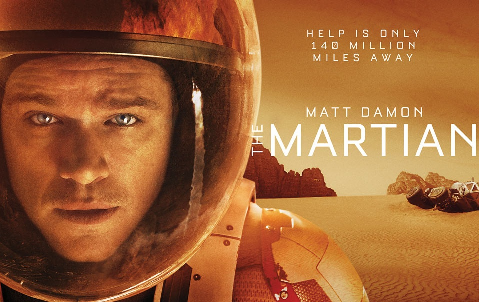 The Martian is receiving some excellent reviews from critics, and for good reason. It is a stirring story about humanity and our capacities and drive to survive. Here we will look at the worldview htemes found in the film. There will be SPOILERS in what follows. I will not be summarizing the plot, but a summary can be found here.
Hope and Humanity
A major theme of the movie is that of hope. Mark Watney, the astronaut left behind on Mars, becomes the center of hope of the entire world. All eyes were following as he continued to fight against the unforgiving Red Planet. When the mission to rescue him finally comes to a climax, there is a scene of people around the globe watching in anticipation and hope. They celebrate merely hearing his voice.
I can’t help but think about the hope of the shepherd in a certain story told be a Jew in Galilee, in which the celebration over but one lost sheep was immense. There is an inter-connectedness that humans experience as we seek to help others and exult in the triumphs even of strangers in need.
Perhaps the central theme in the movie is that of the very, well, human-ness of humanity. We need companionship, and the poignancy of that is found throughout the film. Mark fights against the loneliness he feels by fighting one problem after another. But simply hearing someone’s voice is enough to send him celebrating, and when the rest of his mission team come to rescue him–and he can hear his commander’s voice for the first time, the overwhelming sensation of emotion he feels leads him to tears.
Humanity was not made to be alone.
God?
By no means does this film offer much related to worldview issues about God, but there are a few moments worth mentioning. The first is when Mark has to whittle a crucifix in order to get some material to burn for making water. He looks at the figure of Christ on it and says that he thinks that Jesus wouldn’t mind him using it to save his life. Though this never develops beyond a joke, it is interesting to see how it ultimately is a kind of salvation through the cross–this time in a very literal sense.
Prayer is hinted at when the head of NASA asks the head of the Mars projects whether he believes in God. The answer that came was unexpected: with a Baptist mother and Hindu father, “I believe in several.” The response? “We need all the help we can get.” Again, this joking moment does reveal a hint of truth: that God is the one who provides help. Of course, not the many gods of Hinduism, but the true God is the one who saves.
Conclusion
“The Martian” is a great film. It explores the human need more than most films ever even touch on. These needs reflect deeply ingrained desires that mesh well with the Christian worldview. Only in Christ can we ultimately find the consummation of hope.
Links
Be sure to check out the page for this site on Facebook and Twitter for discussion of posts, links to other pages of interest, random talk about theology/philosophy/apologetics/movies and more!
Andy Weir’s “The Martian” A Christian Look at the Book: Humanity, Community, and Hope– I look at the the worldview themes found throughout the book on which the film was based.
Also see my other looks into movies (scroll down for more).
SDG.
——
The preceding post is the property of J.W. Wartick (apart from quotations, which are the property of their respective owners, and works of art as credited; images are often freely available to the public and J.W. Wartick makes no claims of owning rights to the images unless he makes that explicit) and should not be reproduced in part or in whole without the expressed consent of the author. All content on this site is the property of J.W. Wartick and is made available for individual and personal usage. If you cite from these documents, whether for personal or professional purposes, please give appropriate citation with both the name of the author (J.W. Wartick) and a link to the original URL. If you’d like to repost a post, you may do so, provided you show less than half of the original post on your own site and link to the original post for the rest. You must also appropriately cite the post as noted above. This blog is protected by Creative Commons licensing. By viewing any part of this site, you are agreeing to this usage policy.
Sunday Quote!- Sarah the Matriarch as Equal to Abraham
Every Sunday, I will share a quote from something I’ve been reading. The hope is for you, dear reader, to share your thoughts on the quote and related issues and perhaps pick up some reading material along the way!
Sarah the Matriarch as Equal to Abraham
I’ve been reading through Richard Davidson’s tome, Flame of Yahweh: Sexuality in the Old Testament, a huge study of, well, sexuality in the Old Testament. One portion focuses on the narratives in the Pentateuch and the women discussed therein. Sarah, Abraham’s wife, is shown to be the equal of Abraham, argues Davidson:
Details of Sarah’s life in the Genesis narratives reveal the high valuation of this matriarch, as she and her husband are portrayed as equal partners… given their social context, Sarah and Abraham are amazingly equal… (226, 227)
Davidson’s argument lists a number of reasons to believe this is the case. Here I will quote just a couple:
Sarah is regarded as just as critical to the divine covenant as Abraham himself… ([Genesis] 17:18-19; 21:12)… Sarah’s name is changed from Sarai, just as Abraham’s is from Abram… (17:16)… (227)
These are among the total of 10 main reasons Davidson cites to demonstrate that Sarah was “no wallflower.” The high valuation of women in the Old Testament is something Davidson demonstrates, in my opinion.
Links
Be sure to check out the page for this site on Facebook and Twitter for discussion of posts, links to other pages of interest, random talk about theology/philosophy/apologetics/movies and more!
Sunday Quote– If you want to read more Sunday Quotes and join the discussion, check them out! (Scroll down for more)
Source
Richard M. Davidson, Flame of Yahweh (Peabody, MA: Hendrickson Publishers, 2007).
SDG.
Really Recommended Posts 10/9/15- Inerrancy, Immigration, apologetics, and more!
I’m pleased to offer this go-round of the Really Recommended Posts to you, dear readers. I think they are about as diverse as you can get. We have Stephen Colbert on his faith, illegal immigration and Christianity, apologetics, Jesus’ view of Scripture, and Planned Parenthood on the docket today. Check them out and let me know what you thought!
Watch Stephen Colbert, a Lifelong Catholic, on Hearing a Female Priest Celebrate the Eucharist– I don’t put a lot of stock in celebrity comments about faith or politics or really anything. After all, they don’t automatically become authorities simply because they are famous. However, Colbert’s faith is quite sincere, and this whole interview is worth watching. Here’s a clip in which he talks about a female priest celebrating the Eucharist.
American Christianity and Illegal Immigration– Here’s a fairly lengthy look at the historic interaction with illegal immigration that American Christianity has had. It helps provide a historical perspective on some of the current debates regarding illegal immigration.
Apologetics Strategies: The Myth of a Bulletproof Argument– It is easy to think that, regarding Christian apologetics, we can come up with an argument that will convince everyone. Is that the case? Here’s a post on apologetic method that is well worth your time.
Jesus Viewed Scripture as Inerrant: A Reply to Kyle Roberts– A few weeks ago I featured an article arguing all Christians should view the Bible as inerrant. Here is a follow-up post in which Rob Bowman takes an extended look at Jesus’ view of Scripture.
3 Pinnochios to Planned Parenthood Supporters for Slippery Mammogram Language– The Washington Post calls out Planned Parenthood supporters for their claims about mammograms. Look, Planned Parenthood doesn’t provide any mammograms at all. Not a single one. It should not be used as a scare tactic against those arguing to defund the abortion provider.
Bible Note: Psalm 50:9-13- God doesn’t need you
 I’ve been reading through the Bible and making a kind of commentary on the whole thing as I go. Needless to say this has been a lengthy project! Here’s an expanded note I made in Psalm 50.
I know the saying I’ve heard many places, “Never quote/read a Bible verse.” The meaning is of course to emphasize the word “a” and point out that all verses have context. Although that is true, I don’t think that means we can never read just one verse and get a clear meaning or teaching out of it. Here’s a pretty neat verse, though:
50:12- “If I were hungry I would not tell you, for the world is mine, and all that is in it.”
In context (50:9-13), you can see that it is surrounded by God noting that God has no needs, that God does not need to eat or drink, and the like.
In the Ancient Near East, sacrifices were often thought to be providing the needs for the gods. Here, in context (50:8, 13), it is clear that YHWH is distinguishing Himself from those alleged deities. There are no needs God has. Indeed, if God had needs, there would be no need to tell us because all belongs to God already. This is a powerful reminder of God’s sovereignty over all the universe.
There is also no small amount of irony/humor involved in the passage. The irony is centered on the fact of God’s power as well. Supposing that a God who created the entire universe does exist, is it not frankly hilarious to imagine that same deity depending on us to provide food? Against the backdrop of the Ancient Near East (see Walton’s work for an extended look), this makes more sense, though. It was thought that by providing for food and drink for the gods, the one offering the food could free the deity up to take care of more cosmic needs. In stark contrast, the God of the Bible claims not only to be fully capable of taking care of the cosmos, but also asserts there are no needs God has that we can fulfill. It’s an astonishing declaration of God’s might.
It also can provide some degree of comfort: God doesn’t need you. Grace is a gift.
What are your thoughts? How might we take this verse in its ancient context and draw out the humor for today?
Sunday Quote!- Mormonism and Breaking the Ninth Commandment
Every Sunday, I will share a quote from something I’ve been reading. The hope is for you, dear reader, to share your thoughts on the quote and related issues and perhaps pick up some reading material along the way!
Mormonism and Breaking the Ninth Commandment
Talking Doctrine: Mormons & Evangelicals in Conversation is an intriguing collection of essays from evangelical and Mormon scholars (see my review). In one essay, Cory B. Willson briefly comments on something that an evangelical, Richard Mouw, said in an address at the Mormon Tabernacle in 2004:
The common habit of telling Mormons what they believe without bothering to ask them, Mouw noted, has often led to misrepresenting and even demonizing their beliefs and practices–a form of bearing false witness against our Latter-day Saint neighbors. (80, cited below)
Mouw’s point should be well-taken. Too often in interfaith dialogue there is a tendency to jump on assumed beliefs rather than getting to know the religious “other.” Instead, we should focus on what those religious “others” are actually telling us they believe, so that we do not give false testimony against them. I wrote a post about a vision for Christian apologetics to world religions that focuses more on this topic.
What do you think? How might we map ways forward in interfaith dialogue that does not misrepresent the other side? How could this be better applied to evangelical-Mormon discussions?
[Note: there are some different ways of numbering the commandments. The Commandment Referred to here is “Do not give false testimony against your neighbor” which is commonly known as the 8th or 9th Commandment, depending on how a tradition breaks them up. I stuck with it as the 9th commandment because that’s how the quote had them numbered.]
Links
Be sure to check out the page for this site on Facebook and Twitter for discussion of posts, links to other pages of interest, random talk about theology/philosophy/apologetics/movies and more!
Sunday Quote– If you want to read more Sunday Quotes and join the discussion, check them out! (Scroll down for more)
Book Review: Talking Doctrine: Mormons and Evangelicals in Conversation edited by Mouw and Millet– I review the book from which this quote came.
Source
Talking Doctrine: Mormons and Evangelicals in Conversation edited Mouw and Millet (Downers Grove, IL: InterVarsity, 2015).
SDG.
Andy Weir’s “The Martian”- A Christian Look at the Book: Humanity, Community, and Hope
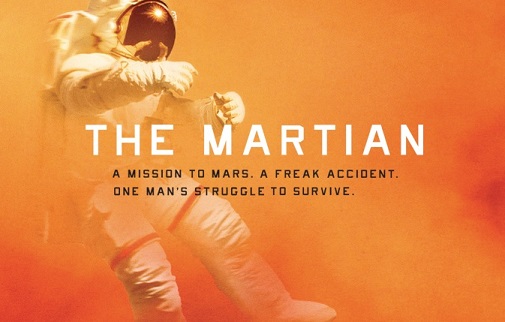 There is a lot of buzz surrounding Andy Weir’s novel, The Martian. It’s being made into a movie staring Matt Damon. Here, we will look at the book from a worldview perspective. There will be major SPOILERS in what follows.
The Value of a Human
One of the objections raised in the novel to moving missions around to try to save Mark is the sheer cost of the expedition. Why spend millions or even billions of dollars trying to save just one person, particularly when there are so many others who could be saved?
Towards the end, Mark himself is reflecting on this and he writes “The cost of my survival must have been hundreds of millions of dollars. All to save one dorky botanist. Why bother? …[T]hey did it because every human being has a basic instinct to help each other out. It might not seem that way sometimes, but it’s true… Yes, there are [expletive]s who just don’t care, but they’re massively outnumbered by the people who do. And because of that, I had billions of people on my side.”
The appeal to basic goodness of humanity is not without a number of assumptions. For example, how is it that the basic goodness of humanity is established? It isn’t just assumed–the evidence cited is that the overwhelming majority of people have basic instinct built into them to help others. But I wonder whether that evidence is drawn more from the extraordinary circumstances Mark found himself in than from the reality of human nature. It is a fact that women are taught in this country (the United States) to shout “fire” rather than “rape” if they are under assault, because people will answer more readily to cries to help fight a fire than they will try to intervene in an assault. The circumstances often determine how willing we are to go the extra mile to help others.
Thus, the conclusion seems a bit naive. Yes, the world pulled together in this work of fiction to help a man stranded on Mars–and I suspect that all kinds of red tape would, in fact, be cut if this ever happened–but that cannot be applied universally to every situation. The fact that there is so much human suffering happening right now–visible human suffering that can be seen in places that are, for example, attacked by IS, or wracked by storms, and the like–without humanity pulling together to stop it suggests that this notion of universal good will towards all is not as powerful as was suggested.
On the other hand, from a Christian perspective, each and every human life is precious, not because we have some inherent need to help others (though that could arguably be there), but because we share human nature, a nature given to us by God to be the image of God in this universe. Humans are valuable simply because they are humans, and we have an obligation to help those in need.
Humans and Others
It is not explored very deeply, but there is a sense throughout the book that humans are made to be with others. Mark feels a profound sense of loneliness when he realizes he is stuck on Mars, but he ultimately gets to work on trying to survive as quickly as possible. This work helps to distract him from his sense of loss, but at times throughout the book it crops up again. The sense of loneliness is at times crushing for him, but he is always able to get himself moving again, perhaps because he continually has hope that the loneliness will be squashed by being rescued or at least getting contact with Earth.
Humans are made to be people in community. I think this again reflects the Christian concept of the image of God. As God is Triune and in community (speaking here rather metaphorically, of course), we are made to be in community as well. Moreover, God created man but then realized “it is not good for man to be alone” and created a woman. These profound words are often explored from various angles, but I wonder whether they don’t also speak to us from a sense of loneliness. We are not meant to be alone but rather to exist in community. Our existential longing and loneliness ultimately points beyond ourselves to a higher reality–in which we may experience communion with God.
Conclusion
The Martian is an entertaining read. It doesn’t raise as many worldview questions as some other science fiction works do, but it does ask us to consider the value of humanity and shared experience. I’d recommend reading it, but be aware of a large amount of swearing.
Links
Be sure to check out the page for this site on Facebook and Twitter for discussion of posts, links to other pages of interest, random talk about theology/philosophy/apologetics/movies and more!
Popular Books– Read through my other posts on popular books–science fiction, fantasy, and more! (Scroll down for more.)
SDG.
——
The preceding post is the property of J.W. Wartick (apart from quotations, which are the property of their respective owners, and works of art as credited; images are often freely available to the public and J.W. Wartick makes no claims of owning rights to the images unless he makes that explicit) and should not be reproduced in part or in whole without the expressed consent of the author. All content on this site is the property of J.W. Wartick and is made available for individual and personal usage. If you cite from these documents, whether for personal or professional purposes, please give appropriate citation with both the name of the author (J.W. Wartick) and a link to the original URL. If you’d like to repost a post, you may do so, provided you show less than half of the original post on your own site and link to the original post for the rest. You must also appropriately cite the post as noted above. This blog is protected by Creative Commons licensing. By viewing any part of this site, you are agreeing to this usage policy.
Sunday Quote!- Making a Composite Jesus
 Every Sunday, I will share a quote from something I’ve been reading. The hope is for you, dear reader, to share your thoughts on the quote and related issues and perhaps pick up some reading material along the way!
Making a Composite Jesus
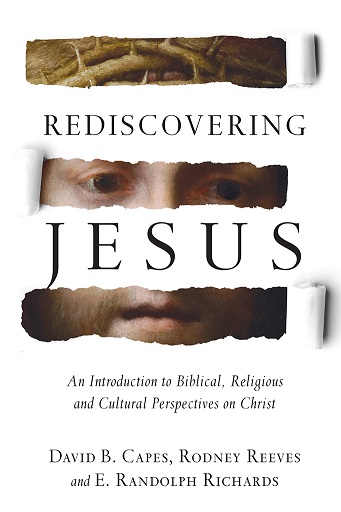
I finished reading through Rediscovering Jesus not too long ago and I was struck by something fairly early on: the authors challenged readers to come to the realization that we are often operating under a kind of composite portrait of Jesus:
My Jesus is often a smorgasbord Jesus, a Jesus who doesn’t look like the one in the Bible. Just like a buffet in the cafeteria, where I go through the line and pick out what I want, I read through the Gospels, pulling out stories I like. (17, cited below)
The authors go on to note that our view of Jesus is not only formed buffet-like from imagery found in the Bible, but also through various ways the culture has influenced us to think about Jesus. What are some of the ways that your picture of Jesus may have been shaped by extra-biblical imagery? How might we find the composite Jesus we have created that often stands alongside us as we try to read about Jesus in the scriptures?
Rediscovering Jesus is full of insights like this, and I highly commend it to you, dear readers.
Source
David B. Capes, Rodney Reeves, and E. Randolph Richards, Rediscovering Jesus (Downers Grove, IL: InterVarsity, 2015).
Links
Be sure to check out the page for this site on Facebook and Twitter for discussion of posts, links to other pages of interest, random talk about theology/philosophy/apologetics/movies and more!
Sunday Quote– If you want to read more Sunday Quotes and join the discussion, check them out! (Scroll down for more)
SDG.

 J.W. Wartick - Reconstructing Faith