Christianity
“The Measure of a Man” – Star Trek: The Next Generation and Personhood
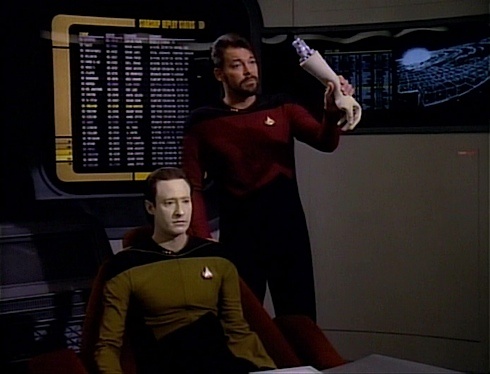 Star Trek: The Next Generation is my favorite television series. I’ve been rewatching it recently with my wife and I got to the episode called “The Measure of a Man” (check out my plot recap and review here). This episode brings up some issues I felt were pretty relevant for discussing here. We will explore only two major aspects of this episode: personhood and self-sacrifice. There will be SPOILERS for the episode in what follows.
Personhood
The episode centered around the question of whether Data could be property. Properly speaking, it seems the episode was centered around whether Data was to be considered a “person” in the legally relevant sense. The arguments brought up regarding this question were interesting, particularly for those of us interested in philosophy of mind.
Data’s conversation with Maddox, the scientist who wishes to disassemble him in order to build more of him, centers around phenomenal consciousness. Data argues that although he has no doubt Maddox could preserve the content of his memories by simply downloading the, erm, data from his brain, he thinks there is something more to these thoughts and memories than simple facts. There is a “feel” to thoughts which have a kind of aboutness that is ultimately beyond the facts and into the realm of experience.
Frankly, this is a stunningly complex argument to make for a television show. It reflects a kind of appeal to phenomenology: the content of thoughts and the “aboutness” or taste of them. Some philosophers of mind (and I would agree with them) argue that there is a real notion of this phenomenal aspect of thought which goes beyond the simple facts. Indeed, this very aspect of thoughts and feelings–the ability to have an “about” aspect to them–is the very criterion for consciousness which some philosophers appeal to. In context of the episode, if Data really has this “aboutness,” I would say it is indisputable that he would be a person (not to say that consciousness is required for personhood, but surely a self-aware, conscious being would by necessity a person be).
Ultimately, the episode climaxes in an argument over what is it that determines someone as human or a person, and Maddox summarizes the standard definitions well by appealing to self-awareness and consciousness–though again this is disputable: surely I am a person even when unconscious!–and the arguments center around this question. These are interesting and necessary questions and I think they get at the depth of the philosophical debate surrounding this issue.
Self-Sacrifice
Interestingly, this episode also clearly focuses on the concept of “self-sacrifice.” William Riker does not want to prosecute the case against Data, but he is forced to in order to save his friend. In one epic scene, he ends up flipping Data’s power switch off and as Data collapses he says “the strings are cut” referring to Pinocchio. The final scene shows Data finding Riker staring out into space, clearly pensive over his actions and hurt over his own seeming attack on his friend. Data, however, states that although Riker knew his actions would “wound” him, Riker still prosecuted the case because he knew the alternative would be, for Data, at least akin to if not literally death. Thus, Data says, Riker “saved me.”
This kind of self-sacrifice is found exactly at the heart of the Christian message. Christ was wounded for our transactions, and, as Riker does here, Jesus came knowing that such wounding would happen. These wounds were borne for our sake.
Conclusion
“The Measure of a Man” is one of those rare episodes of a serial TV show which forces viewers to take a step back and think–really think–on a topic. Whether you agree with the conclusions of the episode or not, it must be admitted it raises a number of interesting topics to explore. What do you think of this episode? What additional themes did you pick up in it? How do your favorite shows resonate with your worldview?
Links
Be sure to check out the page for this site on Facebook and Twitter for discussion of posts, links to other pages of interest, random talk about theology/philosophy/apologetics/movies and more!
Star Trek: TNG Season 2, “The Measure of a Man” and “The Dauphin”– Check out my ongoing recaps and reviews of Star Trek: TNG episodes at my “other interests” site, Eclectic Theist. Here, I review this episode and the following one. More recaps may be viewed here or by searching on that site.
The photo in this episode was a screenshot capture of the episode. I claim no rights to it and use it under fair use.
SDG.
——
The preceding post is the property of J.W. Wartick (apart from quotations, which are the property of their respective owners, and works of art as credited; images are often freely available to the public and J.W. Wartick makes no claims of owning rights to the images unless he makes that explicit) and should not be reproduced in part or in whole without the expressed consent of the author. All content on this site is the property of J.W. Wartick and is made available for individual and personal usage. If you cite from these documents, whether for personal or professional purposes, please give appropriate citation with both the name of the author (J.W. Wartick) and a link to the original URL. If you’d like to repost a post, you may do so, provided you show less than half of the original post on your own site and link to the original post for the rest. You must also appropriately cite the post as noted above. This blog is protected by Creative Commons licensing. By viewing any part of this site, you are agreeing to this usage policy.
Sunday Quote!- The Gullibility of Religious Experience?
 Every Sunday, I will share a quote from something I’ve been reading. The hope is for you, dear reader, to share your thoughts on the quote and related issues and perhaps pick up some reading material along the way!
The Gullibility of Religious Experience?
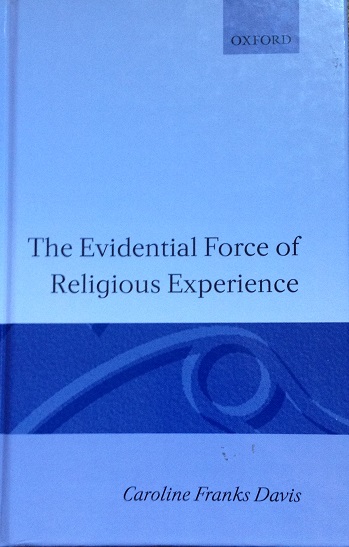
My discussions of the Argument from Religious Experience here have led to any number of challenges, many of which center around the notion that if we were to accept religious experience as a way to discern reality, why not also accept UFOs, Bigfoot sightings, and the like? In other words, the charge is that if we accept REs, we are somehow made gullible regarding other, non-desirable situations. Caroline Franks Davis, in her tour de force work on the argument from religious experience, The Evidential Force of Religious Experience, confronts this charge head on:
[T]he challenges to certain types of experience (e.g. dreams) and to experience of certain types of entities and phenomena (e.g. elves, ‘auras’) are so widely successful and so well-known that claims based on such experiences have come to be regarded by adults initially with suspicion rather than with credulity. (101, cited below).
The point is that in cases like those she lists, and others like UFOs, Bigfoot, etc., the challenges to such observations are indeed successful (i.e. an airplane light interpreted as a UFO) and well-known that we have an a priori reason to treat them with suspicion. However, it remains to be shown whether there are such successful and well-known rebuttals for the case of religious experience. Indeed, the majority of Caroline Franks Davis’ work is dedicated to showing that this is, in fact, not the case. Moreover, her argument in this section is more complex, and should not be reduced merely to this quote (which I have only done for the sake of this post!).
What are your thoughts? Do you think this is a successful rebuttal? How might we distinguish between credible cases and non-credible cases?
Links
Be sure to check out the page for this site on Facebook and Twitter for discussion of posts, links to other pages of interest, random talk about theology/philosophy/apologetics/movies and more!
Sunday Quote– If you want to read more Sunday Quotes and join the discussion, check them out! (Scroll down for more)
Source
Caroline Franks Davis, The Evidential Force of Religious Experience
SDG.
Question of the Week: Which apologetic method do you prefer?
 Each Week on Saturday, I’ll be asking a “Question of the Week.” I’d love your input and discussion! Ask a good question in the comments and it may show up as the next week’s question! I may answer the questions in the comments myself.
Apologetic Method
There are a number of different apologetic methods, such as evidentialism, presuppositionalism, classical apologetics, cumulative-case apologetics, Reformed Epistemology, and some even consider forms of fideism to be a type of apologetics.
I’m curious as to what your preferred apologetic method is:
Which apologetics method do you prefer? Do you consider it to be the only method which is viable?
There are some who argue that, for example, presuppositionalism is the only biblical apologetic method. Others (like myself) prefer an integrative approach which uses aspects of as many different approaches as possible. What are your thoughts? How have you used your apologetic approach most effectively? Let me know in the comments!
Links
Be sure to check out the page for this site on Facebook and Twitter for discussion of posts, links to other pages of interest, random talk about theology/philosophy/apologetics/movies and more.
Question of the Week– Check out other questions and give me some answers!
SDG.
Really Recommended Posts 8/1/14- Marriage, Biblical Songs, Confucius, and More!
 Here’s another go-round of great posts for your perusal, dear readers! As always, let me know what you thought, and be sure to drop a comment on those you enjoyed!
Co-Leadership in Marriage: Who’s in Authority?– A question which often comes up in discussions about egalitarianism–the view that men and women have equal authority in the church and home–is how one is supposed to determine who’s in charge in marriage. Here’s a solid post answering that question.
Man’s Fallible Ideas vs. God’s Infallible Word– It is often said that we should harbor some sort of distrust towards “Man’s Fallible Ideas.” Here, Luke Nix examines this claim and sees how it may be applied to issues like creationism.
The Two Most Overlooked Apologetics Verses in the Bible– There are many verses in the Bible which are commonly referenced when it comes to apologetics. Here, Tom Gilson brings up two which are not often referenced in terms of apologetics. I originally found this over at The Poached Egg, which is a site well worth you following!
All the Songs in the Bible [Infographic]– Here, there is an outline and explanation of every single song in the Bible. It’s pretty interesting to see them all written out and explained. Frankly, I find this to be one of the more interesting and helpful sites on the web related to general Bible knowledge. Be sure to follow it for some more excellent general Bible knowledge posts.
How Confucius proves Jesus– Did Jesus exist? How we approach this question should be consistent. How do we explore other historical questions? Check out this post, which explores the question.
“Family Guy” is no friend of atheists
 I used to watch almost every episode of Family Guy in the first season or two. I thought it was sometimes a clever show, but as it went on it seemed to devolve into a series of flashbacks and random, drawn-out asides which broke apart the coherence of the story. I recently saw most of an episode of “Family Guy” in which it was revealed that Brian, the family’s dog (who talks and is essentially part of the family), is an atheist. The episode is called “Not All Dogs Go to Heaven.”
My first observation is that despite the apparent intent to make people more aware of the demonization which happens with atheists, the episode does not portray Brian in the best light by any means. For one, Brian’s reasons for remaining an atheist are revealed to be a bit absurd to say the least. When Meg–the daughter who is often the butt of jokes on the show–asked Brian why he doesn’t believe in God given “all the evidence,” he responded with an argument that made my jaw drop. To paraphrase him, he said that Hubble Space Telescope has been taking so many amazing pictures of the wonders of the universe but has never found some old man with a white beard “out there” somewhere. It then cut to an aside with an old man with a beard riding on something with some sweet music in the background [see my comments on the show being a bunch of asides and flashbacks].
Seriously, that is apparently one of Brian’s main reasons for rejecting theism, according to the episode. Really? I don’t know if this is really a reflection of what Seth MacFarlane (creator of Family Guy) believes about Christianity; but if it is he needs to perhaps reflect upon his own rejection of it. The notion that God should be found somewhere in the physical universe by something as simplistic as the Hubble Space Telescope (or anything, for that matter) and would be seen as an old man with a beard is… well, obscene. If that were my picture of what Christians believed, I’d be an atheist too. But Christians don’t believe this. Instead, they believe that God is spirit and one cannot artistically make anything which looks like God. The old man with a beard was popularized by some Christian art which, for the sake of depicting deity, chose that image to portray God. That doesn’t mean Christians actually believe God is an old man with a beard cruising through space somewhere.
The worst part about this scene is that it seems like Brian is supposed to get points for his response here somehow. That is, it’s like the viewer can feel a running tally going and apparently they’re supposed to check one off for the atheists. But gross misrepresentation of others’ religion does not mean that one has made a good point. Sure, people can sit around laughing at the notion that God is some old white guy–I’ll join them!–but to think that Brian said anything constructive is absurd. I realize it is a TV show, and a fairly shallow one at that, but I expected more. Mea Culpa, I suppose.
So it seems Brian’s atheism is based upon a farce. But that’s not the only reason I think this episode is actually unfriendly to atheists. In a later conversation with Meg, who has newly found a rather zealous faith, he confronts her belief directly with what is apparently some kind of knock-down argument because it destroys her faith:
Meg: “You are not gonna turn me from my faith, Brian!”
Brian: “Ok, fine. Then let me just ask you this. If there were a God would he put you here on Earth with a flat chest and a fat [butt]?”
Meg: “I’m made in his image…”
Brian: “Really? Would he give you a smoking hot mom like Lois and then have you grow up looking like Peter [her odd looking father]? …And what kind of God would put you in a house where no one respects or cares about you?”
That is essentially the extent of the comments on Brian’s reasoning for atheism. Apparently, for Brian [and perhaps MacFarlane, depending upon if he is actually sharing his view], God’s entire purpose should be to go around making everyone’s life the best possible life ever. God is some kind of cosmic vending machine, and if you don’t win the lottery, you should doubt the existence of that vending machine. What was most horrifying about this sequence, in my opinion, was the fact that the “image of God” was reduced down to having a hot body. Ridiculous! Being made in God’s image does not mean that everyone is going to be physically perfect. Such a notion completely misrepresents what is meant by the “image of God” which historic Christianity has long held refers to the intellect, soul, reason, etc.; not physical perfection or even physical form.
Brian’s last retort seems to seal the deal for Meg. After all, why would God put people in homes in which they aren’t cared for? Well, I don’t know, why would God put Joseph in a home in which his brothers sold him into slavery? Oh… right. You see, anyone who thinks that is an objection to the existence of God presumes they know better than God. That is, they know how to run things; they should be in charge. But I’m sorry to anyone who thinks that: you don’t. Moreover, why assume that we should know the reasons for this, or even that there are reasons? Again, I am stretching the philosophical muscle of the show quite a bit [understatement of the millenium], but the whole episode seems disingenuous.
The episode did do some good things, however, in showing the absurdity of mistreating and abusing atheists due to their lack of shared belief. I agree with this. We should not say atheists are automatically terrible people or that we wouldn’t want to live next to them. Anyone who does endorse mistreatment of atheists is acting in a decidedly un-Christian manner and should repent. Period. My point in this post is simply that this episode of Family Guy doesn’t do atheists any favors. It misrepresents Christianity in order to abuse it, but it also presents atheism in an extremely shallow way. Rather than spurring discussion, the episode merely seems bent upon mutual ridicule. I hope my atheist friends would choose, instead, to engage in dialogue rather than resorting to this kind of nonsense–and the same goes for my Christian friends as well.
Links
Be sure to check out the page for this site on Facebook and Twitter for discussion of posts, links to other pages of interest, random talk about theology/philosophy/apologetics/movies and more!
——
The preceding post is the property of J.W. Wartick (apart from quotations, which are the property of their respective owners, and works of art as credited; images are often freely available to the public and J.W. Wartick makes no claims of owning rights to the images unless he makes that explicit) and should not be reproduced in part or in whole without the expressed consent of the author. All content on this site is the property of J.W. Wartick and is made available for individual and personal usage. If you cite from these documents, whether for personal or professional purposes, please give appropriate citation with both the name of the author (J.W. Wartick) and a link to the original URL. If you’d like to repost a post, you may do so, provided you show less than half of the original post on your own site and link to the original post for the rest. You must also appropriately cite the post as noted above. This blog is protected by Creative Commons licensing. By viewing any part of this site, you are agreeing to this usage policy.
Pascal’s Wager: The Utility Argument Explained
 …I realized that Pascal’s Wager is a much stronger argument than I had thought.
Let’s get it out of the way: Pascal’s Wager does not have much “street cred.” It’s much-maligned as nothing more than rolling the dice, and doing so for no good reason. After all, on which deity should one wager?
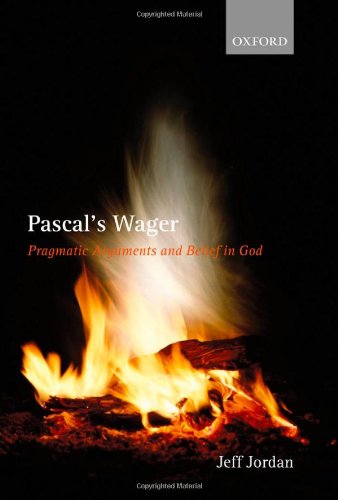
Here, I’ll take a look at one formulation of Pascal’s Wager, then very briefly offer a way to perhaps circumvent the “many gods” objection. I’ll be relying heavily upon Jeff Jordan’s book, Pascal’s Wager: Pragmatic Arguments and Belief in God, in what follows.
One way to lay out the Wager may be as follows (quoted from Jordan, 23, cited below):
1. for any person S, and alternatives, a and b, available to S, if the expected utility of a exceeds that of b, S should choose a
2. believing in God carries more expected utility than does not believing
3. Therefore, one should believe in God
Now, this is a pretty straightforward argument. 3, the conclusion, follows via modus ponens. Thus, it is up to the one who wants to deny 3 to deny one of the premises. Let’s examine each in turn.
Premise 1 seems to be logical, but it has actually garnered just as many objections as the second premise. Some have argued that one should not reduce belief in God to a “gamble” or some pragmatic choice. Others have argued that one cannot simply choose to believe and argued that the Wager results in Doxastic Voluntarism–the notion that one may simply change beliefs at will. In order to combat each objection in turn, one would have to show that it may be permissible to choose pragmatically even in religion. Jordan argues to this effect at length, but for the sake of argument I think it may be enough to just say that generally, we do make choices which we think will benefit us, and this is not an objectionable path of reasoning. Moreover, the Wager does not reduce to doxastic voluntarism, for one may indeed change one’s disposition toward something, but not at will. This is a complex argument, and I think we may set it aside for now because there is nothing in Premise 1 which would demand doxastic voluntarism.
Premise 2, of course, is highly contentious as well. Some allege that belief in God prevents the joys of hedonistic living; others allege that one would not know which deity to choose; still others would argue that there could exist deities that would reward unbelief.
Again, dealing with each in turn would take quite some time, so I’ll simply offer a few comments. First, hedonistic living in one life would not outweigh the benefits of eternity with a benevolent deity. Second, the Wager may simply be used to prefer theism generally–after all, if one does not wager on any deity, there would be no possibility of infinite (or nearly limitless) expected utility from one’s wager. Third, inventing fictions to attempt to rival established religious traditions which have, presumably, been believed by our epistemic peers (to use the term of Jordan, 80-81) does not put them on par.
Now, it should be fairly clear that even an incredibly low probability for God’s existence may have much higher expected utility than unbelief, for the overall possible gain is much higher. Jordan elaborates on this and answers many objections (such as the notion that “betting” on something which is highly improbable is necessarily irrational). For now, I simply leave this statement hanging because it helps my purpose, which is to demonstrate to those interested that the Wager is worth investigating further.
Because of the above, another of the strengths of the argument may be found in its usefulness to the apologist. Pascal’s Wager, Jordan argued, may be viewed as a kind of “last ditch” argument for apologists and theism (24). After all, suppose one were to come up with an argument which convinced you that the truth of theism is quite unlikely indeed. In that case, Pascal’s Wager provides a rational reason to continue to believe in God. For, even if it is unlikely that God exists, the utility of believing that God exists has a potentially infinite reward and thus trumps the utility of not believing that God exists.
Remember, though, that this functions for any possibility of God existing that is greater than zero. It was at this point in the book that I realized that Pascal’s Wager is a much stronger argument than I had thought. Not only may it be adequate to ground theistic belief, but it also may serve as a kind of bulwark against anti-theistic arguments as well.
I have argued that Pascal’s Wager may be formulated in such a way that one should believe in God. Now there is, of course, much more nuance and many more objections to each premise. Interested readers should check out Jeff Jordan’s Pascal’s Wager: Pragmatic Arguments and Belief in God.
Links
Be sure to check out the page for this site on Facebook and Twitter for discussion of posts, links to other pages of interest, random talk about theology/philosophy/apologetics/movies and more!
Question of the Week: Wagering Much?– In this post, I asked the question of apologists about whether or not they used Pascal’s Wager. The feedback I got was diverse and interesting. Check out the post, and let me know your own thoughts.
Source
Jeff Jordan, Pascal’s Wager: Pragmatic Arguments and Belief in God
SDG.
——
The preceding post is the property of J.W. Wartick (apart from quotations, which are the property of their respective owners, and works of art as credited; images are often freely available to the public and J.W. Wartick makes no claims of owning rights to the images unless he makes that explicit) and should not be reproduced in part or in whole without the expressed consent of the author. All content on this site is the property of J.W. Wartick and is made available for individual and personal usage. If you cite from these documents, whether for personal or professional purposes, please give appropriate citation with both the name of the author (J.W. Wartick) and a link to the original URL. If you’d like to repost a post, you may do so, provided you show less than half of the original post on your own site and link to the original post for the rest. You must also appropriately cite the post as noted above. This blog is protected by Creative Commons licensing. By viewing any part of this site, you are agreeing to this usage policy.
Sunday Quote!- Is God in Control of Disasters?
 Every Sunday, I will share a quote from something I’ve been reading. The hope is for you, dear reader, to share your thoughts on the quote and related issues and perhaps pick up some reading material along the way!
Is God in Control of Disasters?
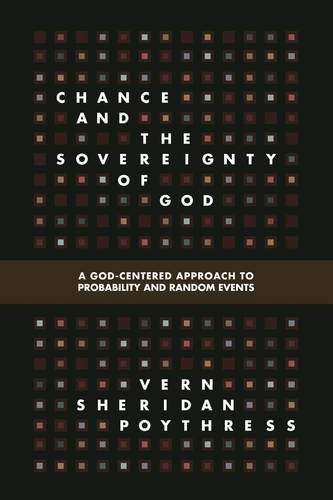
I’ve been reading through Chance and the Sovereignty of God
The main alternative is to say that God is not thoroughly in control. It says that some disasters “just happen,” apart from God’s control. This alternative is superficially attractive, because it appears to protect the goodness of God… further reflection shows that it is not satisfying–in fact it is spiritually devastating… If God is in control… we have a consolation such as the Bible provides… that God is able to bring good out of evil.
…[W]hat if we say that God is not in control of the disaster? God might still do something good in the response. But the disaster itself is still out of control, and inherently unredeemable. There is no comfort to be had for it. We are left with fear for the future. (Kindle location 738, cited below)
What do you think? When a disaster strikes, like Hurricane Katrina, it is inevitable that some will stand up and say it was God’s judgment on a town. Others quote Jesus’ words in Luke 13:1-5 and say that these disasters come seemingly at random. Are these mutually exclusive claims? What are your thoughts on Poythress’ comments: do they show that it is better to say God is in control than not?
Links
Be sure to check out the page for this site on Facebook and Twitter for discussion of posts, links to other pages of interest, random talk about theology/philosophy/apologetics/movies and more!
Sunday Quote– If you want to read more Sunday Quotes and join the discussion, check them out! (Scroll down for more)
Book Review: “Chance and the Sovereignty of God” by Vern Poythress– Check out my review of this interesting book about chance and God’s control over all events.
Source
Vern Poythress, Chance and the Sovereignty of God: A God-Centered Approach to Probability and Random Events (Wheaton, IL: Crossway, 2014).
SDG.
Question of the Week: Where do you stand on gender?
Each Week on Saturday, I’ll be asking a “Question of the Week.” I’d love your input and discussion! Ask a good question in the comments and it may show up as the next week’s question! I may answer the questions in the comments myself.
Gender
It’s no secret on this blog that I support egalitarianism–the view that men and women should serve God through giftedness instead of by gender (read on this topic here). However, I’m curious to see what spectrum my readers have on this important topic.
What do you think is the correct biblical view of the relationship between the genders?
It is worth noting that the dichotomy between full egalitarianism/full complementarinism is a false one. There are those who hold that women may be leaders in the church but not the home (and vice versa), along with a spectrum of other beliefs among these. So I’m curious to know what you think. Let’s not start a theology war here; this post is intended merely for sharing your position.
Links
Be sure to check out the page for this site on Facebook and Twitter for discussion of posts, links to other pages of interest, random talk about theology/philosophy/apologetics/movies and more.
Question of the Week– Check out other questions and give me some answers!
SDG.
Really Recommended Posts 7/25/14- Lewis, Jesus Myth, the Bible, and more!
Around the ‘net we go, where we stop, I guarantee a good read! Check out this latest round of recommended posts, on subjects like C.S. Lewis’ apologetics, the need to read the Bible, the Jesus myth, and more! Make sure to drop a comment at the sites of those whose posts you enjoyed, and let me know what you thought her!
The Telephone Game and Biblical Transmission– Is the “Telephone Game” really an analogue for how the Bible was transmitted over time? Short answer: no. Check out this post to find out many problems with this analogy.
C.S. Lewis and the Language of Apologetics– I cannot emphasize how great a read this post is. It discusses how Lewis’ apologetic is able to penetrate even secularized countries like the Czech Republic. It is imperative to realize that the Gospel is to be presented in different ways to different people. I discovered this post through The Poached Egg, which is a site well worth bookmarking for its constant stream of quality apologetics links.
How do you respond to Conquests in the Old Testament– The problem of “Holy War” in the Bible is one which many feel acutely. Here, some of the most interesting responses are briefly summarized. I found this to be a helpful introduction to the issues.
Why Mythicism Should Not Be Taken Seriously– Nick Peters looks into some of the issues with the “Jesus Myth” movement. In particular, he examines the historiographic approach of those who are trying to show that Jesus never existed. It’s a fascinating read about a strange topic.
Open the Book– Here is an exhortation: open the Bible and read it! This post is worth a read too, as it gives a brief history behind how we got the Bible in our hands today.
7 Things Christian Parents Can Learn from the Tim Lambesis Story– Here, some very good insights into the need for apologetics and solid grounding in theology are taken from the story of Tim Lambesis- the lead singer of a band who has recently said he rejected his Christian faith but kept the label in order to sell records. Check out these great insights. See also my post On Christian Music.
Ken Ham Declares Aliens Eternally Doomed
 Ken Ham, a prominent young earth creationist and the founder of Answers in Genesis, recently lamented on his blog about the money being spent on the search for extraterrestrial life in space. Interestingly, part of his objection was that aliens probably don’t exist because they would not be saved:
I do believe there can’t be other intelligent beings in outer space because of the meaning of the gospel. You see, the Bible makes it clear that Adam’s sin affected the whole universe. This means that any aliens would also be affected by Adam’s sin, but because they are not Adam’s descendants, they can’t have salvation.
That’s correct: according to Ken Ham, we can speculate about whether aliens may or may not exist (though both he and I agree that we think it is very improbable), but we can know for sure that aliens cannot be saved. Keep this in mind through the rest of my post: Ken Ham did not say that aliens may not be saved, but rather that they “can’t” be saved.
Space and Cost
Ken Ham was concerned with the notion that we’re spending so much money on space travel: “I’m shocked at the countless hundreds of millions of dollars that have been spent over the years in the desperate and fruitless search for extraterrestrial life.”
I would first point out that the money being thrown at this is hardly exclusively dedicated to the search for ET. Rather, much of it goes to new technology like new telescopes, listening devices, etc. which actually bring benefits for the rest of society. Thus, the money is not being spent in a “fruitless” fashion.
One might come back and say: “What if all that money was instead spent on feeding the hungry, clothing the needy, etc.?” I think that’s a valid point and it is one with some initial force. One wonders, though, about the notion of division of effort. There is a real sense in which not all of human effort may be directed towards one end. As a Christian, I certainly desire to aid those in need, but I would not say that means every dollar I spend should be directed towards that end. There are other evils than need in the world (such as abortion) to direct effort towards, and there are also other goods to promote (evangelization would be one I would list). As such, my activity must be divided. Similarly, on a national level, there are numerous ends to pursue, and an argument which reduces national spending to a single issue is simplistic.
I’m open to disagreement here and would love to hear from those who are either pro-space exploration or con. I lean pro- but I think there is some force to arguments against.
 Doomed Aliens
The thrust of Ken Ham’s post, however, was that aliens would not be saved. He acknowledged that “[T]he Bible doesn’t say whether there is or is not animal or plant life in outer space.” Given his nod to the fact that the Bible is clearly not concerned with the broader universe, it is then shocking to find that Ham asserted without qualifications that “[aliens] can’t have salvation.” I wonder: where is that found in the Bible? Where might I find the notion that: “If aliens exist, they can’t have salvation” implied in the Bible?
Ham’s argument was an implicit one: because “The Earth was created for human life” (an example of the single-end fallacy regarding God’s creation which I discussed elsewhere), and “Adam’s sin affected the whole universe. This means that any aliens would also be affected by Adam’s sin, but because they are not Adam’s descendants, they can’t have salvation.”
The argument depends upon a number of hidden and explicit premises. First, one must ask in what way Adam’s sin affected the whole universe. Does that mean that intelligent aliens instantly became cursed and condemned by the Fall? It seems Ham’s argument depends upon that premise, but there is surely no bibical data to back that up. Rather, Ham is assuming that the Fall means that any other life in the universe would necessarily be sinful and in a state of rebellion against God. Although the Bible speaks of humans being in rebellion against God, and it speaks of “all creation groan”ing awaiting for God’s coming to reconcile all things, it is surely a massive inference to leap from that to the notion that any aliens anywhere are eternally doomed.
Second, the argument assumes that God did not or would not (can not!?) mediate between other sentient beings and God. Surely it is a major assumption to state that God would not operate in a certain fashion about speculative aliens who have speculatively been included in the Fall and are speculatively doomed for eternity! For Ham to turn around and just assert that God would not save these aliens (or again, perhaps cannot, because he states that they “can’t have salvation), is a major theological error.
Third, and perhaps most importantly, the question of how Ham reconciles his first premise with his premise that “because [aliens] are not Adam’s descendants, they can’t have salvation.” After all, the same proof-texts which may be cited to try to imply that all of creation groans under the Fall (Romans 8) could also be taken, when read with the same presumptions, to mean that aliens will be saved or at least have hope of salvation: “For the creation was subjected to frustration, not by its own choice, but by the will of the one who subjected it, in hope the creation itself will be liberated from its bondage to decay and brought into the freedom and glory of the children of God [Romans 8:20-21 NIV].”
Thus, Ham’s argument has a faulty conclusion: if it is true that all of the universe fell through Adam and is therefore doomed, then it equally follows that, according to the same text, it will all be saved through Jesus as the new Adam (not universalism, but rather the “hope of salvation”). There are no grounds for Ham’s assumptions.
Conclusion
Ken Ham has overstated his case to the extreme. Although he may have some force to his argument about the needless spending of money on various space exploration projects (and again, I think these aren’t needless but that perhaps his side has some a priori power), he has committed some major blunders when it comes to speaking of the possibility of alien salvation.
As always, I’d love to have your thoughts in the comments. What do you think about Ham’s statements? Be sure to check out his blog post to get his side of the argument.
Links
Be sure to check out the page for this site on Facebook and Twitter for discussion of posts, links to other pages of interest, random talk about theology/philosophy/apologetics/movies and more!
Alien life: Theological reflections on life on other planets– I engage in some [highly] speculative theology related to the possibility of aliens.
Did God Create the Universe for Humans?-Some Thoughts on God’s purposes for creating– I argue that God’s purposes in creating are needlessly limited when people object that God created the universe [only] for humankind.
Aliens that believe in God: The theological speculations of Robert Sawyer’s “Calculating God”– I reflect on a science fiction book, Calculating God, which has aliens that believe in God.
SDG.
——
The preceding post is the property of J.W. Wartick (apart from quotations, which are the property of their respective owners, and works of art as credited; images are often freely available to the public and J.W. Wartick makes no claims of owning rights to the images unless he makes that explicit) and should not be reproduced in part or in whole without the expressed consent of the author. All content on this site is the property of J.W. Wartick and is made available for individual and personal usage. If you cite from these documents, whether for personal or professional purposes, please give appropriate citation with both the name of the author (J.W. Wartick) and a link to the original URL. If you’d like to repost a post, you may do so, provided you show less than half of the original post on your own site and link to the original post for the rest. You must also appropriately cite the post as noted above. This blog is protected by Creative Commons licensing. By viewing any part of this site, you are agreeing to this usage policy.

 J.W. Wartick - Reconstructing Faith