Christianity
Really Recommended Posts 10/12/12
 Another great run around the internet today. I noticed that this edition of Really Recommended Posts has a lot on Christianity and Science, Islam, and religious or activist violence. Abortion, biochemistry, the Qur’an, violence in Islam, Mitt Romney, and more are all featured. Check out the posts. If you like them, let me know.
Cataloging the Historical Anachronisms in the Qur’an– Does the Qur’an potray accurately the period that it purports to describe in historical narrative? It does not seem so. Check out some of the anachronisms which crept in.
New peer-reviewed paper in Nature falsifies Darwinian junk DNA prediction– Darwinian Evolution has long used the notion of “junk DNA” as confirmation of its naturalistic processes. However, recent study has confirmed one of the predictions of the Intelligent Design movement: this supposed junk DNA would prove to be useful. I don’t claim to be a scientist at all, but I find this very intriguing. Check out the article.
Hey Atheists, Just Shut Up Please [LANGUAGE WARNING]- I found this article very interesting. An atheist discusses how people can tend to hate the “other” in their over-enthusiastic attempts to refute them. I was pleased with the article in general, but be aware that there is some strong language there. I myself have written about how religion is often used as a mechanism to hate the “religious other.”
Would a Romney presidency boost Mormonism?– Some Christians have come out saying they are afraid to vote for Romney because it would boost Mormonism. A pastor responds briefly to these claims.
Why Abolition Must be Non-Violent– The Abolish Human Abortion blog discusses why we in the pro-life movement must not resort to violence. The struggle is between worldviews, and pro-life persons cannot say they are pro-life while using violence.
Modern Muslims Who Choose the Path of Violence– Nabeel Qureshi discusses violence in Islam and the fact that Islam is not monolithic. The important thing to think about is how and when Islam turns violent. As I have emphasized elsewhere, religion and violence must be analyzed empirically, not with a mind towards demonizing the religious “other.”
Yes, the media does deliberately misrepresent and demonize creationists– Readers of my blog know I do not hold to a young-earth position. However, like Glenn Andrew Peoples I am still offended when the media blatantly misrepresents my Christian brothers and sisters. Check out this thoughtful post.
Reformation Review: A look at the origins of the European Reformations
 The Reformation [I am going to use the term “Reformation” to refer to the European Reformations and the Roman Catholic counter-Reformation] is a period of extreme importance for those who seek to understand Christian theology. Many of the debates that are happening now can trace their roots to this period of history.
One of the most important aspects to understanding the Reformation–and, by extension, much of the development of theology after the Reformation–involves looking into the origins of the movements. How is it that the Reformation started? What brought about the notion that it was necessary to reform the Church?
In his Reformation Thought: An Introduction
Social Factors in the Reformation
The organization of cities was one factor that led to the success of the reformation. McGrath notes that individual cities during this period had come to regard itself as a kind of individual state. However, due to the failures of many of these cities to provide for their citizens and their growth over time, there were calls for a broader and representative government (McGrath, 16, cited below).
Cities had become centers of power and experienced “remarkable growth” due to the various agrarian crises and plagues that had taken place in earlier years (Carter Lindberg, The European Reformations
Furthermore, the control of the city council over the general practices and laws of the cities often led to a “symbiotic relationship” between a reformer and the city council. “The reformer, by presenting a coherent vision of the Christian gospel and its implications for the religious, social, and political structures and practices of a city, was able to prevent a potentially revolutionary situation from degenerating into chaos” (McGrath, 19).
Some reformers were very tied to the social aspects of the reformation. For these reformers, “the Reformation involved the identification of ‘citizen’ with ‘Christian’… Thus Zwingli laid great emphasis upon the need to reform and redeem a community, whereas Luther tended to concentrate upon the need to reform and redeem the individual” (McGrath, 20).
Doctrinal and Moral Concerns and the Reformation
One of the primary concerns of the reformers was that the Church could “best be reformed and renewed by returning to the beliefs and practices of the early church” (McGrath, 20). The reformers observed many problems with the Church of their time and felt that it was important to return to the “golden age” of Christianity, which they interpreted largely as the patristic period.
There had been a growth in popular religion which was largely disconnected from that of the Church. “Folk religion” focused upon the “needs of rural communities–such as haymaking and harvesting” (McGrath, 24). A lack of confidence in the pope and the clerical system contributed to the need for reform. Furthermore, the laity was becoming more educated, which led to a problem for the Church. Due to the Roman Catholic church’s system at the time in which positions of authority would be given often to the highest bidder, there were many in the Church who never visited their parishes or had little interest in or understanding of that which they were supposed to preach. The educated laity became increasingly aware of the many errors even parish preachers would make in their renditions of the Latin in the Mass (some of these priests had merely memorized the service without understanding it themselves!) (24ff).
Furthermore, throughout the Scholastic era, the Church had tolerated a kind of doctrinal pluralism. The Church recognized the need for allowing the academics to debate various issues, but this led to a serious question: “[W]hich of these schools of thought [theological schools of thought like Thomism or Scotists] was right?” (McGrath, 28). Yet the Church had suffered from a kind of schizophrenia about centralized authority. Was the authority in the Church found in Councils or in the Pope (Lindberg, 44ff)? Questions like these led to the need for reform. The reformers focused on who had the right to decide doctrine and the need for God’s word in the vernacular of the populace.
Two Primary Movers
There were two primary focuses for the individual reformers: the moral sphere and the doctrinal sphere. While it is necessary to avoid drawing a false either-or dichotomy between these, it is equally important to note that the various reformers focused largely one way or the other. Broadly speaking, several reformers in the Wittenburg/Swiss tradition focused upon the need to reform the very teachings and doctrines of the church, while those in the humanist (not to be confused with modern notions of humanism as atheism, but rather as a system of thought and practice) tradition focused upon the need to reform the moral practice of the church.
Again, neither of these should be seen as exclusive of the other. Moral reform often involved doctrinal reform and vice versa. What must be emphasized, however, is that the reformers differed at points on whether it was more important to have right belief or right practice. Surely both thought both were necessary, but the question was how to integrate these into the Church and furthermore which should come first as important. Such differing emphases can be observed, for example, in the doctrine of Scripture. The humanistic reformers tended to see the Bible as a guide for morals, while the Wittenberg and Swiss reformers tended to see it as a “record of God’s gracious promises of salvation to those who believed” (see discussion in McGrath, 55-57).
More to Come!
Thus, the stage was set for reform of the church. Societal and doctrinal pressures were in place that would lead to the need for reflection on the spheres of belief and practice. The debates that raged through the reformation continue to rage today.
Throughout October and into the next few months (and perhaps beyond, depending on the feedback/readership I get here), I will be exploring various aspects of the Reformation. I will look at some important thinkers of the Reformation period and will also focus on some modern theology which can trace its roots back to the reformation. Why October [and beyond]? Well, Reformation Day is October 31st! Be ready to learn with me, and please ask questions and leave some comments!
Alister McGrath’s book was a gift from an anonymous donor. I was blown away when I saw it show up at my door and I have to say Thank you so much for being such a blessing! Whoever you are, you made my day. Well, more than just one day actually. This series of posts is a direct result of your donation. Thank you!
Links
The Church Universal: Reformation Review– What makes a church part of the Church Universal? What makes a church part of the true church? I write on these topics (and more!) and their origins in the Reformation.
Who Interprets Scripture? Sola Scriptura, the Reformation, and the modern era: Reformation Review– I investigate the notion of “sola scriptura” and its different applications in interpreting Scripture. I particularly emphasize the problem of doctrinal unity and the various ways church bodies have dealt with these difficulties from the Reformation into today.
Sources
Alister McGrath, Reformation Thought: An Introduction
Carter Lindberg, The European Reformations
SDG.
——
The preceding post is the property of J.W. Wartick (apart from citations, which are the property of their respective owners, and works of art as credited) and should not be reproduced in part or in whole without the expressed consent of the author. All content on this site is the property of J.W. Wartick and is made available for individual and personal usage. If you cite from these documents, whether for personal or professional purposes, please give appropriate citation with both the name of the author (J.W. Wartick) and a link to the original URL. If you’d like to repost a post, you may do so, provided you show less than half of the original post on your own site and link to the original post for the rest. You must also appropriately cite the post as noted above. This blog is protected by Creative Commons licensing. By viewing any part of this site, you are agreeing to this usage policy.
A Christian look at “John Carter”
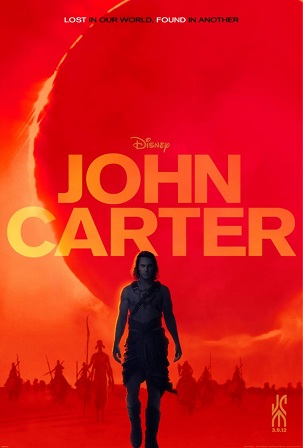
Disney’s “John Carter
Heroism and Just War
John Carter is a hero with a haunted past. The movie, unfortunately, never really explores his history much. From what I could tell, he went to war and came back to find his family had all been killed and his house burned as part of the conflict. He thus swore off fighting for a cause and instead decided to seek his fortune.
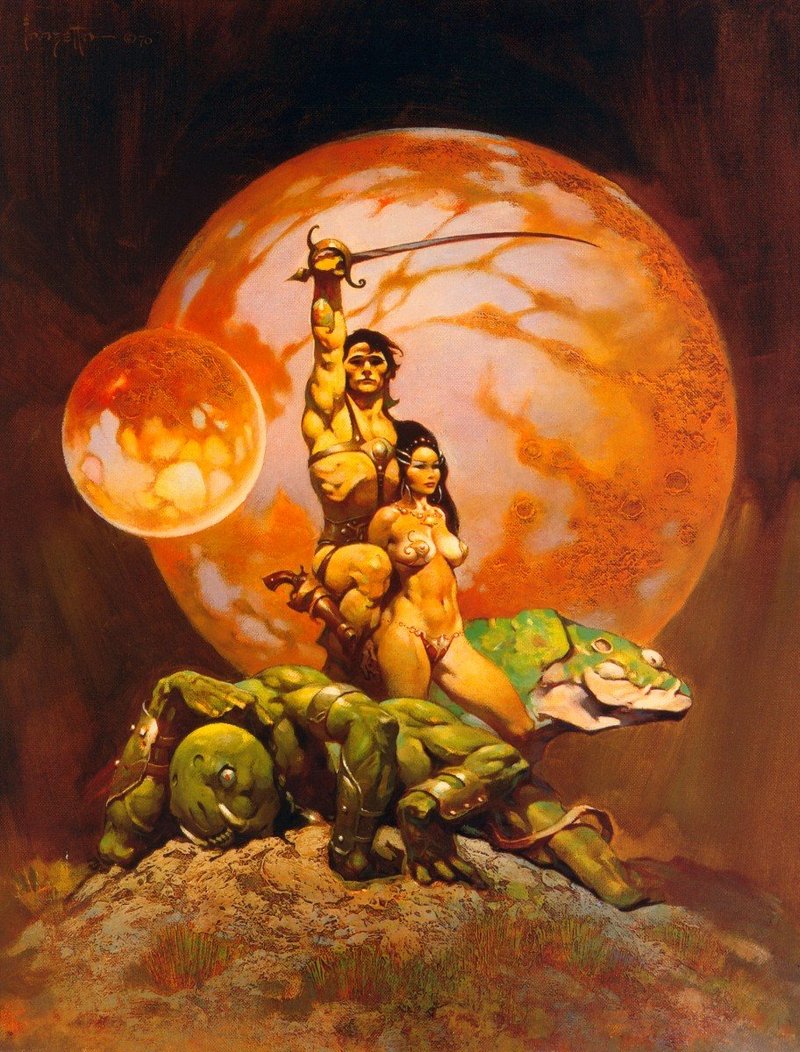
Once Carter reaches Mars (Barsoom), however, he is thrown into a conflict in which he realizes that the fate of an entire planet rests upon the victory of the city of Helium. Once he realizes the implications of this battle (and conveniently, finds the princess of Helium particularly attractive) Carter aligns himself with the Tharks, a race of aliens largely viewed as savages by the humanoid aliens on the planet. He is able to seal victory for Helium by making the Tharks realize that they, too, have a place on Barsoom which is influenced heavily by the conflict between Helium and Zodanga.
The movie touches, then, on the notion of a just war. Helium is trying to save the planet, while Zodanga does little but consume and subjugate. The Tharks view both sides as neutral and prefer them to continue fighting, as long as the war stays away from them. Yet it becomes clear that due to the influence of the Thern–an extremely advanced (technologically speaking) race which seeks to orchestrate the destruction of planets–that the conflict has implications for everyone on Barsoom, and indeed, on Earth.
Sin
The Tharks have a tradition in which they brand their people as punishment for their sins. The brands are placed so that they continue to cover one’s skin throughout their lives. If one has committed enough offenses that there is no longer any place for a branding, then one is either killed or thrown into the arena to fight against impossible odds. One’s sins literally cover their flesh. One cannot escape from one’s offenses. There is no redemption.
Christianity affirms that sin is something for which one can make no redemption for themselves. One’s sins are, in a sense, branded onto one’s past. Only by repentance and grace through faith can one be saved. There is no escape from one’s offenses except through the full and free forgiveness through Jesus Christ our Lord. There imagery in the movie of one’s sins being displayed on one’s flesh is powerful, and it resonates with the Christian view that our sins condemn us forever. Only by grace can we be saved. There is no removing the sins–branded onto us–by our own power.
Religion
The Therns are supposedly oracles of the goddess. However, it turns out that they are actually dedicated to manipulating civilizations across the galaxy. It is never discussed whether the goddess and the Therns were ever actually genuine, but it seems fairly clear that those calling themselves Therns are just using the title in order to gain power.
Religion is therefore seen as a kind of way to manipulate and enthrall the masses. All of the sides of the conflict are shown to be dedicated to the goddess, but none seems to have the full truth. However, it does seem that the dedication of the Tharks, in particular, shows a resonance with truth and a genuineness that reaches beyond the mere use of religion as subjugation. The movie, I would say, gives an overall neutral view of religion. In some ways it can be used for ill, but it nonetheless is not inherently evil.
Yet another aspect of religion in the movie, however, is that one can observe the difference between genuine faith and exploitative faith. It is clear that many of the Therns genuinely believed in the goddess and there are scenes which convey a sense of awe over the faith on Barsoom. Religious practice is seen as taking place on a genuine level and being an important part of the lives of the practitioners. These religious persons are seen as genuine and largely trustworthy. On the other hand, those who seek to exploit the faith are seen as inherently evil. Such a view should resonate with Christians, who are instructed to be aware of those within the church who would seek to lead us astray (antichrists).
 Alien Life and social (in)justice
Social justice is an underlying theme in the movie. By portraying the alien Tharks as the outsiders, the movie is able to focus on the notion that the downtrodden and overlooked can rise above the limitations of their position. Although viewed as unequals, they are equals.
One poignant scene early in the film showed a hatchery for the Tharks. They came to collect the hatchlings and it turned out that some eggs hadn’t yet hatched. The Tharks then fired on all the eggs with their gun and destroyed the “weak” young. I couldn’t help but think that this is largely what is happening in the real world with abortion [a topic I have written on extensively].
Here again, worldviews rear their ugly heads. The faith of Barsoom is a bit enigmatic. The goddess seems largely uninterested in the goings-on of everyday life. Furthermore, those who follow her are fully willing to kill their own young in order to ensure the survival of the strongest. One can’t help but think of the prioritization of desires over objective morality in our own world.
Conclusions
The film was a lot of fun. One can easily see how the source material influenced science fiction in a number of ways. As a huge fan of science fiction, I can’t help but love the movie. It is so awesome to see the origins of sci-fi play out on screen. Christians watching the film will find areas to discuss social justice, just war, and heroism. Furthermore, there are some poignant scenes which can bring up issues related to abortion and racism. A final talking point would be to discuss religion as a transcultural entity and see how it has been used in both good and bad ways. I go into this issue in my own post on the “Myth of ‘Religion.'”
“John Carter
Links
Check out another review of the movie over at Sci-Fi Christian, which looks into the background of the movie more, as well as exploring some Bible texts in relation to the movie: Barsoom or Bust!
Engaging Culture: A brief guide for movies– I discuss how Christians can view movies with an eye towards worldview.
Religious Dialogue: A case study in science fiction with Bova and Weber– I look at how science fiction is frequently used to discuss worldviews and analyze two major authors in the field along with their view of religious dialogue.
Alien Life: Theological reflections on life on other planets– What would it mean for Christianity if we discovered life on other planets?
Check out my other looks at movies, including the Hunger Games and the Dark Knight Rises here (scroll down for more).
SDG.
——
The preceding post is the property of J.W. Wartick (apart from citations, which are the property of their respective owners, and works of art as credited) and should not be reproduced in part or in whole without the expressed consent of the author. All content on this site is the property of J.W. Wartick and is made available for individual and personal usage. If you cite from these documents, whether for personal or professional purposes, please give appropriate citation with both the name of the author (J.W. Wartick) and a link to the original URL. If you’d like to repost a post, you may do so, provided you show less than half of the original post on your own site and link to the original post for the rest. You must also appropriately cite the post as noted above. This blog is protected by Creative Commons licensing. By viewing any part of this site, you are agreeing to this usage policy.
The Myth of “Religion”: Constructing the Other as an enemy
The myth of religious violence should finally be seen for what it is: an important part of the folklore of Western societies. It does not identify any facts about the world, but rather authorizes certain arrangements of power in the modern West… The myth also helps identify Others and enemies, both internal and external, who threaten the social order and who provide the requisite villains against which the nation-state is said to protect us. (William Cavanaugh, 226, cited below)

I recently discussed a phenomenal work by William Cavanaugh, The Myth of Religious Violence
The Myth Played Out
The religious other is said to be violent. Religions cause violence due to their scary propensity to link with irrationality, absolutism, and divisive. Religion caused wars and chaos. Religious persons engaged in wars for God over nothing but minute doctrinal differences raged across the time of the reformation and at other times as well. The rise of the secular nation-state and the squelching of religion in the public square allowed for the cessation of violence and for man to live in peace. Such goes the myth of religious violence. Cavanaugh refers to this myth as a “creation myth” of the nation-state (123).
Notice the themes that run through any discussion of religion and violence. The general theme is that religion causes division through doctrinal matters. Because person A believes x and person B believes y, they argue, Furthermore, because neither x nor y has sufficient rational grounds for A and B to resolve the issue, they must fight in order to determine is right. After all, religion deals with absolutes. A and B square off about salvation–their eternal souls are at stake!
Often, religious persons are tempted to come back and counter that those who are non-religious are often violent too. However, this is itself a reaction to the same factors that drive the notion of religious violence. Namely, the myth of religious violence is used to stigmatize the Other. It constructs temporary categories of “religious” and “secular,” groups people based upon that, and then delegates the worst types of violence to that which is called religious. The myth is part of the justification for the nation-state and nationalism. The Nation is that which protects us from the Others in our own society. Without the protection of the State, we would turn to violence to try to subjugate others for our own purposes. Therefore, the State becomes a sacred object. Its symbols become cultic objects, and we ritualize specific aspects of the State. After all, the Nation is our savior from violence of religion. People will willingly lay their lives down in the name of their country, but for their religion? Certainly not! The State is worth dying for because it defends all people, but a religion is an internalized, personal object.
Thus, those things deemed religious are stigmatized and forced into the personal sphere, while those deemed secular are allowed for public debate. As such, specific aspects of a person’s worldview are forcibly separated and parsed. The religious person is expected to act “secular” when it comes to the public sphere, but is allowed to do whatever he wishes in the private realm. The problems quickly become clear.
Religion as a Myth
Religion itself is a social construct. I have seen this personally in a number of works dealing with “religion.” Rarely do authors attempt anything more than a working definition, and even then the definitions do little to outline real differences between that which is “secular” and that which is “religion.” The definitions are either extremely vague or too specific.
A survey of literature on religion shows that this problem is pervasive. The problem is with the notion of religion itself as a category that can somehow cordon off that which is secular. It may be much more useful to speak simply of ideologies or worldviews. Thus, a side-by-side comparison of differing worldviews can indeed be made. There is no fast and hard distinction between secular and religious, for such a distinction is nothing but arbitrary.
How does one define religion in such a way that Taoism, Confucianism, Christianity, Buddhism, Hinduism, and Islam all somehow fit while Marxism, Communism, Nationalism, and the like do not? It seems an impossible task. Some who read my site may notice that I frequently file things under “philosophy of religion” [including this post!]. I’m not suggesting that “religion” is an entirely useless word. What I’m suggesting here is that we must admit that the category is a construction, pure and simple. When I use “religion,” I use it pragmatically to review to an arbitrarily dilineated set of worldviews. Ultimately, “philosophy of religion” is a philosophy of worldviews: putting them side by side for comparison.
By challenging the reigning paradigm of religion as a real, transcultural, category we may thus turn to the question of violence, rationality, and the like as an empirical, philosophical, and existential study. By stripping away the prejudices that come up when someone uses the word “religious” or “secular,” we may focus upon the actual data at hand. Regarding the question of violence, we can ask questions like: “In what circumstances will worldview U turn to violence?” or “Is worldview U more prone to violence than others?” As such, extremism like that of Marxism which has killed untold millions with an atheistic paradigm can be set up alongside extremism like that of Islamicism. Thus, categories outside of “religion” can be used to analyze these cases. Surely divisiveness, absolutism, and irrationality are involved in both cases? What causes them to arise? How do we slow that tide? How do we reason with the Other?
The category “religion” is a construct of the person utilizing it. As such, it can be wielded as a weapon. And, I charge, that is exactly what the category “religion” has been used for.
Controlling the Other
Those who argue that religion causes violence are, in particular, wielding the phrase as a weapon. The religious Other is irrational, violent, and to be feared. It is “us” or “them.” One can observe this in the literature. Some endorse violence against specific religions just because they assume that the myth of religious violence will apply to the view at large.
It is this kind of mentality that the construct of religion perpetuates. It is the Other which we must fear. We, who are rational, need to fear the irrational Other. The Other causes violence, they cannot be reasoned with, and they want absolutist control over society.
The key to this discussion is that the notion of a hard line between “secular” and “religious” is a social construct. The notion of religion is indeed a construction.
The myth of religion is therefore one step towards the myth of religious violence. The key is to construct a “religious other” who is irrational, divisive, and dangerous. Thus, we can feel free to stigmatize and fear this Other. We need to make sure that the Other does not threaten us, and indeed part of this may be to use violence against the Other. After all, they are incapable of reasoning and will not listen to our sound arguments. The only thing they are capable of understanding is violence, which they have used to try to subjugate us to their views.
It is in this way that the myth is used most dangerously. The religious other is a fearsome enemy, one who must be avoided and perhaps even destroyed in order to prevent one’s own destruction. By perpetuating the notion of religion as a transcultural, transhistorical, real entity distinct from that which is secular, the possibility is made to make the religious other the enemy, while glorifying those categories which one decides are not religious. It undermines the empirical study of the way violence comes about on particular worldviews.
An Alternative Way Forward
Rather than using the category of “religion” in order to stigmatize, I suggest that we instead discuss “worldviews.” In this way, all worldviews are on the same plain. Violence may arise in certain worldviews more easily than others, whether it is nationalism or a particular worldview which is deemed “religious.” It may be extremely difficult to avoid using the term “religion” so I will not even attempt to do so. The category is a construction, so it can be used as a useful fiction. Because it is indeed a temporal, cultural distinction, I can use “religion” in a meaningful sense so far as when I say it people will tend to think of Islam, Christianity, Hinduism, and the like.
However, it is just as important to focus upon all worldviews, not those which are somewhat arbitrarily deemed “religious,” when discussing truth claims. As such, it is important to avoid the secular/religious distinction and instead focus upon factual debate and discussion over the coherence of particular views. By doing so, we can advance the discussion about worldviews while avoiding the use of the myth of “religion” to stigmatize the other.
Links
Book Review: “The Myth of Religious Violence” by William T. Cavanaugh– I review the book which has led me to discuss the ways the category of religion is used to stigmatize the other and also forced me to rethink a number of issues. I highly recommend this book.
Source
William T. Cavanaugh, The Myth of Religious Violence
SDG.
——
The preceding post is the property of J.W. Wartick (apart from citations, which are the property of their respective owners, and works of art as credited) and should not be reproduced in part or in whole without the expressed consent of the author. All content on this site is the property of J.W. Wartick and is made available for individual and personal usage. If you cite from these documents, whether for personal or professional purposes, please give appropriate citation with both the name of the author (J.W. Wartick) and a link to the original URL. If you’d like to repost a post, you may do so, provided you show less than half of the original post on your own site and link to the original post for the rest. You must also appropriately cite the post as noted above. This blog is protected by Creative Commons licensing. By viewing any part of this site, you are agreeing to this usage policy.
The Avengers: Sin, Salvation, and Jonah
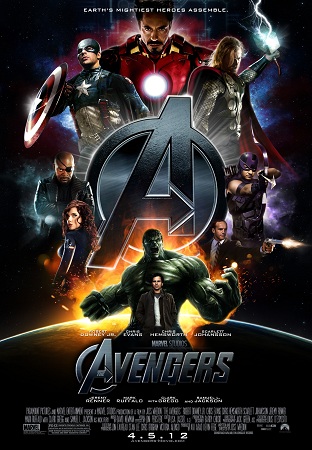 I have already reflected on Marvel’s “The Avengers” from a Christian perspective, but upon watching the recently released blu-ray and DVD
There will be SPOILERS here.
Slavery of all mankind
A thoughtful friend of mine on Facebook pointed to the dialogue between Loki and a crowd of people near the beginning of the film wherein he forces them all to kneel. Loki stands before them and shouts:
Kneel before me. I said… Kneel! Is not this simpler? Is this not your natural state? It’s the unspoken truth of humanity that you crave subjugation. The bright lure of freedom diminishes your life’s joy in a mad scramble for power. For identity. You were made to be ruled. In the end, you will always kneel.
Think of how this resonates with the Christian notion of slavery in sin. We align ourselves with things that we love. Greed. Envy. Pride. Lust. Gossip. These things, while initially pleasurable, ultimately enslave us. Loki’s speech was very discerning, however. For even though these things come to enslave us and take time away from the goods in life, we come to love them, to glorify them, and to become attached to them. We want to be enslaved in sin. We desire it. Sin calls to us, enslaves us, and we love it.
Yet, as in the movie, we are called to rise up against this sin. But we can’t do it on our own. As I discussed in my other post on “The Avengers,” we “need a hero.” We cannot rise out of slavery. Paul discusses this very notion in his letter to Rome:
Don’t you know that when you offer yourselves to someone as obedient slaves, you are slaves of the one you obey—whether you are slaves to sin, which leads to death, or to obedience, which leads to righteousness? But thanks be to God that, though you used to be slaves to sin, you have come to obey from your heart the pattern of teaching that has now claimed your allegiance. You have been set free from sin and have become slaves to righteousness. (Romans 6:16-18, NIV)
Who is it that set us free? We did not do it on our own. After all, we became slaves to sin and offered ourselves freely to it. No, it is Christ Jesus who set us free. He was the “hero” who broke the chains and gave us our freedom in Him.
Debts that Cannot Be Paid
Later on, Loki converses with Black Widow. They discuss the notion that Black Widow has “debts” to others. She owes them for the things they’ve done for her. She says that her ledger is in the “red”–she is on the wrong side of debt. During this conversation, Loki tries to break Black Widow down verbally, “Can you wipe out that much red? …Your ledger is… gushing red.”
Loki’s comments are telling, for they are actually true of not just Black Widow but of everyone. We all have our debts. We have our sins that we commit in private, away from others. We have the anger we have expressed through thought and deed. Our ledgers are overflowing, they gush red. Our sins are too great for us to repay; we cannot wipe away the red.
Yet God has loved us so much that He paid the debt. Jesus, God in human form, came to earth and paid that debt for each and every one of us. Our ledgers were full, but now we’re in the black. We have become co-heirs with Christ and have received salvation by grace through faith. We are justified through Jesus’ death and resurrection. God forgives us our sins and wipes our ledgers clean on His behalf. Loki’s comments are not unlike those of the Devil, trying to convince us that we are still in debt. Can anyone–even God–wipe away all the wrongs we’ve done? Fortunately, that answer is yes. Although we ourselves cannot repay it, God has done so for us.
Jonah
Another great line in the film is when New York City is under attack (seriously, why can’t that city catch a break?). Iron Man comes face to face with a gigantic enemy ship/creature/thing (my wife named it “Leviathan” and I think that’s a great title) and has to take it down. He asks his onboard computer: “You ever heard the tale of Jonah?” He then bursts into the mouth of the Leviathan and flies through it, exploding from the end and destroying it.
No, the reference was never explained. Hey, if you don’t know the story, look it up! It’s one of my favorites in the Bible. Just get out a Bible (or search online) and flip to “Jonah.” It’s short, and I guarantee you it’s worth the read!
Conclusion
It seems to me that there are a number of themes in “The Avengers” that Christians can relate to. The notion of the incredible debt we owe and cannot pay due to our past resonates directly with the Christian worldview. It points towards the salvation we have in Christ. Similarly, our slavery to sin cannot be overlooked. We want to sin, we crave it, but thankfully those bonds are broken in Christ.
Links
A Christian Look at “The Avengers”– I examine a number of other themes in “The Avengers” which Christians and non-Christians can discuss.
Engaging Culture: A Brief Guide for movies– I reflect on how Christians can engage with popular movies in order to have meaningful conversations with those around them.
SDG.
——
The preceding post is the property of J.W. Wartick (apart from citations, which are the property of their respective owners, and works of art as credited) and should not be reproduced in part or in whole without the expressed consent of the author. All content on this site is the property of J.W. Wartick and is made available for individual and personal usage. If you cite from these documents, whether for personal or professional purposes, please give appropriate citation with both the name of the author (J.W. Wartick) and a link to the original URL. If you’d like to repost a post, you may do so, provided you show less than half of the original post on your own site and link to the original post for the rest. You must also appropriately cite the post as noted above. This blog is protected by Creative Commons licensing. By viewing any part of this site, you are agreeing to this usage policy.
A violation of God’s Will: Abortion- or why no Christian should be pro-choice
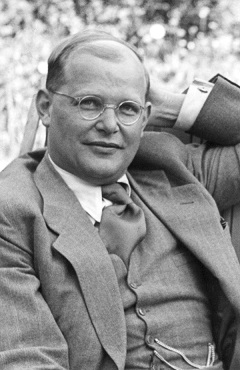 Destruction of the embryo in the mother’s womb is a violation of the right to live which God has bestowed upon this nascent life. To raise the question whether we are here concerned already with a human being or not is merely to confuse the issue. The simple fact is that God certainly intended to create a human being and that this nascent human being has been deliberately deprived of his life. And that is nothing but murder.- Dietrich Bonhoeffer, Ethics
The foresight which Dietrich Bonhoeffer showed in this passage from his book, Ethics, is astounding. Bonhoeffer was a pastor who stood up to the Nazi regime and was martyred–hanged by the Nazis–for his activism on behalf of the innocent lives being slaughtered by Hitler. His view on abortion lines up exactly with his views on preserving human life in Nazi Germany. Bonhoeffer’s argument anticipates and cuts off a number of pro-choice arguments for abortion. Let’s see how.
Bonhoeffer’s argument does not depend whatsoever on whether the unborn is a human being or not (and the unborn is indeed a human being). His argument instead is based upon God’s will for that unborn entity. Examine once more what Bonhoeffer said: “The simple fact is that God certainly intended to create a human being and that this nascent human being has been deliberately deprived of life.” The focus here is not so much on the status of the unborn as a human or not, but rather the focus is upon God’s will for the unborn. Why is it that God set the world up in such a way that the nascent (developing) human being grows into a toddler, adolescent, adult, and senior? Bonhoeffer focuses the argument directly upon God’s will. God has willed that from conception, a plan for a human life is set into motion. Thus, to terminate a pregnancy is to destroy part of God’s plan, a plan for a human life.
For Christians, this logic is binding. The pro-choice objection that the fetus is not a human person is a rabbit trail at this point. Another objection must be thrown out the window as well: namely, the notion that even if the unborn is a human person, the mother has an absolute right to bodily autonomy. For the Christian, God’s will trumps any supposed absolute autonomy. God’s will is absolute. It must be obeyed. To go against God’s will is to sin.
Is there a way for Christians to avoid the implications of Bonhoeffer’s argument? It seems the only way to do this is to deny that God wills for there to be a human being as the result of a pregnancy. I confess that I do not see any possible way for this argument to be convincing. The objector would essentially have to say that God’s will for the unborn is based entirely upon that of the parents’ will. For, after all, if God did not will for there to be a human being as the result of a pregnancy, what would God’s will regarding the conceived being be? It seems that it would have to be arbitrary. But this would seem to be untenable given the doctrine of the nature of God as perfection.
Therefore, Bonhoeffer’s ingenious argument leads to the inescapable conclusion: no Christian can endorse abortion. The fact of the matter is that God so set up the world that the process of human growth begins at conception. Unless there is a complication in the pregnancy or there is an outside source intervening to terminate the pregnancy, the result of conception is a human being.
All Christians say in chorus: Let God’s Will Be Done!
Links
Abortion: The Holocaust of our Day– I explore more reasons to reject the pro-choice position for both Christians and non-Christians at length.
Pro-Life– check out my numerous posts on the issue of abortion.
Sources
Dietrich Bonhoeffer, Ethics
SDG.
——
The preceding post is the property of J.W. Wartick (apart from citations, which are the property of their respective owners, and works of art as credited) and should not be reproduced in part or in whole without the expressed consent of the author. All content on this site is the property of J.W. Wartick and is made available for individual and personal usage. If you cite from these documents, whether for personal or professional purposes, please give appropriate citation with both the name of the author (J.W. Wartick) and a link to the original URL. If you’d like to repost a post, you may do so, provided you show less than half of the original post on your own site and link to the original post for the rest. You must also appropriately cite the post as noted above. This blog is protected by Creative Commons licensing. By viewing any part of this site, you are agreeing to this usage policy.
Really Recommended Posts 9/21/12
There are so many fantastic posts out there it has been hard for me to keep up. I actually have another RRP scheduled with all the backlogged posts I’ve run into. Let me know which posts you’ve enjoyed. I feature here a diverse spread of posts. The necessity of apologetics, atheism, the Gospel of Barnabas (!?), young earth creationism, and resisting sin are all featured. Check ’em!
Sarah Geis provides pointers for constructive debate and disagreement– A creative look at how to debate constructively by showing how not to do so.
Why Apologetics Should Be A Requirement For Every Pastor– Fellow Christians, I hope this post convicts you like it convicted me. We need to be doing apologetics. We owe it to our youths, we owe it to the adults in our congregations, and we owe it to ourselves.
Born Atheists?– Yes, you have heard it somewhere. We’re all born atheists. Really? What is that even supposed to mean? I found this post really excellent and it got me thinking. Check it out.
What is the Gospel of Barnabas?– Some Muslims have been claiming that the so-called Gospel of Barnabas falsifies the Christian doctrine of the Son of God. It is not, however, a serious threat. Check out this post to get some great historical information on this attempt to refute Christianity.
Atheism, Agnosticism, and the New Atheists– It never gets old. What does “atheist” mean? Don’t atheists just believe in one fewer god than believers? I’ve written about this topic myself. Check out this great post on the subject.
A Young Earth Chronometer?– One of my favorite websites has recently taken an intense three-part look at the claim that the amount of salt in the ocean is evidence for a young earth. I highly, heartily recommend the site itself to all my readers, Naturalis Historia.
How to Start a Preemptive Strike on a Sinful Inclination– Another one of my favorite and highly recommended sites, No Apologies Allowed, posted this thought-provoking comic about resisting sin.
Jesus’ wife? A survey of responses.
SEE UPDATE: It has become revealed that this fragment is almost certainly a fraud. But, if you’re still bothered by it, check out the links below.
UPDATE 2 (4/17/2014): The case has been reopened as some alleged new evidence has shown that the document might not be a forgery after all, which now makes the links below relevant again! I’ve also added a comedic video I found via Tim McGrew.
There has been a bit of an uproar about a 4th Century Coptic Manuscript which purportedly provides evidence that Jesus had a wife. Apart from the fact that it is 4th century and therefore a few hundred years after the events and during primetime for Gnostics making up facts about Jesus to undergird their own theological leanings, many seem to think this is somehow evidence against Christianity. Well, here are some great responses to the discovery.
Reality Check: The “Jesus’ Wife” Coptic Fragment– Daniel Wallace, an influential NT scholar, comments on the discovery. He really gets into some great textual-critical details here. I would say this is one of the more important responses. I highly recommend this response.
Durham University professor calls the “Jesus had a wife” manuscript fragment a forgery– Yep, folks, we might be cutting this one off pretty quickly. Some analyses are suggesting fragment is actually a hoax, and the arguments seem pretty decisive. See the next post:
The Gospel of Jesus’ Wife: How a Fake Gospel-Fragment Was Composed– This is a very interesting post which you can find Francis Watson, a professor of religion and theology at Durham University making a concise argument in a PDF which argues that the fragment is a fake. It’s a fascinating article, and perhaps destroys the whole controversy at the start. (To be fair, the late purported date of the fragment does little for me, anyway.)
New Coptic Fragment Says Jesus Was Married– A summary of skeptics’ attitudes towards historicity.
The Gospel of Jesus’ Wife?– Glenn Andrew Peoples has a simply fantastic discussion of the implications of this discovery. One of my favorite lines: “Prepare yourself. Suddenly, people are going to read a sensational article about a tiny scrap of parchment and become experts on early church history.”
Did Jesus Have a Wife?– A post which focuses on the authenticity of the document and the implications if it is indeed authentic. Another great response.
SHOCKING New Evidence Reveals 4th-Century Coptic Christians WONDERED If Jesus Was MARRIED!– What is the historical significance of the discovery, assuming it is genuine? A few very good, concise points.
So What if Jesus did Have a Wife?– Definitely an alternative approach. John Byron notes that Christians could grant that Jesus was married without somehow undermining the core doctrines of Christianity. This one is really interesting and I’m sure will be controversial. While not a response to this article, Aggie Catholics has a very different view of the implications of the discovery, while denying that it has historical import other than as showing the beliefs of Gnosticism: Proof That Jesus Was Married?
The Wife of Christ and the Bride of Christ– This post looks at the discovery from a more presuppositional type approach. We know the Bible is reliable, so what should we make of this discovery?
Stop the presses! Jesus was married! Oh no!– Carl Olson at the Catholic World Report comments on a number of issues with jumping to conclusions about the text. I found this one particularly insightful about how the discovery is being portrayed in the media.
Quick Thoughts on the New Jesus Wife Text– Darrell Bock, a prominent NT scholar, shares his thoughts on the implications of the text. It’s highly informative and concise.
Was Jesus Married?– A reflection on the way the media portrays stories like this along with an examination of the importance of the document and apologetics.
Get Ready for A Wave of Gnostic Looniness Again– James White notes that the discovery was made by a woman who loves to sensationalize gnosticism.
Shock! Horror! Jesus’ Wife! (Video)– a satirical video about the discovery and its alleged implications for Christian faith.
The Presumption of Pluralism: How religious pluralism devalues all religious persons
Everyone has their own truth.
What’s true for you is true for you, what’s true for me is true for me.
All religious backgrounds have a piece of the puzzle.
All roads lead to the same goal.
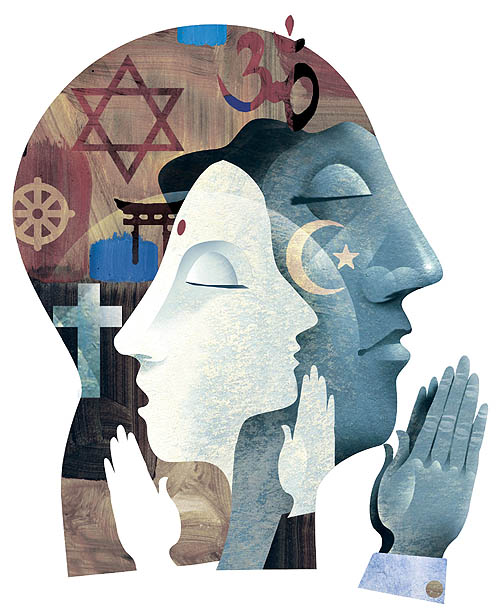
Pluralism is rampant in our society. People want to affirm everyone’s belief. Tolerance is the buzzword. Few want to talk about the differences in worldviews. It’s easier to affirm everyone’s beliefs as having a place in the interchange of ideas.
Pluralism is the position that all religions are true. This can be qualified in a number of ways. Often, the views are not well-thought out and amount to little more than saying that all ways get to heaven. However, there are thoughtful pluralists with highly developed structures for affirming their professed pluralism. For example, John Hick, a well known proponent of pluralism, writes:
[T]he Transcendent in ‘its’ inner nature is beyond human description or comprehension… it is ineffable or, as I would rather say, transcategorical, beyond the scope of our human concepts. It is to this ultimate transcategorical reality that the religions are oriented and to which they are human responses. (Hick, 163, cited below)
Thus, for Hick and most other pluralists, all religions are oriented towards some kind of Ultimate or Transcendent, from which they derive all of their beliefs. Thus, these pluralists can affirm the notion that all religions are “true” in a qualified sense.
The problem with pluralistic claims is that in their gusto to affirm all religions as true, what they’ve actually done is said that all religions are false. Again, Hick realizes a problem inherent in qualifying religions–and specifically Christianity–such that they can all be true. The problem is that some claim to have stated actual truths about transcendent reality. In other words, when a theologian claims that God is Triune, they are making a claim about objective reality. But Hick’s proposed solution is to simply place such theological claims into the reports of experiences about the “Real”: “according to our hypothesis, the different traditions are not reporting experiences of the Real in itself, but of its different manifestations within human consciousness” (171, cited below). Unfortunately for pluralists, what this has done is create what I find to be the real problem for pluralists.
The problem is that the pluralist is the only one whose claims about the Real/Transcendent are true.
The presumption of pluralism is that it assumes the invalidity of all religious claims. Only the pluralist can see that all religious claims to exclusivity are false. The exclusive claims of individual religions are dismissed offhand. After all, if all ways are true, then none can be exclusive.
Again, look at the reasoning from Hick: the claims of theologians are not actually claims about the Real itself. Rather, the claims of the theologian apply only to the Real-as-experienced in human consciousness. In other words, those making truth claims about individual religions are only expressing claims about their own subjective experience of an objective reality: the Real.
Thus, the pluralist undermines the truth claims of all religions, while simultaneously trying to affirm them. Only the pluralist is able to look beyond the truth claims of religion and see that when the Muslim claims that Allah is the only God, he is mistakenly reporting his experience as opposed to a claim about reality. Only the pluralist can see that the Christian who claims that Jesus is the only savior, she is only reporting her conscious experience of the Real. The Buddhist who says there is no God is similarly mistaken: perhaps there is? Who knows? Only the pluralist can see that all of these contradictory claims about religious reality are in fact merely the reports of conscious experience of a supra-reality: one which stands above all religions and is the true religion.
The bottom line is that the pluralist has become the exclusivist. Only the pluralist knows the true way. Thus, their system must collapse in on itself. It either relegates all religious claims to become mere reports of human consciousness and thus affirms itself as the only true religion, or it must affirm blatantly contradictory claims like “God exists” and “There is no God” or “Shiva is a god, Vishnu is a god, etc.” and “There is no God but Allah.” The pluralist has presumed much.
If all ways are true, then none are. Pluralism has failed.
Links
Can we evaluate worldviews?– I discuss how to evaluate rival worldviews and outline some criteria by which to do it.
A Vision for Christian Apologetics to World Religions– I outline a vision for Christians interacting with believers of other faiths. Integral to this approach is understanding others’ beliefs.
Source
John Hick, The New Frontier of Science and Religion (New York: Palgrave Macmillan, 2010).
SDG.
——
The preceding post is the property of J.W. Wartick (apart from citations, which are the property of their respective owners, and works of art as credited) and should not be reproduced in part or in whole without the expressed consent of the author. All content on this site is the property of J.W. Wartick and is made available for individual and personal usage. If you cite from these documents, whether for personal or professional purposes, please give appropriate citation with both the name of the author (J.W. Wartick) and a link to the original URL. If you’d like to repost a post, you may do so, provided you show less than half of the original post on your own site and link to the original post for the rest. You must also appropriately cite the post as noted above. This blog is protected by Creative Commons licensing. By viewing any part of this site, you are agreeing to this usage policy.
Book Review: “From God to Us” by Norman Geisler and William Nix
 From God To Us
Inspiration
FGU outlines the nature of inspiration. It is important to note that “it is only the product that is inspired, not the persons” (17). Another misconception is that inerrancy/inspiration applies to copies. The sense in which it does must be limited: “Only the autographic [original] texts themselves (or perfect copies of them) are inerrant… Every other copy is inspired only insofar as it is an accurate reproduction of the original” (18).
The authors then turn to a defense of inspiration through the Biblical teaching of inspiration. By outlining the way the text is treated as inspired in both the Old and New Testaments, the authors make a case for the general inerrancy of the autographic texts. Finally, the authors provide an argument for the Bible as the word of God (68ff). The argument is 12 steps and they provide a basic defense of each premise.
Canonization
One of the most frequent objections brought up offhand to those who hold to a high view of the inspiration of the Bible is that of the canon. Some say that the canon was just arbitrarily chosen by a church council somewhere, and that there is no way to determine how books got into the Bible.
FGU provides a more historically accurate look at the canon. The authors first outline a number of factors that are faulty for determining canonicity. For example, age alone cannot determine canonicty because some books of the Bible drew from contemporary sources.
In direct opposition to the notion that a council alone could determine the canon, FGU underscores the notion that: “the role of the Christian church… is not to determine which books are in the canon but to discover which books God determined should be in the canon, namely, those that He had inspired” (91). The authors then explore a number of factors which play into discovering the canon.
Historically, FGU explores the extent and formation of the Old Testament and New Testament canons. The arguments are concise and direct readers to further areas of exploration, while providing enough information to refute most basic arguments.
Transmission
The Bible had to be transmitted: namely, God’s word had to be communicated to human persons. How was this done? Largely in the form of written languages. FGU explores the importance of written language as a means of communication and provides a brief background in the development thereof (164ff).
Of great importance to the reader is the extensive material on the manuscripts of the Bible. The details of the manuscript tradition are outlined and even several forms of extrabiblical manuscript evidence is brought into the picture. Such evidence is an important part of a believers’ background of Bible knowledge. FGU also does a fantastic job outlining the foundations of textual criticism and the valuable role it can play in determining the accurate reading of the text (221ff).
One of the most enlightening parts of FGU outlines the nature of finding “errors” in the transmission of Scripture. Often, one will hear the claim that there are 100s of thousands of errors in the Bible. Bart Ehrman has, in particular, focused upon this in order to cause some unrest in the notion of the accuracy of the Bible (243). But these are actually variants in manuscripts which are sometimes counted numerous times:
If a single word were misspelled in 3,000 different manuscripts, they are counted as 3,000 variants… Ironically, the way Ehrman counts ‘errors’ (variants), there were 1.6 million errors in the first printing of his book. For there were 16 errors, and the book printed an alleged 100,000 copies… Ehrman himself admits the biblical variants do not affect the central message of the Bible. (243)
The authors then turn to an analysis of variant readings and how they occur, from misspellings and unintentional changes to corrections to try to bring texts into concord (246ff).
Translation
FGU provides an intense look at a number of ways the Bible has been translated and the way that translations happen. The traditions of translation are outlined and traced through history (280ff) and the importance of individual translations are analyzed.
Another extremely valuable part of the book is the analysis of how translations come about as far as the emphasis placed upon form-driven versions, meaning-driven versions, and paraphrases. Readers interested in modern Bible translations will find a wealth of resources for analyzing the varied translations. There are nearly 70 pages of information on these translations, so readers will have a number of points to discuss with those asking questions about translations.
Analysis
FGU is a huge resource for those interested in not just defending but learning about the Bible and how it has arrived in its current state in our pews. The book covers a number of issues and it will have appeal to both lay readers and interested professionals. Christian apologists will find a treasure trove of information about the background of the Bible which is often glossed or ignored in a number of apologetics resources.
The authors come from a decidedly conservative background, but this does not prevent them from a generally fair analysis of a number of topics. For example, though they seem critical of the so-called “gender accurate” language of TNIV, the analysis of the translation is objective and simply outlines how the translation comes to its current form (350-353).
Conclusion
Norman Geisler and William Nix have provided a solid resource with From God to Us. It will appeal to those who want to get a lengthy introduction to a number of relevant apologetical issues related to the Bible. Furthermore, it provides a significant amount of background on various translations of the Bible. What is most surprising about the book is how it manages to provide so much information without becoming too dense or thin. It covers so many issues that the danger would seem to be either to err on the side of being too long or too brief on each issue. The authors admirably do not stray to either side, and in doing so, have provided an invaluable resource for both the interested lay reader and professional.
SDG.
——
The preceding post is the property of J.W. Wartick (apart from citations, which are the property of their respective owners, and works of art as credited) and should not be reproduced in part or in whole without the expressed consent of the author. All content on this site is the property of J.W. Wartick and is made available for individual and personal usage. If you cite from these documents, whether for personal or professional purposes, please give appropriate citation with both the name of the author (J.W. Wartick) and a link to the original URL. If you’d like to repost a post, you may do so, provided you show less than half of the original post on your own site and link to the original post for the rest. You must also appropriately cite the post as noted above. This blog is protected by Creative Commons licensing. By viewing any part of this site, you are agreeing to this usage policy.

 J.W. Wartick - Reconstructing Faith