God
The Unbeliever Knows God: Presuppositional Apologetics and Atheism
[A]ll men already know God–long before the apologist engages them in conversation–and cannot avoid having such knowledge… People lack neither information nor evidence… [A]ll men know that God exists… In a crucial sense, all men already are “believers”–even “unbelievers” who will not respond properly by openly professing and living obediently in accordance with the knowledge they have of God. (Greg Bahnsen, Van Til’s Apologetic
, 179-180, emphasis his, cited below).

One crucial point of presuppositional apologetics is that even the unbelieving atheist really does know God. All people have knowledge of God. None can turn from it, none can escape it: everyone knows God. This knowledge is not saving knowledge. Instead, it is knowledge which is suppressed. The knowledge is ignored or even reviled. The quote above from the famed presuppositionalist Greg Bahnsen is just one example. C.L. Bolt, a popularizer of presuppositional apologetics, says similarly:
It is in the things that have been created that God is clearly perceived. This perception is, again, so clear, that people have no excuse. Not only do all of us believe in God, but we know God. (C.L. Bolt, cited below)
What are we to make of this claim? What is the point from the presuppositionalist perspective? The claim is firmly rooted in Paul’s discussion of God’s wrath against evil in Romans 1-2 (see the text at the end of this post). Therefore, it behooves all Christians to reflect upon the notion that God is known to all people. Presuppositional Apologists have done much reflecting on these subjects, and here we shall reflect upon their insights.
 What is meant by ‘knowledge of God’?
It is important to outline what exactly it is that this knowledge is supposed to be. Greg Bahnsen notes in Van Til’s Apologetic
Note that there is an important distinction within presuppositional thought about what this knowledge of God means. John Frame makes it clear that there is a sense in which the unbeliever knows God and yet another sense in which the unbeliever does not know God (Frame, The Doctrine of the Knowledge of God
Frame also makes clear the reasons why all people know God in at least the limited sense: “God’s covenental presence is with all His works, and therefore it is inescapable… all things are under God’s control, and all knowledge… is a recognition of divine norms for truth. Therefore, in knowing anything, we know God” (18). Frame elaborates: “[B]ecause God is the supremely present one, He is inescapable. God is not shut out by the world… all reality reveals God” (20).
Therefore, this knowledge should be understood as the blatant, obvious awareness of God found in the created order. It is not saving faith or saving knowledge; instead, it is knowledge which holds people culpable for its rejection. All are accountable before God.
 The Implications of the Knowledge of God
The Practical Implications of the Knowledge of God
Of primary importance is the notion that there is no true atheism. Instead, atheism can only be a kind of pragmatic or living atheism: a life lived as though there were no God. All people know that God exists. The eminent Calvinist theologian, William Greenough Thayer Shedd writes, “The only form of atheism in the Bible is practical atheism” (Shedd, Dogmatic Theology
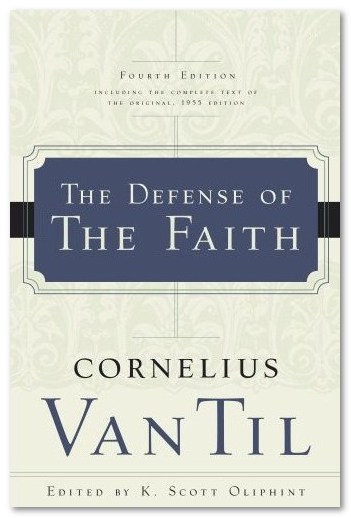
Van Til notes, “It is… imperative that the Christian apologist be alert to the fact that the average person to whom he must present the Christian religion for acceptance is a quite different sort of being than he himself thinks he is” (The Defense of the Faith
Furthermore, this knowledge of God is of utmost importance. Bahnsen writes, “Our knowledge of God is not just like the rest of our knowledge… The knowledge that all men have of God… provides the framework or foundation for any other knowledge they are able to attain. The knowledge of God is the necessary context for learning anything else” (181). As was hinted at above, without God, there is no knowledge. Even the unbeliever relies upon God for any true beliefs he has. Van Til notes, “our meaning… depends upon God” (63).
Apologetics in Practice
For presuppositionalists, this means that apologetics is reasoning with people who already know and use their knowledge of God to ground whatever knowledge they do have and bringing them to an awareness of their double-standards. They reject God in practice, but accept God in their epistemology. Thus, presuppositional apologists use the transcendental argument: an argument which seeks to show that without God, the things which we take for granted (knowledge, logic, creation, etc.) would not exist.
Can evidentialists use the insights of presuppositionalists here as well? It seems they must; for the Bible does clearly state that everyone knows God. However, the way evidentialists may incorporate this insight is by using an evidential approach to bring the unbeliever into an awareness of the knowledge they are rejecting in practice. Thus, a cosmological argument might be offered in order to bring the unbeliever into an awareness that their assumptions about the universe can only be grounded in a creator.
Conclusion
We have seen that presuppositional apologetists makes use of the knowledge of God attested in all people by Romans 1 in order to draw out a broadly presuppositional approach to apologetics. I have also given some insight into how evidentialists might use this approach in their own apologetic. We have seen that the core of this argument is that all people know God. Therefore, there are no true atheists; only practical atheists. All true knowledge must be grounded on the fact of God. There are none with an excuse to offer before God at judgment. God’s existence is clear. The unebeliever knows God.
I end with the Biblical statement on the state of the knowledge of the unbeliever, as written by Paul in Romans 1:
The wrath of God is being revealed from heaven against all the godlessness and wickedness of people, who suppress the truth by their wickedness, since what may be known about God is plain to them, because God has made it plain to them. For since the creation of the world God’s invisible qualities—his eternal power and divine nature—have been clearly seen, being understood from what has been made, so that people are without excuse.
For although they knew God, they neither glorified him as God nor gave thanks to him, but their thinking became futile and their foolish hearts were darkened. Although they claimed to be wise, they became fools…
Links
Like this page on Facebook: J.W. Wartick – “Always Have a Reason”
Unbeliever’s suppression of the truth-A brief overview of the notion that unbelievers are suppressing the truth from a presuppositional perspective.
The Presuppositional Apologetic of Cornelius Van Til– I analyze the apologetic approach of Cornelius Van Til, largely recognized as the founder of the presuppositional school of apologetics.
Choosing Hats– A fantastic resource for learning about presuppostional apologetics.
Sources
C.L. Bolt, “An Informal Introduction to Covenant Apologetics: Part 10 – Unbeliever’s knowledge of God.”
Greg Bahnsen, Van Til’s Apologetic
John Frame, The Doctrine of the Knowledge of God
Cornelius Van Til, The Defense of the Faith
Shedd Dogmatic Theology
SDG.
——
The preceding post is the property of J.W. Wartick (apart from citations, which are the property of their respective owners, and works of art as credited) and should not be reproduced in part or in whole without the expressed consent of the author. All content on this site is the property of J.W. Wartick and is made available for individual and personal usage. If you cite from these documents, whether for personal or professional purposes, please give appropriate citation with both the name of the author (J.W. Wartick) and a link to the original URL. If you’d like to repost a post, you may do so, provided you show less than half of the original post on your own site and link to the original post for the rest. You must also appropriately cite the post as noted above. This blog is protected by Creative Commons licensing. By viewing any part of this site, you are agreeing to this usage policy.
Review of “Love Wins” by Rob Bell: Chapters 7 and 8
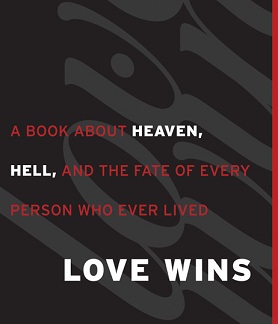 I have been reviewing Rob Bell’s book, Love Wins, with a particular interest in his theological views and how he argues for those views. I have not read the book before, so each review is fresh: I am writing these having just completed the chapter the post is on. This week, I wrap up the book by looking at Chapters 7 and 8. Within the next few weeks, I’ll publish a study guide and overview for the entire book.
Chapter 7
Outline
Rob Bell begins with an analysis of the parable of the Prodigal Son/Forgiving Father/Unforgiving Brother (Luke 15:11-32). He contrasts the prodigal with the older brother. The prodigal believes “he’s ‘no longer worthy’ to be called his father’s son” (165). But the father “tells a different story. One about return and reconciliation and redemption” (ibid). In contrast, the older brother sees himself as being cheated–he’s been “slaving for his father for years” (166). But the father turns the story around and points out he hasn’t been a slave–the older brother has “had it all the whole time… All he had to do was receive” (168).
Given this story, Bell concludes a number of things. He argues “Hell is our refusal to trust God’s retelling of our story” (170). This retelling assures us that we are loved, despite the way we choose to tell our own stories.
Then there is the notion that “Millions have been taught that if they don’t believe… and they were hit by a car and died later that same day, God would have no choice but to punish them forever in conscious torment in hell. God would, in essence, become a fundamentally different being to them in that moment of death, a different being to them forever” (173, emphasis his). He asks “Does God become somebody totally different the moment you die?” (174).
Bell continues to focus on this argument, arguing that there is something “wrong” with this notion of deity which is “loving one second and cruel the next… if your God will punish people for all eternity for sins committed in a few short years… [nothing] will be able to disguise that one, true, glaring, untenable, unacceptable, awful reality” (175). Thus, Bell feels he can conclude “Hell is refusing to trust” (ibid).
He continues, noting that the good news is better than merely the question of whether one will “get into heaven” (178-179). Instead, it is about “entering into this shared life of peace and joy as it transforms our hearts, until it’s the most natural way to live that we can imagine” (179).
Our sins are “simply irrelevant when it comes to the counterintuitive, ecstatic announcement of the gospel” (187). Indeed, so are our “goodness… rightness… church attendance… and all of the wise, moral, mature decisions” we make (ibid). Instead, what matters is the “unexpected declaration that God’s love simply is yours” (188). “Forgiveness is unilateral,” God doesn’t wait for us to clean ourselves up, but “has already done it” (189).
“The only thing left to do is trust” (190) Bell argues. “Everybody is at the party. Heaven and hell, here, now, around us, upon us, within us” (ibid).
Analysis
Bell is absolutely correct to note that the Gospel is about more than simply “getting into heaven.” There is a kind of gospel reductionism which changes the message of Christianity into heaven or hell and that’s all. It’s dangerous, and it distorts the proclamation of Christ.
However, there is something very bothersome about Bell’s arguments against the notion of eternal punishment. His entire argument is based around the notion that God is love, and that God won’t just change who he is. He continues to focus on God as love. Yet he does this at the expense of the rest of the Biblical teaching about who God is. God is not reducible to love. We can’t base our doctrine only on the notion that God is love, and therefore our ideas of what love is will define who God is. Instead, the Bible teaches us much more about God than that God is simply love.
But Bell is insistent on this point. He evaluates God through the lens of a human parent and argues that if God were a human parent on some views, we would want to put God in prison. Instead, he argues, we should see God as love… and apparently that’s it. That’s Bell’s God. Love. The Bible, on the other hand, does not teach us only that God is love. Consider:
For you are not a God who is pleased with wickedness;
with you, evil people are not welcome.
The arrogant cannot stand
in your presence.
You hate all who do wrong;
you destroy those who tell lies.
The bloodthirsty and deceitful
you, Lord, detest. (Psalm 5:4-6)
How does this fit into Bell’s analysis? Why does he refuse to address the fact that the Bible very clearly state that God hates wrongdoing? Nor does Bell acknowledge that one of God’s attributes is justice. God is absolutely just and we deserve God’s wrath. Period. Instead of even attempting to address these verses or the arguments around the notion of God’s justice, all Bell has done is argue that God is love and that anything else means God changes his essence. That is simplistic and borderline dishonesty. Bell his misportrayed the doctrine of God and invented his own, wherein only the verses about God being loving are those which dominate all doctrine. Again, he has created a canon within the canon, where the verses about love trump all others.
Another demonstration of this is in Bell’s declaration that our sins are “irrelevant.” Really? Orthodox Christianity has held that our sins are the reason Jesus had to die–as punishment for our sins. That sounds extremely relevant to me. Yet Bell, in his over-eagerness to argue that God is love, has vastly overstated his case.
God does not change (Malachi 3:6), but neither is God only defined by love. And even were God defined by love, that love would not be human love, which is what Bell has chosen to base his argument upon. Again and again he appeals to the relationship between human parents and their children. Yet God is not a human being (Numbers 23:19).
Not only that, but Bell’s assertion that hope continues after death is flatly contradicted in the Bible:
people are destined to die once, and after that to face judgment (Hebrews 9:27)
What room is there in this passage to allow for Bell’s scheme of salvation after death? People die, and after that there is judgment. Period. It doesn’t say “people are destined to die… then to have hope forever and eventually come to heaven.” Where does Bell ground his teaching in the Bible? I simply cannot find it. Instead, he continues only to press the notion that God is love, and by doing so he creates his own Bible outside of the Bible which trumps the passages with which he disagrees.
As Christians, we must take into account the whole of Biblical teaching. We can’t just ignore the passages which don’t agree with our theology, as Bell has done. Bell’s entire argument so far seems to be a house of cards. It is based on a few select verses with an idiosyncratic interpretation. Moreover, he simply declares that God is love, and then uses that to counter anything he thinks is not loving. In other words, Bell’s concept of love defines his theology of God. That is a huge problem.
Chapter 8
Outline
In this very short chapter/conclusion, Bell calls people to trust God. He tells readers that “love wins” (198). “Love is what God is” (197).
Analysis
There’s not much in this chapter which hasn’t been said before. It is worth noting that once again, Bell defines God merely as love. That’s it.
Conclusion
Bell doesn’t speak to God’s justice. He doesn’t speak to God’s covenant relationship with the people of God. He doesn’t even mention God’s hate of sin. Instead, it is all about love. That’s all. That is Bell’s theology. I am forced to ask: “Is that really all the Bible teaches?”
I believe I have shown Bell is mistaken on any number of points. His emphasis on God as love is wonderful. We do need to make sure that is part of our doctrine of God. But Bell’s doctrine of God just is love. Moreover, Bell has defined that doctrine of love through human categories instead of divine categories. He ignores the themes in the Bible about God’s justice. Indeed he ignores explicit statements of God’s justice and hatred for sin and even sinners. Doctrine of God must balance these statements in the Bible, not use one to trump the other. Bell has done the latter.
Within the next two weeks, I will be publishing a study guide for the book, along with a general overall review. As always, let me know what you think.
Links
Like this page on Facebook: J.W. Wartick – “Always Have a Reason”
The book: Rob Bell, Love Wins
Review of “Love Wins” by Rob Bell: Preface and Chapter 1– I discuss the preface and chapter 1 of Love Wins.
Review of “Love Wins” by Rob Bell: Chapter 2– I review chapter 2.
Review of “Love Wins” by Rob Bell: Chapter 3– I look at Chapter 3: Hell.
Review of “Love Wins” by Rob Bell: Chapter 4– I look at Chapter 4: Does God Get what God Wants?
Review of “Love Wins” by Rob Bell: Chapter 5– I analyze chapter 5.
Review of “Love Wins” by Rob Bell: Chapter 6– I review chapter 6.
Love Wins Critique– I found this to be a very informative series critiquing the book. For all the posts in the series, check out this post.
Should we condemn Rob Bell?– a pretty excellent response to Bell’s book and whether we should condemn different doctrines. Also check out his video on “Is Love Wins Biblical?“
Source
Rob Bell, Love Wins
SDG.
——
The preceding post is the property of J.W. Wartick (apart from citations, which are the property of their respective owners, and works of art as credited) and should not be reproduced in part or in whole without the expressed consent of the author. All content on this site is the property of J.W. Wartick and is made available for individual and personal usage. If you cite from these documents, whether for personal or professional purposes, please give appropriate citation with both the name of the author (J.W. Wartick) and a link to the original URL. If you’d like to repost a post, you may do so, provided you show less than half of the original post on your own site and link to the original post for the rest. You must also appropriately cite the post as noted above. This blog is protected by Creative Commons licensing. By viewing any part of this site, you are agreeing to this usage policy.
Review of “Love Wins” by Rob Bell: Chapter 6
I have been reviewing Rob Bell’s book, Love Wins, with a particular interest in his theological views and how he argues for those views. I have not read the book before, so each review is fresh: I am writing these having just completed the chapter the post is on. This week, I look at Chapter 6: There Are Rocks Everywhere.
Chapter 6
Outline
Rob Bell begins with a number of stories illustrating how we often come into contact with what some people take to be God or some kind of abstract “love.” He ponders this and wonders “are we alone in the world?… what does any of this have to do with Jesus?” (142). He argues that the rock which Moses struck in the desert from which the people drank was Jesus, utilizing 1 Corinthians 10:3-5 and applying it back to Exodus 17. He asks: “That rock was… Christ? Jesus? Jesus was the rock?” He notes that Paul interprets the story to show how Christ was there.
Bell then turns to the notion of that “There is an energy in the world, a spark, an electricity that everything is plugged into” (144). It has been called the Force, life, “Spirit” and other things. Bell argues that there is such a force and it is found in the “Word of God,” for “God speaks… and it happens. God says it… and it comes into being” (145).
Jesus, Bell argues, shows “what God has been up to all along” (148). God is bringing all people together under Christ.
Moreover, according to Bell, “Jesus is bigger than any one religion. He didn’t come to start a new religion, and he continually disrupted whatever conventions or systems or establishments that [sic] existed in his day” (150). Jesus came to draw all people to himself, a point Bell emphasizes through repetition and restating it in numerous ways.
Regarding this drawing all people, Bell argues for “inclusivity” which he defines as “exclusivity on the other side of inclusivity. This kind insists that Jesus is the way, but holds tightly to the assumption that the all-embracing, saving love of this particular Jesus the Christ will of course include all sorts of unexpected people from across the cultural spectrum” (155). Jesus, Bell argues, leaves the door “wide open” which provides the possibility for any to enter.
Bell notes that we must wonder what people mean when they say “Jesus.” Do they mean “tribal membership, the source of “imperial impulse,” or some kind of “political, economic, or military system through which they sanctify their greed and lust for power?” (156).
No one has “cornered the market” on Jesus. We cannot contain him. Bell reemphasizes the importance of not pre-judging people’s eternal destinies. He writes, “it is our responsibility to be extremely careful about making negative, decisive, lasting judgments about people’s eternal destinies. As Jesus says, he ‘did not come to judge the world, but to save the world’ (John 12[:47])” (160).
Analysis
There is much to commend in this chapter, just like I pointed out in my review of Chapter 5. First, Bell rightly warns against trying to bottle Jesus in one form or another. It is not an individual denomination which owns Jesus. Second, Bell again makes the very important point that it is not our place to say whether one person’s eternal destiny is heaven or hell. We do not know how God may be working on that person. Third, he is correct in emphasizing Jesus as the “only way.” Finally, he is right to note how some people attempt to make Jesus into a slogan or a cry for some specific cause they are doing. Doing so undermines the message of Jesus and should be avoided.
Yet there are also many areas to critique in this chapter. First, there is the notion of questionable exegesis. For example, Bell cites John 12:47 to show that Jesus is not about judgment, but fails to cite the very next verse which states: “There is a judge for the one who rejects me and does not accept my words; the very words I have spoken will condemn them at the last day” (NIV). Bell spends the whole section centered around 12:47 and how God isn’t about judgment, but rather “exclusivity on the other side of inclusivity.” One wonders, then, why he fails to read the next verse of the passage he cites in context. I find this a gross example of proof-texting wherein a part of a verse is ripped from its context and used to rant against the very thing the next verse affirms. The importance of looking at the entire context of individual verses is paramount, and Bell continues to fail to be attentive to the evidence against his positions.
Again, Bell emphasizes the notion of an “open door.” We discussed this at some length in my look at Chapter 4. Once more, the “open gates” in context show a city without any enemy. That is, the enemies of that city have been utterly defeated. Yet Bell takes it to mean wide openness in the sense that people can always come [and go?–does Bell imply that we can leave heaven if we so choose? Is our salvation not secure?]. He emphasizes this over and over again, but then he has yet failed to cite Matthew 7:14, in which Jesus describes the gate and the road to eternal life “narrow” and says “only a few find it.” Why this emphasizing on some texts while ignoring others? Certainly, we need to balance these Biblical teachings, but we cannot ignore one at the expense of the other. Bell seems to do the latter time and again. He cites a text out of its context and ignores anything in the text which goes against his own interpretation. He doesn’t interact with the other parts of the text, he just pretends they don’t exist. I find this highly problematic.
I am also wary of Bell’s statement that Jesus is beyond any one religion. Clearly, Jesus saw himself as a Jew. Making this argument would take me well beyond the scope of this post, but suffice to say that Jesus’ language and imagery regarding himself as the temple places him exactly within the Jewish religion. Yes, he interpreted things in startling ways which led Jews to call him blasphemous, but other Jews saw his resurrection and what did they do? They began to proclaim Christ glorified as the Son of God. Did Jesus really come to overthrow religion, as Bell seemingly implies? Again, such an assertion abuses the Bible. I say this in strong words because it needs to be said. What does Jesus actually say about the religious system in place at the time? Yes he criticized it, but when it came down to the core of the Hebrew faith, the Torah, Jesus said:
“Do not think that I have come to abolish the Law or the Prophets; I have not come to abolish them but to fulfill them. For truly I tell you, until heaven and earth disappear, not the smallest letter, not the least stroke of a pen, will by any means disappear from the Law until everything is accomplished.” Matthew 5:17-18 NIV
That doesn’t sound to me like Jesus overthrew that religion. Instead, he argues he came to be the reality of that faith. Jesus came to fulfill the expectations of the Law. Again, Bell’s selective reading of the texts undermines the core of Christian teaching.
Conclusion
There are many positive things to say about this chapter of Love Wins. Bell has rightly emphasized a number of themes to which Christians should be attentive. We need to avoid making Jesus too small and turning him into our personal example or slogan. Yet Bell has also continued to perpetuate a number of errors, and his exegesis is very selective. The way he reads texts seems to have theological blinders on. When he finds the verse he wants, he uses it to trump anything else. We have seen how problematic this is in a number of examples. Next week, we will explore Chapter 7.
Links
Like this page on Facebook: J.W. Wartick – “Always Have a Reason”
The book: Rob Bell, Love Wins
Review of “Love Wins” by Rob Bell: Preface and Chapter 1– I discuss the preface and chapter 1 of Love Wins.
Review of “Love Wins” by Rob Bell: Chapter 2– I review chapter 2.
Review of “Love Wins” by Rob Bell: Chapter 3– I look at Chapter 3: Hell.
Review of “Love Wins” by Rob Bell: Chapter 4– I look at Chapter 4: Does God Get what God Wants?
Review of “Love Wins” by Rob Bell: Chapter 5– I analyze chapter 5.
Love Wins Critique– I found this to be a very informative series critiquing the book. For all the posts in the series, check out this post.
Should we condemn Rob Bell?– a pretty excellent response to Bell’s book and whether we should condemn different doctrines. Also check out his video on “Is Love Wins Biblical?“
Source
Rob Bell, Love Wins
SDG.
——
The preceding post is the property of J.W. Wartick (apart from citations, which are the property of their respective owners, and works of art as credited) and should not be reproduced in part or in whole without the expressed consent of the author. All content on this site is the property of J.W. Wartick and is made available for individual and personal usage. If you cite from these documents, whether for personal or professional purposes, please give appropriate citation with both the name of the author (J.W. Wartick) and a link to the original URL. If you’d like to repost a post, you may do so, provided you show less than half of the original post on your own site and link to the original post for the rest. You must also appropriately cite the post as noted above. This blog is protected by Creative Commons licensing. By viewing any part of this site, you are agreeing to this usage policy.
Review of “Love Wins” by Rob Bell: Chapter 4
I have been reviewing Rob Bell’s book, Love Wins, with a particular interest in his theological views and how he argues for those views. I have not read the book before, so each review is fresh: I am writing these having just completed the chapter the post is on. This week, I look at Chapter 4: “Does God Get what God Wants?”
Chapter 4
Outline
Bell starts the chapter by surveying a number of statements from church’s web sites regarding hell. These statements range from the unsaved being separated from God forever to eternal conscious torment. He seems to be pointing readers towards a kind of discontinuity between these statements and the statements about God’s power and love:
I point out these parallel claims: that God is mighty, powerful, and “in control” and that millions of people will spend forever apart from this God… even though it’s written in the Bible that “God wants all people to be saved and to come to a knowledge of the truth” [1 Timothy 2:4- seems to be NIV]
…How great is God? Great enough to achieve what God sets out to do… but in this, the fate of billions of people, not totally great. Sort of great. A little great. (97-98)
Bell asks a poignant question: “Will all people be saved, or will God not get what God wants?” (98). He then goes through a number of verses focused around God’s love. He notes the parables in Luke 15 about people pursuing their desires and concludes, “The God that Jesus teaches us about doesn’t give up until everything that was lost is found. This God simply doesn’t give up. Ever” (101).
Bell turns to the reason that many people think God may fail in his desire to save everyone. From the perspective of those who advocate the views he outlined at the beginning of the chapter, “love, by its very nature, is freedom… God has to respect our freedom to choose to the very end” (103). However, Bell argues that “We aren’t fixed, static beings–we change and morph as life unfolds.”
Tied into this notion of the unfixed nature of our lives, he seems to hold that it is possible that people can choose to come to Christ after they die. He asks, “why limit that chance [the chance to come to Christ] to a one-off immediately after death? And so they expand the possibilities… [The chance is given for] as long as it takes, in other words” (106-107).
Bell then traces this notion through Clement of Alexandria, Origen, Gregory of Nyssa, and Eusebius. He goes so far as to cite Augustine saying “‘very many’ believed in the ultimate reconciliation of all people to God” (108).
He argues that “central to their trust that all would be reconciled was the belief that untold masses of people suffering forever doesn’t bring God glory” (ibid). Moreover, he argues that “At the center of the Christian tradition since the first church have been a number who insist that history is not tragic, hell is not forever…” (109). He notes that “serious, orthodox followers of Jesus have answered these questions [about hell and salvation] in a number of ways” (ibid).
Next, Bell turns to an analysis of the book of Revelation. he notes that the book ends with notion that the gates of the city “never shut” and infers that “gates are for keeping people in and keeping people out. If the gates are never shut, then people are free to come and go” (114-115).
Bell ends the chapter with what seems like a poetic inference. He goes into prose and concludes that: “[Love] always leaves room for the other to decide. God says yes, we can have what we want, because love wins” (119).
Analysis
There is much to discuss in this chapter. First, it is important to note that Bell has done much to cause reflection upon the subject of hell. It is something that we as a group of believers need to be thinking on. Too often, the subject is cast aside. Bell has done admirably in bringing the topic to the table.
Moreover, Bell is correct to note that confusion can be caused by simply throwing statements on hell “out there” in a void. It is important to contextualize statements about heaven and hell and make clear what is meant by the phrases that are used in the discussion.
Bell seemingly just assumes that there will be more chances to “accept Christ” in the afterlife. His discussion of the possibility of people changing after death implies this perspective, but he has done nothing to establish it. Perhaps he will do so in a later chapter, at which point we will evaluate his argument for that perspective. Indeed, thus far his argument seems to be a kind of straw man: he asserts the notion that people are changeable beings even in the afterlife as a counterpoint to those who hold that people will continue to choose evil in the hereafter as though this choice is the reason people hold to the eternal hell view. Yet this is not the case; many who hold this position do argue that people will continue to choose evil, but the reason that people are condemned to hell is because they rejected the God, whose existence and power are obvious (Romans 1) in their lives. No one has an excuse (Romans 1:20).
Bell’s utilization of church fathers is problematic. I can’t help but think there is a subtle twisting of some of their views to fit his position. In particular, he cites Augustine as “acknowledging” that “very many” believed in “ultimate reconciliation of all people” (107-108). Yet Augustine himself categorically denies and denounces this position. In fact, almost the entirety of Book XXI of The City of God
I hate to beat a dead horse here, but let’s look what Augustine says (The City of God
Origen was even more indulgent; for he believed that even the devil himself and his angels, after suffering those more severe and prolonged pains which their sins deserved, should be delivered from their torments, and associated with the holy angels. But the Church, not without reason, condemned him for this and other errors…
So we see that Augustine, far from being anywhere near Origen’s view on the topic, endorses the Church’s condemnation of Origen as a heretic in this regard. Yet where does Bell reveal this? Where does Bell interact with historical theology? No, he seems perfectly content to throw out a bunch of names out of context together and let readers make their own assumptions. I realize this is a popular level book, but I can’t help but be very worried about Bell’s style here. It is very misleading. Maybe he does note later in the book that Origen was condemned as a heretic for this view, and that Augustine endorses this condemnation, but considering Bell seemingly endorses Origen’s view, I very much doubt that he will reveal that it was condemned by the Church.
More damning is the fact that Bell is able to, seemingly seriously, say that “At the center of the Christian tradition since the first church have been a number who insist that history is not tragic, hell is not forever…” (109). I admit that I agree in one sense–there have been many universalists throughout church history. However, that view was condemned as heretical. Augustine upholds that condemnation in The City of God
Here again we see one of Bell’s biggest methodological problems: he simply introduces a notion, argues that there are diverse views, and then assumes that they are all equally legitimate. but this is simply mistaken. Multiplication of viewpoints does not mean they are equally valid. Furthermore, Bell’s lack of interaction with historical theology on this point, when he himself is the one who introduces several of the church fathers, is questionable at best. Moreover, he says these teachers were “orthodox” when in fact Origen specifically was far from orthodox in his beliefs, as even a cursory study of Origen would reveal. Origen lived at a time before certain views were made explicit, yes, so he in a sense gets a pass in that his theology was intentionally exploratory. However, many of his views were later condemned, including the one Bell endorses. For Bell to turn around and use Origen to support his diversity of orthodox views on the topic is seemingly dishonest.
Moreover, one must wonder about Bell’s analysis of the meaning of the gates of heaven as open. Instead of looking at this passage in context, in which the notion of a city with open gates would imply a city unthreatened by outsiders because all enemies were defeated (which fits much better into the book of Revelation), Bell states explicitly “If gates are never shut, then people are free to come and go” (115). Think on this for a moment. What Bell has stated here undermines the notion of security of salvation. Now I do not hold to the doctrine of eternal security; however, I do affirm that once people are saved and in the New Creation in heaven, they are not about to change their status. They aren’t “going” anywhere. Bell’s view here undermines the assurance of salvation. His view of “love winning” also serves to illustrate this point, for if there is “always room for the other to decide” we must ask: is there always room to choose hell? Can “love win” by letting us walk away from the eternal salvation we are promised in Christ?*
Conclusion
I admit I have been highly critical in this chapter. I have tried throughout so far to find positive things to say about Bell’s work, and as I noted, Bell does well in this chapter to center discussion around the hard questions.
However, there are numerous problems with Bell’s work in this chapter. His use of the church fathers is highly problematic. I won’t rehearse the arguments again (see above). Oddly, his view also seems to imply that we have absolute autonomy and the ability to simply walk out of heaven whenever we wish. That in itself is another great difficulty, for it undermines the assurance of salvation we have in Christ: “I give them eternal life, and they shall never perish; no one will snatch them out of my hand” (John 10:28).
Bell continues to use the method of argumentation in which he simply notes diverse views on a topic and concludes that all are somehow equally at the table or equally valid.
Next week, we will look at Chapter 5: Dying to Live.
*My thanks to my wife for this point.
Links
The book: Rob Bell, Love Wins
Review of “Love Wins” by Rob Bell: Preface and Chapter 1– I discuss the preface and chapter 1 of Love Wins.
Review of “Love Wins” by Rob Bell: Chapter 2– I review chapter 2.
Review of “Love Wins” by Rob Bell: Chapter 3– I look at Chapter 3: Hell.
Review of “Love Wins” by Rob Bell: Chapter 5– I analyze chapter 5.
Love Wins Critique– I found this to be a very informative series critiquing the book. For all the posts in the series, check out this post.
Should we condemn Rob Bell?– a pretty excellent response to Bell’s book and whether we should condemn different doctrines. Also check out his video on “Is Love Wins Biblical?“
Source
Rob Bell, Love Wins
SDG.
——
The preceding post is the property of J.W. Wartick (apart from citations, which are the property of their respective owners, and works of art as credited) and should not be reproduced in part or in whole without the expressed consent of the author. All content on this site is the property of J.W. Wartick and is made available for individual and personal usage. If you cite from these documents, whether for personal or professional purposes, please give appropriate citation with both the name of the author (J.W. Wartick) and a link to the original URL. If you’d like to repost a post, you may do so, provided you show less than half of the original post on your own site and link to the original post for the rest. You must also appropriately cite the post as noted above. This blog is protected by Creative Commons licensing. By viewing any part of this site, you are agreeing to this usage policy.
Book Review: “Understanding End Times Prophecy” by Paul Benware
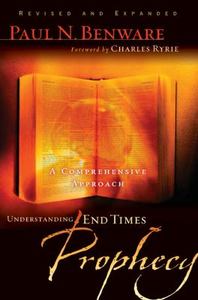 Understanding End Times Prophecy
Wait, What?
Yes, I just used the words dispensational premillenialism together in a sentence as though it made sense. It does. That is one of the many views Benware surveys in the book. Before reading Understanding End Times Prophecy (hereafter UEP), I admit I could not have distinguished a dispensational premillenialist from an amillenialist. Nor could I have identified a pre-wrath view in contrast with a post-wrath view. Benware’s book touches all of these and more, explaining the various positions out there on the various eschatological themes while also providing a thorough critique of those with which he disagrees.
Outline of Contents
Benware starts by outlining some principles for interpreting Biblical prophecy. Primary among these is the notion that prophetic passages must be interpreted literally. Benware explains: “Literal interpretation assumes that… [God] based His revelatory communication on the normal rules of human communication. Literal interpretation understands that in normal communication and in the Scriptures figures of speech are valuable as communication devices…” and it is therefore “not… a rigid ‘letterism’ or ‘mechanical understanding of the language’ that ignores symbols and figures” (23-24).
UEP then outlines a broad understanding of Biblical covenants, noting that the covenant God made with Abraham was unconditional, and so must be fulfilled.Next, Benware turns to a number of passages which outline the Palestinian, Davidic, and New Covenants. These he discusses in the context of promises God makes to Israel which must be fulfilled.
The next major section outlines the major views on the millennium. Benware favors the dispensational premillenial view and so spends some time outlining it.The dispensational view focuses on the covenants found throughout the Bible. It holds that there are different “economies” of God’s working. These dispensations are not time periods, nor are they different ways of salvation. Instead, they are specific truths about how God chooses to work with His people (86ff). This view also holds that God will fulfill promises through Israel as a literal nation in the place that God promised them (88ff).
The premillenial view holds that Christ returns before the millennial kingdom. It holds that the millennium is a literal thousand-year reign of Jesus on earth. Thus, there are two resurrections: first, before the millennial kingdom; second, after the millennial kingdom. Israel factors prominently into this view; Israel will be part of the thousand year reign and will occupy the land that God promised unconditionally to Abraham (94ff). Benware argues against the notion that Israel has become displaced or fulfilled in the church (103-120).
Then Benware turns to the view of amillenialism. Essentially, this view holds that the “millennium” is non-literal and is being fulfilled now during the church age. There is one resurrection, and the judgment comes immediately upon Christ’s return. Thus, the current period is the millennial kingdom (121-137).
Postmillenialism is the subject next discussed in UEP. This view tends to be tied into the notion that we are now living in the kingdom of God and so will usher in a golden age through social justice or action. After this undefined point, Christ will return to judge (139ff). Benware is highly critical of this view, noting that it relies upon the notion that we will continue improving the world (yet the world seems to be falling farther rather than progressing); as well as its rejection of the notion of a literal reign of Israel (150ff).
Finally, Benware evaluates preterism. Essentially, this view holds that the events prophesied in Revelation and elsewhere have either all or mostly been fulfilled already. There is much diversity within this perspective, but largely it is tied in with the notion that the destruction of the temple ushered in the end times (154ff).
The next major area of evaluation in UEP is that of the rapture. Benware analyzes pre-tribulation; post-tribulation; and other rapture views. Pre-tribulation is the view that the rapture will happen before the tribulation period. Post-tribulation is the view that the rapture happens after the tribulation. These directly tie into how one views the coming of Christ and the millennial kingdom (207ff).
Finally, UEP ends with outlines of the seventieth week of the book of Daniel, the Kingdom of God, death and the intermediate state, and the final eternal state. An enormous amount of exposition and discussion is tucked into these final chapters. For example, Benware includes a critique of annihilationism.
I have here only touched on the surface of UEP. Benware is exceedingly thorough and has managed to write an amazing resource on the issues related to End Times Prophecy.
Analysis
As has been noted, UEP is a simply fantastic resource for those who want to look at the various views which are discussed in contemporary evangelicalism. Benware has also provided an extremely detailed exposition of the dispensational premillenialist position. If someone wants to critique that view, UEP will be a book which they must reference. It is that good and that comprehensive.
Furthermore, Benware provides a number of excellent insights through the use of charts. Throughout UEP, there are charts scattered which summarize the content of what Benware argues, show pictorially what various views teach, and more. These charts will become handy for readers to reference later when they want to discuss the issues Benware raises. They also help interested readers learn what various views and positions teach.
Benware rightly shatters false notions that Biblical prophecy is some kind of indiscernible mystery language which humans weren’t meant to think on. His care for making clear what the Bible teaches on a number of issues is noteworthy.
Unfortunately, there are several areas in the book which are cause for caution. Benware’s use of proof texts is sometimes questionable. There is great merit to utilizing a series of related texts after an assertion in order to support one’s argument, but upon looking up several texts that Benware cites to make his points, it seems that he often stretched texts far out of their context or even cited texts which had nothing to do with the argument he made in the context in which he cited them. For just one example, Benware writes “The second phase of his [the Antichrist’s] careerwill take place during the first half of the tribulation… During his rise to power he will make enemies who will assassinate him near the midpoint of the tribulation (cf. Rev. 13:3, 12, 14). But much to the astonishment of the world, he is restored to life and becomes the object of worship (along with Satan)” (300). Note that Benware specifically says that the Antichrist will be assassinated and resurrected. Now, turn to the passages that Benware cites. Revelation 13:3, 12, and 14 state:
3: One of the heads of the beast seemed to have had a fatal wound, but the fatal wound had been healed. The whole world was filled with wonder and followed the beast… 12: It exercised all the authority of the first beast on its behalf, and made the earth and its inhabitants worship the first beast, whose fatal wound had been healed… 14: Because of the signs it was given power to perform on behalf of the first beast, it deceived the inhabitants of the earth. It ordered them to set up an image in honor of the beast who was wounded by the sword and yet lived. (NIV)
Now, where in this section does it say the Antichrist will be assassinated? Where in this section does it talk about the Antichrist dying and being raised to life? Strangely, Benware seems to reject the literal hermeneutic he advocates, and begins to interpret texts in ways that bend them to the breaking point.
The issue of these proof texts opens a broader critique of UEP. Benware constantly insists upon a literal reading of Revelation and other prophetic texts, while also criticizing those who hold other views of using an inconsistent hermeneutic. Yet, as I believe I demonstrated above, Benware often goes well beyond the literal meaning of the texts and comes to conclusions which stretch them past literal readings. In fact, it seems that Benware balances an often literalistic reading of the text with a non-literal reading. Thus, Benware seems to fall victim to the very error he accuses all other positions of falling into.
An overall critique of the position Benware holds would take far too much space and time for this reader to dedicate in this review, but I would note that the conclusions Benware comes to are often the result of the combination of literalistic readings and/or taking texts beyond what they say that I noted above. Some of the worrisome issues include the notion that the sacrificial system will be reinstated (334ff); a view in which the notion that the church seems in no way fulfill the Biblical prophecies about Israel (103ff); hyper-anthropomorphism of spiritual beings (i.e. demons, which are spiritual beings, being physically restricted [130]); and the insistence on literalizing all numbers in the Bible (168), among issues. It’s not that Benware doesn’t argue for these points; instead, it was that it seems his method to get his conclusions was sometimes faulty, and the case not infrequently was overstated.
One minor issue is Benware’s use of citations. It’s not that he fails to cite sources; rather, the difficulty is that he inconsistently tells the reader where the source is from. Very often Benware block quotes another text (with proper end note citation) without letting the reader know who or what he is quoting. Although this may be better for readers only interested in the argument, it can be very frustrating for those interested in knowing where Benware is getting his information to have to flip to the back of the book all the time to trace down sources. The problem is compounded by the fact that sometimes he does tell the reader where the quote is from (for example, he’ll write “so-and-so argues [quote]”) while at other times he just dives directly into the quote. The inconsistent application here may be a minor problem, but it did cause major frustration through my reading of the text.
Conclusion
Understanding End Times Prophecy
Source
Paul Beware Understanding End Times Prophecy
Disclaimer: I was provided a review copy of this book by the publisher My thanks to Moody Books for the opportunity to review the book..
SDG.
——
The preceding post is the property of J.W. Wartick (apart from citations, which are the property of their respective owners, and works of art as credited) and should not be reproduced in part or in whole without the expressed consent of the author. All content on this site is the property of J.W. Wartick and is made available for individual and personal usage. If you cite from these documents, whether for personal or professional purposes, please give appropriate citation with both the name of the author (J.W. Wartick) and a link to the original URL. If you’d like to repost a post, you may do so, provided you show less than half of the original post on your own site and link to the original post for the rest. You must also appropriately cite the post as noted above. This blog is protected by Creative Commons licensing. By viewing any part of this site, you are agreeing to this usage policy.
Aliens that believe in God: The theological speculations of Robert Sawyer’s “Calculating God”
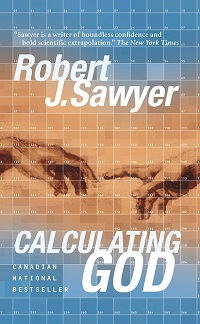 The interplay between worldviews and science fiction is very strong. In any writing, an author’s viewpoint will show through, but I think that it is particularly true in sci-fi. For in science fiction, the author is most frequently presenting a view of the world as it should be or as it should not be. The speculative future can be used as a foil through which the reader views reality in a new way. Often, science fiction will touch upon theological issues.
Robert Sawyer’s Calculating God
Fine Tuning
The most immediately striking and pervasive theme of Calculating God is that aliens show up on earth, and they believe in God. In fact, they take the existence of God to be a scientific certainty. The main character of the book, a paleontologist named Tom Jericho, is very skeptical throughout. Here’s the kicker, though, the aliens have been convinced of the existence of God through the evidence–specifically, the fine-tuning argument. Said argument is presented throughout the course of the book in interactions between Tom and Hollus, an alien paleontologist.
What is surprising is how much depth the book goes into while exploring the argument. Yes, Sawyer does fudge the argument a bit by allowing the aliens the possibility of a grand unified theory of science as well as a few other fictionalized aspects of the argument, but overall the fine-tuning argument he presents is very similar to the modern fine-tuning argument.
Not only that, but the characters Sawyer created go to great lengths to explore objections to and defenses of the fine tuning argument. For example, there is a discussion on p. 144ff (mass market paperback edition) in which Hollus and Tom discuss some objections to fine tuning. Tom is arguing against the probability of God:
“All the actions you ascribe to God could have been the doing of advanced aliens” [said Tom].
“There are… problems with your argument,” said Hollus, politely. “[E]ven if you dispense with the need for a god in recent events–events of the last few billion years; events after other conscious observers had emerged in this universe–you have done nothing to dispense with the relative strengths of the five fundamental forces [its science fiction, so there is an extra force], who designed the thermal and other properties of water, and so on. And therefore what you are doing is contrary to the razor of Occam you spoke of: you are increasing, not reducing the number of entities that have influenced your existence…”
The book is replete with debates like this, and the inevitable conclusion is that, shock of all shocks, God exists. I don’t say that sarcastically, I mean that I was genuinely surprised that the book affirmed God exists. But what kind of God?
God Exists… but?
It should be clear that in Calculating God, God is nowhere near the God of classical theism. In fact, one could almost argue that what Sawyer has offered here is a materialistic supplanting of God. The “god” of this work is essentially a super-powerful alien which is capable of swallowing the enormous energy output of a supernova, while also capable of designing our biology and fixing the constants of the universe during the early stages of the Big Bang.
God’s action is described purely in non-transcendent language. For example, the aliens confirm that god caused ice ages and mass extinctions on all the planets with intelligent life. The way this was accomplished was a matter of some speculation–perhaps God generated a dust cloud by using particles from across the galaxy to shield the planets from light and lower the temperature, or perhaps God redirected an asteroid or two to send them hurtling at the planets with life that needed a ‘jump start’ of evolution (146ff).
So why think that this is an image of god supplanting the classical theistic God? Well, clearly many who use the teleological argument are intending for it to point towards a creator God. What Sawyer has offered is a more naturalistic explanations of these events. Yes, there is a ‘god’ in the sense of a being capable of tampering with the very fabric of our universe, but that ‘god’ is itself trapped within the spatio-temporal boundaries of the known universe. In fact, god is said to subsist by recreating itself via a kind of reproductive method and passing one generation through a Big Crunch (think of a bouncing universe model).
Now what?
Calculating God offers a unique look at theology from a science fiction perspective. The fine tuning argument is presented in full force–even enhanced by some fudging of the science–and it leads to the inevitable conclusion that god exists. Yet this ‘god’ is not at all amenable to the god of Christianity or classical theism. So what should we do with this book?
Well, it is important to note that it is a work of fiction. The author clearly adds in some extra ‘fluff’ to make the fine tuning argument more powerful than it is (and I think it is quite powerful as it stands). And really Sawyer’s shoehorning in of a materialistic entity that is able to fiddle with physics boils down to hand-waving. Again, it is fiction, but it is important to note that Sawyer’s attempt to supplant the God of classical theism simply doesn’t work. Think of it this way: how would a purely physical being, however powerful, manage to transcend the physical universe in such a way as to literally rewrite the laws of physics? Extremely interesting science fiction? Yes. Compelling argument? No.
So where are we left? Sawyer does present the fine tuning argument in a way that is quite compelling, even when one strips away all the layers of fiction over it. It seems to me that, at a minimum, readers are left with a rock in their shoe: how do we explain away all this fine tuning without going beyond the cosmos? Sawyer’s own proffered answer, while entertaining fiction, remains that: fiction.
Other Issues
I have not yet even begun to delve into the depths of Sawyer’s Calculating God. The book covers an extremely broad array of topics related to science and faith as well as the secular-religious [false] dichotomy. For example, he discusses abortion in a few places, and I think the view the characters favor is very inconsistent. There is also some clear portrayal of the religious “other” as only a fundamentalist who seeks to halt scientific advancements. Yes, Sawyer panders to Christians in a few places, but the overall look at religious persons seems to be fairly negative (apart from Tom’s wife). I wish I could do justice to each of these topics, so I think I may follow this post up with another touching on more. For now…
Conclusion
Ultimately, Sawyer’s work is a simply phenomenal read. The amount of scientific, ethical, and religious issues upon which it touches is stunning, and readers will be forced to deal with the argument. Sawyer has done an excellent job using fiction for what I think it is called to do: inspire, entice, and force thought. Readers will be uncomfortable. The work will challenge people to really think about the arguments, and to think about the offered solutions.
Links
I have discussed the use of science fiction in showing how religious persons act. Check out Religious Dialogue: A case study in science fiction with Bova and Weber.
What would it mean if we discovered life? I have reflected on the possibility: Alien Life: Theological reflections on life on other planets.
Our Spooky Universe– I make the case for the intelligent design argument for the existence of God, which is heavily used throughout Calculating God.
Check out my other looks at popular level books. (Scroll down to see more!)
Source
Robert Sawyer, Calculating God
SDG.
——
The preceding post is the property of J.W. Wartick (apart from citations, which are the property of their respective owners, and works of art as credited) and should not be reproduced in part or in whole without the expressed consent of the author. All content on this site is the property of J.W. Wartick and is made available for individual and personal usage. If you cite from these documents, whether for personal or professional purposes, please give appropriate citation with both the name of the author (J.W. Wartick) and a link to the original URL. If you’d like to repost a post, you may do so, provided you show less than half of the original post on your own site and link to the original post for the rest. You must also appropriately cite the post as noted above. This blog is protected by Creative Commons licensing. By viewing any part of this site, you are agreeing to this usage policy.
“Is Faith in God Reasonable?” Brief Debate Review: Alex Rosenberg vs. William Lane Craig
 Recently, the atheist Alex Rosenberg debated the theist William Lane Craig. The meat started to happen in the rebuttals, so I will focus on those. For a full review, check out Wintery Knight’s excellent summary.
Craig’s First Rebuttal
Craig pointed out the extreme implausibility of the naturalistic worldview in contrast to theism. He outlined several ways in which naturalism fails as an explanation of reality and cited Rosenberg’s work several times throughout this discussion. He argued that mental states have an “aboutness” which naturalism cannot explain.Then, he pointed out the profound difficulty naturalism has with locating truth and meaning within the worldview. He asserted that libertarian free will and purpose are incompatible with naturalism. Finally, the concept of the “self” and the first-person awareness cannot be explained by naturalism.
Rosenberg’s First Rebuttal
Alex Rosenberg: He focused on this question quite a bit in his rebuttal: “How is it possible for one chunk of manner to be ‘about’ some other piece of matter?” Yet after saying that this, he asserted that this debate over naturalism has nothing to do with the topic of the debate: “Is Faith in God Reasonable?”
He then turned to a discussion of the problem of evil. “If God is omnibenevolent, omniscience, and omnipotent, then the suffering of animals and humans needs desperately to be explained… Nobody has yet to offer a satisfactory explanation… Dr. Craig needs to tell us how [God] had to have the holocaust!”
He also argued that different religious books are false, so there is no reason to trust the New Testament.
Rosenberg said if Craig could provide an explanation for this, then he would become a Christian.
Craig 2nd Rebuttal
Craig immediately exclaimed his excitement over Rosenberg’s possibility of becoming a Christian, arguing that the logical problem of evil, which Rosenberg seemed to be using, has been largely abandoned due to its immense problems. In order to make this argument, the atheist assumes that if God is all powerful than he can create any world he wants, but this is not necessarily true. It is logically impossible for God to make someone freely do something. The atheist would have to prove that there is a world with as much free good in this world but without as much free evil. It seems this premise is impossible to prove. Thus, the logical problem of evil has largely been dropped.
Craig pointed out the fact that Rosenberg was simply mistaken about the importance of metaphysical naturalism. If metaphysical naturalism is false, then it seems clear that theism is that much more plausible.
Craig also once again pointed out that discrediting things like the Book of Mormon or the Qur’an does nothing to undermine the truth of the New Testament documents.
Rosenberg Final Rebuttal
Rosenberg continued to attack Craig as well as the format of the debate. He asserted that Craig was merely repeating himself. Then he commented that the format of a debate does not work to discuss questions like those at hand. One honestly is forced to wonder why Rosenberg chose to engage in the debate, if such were his opinions. Rosenberg attacked Craig’s arguments for “giving philosophy a bad name” and said he would be “embarrassed” to outline Craig’s defense of his arguments.
He did get into some actual comments on the arguments, however. He argued that some things can come into being from “nothing at all,” specifically alpha particles.
Finally, he got to the problem of evil. Here I continued to be confused over whether Rosenberg was sure which variety of the problem of evil he was presenting. He continued to utilize the evidential problem of evil as though it were the same as the logical problem of evil. He was confusing his arguments, mixing necessity with contingency. There is little to comment on here, because it was so confused.
Regarding the New Testament, Rosenberg essentially argued that we cannot know how corrupt the New Testament is.
Craig Closing
Craig turned once more to Rosenberg’s construction of the problem of evil. He pointed out that Rosenberg was mistaken about free will as well as the nature of the God’s creation. He pointed out that the holocaust was not necessary. Instead, he noted that the onus is upon Rosenberg to show that God could have actualized a world with as much good as there is in this world while simultaneously showing there would be less evil, which is of course beyond the ken of the atheist (or the theist).
Craig pointed out that we can confirm that New Testament sources we have go back to within 5 years of the actual events. Furthermore, Rosenberg was mistaken in saying that the New Testament documents were written in Aramaic. They were written in Greek.
Rosenberg Closing
Rosenberg used his closing to present an “obvious” argument for atheism. He argued that science has no need of the God hypothesis and that there is no basis “to invoke God for explanatory or any other purpose” in science. Thus, science has no reason to accept the existence of God. I find it interesting that he chose to save this argument for the point when he couldn’t be rebutted on the argument. Perhaps that is due to the extreme weakness of the argument. Only be equating science with knowledge could this argument have any relevance. This is not to mention that he is mistaken on this, but to show that he is mistaken would take us too far afield. Interested readers can view the links at the end of this post.
Rosenberg closed with “advice from an atheist.” His advice was to tell theists to not demand that their faith be reasonable. He continued with a discussion saying that theists should say “I believe because it is absurd.” He essentially asserted that theists cannot be reasonable. Honestly, this was just an insult. I admit I was not surprised by this comment by the end of the debate, as Rosenberg’s general strategy had seemed to be to denigrate, rather than interact with, theism.
Comments
I was honestly stunned by Rosenberg’s assertion that substance dualism or a debate over naturalism had nothing to do with faith in God. It seems quite obvious that such things are indeed germane to the discussion. If substance dualism is true, then theism has a much better account than non-theistic worldviews. If naturalism is false, the plausibility of theism increases greatly.
In the Q+A following the debate, someone asked Rosenberg why they should believe anything he said in the debate if he himself doesn’t believe in true. Rosenberg basically answered by saying that he’s just rearranging the brain in a way to meet truth… but of course he already denied that we can know what truth is. It’s just a certain way of orienting the matter in one’s brain! Ridiculous. I’m sorry, but it is ridiculous.
Regarding the debate itself, there were a number of non-scientific ways that people voted on the results of the debate. A formal panel awarded Craig the victory 4-2. The local (Purdue) voting on the debate 303-1390 Craig won. Online vote favored Craig 734-59. In other words, Craig crushed Rosenberg. I agree wholeheartedly. Let me know your thoughts. Comment below!
One awesome line from the debate came from Craig: “The purpose of life is not happiness. The purpose of life is knowledge of God.”
An awesome tweet: “Rosenberg apparently knows not only what God could have done but what would have been best for us for all eternity.” @ThnkngChristian
Links
Wintery Knight provided a simply fantastic summary of the debate.
Glenn Andrew Peoples has a post on quantum events in relation to the cosmological argument which is very relevant to this debate.
Shoulders of Giants?- Philosophy and Science in Context, or, “Lawrence Krauss Jumps off!”– I write on the relationship of science to philosophy as well as Christianity.
Science: “Thanks Christianity!”– Does Christianity say anything about science?
Our Spooky Universe: Fine-Tuning and God
 The Fine-Tuning Argument for the existence of God has been acknowledged as one of the most powerful arguments for theism. Proponents of this argument, also known as the teleological argument note that our universe is “spooky.” So many facets of our universe appear designed. It is startling to me to read about many of these in literature and realize that the very fingers of God seem apparent in these qualities of our universe. The way that these pieces fit together should not be viewed as independent variables. Any theory which seeks to explain the features of our universe must take into account the full range of factors.
The Argument Stated
The fine-tuning argument for the existence of God can be stated fairly simply:
1) The fine-tuning of the universe is due to either physical necessity, chance, or design
2) It is not due to physical necessity or chance
3) Therefore, it is due to design (Craig 1, 161 cited below)
The first premise turns on the notion of “fine-tuning”–something which is widely acknowledged to exist. It is the explanation of this fine-tuning that becomes controversial. Before trying to offer a way forward in this controversy, it will be prudent to list some of these evidences for fine tuning. Finally, before diving it it should be noticed that this argument can be seen probabilistically: that is, one should view it in light of which is more probable- are the properties we observe more probable in a universe that came about by chance, design, or necessity?
Various Evidences for Fine-Tuning
There are any number of independent, fine-tuned factors which make our universe capable of sustaining life. Without these factors in place, our universe would be uninhabited, and we would not exist.
Low Entropy
If the entropy in our universe were high, then the energy required for life to function would be distributed in such a way as to make the complexity required for life impossible. In order to determine the likelihood of a life-permitting range for a universe, Roger Penrose calculated the total entropy in our universe as “equal to the total number of baryons (protons and neutrons) in the universe… times the entropy per baryon… which yields a total entropy of 10^123.” This means that our universe falls within a range of accuracy regarding entropy of one part in 10 to the 10th to the 123rd power, 10^10^123. As Penrose put it, “the Creator’s aim must have been… to an accuracy of one part in 10^10^123” (quoted in Spitzer, 58).
The Existence of Matter
The very existence of matter is something which cries out for explanation. Why? Well, to put it as simply as possible, the basic particles of matter, quarks and anti-quarks form via pair production. They annihilate each other.
However, during the Big Bang, a slight asymmetry in this pair production resulted in approximately 1 extra particle of matter for every 10 billion produced.
It turns out that this 1 in 10 billion ratio of “leftover particles” happens to be the exact amount of mass necessary for the formation of stars, galaxies, and planets. As much as 2 in 10 billion, and the universe would have just been filled with black holes. As little as 0.5 in 10 billion, and there would not have been enough density for galaxies to form. (Bloom, cited in Rodgers).
The Nuclear Binding Force
If the nuclear binding force were much about 2% stronger, then the universe would form mega-elements which would make life impossible. Our universe would be filled with black holes and neutron stars. Furthermore, if it were weaker by about 5%, we would eliminate a large portion of the periodic table…. in fact, it would reduce it so much as to make the universe composed entirely of hydrogen (Bloom, cited in Rodgers).
 The Properties of Water
Water is required for life. Don’t take my word for it: just look into the works of those who are working on investigating the origins of life, people like Iris Fry

Water also has high adhesion which is critical for plants to grow. They rely upon capillary action with cohesion to grow upwards. This would be impossible if water were less cohesive. Water is a universal solvent, which is important for life because life relies upon a medium for chemistry to occur. If the medium were gas, the interactions would be too far apart, while if it were solid the interactions would occur to slowly or there wouldn’t be enough movement within the substance for chemical interactions needed for life to occur. Perhaps most “spooky” of all, a more recent discovery hints that water has quantum effects which cancel each other out, reducing the effects of quantum indeterminacy on the covalent bonds in water. This allows for water to have many of the properties outlined above.
There is no set number to assign to this chemicals of water, but it should be seen that property after property regarding water lines up exactly with the needs for life.
For a more in-depth discussion of the “spooky” properties of water, see the RTB Podcast on the topic.
Gravity
If gravity were increased by a significant margin, complex life could not exist due to their own weight. Even if life only came to be in water, the density of such life would have to be high simply to resist gravitation, which would again make complex life impossible. The lifespan of stars would also be reduced if gravity were increased by about a factor of 3,000 (or more). Robin Collins, in noting gravity as fine-tuned, argues:
Of course, an increase in the strength of gravity by a factor of 3,000 is significant, but compared to the total range of strengths of the forces in nature… this still amounts to a… fine-tuning of approximately one part in 10^36 (Collins, 190, cited below).
More
There are more of these requirements for fine tuning found in a number of the sources I cite below. But even looking at those I have outlined here, the possibility for our universe to exist as a life-permitting universe is absurdly low. It is so small that it baffles the imagination.
 The Fine-Tuning is Neither Chance nor Necessity
Robert Spitzer outlines the argument which leads from these constants to design:
1) The values of universal constants… must fall within a very narrow, closed range in order to allow any life form to develop
2) …the possible values that these universal constants could have had that would have disallowed any life form from developing are astronomically higher (falling within a virtually open range)
3) Therefore, the odds against an anthropic condition occurring are astronomically high, making any life form… exceedingly improbable. This makes it highly, highly unlikely that the conditions for life in the universe occurred by pure chance, which begs for an explanation (Spitzer, 50, cited below)
Thus, the argument turns on this contention: is it reasonable to think that the fine-tuning we observe in our universe is based merely upon chance? Now it is important here to realize that any of the three proposed explanations for the fine-tuning of our universe must carry the burden of proof for their position. That is, if someone puts “chance” out there as the explanation for the fine-tuning in the universe, they must defend their position as being more probable than the hypotheses of necessity and design.
Therefore, it is not enough to simply say that “anything is possible.” The key point is that any theory must take into account the full range of intersecting evidences for fine tuning. To make the inference for design, furthermore, is not a failure to attempt explanation. Instead, it is itself an explanation. The argument is that design is the best way to explain the evidence for fine-tuning in the universe.
William Lane Craig notes that it is important to take into account that the probability in play in the teleological argument is epistemic probability. That is, is it reasonable to believe that our life-permitting universe occurred merely by chance (Craig 2, 169)? Again, turning to Spitzer’s contention above and taking into account the enormously huge range of possibilities that turn against a life-permitting universe, one has to take into account the fact that it is almost infinitely more probable that a universe would be lifeless than to be one that has life. Yet Spitzer’s point is also that there is a “closed range” for values which are life-permitting. That is, there is only a limited set of values which will allow for their to be life. Yet the range of values which are life prohibiting is essentially open–that is, it is infinite. Therefore, the fact that our universe exists and is life permitting makes it reasonable to believe that it was designed. Design is the only explanation which can account for the full range of the evidence, for it explains why our universe would fall within a specific set of parameters which all must be aligned in order to meet the end of life. In the set of possible worlds, purposeless chance would give us an extraordinarily higher probability of having a lifeless universe, while necessity fails to provide any explanation at all. Only design provides a reason to believe that a life permitting universe would be the one to be brought into existence.
One may object by saying “well of course, but our universe is life permitting, so it appears that we hit the jackpot.” It should be seen now that that just begs the question. The person who makes this argument is in fact assuming that chance is the explanation without providing any evidence to think this is the case. Again, when one considers how vastly improbable our universe is, the most reasonable conclusion is that it is not, in fact, a random occurrence. As John Bloom put it, it would be like throwing a dart from outer space and hitting a bullseye on the surface of the earth that is smaller than a single atom. In other words, it is statistically impossible.
One may also object by noting that all universes are equally improbable, so our universe had to have some values. But again this misses the point. The argument is not that our universe is improbable, but rather that our universe, as life-permitting, is part of a limited set of possibilities against the much larger realm of possible worlds. In other words, the fact that our universe is life-permitting rather than life-prohibiting is what is surprising–not the brute fact of its existence. Although the fact of the universe’s existence is itself something in need of explanation.
Yet what about necessity? Is it possible that our universe simply has the constants that it has due to some kind of necessity? Here, mere physical necessity will not do as an explanation. For something which is physically necessary is not metaphysically necessary. That is, something can happen due to laws of nature and the like, while not being something required by logical necessity. Thus, it seems the burden of proof in this case is upon the one claiming that the universe is metaphysically necessary to show their case to be more reasonable than the chance and design hypotheses. Frankly, I think that the prospect is quite bleak.
Conclusion
We have noted a number of scientific evidences for the fine-tuning of the universe. These form our data set that any theory needs to explain. Chance has been found epistemologically wanting. It is simply not reasonable to say that chance is the explanation. Necessity seems to fare no better. There is no way to account for the necessity of the universe, and in fact our universe seems to be apparently contingent. Therefore, the most reasonable explanation for the apparent design in our universe is to infer that there is, in fact, a designer. Our universe is not so much spooky as it is spectacular.
Links
Evidence for God: A Fine-Tuned Universe– Matt Rodgers gives a great summary of a talk by John Bloom I attended as well. This post gives a really concise summary of a number of the evidences for fine-tuning.
The Teleological Argument– I present Robin Collins’ version of the fine-tuning argument and briefly defend it against a few objections. The Past, Probability, and Teleology– I answer a few objections to the teleological argument.
What about the multiverse? I have answered a number of issues related to the multiverse in my previous posts on the topic.
Max Andrews offers a discussion of the multiverse and the fine-tuning argument, wherein he notes that the existence of a multiverse does not undermine the argument.
Sources and Further Reading
John Bloom, “A Fine-Tuned Universe.” Lecture given at the EPS Apologetics Conference, 2012.
Robin Collins, “Evidence for Fine Tuning” in God and Design
William Lane Craig 1, Reasonable Faith
William Lane Craig 2, “Design and the Anthropic Fine-Tuning of the Universe” in God and Design
Fazale Rana, “Science News Flash: ‘Water Fine-Tuned for Life'” (October 27, 2011). Reasons to Believe.
Matt Rodgers, “Evidence for God: A Fine-Tuned Universe.”
Robert Spitzer, New Proofs for the Existence of God
SDG.
——
The preceding post is the property of J.W. Wartick (apart from citations, which are the property of their respective owners, and works of art as credited) and should not be reproduced in part or in whole without the expressed consent of the author. All content on this site is the property of J.W. Wartick and is made available for individual and personal usage. If you cite from these documents, whether for personal or professional purposes, please give appropriate citation with both the name of the author (J.W. Wartick) and a link to the original URL. If you’d like to repost a post, you may do so, provided you show less than half of the original post on your own site and link to the original post for the rest. You must also appropriately cite the post as noted above. This blog is protected by Creative Commons licensing. By viewing any part of this site, you are agreeing to this usage policy.
“Cross Roads” by Wm. Paul Young- An Evangelical’s Perspective
 One of the biggest publishing phenomena of late, The Shack

Free Will
The notion of crossroads is a major theme throughout the work, and Young utilizes the imagery to discuss free will metaphorically. Anthony Spencer (Tony), the main character, finds himself inside his mind, which is portrayed as a kind of land with various roads and places inside it. Initially, he begins exploring this land and finds himself coming to numerous forks in the road. He continues to find these forks and realizes that as he continues to make choices, “it occurred to Tony that the number of direction decisions was diminishing; options were significantly decreasing” (35). Young doesn’t expand on this much, but it seems like a vivid illustration of libertarian free will, wherein one’s choices in the past do indeed influence their choices in the future. As Tony makes choices on his path, he finds that the choices available to him decrease. The reason, it seems, is because his choices have started to form his world. It seems to me that this is a great way to show libertarian free will in literature.
Church
A robust theology of church and salvation is something that I think is necessary for an adequate theology. I find one reason for this illustrated well by Young:
Church, thought Tony. He hadn’t set foot inside one of those since his last foster family had been religious. He and Jake [Tony’s brother] had been required to sit silently for what seemed like hours… He smiled to himself, remembering how he and Jake had schemed together and ‘gone forward’ one night at church, thinking it would win them points with the family, which it did. The attention their conversions garnered was initially rewarding, but it soon became clear that ‘asking Jesus into your heart’ dramatically increased expectations for strict obedience to a host of rules they hadn’t anticipated. He soon became a ‘backslider,’ in a category, he discovered, that was profoundly worse than being pagan in the first place. (124)
It seems clear to me that here the act of conversion has itself become a work, rather than a gift of grace. Tony’s concept of conversion at this point in the book is that of “asking Jesus into your heart.” Unsurprisingly, when he fails to perform other adequate works–obeying a set of rules. The problem with this theology should become clear immediately. By suggesting that Christianity is about “going forward” and publicly affirming a faith, this form of theology puts the believer in the position of affirming faith, rather than receiving it as a gift. When faith becomes a public work, it becomes the Law instead of the Gospel. When demands for works are made on faith, then faith itself becomes a work. Unfortunately, this kind of works-righteousness sneaks into theology at all levels, ever seeking a place to grow.
The problems with this theology are portrayed vividly in this illustration. The notion that people need to make a public declaration of faith leads to its abuse, as Tony and Jake attempted to do, but it also leads to difficulties for those who believe their declaration was itself true (unlike Tony and Jake, who simply did it to glorify themselves in the eyes of their foster parents). When someone makes their “decision for Christ,” their faith life becomes wrapped up in that decision. Their walk with God is contingent upon their continuing to make this decision. Unfortunately, this type of theology makes faith all about one’s own decisions, rather than Christ’s justification and the free gift of faith.
Women
There are many church bodies who do not ordain women to the office of the ministry. That is, they hold beliefs that say women should not be spiritual leaders of men in the church. Young explores this issue when Pastor Skor shows up and challenges Maggie, one of the main characters, regarding her outburst during a church service. Pastor Skor takes Maggie’s outburst and disruptive behavior as a clue to him from God that he has been too lax in his instructing his congregation in the Bible. He makes an argument that women should not be leaders in church and should remain silent:
And we affirm the Word, which declares there is no longer male or female [Galatians 3:28], but… the Word is speaking of how God sees us, not about how we function in the church, and we must always remember that God is a God of order. It is vital that each person play their part, and as long as they stay within the roles that God has mandated, the church functions as it was meant to… (167)
The pastor goes on to quote 1 Corinthians 14:34-35 to support his position. Yet Young, through Clarence, an elder who is with the pastor to talk with Maggie, provides a counter-argument to this reasoning:
It is sarcasm… I believe that the apostle Paul was being sarcastic when he wrote what you read… He is quoting a letter that these folk sent him with questions, and he is in total disagreement with what they have written to him. (168-169)
Clarence defends this position by alluding to 1 Corinthians 14:36, apparently using the KJV: “What? came the word of God out from you? or came it unto you only?” Given the way this verse is worded, Clarence holds that verses 34-35 are a quote from a letter the Corinthians sent to Paul which Paul then responds to sarcastically by wondering whether the Corinthians think that God’s word came only to them.
Young’s offered interpretation seems possible, but perhaps not made explicit enough. It seems to me possible that Paul would have made it more clear that he was quoting another’s writing here. The KJV seems to support the interpretation given to 1 Cor 14:36 here, but other translations phrase it differently, in such a way that the verse seems to be more of a challenge to readers to dismiss what Paul is declaring in 34-35.
Of course, one could still argue that Young’s interpretation has great strength, noting that nowhere in the Bible do we see this command in the Scripture “as the law also says” and so we may infer that Paul is referencing an extra-biblical teaching and rebutting it. In fact, this seems to line up with Young’s argument perfectly because we can see that Paul would be citing a Judaizer’s teaching in the church in Corinth–who would hold that the silence of women is taught by the Law [Jewish extra-biblical law]–and then refuting this by noting that the word of God did not come from them alone (see Katharine Bushnell’s God’s Word to Women
Therefore, it seems to me that Young offers a fairly decent egalitarian interpretation of the passage, though he could have given other arguments which would take into account the passage’s cultural context, in which women were speaking out of turn in worship. The core of the statement seems to me to be that the women in this specific context needed to learn from their husbands at home and remain silent in church so that they did not cause disruption.
The way the scenario plays out in the book is also difficult to evaluate because Maggie definitely was disrupting the church service and would have appeared at least slightly crazy to those around her. She was screaming about a demon speaking to her and was, in fact, mistaken about that. I think she can be forgiven for her extreme reaction given the strange situation in which she found herself, but the Corinthians passage is in context all about order in worship in general, and certainly people bursting in screaming about demons would be disorderly worship.
Thus, it seems to me that Young offers a possible interpretation of 1 Corinthians 14:34-35, but he has made his case problematic by the narrative context in which he placed it. It is worth noting that this work will get people talking about the issue. Young has given a somewhat strong version of a lengthy egalitarian argument in the form of narrative.
Practical Ethics and Disability
Cabby, a boy with Down’s Syndrome, is featured prominently throughout the book. Young uses him as a foil to show that those with disabilities have much to contribute to modern society. Perhaps the most poignant way he does this is through the negative portrayal of Tony’s view of Cabby:
Tony had never known a ‘retarded’ person. He wasn’t sure if that is what you called them… His opinions on most nonbusiness matters may not have been founded on evidence or experience, but he was sure of them. People like Cabby were an unproductive drain on the resources of society; they were valuable only to their families. He believed they were tolerated because of liberal persuasions, not because such people had any intrinsic worth… It is easy to create a category of persons, like retarded or handicapped, and then pass judgment on the group as a whole. He wondered if that was not the heart of all prejudice. (108-109)
In contrast to Tony’s view, Cabby turns out to be insightful and delightful. He is shown to have positive value in a number of ways that go beyond his immediate family. He ultimately shows the practical usefulness of inherent human worth.
God
For Young, understanding God as relationship is central to the concept of deity. The concept of deity that is presented is that of Trinity. Much ink will be spilled, I feel certain, on whether or not Young portrays the persons of the Trinity correctly, just as there was in The Shack (see my own discussion here).
Young’s position seems to be largely unchanged from that in The Shack, and so much of the commentary will follow the same line. I think he does a very good job of exploring the inter-relational character of God and the temporal submission of Christ in the incarnation to God the Father. Some may see the primary difficulty with Young’s portrayal of God is that the Father makes very little appearance in the book, but near the end readers find out that is not the case. In fact, the Father is intricately involved in all aspects of God and the life portrayed in the novel.
Those who conceptualize God as inherently male will have a problem with the book, however. Unfortunately, some paganism has indeed hung on in the church, wherein some view God as a gendered being. In the Bible, however, we find that God is spirit and not a man. Thus, I think that Young’s use of gender with God may shock some but also underscores the fact that God is not a gendered being, and instead transcendent.
Historical Theology
Young offers a short discussion of historical theology and God that seems to me to at least partially miss the mark. It is very brief, but I think it is worth discussing. Young puts the following commentary in the mouth of Jesus himself:
The Greeks, with their love for isolation [of deity] influence Augustine and later Aquinas… and a nonrelational religious Christianity is born. Along come the Reformers, like Luther and Calvin, who do their best to send the Greeks back outside the Holy of Holies, but they are barely in the grave before the Greeks are resuscitated and invited back to teach in their schools of religion. The tenacity of bad ideas is rather remarkable, don’t you think? (73)
There are a number of problems with this small passage. First, Augustine heavily influenced both Calvin and Luther. In fact, Calvin’s theology is tied very intricately to Augustine’s view of free will and original sin. Similarly, Luther’s view of original sin derives directly from Augustine’s exposition in City of God. Second, it seems unfair to view Aquinas as a kind of anti-relationalist when it comes to God’s nature. Aquinas very much emphasized the triunity of God, which was (and is!) an extremely important topic. To thus accuse Aquinas of undermining God’s relational-ness seems unfair. Finally, the notion that the influence of Greek philosophy on Christianity is somehow inherently bad seems a bit shortsighted. There are innumerable positive contributions that reflection on Greek thought has brought into the fold of Christianity. Among these are the very concept of free will that Young pushes in his book, along with a number of aspects of Trinitarian and Incarnational theology that Young seems to support. This may seem to be a nitpick, but it seems to me that if Young is going to use his book to make comments about historical theology, it is vastly important to get that historical development right.
Conclusion
Cross Roads
SDG.
——
The preceding post is the property of J.W. Wartick (apart from citations, which are the property of their respective owners, and works of art as credited) and should not be reproduced in part or in whole without the expressed consent of the author. All content on this site is the property of J.W. Wartick and is made available for individual and personal usage. If you cite from these documents, whether for personal or professional purposes, please give appropriate citation with both the name of the author (J.W. Wartick) and a link to the original URL. If you’d like to repost a post, you may do so, provided you show less than half of the original post on your own site and link to the original post for the rest. You must also appropriately cite the post as noted above. This blog is protected by Creative Commons licensing. By viewing any part of this site, you are agreeing to this usage policy.
Really Recommended Posts 12/30/12
 Another round of Really Recommended Posts here. Featured are undesigned coincidences, literary and culutral apologetics, egalitarianism/complementarianism, young earth creationism, and the “Gospel of Jesus’ wife.” I hope you’ll check them out and let me know what you thought!
Tim McGrew replies to Ed Babinski’s Critique of his Discussion of Undesigned Coincidences– I recently wrote on one of the [mostly] forgotten arguments for the truth of Christianity- Undesigned Coincidences. Tim McGrew is the best current proponent of this argument, and here he offers a response to some of the standard objections to the argument, along with a general criticism of trying to rebut the argument based on Markan priority. Check out my post, and check out this post to see the excellent defense of the argument.
“Full Dark, No Stars”: Stephen King’s Worlds of Night– An excellent blog that often looks into cultural apologetics, “Empires and Mangers,” Anthony Weber’s Blog takes a look at one of Stephen King’s work from a Christian perspective. It’s a very intriguing read. Anthony Weber is the author of “Learning to Jump Again,” which I reviewed.
It’s About the Bible, not Fake ideas of Progress– NT Wright is one of the most lucid Christian thinkers with whom I have ever interacted. Here, he takes a look at some strategies of those who are both for and against women in the ministry and evaluates the arguments. He offers a way forward in the discussion.
How prestigious evangelical scholars helped debunk the Jesus wife myth– Did Jesus have a wife? Some recent controversy occurred over the alleged finding of a fragment purporting to tell the truth on this exact detail. However, it has come to light that the fragment is almost certainly a fraud. Wintery Knight’s post looks at how evangelical scholars helped to expose this fraud. I have linked to a number of posts about this “Gospel” myself. For those wondering: even if it were not a fraud (which it is), it is a late fragment that doesn’t tell us much other than what some heretics believed at the time.
The Call to Adventure– Why is it that we are so intrigued by stories of adventure? Garret Johnson at Hieropraxis–one of my favorite websites–offers a look into this theme.
Nathaniel Jeanson of the Institute for Creation Research in Montana– I found this post extremely interesting. It is often alleged by young earth creationists that old earth proponents and “secularists” follow a strict uniformitarianism. Unfortunately, this definition of uniformitarianism is outdated by a couple hundred years.The GeoChristian offers a response to this YEC argument. Yes, this is part 3 of a 5 part series, no you don’t have to read them all to make sense of it. But do check out the whole series, because it is interesting!
Nonrandom Mutations Scramble the Case for Common Descent: Reasons to Believe, my favored resource for science-faith discussions, is chock-full of excellent articles like this one, which argues that mutations are not necessarily always random, but rather take place in such a way that reflects design.

 J.W. Wartick - Reconstructing Faith