Intelligent Design
Intelligent Design in Fiction – Ben Bova’s “New Earth” and Intelligent Design
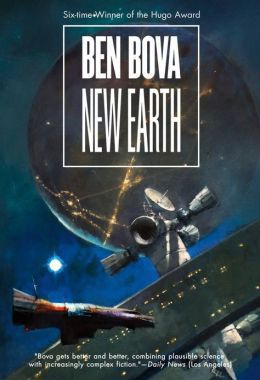 Ben Bova is a six time winner of the Hugo Award. His books hit best seller lists, and he is acknowledged as one of the all-time masters of science fiction. I’ve already explored several themes found in one of his latest books, New Earth. Here, we will look at how one might view the book as a fictionalization of the way to discover intelligent design in unexpected places. I should note that I am highly doubtful that Bova intended the book to be viewed through this lens, which makes the discovery of such a possible theme more surprising. There will be SPOILERS in what follows.
Expectations
When a team from Earth discovered the planet they dubbed “New Earth,” it defied explanation. Between a pair of stars, one of which went nova in the relatively recent past, the timing was off for such a planet to exist. The strangeness of the planet only increased when life was discovered on its surface. Finally, when intelligent life in fairly similar form to humans greet the human visitors in English, the astonishment of the explorers is complete.
But of course that’s not all that is strange about the planet. Under the surface it is actually hollow, with metal mantle that contains a gravity generator. Each of these aspects ultimately leads to the inescapable conclusion: the planet was designed for life, specifically life like that of Earth. The revelation comes from a Precursor–an ancient, sentient machine–the planet was designed to lure humans into first contact so a message of coming destruction could be delivered. The planet and the life on it were indeed designed with purpose. The eeriness of the situation is, in fact, telling.
Finding Design
In New Earth, when things show up with unexpected parameters or where they “should not be,” it is reason for further scientific exploration. Ultimately, this exploration yields the conclusion of design. I must emphasis this aspect of the book: design is not a hypothesis excluded at the outset. Instead, it is the logical outcome of putting the disparate pieces of evidence–unexpected location, age, life, types and forms of life, breathable atmosphere, hollow planet, etc.–together.
Put this in perspective: today one of the major critiques against the notion of “intelligent design” in the origins of life, its diversity, or our universe is that, essentially, one must have an a priori commitment to reject such intelligent causes as some kind of primitive magical reality in which people believe anything. However, in New Earth, epistemic openness to the possibility of design leads to real scientific discovery… of design.
I can’t help but think there is something informative here. The notion that scientific hypotheses must, by definition, exclude design not only would–if consistently practiced–remove any notion of agent causation from any situation (such as a human doing something), but could also hamper actual discovery. Methodological naturalism–the notion that science must operate in such a way as to exclude the possibility of agency–could actually be limiting the scientific enterprise. This is not to say that any unexpected observation should immediately be credited to design. Rather, my point is that if design is the most plausible of competing hypotheses, there is no reason to exclude it from the realm of possibility.
New Earth provides just such an example of how, ultimately, design was a better operating hypothesis than rival theories. When the explorers initially discussed the strange circumstances in the planet (specifically its seeming impossible location), one character remarked that [paraphrased] “It’s here! The models must be wrong!” Ultimately, this exclamation was shown to be incorrect: the models remained correct but did not account for the possibility of design.
Conclusion
One might note that Bova’s work perhaps shows the disjunct between design and naturalistic process. The juxtaposition of New Earth and its unexpected location, age, flora, and fauna against Earth’s more “typical” age and location provides readers with a reduced sense of the wonders of Earth. Moreover, in Bova’s broader canon, even Mars at one point had intelligent life upon its surface.
However, one must look to Earth and consider what we actually do observe rather than simply declaring that Earth “is here” so it must have gotten here through naturalistic means. Does Earth (or our universe) provide evidence for the hypothesis of design? That is, is design a more plausible explanation than naturalistic explanations which are offered? That’s a question which will take much exploration.
Links
Be sure to check out the page for this site on Facebook and Twitter for discussion of posts, links to other pages of interest, random talk about theology/philosophy/apologetics/movies and more!
A Solar System and Cosmos Filled with Life?- A reflection on Ben Bova’s “Farside” and “New Earth”– I explore the notion that life should be expected all over the place in a post that looks at some of Bova’s most recent works.
Our Spooky Universe: Fine-Tuning and God– Here, I present evidence that our universe indeed has been designed.
“Fitzpatrick’s War”- Religion, truth, and forgiveness in Theodore Judson’s epic steampunk tale– I take a look at the book Fitzpatrick’s War, a novel of alternative history with steampunk. What could be better? Check out some of the worldview issues brought up in the book.
I have discussed the use of science fiction in showing how religious persons act. Check out Religious Dialogue: A case study in science fiction with Bova and Weber.
Source
Ben Bova, New Earth (New York: Tor, 2013).
SDG.
——
The preceding post is the property of J.W. Wartick (apart from quotations, which are the property of their respective owners, and works of art as credited; images are often freely available to the public and J.W. Wartick makes no claims of owning rights to the images unless he makes that explicit) and should not be reproduced in part or in whole without the expressed consent of the author. All content on this site is the property of J.W. Wartick and is made available for individual and personal usage. If you cite from these documents, whether for personal or professional purposes, please give appropriate citation with both the name of the author (J.W. Wartick) and a link to the original URL. If you’d like to repost a post, you may do so, provided you show less than half of the original post on your own site and link to the original post for the rest. You must also appropriately cite the post as noted above. This blog is protected by Creative Commons licensing. By viewing any part of this site, you are agreeing to this usage policy.
Really Recommended Posts 2/28/14
 Kids Say the Darnedest Heresies– How should we react when kids don’t understand essentials of Christian doctrine? Jason Wisdom offers some interesting advice for how to deal with the situation… and it’s not just to laugh it off! I’d be curious to see what parents think of this post!
A Critical Review of Myron Penner’s “The End of Apologetics”– “The End of Apologetics” recently received some acclaim from Christianity Today, which I find a bit shocking, to be honest. Rather than declaring the “end” of Apologetics, we should be encouraging its bolstering and spread. I very highly recommend this post for some looks into the issues Penner’s book raised.
Kevin Lewis: Sharing the Gospel with Atheists (VIDEO)- One of my professors from Biola University, Kevin Lewis, here shares his thoughts on how to share the Gospel with atheists. Kevin Lewis is a witty, awesome lecturer, and I think you’ll enjoy this as much as I did!
Option (COMIC)- A fun way to look at the rather famous “trilemma” from C.S. Lewis. Here, it is presented in comic form.
A Smart Movie that Questions Evolution (Yes It’s Possible!)– There’s a movie coming called “I Origins” which explores intelligent design and the New Atheism through… yes! a storyline! Check out this look into the flick. It’s apparently out already but I can’t seem to track it down anywhere. Have you seen it? What are your thoughts?
What options are there in the origins debate? – A Taxonomy of Christian Origins Positions
 The origins debate within Christianity is often viewed through the lens of a very narrow spectrum. Most recently, this was demonstrated in the debate between Ken Ham and Bill Nye. I also demonstrated this recently by answering questions for old earth creationists (see the first and second parts): some people tend to see the only options available for Christians as either young earth creationism (the earth was made in six 24 hour days 6-10 thousand years ago) or theistic evolutionism (God set it up, then evolution accounts for diversification). These perspectives, though showing a few of those available to Christians, do not actually reflect the whole realm of possibilities for Christians.
More thoughtful Christians tend to think of the perspectives as threefold. There are theistic evolutionists, young earth creationists, and then in between there is a kind of amorphous glob of people who hold to an “old earth” without expressing it in strictly evolutionary terms. Here, we’ll explore this amorphous glob (as well as the extremes) to show that there really is a range of options. I’m writing this mainly to clarify for many some of the difficulties in commenting on creation issues without such a taxonomy.
Gerald Rau’s Mapping the Origins Debate
If I could recommend one book to anyone who is going to get involved in creation issues, I would have to say I’d recommend Gerald Rau’s Mapping the Origins Debate: Six Models of the Beginning of Everything
Rau’s Taxonomy
Rau divided the major positions on the origins debate into a sixfold division (see Rau, 41):
Naturalistic Evolution- On this view, there is no God and no purpose in origins. The process for the origin of species and its diversity is “spontaneous.”
Nonteleological Evolution- On this view, there is a creator, but there remains no intervention in the natural process which yield life and its diversity. Thus, the “conditions necessary for life” were “established at creation.” However, evolution is still without purpose and the creator did not specify its parameters.
Planned Evolution- On this view, there is a creator who had a purpose for life and its origin. This purpose is through a “perfect creation” which “naturally fulfills God’s purposes.” Thus, the purpose which the creator had was essentially front-loaded in at the moment of creation. There is no direction during the process.
Directed Evolution- On this view, there is a creator with a purpose for the diversity of life. Unlike the previous view, the creator doesn’t merely front-load design and purpose but rather intervenes throughout the course of history to bring about purpose: “changes in universe and life” are “subtly directed over time.”
Old-Earth Creation- On this view, the process by which the diversity of species came about is not through directed evolution but rather through creation over time: “major body plans” are “created over millions of years.” New diversity of life is through God’s direct creative act.
Young-Earth creation- on this view, “each ‘kind'” is “created in one week, within the last 10,000 years. All diversity of life is due to God’s creative act; any changes since then are only among the “kinds” represented on the ark.
 A Larger Picture
Rau’s division of these groups is extremely helpful because he hits on the major positions represented within the spectrum. Of course the only options which are available to Christians are those which do not exclude God from the picture. Thus all but naturalistic evolution remain open to the believer. Now, the debate over how these might fit into the teaching of the Bible is not what I’m trying to dive into here. Instead, I’m simply pointing out there is diversity of views greater than the YEC/Theistic Evolutionism divide. One can see from the above that even within theistic evolutionism there is some diversity. Does evolution take place nonteleologically or did God plan it from the beginning? Perhaps God directed evolution along the way. There also is the option of Old Earth Creationism which shares many features with young earth creationism but radically diverges from the latter in many respects.
However, the spectrum opens up even more than Rau’s taxonomy depicts. The views he discusses focus primarily upon the science; that is, they are distinctions among views on the specifics of a scientific account of origins. Other views may be listed which may be distinguished by the reading of the Bible. Now, there is of course much overlap between these and Rau’s list, but I wanted to highlight a few views of interest.
First, there are interpreters like John Sailhamer in his book Genesis Unbound
Second, John Walton’s view reads the creation account within the Ancient Near Eastern context and so he views Genesis not as a literal creation account but rather as an account showing how God is enthroned over the entire creation as King. Again, such a view would be amenable to the spectrum of views possible for a Christian as I noted.
It is worth noting that either of these is distinct from the spectrum Rau lists. They are distinct because they do not require commitment to any of the creation models. Thus, for Collins, Sailhamer, and Walton, one may simply remain open to the evidence rather than filtering the evidence through specific readings of the Genesis text. Of course, one could hold to this view and remain a young earth creationist; but none of these readings explicitly forces someone to hold to any position on the actual means of creation and speciation.
Third, there are positions related to the scientific origins which would further subdivide Rau’s categories as dilineated above. For example, young earth creationists often hold that the Global Flood can account for the fossil record and stratification. But some YECs have historically held that the Flood would have been tranquil and essentially had no impact on the Earth. Other YECs simply hold that the universe and the Earth have an appearance of age because God would have known at what age it would have needed to be in order to sustain life. There is much diversity about the mechanisms related to the Flood as well. Similarly, Old Earth Creationists exist upon a spectrum, though Rau’s principles about what unites them are correct. However, OECs are often confused with other views along the spectrum such as directed evolution. Strictly speaking, an Old Earth Creationist will not hold to the notion that speciation occurs on such a broad scale through evolution.
Conclusion
I have utilized Rau’s work to demonstrate there is a spectrum of beliefs related to the origins debate. The spectrum, I have argued, is even broader than Rau showed. Within each category he listed, there may be subdivisions. Moreover, there are some views which eschew attempts to dilineate the scientific truths but simply ascribe to reading the text. These latter views would fit with essentially any along the spectrum of beliefs so long as God is involved.
The purpose of this post is not to sow confusion for those interested in the topic of origins. Rather, it is to demonstrate that there really are more options on the table than either Young Earth Creationism or Theistic Evolutionism. Within either of those views there is much diversity, and there is a whole range in-between. Thus, let us hope that when we discuss origins we avoid falsely portraying the positions as being so limited that we fail to account for the range. Hopefully, this taxonomy will prove helpful.
Links
Be sure to check out the page for this site on Facebook and Twitter for discussion of posts, links to other pages of interest, random talk about theology/philosophy/apologetics/movies and more!
Source
Gerald Rau, Mapping the Origins Debate: Six Models of the Beginning of Everything
SDG.
——
The preceding post is the property of J.W. Wartick (apart from quotations, which are the property of their respective owners, and works of art as credited; images are often freely available to the public and J.W. Wartick makes no claims of owning rights to the images unless he makes that explicit) and should not be reproduced in part or in whole without the expressed consent of the author. All content on this site is the property of J.W. Wartick and is made available for individual and personal usage. If you cite from these documents, whether for personal or professional purposes, please give appropriate citation with both the name of the author (J.W. Wartick) and a link to the original URL. If you’d like to repost a post, you may do so, provided you show less than half of the original post on your own site and link to the original post for the rest. You must also appropriately cite the post as noted above. This blog is protected by Creative Commons licensing. By viewing any part of this site, you are agreeing to this usage policy.
Really Recommended Posts 12/13/13- Bonhoeffer, Creationism, Feminism, and more!
The Really Recommended Posts this week are really wide-ranging. I hope you’ll enjoy this smorgasbord as much as I did. We feature Dietrich Bonhoeffer’s theology, creationism, feminism, intelligent design, the conquest narratives in the Bible, and more! Check them out, and, as always, let me know what you think!
Dietrich Bonhoeffer, a New Testament Pastoral Theologian– Bonhoeffer is, I admit, one of my favorite theologians. I only wish he had had more time upon the earth to develop more systematic works than he did write. I’m Lutheran too, which makes me gleeful at the broad appeal Bonhoeffer has demonstrated. In this post, Joel Willitts explores the way in which Bonhoeffer did theology. It’s a fascinating look at the development of his theology.
Multiple Lines of Evidence Support an Ancient Earth– The charge is often made from young earth creationists that dating methods don’t work. What about when those dating methods correspond across independent and multiple lines of evidence? It seems this presents a major challenge to the young-earth paradigm. Check out this post for a summary of several related points.
Was There an Exodus & Conquest– Two of the biggest challenges to the OT narrative are directly related to the historical accounts of the Exodus and the Conquest narratives. That is, did these even happen? Here, there is a post which briefly summarizes the issues and evidences related to these events.
“Darwin’s Doubt” with Stephen Meyer (and Eric Metaxas) [VIDEO]– A fairly lengthy video in which Eric Metaxas discusses intelligent design with Stephen Meyer. I found this video to be highly informative and also really entertaining. Metaxas is clearly a great speaker, and he keeps the discussion going and interesting throughout. Meyer, of course, is also a great speaker and it is worth hearing his discussion of these ideas.
thoughts on being a “Jesus Feminist”– What does it mean to be a Jesus Feminist? Can Christians be feminists and follow Christ? Check out this reflective post on what it means to be a Jesus Feminist.
Rescuing Songs of Christ’s Birth from Christmas– Should songs of Jesus’ birth be sung only during the Christmas season? Here, compelling reasons are offered as to why these songs are appropriate year-round.
The Advent Project– A pretty sweet deal: Biola University, one of the best schools out there (not biased at all ;)), has a series of Advent devotions going up daily available on their site. Each has a work of art, a music selection(s), and a brief reflection upon the coming of Christ, the incarnate God, into our lives. I’ve been following them as they go up and have enjoyed them all. Check them out for an excellent way to meditate on the meaning of Christmas.
Really Recommended Posts 9/27/13- Star Trek, stem cells, gears, and more!
 A Word of Caution Regarding Induced Pluripotent [Adult] Stem Cells– It is vastly important when debating any issue–but particularly those issues with much emotional attachment–to be careful to make proper distinctions. Here, Matt Rodgers makes a very important clarification regarding the successes and usefulness of induced pluripotent (read: adult) stem cell research. Is it something to be celebrated wildly by pro-life persons? He urges caution. Read the post for why.
Remembering When Star Trek Responsibly Dealt With Disability and Assisted Suicide– Star Trek: The Next Generation is one of my all-time favorite TV shows. In this post, Chelsea Zimmerman analyzes one of the episodes to look at how it thoughtfully deals with some really tough topics: assisted suicide and disability.
First mechanical gear discovered in a living creature– One of the most important arguments for biological design, irreducible complexity, relates to the analysis of systems within lifeforms which, it is alleged, cannot have arisen through undirected processes. The concept of a serious mechanical gear existing within an insect offers a case study for irreducible complexity. Is it the case that this presents a challenge to Neodarwinism? Check out the post.
Cutting the Baby in Half: A review of Neal Shusterman’s “Unwind”– Anthony Weber’s blog, Empires and Mangers, is simply a must-follow if you are interested at all in the relationship between Christianity and culture. Here, he analyzes a work which directly addresses issues related to abortion. What happens when the value regarding human life is shifted beyond recognition? Or… more startlingly, is the dystopia portrayed in this work really a value network which is beyond recognition?
Was there animal death before Adam’s sin?– One of the arguments used by young earth creationists most frequently is the argument that animal death before the Fall decisively shows that any other position is false. William Lane Craig answers this challenge briefly. For my part, I have argued that the young earth view is actually self-referentially false in my post: “Animal Death? A Theological Argument Against Young Earth Creationism.”
Resource Review: “Flight: The Genius of Birds”
 “Flight: The Genius of Birds
The Complexity of Birds
The film traces the incredible development of birds from single cells into babies and the way in which their bodies must work in order to achieve flight. One of the people interviewed in the film notes that flight is not an incremental phenomenon; the entire body must be set up in order to accomplish it. The way feet work, the shape of the wing, the structure of muscles, and the weight of bones are all factors which must come into play in order to make up an animal capable of flight.
Hummingbirds
“Flight” presents a number of different birds as case studies the complexity which the systems that make up a bird show. Hummingbirds’ flight muscles comprise, on average, 43% of the bird’s body mass. This allows the birds to have an enormous amount of precision in order to move in the ways that they can, such as hovering, moving backwards, laterally, etc. The hummingbird generates lift both on the back and the front strokes of their wings. This capability is grounded in the shoulder joints found in the bones which are at the bases of the wings. The hummingbird’s heart must beat at an enormous rate, which means that it also must eat quite a bit in order to sustain the energy level required for the bird’s metabolism and constant movement. The hummingbird’s tongue is particularly interesting, for it has a number of functions on it which allow it to draw up nectar far more efficiently than had been thought.
European Starlings
These starlings, sometimes flying in groups in the hundreds of thousands, move in a stirring, beautiful way, seeming to shift as if they comprised one organism. The way that these birds continue flying without running into each other is by monitoring those starlings which are closest to each other. Rather than monitoring the entire formation, they simply move when those around them move, which lends itself to the movement of a flock as one kind of organism. Their movements must take place within very minuscule spans of time in order to maintain the formation. They follow air flows to minimize the turbulence they encounter, and their formation also serves as a defense mechanism.
Arctic Terns
Arctic terns have the longest migration of any animal on earth. They cross the planet from pole-to-pole to seek out nesting and feeding grounds. From the North Atlantic, they head south, eventually splitting as half go along the African coast while the other half goes along the coast of Brazil. In the south, near Antartica, they feast upon small fish before heading back north. They must arrive back near Greenland and other areas in the north for a nesting period of about 8 weeks. Then, as winter sets in in the north, they head back south.
How did the complexity arise?
The film here presents an argument that a materialist must use Darwinian evolution to explain the unique functions of flight. No design may be invoked in order to explain these things in a materialistic worldview. Dinosaurs were the precursors of birds, and natural selection selected for those dinosaurs which began to develop better means by which to avoid predators and catch prey.
The Feather
One feather may contain around a million individual parts, from the shaft to the individual strands, barbs, which compose the feather, and each of these are made up of barbules. These are constructed in such a way as to interlock with each other. Yet the feather is but one of the many factors which must go into the mechanisms required for flight.
Other Mechanisms
Other than those already noted (muscles, bones, etc.), birds require a navigational system which allows them to migrate and follow food. They must have instincts to cue and direct their movements across continents and even oceans. One could see how these latter functions came into play in the case study of the Arctic Terns.
Natural Selection?
The film makes the argument that natural selection cannot account for the mechanisms required for flight. The primary problem presented by “Flight” is the “lack of foresight.” Natural selection cannot look ahead and select for various factors in order to put them together into an integrated whole. The argument is that the multiple and independent functions needed in order to get a functional bird which would have some chance at survival is impossible to get to by means of a process which is blind.
Evaluation
First, I have to say that there were moments I found myself with my mouth hanging open and the gorgeous imagery in “Flight.” This was particularly the case following the starlings’ movements, the icy regions the terns flew through, and the overall imagery related to the hummingbirds.
The use of particular case studies over the middle section of the film was particularly effective at showing the problems which may come up when trying to describe certain characteristics and behaviors which birds exemplify that cannot be explained so easily by naturalistic mechanisms.
The film also did a good job of noting that there are presuppositions when it comes to the scientific enterprise. Given naturalism, neo-Darwinism is the only game in town. However, as was asked repeatedly throughout the film, if one is capable of acknowledging design and intelligence when it comes to certain things, why should one preclude the possibility of an intelligent agent when it comes to higher orders?
One problem with the film can be found in the format. It is necessarily short, making only the briefest points and only touching upon those things which it discusses. I suspect that those who hold to a naturalistic worldview will be largely unimpressed, while those who hold to the possibility of intelligent agency in biology will see it as backing their own positions. However, those who may be on the fence will see that there are reasons to ask questions.
Overall, “Flight: The Genius of Birds
Disclosure
I was sent a copy of Flight: The Genius of Birds
SDG.
——
The preceding post is the property of J.W. Wartick (apart from citations, which are the property of their respective owners, and works of art as credited) and should not be reproduced in part or in whole without the expressed consent of the author. All content on this site is the property of J.W. Wartick and is made available for individual and personal usage. If you cite from these documents, whether for personal or professional purposes, please give appropriate citation with both the name of the author (J.W. Wartick) and a link to the original URL. If you’d like to repost a post, you may do so, provided you show less than half of the original post on your own site and link to the original post for the rest. You must also appropriately cite the post as noted above. This blog is protected by Creative Commons licensing. By viewing any part of this site, you are agreeing to this usage policy.
Really Recommended Posts 9/13/13- Mormonism, Creationism, and Nothing!
The internet is a big place, friends. I have made it smaller for you by finding a number of posts worth your time. Check them out. We have Mormonism, prayer, intelligent design, creationism, and a universe from nothing on display today.
A Compilation of Professors Responding to Mormon Claims– A user over on Reddit (not usually a site I recommend for thoughtful discussion) wanted to do some research into the claims made in the Book of Mormon. They emailed a number of professors in Egyptology and Mesoamerican studies with a survey of those claims asking about their credence. Check out the compilation of responses they got.
A gigantic royalty check from nothing– Edward Feser is a Thomistic philosopher who is quite erudite in his thinking. Here, he analyzes Lawrence Krauss’ view that the universe could come from nothing.
Prayer– A great little web comic which shows how awesome prayer is, if you just think about it for a minute.
Michael Behe and Keith Fox debate theistic evolution vs intelligent design– Winter Knight has up a “VERY SNARKY” review of the debate between ID advocate Michael Behe and theistic evolutionist Keith Fox. The link also has the audio of the debate, which is well worth listening to.
In the Beginning Symposium, Part One: Fossils– Over at Spiritual Meanderings, there is an interesting series going on analyzing a symposium by City Bible Forum on creation.
Really Recommended Posts 9/6/13- Dystopia, Poetry, and Creationism (+more!)
Another look around the internet this week, as we investigate young earth creationism from a few angles, intelligent design, some dead guys, and dystopian fiction. Let me know what you think!
Christian Virtues in Dystopian Fiction– Look, if you read my blog much you’ll know I am an absolute sucker for science fiction. One recurring theme in sci-fi is that of a dystopia: attempts to make a perfect world gone wrong. Most recently, The Hunger Games is a great example of the genre. In this post, Garret Johnson explores Christian Virtues found in this genre. It is a truly fascinating post, and I highly recommend you follow the blog to see more of the like.
Dead Guys, a poem– A very clever poem with a comic about the need to look at the works of the past in order to understand the present more fully. We stand on the shoulders of giants. I have written about the need to read more of the classic defenses of Christianity and theology, along with several ways to direct reading in my post, “On the Shoulders of Giants.”
A Horse is a Horse According to Answers in Genesis– An analysis of a recent attempt to present evidence for the young earth paradigm, this post looks at the genetic lineage of various species of horse. It is pretty awesome.
Stephen C. Meyer debates Michael Ruse about intelligent design and evolution on NPR– A “snarky” summary of a recent debate between Intelligent Design theorist Stephen Meyer and atheist Michael Ruse. Check out the review and listen to the debate.
Compromising Christians Don’t Like “Evolution vs. God” Film– I am “recommending” this post not because I endorse its contents, but because I think it shows how not to interact in “in-house” debates with other Christians. Ken Ham constantly uses the scare word “compromise” as a descriptor for other Christians. Compromise on what? Ham’s preferred interpretation of the text. It is a word he uses as a weapon time and again. As for the film itself, for some other perspectives (both positive and negative), check out my previous RRP.
**As always my linking to a post does not imply I endorse all or even part of that site**
Really Recommended Posts 8/30/13- Dinosaurs, Mumford and Sons, Design, and more!
 Another search of the internet has turned up a number of excellent posts. I have found another diverse array of topics for you to browse at your leisure. This week, we’ll look at dinosaurs, Ray Comfort’s Evolution vs. God, cave diving, preterism, design, the economy, and Mumford and Sons!
Dinosaurs, Dragons and Ken Ham: The Literal Reality of Mythological Creatures– Often, the claim is made that legends about dragons sprang from humans living alongside dinosaurs. Young earth creationists cite this as evidence for their position. Here, the Natural Historian sheds some light on these claims in a well-researched post with plenty of pictures for those of us with short attention spans. I highly recommend following this blog as it remains an outlet for great analysis of young earth claims.
Evolution vs God– Another issue which has been making the rounds on apologetics/Christian sites has been the recent video by Ray Comfort, “Evolution vs God.” The video is available to watch for free on youtube. Feel free to check it out yourself (you can find a link to it here). My good friend over at No Apologies Allowed seems to endorse it to a limited extent (see his comment on this post), and his comments have touched off a great discussion: [DVD] Evolution vs. God. On the other hand, the Christian think-tank Reasons to Believe has offered their own brief video review (the link will stat playing instantly) of the movie which has a very different perspective. What are your thoughts?
Some Questions Concerning my Preterism– I am not a preterist, but I appreciate well thought out positions and the insights they provide into their positions. Here, Nick Peters shares a number of question-and-answers related to his preterist views. Preterism is the view that the majority of the prophecies found in Revelation and the like have been fulfilled, usually in the destruction of the Temple in AD 70.
The theory of intelligent design (Video)- As one friend sharing this video put it: “A video on MSN featuring Michael Behe narrated by Morgan Freeman? What world did I wake up in?” My thoughts exactly. This video is a very basic exposition of the theory of intelligent design. Check it out.
Cave Diving and Apologetics– I like caves, though I have never done cave diving and almost certainly never will. I found this post to be fairly helpful in regards to drawing out some of the dangers of apologetics and going everywhere at once. I wasn’t terribly appreciative of the explicit appeal to defense of Catholic dogma, but apart from that the post is pretty solid.
Mumford & Sons: Five Songs With All Sorts of Christian Undertones– A really excellent look into several Mumford & Sons songs. I admit I’m not a big fan of the style of music, but I found this post fascinating nonetheless. Check it out.
What happened to the economy after Democrats won the House and Senate in 2007?– People who know me personally realize that I am a complete mishmash of political views. I frankly despise both major political parties because I think they are both ridiculously partisan and do little correctly. That said, I found this post to be a pretty interesting look at the economics of policy. Let me know what you think.
William Paley (1743-1805) – Historical Apologist Spotlight
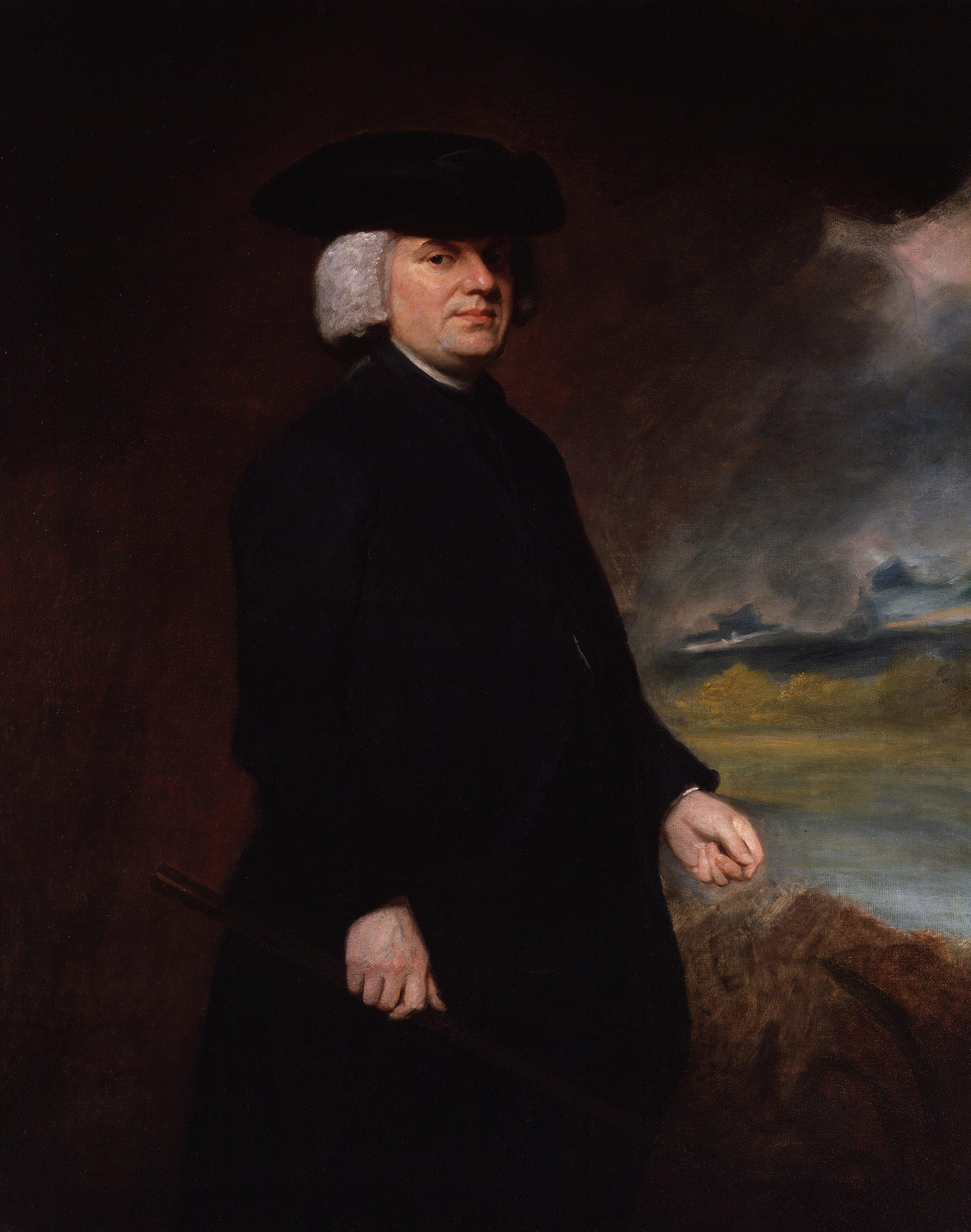 William Paley (1743-1805) is a name which echoes through history. His Natural Theology

Brief Biographical Note*
Paley went to school at Christ’s College and Cambridge. At the latter, he was awarded multiple times for his scholarship. He eventually became the Senior Dean at Christ’s College and was awarded a Doctorate of Divinity from Cambridge. Bishop Barrington of Durham granted him the rectory of Bishop Wearmouth. His life was strewn with accomplishments.
He was a utilitarian with deep Christian convictions. Throughout his life, he remained controversial. His utilitarianism was condemned, as was his critique of the often extreme defenses of property ownership. His anti-slavery was unpopular alongside his support of the American Colonies in the Revolutionary War.
The powerful nature of Paley’s works is revealed in the fact that his major work on utilitarianism, The Principles of Moral and Political Philosophy, became mandatory reading at Cambridge. His Natural Theology continues to be discussed in courses on philosophy of religion. The man was acclaimed by some within the church, who praised his defense of the faith despite others’ objections to his metaethical views.
His contributions to Christian apologetics are the focus of this piece, and we shall turn to them now.
Natural Theology
Paley’s most famous work nowadays is undoubtedly Natural Theology. In this work, he makes his well-known case for the design argument. He utilizes the analogy of a watch. If one finds a watch on a beach, one knows instantly that someone made the watch. Paley applied this same notion to life; one sees the sheer complexity and life and can infer that it, like the watch, was designed.
Many have dismissed Paley’s work here, noting that at points he relies on scientific explanations which have been discredited, while at others his examples have been explained. Yet the genius of his work is found in broader principles, which moderns should note. First, he argued that simply never having observed design in action on a biological level does not preclude any possibility of arguing for that same design (Natural Theology, 8, cited below). Second, evidence of things “going wrong” within a design does not invalidate the design of an object in and of itself. Third, higher level natural laws which may lead to order does not explain away the order itself. Fourth, when something appears to be designed, the burden of proof is upon those who assert an object is not designed.
These points seem to me to hold true to this day. I am sure none of them are uncontroversial, but Paley places his defense of this points squarely within his analysis of those artifacts which he considers to be designed (i.e. the eye and ear). A full treatment of these points thus must turn to his own arguments, but for now I would provide the following brief defenses. Regarding the first, this point seems obvious. If I have never seen someone construct a car, that does not in any way mean that I cannot conclude that someone had to have made it. The second point should be well taken within the context of the debate between Intelligent Design and Darwinian forms of evolution. The point is that simply pointing out a flaw in a design does not mean an entire object is undesigned. The third item seems correct because if something exhibits order, and that order is shown to be based around an ordering principle, the very order in and of itself has not been explained; instead, it is only the mechanism for generating that order which is observed. Finally, the fourth point is likely to be the most controversial–after all, appearances may deceive. Yet it does seem to be the case that if, a priori, something appears designed, then to conclude that something is not designed one must have defeating evidence for this appearance.
A View of the Evidences of Christianity
Paley’s Evidences (commonly known as “Evidences of Christianity”) became almost instantly famous. The work generated a number of summaries and expositions by other authors who were delighted with its style and the arguments contained therein. It is easy to see why, once one has begun a read through this apologetic treatise. Paley presents a number of arguments in favor of the Christian worldview. These evidences are largely historical in nature and include the suffering of those who spread Christianity as evidence for its truth, extrabiblical evidence for the truth of the Gospels, the authenticity of our Gospel accounts due to the early practices and beliefs of Christians, undesigned coincidences, and many more. Paley also provides a dismantling of David Hume’s argument against miracles.
It seems to me that any and all of these arguments retain the force they had in Paley’s own day. Consider the argument from the suffering of Christians. Well of course those of other faiths are willing to even die for that which they believe is true. But Paley rightly pointed out a huge difference between those of other faiths dying for their beliefs and the early eyewitnesses of the events surrounding Christ dying for their own beliefs. Namely, these people would know for certain whether that which they believed were true. That is, they either saw the resurrected Christ or they did not. If they did not, then explaining their willingness to die for this profession of faith becomes extremely difficult. However, if they did actually see that which they declared, their willingness to suffer unto death for this belief makes perfect sense. Many miss this important distinction even to this day. The rest of Paley’s arguments found in the Evidences is filled with insights similar to this.
Horae Paulinae
An argument which has largely been neglected within modern apologetic circles is that of “undesigned coincidences.” I have made an exposition of this argument already, and it should be noted that the best places to discover it are in the realm of historical apologetics. William Paley dedicated this work, Horae Paulinae
Now, the argument from undesigned coincidences takes quite a bit of work to properly outline. It is, in essence, a matter of looking through the Scriptures and finding how incidental details in one account fill in the blanks of another account. However, this description is so brief as to be simplistic. Paley himself acknowledged a number of the difficulties with describing undesigned coincidences in this way. Regarding the Pauline corpus, for example, it could be that someone invented letters from Paul but based them upon his history found in Acts. But the argument itself takes this into account and generally serves as a defeater for this notion by sheer weight of evidence. That is, the more coincidences are found, the more credulity is stretched if one wishes to assert forgery.
Paley buries the objections to undesigned coincidences in this fashion throughout the Horae Paulinae. The sheer volume of coincidences he finds, and the way they seem so clearly to be incidental, serves to dispel doubts about their genuine nature.
Other Works
Here, we have surveyed Paley’s major works, but he was a prolific writer who published sermons and of course his (in)famous work on utlitarian ethics. The preeminence of Paley as a scholar and writer is unquestionable. It is time we acknowledge how much we have to learn from those who have come before us.
Conclusion
We have seen the diverse array of arguments which Paley offered in favor of Christianity. These ranged from biological design arguments to undesigned coincidences to historical arguments in favor of the Gospels. Paley was a masterful writer whose arguments continue to influence apologists and draw ire from atheists to this day. Although the arguments have not been unscathed, I have offered a few reasons to reconsider some which have long been dismissed or forgotten. Paley’s influence endures.
I would like to dedicate this post to Tim McGrew, who introduced me to the vast field of historical apologetics. Without his bubbling delight and enthusiasm in the field, I would never have known much–if anything–about people like Paley. It is my hope and prayer that you may also be persuaded to pursue historical apologetists/apologetics. Be sure to check the links for some good starting places.
Be sure to check out the links at the end of this post as well as the resources from Paley.
Links
Like this page on Facebook: J.W. Wartick – “Always Have a Reason.” I often ask questions for readers and give links related to interests on this site.
Library of Historical Apologetics– Here is where I got started, with Tim McGrew’s phenomenal collection of works. In particular, the “annotated bibliography” will set you up with some fine works. The site features a “spotlight” on the main page for various fantastic reads. Browse and download at will. Also check out their Facebook page.
On the Shoulders of Giants: Rediscovering the lost defenses of Christianity– I provide a number of links as well as an annotated list of historical apologetics works which are great jumping off points for learning more about the vast array of arguments which have largely been forgotten within the realm of apologetic argument. I consider this one of the most important posts on this site.
Forgotten Arguments for Christianity: Undesigned Coincidences- The argument stated– Here I outline the argument from undesigned coincidences and explain how it can be used within apologetics.
Sources
William Paley, Evidences of Christianity
—-, Natural Theology (Oxford World’s Classics)
—-, Horae Paulinae
*I am indebted to the discussion of Paley’s life found in the introduction of the Oxford Classic’s edition of Paley’s Natural Theology, which I have cited above.
SDG.
——
The preceding post is the property of J.W. Wartick (apart from citations, which are the property of their respective owners, and works of art as credited) and should not be reproduced in part or in whole without the expressed consent of the author. All content on this site is the property of J.W. Wartick and is made available for individual and personal usage. If you cite from these documents, whether for personal or professional purposes, please give appropriate citation with both the name of the author (J.W. Wartick) and a link to the original URL. If you’d like to repost a post, you may do so, provided you show less than half of the original post on your own site and link to the original post for the rest. You must also appropriately cite the post as noted above. This blog is protected by Creative Commons licensing. By viewing any part of this site, you are agreeing to this usage policy.

 J.W. Wartick - Reconstructing Faith