Jesus
More Committed to Truth than God.
 JP Moreland has said that he is “more committed to truth” than he is to God (JP Moreland, “Christianity and the Nature of Science” Lecture).
What he means is that were it shown that belief in God is irrational, he would drop faith belief in God.
I think it is supremely important for all Christians to maintain this attitude. We cannot simply assume the truth of our position, but must rather be willing to follow the evidence where it leads. Notably, the evidence leads us directly to the existence of God.
Such a view is also Biblical. Examine, for the moment, 1 Corinthians 15:14 “If Christ has not been raised, our preaching is useless and so is your faith.” Paul here asserts what Moreland does: if it is shown that what we believe in is false, then our faith is useless. We must remain committed to truth as we examine the universe around us.
It is that commitment to truth which must also leave us unrestrained from examining the deep topics of our faith. We must be open to modifying the doctrinal positions we hold as we scrutinize them with both Scripture and philosophy. There is objective truth, and we are, in some sense, obligated to pursue it–particularly if the alternative is to blindly hold to our position.
Such advice applies not only to believers but also to those who do not believe. Dogmatic atheists who deny God’s existence on principle are no more committed to truth than theists who believe because they “feel it’s right.”
I can put it no better than the words of our Lord: “You will know the truth and the truth will set you free.” -Jesus, John 8:32
SDG.
Image source: http://commons.wikimedia.org/wiki/File:Nwmsu-truth.jpg
———
The preceding post is the property of J.W. Wartick (apart from citations, which are the property of their respective owners) and should not be reproduced in part or in whole without the expressed consent of the author. All content on this site is the property of J.W. Wartick and is made available for individual and personal usage. If you cite from these documents, whether for personal or professional purposes, please give appropriate citation and provide a link to the original URL. By viewing any part of this site, you are agreeing to this usage policy.
Atonement and a Timeless God
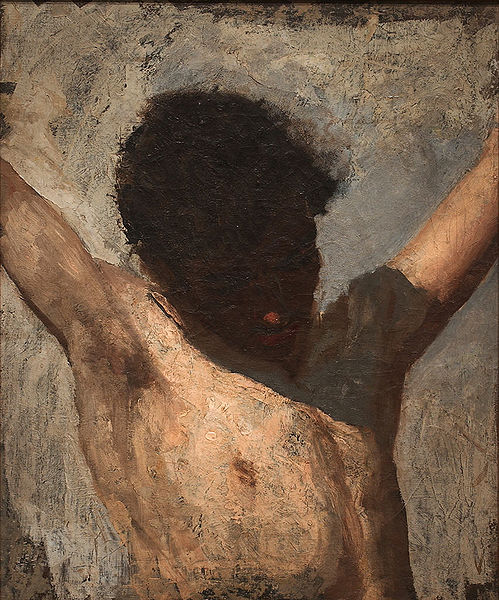 One of my own struggles with Christianity as I began serious contemplation of its core doctrines is the doctrine of atonement. Specifically, I kept wondering how it is that Jesus’ death two thousand years ago could be used as atonement for my sins now. In order to overcome my difficulties figuring this out, I admittedly opted for a fideist type of approach and just assumed that God could do what He wanted, and if He wanted to forgive me because of something two thousand years ago, that was fine.
More recently, however, I’ve been thinking about God’s timeless nature. I touched on these thoughts in my last post, but wanted to get into more depth now.
Consider this: If God is timeless, then God’s existence occurs “all at once”; there is no sequence of events to God, only one eternal “now.” But then it follows that God the Son, Jesus Christ, is eternally crucified, eternally exalted, eternally reigning on high.
In some sense, if God is timeless, then it follows that while I am sinning, Christ is suffering on the cross. As I ask for forgiveness, He is rising from the tomb. As I read Scripture, Christ is speaking. I don’t mean these things temporally, of course, for on this view, god is atemporal–He is without time. Thus, I am not saying that “now”, Christ is dying in a temporal sense; rather, it is meant metaphorically. Christ is crucified in God’s eternal “now”; during which all events are “present.”
What does this mean for atonement? At least in my opinion, it seems to make a lot of sense out of the idea that Christ’s death pays for my sins. For there is no moment at which Christ is not suffering for my sins–a truly horrific thought. On the other hand, there is no moment at which Christ is not glorified with His Father in heaven. All of God’s experience occurs in an instant.
It should be noted again that these considerations are not intended to imply that all events are “simultaneous” in a temporal sense of “occurring at the same time”; rather, they are simultaneous in the sense that from God’s perspective, they have occurred; are occuring; and will occur. All events are eternally present to God. Neither does this mean that God has no sense of the order of events. God’s eternal now sees events in order of logical priority as opposed to temporal progression. Therefore, God knows that one event (x) occurs “before” another (y) in the sense that x is logically prior to y; x had to occur for y to happen. But God experiences all events as “now”; as the changeless, immutable deity, He is eternally crucified, eternally glorified; eternally paying for our sins, and eternally forgiving us for them.
At Communion today (Sunday), I was contemplating the implications of an atemporal God for atonement and justification. I was overcome with emotion as I thought deeply on the issue. As I was eating of the body and blood, Christ was being crucified for my sins; as my forgiveness was declared, Christ was rising.
Powerful thoughts. I think divine temporalists (those who hold that God is temporal) still have to deal with the doctrine of atonement: how does a death thousands of years ago atone for me now? Those who hold God is timeless can answer this question sufficiently: Christ is paying for your sins.
SDG.
———
The preceding post is the property of J.W. Wartick (apart from citations, which are the property of their respective owners) and should not be reproduced in part or in whole without the expressed consent of the author. All content on this site is the property of J.W. Wartick and is made available for individual and personal usage. If you cite from these documents, whether for personal or professional purposes, please give appropriate citation and provide a link to the original URL. By viewing any part of this site, you are agreeing to this usage policy.
Book Review: Is There a God? by Richard Swinburne
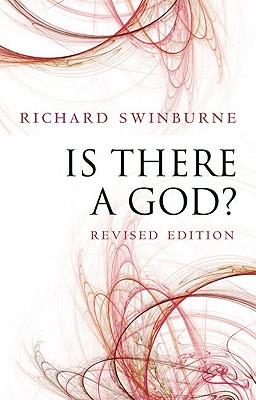 The purpose of Is There a God?
ITG starts off with a chapter aptly titled “God.” In this chapter (modeled after his longer work, The Coherence of Theism), Swinburne outlines the properties and concept of God. It should be noted that Swinburne’s view of God differs from classical theism in two major ways. First, Swinburne’s conception of God does not involve knowledge of the future. His reasoning is that it is logically impossible to know that which does not yet exist (the future), so God is omniscient, but does not know the future. Going into great detail for an argument against that notion would take me too far away from this review, but suffice to say that I find the argument wrong for at least two reasons: 1) There are many coherent ways to envision the future as possible knowledge; 2) A timeless view of God would definitely entail foreknowledge, because all time would be equally present to such a deity. Second, Swinburne’s view of God differs in that he believes God’s existence is contingent, not necessary (he does believe that God is necessary in the sense that his existence does not cease–the necessity/contingence is the difference between modern and Aristotelian contingency–thanks to Tim McGrew and Chris Reese for pointing this out). Again, I disagree, but I find Swinburne’s view coherent.
Swinburne then turns in chapter two to the nature of explanation and argues that we often take personal explanations as valid even within scientific inquiry. Further, he puts much weight upon the simplicity of a theory, which leads into his third chapter, which argues for the simplicity of theism as an explanation for much of our known data. These chapters sum up his work in The Existence of God.
Swinburne then turns to other arguments for the existence of God, such as the cosmological argument and the teleological argument. In chapter 6, he provides a theodicy–an explanation of evil on theism. While I’ve read some pretty harsh critiques of Swinburne’s view on the problem of evil in the past, I found his argument here very compelling, personal, and interesting. His argument is largely a “greater good” type of argument–evils allow for things like heroism–but it is the most compelling version of such a theodicy I have read. I’m still not sure about whether I would incorporate this argument into my own apologetic, but I find Swinburne’s account compelling. (More on this topic can be found in his Providence and the Problem of Evil.)
The last chapter of ITG deals with Swinburne’s discussion of miracles and the argument from religious experience. Swinburne has been hugely influential in the field of arguing for the existence of God from religious experience, and this chapter sums up his argument. He argues that “we ought to believe that things are as they seem to be (in the epistemic sense) unless and until we have evidence that we are mistaken” (115). He then goes on to apply this to theistic experiences and concludes that “the overwhelming testimony of so many millions of people to occasional experiences of God must… be taken as tipping the balance of evidence decisively in favor of the existence of God” (120). (Swinburne’s arguments here are developed in his book, The Existence of God.)
I find two downsides to ITG. First, the concise nature of the work means that those interested in his arguments will need to go beyond the book to fully explore the issues. However, this is barely a downside because that is exactly what the book is meant to be: an introduction.
The second is that Swinburne doesn’t offer a very comprehensive “Guide to Further Reading” in his chapter of the same title. For example, about the question for the existence of God, Swinburne only offers two books arguing against God’s existence for further reading. Furthermore, the two books he suggests are heavy philosophical texts not at all comparable to ITG. I would have liked to see Swinburne offer some suggestions for equally philosophical explorations on the positive side of the theistic question. (I recommend the Blackwell Companion to Natural Theology edited by William Lane Craig and J.P. Moreland and God and Necessity by Stephen Parrish as two “heavier” books on the side of theism.)
Richard Swinburne’s Is There a God?
———
The preceding post is the property of J.W. Wartick (apart from citations, which are the property of their respective owners) and should not be reproduced in part or in whole without the expressed consent of the author. All content on this site is the property of J.W. Wartick and is made available for individual and personal usage. If you cite from these documents, whether for personal or professional purposes, please give appropriate citation and provide a link to the original URL. By viewing any part of this site, you are agreeing to this usage policy.
Kamal Saleem: A Muslim Cries Out to Jesus
Check out this awesome video of a former Muslim’s religious experience of Christ our Lord:
The Case for Christianity in 15 Minutes (or less)
 Recently, the need for defending Christianity in a short time period has come to light. I was in a discussion with some acquaintances and was asked to outline why I believe what I believe, but we were on a time crunch so I only had about 15 minutes. Thankfully, I have had access to some wonderful resources that allowed me to memorize some quick, but useful arguments.
This post is intended to provide other Christians with a case for their beliefs that they can memorize and share with others. Note that the study cannot stop here. Most people will not be convinced by the basics outlined here. The goal of this post is to provide a springboard for discussion and keep people engaged in the idea that God exists and Jesus is Lord. Each section is intended to flow directly into the next. I encourage my fellow Christians to memorize a “case for faith” in a manner like this, so they may be prepared with a reason for the hope within them (1 Peter 3:15).
The arguments are necessarily short and simple due to time constraints, but they offer a short defense that will, hopefully, spur further conversation (again, don’t forget to do more research!). Greg Koukl says we don’t need to convince someone right away–we just need to “put a rock in their shoe” so that we can keep the discussion going later. As always, the most effective apologetic is a prayerful, Christ-reflecting life. May the Holy Spirit guide you all.
1. God Exists (7 minutes)
There are many reasons to believe God exists, let me share a few:
Kalam Cosmological Argument
1) Everything that began to exist has a cause
2) The universe Began to exist
3) Therefore the universe has a cause.
It seems intuitively obvious that 1) is true. Things don’t just pop into and out of existence. 2) follows from modern scientific discoveries like the Big Bang, which implies a single cosmological beginning. 3) follows via modus ponens (the most basic form of argument) from 1 and 2. This argument shows a transcendent cause of the universe. The cause must also be personal because [it] brought the universe into existence at some point, which requires a choice. Choices can only be made by persons, so this entity is personal. (See William Lane Craig in “On Guard”, linked below, for more.)
[For more reading on the Kalam Cosmological Argument see my posts linked below.]
The Moral Argument
4) If there are objective moral values, then God exists
5) There are objective moral values
6) Therefore, God exists.
“Objective moral values” here means that moral values are true regardless of what anyone thinks. For example, “murder is wrong” would be wrong even if every single human being thought murder was the way to achieve greatest happiness and encouraged it as an extracurricular activity for teenagers. But the only way to hold that objective moral values exist is to grant God’s existence, because objective laws require an objective lawgiver.
Without God, however, morals reduce to “I don’t like that.” It seems ludicrous to believe that murder is wrong just because we don’t like it. It is something actually wrong about murder that makes it wrong. That which makes it wrong is, again, the commands of the Lawgiver: God. People have a sense of moral objectivity built into them, which also suggests both the existence of objective morals and a God who created in us this conscience. (See Craig “On Guard” and C.S. Lewis, “Mere Christianity”.)
2. Christianity is Unique (3 minutes)
Religions are not all the same:
1) Many religions have contradictory truth claims. (Some forms of Buddhism say: There is no God; Christianity argues: There is a God; Hinduism states: there are many gods)
2) Even among theistic religions, there are contradictory claims (Christianity: Jesus is God; Judaism: Jesus is not God; Islam: Mohammed is prophet; Christianity: Mohammed is not a prophet; Judaism: Mohammed is not a prophet; Islam: Jesus is not God; etc.).
3) The Law of Noncontradiction (actual contradictions like “square circles” or “married bachelors” cannot exist and are not real) shows us that therefore, these religions cannot all be true.
4) Christianity is unique in that its central religious claim is a historical one: that the person Jesus Christ died and rose again from the dead. This is a historical event which can be investigated just like any other historical event. Yet exploration of this event leads to the conclusion that…
3. Jesus is God (5 minutes)
1) The Gospels are reliable. They demonstrate many criteria for historical truth: multiple attestation (four Gospels telling the same story, but with enough significant differences to demonstrate they didn’t copy off each other), principle of embarrassment (the authors of the Gospels included details which would be embarrassing either to themselves or culturally, such as the fact that women were the first witnesses to the risen Christ in a culture in which women were not trusted), the writers died for their belief in the historical events (while many religious believers die for their beliefs, it seems unfathomable that the Christian Gospel writers would willingly die gruesome deaths for things they made up–which is what alternative theories argue), etc. (See Strobel, “Case for Christ”)
2) Jesus made divine claims “I and the Father are one” John 10:30; “Before Abraham was, I am” John 8:58; etc.
3) The miracle of the resurrection is God’s confirmation of Jesus’ divine claims. If the Gospels are reliable (per 1), then Jesus is divine.
Conclusions
There is good evidence to think that God exists. There are even other arguments that could be presented, such as the teleological, ontological, transcendental, argument from religious experience, and more. We can also see that not all religions can be true. Furthermore, there are good reasons to think the Gospels are reliable and that Jesus claimed to be God and had His claims authenticated by God Himself in Jesus’ resurrection.
Remember, this is not even close to a full defense of Christianity. It is simply a condensed, easy to remember defense designed to be ready at a moment’s notice for when the Holy Spirit leads people into our paths. We need to do more research, offer more arguments, and continue to witness as the Holy Spirit works through our testimony. This defense is by no means a total apologetic; it is meant only as an introduction to spur further conversation. Always have a reason.
Later Edit:
Some have objected to this post on various grounds, most of which are reducible to my arguments not being developed enough. I emphasize once more, this is supposed to be used for a 15-minute defense of the faith, not an entire survey of the field. See my links for more reading, and continue to investigate for yourself.
Further Reading
If you are interested in further reading on these topics, I suggest:
1) On my site, check out the posts on the existence of God: here. Specifically, for the Kalam Cosmological argument:
The Kalam Cosmological Argument
Dawkins and Oppy vs. Theism: Defending the Kalam Cosmological Argument
“The Multiverse Created Itself” and “Who made God after all?”- The Kalam Cosmological Argument
The Leibnizian Cosmological Argument (not developed in this post).
2) On Guard
3) The Case for Christ
4) Mere Christianity
———
The preceding post is the property of J.W. Wartick (apart from citations, which are the property of their respective owners) and should not be reproduced in part or in whole without the expressed consent of the author. All content on this site is the property of J.W. Wartick and is made available for individual and personal usage. If you cite from these documents, whether for personal or professional purposes, please give appropriate citation and provide a link to the original URL. By viewing any part of this site, you are agreeing to this usage policy.
The Virgin Birth?
 Was Jesus born of a virgin?
The question has many facets and nuances. I’m going to focus briefly on two: the possibility of virgin birth, and the question of whether or not the prophecy of Christ was a prophecy about a virgin birth.
Is virgin birth possible? The question centers around one’s worldview. It is intuitively obvious that if God exists, then a virgin birth is possible; while if God does not, then the virgin birth seems highly implausible, at best. Therefore, the question of whether a virgin birth is possible centers around whether or not God exists. On the face of it, this doesn’t seem like a very important point. However, I believe that this kind of point is central to many questions about the validity of the Scriptural accounts and other things which anti-theists often bring up in debates with theists.
Very often, the question of whether God exists is what is paramount in such debates. For example, the question of whether the moral imperatives in Scripture are right or not betrays metaethical questions lurking in the background: does God exist, and is He the grounding of ethical theory? Similarly, whether or not a virgin birth is possible, whether or not the Flood happened, whether or not Moses parted the Red (Reed?) Sea, and other questions really reveal a metaphysical question: does God exist? If God does exist, then the accounts mentioned are much more likely epistemically than they would be if theism is false. Because I believe there are good reasons to believe in a theistic God (see here for some), I find the question of whether virgin birth is possible more likely epistemically than not.
The second question references a charge that the writers of the Gospels were relying on a mistranslated Hebrew word which did not mean virgin. The argument hinges around the Hebrew word, almah, which is used in the prophecy in Isaiah 7:14, “…the virgin (almah) will conceive and give birth to a son…” This prophecy is used by the Gospel writers to refer to the virgin birth of Christ. The word means “young woman.” But, as is the case in English, in Hebrew, words can have more than one meaning. Almah in Hebrew is not the common word for virgin, but it is always used for an unmarried woman (McDowell, 391). The assumption of an unmarried woman was that she was also a virgin (393). Unfortunately, today it is hard for us to see this assumption, for too often young, unmarried women are giving birth.
Further evidence for the use of “virgin” for the word stems from its usage in Isaiah 7:14. The key here is that the prophecy was fulfilled immediately in the context. The King of Judah was told that the virgin birth would be the sign for him from God. The fact that it was to be a miracle signaling God’s unique work in the world as a sign for the King helps further support the idea that the passage is referring to a virgin birth rather than simply any birth, which, one can guess, was not terribly uncommon in Judah.
Even more evidence comes from the fact that the translators of the Old Testament into the Greek Septuagint took the word in Isaiah 7:14 and used the Greek word specifically used for virgins. This wasn’t due to a mistake, but because they were familiar with the prophecy itself. It would be a fantastical claim on the part of the objector here to argue that those who were translating the Old Testament into Greek were so unfamiliar with Hebrew that they wouldn’t have recognized the nuance. Such a claim would demand evidence; and no evidence exists.
Therefore, it seems that it was prophesied that Christ would be born of a virgin, and it also seems at least possible that such a birth could happen, on theism.
Merry Christmas.
SDG.
This is part of a series I’ve entitled “Jesus: the Living God,” which explores Jesus from Biblical, theological, and apologetic levels. View other posts in the series here.
McDowell, Josh, Evidence for Christianity: Historical Evidences for the Christian Faith (Nashville, TN: Thomas Nelson, 2006).
——
The preceding post is the property of J.W. Wartick (apart from citations, which are the property of their respective owners) and should not be reproduced in part or in whole without the expressed consent of the author. All content on this site is the property of J.W. Wartick and is made available for individual and personal usage. If you cite from these documents, whether for personal or professional purposes, please give appropriate citation and provide a link to the original URL. By viewing any part of this site, you are agreeing to this usage policy.
Jesus, Dedication, and Wise Men
 Are these Biblical accounts of Jesus’ birth irreconcilable:
“When the time came for the purification rites required by the Law of Moses, Joseph and Mary took him to Jerusalem to present him to the Lord.”- Luke 2:22
“When [the Magi] had gone, an angel of the Lord appeared to Joseph in a dream. ‘Get up,’ he said, ‘take the child and his mother and escape to Egypt. Stay there until I tell you, for Herod is going to search for the child to kill him.’ So he got up, took the child and his mother during the night and left for Egypt…” Matthew 2:13-14
One says he was dedicated in the temple, the other, that Joseph took Mary and Jesus and fled to Egypt. The key to solving this potential problem is, as frequently is the case with Bible difficulties, context, context, and context.
The dedication of Jesus would have taken place very shortly after His birth. But reading the account of the visit of the Magi, we find that the wise men came at some point after the birth of Jesus. This is evident in Matthew 2:1-12, in which the Magi initially stop to visit King Herod to ask him where Jesus was born. Unless one is to assume the Magi were able to travel instantaneously to Bethlehem from Jerusalem with all of their escort, one should have no difficulty thinking that the Magi arrived at some point after Jesus had already traveled to Jerusalem and back for His dedication at the temple.
Not only that, but despite some traditions drawings of the Magi, it is unlikely that they came while Jesus was merely a babe. Again, these men came from “the east,” so it is unlikely that they made the trip in a few days. But there is also textual evidence for this idea, for when Herod seeks to kill Jesus, he kills all boys 2 years old and younger (2:16). Sure, he may have simply had no idea how old Jesus was and simply been shoring up his bets, but the text goes on to say that he kills boys 2 and younger “in accordance with the time he had learned from the Magi” (2:16b). So at some point he must have asked them how long they’d been traveling, and it was long enough to warrant killing the boys 2 and younger.
Thus, there is no contradiction in the text.
Merry Christmas.
SDG.
This is part of a series I’ve entitled “Jesus: the Living God,” which explores Jesus from Biblical, theological, and apologetic levels. View other posts in the series here.
——
The preceding post is the property of J.W. Wartick (apart from citations, which are the property of their respective owners) and should not be reproduced in part or in whole without the expressed consent of the author. All content on this site is the property of J.W. Wartick and is made available for individual and personal usage. If you cite from these documents, whether for personal or professional purposes, please give appropriate citation and provide a link to the original URL. By viewing any part of this site, you are agreeing to this usage policy.
Jesus and the Stable: A Theory
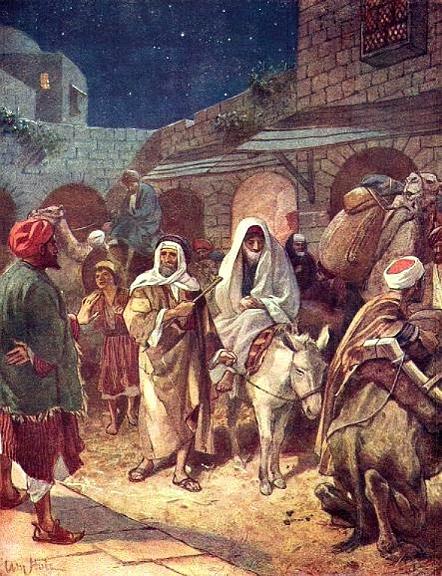 The Christmas season is upon us and I have been contemplating much of the story of Christ’s birth. Apologetically, I’ve decided to focus this season upon a few questions about Jesus.
One argument I have heard is that the account of Jesus’ birth in Luke 2 is inaccurate. The charge is made because it seems unfathomable culturally that Joseph could have gone to his hometown and found no family who would accommodate he and his betrothed. Luke 2:7 says “And she gave birth to her firstborn son and wrapped him in swaddling cloths and laid him in a manger, because there was no place for them in the inn.” The latter part of the verse is that to which the objector points, saying that surely one of Joseph’s family members would have provided a bed for them.
There are a few important points to be made here. First, the text actually provides for the possibility of Joseph’s family providing lodging. The Greek word translated “inn” in this verse can also be translated as “guest room” which implies that Joseph did seek lodging with family, but all of their guest rooms were full. This is reflected in the NIV translation, which states that “there was no guest room available to them.”
Second, while those who make this objection focus on the cultural significance of hospitality, they also ignore the cultural significance of adultery. That Mary was pregnant was a pretty big deal. She would have been seen as an adulterer–possibly with Joseph (though some anti-Christian literature from the second century suggested that Jesus was the illegitimate child of Mary and a Roman soldier named Panthera). The penalty for adultery was death by stoning. Joseph had stayed with Mary and protected her. It doesn’t seem unlikely that this could have incurred his family’s wrath to the point where they simply didn’t allow him to stay with them for the census. Treated like the family member no one talks about, everyone’s door was shut when Joseph came knocking with his pregnant bride-to-be.
It should be noted that this later theory is just that; a theory. The textual evidence could easily support my first point (that all the guest rooms were full). I think that my own theory is plausible. Either way, the objection fails.
SDG.
This is part of a series I’ve entitled “Jesus: the Living God,” which explores Jesus from Biblical, theological, and apologetic levels. View other posts in the series here.
——
The preceding post is the property of J.W. Wartick (apart from citations, which are the property of their respective owners) and should not be reproduced in part or in whole without the expressed consent of the author. All content on this site is the property of J.W. Wartick and is made available for individual and personal usage. If you cite from these documents, whether for personal or professional purposes, please give appropriate citation and provide a link to the original URL. By viewing any part of this site, you are agreeing to this usage policy.
Arguing for Deism?

One curious objection I have seen and heard to arguments for the existence of God is that these arguments apply to deism, not Christianity. For example, Michael, an atheist blogger, writes, “Note that these are effectively arguments for deism, not Christianity!” about the Moral Argument (here). Another example is found in the irrational and rather virulent attack on theistic argument (laughably, they use Dawkins as the primary source for saying that all arguments for God’s existence have been refuted) can be found here. The author, confused about the implications of the cosmological argument, writes, “YECers actually deny the Big Bang, but Craig appears to be a deist.”
I must confess at least a little confusion about these comment and others which I have seen and heard. The objection seems to be that an argument for the existence of God (such as the cosmological argument) that could be utilized for deism doesn’t help the epistemic justification for belief in the Christian God. This objection is completely misguided, however, for a number of reasons.
First, Michael objects in this way in his discussion of the Moral Argument. But deism is the belief in “a creator who has established the universe and its processes but does not respond to human prayer or need” (Honderich, 195 cited below). Clearly, then, this god of deism cannot be the God towards which the Moral Argument points. The moral argument places God as the objective standard of morality for the universe (note, it doesn’t place God as the arbitrary decision maker for what is right or wrong–but argues that God has objective goodness necessarily or essentially, thus avoiding the Euthyphro dilemma Michael presses). It is hard to see how a god which doesn’t care about or respond to human need could be the objective standard of morality.
Second, the classic arguments for the existence of God don’t each point specifically to the Christian God, but serve as a cumulative case to demonstrate His existence and attributes. The Moral Argument argues for omnibenevolence; the teleological argument demonstrates omniscience and omnipotence (along with omnibenevolence, to a lesser extent); the cosmological argument illustrates omnipotence, transcendence, and necessary existence; the transcendental argument shows God’s transcendence and necessity; the ontological argument combines all of the attributes into its first premise (usually); the argument from consciousness demonstrates God as mind; the argument from reason demonstrates the rationality of God; the list could continue. Furthermore, almost all of these arguments show that God is personal, and therefore, by definition, not deistic but theistic. The objection is specious already.
Furthermore, how is it an objection to these arguments to say that they don’t each individually demonstrate the Christian God is the one true God? This seems to be a confusion about how arguments work. Argumenst for the existence of a god, as long as they don’t contradict the God of Christianity, can be taken as evidence for the existence of the God, namely, the Christian God.
Take an example of a case in court. A man is accused of committing murder. The victim was found hung in his room. The prosecuting attorney argues that the accused had the means–he recently bought some rope. He then argues the accused had motive–the victim had recently gotten a promotion for which the accused was vying. He also shows that the accused has rope marks on his hand and scratch marks on his face, which show the struggle which occurred as the accused allegedly hung the victim. He argues, finally, the accused had opportunity–he was in the room at the time the victim died and he was also the only other person in the room.
Now imagine how ridiculous it would be if the defense attorney stood up and complained that these arguments don’t really apply to the case at hand, because none of them demonstrates the accused committed the murder! They just show, individually, that he had means, motive, and opportunity; not to mention the strong evidence for the accused being involved in a struggle with some rope and another person. But to demonstrate the guilt of the accused, the defense continues, the prosecution must come up with an argument that demonstrates all of these things at once! Otherwise, they just demonstrate the other things individually!
Obviously, the defense attorney has something wrong here. But then the atheistic objector also has something wrong. The Christian philosopher of religion has argued that God is omnipotent, omniscient, omnibenevolent, transcendent, necessary, etc.; the atheist responded by saying “those arguments individually only demonstrate a deistic God!” [Discounting, for the moment, that a deistic God wouldn’t share some of these attributes.] But that isn’t how the arguments work. Any argument which demonstrates that a God exists, as long as that God is not contradictory to the Christian God, can serve as evidence for the existence of the Christian God.
Source:
Ted Honderich, ed., The Oxford Guide to Philosophy (New York, NY: Oxford, 2005).
——
The preceding post is the property of J.W. Wartick (apart from citations, which are the property of their respective owners) and should not be reproduced in part or in whole without the expressed consent of the author. All content on this site is the property of J.W. Wartick and is made available for individual and personal usage. If you cite from these documents, whether for personal or professional purposes, please give appropriate citation and provide a link to the original URL. By viewing any part of this site, you are agreeing to this usage policy.
Our Longing For God
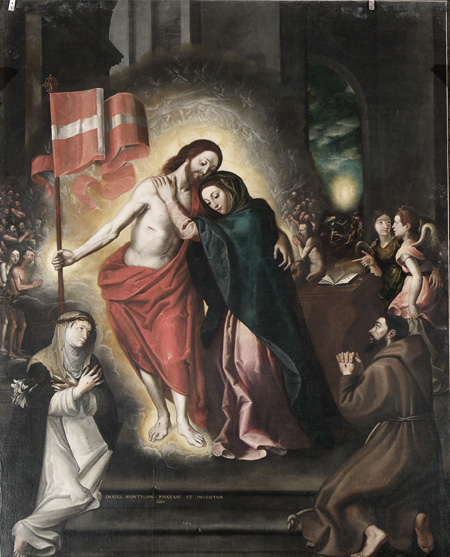 Recently, I had a discussion with my fiancée about the idea of Song of Songs being utilized as an analogy for Christ and the Church. Song of Songs is clearly a book about love, even erotic (eros) love. There are verses like 1:4 “Draw me after you; let us run. The king has brought me into his chambers” or 6:3a “I am my beloved’s and my beloved is mine.” If we are to apply such verses to the life of a Christian and his or her relation to God, we can see it sometimes as an almost uncomfortably close relationship. We aren’t comfortable thinking of our love of God as this kind of intimate desire; a desire for union, to be brought into the chambers of our God.
Yet it is exactly this kind of intimacy–this kind of eros love–which God has planned for us. Song of Songs is such a beautiful book because of this exact thing. It teaches us that we need not be ashamed of the kind of union we desire with God. We are sheep lead astray, and our one desire should be to return to our Lord, in whose arms we find peace and love.
There are other verses in Scripture wherein we can see this idea. Psalm 84:2 states “My soul yearns, even faints for the courts of the Lord; my heart and my flesh cry out for the living God.” Psalm 63:1 puts it eloquently, “Oh God, you are my God, earnestly I seek you; my soul thirsts for you, my body longs for you.”
My favorite exposition of these ideas is found in Alvin Plantinga’s Warranted Christian Belief, of all places. In this monumental work, Plantinga discusses the very idea of God’s love as eros. I feel compelled to quote him at length:
This love for God isn’t like, say an inclination to spend the afternoon organizing your stamp collection. It is longing, filled with desire and yearning; and it is physical as well as spiritual… It is erotic; and one of the closest analogues would be with sexual eros. There is a powerful desire for union with God… What is to be made of this phenomenon? Most psychiatric literature has tended to follow Freud in understanding religion as a kind of neurosis, the ‘universal obsessional neurosis of humanity.’ From this point of view, the religious eros is to be understood as a kind of analogue, displacement, or sublimation of (broadly) sexual energy…
From a Christian perspective… here (as often) Freud has things just backwards. It isn’t that religious eros, love for God, is really sexual eros gone astray or rechanneled… It is sexual desire and longing that is a sign of something deeper: it is a sign of this longing, yearning for God that we human beings achieve when we are graciousliy enabled to reach a certain level of the Christian life. It is love for God that is fundamental or basic, and sexual eros that is the sign or symbol or pointer to something else and something deeper.
[S]exual eros points to two deeper realities… human love for God… [and] a sign, symbol, or type of God’s love. (Plantinga, 311-318)
Those who have had religious experiences in which they felt a kind of union with God can attest to what Plantinga is describing. The kind of mystical union we experience when we are granted the chance to commune with God in a relation of creature-creator is beautiful, to the point of being even sensual. It is something which we long for; something we look forward to in the hereafter.
This also serves to help describe the kind of feelings involved in religious experience. It is a kind of fulfillment of a yearning and a quenching of thirst. Our longing for God is part of humanity. Plantinga argues it is part of our sensus divinitatis–our inborn sense of divine reality. Only when we submit to God and experience relation with him can our deepest desires be realized.
Source:
Alvin Plantinga. Warrented Christian Belief (New York, NY: 2000, Oxford).
——
The preceding post is the property of J.W. Wartick (apart from citations, which are the property of their respective owners) and should not be reproduced in part or in whole without the expressed consent of the author. All content on this site is the property of J.W. Wartick and is made available for individual and personal usage. If you cite from these documents, whether for personal or professional purposes, please give appropriate citation and provide a link to the original URL. By viewing any part of this site, you are agreeing to this usage policy.

 J.W. Wartick - Reconstructing Faith
