Jesus
Guest Post: Rev. Kent Wartick on “The Virgin Birth”
“Behold, the virgin shall conceive and bear a son,
and they shall call his name Immanuel”
(which means, God with us). Matthew 1:28 ESV.
Familiar words to most Christians, aren’t they? Along with His Death and Resurrection, the virgin birth of Jesus is among the most celebrated and unifying events in all of Christianity. Nativity scenes can be found in front of Roman Catholic, Lutheran, Baptist, Methodist, and all sorts of churches of all denominations. The virgin birth is counted as among the fundamental doctrines of Christianity, and was important enough to be counted as one of the twelve articles of the Apostolic Creed. For centuries, the account that Jesus Christ was born of a virgin woman, Mary of Nazareth, was undisputed, at least as far as any known challenges can be documented.
But, then, along came the Enlightenment. With it came the idea that science and reason were the test of Scripture and all truth, and not the reverse. Therefore, if Scripture says that Jesus was born of a virgin, and that is not logical nor scientifically provable, then it must be rejected. Thus, the Jefferson “Bible” excludes any reference to the virgin birth as well as Jesus’ miracles, Deity, resurrection, etc. As time went on, through the historical critical method and other destructive methods of using reason not to teach but to judge Scripture, the Enlightenment principle of reason and science over Scripture slowly infiltrated the thinking of many churches. Surveys confirm this infiltration.
1998: A poll of 7,441 Protestant clergy in the U.S. showed a wide variation in belief. The following ministers did not believe in the virgin birth:
- American Lutherans- 19%
- American Baptists- 34%
- Episcopalians- 44%
- Presbyterians- 49%
- Methodists- 60%
2007-DEC: The Barna Group sampled 1,005 adults and found that 75% believed that Jesus was born to a virgin. 53% of the unchurched, and 15% of Agnostics and Atheists believe as well. Even among those who describe themselves as mostly liberal on political and social issues, 60% believe in the virgin birth. (Source for surveys.)
It is a great travesty in the Church today that many clergy find themselves looking at their positions only as a job, and will say what they must to preserve their positions. From the source of the polls previously cited comes this quote:
“…one Hampshire vicar was typical: ‘There was nothing special about his birth or his childhood – it was his adult life that was extraordinary….I have a very traditional bishop and this is one of those topics I do not go public on. I need to keep the job I have got.’
Such hypocrisy and blatant deceit is unworthy of anyone, let alone one who claims to proclaim the Word of God and represent Him to the people. yet such is the state of much of the clergy, as indicated by the above polling figures. No wonder the Church is in such disarray, and seems so powerless in the world today!
If Christianity is only a “nice” way of life that is only about love and compassion, then I suppose the virgin birth is not so essential, But if Christianity is an intimate and personal relationship by faith with the Creator of the Universe, then Who that Creator is makes all the difference. And if being born of a virgin is something He says about himself, even once, in His Book, then it might be best if we believe it. After all, wouldn’t you like to know a bit about, say, the pedigree of a dog or horse that you were to buy, or even more so, wouldn’t you like to know all about a future spouse that you profess to love before marriage? (Please forgive the analogy, which is not meant to cheapen God, spouses, dogs, or horses).
The virgin birth of Christ—and I would say, the historical fact that Jesus was conceived by a miracle like unto creation itself—does not travel alone. It ties intimately into other doctrines-the Holy Trinity, the Deity of Christ, the substitutionary atonement, the inspiration, inerrancy, and infallibility of Scripture, and more. “Scripture cannot be broken”, Jesus said in John 10:35. Even so, the most basic teachings of the Christian faith cannot be broken off and accepted like items on a buffet table. They are all one. Accept all of them-or none of them. That is the challenge that the catechumen, the seeker, the growing disciple of Christ is faced with. Finally, you see, the importance of the virgin birth is found, like all things, bound in the Person and Work of Jesus Christ.
As far as the prophecy quoted by Matthew, namely Isaiah 7:14, much ink has been spilled on this by scholars with more degrees than I have. Some modern Bible translations, notably the NRSV, CEB, TEV and others use “young woman” to translate the Hebrew word almah. Others, such as the NASB, ESV, NKJB, TNIV (=NIV 2011), use the more traditional “virgin.” The LXX also translates the word “virgin.” While the matter is not as simple as some might make it, certainly I would think that the Septuagint scholars would have known Hebrew and Greek well enough to have chosen a different word besides the Greek word for “virgin” if “young woman” would have been indicated. They had no agenda to support a virgin birth or not. The same cannot be said of some modern translators. The sainted Dr. William Beck wrote a study on this subject, available at www.wlsessays.net/.
Human reason helps us put all of these things together systematically from Scripture; but human reason cannot accept and believe them itself. That, too, is a special creative work of the Holy Spirit. What a delight to know that God wants everyone to know Him as He reveals Himself in Scripture. It is through the very words of Scripture that God creates faith. Through those Holy Spirit given and empowered words He keeps one in the faith. As I stand in awe that God chose this supernatural way to join our human race, so I stand in awe that He created faith in my heart, and has kept that faith to this day. All glory and praise to Him forever!
Finally, though, the virgin birth is a matter of faith. For the individual, it is a matter of personal faith whether one accepts what Scripture says about the miraculous conception and birth of Jesus or not. But the virgin birth is also a matter of THE Faith; that is to say, it is an article of Christian doctrine that is beyond dispute. To accept it is to accept a fundamental, essential doctrine of all Christianity. To reject it is to put one outside the bounds of the Christian faith. I pray that this Advent and Christmas season you will join with me, and with all the Christian world, in celebrating the supernatural way that God chose to enter our human race to bear our sin and be our savior.
Rev. Kent Wartick is the pastor of Faith Lutheran Church in Kent, Ohio. He has been preaching for over 26 years in the Lutheran Church – Missouri Synod. He’s my dad, and an inspiration for the faithful.
Book Review: “Cold Case Christianity” by J. Warner Wallace
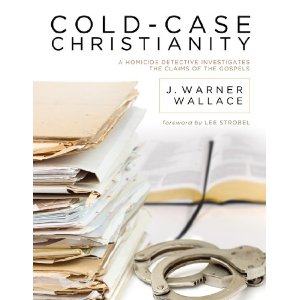 I’ll forego the preliminaries here and just say it: this is the best introductory apologetics book in regards to the historicity of the Gospels I have ever read. If you are looking for a book in that area, get it now. If you are not looking for a book in that area, get it anyway because it is that good. Now, on to the details.
Cold-Case Christianity
He begins the work with a section on method. He argues that we must learn to acknowledge our presuppositions and be aware of them when we begin an investigation. Like the detective who walks into a crime scene with a preconceived notion of how the murder played out, we can easily fall into the trap of using our expectations about a truth claim to color our investigation of the evidence for that claim. Learning to infer is another vastly important piece of the investigation. People must learn to distinguish between the “possible” and the “reasonable” (34ff). This introduction to “abductive reasoning” is presented in such a way as to make it understandable for those unfamiliar with even the term, while also serving as great training on how to teach others to reason for those involved in apologetics.
Chapter 3, “Think Circumstantially” is perhaps the central chapter for the whole book. Wallace notes that what is necessary in order to provide evidence “beyond a reasonable doubt” is not necessarily “direct evidence.” That is, direct evidence–the type of evidence which can prove something all by itself (i.e. seeing it rain outside as proof for it actually raining)–is often thought of to be the standard for truth. Yet if this were the standard for truth, then we would hardly be able to believe anything. The key is to notice that a number of indirect evidences can add up to make the case. For example, if a suspected murderer is known to have had the victim’s key, spot cleaned pants (suspected blood stains), matches the height and weight a witness saw leaving the scene of the crime, has boots that matched the description, was nervous during the interview and changed his story, has a baseball bat (a bat was the murder weapon) which has also been bleached and is dented, and the like, these can add up to a very compelling case (57ff). Any one of these evidences would not lead one to say they could reasonably conclude the man was the murderer, but added together they provide a case which pushes the case beyond a reasonable doubt–the man was the murderer.
In a similar way, the evidences for the existence of God can add up to a compelling case for the God of classical theism. Wallace then turns to examining a number of these arguments, including the moral, cosmological, fine-tuning, and design arguments. These are each touched on briefly, as a kind of preliminary to consider when turning to the case for the Gospels. Furthermore, the notion of “circumstantial” or cumulative case arguments hints towards the capacity to examine the Bible and the Gospels to see if they are true.
Wallace then turns to examining the Gospels–Mathew, Mark, Luke, and John–in light of what he has learned as a detective. He utilizes forensic statement analysis as well as a number of other means by which to investigate witnesses and eyewitness reports to determine whether the Gospels can be trusted. He first turns to Mark and makes an argument that Mark had firsthand contact with Peter, one of the Disciples and an Apostle. He shows how we can search for and find “artifacts”–textual additions that were late into the accounts of the Gospels. None of these are surprises, because we know about them by investigating the evidence we have from the manuscript tradition. By piecing together the puzzle of the evidences for the Gospels, we form a complete picture of Christ (106ff).
It is easy to get caught up in “conspiracy theory” types of explanations for the events in the Bible. People argue that all kinds of alternative explanations are possible. Yet Wallace notes again that there is a difference between possible and reasonable. Simply throwing out possible scenarios does nothing to undermine the truth claims of the Gospels if the Gospels’ own account is more reasonable. Furthermore, drawing on his own knowledge from investigating conspiracy theories, Wallace notes that the Gospels and their authors do not display signs of a conspiracy.
A very important part of Cold-Case Christianity is the notion that we can trace back the “chain of custody” for the Gospels. By arguing that we are able to see how the New Testament was passed authoritatively from one eyewitness to disciple to disciple and so on, Wallace argues that conspiracy theories which argue the Gospel stories were made up have a much less reasonable explanation than that they are firsthand accounts of what happened. Much of the information in these chapters is compelling and draws on knowledge of the Apostles’ and their disciples. It therefore provides a great introduction to church history. Furthermore, Wallace notes that a number of things that we learn from the Gospels are corroborated not just by other Christians, but also by hostile witnesses (182ff). He also argues that we can know that the people who wrote the Gospels were contemporaries of the events they purported to report by noting the difficulties with placing the authors at a later date (159ff). This case is extremely compelling and this reviewer hasn’t seen a better presentation of this type of argument anywhere.
There are many other evidences that Wallace provides for the historicity of the Gospels. These include undesigned coincidences which interlink the Gospel accounts through incidental cross-confirmations in their accounts. I have written on this argument from undesigned coincidences before. Archaeology also provides confirmation of a number of the details noted in the Gospel accounts. The use of names in the Gospels place them within their first century Semitic context.
Again, the individual evidences for these claims may each be challenged individually, but such a case is built upon missing the forest for the trees. On its own, any individual piece of evidence may not prove that the Gospels were written by eyewitnesses, but the force of the evidence must be viewed as a complete whole–pieces of a puzzle which fit together in such a way that the best explanation for them is a total-picture view of the Gospels as history (129ff).
All of these examples are highlighted by real-world stories from Wallace’s work as a detective. These stories highlight the importance of the various features of an investigator’s toolkit that Wallace outlined above. They play out from various viewpoints as well: some show the perspective of a juror, while others are from the detectives stance. Every one of them is used masterfully by Wallace to illustrate how certain principles play out in practice. Not only that, but they are all riveting. Readers–even those who are hostile to Christianity–will be drawn in by these examples. It makes reading the book similar to reading a suspense novel, such that readers will not want to put it down. For example, when looking at distinguishing between possible/reasonable, he uses a lengthy illustration of finding a dead body and eliminating various explanations for the cause of death through observations like “having a knife in the back” as making it much less probable that accidental death is a reasonable explanation, despite being possible.
Throughout the book there are also sidebars with extremely pertinent information. These include quotations from legal handbooks which describe how evidence is to be viewed, explanations of key points within the text, and definitions of terms with which people may be unfamiliar. Again, these add to the usefulness of the book for both a beginner and for the expert in apologetics because it can serve either as a way to introduce the material or as helpful guides for using the book to teach others.
Overall, Cold-Case Christianity
Links
View J. Warner Wallace’s site, Please Convince Me, for a number of free and excellent resources. I highly recommend the blog and podcast.
I would strongly endorse reading this book alongside On Guard
Source
J. Warner Wallace, Cold-Case Christianity
Disclosure: I received a copy of the book for review from the publisher. I was not asked to endorse it, nor was I in any way influenced in my opinion by the publisher. My thanks to the publisher for the book.
SDG.
——
The preceding post is the property of J.W. Wartick (apart from citations, which are the property of their respective owners, and works of art as credited) and should not be reproduced in part or in whole without the expressed consent of the author. All content on this site is the property of J.W. Wartick and is made available for individual and personal usage. If you cite from these documents, whether for personal or professional purposes, please give appropriate citation with both the name of the author (J.W. Wartick) and a link to the original URL. If you’d like to repost a post, you may do so, provided you show less than half of the original post on your own site and link to the original post for the rest. You must also appropriately cite the post as noted above. This blog is protected by Creative Commons licensing. By viewing any part of this site, you are agreeing to this usage policy.
Jesus’ Birth: How undesigned coincidences give evidence for the truth of the Gospel accounts
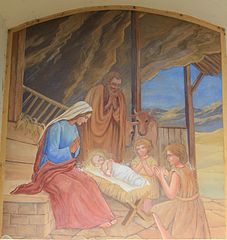 There are many charges raised against the historicity of the birth narratives of Jesus Christ. These run the gamut from objections based upon alleged contradictions to inconsistencies in the genealogies to incredulity over the possibility of a virgin birth. Rather than make a case to rebut each of these objections in turn, here I will focus upon using undesigned coincidences to note how these birth narratives of Christ have the ring of truth. How exactly do undesigned coincidences work? Simply put, they are incidental details that confirm historical details of stories across reports. I have written more extensively on how these can be used as an argument for the historicity of the Gospels: Undesigned Coincidences- The Argument Stated. It should be noted that the birth narrative occurs only in Matthew and Luke. John begins with a direct link of Christ to God, while Mark characteristically skips ahead to the action. Thus, there are only a few places to compare these stories across different reports. However, both Mark and John have incidental details which hint at the birth account. These incidental details lend power to the notion that the birth narratives of Jesus are historical events.
Joseph
First, there is one undesigned coincidence that is such a gaping hole and such a part of these narratives most people will probably miss it. Namely, what in the world was Joseph thinking in Luke!? Do not take my word for this–look up Luke chapters 1-2. Read them. See anything missing? That’s right! Joseph, who is pledged to a virgin named Mary (1:27) doesn’t say anything at all about the fact that his bride-to-be is suddenly pregnant. There is no mention of him worrying at all about it.
So far as we can tell from Luke, Joseph, who we only know as a descendant of David here, is going to be wed to a virgin and then finds out that she’s pregnant. He’s not the father? What’s his reaction? We don’t find out until Luke 2, where Joseph simply takes Mary with him to be counted in the census, dutifully takes Jesus to the Temple, and that’s about it. Isn’t he wondering anything about this child? It’s not his! What happened?
Only by turning to Matthew 1:18ff do we find out that Joseph did have his second thoughts, but that God sent an angel explaining that Mary had not been unfaithful, and that the baby was a gift of the Holy Spirit. So we have an explanation for why Joseph acted as he did in Luke. Now these are independent accounts, and it would be hard to say that Luke just decided to leave out the portion about Joseph just because he wanted to have Matthew explain his account.
The genealogies of Jesus that Matthew and Luke include are different, but they reflect the meta-narratives going on within each Gospel. Luke’s narrative generally points out the women throughout in a positive light, and it is often argued that his genealogy traces the line of Mary. Matthew, writing to a Jewish audience, traces through Jesus’ legal father, Joseph. Now it could be argued that these are simply reflections of the authors’ imaginations within their fictional accounts, but surely including names with descendants tracing all the way back to Abraham and beyond is not a good way to construct a fictional account. No, Matthew and Luke include the genealogies because their accounts are grounded in history.
Incidental Details
Interestingly, the birth narratives of Jesus also help explain the events reported in Mark and John, which do not report His birth. What of the apparent familiarity John had with Jesus in Mark 1:3ff and John 1:19ff? It seems a bit odd for John to go around talking about someone else “out there” who will be better in every way than he himself is without knowing who this other person is. Well, looking back at Matthew and Luke, we find that Mary and Elizabeth (John’s mother) knew each other and had visited each other during their pregnancy. It seems a foregone conclusion that they continued to interact with each other after the births of their sons, which would explain John’s apparent familiarity with Jesus in Mark and John.
Strangely, Mark never mentions Joseph as Jesus’ father. If all we had was Mark’s Gospel, we would be very confused about who Jesus’ father is. The oddness is compounded by the fact that Mary is mentioned a number of times. Well okay, that still seems pretty incidental. But what about the fact that Mark explicitly has a verse where he lists Mary as well as Jesus’ siblings?
Is not this the carpenter, the son of Mary and brother of James and Joses and Judas and Simon? And are not his sisters here with us?” And they took offense at him. (Mark 6:3, ESV)
This verse seems extremely weird. After all, Joseph was a carpenter (well, a more accurate translation is probably “craftsman”) and yet despite Mark explicitly using that word for Jesus, as well as listing Mary and Jesus’ siblings, we still see nothing but silence regarding Jesus’ father. Well, of course! After all, when we turn to the birth narratives in Matthew and Luke, we find that Jesus was born of a virgin. Jesus had no human father. Thus, Mark, ever the concise master of words, simply omits Joseph from details about Jesus’ life. But to not mention Jesus’ father in a largely patriarchal society alongside his mother and siblings seems extremely strange. It is only explained by the fact of the virgin birth, with which Mark would have been familiar. However, Mark didn’t see the birth narrative as important in his “action Gospel.” Only by turning to Matthew and Luke do we find an explanation for the strange omission of Joseph from Mark’s Gospel.
Conclusion
I have listed just a few undesigned coincidences to be gleaned from the birth narratives of Jesus. The fact of the matter is that these can be multiplied almost indefinitely if one looks at the whole of the Gospels, and even moreso if one investigates the whole Bible. These incidental details fit together in such a way as to give the Gospels the ring of truth. The way that Matthew fills in details of Luke, Mark demonstrates his familiarity with the birth narratives, and the intimate connections of Jesus and John are all cross-confirmed is both incidental and amazing. The claim is not that based upon these incidences alone the Gospel accounts are true. No, the claim is that those who challenge the truth of these accounts must account for these incidences in a way that is more plausible than that they simply occur when people relate history. It seems that the only way to do that would be to resort to outlandish narratives that involve the four authors sitting together and discussing which portions of stories to leave out so the others can fill them in. No, instead it seems much more likely that these four authors were writing what they had witnessed–or received from eyewitness testimony, and just as we do when recounting events (think of 9/11, for example, and the different things people remember) they wrote specific details they felt were important or part of the narrative, while the others found other things more important or had other incidental knowledge related to the events they recorded.
SDG.
——
The preceding post is the property of J.W. Wartick (apart from citations, which are the property of their respective owners, and works of art as credited) and should not be reproduced in part or in whole without the expressed consent of the author. All content on this site is the property of J.W. Wartick and is made available for individual and personal usage. If you cite from these documents, whether for personal or professional purposes, please give appropriate citation with both the name of the author (J.W. Wartick) and a link to the original URL. If you’d like to repost a post, you may do so, provided you show less than half of the original post on your own site and link to the original post for the rest. You must also appropriately cite the post as noted above. This blog is protected by Creative Commons licensing. By viewing any part of this site, you are agreeing to this usage policy.
Really Recommended Posts: 11/09/2012
 I have featured literary apologetics, apologetics to Muslims and Jehovah’s Witnesses, geocreationism, and more. Check out the posts. Let me know what you liked. Come back for more.
Elves, Orcs, and Freaks: The Shared Authorial Vision of JRR Tolkien and Flannery O’Connor– Garret Johnson has written a very interesting look into the works of Tolkien and O’Connor. He notes that they viewed fiction as reality from a different outlook. It’s a fascinating post, and there is a second part, which can be viewed here.
An Encounter with a Jehovah’s Witness– It is easy for Christians to slam their doors on those who come door-to-door. What if, instead, we engaged them? This post is a model for engagement and provides some ways forward to engage with Jehovah’s Witnesses.
The Day After: My Thoughts on the Presidential Election– Michael Licona, author of The Resurrection of Jesus: A New Historiographical Approach
Human Footprints in Dinosaur Footprints– Over at GeoCreationism (a highly recommended site), Mike addresses the notion that human and dinosaur footprints have been found together or side by side. Some argue that this supports young earth creationism. Mike explores the paleontological evidence.
Meet the Multiverse– Edgar Andrews, author of what I think is the best introduction to Christian apologetics with a scientific emphasis, Who Made God?
Did Jesus Claim to be Divine? (Answering Islam)– I found this look at answering Muslim objections to the deity of Christ refreshing. It offers an essentially presuppositional approach, which I have found to be very useful when engaging with Muslims. Check it out.
Book Review: “Good News for Women” by Rebecca Groothuis
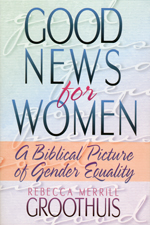 The debate over women’s roles in the home and in the church rages on. A large part of the debate has focused upon the Bible verses that either side raises in defense of their view. Little of the debate has focused on the philosophical implications of either position. Rebecca Groothuis’ Good News for Women
Groothuis first turns to a Biblical case for the equality of men and women. She bases this notion on several Biblical texts. She refers to God’s creation of both male and female in the image/likeness of God (21ff). Her argument also goes into Galatians 3:26-28 and notes how it again draws out the equality between male and female. Regarding the discussions of women’s silence in the churches, Groothuis parallels these passages to those about slaves submitting to their masters:
[T]he strategy of the New Testament church was to tolerate the social subordination of slaves and women so as not to risk alienating non-Christians from the gospel, and yet to modulate and moderate these customs, and ultimately to point beyond them to God’s original intention for human relations. Today, however, when non-Christians are not likely to be offended by an equalitarian gospel, but are likely to find a hierarchical gospel offensive, we have no reason to perpetuate the cultural practices that were intially intended for Christians living in patriarchal societies (25).
Groothuis concludes that throughout the Bible, there is a pattern in which male and female are equal in being. They are, in other words, ontologically equal. Neither is more valuable than the other.
It should be noted that most complementarians today are willing to grant this case. They agree that women and men are indeed created equal and should have equal rights. Groothuis then turns to a series of philosophical arguments which seek to demonstrate that the complementarian position cannot consistently hold that women are equal to men while holding that they are excluded from the ministry. Her argument, therefore, goes deeper than an exegetical challenge. Instead, her argument undermines the theological core groundings of complementarianism.
The very core of Groothuis’ argument is that complementarianism is grounded upon an ontological difference between male and female. The reason she holds that complementarinism must hold this position is “[b]ecause a woman’s traditionally inferior status follows necessarily from the single fact of her essential, female nature, her status is itself a function of her ‘being’ [ontology]; it is determined by what she is, not by what she can do” (53). Complementarians hold that women cannot hold certain offices of the church due only to the fact of her femininity. It is not based upon a functional subordination in which the female chooses to take up a role that is subordinate (62ff); instead, it must be grounded upon the female’s nature as a female. There is nothing about the female which limits her from being a pastor, on most contemporary complementarian positions (that is, those which no longer hold that women are excluded from the ministry simply because she is not as smart or gifted as men in general). Instead, it is exclusively her feminine nature which determines her role as subordinate. Therefore, it is part of her essential nature. I have argued this point myself elsewhere: “Women in the Ministry: The philosophy of equality and why complementarianism fails.”
Grothuis continues with extensive argument to rebut the notion of servant leadership (78ff). She also deals with various analogies complementarians use to attempt to ground equality and hierarchy, such as the Trinity (55ff–it should be noted that grounding subordination in the Trinity undermines the doctrine of the Godhead). It should become immediately apparent as to how this leads to a problem for complementarians. Biblically, they are forced to concede that women and men are, in fact, equal. However, their position undermines this Biblical position of the equality of men and women. Therefore, it seems their position fails.
Groothuis then turns to a number of strategies that complementarians have used in order to try to tie the subordination of women in to patterns of the Godhead. Unfortunately, many of these strategies end up making God into a gendered creature rather than a transcendent Creator. Some complementarians, such as C.S. Lewis, actually go so far as to make God male (93). Groothuis points out that this gendering of God cannot be affirmed based upon the Bible. One difficulty is that both male and female language is used of God (93-94). Yet she insists that the debate must not become a simple adding up of verses on either side to see how God illustrates either gender. That would turn God into a “God who suffers from some gender identity confusion” (93). Instead:
The view that God is both masculine and feminine confuses and distorts the image of God in humanity. It requires that the divine image be divided between women and men, such that women image God’s feminine aspects and men image God’s masculine aspects. This sexualizing of spiritual attributes renders men and women spiritual ‘opposites,’ creating a need to compartmentalize aspects of spiritual life and ministry into separate masculine and feminine quarters. (98)
Groothuis also spends some time dealing with some of the odd–and frankly, pagan–ideas used by some complementarians. For example, some argue that God must act as a male in the creation event: one who gives so much, while the created world merely receives. To be blunt, they describe God’s creative act as a sexual act, with no Biblical support. Groothuis rightly points out that this idea is little more than paganism dressed up in theism, but goes on to note that “It seems a good deal of imagination and determination is required in order to characterize the strenuous effort required of a woman’s body in nourishing, growing, and delivering a child as ‘overwhelmingly passive,’ while depicting the male role of standing around watching it happen as ‘active’!” (95). Another abuse of gender in the Godhead involves some complementarians arguing that because Jesus was a man, only men can be priests (109ff). Groothuis points out that “If we are to regard maleness as essential to who Christ is as Christ, not only must we question whether Jesus Christ can represent women as fully as he can men… we must also view women as essentially inferior to men. Women lack the Christlike attribute of maleness that renders men best qualified to represent Christ…” (113). Interestingly, then, complementarians who utilize this argument essentially undermine the doctrine of the atonement: for Christ’s maleness is emphasized to the point that Jesus is not an adequate representation of humanity. He is essentially male.
The second half of Good News for Women focuses upon an evaluation of the texts used to support complementarianism. These texts are examined in light of the theological points already established. Namely, women and men are created equally as imagers/likenesses of God; and that any attempt to ground hierarchy ultimate fails because it undermines this Biblical concept of equality. A full presentation of Groothuis’ analysis of these texts would probably triple the length of this review, and I don’t see any way to sum up these arguments adequately in a few sentences, so I unfortunately must leave it to those interested to read the book to see these analyses.
Finally, it would be remiss to go without mentioning the outstanding contribution Groothuis gives to the discussion of egalitarian marriage. Groothuis discusses marriage in detail for over 40 pages of the book. What is astonishing is how lucidly she lays out the principles of egalitarian marriage. She illustrates the nature of marriage and how it is a give-and-take with both persons involved as opposed to one ruling over the other. She also discusses in detail how such an egalitarian system can work without having anyone to have a vote to “trump” the other’s vote. Frankly, the book is worth reading just for her discussion on marriage.
Groothuis’ most important contribution here is in the first part of her book, which establishes a strong theological and philosophical case for the equality of men and women in teaching roles in the Church and equal roles in marriage. However, there are numerous important insights throughout the text, both into specific verses and into overarching themes in the debate from both the complementarian and egalitarian positions. Groothuis’ discussion of egalitarian marriage provides a way forward for discussion on the roles of men and women in marriage and also helps to give insight into the Biblical view of marriage. Overall Good News for Women
Links
See my other writings on egalitarianism on my theology page (scroll to the bottom).
I argue that certain complementarian arguments undermine the Trinity.
I review a book which focuses entirely upon exegetical issues related to egalitarianism: Man and Woman: One in Christ.
Source
Rebecca Groothuis, Good News for Women
SDG.
——
The preceding post is the property of J.W. Wartick (apart from citations, which are the property of their respective owners, and works of art as credited) and should not be reproduced in part or in whole without the expressed consent of the author. All content on this site is the property of J.W. Wartick and is made available for individual and personal usage. If you cite from these documents, whether for personal or professional purposes, please give appropriate citation with both the name of the author (J.W. Wartick) and a link to the original URL. If you’d like to repost a post, you may do so, provided you show less than half of the original post on your own site and link to the original post for the rest. You must also appropriately cite the post as noted above. This blog is protected by Creative Commons licensing. By viewing any part of this site, you are agreeing to this usage policy.
The Church Universal: Reformation Review
 Perhaps the most crucial debate of the Reformation Era was over the nature of the universal church. During the Reformation, the church had split into numerous separate bodies. But were each of these bodies truly “the church”? Was salvation only found through membership in the Catholic Church? Finally, how did one determine what church bodies were part of “the church” if there were some new criterion for establishing what counted as “the church”? Having found their origins prior to the Reformation and a spectrum of answers during the Reformation, these questions continue to be debated into our own time.
The Church Universal
The key to understanding the emerging doctrine of the church within the Reformation is to note a distinction in meanings for “apostolic continuity.” On the one hand, one could note a literal apostolic continuity in which the authority of the Apostles themselves was passed from one person to another. On the other hand, some argued that the authority of the church was found in continuity with apostolic doctrine, not with a literal continuity of passed-on authority (McGrath, Reformation Thought: An Introduction
The Protestants began to view church authority as a consequence of right doctrine. This view allowed them to divorce themselves from the Roman Catholic church (and thus potentially lose the literal passing down of authority from one to another from the apostles) while still maintaining that their own churches remained part of the church universal.
Yet this was not the only question facing those trying to distinguish which churches were “true” as opposed to “false” churches. Surely there ought to be some signs of a “true church” to distinguish it from those that had fallen away. Martin Bucer and Martin Luther offered ways forward on this: the marks of the church. Luther insisted that what made a true church was “right administration of the sacraments and true preaching of the Gospel” while Bucer held that there was a third mark: discipline (Diarmaid MacCulloch The Reformation
The Background to the Reformation Debate
Alister McGrath notes how important it is to note the origins of the reformation debate regarding the church here. Specifically, the debate can be traced back to the Donatist controversy in the earlier church (third century). Essentially, this controversy centered around the very nature of the true church. The Christian church had been persecuted, and many had renounced their faith in order to avoid persecution. The question was asked: should these persons be allowed back into the true church? Could they still administer the sacraments and interact with the true body of Christ?
The Donatists said that those who had lapsed had become apostate and could not be allowed back into the church. However this belief was eventually considered to be incorrect and detrimental to the unity of the Church. Augustine argued against the Donatists and pointed out how the church is a “mixed body” of sinners and saints (McGrath, 144ff).
The concept of a sinner-saint was utilized by Martin Luther and other Reformers to note that the church was a body in which the Holy Spirit was actively working sanctification. That is, God was working to make the Church holy, but that did not mean that each individual in the church was absolutely devoid of sin.
How did all of this fit into the Reformation discussions on the true church? Simply put, the Donatists were radically schismatic. They sought to divorce themselves from “sinners” within the church. The Donatists were condemned for their schismatism, and so the Reformers had to deal with the fact that they themselves had either been forcibly removed from or split from the Roman Catholic Church. Thus, the importance of apostolic authority through theological unity became central in understanding the continuity of the Church.
The Modern Debates
The notion that right doctrine delineates the true church as opposed to literal apostolic continuity has a number of interesting outcomes which are very relevant for today’s church bodies.
First, it introduces a great difficulty for many church bodies in determining with whom one can fellowship. If the authority of the church universal is based upon true teachings rather than a passing down of authority from one person to another, then where is the line for how much teaching must be correct in order to remain as the true church?
Different church bodies offer different answers. Some church bodies err on the side of openness and humility and allow many into their fold who hold radically differing views. People in these organizations may hold to different views on things like the ordination of women, the age of the earth, and the like. Other church bodies err on the side of unity in doctrine and restrict membership to those that affirm sound doctrine as taught by their own body. For these church groups, a certain creed or body of work is referenced as the authoritative teaching of the church. If one differs from these teachings, then one is not part of their church body. (For more on the notion of using creeds or bodies of teachings as authoritative interpretations, see my post on “Who Interprets Scripture? Sola Scriptura, the Reformation, and the modern era.”)
To be frank, some Christians fail to recognize the diversity of these answers and simply assume that anyone who has a differing organizational structure is “liberal” or “conservative”–using the words in a derogatory manner. Such an attitude does not contribute to discussions on church organization. By failing to recognize the commendable attitude of humility in the churches that emphasize the unity of faith as opposed to the unity of individual doctrines, some unfairly label other church bodies as unbiblical or apostate. Similarly, by failing to recognize the commendable need for unity of belief in church bodies that emphasize right belief, some unfairly label these church bodies as schismatic or unchristian.
It also seems to me that both of these groups should learn from each other. Too many church groups vary too far one way or the other on these issues. Church bodies that emphasize humility in doctrine can often undermine their own church’s teachings. Similarly, church bodies that emphasize unity in doctrine can undermine their capacity for outreach and cooperation with other church bodies.
The Roman Catholic Church, following Vatican II, officially viewed non-Catholic churches as separated brethren–other bodies of true believers who were practicing independently. Such an affirmation ultimately undermines part of the debate that has raged since the Reformation: are Protestants saved, according to Roman Catholic teaching? This debate was hot during the Reformation and beyond, as the Roman Catholic church continued to deny salvation outside of the Catholic Church. Now, however, it is acknowledged that salvation can be found within Protestant circles as well.
Finally, the options Luther and Bucer offered to describe the “marks of the church” continue to be extremely important. Bucer’s emphasis on independent church discipline has–insofar as I can tell–largely fallen by the wayside, though it remains a point of interest in Anabaptist and other traditions. Although I would be hesitant to make a structured church discipline one of the marks of the true church, it would appear to be greatly important to have a system for disciplining those within the church who do not adhere to basic moral and/or doctrinal norms. However, this must be consistent with the notion that all believers are sinners being formed into saints through the process of sanctification. The modern church in the West perhaps does not have enough emphasis on the importance of church discipline, but caution should be taken so that a reform in this area does not lead the church back to a Donatist-like position.
Conclusion
So what makes a church a true church? The Reformers do still speak to us on this issue. Continuity with apostolic teaching is that which designates a true church. It is not easy to know where to draw the line between unity and humility, but over-emphasizing either leads to great difficulties for a church body. Of utmost importance, however, is the acknowledgement that though not all church bodies agree on every topic (there’s an understatement!), these church bodies are part of the saving body of Christ and therefore part of the salvific work of the Holy Spirit. Remembering this simple fact might help to spur on a bit of humility and unity among the Church Universal.
Links
Please check out my other posts on the Reformation:
I discuss the origins of the European Reformations and how many of its debates carry on into our own day.
The notion of “sola scriptura” is of central importance to understanding the Reformation, but it is also hotly debated to day and can be traced to many theological controversies of our time. Who interprets Scripture?
Sources
Alister E. McGrath a, Reformation Thought: An Introduction
Diarmaid MacCulloch The Reformation
Image: credit to Beatrice- http://commons.wikimedia.org/wiki/File:San_Pietro_e_Ponte_SAngelo_(notte).jpg
Thanks
Alister McGrath’s Reformation Thought: An Introduction was a gift from an anonymous donor. I was blown away when I saw it show up at my door and I have to say Thank you so much for being such a blessing! Whoever you are, you made my day. Well, more than just one day actually. This series of posts is a direct result of your donation. Thank you!
SDG.
——
The preceding post is the property of J.W. Wartick (apart from citations, which are the property of their respective owners, and works of art as credited) and should not be reproduced in part or in whole without the expressed consent of the author. All content on this site is the property of J.W. Wartick and is made available for individual and personal usage. If you cite from these documents, whether for personal or professional purposes, please give appropriate citation with both the name of the author (J.W. Wartick) and a link to the original URL. If you’d like to repost a post, you may do so, provided you show less than half of the original post on your own site and link to the original post for the rest. You must also appropriately cite the post as noted above. This blog is protected by Creative Commons licensing. By viewing any part of this site, you are agreeing to this usage policy.
A Christian look at “John Carter”
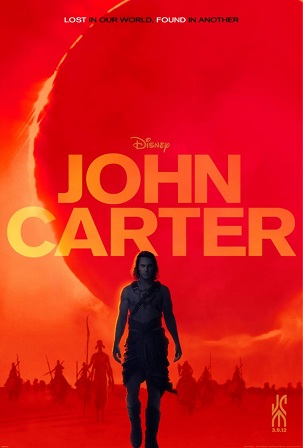
Disney’s “John Carter
Heroism and Just War
John Carter is a hero with a haunted past. The movie, unfortunately, never really explores his history much. From what I could tell, he went to war and came back to find his family had all been killed and his house burned as part of the conflict. He thus swore off fighting for a cause and instead decided to seek his fortune.
Once Carter reaches Mars (Barsoom), however, he is thrown into a conflict in which he realizes that the fate of an entire planet rests upon the victory of the city of Helium. Once he realizes the implications of this battle (and conveniently, finds the princess of Helium particularly attractive) Carter aligns himself with the Tharks, a race of aliens largely viewed as savages by the humanoid aliens on the planet. He is able to seal victory for Helium by making the Tharks realize that they, too, have a place on Barsoom which is influenced heavily by the conflict between Helium and Zodanga.
The movie touches, then, on the notion of a just war. Helium is trying to save the planet, while Zodanga does little but consume and subjugate. The Tharks view both sides as neutral and prefer them to continue fighting, as long as the war stays away from them. Yet it becomes clear that due to the influence of the Thern–an extremely advanced (technologically speaking) race which seeks to orchestrate the destruction of planets–that the conflict has implications for everyone on Barsoom, and indeed, on Earth.
Sin
The Tharks have a tradition in which they brand their people as punishment for their sins. The brands are placed so that they continue to cover one’s skin throughout their lives. If one has committed enough offenses that there is no longer any place for a branding, then one is either killed or thrown into the arena to fight against impossible odds. One’s sins literally cover their flesh. One cannot escape from one’s offenses. There is no redemption.
Christianity affirms that sin is something for which one can make no redemption for themselves. One’s sins are, in a sense, branded onto one’s past. Only by repentance and grace through faith can one be saved. There is no escape from one’s offenses except through the full and free forgiveness through Jesus Christ our Lord. There imagery in the movie of one’s sins being displayed on one’s flesh is powerful, and it resonates with the Christian view that our sins condemn us forever. Only by grace can we be saved. There is no removing the sins–branded onto us–by our own power.
Religion
The Therns are supposedly oracles of the goddess. However, it turns out that they are actually dedicated to manipulating civilizations across the galaxy. It is never discussed whether the goddess and the Therns were ever actually genuine, but it seems fairly clear that those calling themselves Therns are just using the title in order to gain power.
Religion is therefore seen as a kind of way to manipulate and enthrall the masses. All of the sides of the conflict are shown to be dedicated to the goddess, but none seems to have the full truth. However, it does seem that the dedication of the Tharks, in particular, shows a resonance with truth and a genuineness that reaches beyond the mere use of religion as subjugation. The movie, I would say, gives an overall neutral view of religion. In some ways it can be used for ill, but it nonetheless is not inherently evil.
Yet another aspect of religion in the movie, however, is that one can observe the difference between genuine faith and exploitative faith. It is clear that many of the Therns genuinely believed in the goddess and there are scenes which convey a sense of awe over the faith on Barsoom. Religious practice is seen as taking place on a genuine level and being an important part of the lives of the practitioners. These religious persons are seen as genuine and largely trustworthy. On the other hand, those who seek to exploit the faith are seen as inherently evil. Such a view should resonate with Christians, who are instructed to be aware of those within the church who would seek to lead us astray (antichrists).
 Alien Life and social (in)justice
Social justice is an underlying theme in the movie. By portraying the alien Tharks as the outsiders, the movie is able to focus on the notion that the downtrodden and overlooked can rise above the limitations of their position. Although viewed as unequals, they are equals.
One poignant scene early in the film showed a hatchery for the Tharks. They came to collect the hatchlings and it turned out that some eggs hadn’t yet hatched. The Tharks then fired on all the eggs with their gun and destroyed the “weak” young. I couldn’t help but think that this is largely what is happening in the real world with abortion [a topic I have written on extensively].
Here again, worldviews rear their ugly heads. The faith of Barsoom is a bit enigmatic. The goddess seems largely uninterested in the goings-on of everyday life. Furthermore, those who follow her are fully willing to kill their own young in order to ensure the survival of the strongest. One can’t help but think of the prioritization of desires over objective morality in our own world.
Conclusions
The film was a lot of fun. One can easily see how the source material influenced science fiction in a number of ways. As a huge fan of science fiction, I can’t help but love the movie. It is so awesome to see the origins of sci-fi play out on screen. Christians watching the film will find areas to discuss social justice, just war, and heroism. Furthermore, there are some poignant scenes which can bring up issues related to abortion and racism. A final talking point would be to discuss religion as a transcultural entity and see how it has been used in both good and bad ways. I go into this issue in my own post on the “Myth of ‘Religion.'”
“John Carter
Links
Check out another review of the movie over at Sci-Fi Christian, which looks into the background of the movie more, as well as exploring some Bible texts in relation to the movie: Barsoom or Bust!
Engaging Culture: A brief guide for movies– I discuss how Christians can view movies with an eye towards worldview.
Religious Dialogue: A case study in science fiction with Bova and Weber– I look at how science fiction is frequently used to discuss worldviews and analyze two major authors in the field along with their view of religious dialogue.
Alien Life: Theological reflections on life on other planets– What would it mean for Christianity if we discovered life on other planets?
Check out my other looks at movies, including the Hunger Games and the Dark Knight Rises here (scroll down for more).
SDG.
——
The preceding post is the property of J.W. Wartick (apart from citations, which are the property of their respective owners, and works of art as credited) and should not be reproduced in part or in whole without the expressed consent of the author. All content on this site is the property of J.W. Wartick and is made available for individual and personal usage. If you cite from these documents, whether for personal or professional purposes, please give appropriate citation with both the name of the author (J.W. Wartick) and a link to the original URL. If you’d like to repost a post, you may do so, provided you show less than half of the original post on your own site and link to the original post for the rest. You must also appropriately cite the post as noted above. This blog is protected by Creative Commons licensing. By viewing any part of this site, you are agreeing to this usage policy.
The Avengers: Sin, Salvation, and Jonah
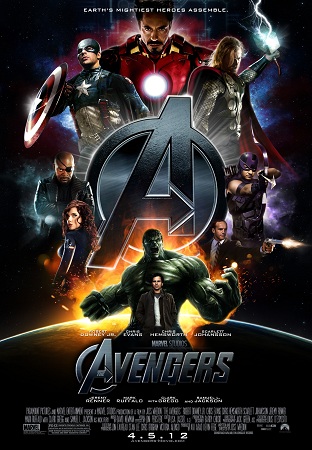 I have already reflected on Marvel’s “The Avengers” from a Christian perspective, but upon watching the recently released blu-ray and DVD
There will be SPOILERS here.
Slavery of all mankind
A thoughtful friend of mine on Facebook pointed to the dialogue between Loki and a crowd of people near the beginning of the film wherein he forces them all to kneel. Loki stands before them and shouts:
Kneel before me. I said… Kneel! Is not this simpler? Is this not your natural state? It’s the unspoken truth of humanity that you crave subjugation. The bright lure of freedom diminishes your life’s joy in a mad scramble for power. For identity. You were made to be ruled. In the end, you will always kneel.
Think of how this resonates with the Christian notion of slavery in sin. We align ourselves with things that we love. Greed. Envy. Pride. Lust. Gossip. These things, while initially pleasurable, ultimately enslave us. Loki’s speech was very discerning, however. For even though these things come to enslave us and take time away from the goods in life, we come to love them, to glorify them, and to become attached to them. We want to be enslaved in sin. We desire it. Sin calls to us, enslaves us, and we love it.
Yet, as in the movie, we are called to rise up against this sin. But we can’t do it on our own. As I discussed in my other post on “The Avengers,” we “need a hero.” We cannot rise out of slavery. Paul discusses this very notion in his letter to Rome:
Don’t you know that when you offer yourselves to someone as obedient slaves, you are slaves of the one you obey—whether you are slaves to sin, which leads to death, or to obedience, which leads to righteousness? But thanks be to God that, though you used to be slaves to sin, you have come to obey from your heart the pattern of teaching that has now claimed your allegiance. You have been set free from sin and have become slaves to righteousness. (Romans 6:16-18, NIV)
Who is it that set us free? We did not do it on our own. After all, we became slaves to sin and offered ourselves freely to it. No, it is Christ Jesus who set us free. He was the “hero” who broke the chains and gave us our freedom in Him.
Debts that Cannot Be Paid
Later on, Loki converses with Black Widow. They discuss the notion that Black Widow has “debts” to others. She owes them for the things they’ve done for her. She says that her ledger is in the “red”–she is on the wrong side of debt. During this conversation, Loki tries to break Black Widow down verbally, “Can you wipe out that much red? …Your ledger is… gushing red.”
Loki’s comments are telling, for they are actually true of not just Black Widow but of everyone. We all have our debts. We have our sins that we commit in private, away from others. We have the anger we have expressed through thought and deed. Our ledgers are overflowing, they gush red. Our sins are too great for us to repay; we cannot wipe away the red.
Yet God has loved us so much that He paid the debt. Jesus, God in human form, came to earth and paid that debt for each and every one of us. Our ledgers were full, but now we’re in the black. We have become co-heirs with Christ and have received salvation by grace through faith. We are justified through Jesus’ death and resurrection. God forgives us our sins and wipes our ledgers clean on His behalf. Loki’s comments are not unlike those of the Devil, trying to convince us that we are still in debt. Can anyone–even God–wipe away all the wrongs we’ve done? Fortunately, that answer is yes. Although we ourselves cannot repay it, God has done so for us.
Jonah
Another great line in the film is when New York City is under attack (seriously, why can’t that city catch a break?). Iron Man comes face to face with a gigantic enemy ship/creature/thing (my wife named it “Leviathan” and I think that’s a great title) and has to take it down. He asks his onboard computer: “You ever heard the tale of Jonah?” He then bursts into the mouth of the Leviathan and flies through it, exploding from the end and destroying it.
No, the reference was never explained. Hey, if you don’t know the story, look it up! It’s one of my favorites in the Bible. Just get out a Bible (or search online) and flip to “Jonah.” It’s short, and I guarantee you it’s worth the read!
Conclusion
It seems to me that there are a number of themes in “The Avengers” that Christians can relate to. The notion of the incredible debt we owe and cannot pay due to our past resonates directly with the Christian worldview. It points towards the salvation we have in Christ. Similarly, our slavery to sin cannot be overlooked. We want to sin, we crave it, but thankfully those bonds are broken in Christ.
Links
A Christian Look at “The Avengers”– I examine a number of other themes in “The Avengers” which Christians and non-Christians can discuss.
Engaging Culture: A Brief Guide for movies– I reflect on how Christians can engage with popular movies in order to have meaningful conversations with those around them.
SDG.
——
The preceding post is the property of J.W. Wartick (apart from citations, which are the property of their respective owners, and works of art as credited) and should not be reproduced in part or in whole without the expressed consent of the author. All content on this site is the property of J.W. Wartick and is made available for individual and personal usage. If you cite from these documents, whether for personal or professional purposes, please give appropriate citation with both the name of the author (J.W. Wartick) and a link to the original URL. If you’d like to repost a post, you may do so, provided you show less than half of the original post on your own site and link to the original post for the rest. You must also appropriately cite the post as noted above. This blog is protected by Creative Commons licensing. By viewing any part of this site, you are agreeing to this usage policy.
Jesus’ wife? A survey of responses.
SEE UPDATE: It has become revealed that this fragment is almost certainly a fraud. But, if you’re still bothered by it, check out the links below.
UPDATE 2 (4/17/2014): The case has been reopened as some alleged new evidence has shown that the document might not be a forgery after all, which now makes the links below relevant again! I’ve also added a comedic video I found via Tim McGrew.
There has been a bit of an uproar about a 4th Century Coptic Manuscript which purportedly provides evidence that Jesus had a wife. Apart from the fact that it is 4th century and therefore a few hundred years after the events and during primetime for Gnostics making up facts about Jesus to undergird their own theological leanings, many seem to think this is somehow evidence against Christianity. Well, here are some great responses to the discovery.
Reality Check: The “Jesus’ Wife” Coptic Fragment– Daniel Wallace, an influential NT scholar, comments on the discovery. He really gets into some great textual-critical details here. I would say this is one of the more important responses. I highly recommend this response.
Durham University professor calls the “Jesus had a wife” manuscript fragment a forgery– Yep, folks, we might be cutting this one off pretty quickly. Some analyses are suggesting fragment is actually a hoax, and the arguments seem pretty decisive. See the next post:
The Gospel of Jesus’ Wife: How a Fake Gospel-Fragment Was Composed– This is a very interesting post which you can find Francis Watson, a professor of religion and theology at Durham University making a concise argument in a PDF which argues that the fragment is a fake. It’s a fascinating article, and perhaps destroys the whole controversy at the start. (To be fair, the late purported date of the fragment does little for me, anyway.)
New Coptic Fragment Says Jesus Was Married– A summary of skeptics’ attitudes towards historicity.
The Gospel of Jesus’ Wife?– Glenn Andrew Peoples has a simply fantastic discussion of the implications of this discovery. One of my favorite lines: “Prepare yourself. Suddenly, people are going to read a sensational article about a tiny scrap of parchment and become experts on early church history.”
Did Jesus Have a Wife?– A post which focuses on the authenticity of the document and the implications if it is indeed authentic. Another great response.
SHOCKING New Evidence Reveals 4th-Century Coptic Christians WONDERED If Jesus Was MARRIED!– What is the historical significance of the discovery, assuming it is genuine? A few very good, concise points.
So What if Jesus did Have a Wife?– Definitely an alternative approach. John Byron notes that Christians could grant that Jesus was married without somehow undermining the core doctrines of Christianity. This one is really interesting and I’m sure will be controversial. While not a response to this article, Aggie Catholics has a very different view of the implications of the discovery, while denying that it has historical import other than as showing the beliefs of Gnosticism: Proof That Jesus Was Married?
The Wife of Christ and the Bride of Christ– This post looks at the discovery from a more presuppositional type approach. We know the Bible is reliable, so what should we make of this discovery?
Stop the presses! Jesus was married! Oh no!– Carl Olson at the Catholic World Report comments on a number of issues with jumping to conclusions about the text. I found this one particularly insightful about how the discovery is being portrayed in the media.
Quick Thoughts on the New Jesus Wife Text– Darrell Bock, a prominent NT scholar, shares his thoughts on the implications of the text. It’s highly informative and concise.
Was Jesus Married?– A reflection on the way the media portrays stories like this along with an examination of the importance of the document and apologetics.
Get Ready for A Wave of Gnostic Looniness Again– James White notes that the discovery was made by a woman who loves to sensationalize gnosticism.
Shock! Horror! Jesus’ Wife! (Video)– a satirical video about the discovery and its alleged implications for Christian faith.
Book Review: “From God to Us” by Norman Geisler and William Nix
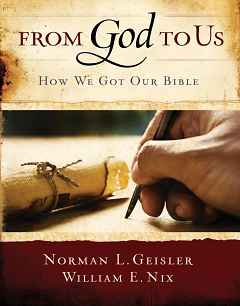 From God To Us
Inspiration
FGU outlines the nature of inspiration. It is important to note that “it is only the product that is inspired, not the persons” (17). Another misconception is that inerrancy/inspiration applies to copies. The sense in which it does must be limited: “Only the autographic [original] texts themselves (or perfect copies of them) are inerrant… Every other copy is inspired only insofar as it is an accurate reproduction of the original” (18).
The authors then turn to a defense of inspiration through the Biblical teaching of inspiration. By outlining the way the text is treated as inspired in both the Old and New Testaments, the authors make a case for the general inerrancy of the autographic texts. Finally, the authors provide an argument for the Bible as the word of God (68ff). The argument is 12 steps and they provide a basic defense of each premise.
Canonization
One of the most frequent objections brought up offhand to those who hold to a high view of the inspiration of the Bible is that of the canon. Some say that the canon was just arbitrarily chosen by a church council somewhere, and that there is no way to determine how books got into the Bible.
FGU provides a more historically accurate look at the canon. The authors first outline a number of factors that are faulty for determining canonicity. For example, age alone cannot determine canonicty because some books of the Bible drew from contemporary sources.
In direct opposition to the notion that a council alone could determine the canon, FGU underscores the notion that: “the role of the Christian church… is not to determine which books are in the canon but to discover which books God determined should be in the canon, namely, those that He had inspired” (91). The authors then explore a number of factors which play into discovering the canon.
Historically, FGU explores the extent and formation of the Old Testament and New Testament canons. The arguments are concise and direct readers to further areas of exploration, while providing enough information to refute most basic arguments.
Transmission
The Bible had to be transmitted: namely, God’s word had to be communicated to human persons. How was this done? Largely in the form of written languages. FGU explores the importance of written language as a means of communication and provides a brief background in the development thereof (164ff).
Of great importance to the reader is the extensive material on the manuscripts of the Bible. The details of the manuscript tradition are outlined and even several forms of extrabiblical manuscript evidence is brought into the picture. Such evidence is an important part of a believers’ background of Bible knowledge. FGU also does a fantastic job outlining the foundations of textual criticism and the valuable role it can play in determining the accurate reading of the text (221ff).
One of the most enlightening parts of FGU outlines the nature of finding “errors” in the transmission of Scripture. Often, one will hear the claim that there are 100s of thousands of errors in the Bible. Bart Ehrman has, in particular, focused upon this in order to cause some unrest in the notion of the accuracy of the Bible (243). But these are actually variants in manuscripts which are sometimes counted numerous times:
If a single word were misspelled in 3,000 different manuscripts, they are counted as 3,000 variants… Ironically, the way Ehrman counts ‘errors’ (variants), there were 1.6 million errors in the first printing of his book. For there were 16 errors, and the book printed an alleged 100,000 copies… Ehrman himself admits the biblical variants do not affect the central message of the Bible. (243)
The authors then turn to an analysis of variant readings and how they occur, from misspellings and unintentional changes to corrections to try to bring texts into concord (246ff).
Translation
FGU provides an intense look at a number of ways the Bible has been translated and the way that translations happen. The traditions of translation are outlined and traced through history (280ff) and the importance of individual translations are analyzed.
Another extremely valuable part of the book is the analysis of how translations come about as far as the emphasis placed upon form-driven versions, meaning-driven versions, and paraphrases. Readers interested in modern Bible translations will find a wealth of resources for analyzing the varied translations. There are nearly 70 pages of information on these translations, so readers will have a number of points to discuss with those asking questions about translations.
Analysis
FGU is a huge resource for those interested in not just defending but learning about the Bible and how it has arrived in its current state in our pews. The book covers a number of issues and it will have appeal to both lay readers and interested professionals. Christian apologists will find a treasure trove of information about the background of the Bible which is often glossed or ignored in a number of apologetics resources.
The authors come from a decidedly conservative background, but this does not prevent them from a generally fair analysis of a number of topics. For example, though they seem critical of the so-called “gender accurate” language of TNIV, the analysis of the translation is objective and simply outlines how the translation comes to its current form (350-353).
Conclusion
Norman Geisler and William Nix have provided a solid resource with From God to Us. It will appeal to those who want to get a lengthy introduction to a number of relevant apologetical issues related to the Bible. Furthermore, it provides a significant amount of background on various translations of the Bible. What is most surprising about the book is how it manages to provide so much information without becoming too dense or thin. It covers so many issues that the danger would seem to be either to err on the side of being too long or too brief on each issue. The authors admirably do not stray to either side, and in doing so, have provided an invaluable resource for both the interested lay reader and professional.
SDG.
——
The preceding post is the property of J.W. Wartick (apart from citations, which are the property of their respective owners, and works of art as credited) and should not be reproduced in part or in whole without the expressed consent of the author. All content on this site is the property of J.W. Wartick and is made available for individual and personal usage. If you cite from these documents, whether for personal or professional purposes, please give appropriate citation with both the name of the author (J.W. Wartick) and a link to the original URL. If you’d like to repost a post, you may do so, provided you show less than half of the original post on your own site and link to the original post for the rest. You must also appropriately cite the post as noted above. This blog is protected by Creative Commons licensing. By viewing any part of this site, you are agreeing to this usage policy.

 J.W. Wartick - Reconstructing Faith
.jpg)