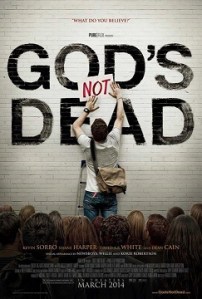
 I recently had the chance to watch “God’s Not Dead,” a film which presents a story in which a college student decides to take a stand for his faith against the pressure of an atheistic philosophy professor. A summary of the plot may be found here. As an apologist with an MA in the field, I thought my comments might help provide some insight into the film. I’ll offer a look at some aspects of the film which I wanted to address. Feel free to chime in in the comments with your own thoughts.
Apologetics
The movie presents a clear picture of the need for apologetics. When challenged by attacks on the faith it is important to always have a reason for the hope within (1 Peter 3:15). Josh Wheaton–the protagonist–put together a decent presentation of various evidences for theism in the snippets that viewers get through the film. Of course, these are very simplified and don’t address several major issues with the arguments, but it gets the point across. It also, I have noted through conversations with others, spurred much interest in the area of apologetics. That’s awesome!
That said, I think there are some issues with even the arguments presented in the film. First, after Wheaton has presented the cosmological, design, and other arguments for theism, he is challenged by Professor Radisson on the notion that one just has to choose between atheism and theism. Wheaton acknowledges that yes, it is a choice. Now, there are a number of issues with this portrayal. First, it treats the balance of evidence as a kind of 50/50 proposition, which is, I would think, hardly the position of anyone. Second, it presents a view of belief in which we can just choose what we believe. This is called “doxastic voluntarism” which is a fancy way of saying that one can believe propositions at will. But that is a highly controversial position (just try to force yourself to believe that “Fairies fill my refrigerator every morning” and you’ll see the folly of it) and also flies in the face of biblical accounts of what faith is. Third, here I’ll tip my bias a bit and say I’m fairly well convinced that the balance of evidence is hardly 50/50 but actually compelling.
Another difficulty with the apologetic in the film is that it seems like the lynchpin argument offered was actually just a point of rhetoric. Wheaton presses Professor Radisson and asks “Why do you hate God?” and follows it up with [paraphrased]: “How can you hate someone who doesn’t exist?” This is the last straw and what prompts the class to vote by standing to say that “God’s not dead.” Although I think rhetoric has a clear place in the Christian apologetic (and has since the earliest times: see the apologetic works of Lactantius and Arnobius in the 200-300s AD), I thought it was an odd choice to make it the climactic argument for God. Perhaps it was because this added to the drama of the moment–and I suspect that’s right–but it did so at the cost of detracting from whatever apologetic the film could put forward.
I did, however, appreciate the interaction with some top scholars like Hawking and Lennox. I think it is very important for Christians interested in apologetics to read the top scholars in their fields in order to best get acquainted to the arguments.
Characters or Caricatures?
The way the Muslim father was portrayed was problematic. In the beginning of the film we see him dropping off his daughter and showing great concern for her. Later, he shares an intimate discussion of his faith and the importance of obedience in his background. But then, when it is revealed his daughter has converted to Christianity, he not only kicks her out of the house, but he also immediately hits her more than once. Now, I make no claims to being an expert on this, but I know from anecdotal evidence only that people are indeed kicked out of their homes for converting to Christianity (and sometimes for deconverting), and this is surely a bad thing. It’s not a bad thing to address this as an issue.
But the problem I saw was that the Muslim father’s immediate reaction was violence, without any explanation or any background for thinking this would be a reaction. The rest of the film up to this point had shown him as a caring father who was concerned for the faith and well-being of his daughter. To have him immediately turn to violence when she converted was jarring and I think it speaks to our cultural presuppositions about the religious “Other” to portray the “Other”–the Muslim–in that way. We need to move beyond such stereotypes and into genuine dialogue with those of other faiths, always looking to share the light and love of Christ with them.
On the positive side, the film did do a great job speaking to the importance of reaching out to others like the young man from China. It also emphasized missions in a number of ways, like centering some major plot points around a very amiable character as a missionary.
Pastoral Care
I appreciated the comments about the work of a pastor, in which Pastor Dave in the film was comparing his own work to that of a missionary friend’s and felt his own day-to-day tasks were mundane and trivial. The answer given by the missionary, however, was essentially that such work is part of the work of God as well and that we each occupy a place which God has put us in to make an impact on the world. I thought this was a great message and one that deserves further exploration.
On the other hand, I thought that the pastoral care at points in the movie presented some difficulties. For example, Pastor Dave’s conversation with Josh Wheaton before Wheaton decides to for sure stand up to his professor boiled down to a couple citations (not even quotations) of Bible verses to look up later and the comment that “It’s not easy, but it’s simple” [I may have the order in this quotation wrong]. I’ll be blunt: I think that this is actually a gross oversimplification. Quoting Matthew 10:33 (click for reference) does not actually make the issue facing Wheaton “simple.”
For example, would it be “denying” Christ to acknowledge that one might not have the resources available as a freshman student in a general studies philosophy class (and not a major) to take on a philosophy professor on the topic of God’s existence? I don’t think so. One could instead acknowledge that both the clearly adversarial tone taken in the environment and one’s own lack of knowledge or expertise in the area make it likely that one may actually harm the body of Christ by, well, looking like a freshman non-philosophy student outmatched by an atheistic philosophy professor. Wheaton, of course, has the benefits of film, so he is able to put together a beautiful powerpoint each week and manages to pound the books so hard that he can articulate the cosmological, design, and other arguments within a few days. But is this a realistic perspective? Moreover, is it a “simple” application of the passage to our lives?
Conclusion
“God’s Not Dead” awakens people to the need for apologetics. That is a great compliment, because it is a much-needed awakening. However, it has several issues (including those mentioned above) with the presentation of apologetics, its portrayal of the “Other,” and the oversimplification of several arguments, positions, and even pastoral care and reading of texts. In short, it’s a mixed bag.
Links
Be sure to check out the page for this site on Facebook and Twitter for discussion of posts, links to other pages of interest, random talk about theology/philosophy/apologetics/movies and more!
SDG.
——
The preceding post is the property of J.W. Wartick (apart from quotations, which are the property of their respective owners, and works of art as credited; images are often freely available to the public and J.W. Wartick makes no claims of owning rights to the images unless he makes that explicit) and should not be reproduced in part or in whole without the expressed consent of the author. All content on this site is the property of J.W. Wartick and is made available for individual and personal usage. If you cite from these documents, whether for personal or professional purposes, please give appropriate citation with both the name of the author (J.W. Wartick) and a link to the original URL. If you’d like to repost a post, you may do so, provided you show less than half of the original post on your own site and link to the original post for the rest. You must also appropriately cite the post as noted above. This blog is protected by Creative Commons licensing. By viewing any part of this site, you are agreeing to this usage policy.
 “Guardians of the Galaxy” has been a smash hit at the box office, and it has also received critical acclaim. It’s been branded as a happy-go-lucky film. That said, every story has a worldview. What might we find in “Guardians”? Here, we will analyze the movie from a Christian worldview perspective. There will be SPOILERS in what follows.
Chaos and “Human” Nature
Chaotic is a great word to describe the “Guardians.” Each has personality quirks which make them uniquely set up, it seems, to conflict. The fact that this ragtag band of people manages to save the galaxy (or at least a planet) is part of the fun of the film.
The characters’ personalities, however, seemingly also reveal much about “human,” or at least “personal” nature. Each has a background which haunts them individually, whether it be Starlord’s lost childhood or Rocket’s internal struggle to define himself, they each have difficulties. It is this which makes the characters seem more relatable than they otherwise may have been.
It is easy to feel separated from the world of the superheroes due to their general portrayal as otherworldly powers with little connection to Earth other than finding it as a place for their conflicts. In “Guardians,” it is almost the reverse: the characters are grounded in realistic pasts and limited in their power (each overshadowed by Groot’s power, but simplistic mind), but their battle takes place out in the Galaxy, away from home. By subtly shifting the perspective and powers of the heroes, the filmmakers reverse the paradigm of superhero flicks and are able to put together this story of a motley crew just barely managing to succeed.
I think this tells us something about ourselves as well: we relate better to characters with flaws. Our lives as humans have given us complex pasts with parts we often regret. The question, then, is where we may find redemption? How might we make sense of our lives in the broader scheme of things?
Good Guys
There is a lot of gray area when it comes to evil in “Guardians.” The characters themselves are involved in shady schemes, which leads one to wonder who the “good guys” are. That question, though, is one which brings us around full circle to the question of human nature. From a Christian perspective, there are none who are without fault, and salvation history in the Bible reflects God using imperfect people like Samson (womanizer) and Paul (persecutor of the church) to bring about redemption.
Similarly, the characters in “Guardians” are each flawed, but they work together to defeat great evil. Thrown together in the chaos of a universe with much evil, they make their own way. In “Guardians,” evil happens to be defeated almost by luck, but in reality, such things are not mere happenstance.
Rebirth
There is a real sense of “rebirth” throughout the film. Each character undergoes a transformation from a life of relative lax to one in which, at the end, they seek to defend the galaxy, even if that means breaking a few rules along the way. Groot, of course, undergoes the most literal rebirth as he is fragmented (to death?) in order to protect the other Guardians, only to then be reborn as a single stick. Starlord’s own rebirth is more subtle, as he goes from a ne’er-do-well rogue to trying to actually lead a ragtag band of people to defend the galaxy.
Conclusion
“Guardians of the Galaxy” is a distinctly unconventional superhero flick, as it stars a group of people who can hardly be classified among the “good guys” who just so happen to defeat the worst evil in the galaxy. Despite, or perhaps because of, this, they band together and triumph in a good (?) vs. evil story. It is similar, as I noted, to the notion in the Bible that we are a community of sinner saints and people who have questionable paths may still be used for great good by God.
There is more we could discuss from “Guardians of the Galaxy,” so please do join the discussion in the comments below.
Links
Be sure to check out the page for this site on Facebook and Twitter for discussion of posts, links to other pages of interest, random talk about theology/philosophy/apologetics/movies and more!
Guardians of the Galaxy– Check out Anthony Weber’s take on the movie, which is always worth reading. Be sure to follow his blog, as it is one of the best in the business.
Movies– Read other posts I have written on the movies. Scroll down to see more!
The image is a movie poster for the film and I use it under fair use.
SDG.
——
The preceding post is the property of J.W. Wartick (apart from quotations, which are the property of their respective owners, and works of art as credited; images are often freely available to the public and J.W. Wartick makes no claims of owning rights to the images unless he makes that explicit) and should not be reproduced in part or in whole without the expressed consent of the author. All content on this site is the property of J.W. Wartick and is made available for individual and personal usage. If you cite from these documents, whether for personal or professional purposes, please give appropriate citation with both the name of the author (J.W. Wartick) and a link to the original URL. If you’d like to repost a post, you may do so, provided you show less than half of the original post on your own site and link to the original post for the rest. You must also appropriately cite the post as noted above. This blog is protected by Creative Commons licensing. By viewing any part of this site, you are agreeing to this usage policy.
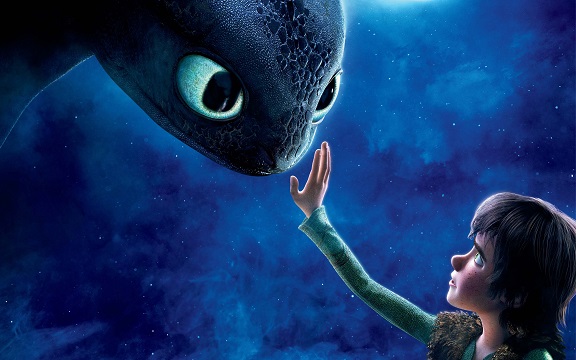
 “How to Train Your Dragon” was a surprise box office success. It was enough of a surprise to get a second movie to come several years later. Both were received with critical acclaim. Here, we’ll take a look at various themes which resonate with the Christian worldview found in each flick. There will be SPOILERS for both films in what follows. I will refer to the second movie as “2” in what follows.
Family
“2” confronts the notion of familial reconciliation. Hiccup’s mom, Valka, is found–after being captured by a dragon, she abandoned her family in order to try to save other dragons who were being hunted or pressed into forced military service. When she runs into Hiccup once more, she realizes that things have changed and people can too. She ends up deciding to come back to the family, though the joy of the reunification of their family is very short-lived. The theme, however, is strong and it leads one to think on how much familial reconciliation is needed in the here-and-now, whether from fighting, divorce, loss, or whatever–it is a truly good task to work towards bringing families back together.
Disabilities and Lost Limbs
In the first “Dragon,” we encounter Gobber, a man who has lost a leg and a hand to dragons. He is boisterous, a little crazy, and he uses his arm as an attachment point for all sorts of tools and weapons. In the climactic battle against the huge evil dragon at the end of the movie, Hiccup also loses part of a leg. By “2,” Hiccup has outfitted himself with a spinning peg leg which may perform several different functions. We also encounter Drago Bludvist, who has also lost an arm to a dragon. Gobber is kind of a crazy man but overall a good guy, Hiccup is a peacemaker (see below), and Drago is clearly a villain–these characters are on a spectrum.
In the “How to Train Your Dragon” universe, then, people with lost limbs are not treated as universally bad or to be pitied. Rather, they are treated as…. well, people. It’s fantastic. Too often, movies use disabilities or loss of a limb as an excuse to become a villain (see another movie review for this theme) or simply as an object of pity. Here, in both films, people are people, and they continue to act in ways which fit their characters despite loss of limb or disabilities. It’s a refreshing to see, and a theme which should feature more prominently in other films.
Peacemaking and Evil
Perhaps the strongest theme throughout both films is the notion of “peacemaking.” Hiccup is a young man who favors making peace over war. He realizes that love and understanding may be more powerful weapons than the sword and spear. The theme is shown to be true in both movies, as it is ultimately this impetus for peace which overcomes the evils of the world. Yet the films do not portray a kind of naive view of the world. In each film, the ultimate villain does not miraculously change his heart, but rather persists in evil and reaps the rewards.
However, this should not overcome the strength of the notion of making peace. Hiccup relentlessly sought to make peace between dragon and humanity, and then between Drago and the people of his homeland. Christians are also called to be peacemakers–to seek justice for all people on Earth.
Conclusion
Both “How to Train Your Dragon” movies are well-worth seeing. They are visual delights with very solid stories and fun moments spread throughout. Not only that, but they each have several themes which resonate with the Christian worldview. Whether it is the notion that all people are valuable, even if they have disabilities, or the themes of family and peacemaking, the movies put forth a reality grounded in notions of right and wrong alongside justice. In short, they’re fantastic.
Let me know what you thought of the movies in the comments.
Links
Be sure to check out the page for this site on Facebook and Twitter for discussion of posts, links to other pages of interest, random talk about theology/philosophy/apologetics/movies and more!
Movies– Read other posts I have written on the movies. Scroll down to see more!
The image is a movie poster for the film and I use it under fair use.
SDG.
——
The preceding post is the property of J.W. Wartick (apart from quotations, which are the property of their respective owners, and works of art as credited; images are often freely available to the public and J.W. Wartick makes no claims of owning rights to the images unless he makes that explicit) and should not be reproduced in part or in whole without the expressed consent of the author. All content on this site is the property of J.W. Wartick and is made available for individual and personal usage. If you cite from these documents, whether for personal or professional purposes, please give appropriate citation with both the name of the author (J.W. Wartick) and a link to the original URL. If you’d like to repost a post, you may do so, provided you show less than half of the original post on your own site and link to the original post for the rest. You must also appropriately cite the post as noted above. This blog is protected by Creative Commons licensing. By viewing any part of this site, you are agreeing to this usage policy.
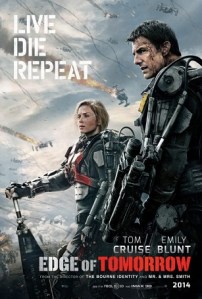
My favorite movie of the year so far.
Each Week on Saturday, I’ll be asking a “Question of the Week.” I’d love your input and discussion! Ask a good question in the comments and it may show up as the next week’s question! I may answer the questions in the comments myself.
Movies of 2014
I realized recently that I haven’t been to as many movies this year as I went to last year. However, it does seem that the movies I have gone to see have been awesome. Early in the year I saw the appropriately-timed Frozen, which I felt had some great themes in it to go with its fantastic music. Then, I went with a friend to see “Lone Survivor,” which I am pleased to report showed greater complexity than many war movies or commentary on the war in Iraq. Then, I saw “Captain America: The Winter Soldier,” which may have been the greatest superhero movie other than the Dark Knight trilogy. I loved its moral commentary.
Finally, I went to go see “Edge of Tomorrow” and “X-Men: Days of Future Past” back-to-back last weekend. The X-Men flick was fantastic and brought up, again, questions of morality. “Edge of Tomorrow,” I would say, is my favorite movie of the pack so far. It was just so good and it helps that it was a genuine sci-fi epic. “Edge of Tomorrow” brings up a number of topics like sacrifice and choice which aren’t always explored in movies, let alone blockbuster action flicks.
As for the question this week:
What movies have I missed that you would consider a “must see”? Let me know in the comments!
This post was adapted from my “other interests” site, which you may want to check out- Eclectic Theist.
Links
Be sure to check out the page for this site on Facebook and Twitter for discussion of posts, links to other pages of interest, random talk about theology/philosophy/apologetics/movies and more.
Question of the Week– Check out other questions and give me some answers!
SDG.
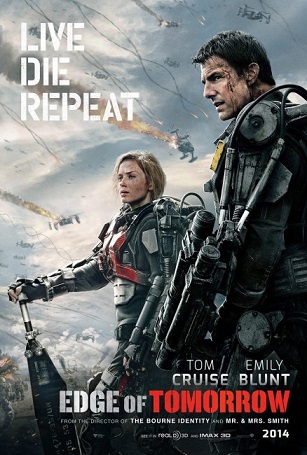
Live. Die. Repeat.
I had the chance to watch “Edge of Tomorrow” this past weekend and I was surprised by how much I enjoyed the film. It was fantastic. Here, I’ll discuss several themes found in the movie from a worldview perspective. There will be SPOILERS in what follows. I will not summarize the plot, but a summary may be found here.
Choice
Major William Cage (Tom Cruise was brilliantly cast for this role) is presented with a number of choices throughout the film, and it becomes clear that he is not a typical save-the-world type of hero. He is flawed, he has passions, he loses hope. But throughout these aspects of the film, we find the notion of choice. Will Cage has been given an extraordinary opportunity to impact the entire human race. When his blood is mingled with that of an Alpha, his death sets off the “Omega” which resets the day. Over and over again, Cage is faced with a choice: what do I do with this day?
He finds Sergeant Rita Vrataski, who is one of the only people who also realizes what’s happening, though she herself doesn’t remember the days. The question, again, is what do I do with this day? Cage’s character is forced to consider that he has the ability to possibly save all of humanity. In such a situation, what choice does he have? But he does make some choices: he chooses to try to save Rita, to save others. But at other times, he gives in to frustration, allowing members of his squad to die despite being able to prevent it. Cage is not a knight in shining armor, but he confronts us with a human thrown into an impossible situation with the highest possible stakes.
Placing the concept of choice against such a backdrop makes for good drama, but it also begs the question: what are you doing with your day? From a Christian perspective, the choices we make are extremely important–we are called to be witnesses, lights to the world–but do our choices each day reflect that? Do we, like Cage, sometimes allow injustices despite having to put forth just a little extra effort? How do our choices impact our life in Christ? The movie demands that we answer questions like these.
Sacrifice
Cage is also confronted with a kind of self-sacrifice. By admitting he is what he is, he must go through a cycle in which he dies continually, in often brutal ways, in order to try to improve, to save humanity. It is sacrifice, but a sacrifice knowing that he will be back the next day. One must ask, I think, whether that actually diminishes the sacrifice. I don’t think it does. Cage must steel himself each day knowing that death will come again, and again, and again. The only way to prevent it is to save all of humanity by destroying the Omega. Though, in the end, Cage ultimately does give up his life for humanity, only to be brought back by having his blood mingled with that of the Omega. One is left wondering whether he will retain the power or not.
The self-sacrifice of Cage (and Rita) for the sake of humanity is clearly a theme which resonates with the central Christian teaching of Jesus Christ as crucified and resurrected Lord. However, beyond the obvious parallels of giving up life for the sake of all (and subsequent resurrection/awakening), the sacrifice of going in knowing one is to die is something that resonates with the story of Christ. I have sometimes seen a challenge issued theologically to the Christian teaching saying Jesus didn’t really sacrifice himself if he knew he was going to be risen by God. But of course that hardly destroys the notion of self-sacrifice and the real price paid of death. Being risen does not destroy the sacrifice of death.
Brutality
Live. Die. Repeat.
The theme is echoed throughout the film. It may cause one to wonder about the brutality of such a story and its appropriateness, but I think that from a Christian perspective one has to incorporate the rest of the themes found in the movie. The brutality of the cross is itself something from which people shy away, but set against the backdrop of salvation, brutality can become sanctified.
Community/Individual
I have not read the manga that “Edge of Tomorrow” was based on, “All You Need is Kill,” but I have heard that there is some juxtaposition over the primacy of the community vs. individual in either. “Edge of Tomorrow” shows this kind of valuation in many ways throughout the film. First, there is Cage’s continued efforts to save Rita, despite what it might cost–including going on one part of the mission alone in order to prevent her death. Second, there is the concept of both Cage and Rita valuing the community of humanity over the self by willingly spending all the time they have left trying to defend humanity rather than find a way to survive themselves. Finally, both Cage and Rita choose to place the community over the self when rather than trying to save one or the other, they both do what needs to be done and give themselves to save humanity.
For Christians, themes of community and individual are extremely important. It is easy in the Western mindset to become obsessed with the self, but a true community of individuals exists in the body of Christ–each as important as the next. How do we go about living our lives in light of this truth?
Conclusion
There are many other themes to be explored from “Edge of Tomorrow”- what of the Alpha/Omega? What happens to Cage and Rita after the end of the film? Were there any efforts to try to make peace or reach out to the “Mimics”–the aliens that they fight against throughout the movie? These are important themes, and I’d love to get discussion of those started in the comments. For now, it should be clear that the film has many themes to reflect upon and it is well-worth seeing. What did you think of the movie? What other themes have you thought of in relation to it? Let’s get your thoughts in the comments below!
Links
Be sure to check out the page for this site on Facebook and Twitter for discussion of posts, links to other pages of interest, random talk about theology/philosophy/apologetics/movies and more!
All You Need Is Kill/Edge of Tomorrow– “Edge of Tomorrow” is based upon this graphic novel. Check out Anthony Weber’s excellent review and critique of the graphic novel from a Christian perspective. I really recommend you follow his blog as well. It’s in my top five must-read blogs, and it is worth your time to browse at length.
Movies– Read other posts I have written on the movies. Scroll down to see more!
The image is a movie poster for the film and I use it under fair use.
SDG.
——
The preceding post is the property of J.W. Wartick (apart from quotations, which are the property of their respective owners, and works of art as credited; images are often freely available to the public and J.W. Wartick makes no claims of owning rights to the images unless he makes that explicit) and should not be reproduced in part or in whole without the expressed consent of the author. All content on this site is the property of J.W. Wartick and is made available for individual and personal usage. If you cite from these documents, whether for personal or professional purposes, please give appropriate citation with both the name of the author (J.W. Wartick) and a link to the original URL. If you’d like to repost a post, you may do so, provided you show less than half of the original post on your own site and link to the original post for the rest. You must also appropriately cite the post as noted above. This blog is protected by Creative Commons licensing. By viewing any part of this site, you are agreeing to this usage policy.
 Each Week on Saturday, I’ll be asking a “Question of the Week.” I’d love your input and discussion! Ask a good question in the comments and it may show up as the next week’s question! I may answer the questions in the comments myself.
Worldview Movie
One of my favorite activities is to go to the movies and evaluate a film from a Christian worldview perspective. In light of that, I wanted to ask you, dear reader:
What’s your favorite movie in regards to the way it portrays a worldview? Why?
When we watch a movie, we must always realize it has a “worldview” in it. What movie has impacted you most in the way it portrays a worldview? Let’s hear it, in the comments.
Links
Be sure to check out the page for this site on Facebook and Twitter for discussion of posts, links to other pages of interest, random talk about theology/philosophy/apologetics/movies and more.
Book Review: “Hollywood Worldviews” by Brian Godawa– Speaking of worldviews in the movies, why not check out my review of this book which seeks to provide a method for analyzing film from a worldview perspective? Let me know what you think.
Engaging Culture: A brief guide for movies– I outline my approach to evaluating movies from a worldview perspective.
I have a number of ways in which I have critically engaged with culture in movies, books, and other arts in my posts on current events (scroll down for more posts).
SDG.
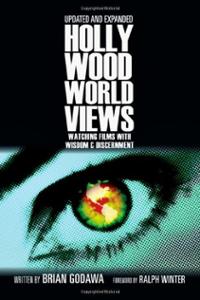
I often say that every movie has a worldview. The same is true for any story. Brian Godawa’s book, Hollywood Worldviews: Watching Films with Wisdom & Discernment , takes just such an approach to movies: what do films teach us? How might we critically evaluate movies?
First, Godawa introduces the concepts of a “cultural glutton” as opposed to a “cultural anorexic.” The point is that Christians are to be in the world not of it. It is one thing to say that violence in a movie is bad; but what of the context of the violence? The Bible also has many scenes which, if filmed, could even rate NC-17. The question is: what’s the point? When looking at film, Christians should look into the way the narrative shapes what happens in the movies.
In order to look into this theme, Christians must be equipped to seek out the context of stories as well as the explicit (and implicit) things they teach. In order to equip people to watch film critically, Godawa approaches this task is divided among several chapters by topics related to film and worldview. Each chapter begins with a summary of the topic of the chapter and how one might discover this theme in film. For example, in the chapter on “Postmodernism,” he begins with a definition and explanation of the concept. Then, he utilizes a slew of examples from various movies to show how postmodernism is found in them in either positive or negative light.
The chapters all cover interesting topics, and Godawa’s use of specific examples from movies are fantastic case studies for showing how critical engagement with worldviews can play out. Even better, Godawa’s explanations and applications could easily be used to apply outside of film and in areas like literature. Frankly, some of Godawa’s evaluation of popular films–including some I’ve enjoyed greatly–have forced me to rethink how I thought of the storyline. Movies which may appear to be fairly neutral or simply entertainment alone do indeed have their own way of approaching reality. Some of the movies which were brought to new light for me included “Gladiator,” “The Truman Show,” and “Groundhog Day.” Dozens of movies are treated throughout this book, and Godawa’s analysis is always interesting and thought provoking, encouraging the critical engagement he seeks.
Another great aspect of the book are the activities Godawa proposes for each chapter to apply what one has learned. These are frequently interesting and provide ways forward to put into practice the art of discernment when it comes to watching film.
One difficulty with a book like this is there is some necessary oversimplification. For example, Godawa, in his discussion of existentialism, writes: “Existentialism accepts the Enlightenment notion of an eternally existing materialistic universe with no underlying meaning or purpose” (95). Oddly, Godawa seems to downplay Kierkegaard’s very explicit Christian faith in light of his existential views, and Kierkegaard seems to become a kind of pariah through this analysis. Kierkegaard, for Godawa, is strangely aberrant from his general picture of existentialism as necessarily godless and without purpose.
At other points, films receive short shrift are are discussed in ways which seem a bit odd. Of course, engagement with these points actually encourages the sort of critical interaction Godawa is pursuing. Some offhand comments are a bit awkward and out of place (for example the bare assertion that “men are the leaders in home and public roles” in Christianity without qualification–in contrast with the declared equality of genders in Galatians 3:28 and the apostleship of a woman in Romans 16:7), but overall these negative points are outweighed by the service Godawa has done to provide critical perspective on worldviews in film.
Hollywood Worldviews is a great book which will encourage much discussion. It would serve as a good resource for those who wish to meaningfully engage the culture. People who read it will be equipped to have thoughtful conversations on the way movies put forth worldviews. The book should come with a warning, though, some of your favorite movies may not be what they seem!
Links
Be sure to check out the page for this site on Facebook and Twitter for discussion of posts, links to other pages of interest, random talk about theology/philosophy/apologetics/movies and more!
Engaging Culture: A brief guide for movies– I outline my approach to evaluating movies from a worldview perspective.
I have a number of ways in which I have critically engaged with culture in movies, books, and other arts in my posts on current events (scroll down for more posts).
Source
Brian Godawa, Hollywood Worldviews: Watching Films with Wisdom & Discernment 2nd Edition (Downers Grove, IL: InterVarsity Press, 2009).
SDG.
——
The preceding post is the property of J.W. Wartick (apart from quotations, which are the property of their respective owners, and works of art as credited; images are often freely available to the public and J.W. Wartick makes no claims of owning rights to the images unless he makes that explicit) and should not be reproduced in part or in whole without the expressed consent of the author. All content on this site is the property of J.W. Wartick and is made available for individual and personal usage. If you cite from these documents, whether for personal or professional purposes, please give appropriate citation with both the name of the author (J.W. Wartick) and a link to the original URL. If you’d like to repost a post, you may do so, provided you show less than half of the original post on your own site and link to the original post for the rest. You must also appropriately cite the post as noted above. This blog is protected by Creative Commons licensing. By viewing any part of this site, you are agreeing to this usage policy.
Every Sunday, I will share a quote from something I’ve been reading. The hope is for you, dear reader, to share your thoughts on the quote and related issues and perhaps pick up some reading material along the way!
Every Story Has a Worldview
I finished reading Hollywood Worldviews: Watching Films with Wisdom & Discernment by Brian Godawa the other day and thought it was pretty solid (though not entirely without faults). One interesting quote was in regards to fiction and worldview:
Every story is informed by a worldview. And so every movie, being a dramatic story, is also informed by a worldview. There is no such thing as a neutral story in which events and characters are presented objectively apart from interpretation. Every choice an author makes… is determined by the author’s worldview. (60)
Godawa’s point is similar to what I say quite often, with almost the exact words: every movie has a worldview. The same, as Godawa states, is true for any story. Every time someone tells a story, whether it is one they made up or one they picked up somewhere, it is slanted with worldview. We should be aware of this fact and be ready to critically engage with any story–fictional or non–so that we can bring into light the truths and falsehoods each story may contain.
What’s your best technique for critically engaging worldview in film? What other arts have you critically interacted with? How have you approached these?
Links
Be sure to check out the page for this site on Facebook and Twitter for discussion of posts, links to other pages of interest, random talk about theology/philosophy/apologetics/movies and more!
Engaging Culture: A brief guide for movies– I outline my approach to evaluating movies from a worldview perspective.
Source
Brian Godawa, Hollywood Worldviews: Watching Films with Wisdom & Discernment 2nd Edition (Downers Grove, IL: InterVarsity Press, 2009).
 I think it’s important to view a range of perspectives on two of the latest flicks to hit the big screens: “Noah” and “God’s Not Dead.” These films are going to draw religious viewers simply based on their content. How do we approach them? What conversations do we have? Here, I’ve offered a few posts about each film. I’d love to read your own thoughts on either or both of these flicks. Yes, this is an owl post edition because I have a winter storm blowing through right now. So that’s fun. (This is my attempt to keep smiling.)
God’s Not Dead
An Apologist Reviews “God’s Not Dead”– Here, a Christian apologist discusses his viewing of the movie. His overall thought is that though it is at times simplistic, it may help awaken the need for apologetics within the church.
David Baggett Guest Post: “God’s Not Dead”– Noted Christian philosopher David Baggett takes on the film. He’s concerned that the film oversimplifies and caricatures atheists and Christians, without paying enough attention to the thoughtfulness of either.
Personal Comments on God’s Not Dead– Astrophysicist Hugh Ross shared his personal thoughts on the film. He thinks it is worth seeing for Christians, but also has reservations regarding its portrayal of the people involved.
A Christian Philosopher’s Thoughts on “God’s Not Dead”– This is a Christian apologist from a different [presuppositional] perspective offering thoughts on the film. To be fair, he is actually looking at the trailer. Can his comments be valid still? Check out the post and judge for yourselves.
Noah
Darren Aronofsky’s “Noah”– Over at The Gospel Coalition, the flick “Noah” is presented as having numerous issues, but it may start conversations and it also helps show the reality of evil before the Flood. Moreover, the reality of the spiritual realm is something that not enough people think of, but in the film the spiritual reality is very real and powerful.
I’m a Christian and I think ‘Noah’ deserves a four star review– In stark contrast to the above, Matt Walsh rips the film apart and also questions why any Christian leaders would be endorsing it or thinking of it as worthy viewing.
Sympathy for the Devil– In this post, Brian Mattson argues that the film is actually an ingenious way of portraying Gnostic ideas and Kabbalah. Essentially, his view is that the film is very explicitly Gnostic and portrays God as evil and the devil as sympathetic.
No, Noah is not Gnostic– In response to the claims of Gnosticisim, Peter Chattaway argues that one cannot conflate Kabbalah with Gnostic thought. Furthermore, he argues that Mattson gets several plot points and points of comparison wrong.
Both, and Then Some!
Hollywood, Movies, and the Bible: Should We Rewind on How We View?– Darrell Bock shares some thoughts on several recent movies with faith themes in them, such as “Noah” and “God’s Not Dead.” He offers practical advice regarding how one might view films with a discerning eye as well.
 Disney’s “Frozen” has generated quite a bit of buzz, and for good reason. The movie is a feast for the eyes and ears. It’s a delight to watch, and it is filled with interesting thematic elements and humor. Moreover, as a Minnesotan, I feel right at home during this winter. Here, I’ll evaluate the movie from a worldview perspective. There will, of course, be SPOILERS hereafter.
Balance
The core of the tension in the movie is found in Elsa’s power. Her parents try to teach her to restrain it, but when put under duress, her power breaks free and she fled the castle. Interestingly, one may note that the total denial of her capability led to her cutting herself off from those who surround her.
Once she leaves the castle, she decides to break free of her self-restraint. The Oscar-nominated song “Let it Go” is indicative of this. Elsa sings:
Let it go, let it go!
Can’t hold it back anymore
Let it go, let it go!
Turn away and slam the door
I don’t care what they’re going to say
Let the storm rage on
The cold never bothered me anyway
It is interesting to see that there must be some balance between the two extremes. Elsa’s self-imposed restrictions upon her powers led to the separation from those she loved; her release endangers the entire kingdom. Her life, instead, must be lived along a balance. I can’t help but think of the words of Paul:
“I have the right to do anything,” you say–but not everything is beneficial. “I have the right to do anything”–but not everything is constructive.
Christian freedom is a freedom with restraint. There must be balance in the process of sanctification.
Women
Many have hailed “Frozen” for its portrayal of women. Neither Anna nor Elsa have a relationship foisted upon them for the main purpose of the plot. Anna’s developing relationship with Kristoff is made even more interesting by the contrast to her obsession with Prince Hans. Both women are independent. Some tongue-in-cheek humor could be found in the striking way in which both Kristoff and Elsa noted that Anna’s willingness to marry a man she just met that day was a bit absurd.
The plot is not driven by a love story; instead, it is driven by the need for reconciliation. Powerful, strong women are the ones who push the plot forward, while the men are sometimes helpful and even featuring shades of prince charming (Kristoff) or villainous and greedy (Hans). It is not that the portrayal of men is negative (as I just noted, there is a spectrum of motivations for the men involved); rather, it is that women are not seen as incapable of action. It is refreshing.
Our Own State
Elsa herself, far from being the quintessential villain, is someone with whom we may be capable of sympathizing. Like her, we are in a serious predicament brought about by our own actions: we live in need of aid. Our actions have sometimes horrific consequences. At other times, our consciences convict us of the wrongness of our deeds. We long to sing along with Elsa, crying out to “Let it Go” and stop caring anymore. But, like her, we realize that such a state is ultimately not be lauded but to be feared. We lash out at those we love due to our own guilt. Can there be salvation?
Christ
Interestingly, some have argued that the movie actually serves as an allegory of Christ. It is Anna who is wronged by Elsa, but it is only Anna who is able to right the wrong. The person who is wronged is the one who must make it right. Similarly, for the Christian, it is God who is wronged, but God is the only one capable of righting that wrong in the perrson of Christ. (I am here paraphrasing the post I linked to.)
The themes noted above come to fruition here. Our state is characterized by a recognition of the wrongness of our actions, but an incapability of bringing about the reconciliation required. Thus, it is up to the party wronged to bring about this reconciliation, through the true forgiveness offered in Christ.
Links
Be sure to check out the page for this site on Facebook and Twitter for discussion of posts, links to other pages of interest, random talk about theology/philosophy/apologetics/movies and more!
Disney’s Frozen might be the most Christian movie lately– This post reflects upon the movie as an allegory of Christ. As noted, I derived much of the last section from the argument made in this post.
The Image featured in this post is the intellectual property of Disney. I make no claims to ownership and have used it under fair use for the purpose of critical evaluation of the film. To my knowledge the image is freely available as promotional material.
SDG.
——
The preceding post is the property of J.W. Wartick (apart from quotations, which are the property of their respective owners, and works of art as credited; images are often freely available to the public and J.W. Wartick makes no claims of owning rights to the images unless he makes that explicit) and should not be reproduced in part or in whole without the expressed consent of the author. All content on this site is the property of J.W. Wartick and is made available for individual and personal usage. If you cite from these documents, whether for personal or professional purposes, please give appropriate citation with both the name of the author (J.W. Wartick) and a link to the original URL. If you’d like to repost a post, you may do so, provided you show less than half of the original post on your own site and link to the original post for the rest. You must also appropriately cite the post as noted above. This blog is protected by Creative Commons licensing. By viewing any part of this site, you are agreeing to this usage policy.




 J.W. Wartick - Reconstructing Faith