philosophy of religion
Ozymandias and the Plight of Atheism
 Ozymandias
by Percy Bysshe Shelley
I met a traveler from an antique land
Who said: Two vast and trunkless legs of stone
Stand in the desert. Near them, on the sand,
Half sunk, a shattered visage lies, whose frown,
And wrinkled lip, and sneer of cold command,
Tell that its sculptor well those passions read
Which yet survive, stamped on these lifeless things,
The hand that mocked them, and the heart that fed;
And on the pedestal these words appear:
“My name is Ozymandias, king of kings:
Look on my works, ye Mighty, and despair!”
Nothing beside remains. Round the decay
Of that colossal wreck, boundless and bare
The lone and level sands stretch far away.
The poem has struck me every time I read it. I am filled with senses of longing, wonder, and terror. Longing, because I want to see the legs of Ozymandias, to know of his Empire, to know how he got to the point of writing the infamous words “Look on my works, ye Mighty, and despair!” Wonder, because he surely must have known his works would pass, as do all things. But maybe he didn’t think they would, maybe he thought he could preserve himself through all time by making a statue… but all that remains is a placard and part of his legs. His works may have been great enough to despair the Mighty, but they’ve passed, and they are nothing but a memory. Terror, because I realize that without God, this is the plight of mankind. We build ourselves up, but we shall pass. In the fullness of time, the world will fade away, the sun will burn out, and our works–which we may think mighty or great–shall pass away.
The poem of Ozymandias describes atheism. Without God, we are each our own Ozymandias–building futile works for a futile purpose. Our writings, our words, our lives all pass away. The best we can hope for is a saying written in rock which may be discovered somewhere by someone, but even then our futility will only be felt with the sting having passed. No matter how great we become, we die, and we pass into nothing. Each one of us is futile, living a meaningless life in a universe without purpose, without a plan. Travelers may come by Earth one day and see the abandoned wreckage of our cities, and make their own poem about the futility of the human race, who thought it had achieved something, but aspired for greatness in a universe without meaning.
So what are we to do? I’m not suggesting that just because the universe is meaningless, we should become adherents to a religion. I’m suggesting two things: first, atheists should think long and hard about their lives. If atheists are living as though there is meaning, they have imported something from a rival worldview. On atheism, the best we can hope for is a poem dedicated to our memory, which will have long since passed away. And that poem will itself have no meaning, for it to shall pass. And it’s not the passage which makes the universe meaningless–it’s the utter meaninglessness of time now, then, and forever. For what does it matter if I am a Mother Theresa or a Hitler? What does it matter if I am a sinner or a saint? If the world remembers me as a tyrant or a benevolent ruler? Here and now, the only meaning we can construct is our own–and that is a facade, an illusion. For our meaning is contradicted by others, and our meaning is self-created. How can one make meaning? Only by believing it is meaning. So it is a fideism, an atheistic faith in meaning.
Second, I’m suggesting people should be open to examining other worldviews. Suppose atheists are wrong, and there is meaning. To continue living life as an Ozymandias is then the greatest tragedy which could befall one’s life. If one is worth something, then to live as though one is worthless is the worst thing that could happen. So I’m suggesting atheists should examine views which don’t imply a universe void of meaning. Why? Not out of fear–but out of hope. It seems as though the entirety of the human experience is based upon the idea that there is meaning. To deny this is to deny part of what it means to be human. Therefore, it seems intuitively possible that there actually is meaning in the universe. Our experience leads us to believe there is. But that meaning cannot be found on atheism, so atheism has intuitive implausibility. Perhaps we should abandon the (un)belief.
Related post: Atheism’s Universe is Meaningless and Valueless.
SDG.
——
The preceding post is the property of J.W. Wartick (apart from citations, which are the property of their respective owners) and should not be reproduced in part or in whole without the expressed consent of the author. All content on this site is the property of J.W. Wartick and is made available for individual and personal usage. If you cite from these documents, whether for personal or professional purposes, please give appropriate citation and provide a link to the original URL. By viewing any part of this site, you are agreeing to this usage policy.
Omniscience, Substance Dualism, and Private Access
 I recently attended a seminar on God and Time with William Lane Craig (view my post on it here). One topic (among many) that caught my interest was Craig’s denial of one of the arguments for substance dualism, namely, the “private access” of some truths.
J.P. Moreland argues for private access in his work The Recalcitrant Imago Dei: Human Persons and the Failure of Naturalism. He argues that mental states have an “ofness or aboutness–directed towards an object” which is “inner, private, and immediate to the subject having them” (20, emphasis his). Basically, the claim is that even were someone else to know everything about J.W. Wartick, they could not say that they know what it is to say “I am J.W. Wartick”, because they are not J.W. Wartick. Certain truths and facts are such that only the knower can know them. I cannot say I am Abraham Lincoln, because I am not him. Nor could I say that I was Abe Lincoln even were I to comprehensively know everything about Abe Lincoln from the events that occurred in his life to the exact synapses in his brain. There is something about a phrase like “I am Abe Lincoln” which only Abe Lincoln can know.
Interestingly, Craig denied that there was such a thing as “private access.” He argued that, were this the case, it would mean God is not omniscient.
Why should it follow that God is not omniscient? Well, Craig defines omniscience as “Knowledge of any and all true statements” (definition from my lecture notes). Due to the fact that God would not know true facts which have private access, argued Craig, there is no such thing as private access. This seemed like an odd way to go about denying private access in regards to substance dualism. The argument seemed to be:
1) Omniscience =def.: God knows any and all true statements.
2) God is omniscient.
3) Truths available only through private access would entail truths God does not know
4) Either God is not omniscient or there are not truths available only through private access (1, 2, 3)
5) God is omniscient (2)
6) Therefore, there are no truths available only through private access (4, 5)
The argument would work, if one agrees with the definition of omniscience in (1). But I find it more likely that omniscience is analogous to omnipotence, which is defined as God’s ability to do anything logically possible. Why should it not be the case that God can only know things which are logically possible to know? On such a view, then, private access would not challenge omniscience whatsoever, because it would be logically impossible for God to know truths only knowable to their subjects.
I brought this up to Craig, and he responded by saying that my definition of omniscience made it into a modal property, and omniscience is not a modal property. I don’t see why omniscience could not be a modal property. In fact, it seems to me as though it is necessarily modal. Omniscience entails that any being which is omniscient would have to know all possible truths about all possible worlds (for any being who did not know truths for all possible worlds could be outdone by a being which knew about more possible worlds), which is clearly a modal claim. So it seems to me omniscience is clearly a modal property, and there is no problem revising Craig’s definition to:
(7) Omniscience=def.: A being is omniscient if it knows everything it is logically possible to know.
Further, a denial of (7) would seem obviously contradictory because one who denies (7) would have to assert:
(7`): Omniscience=def.: A being is omniscient if it knows everything, including things it is logically impossible to know.
And this would lead to contradictions about omniscience. So I don’t see any reason not to revise Craig’s definition of omniscience to note that God can only know that which it is logically possible to know (for a denial of this would imply God’s knowledge could be contradictory). But then private access provides no challenge to omniscience, and Craig’s denial falls apart.
Finally, “private access” seems like an intuitively obvious feature of knowledge. How could one deny that there are truths such as “I am J.W. Wartick”? It seems clear that only I can experience what it is to be J.W. Wartick. So I think it is necessary to modify Craig’s definition and simply deny his argument, both because God cannot know or do the logically impossible, and because “private access” is such a well-established phenomenon.
Edit: See the interesting discussion in the comments below. I am forced to modify the definition I presented in this post in the comments below due to an insightful comment by Midas. Those interested can read below or just read my modification here: “A being is omniscient iff it knows all truths which are not delineated by private access [of others] or experiential knowledge [of others].”
SDG.
———
The preceding post is the property of J.W. Wartick (apart from citations, which are the property of their respective owners) and should not be reproduced in part or in whole without the expressed consent of the author. All content on this site is the property of J.W. Wartick and is made available for individual and personal usage. If you cite from these documents, whether for personal or professional purposes, please give appropriate citation and provide a link to the original URL. By viewing any part of this site, you are agreeing to this usage policy.
Atonement and a Timeless God
 One of my own struggles with Christianity as I began serious contemplation of its core doctrines is the doctrine of atonement. Specifically, I kept wondering how it is that Jesus’ death two thousand years ago could be used as atonement for my sins now. In order to overcome my difficulties figuring this out, I admittedly opted for a fideist type of approach and just assumed that God could do what He wanted, and if He wanted to forgive me because of something two thousand years ago, that was fine.
More recently, however, I’ve been thinking about God’s timeless nature. I touched on these thoughts in my last post, but wanted to get into more depth now.
Consider this: If God is timeless, then God’s existence occurs “all at once”; there is no sequence of events to God, only one eternal “now.” But then it follows that God the Son, Jesus Christ, is eternally crucified, eternally exalted, eternally reigning on high.
In some sense, if God is timeless, then it follows that while I am sinning, Christ is suffering on the cross. As I ask for forgiveness, He is rising from the tomb. As I read Scripture, Christ is speaking. I don’t mean these things temporally, of course, for on this view, god is atemporal–He is without time. Thus, I am not saying that “now”, Christ is dying in a temporal sense; rather, it is meant metaphorically. Christ is crucified in God’s eternal “now”; during which all events are “present.”
What does this mean for atonement? At least in my opinion, it seems to make a lot of sense out of the idea that Christ’s death pays for my sins. For there is no moment at which Christ is not suffering for my sins–a truly horrific thought. On the other hand, there is no moment at which Christ is not glorified with His Father in heaven. All of God’s experience occurs in an instant.
It should be noted again that these considerations are not intended to imply that all events are “simultaneous” in a temporal sense of “occurring at the same time”; rather, they are simultaneous in the sense that from God’s perspective, they have occurred; are occuring; and will occur. All events are eternally present to God. Neither does this mean that God has no sense of the order of events. God’s eternal now sees events in order of logical priority as opposed to temporal progression. Therefore, God knows that one event (x) occurs “before” another (y) in the sense that x is logically prior to y; x had to occur for y to happen. But God experiences all events as “now”; as the changeless, immutable deity, He is eternally crucified, eternally glorified; eternally paying for our sins, and eternally forgiving us for them.
At Communion today (Sunday), I was contemplating the implications of an atemporal God for atonement and justification. I was overcome with emotion as I thought deeply on the issue. As I was eating of the body and blood, Christ was being crucified for my sins; as my forgiveness was declared, Christ was rising.
Powerful thoughts. I think divine temporalists (those who hold that God is temporal) still have to deal with the doctrine of atonement: how does a death thousands of years ago atone for me now? Those who hold God is timeless can answer this question sufficiently: Christ is paying for your sins.
SDG.
———
The preceding post is the property of J.W. Wartick (apart from citations, which are the property of their respective owners) and should not be reproduced in part or in whole without the expressed consent of the author. All content on this site is the property of J.W. Wartick and is made available for individual and personal usage. If you cite from these documents, whether for personal or professional purposes, please give appropriate citation and provide a link to the original URL. By viewing any part of this site, you are agreeing to this usage policy.
“God, Time, and Creation”: A Seminar with William Lane Craig
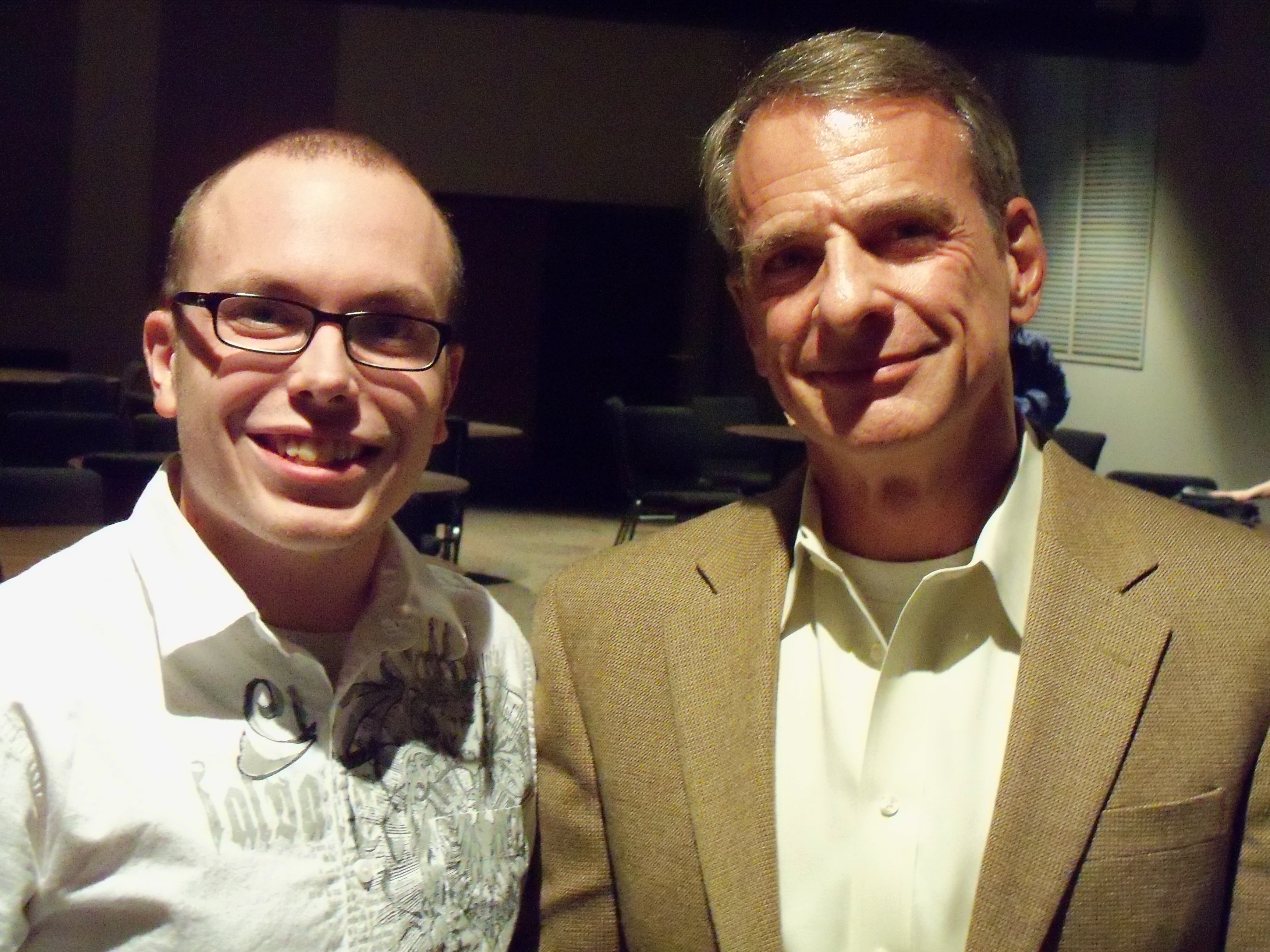 Over the past weekend, I was privileged to spend some time in Georgia (Atlanta area) at the seminar “God, Time, and Creation” with William Lane Craig (in picture next to me). It was part of a class of the same name for the Master of Arts Program with Biola University.
The seminar was a blast. I took approximately 25 pages of notes. Craig’s lecture notes comprised about 440 pages. Awesome!
The seminar focused on God’s relationship to time. Is God timeless, or temporal? Interestingly, Craig holds that God was timeless without creation and temporal subsequent to creation. His book, Time and Eternity, expands on the issues at great length.
First, Craig covered the arguments for and against a timeless God. It seems like a timeless God is not philosophically untenable, and the argument for a timeless God based upon the idea of the imperfection of a temporal life has some plausibility. Then, Craig went over the arguments for and against a temporal God.
After that, we covered the static (B-theory) of time–which holds that all of time and space is a kind of 4-dimensional block–and the dynamic (A-theory) of time–which holds that temporal becoming and passing away is real. It seems that the B-theory of time is, at best, extremely counterintuitive. If the B-theory is correct, our feeling of passing through time is illusory. Further, the theological problems with the view make it really implausible. If time is static, then the J.W. from three hours ago is literally a different entity than the J.W. now, because each is a different “slice” of a four-dimensional “block” of time. So, for example, it would seem as though the J.W. now could not be punished for the sins of a past J.W.–they are, in fact, different entities. Therefore, the doctrines of atonement, justification, sin, etc. seem to be at best vacuous. So a static theory of time, I think, is very implausible for the Christian to hold.
I’m reading through Paul Helm’s Eternal God: A Study of God without Time right now. He holds that God is timeless, and holds that time is static. I’m interested to see if he counters any of these theological issues.
Craig concluded that without creation, God is timeless–there is no change. But once God created, He underwent at least an extrinsic change, which Craig argues means God is temporal subsequent to creation.
This is one of the few areas I disagree with Craig on. I actually think it is more theologically plausible to hold that God is timeless, period. The main problem with this view is that many argue a timeless God entails a static theory of time. If I find on my further study into the area that this is the case, I may be forced to abandon the view that God is timeless. Therefore, I’m looking forward to delving into greater detail on this topic.
I’ve read Brian Leftow’s Time and Eternity and found it extremely interesting and thought-provoking. Craig is highly critical of Leftow’s view and charges that Leftow makes category mistakes throughout his work. As I said, I’m also reading Helm’s Eternal God, so I’ll see how that holds up. This is a very interesting topic which affects the core of study about the nature of God, how God relates to the world, divine providence, and many other areas. I’m excited to continue my research in this area.
On a side note, the Atlanta area is pretty awesome to visit! The weather was gorgeous. It isn’t that much fun driving there, however.
I visited a Christian Bookstore in the area–Lifeway Christian Bookstore–which had a huge sale on CDs. I couldn’t resist picking up some more Christian music (5$ cds!).
SDG.
———
The preceding post is the property of J.W. Wartick (apart from citations, which are the property of their respective owners) and should not be reproduced in part or in whole without the expressed consent of the author. All content on this site is the property of J.W. Wartick and is made available for individual and personal usage. If you cite from these documents, whether for personal or professional purposes, please give appropriate citation and provide a link to the original URL. By viewing any part of this site, you are agreeing to this usage policy.
Religious Pluralism: The Argument Assessed
 “If you were born in India, you’d probably be a Hindu.” “What of those sincere believers in other faiths, are you suggesting they are wrong?” “Jesus is just one of the many ways towards salvation/bliss/righteousness/etc.”
These are the types of “bumper sticker” quotes Christians often get in our pluralistic society. I’ll be focusing on only one of the many problems with views such as these:
The argument against theism from religious pluralism rests on the implicit assumption that all religions are equally veridical.
The religious pluralist (or the objector to religious belief) who uses arguments like these unjustifiably makes the assumption that all religions are on equal ground (epistemically–on equal footing in the realm of knowledge). That this assumption is made is fairly evident, but we can illustrate it with a thought experiment (ignore some of the disanalogies–this is for example only):
Suppose Bob believes that he is reading a book, An Introduction to Philosophy. Now, suppose Steve else comes along and says “You can’t be sure that you’re right in your belief that you are reading An Introduction to Philosophy–after all, there are billions of people who read books which are not An Introduction to Philosophy. And they think they know what they are reading. How can you be sure that you are reading An Introduction to Philosophy? You may be reading a book on psychology, or a novel!”
Bob responds by saying, “Well, I can look at the cover and see the title. I can open it up and see the ISBN and confirm by searching for the ISBN online that it is only tied to An Introduction to Philosophy. The contents certainly seem as though they would match a book of that title. Also, I know the authors name is Jane Doe and this is the only book she’s ever written.”
The key point is that Bob has some very good reasons for thinking that he is reading An Introduction to Philosophy. Steve’s objection assumed that there was no way to determine what book Bob was reading.
Religious pluralists often do the same thing. They ask “How can you know you are right?” or “How do you know yours is the only true religion?” The assumption seems to be that there are no criteria for determining whether one religion is to be favored over another (again, using these terms in an epistemic sense–the sense having to do with knowledge). SO, let’s revisit the scenario:
Bob is sitting contemplating the universe. He’s a Christian, and Steve knows it. Steve comes along and says “Bob, how do you know you’re right? The Hindu, the Buddhist, and the Muslim all think they are just as right as you.”
Bob responds, “Well, I think there are very good reasons to think Christianity is true. There are cosmological, teleogical, and ontological arguments which I believe are quite successful. If they are successful, Buddhism and Hinduism are wrong. And I think the Gospels are quite reliable due to the standard historical criteria such as the principle of embarrassment and multiple attestation. But if the Gospels are reliable (and Jesus died and rose again), then Islam is wrong too. So I don’t think those other religions are on equal footing with my own faith. Christianity seems to me to have the most explanatory power.”
The assumption that all religions are on equal footing seems patently false. Why should we think that Hinduism = Buddhism = Islam = Christianity = Jainism (etc.) when it comes to whether or not we can evaluate their truth? The religious pluralist simply assumes we cannot. However, in light of the evidence for Christianity, it seems the world religions are not all on equal epistemic ground.
Finally, the pluralist objection assumes that it is, itself, on a higher epistemic ground than its rivals. The pluralist believes that, while all religions are equally veridical, pluralism itself is true. Yet pluralism’s truth entails the falsehood of large portions of theistic, pantheistic, and atheistic belief. Pluralism must chop away the incompatible components in the world’s religions in order to make way for a distorted view of reality. What reason do we have for holding on to pluralism when we have much better reasons to think Christianity is true?
SDG
———
The preceding post is the property of J.W. Wartick (apart from citations, which are the property of their respective owners) and should not be reproduced in part or in whole without the expressed consent of the author. All content on this site is the property of J.W. Wartick and is made available for individual and personal usage. If you cite from these documents, whether for personal or professional purposes, please give appropriate citation and provide a link to the original URL. By viewing any part of this site, you are agreeing to this usage policy.
Book Review: Is There a God? by Richard Swinburne
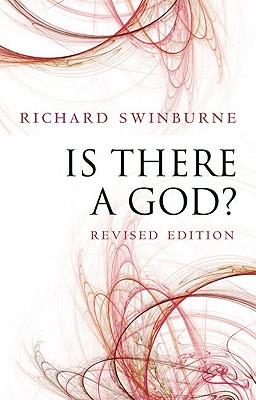 The purpose of Is There a God?
ITG starts off with a chapter aptly titled “God.” In this chapter (modeled after his longer work, The Coherence of Theism), Swinburne outlines the properties and concept of God. It should be noted that Swinburne’s view of God differs from classical theism in two major ways. First, Swinburne’s conception of God does not involve knowledge of the future. His reasoning is that it is logically impossible to know that which does not yet exist (the future), so God is omniscient, but does not know the future. Going into great detail for an argument against that notion would take me too far away from this review, but suffice to say that I find the argument wrong for at least two reasons: 1) There are many coherent ways to envision the future as possible knowledge; 2) A timeless view of God would definitely entail foreknowledge, because all time would be equally present to such a deity. Second, Swinburne’s view of God differs in that he believes God’s existence is contingent, not necessary (he does believe that God is necessary in the sense that his existence does not cease–the necessity/contingence is the difference between modern and Aristotelian contingency–thanks to Tim McGrew and Chris Reese for pointing this out). Again, I disagree, but I find Swinburne’s view coherent.
Swinburne then turns in chapter two to the nature of explanation and argues that we often take personal explanations as valid even within scientific inquiry. Further, he puts much weight upon the simplicity of a theory, which leads into his third chapter, which argues for the simplicity of theism as an explanation for much of our known data. These chapters sum up his work in The Existence of God.
Swinburne then turns to other arguments for the existence of God, such as the cosmological argument and the teleological argument. In chapter 6, he provides a theodicy–an explanation of evil on theism. While I’ve read some pretty harsh critiques of Swinburne’s view on the problem of evil in the past, I found his argument here very compelling, personal, and interesting. His argument is largely a “greater good” type of argument–evils allow for things like heroism–but it is the most compelling version of such a theodicy I have read. I’m still not sure about whether I would incorporate this argument into my own apologetic, but I find Swinburne’s account compelling. (More on this topic can be found in his Providence and the Problem of Evil.)
The last chapter of ITG deals with Swinburne’s discussion of miracles and the argument from religious experience. Swinburne has been hugely influential in the field of arguing for the existence of God from religious experience, and this chapter sums up his argument. He argues that “we ought to believe that things are as they seem to be (in the epistemic sense) unless and until we have evidence that we are mistaken” (115). He then goes on to apply this to theistic experiences and concludes that “the overwhelming testimony of so many millions of people to occasional experiences of God must… be taken as tipping the balance of evidence decisively in favor of the existence of God” (120). (Swinburne’s arguments here are developed in his book, The Existence of God.)
I find two downsides to ITG. First, the concise nature of the work means that those interested in his arguments will need to go beyond the book to fully explore the issues. However, this is barely a downside because that is exactly what the book is meant to be: an introduction.
The second is that Swinburne doesn’t offer a very comprehensive “Guide to Further Reading” in his chapter of the same title. For example, about the question for the existence of God, Swinburne only offers two books arguing against God’s existence for further reading. Furthermore, the two books he suggests are heavy philosophical texts not at all comparable to ITG. I would have liked to see Swinburne offer some suggestions for equally philosophical explorations on the positive side of the theistic question. (I recommend the Blackwell Companion to Natural Theology edited by William Lane Craig and J.P. Moreland and God and Necessity by Stephen Parrish as two “heavier” books on the side of theism.)
Richard Swinburne’s Is There a God?
———
The preceding post is the property of J.W. Wartick (apart from citations, which are the property of their respective owners) and should not be reproduced in part or in whole without the expressed consent of the author. All content on this site is the property of J.W. Wartick and is made available for individual and personal usage. If you cite from these documents, whether for personal or professional purposes, please give appropriate citation and provide a link to the original URL. By viewing any part of this site, you are agreeing to this usage policy.
The Case for Christianity in 15 Minutes (or less)
 Recently, the need for defending Christianity in a short time period has come to light. I was in a discussion with some acquaintances and was asked to outline why I believe what I believe, but we were on a time crunch so I only had about 15 minutes. Thankfully, I have had access to some wonderful resources that allowed me to memorize some quick, but useful arguments.
This post is intended to provide other Christians with a case for their beliefs that they can memorize and share with others. Note that the study cannot stop here. Most people will not be convinced by the basics outlined here. The goal of this post is to provide a springboard for discussion and keep people engaged in the idea that God exists and Jesus is Lord. Each section is intended to flow directly into the next. I encourage my fellow Christians to memorize a “case for faith” in a manner like this, so they may be prepared with a reason for the hope within them (1 Peter 3:15).
The arguments are necessarily short and simple due to time constraints, but they offer a short defense that will, hopefully, spur further conversation (again, don’t forget to do more research!). Greg Koukl says we don’t need to convince someone right away–we just need to “put a rock in their shoe” so that we can keep the discussion going later. As always, the most effective apologetic is a prayerful, Christ-reflecting life. May the Holy Spirit guide you all.
1. God Exists (7 minutes)
There are many reasons to believe God exists, let me share a few:
Kalam Cosmological Argument
1) Everything that began to exist has a cause
2) The universe Began to exist
3) Therefore the universe has a cause.
It seems intuitively obvious that 1) is true. Things don’t just pop into and out of existence. 2) follows from modern scientific discoveries like the Big Bang, which implies a single cosmological beginning. 3) follows via modus ponens (the most basic form of argument) from 1 and 2. This argument shows a transcendent cause of the universe. The cause must also be personal because [it] brought the universe into existence at some point, which requires a choice. Choices can only be made by persons, so this entity is personal. (See William Lane Craig in “On Guard”, linked below, for more.)
[For more reading on the Kalam Cosmological Argument see my posts linked below.]
The Moral Argument
4) If there are objective moral values, then God exists
5) There are objective moral values
6) Therefore, God exists.
“Objective moral values” here means that moral values are true regardless of what anyone thinks. For example, “murder is wrong” would be wrong even if every single human being thought murder was the way to achieve greatest happiness and encouraged it as an extracurricular activity for teenagers. But the only way to hold that objective moral values exist is to grant God’s existence, because objective laws require an objective lawgiver.
Without God, however, morals reduce to “I don’t like that.” It seems ludicrous to believe that murder is wrong just because we don’t like it. It is something actually wrong about murder that makes it wrong. That which makes it wrong is, again, the commands of the Lawgiver: God. People have a sense of moral objectivity built into them, which also suggests both the existence of objective morals and a God who created in us this conscience. (See Craig “On Guard” and C.S. Lewis, “Mere Christianity”.)
2. Christianity is Unique (3 minutes)
Religions are not all the same:
1) Many religions have contradictory truth claims. (Some forms of Buddhism say: There is no God; Christianity argues: There is a God; Hinduism states: there are many gods)
2) Even among theistic religions, there are contradictory claims (Christianity: Jesus is God; Judaism: Jesus is not God; Islam: Mohammed is prophet; Christianity: Mohammed is not a prophet; Judaism: Mohammed is not a prophet; Islam: Jesus is not God; etc.).
3) The Law of Noncontradiction (actual contradictions like “square circles” or “married bachelors” cannot exist and are not real) shows us that therefore, these religions cannot all be true.
4) Christianity is unique in that its central religious claim is a historical one: that the person Jesus Christ died and rose again from the dead. This is a historical event which can be investigated just like any other historical event. Yet exploration of this event leads to the conclusion that…
3. Jesus is God (5 minutes)
1) The Gospels are reliable. They demonstrate many criteria for historical truth: multiple attestation (four Gospels telling the same story, but with enough significant differences to demonstrate they didn’t copy off each other), principle of embarrassment (the authors of the Gospels included details which would be embarrassing either to themselves or culturally, such as the fact that women were the first witnesses to the risen Christ in a culture in which women were not trusted), the writers died for their belief in the historical events (while many religious believers die for their beliefs, it seems unfathomable that the Christian Gospel writers would willingly die gruesome deaths for things they made up–which is what alternative theories argue), etc. (See Strobel, “Case for Christ”)
2) Jesus made divine claims “I and the Father are one” John 10:30; “Before Abraham was, I am” John 8:58; etc.
3) The miracle of the resurrection is God’s confirmation of Jesus’ divine claims. If the Gospels are reliable (per 1), then Jesus is divine.
Conclusions
There is good evidence to think that God exists. There are even other arguments that could be presented, such as the teleological, ontological, transcendental, argument from religious experience, and more. We can also see that not all religions can be true. Furthermore, there are good reasons to think the Gospels are reliable and that Jesus claimed to be God and had His claims authenticated by God Himself in Jesus’ resurrection.
Remember, this is not even close to a full defense of Christianity. It is simply a condensed, easy to remember defense designed to be ready at a moment’s notice for when the Holy Spirit leads people into our paths. We need to do more research, offer more arguments, and continue to witness as the Holy Spirit works through our testimony. This defense is by no means a total apologetic; it is meant only as an introduction to spur further conversation. Always have a reason.
Later Edit:
Some have objected to this post on various grounds, most of which are reducible to my arguments not being developed enough. I emphasize once more, this is supposed to be used for a 15-minute defense of the faith, not an entire survey of the field. See my links for more reading, and continue to investigate for yourself.
Further Reading
If you are interested in further reading on these topics, I suggest:
1) On my site, check out the posts on the existence of God: here. Specifically, for the Kalam Cosmological argument:
The Kalam Cosmological Argument
Dawkins and Oppy vs. Theism: Defending the Kalam Cosmological Argument
“The Multiverse Created Itself” and “Who made God after all?”- The Kalam Cosmological Argument
The Leibnizian Cosmological Argument (not developed in this post).
2) On Guard
3) The Case for Christ
4) Mere Christianity
———
The preceding post is the property of J.W. Wartick (apart from citations, which are the property of their respective owners) and should not be reproduced in part or in whole without the expressed consent of the author. All content on this site is the property of J.W. Wartick and is made available for individual and personal usage. If you cite from these documents, whether for personal or professional purposes, please give appropriate citation and provide a link to the original URL. By viewing any part of this site, you are agreeing to this usage policy.
Book Review: New Proofs for the Existence of God by Robert Spitzer
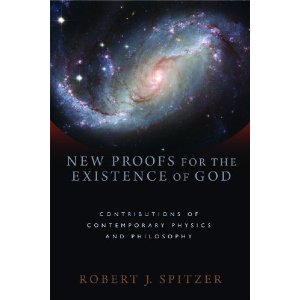
Robert Spitzer’s New Proofs for the Existence of God (hereafter NPEG) presents in rigorous detail, five arguments for the existence of God, a section discussing the plausibility of multiverse/string universe scenarios, and some philosophical discussion on methodology.
Before continuing the review, I should note that the “New” in NPEG is nuanced. Spitzer notes this himself (my guess is that it was a marketing technique. “New” refers to the evidence from cosmology and further research in philosophy which lend new power for these arguments.
Chapter 1 presents a cosmological argument. Spitzer cogently argues that “(1) If there is a reasonable likelihood of a beginning of the universe… and (2) if it is apriori true that ‘from nothing, only nothing comes,’ then it is reasonably likely that the universe came from something which is not physical reality” (Spitzer, 45). This conclusion is supported by explorations of current cosmological theories about the origins of the universe.
Chapter 2 presents the teleological argument, which Spitzer bases on the universal constants. The argument leads to the conclusion that “the odds against an anthropic condition occurring are astronomically high, making any life form… exceedingly improbable.” It is a probabilistic argument, the likes of which I defend in my article Past, Probability, and Teleology (Hope’s Reason 2011-1).
Following chapter 2 is a chapter which discusses the possibilities of inflationary cosmology and the string multiverse written by Bruce Gordon. It is extremely technical and will provide readers with cogent arguments against the possibility of a multiverse scenario circumventing the previous arguments.
Chapter 3 presents Spitzer’s metaphysical argument for the existence of God, which is full of sound argumentation along with some interesting Thomistic Philosophy wherein he discusses God’s simplicity in the most coherent way I have read. I greatly encourage readers to look into this chapter, if only for the discussion of this oft-neglected doctrine.
Spitzer follows this with Chapter 4’s metaphysical argument derived from Bernard Lonergan’s Insight, which is a subtle version of the argument from reason. This chapter was particularly good because it focuses on a little-used type of arguments for the existence of God–that if our universe is intelligible, that can only be explained by God’s existence.
Chapter 5 is an argument from contingency similar to the Leibnizian cosmological argument.
Chapter 6 engages the question of method in philosophy along with whether atheism is actually rational. I was intially put off by the title of this chapter (“Methodological Considerations and the Impossibility of Disproving God”), but happened throughout the book, I was pleasantly surprised by the rigorous arguments and enlightening conclusions Spitzer laid out.
Finally, the last two chapters outline some more considerations about the universe and the relation of humans and God.
NPEG was a surprising read for me. I went in with neutral expectations, and those were blown away. Spitzer’s knowledge of the topics in the work runs deep, and his writing style is clear and cohesive. It is genuinely exciting to read. Readers will be challenged by the arguments for the existence of God, and engaged in the details and philosophical explanations of these arguments. I highly recommend this work to those interested in advanced books on arguments for God’s existence.
——
The preceding post is the property of J.W. Wartick (apart from citations, which are the property of their respective owners) and should not be reproduced in part or in whole without the expressed consent of the author. All content on this site is the property of J.W. Wartick and is made available for individual and personal usage. If you cite from these documents, whether for personal or professional purposes, please give appropriate citation and provide a link to the original URL. By viewing any part of this site, you are agreeing to this usage policy.
The Ontological Argument: Question Begging?
 Is the ontological argument question begging? Short answer: some versions yes, others, no. For the long answer, read on:
Many versions of the ontological argument appear to beg the question. The Anselmian version of the argument seems invalid, but there are other formulations of it which avoid its invalidity (cf. Maydole’s chapter on the Ontological Argument in The Blackwell Companion to Natural Theology, eds. Craig + Moreland, 553ff). Then, Alvin Plantinga came along and introduced the modal ontological argument, which relies on S5 modal logic. I have discussed Plantinga’s argument elsewhere, as well as demonstrated its validity.
Therefore, we will focus on a new considerations. Consider the following very simple version of the modal ontological argument:
1) Possibly, God necessarily exists
2) Therefore, God necessarily exists
The argument seems, at first face, to be a very strange argument. However, the argument does not beg the question when viewed through modal logic. 1) does follow from 2) in a non-tautological way, but 1) must be established.
Symbolically, the argument is written as the following (Take “T” to be “God exists”):
1) ◊□T
2) □T
S5 modal logic is based upon this very axiom. Namely, ◊□x⊃□x or ◊□x iff □x (Hughes & Cressewell, A New Introduction to Modal Logic, 58). For in modal logic:
3) that which is “possible” exists in “some possible world.”
4) That which is necessary exists in all possible worlds
Therefore, if something is possibly necessary, then it must obtain in some possible world (3). however, if it is necessary, then it exists in all possible worlds (4). Therefore, if something is possibly (exists in some possible world) necessary (exists in all possible worlds), then it exists in all possible worlds.
Is this argument question begging? If it is, then it is not obviously so. Alexander Pruss has argued out that the argument is question begging only if it is directed at one who does not understand that 1) entails 2) (Pruss, The Principle of Sufficient Reason, 232). I’m not convinced that this is correct. Soundness of arguments don’t depend upon whether people understand them–they depend on whether they are valid or true. However, it seems Pruss has an intuitive point here, in that even if this argument isn’t question begging, it appears to be.
How might the theist respond? Well, Pruss argues that if the theist argues for the establishment of S5, then it is no longer question begging (232). Alvin Plantinga does just that in God, Freedom, and Evil, as Pruss points out. We’ve already established elsewhere that Plantinga’s argument doesn’t beg the question regardless (see here), but this symbolic proof is bolstered by providing an argument for S5.
Then, it seems to be the case that if S5 modality is valid, God necessarily exists.
Are there versions of the ontological argument that resist this reduction to the “simplistic” version offered here? Yes, there are. For example, Stephen Parrish’s ontological argument:
5) The concept of the GPB (Greatest Possible Being) is coherent (and thus broadly logically possible)
6) Necessarily, a being who is the GPB is necessarily existent, and would have (at least) omnipotence, omniscience, and moral perfection essentially.
7) If the concept of the GPB is coherent, then it exists in all possible worlds.
8 ) But if it exists in all possible worlds, then it exists in the actual world.
9) The GPB exists (Parrish, God and Necessity, 82)
This argument may initially seem to be susceptible to the same reduction, but it can avoid this reduction by lengthening it to:
10) the GPB is coherent (and logically possible)
11) the GPB’s coherence entails modal possibility
12) the GPB is necessary
13) modally, if something is possibly necessary, then it is necessary
14) the GPB exists necessarily
The key premise here is 10), because if it is true, then the rest of the argument follows necessarily. What reasons do we have for thinking 10) is true? Such a debate is beyond the scope of this post (good discussions can be found throughout theistic philosophy of religion–see, in particular, Craig and Moreland, Philosophical Foundations for a Christian Worldview and Swinburne, The Coherence of Theism; see also my brief discussion in the post on the argument here); but it seems to me that there is no incoherence in the concept. If that is the case, then I am justified in holding 14).
Therefore, it seems the modal ontological argument is not question begging, particularly if one argues first for the validity of S5 modality. Furthermore, there are other modal arguments which don’t rely on a reduction to a simple modal argument. For example, Parrish’s ontological argument relies instead upon the coherence of the GPB. Such arguments are successful if arguments against the GPB’s coherence are shown to be unsuccessful. In either case, God exists.
Ergo deus est.
SDG.
Sources:
Maydole, Robert E. “The Ontological Argument.” The Blackwell Companion to Natural Theology. Edited William Lane Craig and J.P. Moreland. Blackwell, 2009.
Parrish, Stephen E. God and Necessity. University Press of America. 1997.
Pruss, Alexander. The Principle of Sufficient Reason. Cambridge. 2006.
——
The preceding post is the property of J.W. Wartick (apart from citations, which are the property of their respective owners) and should not be reproduced in part or in whole without the expressed consent of the author. All content on this site is the property of J.W. Wartick and is made available for individual and personal usage. If you cite from these documents, whether for personal or professional purposes, please give appropriate citation and provide a link to the original URL. By viewing any part of this site, you are agreeing to this usage policy.
Atheism’s Universe is Meaningless and Valueless
 “‘Meaningless! Meaningless!’
says the Teacher.
‘Utterly meaningless!
Everything is meaningless.'” – Ecclesiastes 1:2
My most recent post on the problem of evil granting empirical atheism generated some thoughtful discussion. Most importantly, it lead me to the following argument:
1) On materialistic [I use materialism and physicalism interchangeably, as is common in philosophy today] atheism, all we are is matter in motion.
2) There is no objective reason to value matter moving in way A over matter moving in way B
3) Therefore, on materialistic atheism, there is no value or meaning
Premise 1 seems self-evident. Materialistic atheism, by definition, says that “everything is physical, or as contemporary philosophers sometimes put it, that everything supervenes on, or is necessitated by, the physical” (Stanford Encyclopedia of Philosophy). The physical world is matter.
Premise 2 also seems like it should need little defense, yet atheists continually come up with ideas to try to get around it. For example, one may argue that the subjective suffering of persons should matter. Yet I fail to see how this argument succeeds. Pain and suffering, on materialism, at most supervenes upon neurons firing in the brain (along with chemical reactions and other physical phenomenon). My question for the materialist is: What reason can be provided for favoring matter moving in way A (call it, the way neurons fire when someone is in a state of bliss) over matter moving in way B (neurons firing in the way which causes pain)?
One answer which may be forthcoming is that creatures and persons tend to try to get away from things which cause B. This argument fails to provide an answer to the question, because all it does is push the question back to a higher level. It would change to: Why should we favor physical observable phenomenon which don’t cause avoidance over those that do? Again, the avoidance of B would simply be matter moving in a different way. In order to make a judgment between them, one would have to reach beyond the material world and into the world of objective meaning and value; this is, necessarily, a world which is nonexistent on materialism. Even if one could provide an answer to this second question, say “We tend to not like B. Things we don’t like are bad”, then we would have a purely subjective reality. What of the serial killer who delights in torturing himself, causing things to B? What reason do we have for saying what he is doing is wrong, because, after all, he likes B?
Ultimately, on materialism, everything boils down to matter in motion. Making value judgments about matter in motion is meaningless.
But if everything is matter in motion, then there doesn’t seem to be any way to make value judgments. How does one value a rock over a stick? They’re both just stuff. But then, on materialism, people are just stuff too; albeit more complex. However, if you were to break us down into our ultimately realities, we are no different than the rock. We are matter organized in a different way. Why value us?
There is no objective reason to do so. Therefore, there is no objective meaning or value. Life is purposeless, meaningless, valueless. Atheistic materialism demands this bleak view of the universe. I’m not saying it’s a good reason to abandon that [un]belief. I’m merely saying that those who hold such a view must be consistent.
“Now all has been heard;
here is the conclusion of the matter:
Fear God and keep his commandments,
for this is the duty of all mankind.
For God will bring every deed into judgment,
including every hidden thing,
whether it is good or evil.” -Ecclesiastes 12:13-14
[In the comments, I have suggested that on materialism, there is no such thing as a subject. The claim has proven highly contentious, so I have created a post to clarify my position: https://jwwartick.com/2011/12/05/subjects-materialism/.]
Check out my post on the Ontology of Morality: Some Problems for Humanists and their friends
SDG
——
The preceding post is the property of J.W. Wartick (apart from citations, which are the property of their respective owners) and should not be reproduced in part or in whole without the expressed consent of the author. All content on this site is the property of J.W. Wartick and is made available for individual and personal usage. If you cite from these documents, whether for personal or professional purposes, please give appropriate citation and provide a link to the original URL. By viewing any part of this site, you are agreeing to this usage policy.

 J.W. Wartick - Reconstructing Faith