theology
Sunday Quote!- On Theological Controversies from John Newton
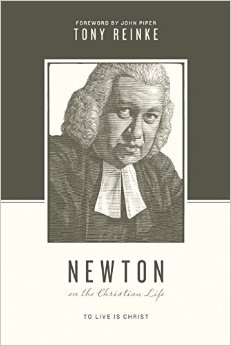
Every Sunday, I will share a quote from something I’ve been reading. The hope is for you, dear reader, to share your thoughts on the quote and related issues and perhaps pick up some reading material along the way!
On Theological Controversies- From John Newton
I recently finished reading Newton on the Christian Life (see my review here), a book about John Newton’s pastoral theology. John Newton worked on slave ships but after his conversion worked to help end slavery in the British Empire. His pastoral theology had great depth, as evidenced in this quote on theological controversies, published in a newspaper during a particularly bitter debate between Arminians and Calvinists:
[B]efore you engage in debate, you must take heed of your opponent. He is an eternal creature. If he is not a Christian… he warrants your deepest pity, kindness, and prayers… If, however, your theological opponent is a genuine Christian, think about your future together in heaven.” (Kindle Location 5460, cited below)
Think about that for a moment. Your “debate opponent” will be together with you in heaven forever. This isn’t someone you can hide comfortably from behind a keyboard. You’ll meet one way or another. How do you think you should treat this child of God?
But that’s not all. Newton’s advice applies even moreso if the debate is against someone who is not a Christian, for they “warrant… your deepest pity, kindness, and prayers.” What kind of Christians are we if our theological debates drive people away from Christ (another theme in Newton’s pastoral theology)?
We should keep in mind Newton’s advice as we engage others; all of whom bear the image of God.
Links
Be sure to check out the page for this site on Facebook and Twitter for discussion of posts, links to other pages of interest, random talk about theology/philosophy/apologetics/movies and more!
Sunday Quote– If you want to read more Sunday Quotes and join the discussion, check them out! (Scroll down for more)
Source
Tony Reinke, Newton on the Christian Life (Downers Grove, IL: Crossway, 2015).
SDG.
Book Review: “Bavinck on the Christian Life” by John Bolt
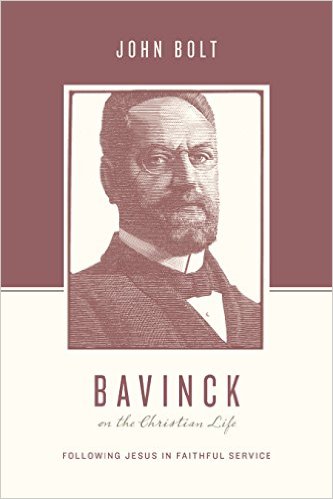
Bavinck on the Christian Life is another entry in the “Theologians on the Christian Life” series from Crossway. Check out my other reviews in the series.
The chapter on union with Christ is particularly insightful. Bolt draws out Bavinck’s insights into Christology, which include going beyond redemption and looking to eschatology and creation as important aspects of Christology as well. Union with Christ is explored from various angles, including penetrating looks at deism and pantheism alongside an examination of the Orthodox doctrine of theosis. This latter portion is particularly interesting both because it allows for some evangelical-Orthodox dialogue and because it clarifies some important distinctions Orthodox distinctions make that allow them to avoid pantheism or panentheism in regards to divinization.
I also appreciated the extensive biographical background to set the stage for Bavinck’s theology by showing how he interacted with the controversies of his time. The overview provided herein of Bavinck’s thought is also insightful. He was thoroughly Calvinist. His view of the world was tied up in Trinitarianism, and he grounded not only his view of reality but also of various aspects of reality in the Trinity. An important insight from Bavinck is the way in which work is part of the human vocation and living out of the image of God. As a Lutheran I particularly enjoyed the emphasis on work as being part of God’s plan for humanity.
One criticism I have is that the author seemed to have a bit of a political axe to grind. In chapter 3, for example, welfare is mentioned at least twice and referenced off hand a third time. Bolt seems keen to point out that Christians can differ on this subject, writing at one point “The Bible is quite clear about the responsibility of God’s children to help those who are poor and needy. Whether or not this commitment to the poor demands support for higher taxes and greater government welfare is quite another matter” (Kindle location 1211-1221). The 10th chapter of the book returns to this issue and places it in Bavinck’s own context with debates over the social gospel and the meaning of the Kingdom (see especially Kindle location 4300 and following). This at least places the whole discussion in Bavinck’s own day.
Yet, remarkably, Bavinck’s response to social inequality seems, according to Bolt, to simply shift the problem elsewhere. Bavinck casts inequality and social injustice squarely into the realm of divine sovereignty: “God’s preordaining was the final, most profound cause of all differences among creatures… It is neither the free will of man, nor merit and worth, nor culture or even nature that is the source… but God’s almighty and all-powerful will…” (4540). I’m not saying this is inherently mistaken. What I’m saying is this doesn’t even begin to answer the question raised: how should we deal with injustice? Sure, a Calvinist would argue that all that happens is sovereingly decreed by God, but how does just saying that in any way answer the preceding question? It just moves it up a (or several) level(s).
Bavinck was also someone who “ascribe[d] to women a primary calling in the home, and he point[ed] to human history, as well as the narratives and laws of the Old Testament, as evidence for a patriarchal structure of human society” (Kindle location 3001). Yet, he also argued that no man is complete without some aspects of femininity and no woman is complete without some aspects of masculinity. How that plays out is largely left up for interpretation, though Bolt argues that this demonstrates that although Bavinck would align with “complementarianism”–the view that men and women have different roles in church and home–he would not ascribe to some of the “will-to-power, macho masculinity and eroticized or subservient, passive femininity” (Kindle loc 3076). Bavinck also challenged some of the patriarchal views of his own society. One way he did this was supporting women’s suffrage. These are admirable qualities He emphasized the role of children and family as the calling of humanity, but one wonders what this might say to those who remain single or childless.
A final, though minor, critique is that there are many portions of the book in which the overall outline of the book is walked back through, or references are made to previous chapters alongside a brief description of why such a reference is relevant in context. It’s a minor thing to point out, but it was distracting at points and gave an impression that the book wasn’t always organized logically.
Bavinck on the Christian Life provides perspective on Bavinck’s thought, life, and context. It isn’t quite as polished as the other books in the series, but it remains a worthy read.
The Good
+Interesting insight into the theological context of Bavinck’s day
+Good cautionary words on worldview analysis
The Bad
-At some points too concerned with modern controversies
-Too many words spent explaining why the book was organized in the fashion it was
-Expresses commitment to “patriarchy”
Disclaimer: I was provided with a review copy of the book from the publisher. I was not asked to give any specific kind of feedback whatsoever.
Links
Be sure to check out the page for this site on Facebook and Twitter for discussion of posts, links to other pages of interest, random talk about theology/philosophy/apologetics/movies and more!
Book Reviews– There are plenty more book reviews to read! Read like crazy! (Scroll down for more, and click at bottom for even more!)
Source
John Bolt, Bavinck on the Christian Life (Wheaton, IL: Crossway, 2015).
SDG.
——
The preceding post is the property of J.W. Wartick (apart from quotations, which are the property of their respective owners, and works of art as credited; images are often freely available to the public and J.W. Wartick makes no claims of owning rights to the images unless he makes that explicit) and should not be reproduced in part or in whole without the expressed consent of the author. All content on this site is the property of J.W. Wartick and is made available for individual and personal usage. If you cite from these documents, whether for personal or professional purposes, please give appropriate citation with both the name of the author (J.W. Wartick) and a link to the original URL. If you’d like to repost a post, you may do so, provided you show less than half of the original post on your own site and link to the original post for the rest. You must also appropriately cite the post as noted above. This blog is protected by Creative Commons licensing. By viewing any part of this site, you are agreeing to this usage policy.
“The Sojourner in your Land” – A Christian perspective on immigration and refugees

A Public Domain image of Syrian Refugees. Accessible: https://commons.wikimedia.org/wiki/File:Syrian_refugee_of_the_Syrian_civil_war.jpg
The issue of immigration has been turned into a political meme. Refugees flee from Syria and other nations in the wake of violence. There are some who treat the plight of the refugee and immigrant, however, as a blight to be extinguished. What does the Bible have to tell us about these issues? A great deal. Here I will briefly draw out a few ways the Bible discusses these topics.
All Humans Share Equal Dignity
The Bible makes it extremely clear that all humans share the image of God (Genesis 2), and that the divisions we make of nation and race have no place in the body of Christ (Galatians 3:28).
The Sojourner in Your Land
The Old Testament has much to say regarding sojourners or exiles. There is no comment about the legality of the sojourner or exile, but rather the focus is on the plight of those who flee from their own lands.
“When a stranger sojourns with you in your land, you shall not do him wrong. You shall treat the stranger who sojourns with you as the native among you, and you shall love him as yourself, for you were strangers in the land of Egypt: I am the Lord your God.” – Leviticus 19:33-34 (ESV)
The argument might be made that these are specific commands to a specific people: the Israelites. After all, we read the reasoning: for you were strangers in the land of Egypt. We were never in Egypt! we might cry. The teaching, however, seems to be binding and universal.To point out that the latter part does not apply to Christians is like the teachers of the Law saying they were slaves to no one, despite being Abraham’s descendants (John 8:33).
Moreover, when we consider a verse like Exodus 22:21- ““You shall not wrong a sojourner or oppress him, for you were sojourners in the land of Egypt” (ESV), we note that the reasoning provided is not necessary for the command. You shall not wrong or oppress a sojourner; next clause: here’s a reason why. But the command itself stands whether or not the reason given directly applies to us or not. Of course, even if you don’t buy into this reasoning, there are plenty of verses that simply command us to care for the sojourner.
Malachi 3:5 states “Then I will draw near to you for judgment. I will be a swift witness against the sorcerers, against the adulterers, against those who swear falsely, against those who oppress the hired worker in his wages, the widow and the fatherless, against those who thrust aside the sojourner, and do not fear me, says the Lord of hosts.”
God issues dire warnings “against those who thrust aside the sojourner.”
The letter to the Hebrews applies this from a New Testament perspective: “Do not neglect to show hospitality to strangers, for thereby some have entertained angels unawares.” (13:2).
Commands to help the needy and poor are found throughout Scripture, such as in Proverbs: “Open your mouth for the mute, for the rights of all who are destitute. Open your mouth, judge righteously, defend the rights of the poor and needy.” (31:8-9)
It would be difficult to discount that “illegal immigrants” are often among the poor and needy, or that refugees could not be counted among that number.
Hope for all nations is preached throughout the Bible, calling people from all directions to God.
An Eschatological Perspective
Christians are told by Peter that we are all exiles in this world (1 Peter 2:11). We are in this world, and not of it. Such verses speaking of the nature of Christians as exiles on earth tie the thread, and bring us full circle. The reasoning that applied to the Israelites because they were sojourners in Egypt applies to us, because we are sojourners on Earth. Care for the poor and needy, do not turn aside the sojourner, for we are exiles as they are.
Drawing Conclusions
Christians have no wiggle room: the plight of the sojourner, the refugee, and/or the exile are not to be ignored. We are to care for them as we would be cared for. How exactly does this play out in a practical fashion? That is up for some debate. However, any perspective cannot be called Christian which ignores the Bible’s clear teaching and command to care for others.
It is also clear that there is nowhere in the Bible where provisions are made for some of the arguments commonly used in the political sphere. For example, there is no exception stating that if people do not want to pay higher taxes, they are allowed to turn aside the sojourner. Neither does it prescribe a specific system for providing assistance, or say that a specific form of government should be established to do so. One thing that is excluded explicitly would be any demeaning of others made in the image of God. One thing that is required is that we do care for those in need.
We are called to help the sojourner. Whether that is the refugee from Syria, the young neighbor boy who ran away from an abusive home, or an “illegal” seeking to escape from systemic poverty: no exceptions are made. We as Christians should remember that we, too, are exiles seeking scraps from the Master’s table.
Grace and peace.
Links
Be sure to check out the page for this site on Facebook and Twitter for discussion of posts, links to other pages of interest, random talk about theology/philosophy/apologetics/movies and more!
SDG.
——
The preceding post is the property of J.W. Wartick (apart from quotations, which are the property of their respective owners, and works of art as credited; images are often freely available to the public and J.W. Wartick makes no claims of owning rights to the images unless he makes that explicit) and should not be reproduced in part or in whole without the expressed consent of the author. All content on this site is the property of J.W. Wartick and is made available for individual and personal usage. If you cite from these documents, whether for personal or professional purposes, please give appropriate citation with both the name of the author (J.W. Wartick) and a link to the original URL. If you’d like to repost a post, you may do so, provided you show less than half of the original post on your own site and link to the original post for the rest. You must also appropriately cite the post as noted above. This blog is protected by Creative Commons licensing. By viewing any part of this site, you are agreeing to this usage policy.
Book Review: “Theology as Retrieval” by W. David Buschart and Kent D. Eilers
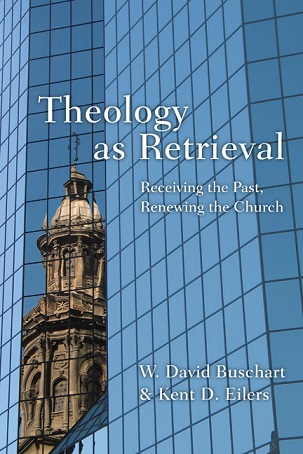
Theology as Retrieval is an exploration of how theologians might look to the past to gain applicable insights into today’s challenges. It is more than that, though. There are several specific aspects of theological retrieval that are addressed in the book from a variety of angles.
After a robust introduction that outlines what is meant by retrieval of theology and the different ways this is being brought about, there are individual chapters on various topics around which retrieval is centering. These are scripture, theology (broadly), worship, spirituality, mission(s), and cosmos. Each chapter has a question that is being addressed by many of the projects, examples of how retrieval is taking place in this specific area, and some of the results of retrieval in that field.
For example, the chapter on worship asks the question “Whose House is This?” Then, it traces various responses to the question, whether various Protestant positions or a Roman Catholic perspective. Next, specific examples of how churches went about creating worship spaces alongside their own explorations of Christian thought from the past about the place of worship. Finally, a few concluding remarks are offered about how retrieval is being done in the area of worship.
The layout thus allows for readers to pick and choose sections to read while continuing to gain different insights into how retrieval is being done. I found the chapters on worship and spirituality to be particularly enlightening. Buschart and Eilers offer not only examples of retrieval but also serve these up almost as morsels to whet the appetite for more. Throughout the book, there is a sense that there is a vast wealth of knowledge waiting to be retrieved and that the work is only being begun. I think this is an accurate portrayal of the state of theological recovery.
After the meaty introduction, the authors tend to take a kind of show, don’t tell approach to the activity of theological retrieval. The examples used are often quite robust, but I was left at times wondering whether it would have been more helpful to add another chapter on how exactly readers might go about their own activity of theological retrieval. The basics are provided in the introduction, and the examples also give several ways of how others have done so, but it would have been nice to have a more substantive overview of methodology.
Theology as Retrieval is a good read with plenty of avenues to explore. Readers will likely experience a yearning to enter into conversation with theologies of the past, and the authors provide some avenues to pursue this research. As far as methodology, however, readers will have to develop their own or try to adapt one from the glimpses provided in the book.
The Good
+Uses plenty of examples to highlight areas of retrieval
+Suggests ways to apply the concepts from the book to the church
+Highlights importance of past theologians
The Bad
-Use of examples sometimes extremely brief
-Could have used more conceptual framework
Disclaimer: I was provided with a review copy of the book from the publisher. I was not asked to give any specific kind of feedback whatsoever.
Links
Be sure to check out the page for this site on Facebook and Twitter for discussion of posts, links to other pages of interest, random talk about theology/philosophy/apologetics/movies and more!
Book Reviews– There are plenty more book reviews to read! Read like crazy! (Scroll down for more, and click at bottom for even more!)
Source
W. David Buschart and Kent D. Eilers, Theology as Retrieval (Downers Grove, IL: InterVarsity, 2015).
SDG.
——
The preceding post is the property of J.W. Wartick (apart from quotations, which are the property of their respective owners, and works of art as credited; images are often freely available to the public and J.W. Wartick makes no claims of owning rights to the images unless he makes that explicit) and should not be reproduced in part or in whole without the expressed consent of the author. All content on this site is the property of J.W. Wartick and is made available for individual and personal usage. If you cite from these documents, whether for personal or professional purposes, please give appropriate citation with both the name of the author (J.W. Wartick) and a link to the original URL. If you’d like to repost a post, you may do so, provided you show less than half of the original post on your own site and link to the original post for the rest. You must also appropriately cite the post as noted above. This blog is protected by Creative Commons licensing. By viewing any part of this site, you are agreeing to this usage policy.
“Never use an argument that you don’t find convincing”?

Not an argument, but a pretty picture nonetheless.
I was contemplating a post I was working on not too long ago and realized I didn’t find one of the arguments I put forward very convincing.
I think that there may be situations in which it is permissible and perhaps even wise to use arguments that you don’t personally find convincing. I want to start this with the caveat that as Christians in no way should you use arguments in this fashion without honestly prefacing them by saying something like “I don’t find this convincing necessarily” or “This is not my view, but some think…” We must be honest in our argumentation, but that doesn’t mean we have to be limited in it.
The Impossibility of Knowing Everything
One reason to use arguments that you don’t personally find convincing is because it is impossible for us to know everything. For example, for a long time I thought Pascal’s Wager was an okay, but not ultimately convincing argument. However, I then read a book on the argument, Pascal’s Wager: Pragmatic Arguments and Belief in God by Jeff Jordan (review linked), which convinced me that the argument is actually fairly powerful. Indeed, after reading the book I even started to use the argument myself.
Thus, what this means is that there was an argument I did not find convincing at one point, but which I later found to be quite convincing indeed. I didn’t have a complete picture of the Wager type argument, and I still don’t. It’s possible that one day I might discover a strong counter-argument which undermines my confidence in the argument.
Effectively any argument that we consider is in a situation like this. We cannot possibly have read every single angle on most (any?) arguments, and so it is possible that any number of arguments we find convincing are really not; or vice versa.
Thus, it might not be a bad idea in some situations to offer something like this: “I haven’t studied X argument much, but as of now I don’t find it very convincing. However, I do think the position it ultimately argues for is true. Perhaps you’d find X argument convincing, and we can talk about it. [Offer X argument.]”
Opening Up New Avenues for Discussion
The closing example above offers another insight into why mentioning or “using” arguments that we don’t personally find convincing could be effective- they might open up avenues for more discussion. For example, when one is doing apologetics, I could see a conversation happening in which an opening could be found by saying something like “I agree! I don’t find X to be a convincing reason to believe in God. Here’s why. Can we talk about Y, though, which I do find convincing?”
Moreover, we are called to pursue the truth and hold fast to what is good. In discussing an argument we might not find convincing, there might be new points raised which cause us to reevaluate the rejected argument in a different light.
The Pragmatic Use of Arguments
Finally, another reason it might be even wise to utilize arguments that we don’t personally find convincing would be pragmatic. For the sake of the following example, just assume that the positions presented are thought be the apologist to be acceptable biblically, though they favor one over the other. Suppose one is talking to an atheist whose only objection left to Christianity is the doctrine of eternal conscious punishment. In that case, the apologist might mention the alternative Christian doctrine of annihilationism/conditionalism, pointing out that although they don’t personally hold the view, it is a view that is established within the Christian tradition and offers an alternative to the eternal conscious punishment view.
In this case, the atheist’s final objection is at least possibly answered–they are confronted with the reality that their final objection is possibly mistaken. And, the apologist with whom they are having this discussion was honest enough to point out they don’t hold to the view, merely that it is a view which answers their objection.
This pragmatic use of argument must be done carefully, and again very openly and honestly. I have found that if one does use this method in a conversation, it generally goes to more fruitful discussions and drawing out more areas of agreement.
Conclusion
Thus, I am of the opinion that it is at least permissible to use arguments that you do not personally find convincing, with the caveat that you do so honestly.
What do you think? Should you only use arguments you personally find convincing? Is it permissible to use arguments you don’t find convincing? Are there circumstances in which this is different?
By the way, I did take that argument out of the post I was working on.
SDG.
——
The preceding post is the property of J.W. Wartick (apart from citations, which are the property of their respective owners, and works of art as credited) and should not be reproduced in part or in whole without the expressed consent of the author. All content on this site is the property of J.W. Wartick and is made available for individual and personal usage. If you cite from these documents, whether for personal or professional purposes, please give appropriate citation with both the name of the author (J.W. Wartick) and a link to the original URL. If you’d like to repost a post, you may do so, provided you show less than half of the original post on your own site and link to the original post for the rest. You must also appropriately cite the post as noted above. This blog is protected by Creative Commons licensing. By viewing any part of this site, you are agreeing to this usage policy.
A World of Darkness and War- “Eisenhorn” by Dan Abnett
 Innocence Proves Nothing.
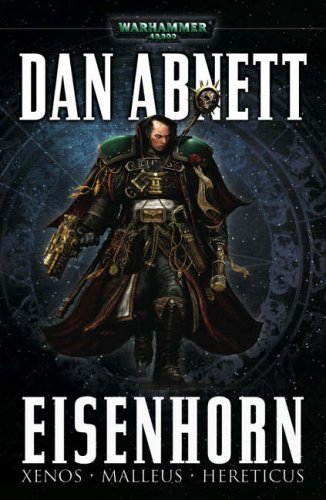
The world of Warhammer 40,000 (hereafter WH40k) is one that has few entry points for the uninitiated. Dan Abnett’s Eisenhorn Trilogy is one such entry point. I reviewed the omnibus on my general interests blog. Here we will be exploring some themes in the trilogy from a worldview perspective. There will be SPOILERS in what follows.
The Darkness
The world of WH40k is ostensibly one set in our very far future. The major tagline for the universe is “In the grim dark future, there is only war.” Confronted by this darkness, readers sometimes struggle to find light. But the light found in the universe is that of relationships: friendships and loyalty. Another light is the fight against the Warp and the forces of Chaos. Christians are similarly called to fight against evil and destroy it. The way that struggle plays out is hotly debated, but Eisenhorn is a kind of call to fight against evil where it is visible.
Puritan or Radical?
There are different sects of the Imperial Inquisition in the WH40k universe and the major way to divide them is along lines of Puritanism or radicalism. Largely, this comes down to whether an Inquisitor would use elements or even knowledge of “Chaos” in order to fight Chaos or whether they would not. This notion of Puritan/Radical is found throughout the Eisenhorn trilogy.
These lines of separation are relevant because in some ways they are paralleled in Christian thought. How literally is the Bible to be taken? How separated from the world should Christians be? What insights can be allowed for in other faith traditions? These are just a few questions that parallel this complex line that is brought to light by Abnett.
Interestingly, the way that Eisenhorn himself develops as a character points to how these might become a false dichotomy. He begins to realize that some of the insights from the Radical side have merit, and began to shift towards a more moderate position. One wonders whether we too often become bogged down in our conservative/liberal divisions to see how the “other side” might have some helpful insights.
War Against Chaos
In the WH40k universe, demons are manifested in the flesh, the forces of darkness work through psychic powers (psykers), aliens worship evil deities, and more. Through the realism of these elements, the universe is put forward as one in which evils are, at times, much easier to identify than the evils we find in our world. Christians have differing views about spiritual warfare (read the link in those words for a brief exploration of a few), but I think we too often pretend that there are no real evils out there or that they can be reduced purely to the evils of the human heart.
Conclusion
The world of WH40k is dark, but the way it portrays evil and the battle against it serves up not only a compelling narrative but one which has some points of contact with Christianity. Ultimately, WH40k ends up left in darkness, but Christianity has the one Story which offers ultimate hope; that found in Christ as victor over death and the devil.
Links
Be sure to check out the page for this site on Facebook and Twitter for discussion of posts, links to other pages of interest, random talk about theology/philosophy/apologetics/movies and more!
Book Reviews– There are plenty more book reviews to read! Read like crazy! (Scroll down for more, and click at bottom for even more!)
Source
Dan Abnett, Eisenhorn (Black Library, 2005).
SDG.
——
The preceding post is the property of J.W. Wartick (apart from quotations, which are the property of their respective owners, and works of art as credited; images are often freely available to the public and J.W. Wartick makes no claims of owning rights to the images unless he makes that explicit) and should not be reproduced in part or in whole without the expressed consent of the author. All content on this site is the property of J.W. Wartick and is made available for individual and personal usage. If you cite from these documents, whether for personal or professional purposes, please give appropriate citation with both the name of the author (J.W. Wartick) and a link to the original URL. If you’d like to repost a post, you may do so, provided you show less than half of the original post on your own site and link to the original post for the rest. You must also appropriately cite the post as noted above. This blog is protected by Creative Commons licensing. By viewing any part of this site, you are agreeing to this usage policy.
Sunday Quote!- We Influence Toward… or Away From Christ
Every Sunday, I will share a quote from something I’ve been reading. The hope is for you, dear reader, to share your thoughts on the quote and related issues and perhaps pick up some reading material along the way!
We Influence Toward… or Away From Christ
I read through Newton on the Christian Life by Tony Reinke recently (see my review). Before I go any further, I would note this is John Newton and not Isaac Newton. John Newton is the man who wrote Amazing Grace, but his life and influence go well beyond that. Reinke notes that, according to John Newton, we have vast influence even in our everyday interactions with others:
Every day we influence others in one of two directions: (1) toward faith in Christ and eternal glory, or (2) toward rejection of Christ and eternal judgment. (Kindle Location 2801, cited below)
Newton has some insights of his own on how we might best lead towards Christ, and this largely centers around the maturing life of a Christian and trying to live as Christ, for “to live is Christ.”
How is it that our actions are influencing others toward or away from Christ? How might we best live our lives in ways that lead to Christ rather than driving people away from Him? In what ways can we, through the Spirit, live as Christ to the world?
Links
Be sure to check out the page for this site on Facebook and Twitter for discussion of posts, links to other pages of interest, random talk about theology/philosophy/apologetics/movies and more!
Sunday Quote– If you want to read more Sunday Quotes and join the discussion, check them out! (Scroll down for more)
Source
Tony Reinke, Newton on the Christian Life (Downers Grove, IL: Crossway, 2015).
SDG.
Really Recommended Posts 8/28/15- The Socratic Method, Planned Parenthood, science, and more!
 I have put together another slew of reads with which you, dear readers, can engage. Here we have evidence for God, Planned Parenthood, Peter Boghossian’s “Street Epistemology,” evaluating scientific discoveries, and boys and girls. I hope you enjoy them! Let me know your thoughts, and be sure to let the authors know as well!
Can the Evidence for God Have Other Explanations?– Natasha Crain, a Christian apologist focused on putting together apologetics for parents and children, answers a question from a skeptic about the evidence purporting to show the existence of God having other explanations. Short answer: of course it might have other explanations; the problem is whether these explanations are better. Check out her post for elaboration.
A Response to “Planned Parenthood is Not Selling Baby Parts, You F*****g Idiots”– In the typical, well-reasoned manner of those who support abortion on demand, a”Skepchick” published a profanity-laden video and a shortened blog-version of the same response to those asking questions about Planned Parenthood. Here is a response to said video.
Boghossian’s Street Epistemology is Not the Socratic Method– Peter Boghossian attempts to reason believers out of their faith, largely by defining faith however he wants. Here is an analysis of his “Street Epistemology” and its attempts to use the Socratic Method against believers.
Girls’ Area– All the recent discussions about boys and girls and whether we need labels for boys’/girls’ toys and bedding has some farther reaching consequences. Here’s a post which highlights how perceived gender roles can impact children.
How to Evaluate Certainty in Scientific Discoveries– A good discussion of the use and importance of error bars in calculations, with the expansion of the universe as a case-study.
Sunday Quote!- Genesis 1-11 is Fiction?
 Every Sunday, I will share a quote from something I’ve been reading. The hope is for you, dear reader, to share your thoughts on the quote and related issues and perhaps pick up some reading material along the way!
Genesis 1-11 is Fiction?
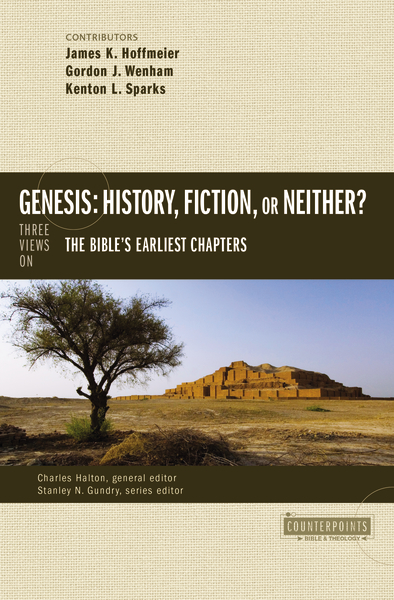
Kenton Sparks argues in his chapter of Genesis: History, Fiction, or Neither? that Genesis 1-11 is “ancient historiography,” which is to say, largely mythic fiction. Why does he argue this, and what are the implications? He sums up his position nicely:
[I]t is no longer possible for informed readers to interpret the book of Genesis as straightforward history. There was no Edenic garden, nor trees of life and knowledge, nor a serpent that spoke, nor a worldwide flood in which all living things, save those on a giant boat, were killed by God. Whatever the first chapters of Genesis offer, there is one thing that they certainly do not offer, namely, a literal account of events that actually happened prior to and during the early history of humanity. If Genesis is the word of God, as I and other Christians believe, then we must try to understand how God speaks through a narrative that is no longer the literal history that our Christian forebears often assumed it to be… (111, cited below)
I’m sure some of this statement was for rhetorical flourish, but it is clear that Sparks has chosen to contrast his position with the staunchest literalist position. He references the Flood as global; despite many conservative scholars arguing that it is local; in the same essay he sets his position against 6-day creationism, but does nothing to hint at how his position might contrast with those who do not adhere to that perspective. As I said, I’m sure a lot of this is rhetorical flourish rather than ignorance, but his essay could have been stronger if he’d interacted with more nuanced positions.
That said, it is difficult to reconcile his statement that effectively nothing in Genesis 1-11 refers to a “literal account of events that actually happened…” with his statement that Genesis is the “word of God.” However, he does try to demonstrate this throughout his essay. I remain unconvinced that Genesis 1-11 is largely fiction, though I would find myself in agreement with Sparks at a few points in his exegesis.
What do you think? Would arguing that Genesis 1-11 is effectively fiction–theological fiction, but fiction nonetheless–undermine its viability as the word of God? What might this mean for interpretation of these early chapters?
Links
Be sure to check out the page for this site on Facebook and Twitter for discussion of posts, links to other pages of interest, random talk about theology/philosophy/apologetics/movies and more!
Sunday Quote– If you want to read more Sunday Quotes and join the discussion, check them out! (Scroll down for more)
Source
Kenton Sparks, “Genesis 1-11 as Ancient Historiography” in Genesis: History, Fiction, or Neither? Charles Halton and Stanley Gundry, eds. (Grand Rapids, MI: Zondervan, 2015).
SDG.
Really Recommended Posts 8/21/15- Science Fiction, Debate the New Testament, and more!
Another week, another round of fresh reads for you, dear readers, to enjoy! This week we have posts on a science fiction author you may not have heard of, a debate between an atheist and a New Testament scholar, theology and miscarriages, a pro-life post with some good arguments and advice for advocates, and creationism.
Cordwainer Smith– Cordwainer Smith was a science fiction author who was also an Anglican. He developed a unique and compelling world full of intriguing insights into humanity, religion, and free will. Here’s a post that develops some of his thought and reflects a bit on his body of work.
How Not to Argue Pro-Choice: Eleven Completely Misguided Arguments– Clinton Wilcox has written a valuable piece here responding to a pro-choice article that alleges to discredit 11 common pro-life arguments. Not only does he respond to each of the 11 attacks on pro-life arguments, but he also clarifies some arguments that we probably shouldn’t be using.
Fact-Checking Dan Barker from Our Recent Debate [with Daniel B. Wallace]– Here’s a meaty read that will help you dive into some of the extra-biblical evidence related to Jesus Christ, among other things.
Miss Carry: The Theology of Unrealized Motherhood– Miscarriages happen to anywhere from 10%-50% of all pregnancies. Yet we don’t often talk about the emotional impact these can have on families. Here’s a post reflecting on the need for a theology of unrealized motherhood.
Billions of Stone Artifacts: Witness to the Ancient Occupation of the Saharan Desert– Joel Duff continues his series responding to an Answers in Genesis argument about the sheer volume of stone artifacts in Africa. The basics are that the fact that billions of artifacts exist means that human occupation must have been much longer than a young earth creationist timeline allows for.

 J.W. Wartick - Reconstructing Faith
