arguments for God
The Ontological Argument and an Evil god
 I shared a video about the ontological argument that gives the absolute bare-bones of the argument on my Facebook recently. A friend came along and raised a point that that friend said had bothered them for a while. The objection was that could not such an argument be used to argue for the existence of an evil god just as much as for a good God? I typed up a response I would like to also share here.
The first thing I’d point out is that such an objection to the argument assumes that evil is itself ontologically extant rather than a deprivation. That is, it assumes evil is itself a thing, rather than being that which is not-good. Although that is not an implausible position, it would take establishment of evil as a real existing thing in order for the argument to work.
Another difficulty is that it seems intuitively false that maximal greatness could include “maximal evil.” That’s a reason things like the maximally great pizza don’t really work as objections to the argument–maximally great pizzas are not only nonsensical (for greatness of pizza depends upon one’s taste) but they also have nothing intrinsic in them to entail maximal greatness. Such an objection would have to establish not only that evil exist on its own rather than as a deprivation, but also that evil is a kind of “great-making property.” Since it seems clear that evil is not a “great-making property,” the burden of proof is on any who wishes to demonstrate that it is.
A third problem is that the argument must see maximally good and maximally evil as epistemically on par with each other. For the argument to work, evil and good have to be effectively even when it comes to probability. But that is a very complex argument to make.
Finally, if all of these difficulties were overcome, the one making the argument has effectively made an argument for radical skepticism, to the point that we could not really be epistemically sure of anything. I’ve argued for this last point at length. Basically, the point is that if it is true that if A and B are epistemically on par with each other, we have no way of distinguishing between A and B, then it follows that we cannot be sure of anything or making distinctions in everyday life. For it is the case that we can construct for ANY scenario X a scenario Y that is epistemically on par with it (at least in principle) such that Y _may_ be the case instead. And if that’s true, and the point made by the notion of an evil God is true, then we must adhere to radical skepticism. In other words, a reductio ad abusdum defeats the argument.
Sunday Quote!- Darwin and Design
 Every Sunday, I will share a quote from something I’ve been reading. The hope is for you, dear reader, to share your thoughts on the quote and related issues and perhaps pick up some reading material along the way!
Darwin and Design
I’ve recently started reading God and Design
It should be possible to define a biological system such that, if it were to exist, its existence could not be explained in Darwinian fashion. If it is impossible to define such a biological system, then it will be impossible to formulate an empirical test that might disconfirm Darwin’s theory. Darwinism’s claim to be a genuine scientific theory would suffer a serious… blow. (11)
The reason Manson argues that the bare possibility of such a definition is required is because of the notion of “falsifiability” in science. While it is debated as to whether falsifiability is an actual criterion for “true” science (at least in the philosophy of science I have read), it has become largely assumed that, in some sense, a theory must be at least in principle falsifiable in order to avoid being question begging or too broadly defined.
Granting that, Manson’s point seems to be a valid one: in order for Darwinism to be viable, it must also be falsifiable. If we can’t even imagine a system that would falsify it, then that may have extremely broad implications. Whether we have imagined such systems–and whether we have discovered them–is a matter of no small amount of debate.
What do you think? Is falsifiability a required criterion for science? Are we able to such a defined biological system to challenge Darwinian evolution? Do such systems actually exist?
God and Design
Links
Be sure to check out the page for this site on Facebook and Twitter for discussion of posts, links to other pages of interest, random talk about theology/philosophy/apologetics/movies and more!
Sunday Quote– If you want to read more Sunday Quotes and join the discussion, check them out! (Scroll down for more)
Source
Neil Manson, “Introduction,” in God and Design ed. Neil Manson (New York: Routledge, 2003).
SDG.
Book Review: “Pascal’s Wager” by Jeff Jordan
For some time, I’d been wanting to put some effort into studying Pascal’s Wager. I picked up Pascal’s Wager: Pragmatic Arguments and Belief in God by Jeff Jordan in order to familiarize myself more with the philosophical grounding behind the argument. Jordan approaches the Wager through a lens of analytic philosophy and, I think, demonstrates that the argument has some force to it.
Jordan’s work has great scope. Several aspects of the Wager are brought to light. He analyzes several different formulations of the argument, while also noting where the argument has been changed or modernized. For example, the notion that Pascal’s Wager was infinite bad vs. infinite good is a more recent innovation than Pascal’s original argument.
He studies the argument contextually to determine whether the Wager was intended as a generalized theistic proof or an argument for Christianity. Numerous objections from leading critics of the Wager are put to the test. Ultimately, a version of the Wager developed by William James is put forward as an argument that passes the philosophical muster. Jordan analyzes this argument from many angles, ultimately demonstrating that it overcomes the challenge of the “many gods” objection and provides grounds for Christian faith.
The value of Pascal’s Wager may is increased by the fact that many aspects of Jordan’s work are applicable to other arguments or areas of interest for philosophers of religion and apologists. For example, Jordan raises significant challenges to the notion that philosopher’s fictional deities may actually be counted as evidence for a “many gods” objection (75-76; 80-81). Another example is a rather interesting argument he derives from the work of James Beattie (1735-1803- Jordan notes Beattie is at times rightly accused of misrepresenting Hume’s arguments) about whether attempts to deconvert might bring about pragmatic wrongs (190-194). These and other tantalizing topics command even more interest than the book might otherwise have had.
Simply put, Pascal’s Wager: Pragmatic Arguments and Belief in God is a phenomenal, thought-provoking work that will have readers rethinking their evaluation not only of the (in)famous Wager but also of a number of related topics. Even at its steep price tag, the book is a bargain.
Links
Be sure to check out the page for this site on Facebook and Twitter for discussion of posts, links to other pages of interest, random talk about theology/philosophy/apologetics/movies and more!
Pascal’s Wager: The Utility Argument Examined– I outline and defend one of the versions of Pascal’s Wager which Jordan brings up in this work. I find it to be a very interesting argument and a great addition to the apologist’s toolkit.
Source
Jeff Jordan, Pascal’s Wager: Pragmatic Arguments and Belief in God
SDG.
——
The preceding post is the property of J.W. Wartick (apart from quotations, which are the property of their respective owners, and works of art as credited; images are often freely available to the public and J.W. Wartick makes no claims of owning rights to the images unless he makes that explicit) and should not be reproduced in part or in whole without the expressed consent of the author. All content on this site is the property of J.W. Wartick and is made available for individual and personal usage. If you cite from these documents, whether for personal or professional purposes, please give appropriate citation with both the name of the author (J.W. Wartick) and a link to the original URL. If you’d like to repost a post, you may do so, provided you show less than half of the original post on your own site and link to the original post for the rest. You must also appropriately cite the post as noted above. This blog is protected by Creative Commons licensing. By viewing any part of this site, you are agreeing to this usage policy.
Book Review: “In Search of Moral Knowledge” by R. Scott Smith
R. Scott Smith’s In Search of Moral Knowledge: Overcoming the Fact-Value Dichotomy
Smith begins by providing overviews of various historical perspectives on ethics, including biblical, ancient (Plato and Aristotle), early (Augustine through Aquinas), and early modern (Reformation through the Enlightenment) systems. This survey is necessarily brief, but Smith provides enough information and background for readers to get an understanding of various ethical systems along with some difficulties related to each.
Next, the major options of naturalism, relativism, and postmodernism for ethics are examined in turn, with much critical interaction. For example, Smith argues that ethical relativism is deeply flawed in both method and content. He argues that relativism does not provide an adequate basis for moral knowledge, and it also undermines its own argument for ethical diversity and, by extension, relativism. Moreover, it fails to provide any way forward for how one is to live on such an ethical system and is thus confronted with the reality that it is unlivable. Ultimately, he concludes that “Ethical Relativism utterly fails as a moral theory and as a guide to one’s own moral life” (163).
For Naturalism, however, Smith contends the situation is even worse: “we cannot have knowledge of reality, period, based on naturalism’s ontology. Yet there are many things we do know. Therefore, naturalism is false and we should reject it not just for ethics, but in toto” (137). His argument for this thesis is, briefly, that naturalism has no basis for mental states–and therefore, for beliefs–and so we cannot have knowledge (see 147ff especially).
Various postmodern theses are also examined, including the highly influential views of Alasdair MacIntyre and Stanley Hauerwas. Ultimately, Smith argues that there are several issues with these ethical positions, and primary among them is the difficulty that without any facts which are un-interpreted, there is no way to have moral knowledge, dialogue, or grounding (see 264ff, esp. 265; 277-278).
Finally, the book ends with Smith’s proposal for grounding moral knowledge: namely, Christian theism. First, he notes that there is a “crisis of moral knowledge” which is that it seems we really do have moral knowledge, but no solid basis for this knowledge. However, to solve the difficulty, we may find another ethical stance which can support this fact of moral knowledge. For supporting this thesis, he both presents arguments for Christian theism and notes the paucity of rival positions.
One major strength of Smith’s work is that he doesn’t merely outline or only critique the ethical systems with which he interacts. Instead, each system is allowed to present its theses on its own terms before Smith turns to a critical assessment. This is particularly evident in his interactions with Alasdair MacIntyre and Stanley Hauerwas–each of whom has a dedicated chapter to their own systems and then a shared chapter of analysis and critique–but is the case in each instance of a system which he evaluates. This strength is increased when one considers the number of ethical systems Smith interacts with throughout the book. Although no work of this length (or any length, really) could be truly comprehensive, here is offered a broad enough variety of ethical theories that readers will be able to engage with those which are not mentioned.
There are tables scattered throughout the book which actually add quite a bit to the readability and argument. I commend Smith for a great use of these tools throughout the work.
I would have liked to see more development of the positive notion of exactly how Christian theism serves as the basis for moral knowledge. Smith does provide some clear insight into this, but it seems that after the significant development given to so many rival theories, the case for the Christian perspective could have gone deeper.
R. Scott Smith has accomplished an enormous achievement with In Search of Moral Knowledge both by providing an excellent survey and critique of relevant ethical systems and by coupling it with a positive case for a theistic–Christian–grounding for morality. The book can serve as an excellent text for a class on ethics, but may also be used by those interested in exposure to and critical insight into various ethical systems. Smith’s argument for Christian metaethics is compelling and strong, and his criticisms leveled against other systems–particularly naturalism and relativism–are crucial.
Disclaimer: I was provided with a review copy by the publisher. I was not obligated by the publisher to give any specific type of feedback whatsoever.
Links
Be sure to check out the page for this site on Facebook and Twitter for discussion of posts, links to other pages of interest, random talk about theology/philosophy/apologetics/movies and more!
Source
R. Scott Smith, In Search of Moral Knowledge: Overcoming the Fact-Value Dichotomy
SDG.
——
The preceding post is the property of J.W. Wartick (apart from quotations, which are the property of their respective owners, and works of art as credited; images are often freely available to the public and J.W. Wartick makes no claims of owning rights to the images unless he makes that explicit) and should not be reproduced in part or in whole without the expressed consent of the author. All content on this site is the property of J.W. Wartick and is made available for individual and personal usage. If you cite from these documents, whether for personal or professional purposes, please give appropriate citation with both the name of the author (J.W. Wartick) and a link to the original URL. If you’d like to repost a post, you may do so, provided you show less than half of the original post on your own site and link to the original post for the rest. You must also appropriately cite the post as noted above. This blog is protected by Creative Commons licensing. By viewing any part of this site, you are agreeing to this usage policy.
Pascal’s Wager: The Utility Argument Explained
…I realized that Pascal’s Wager is a much stronger argument than I had thought.
Let’s get it out of the way: Pascal’s Wager does not have much “street cred.” It’s much-maligned as nothing more than rolling the dice, and doing so for no good reason. After all, on which deity should one wager?
Here, I’ll take a look at one formulation of Pascal’s Wager, then very briefly offer a way to perhaps circumvent the “many gods” objection. I’ll be relying heavily upon Jeff Jordan’s book, Pascal’s Wager: Pragmatic Arguments and Belief in God, in what follows.
One way to lay out the Wager may be as follows (quoted from Jordan, 23, cited below):
1. for any person S, and alternatives, a and b, available to S, if the expected utility of a exceeds that of b, S should choose a
2. believing in God carries more expected utility than does not believing
3. Therefore, one should believe in God
Now, this is a pretty straightforward argument. 3, the conclusion, follows via modus ponens. Thus, it is up to the one who wants to deny 3 to deny one of the premises. Let’s examine each in turn.
Premise 1 seems to be logical, but it has actually garnered just as many objections as the second premise. Some have argued that one should not reduce belief in God to a “gamble” or some pragmatic choice. Others have argued that one cannot simply choose to believe and argued that the Wager results in Doxastic Voluntarism–the notion that one may simply change beliefs at will. In order to combat each objection in turn, one would have to show that it may be permissible to choose pragmatically even in religion. Jordan argues to this effect at length, but for the sake of argument I think it may be enough to just say that generally, we do make choices which we think will benefit us, and this is not an objectionable path of reasoning. Moreover, the Wager does not reduce to doxastic voluntarism, for one may indeed change one’s disposition toward something, but not at will. This is a complex argument, and I think we may set it aside for now because there is nothing in Premise 1 which would demand doxastic voluntarism.
Premise 2, of course, is highly contentious as well. Some allege that belief in God prevents the joys of hedonistic living; others allege that one would not know which deity to choose; still others would argue that there could exist deities that would reward unbelief.
Again, dealing with each in turn would take quite some time, so I’ll simply offer a few comments. First, hedonistic living in one life would not outweigh the benefits of eternity with a benevolent deity. Second, the Wager may simply be used to prefer theism generally–after all, if one does not wager on any deity, there would be no possibility of infinite (or nearly limitless) expected utility from one’s wager. Third, inventing fictions to attempt to rival established religious traditions which have, presumably, been believed by our epistemic peers (to use the term of Jordan, 80-81) does not put them on par.
Now, it should be fairly clear that even an incredibly low probability for God’s existence may have much higher expected utility than unbelief, for the overall possible gain is much higher. Jordan elaborates on this and answers many objections (such as the notion that “betting” on something which is highly improbable is necessarily irrational). For now, I simply leave this statement hanging because it helps my purpose, which is to demonstrate to those interested that the Wager is worth investigating further.
Because of the above, another of the strengths of the argument may be found in its usefulness to the apologist. Pascal’s Wager, Jordan argued, may be viewed as a kind of “last ditch” argument for apologists and theism (24). After all, suppose one were to come up with an argument which convinced you that the truth of theism is quite unlikely indeed. In that case, Pascal’s Wager provides a rational reason to continue to believe in God. For, even if it is unlikely that God exists, the utility of believing that God exists has a potentially infinite reward and thus trumps the utility of not believing that God exists.
Remember, though, that this functions for any possibility of God existing that is greater than zero. It was at this point in the book that I realized that Pascal’s Wager is a much stronger argument than I had thought. Not only may it be adequate to ground theistic belief, but it also may serve as a kind of bulwark against anti-theistic arguments as well.
I have argued that Pascal’s Wager may be formulated in such a way that one should believe in God. Now there is, of course, much more nuance and many more objections to each premise. Interested readers should check out Jeff Jordan’s Pascal’s Wager: Pragmatic Arguments and Belief in God.
Links
Be sure to check out the page for this site on Facebook and Twitter for discussion of posts, links to other pages of interest, random talk about theology/philosophy/apologetics/movies and more!
Question of the Week: Wagering Much?– In this post, I asked the question of apologists about whether or not they used Pascal’s Wager. The feedback I got was diverse and interesting. Check out the post, and let me know your own thoughts.
Source
Jeff Jordan, Pascal’s Wager: Pragmatic Arguments and Belief in God
SDG.
——
The preceding post is the property of J.W. Wartick (apart from quotations, which are the property of their respective owners, and works of art as credited; images are often freely available to the public and J.W. Wartick makes no claims of owning rights to the images unless he makes that explicit) and should not be reproduced in part or in whole without the expressed consent of the author. All content on this site is the property of J.W. Wartick and is made available for individual and personal usage. If you cite from these documents, whether for personal or professional purposes, please give appropriate citation with both the name of the author (J.W. Wartick) and a link to the original URL. If you’d like to repost a post, you may do so, provided you show less than half of the original post on your own site and link to the original post for the rest. You must also appropriately cite the post as noted above. This blog is protected by Creative Commons licensing. By viewing any part of this site, you are agreeing to this usage policy.
Move Over, Kalam, Here is the best argument for theism
 Yeah, I said it. The Kalam Cosmological Argument is in vogue, and for good reason. It’s an extremely powerful argument for the existence of God, the first Cause. Nothing I say here should be taken as a condemnation of the Kalam. However, I don’t think it is the most powerful argument for theism. In fact, I don’t think it’s even close. The Argument from Religious Experience wins that prize, and it is a landslide.
Is it so powerful?
The obvious question is this: what makes the Argument from Religious Experience (hereafter ARE) so powerful? Here are just a few reasons:
1. The ARE is malleable and may be used as an argument for a) merely the existence of the transcendent–anything beyond the physical world; b) theism specifically c) Christianity specifically.
2. The ARE does not rely upon anything more than things we already do in everyday life, such as trusting that people are reporting the truth.
3. The ARE has evidence backed from millions of persons across the world and time.
4. It is possible, though not at all certain, to have personal confirmation of the ARE.
Why Not ARE?
Okay, well if it’s so strong, why don’t more apologists use the argument? There are a number of reasons, and some are basic: they haven’t read about the argument in much popular apologetic literature and so are unfamiliar with the argument, they know of it but are unsure of how to formulate it in a helpful way, or they simply haven’t thought about how powerful the argument is. Another reason may be (as I suggested elsewhere) that apologists prefer arguments that are useful in debate formats.
To be honest, though, I think the primary reason is because the ARE has almost an inherent strangeness to it. There is a kind of spiritualism about the argument itself which might turn off apologists who would prefer a purely deductive argument. If one wants to talk about a religious “experience,” there is a kind of feeling to that phrase which an argument like the Kalam does not share. Just admitting that there is a category of religious experience itself admits to a kind of transcendence, and I think that apologists–I include myself in this category–are overly cautious about spirituality. So let’s get over it and start using this powerful argument, okay?
What is the ARE?
As I noted in point 1 in favor of the ARE’s strength above, the argument itself is malleable and may be formulated in different ways (for some examples, see my post on the usefulness of the argument). Here’s a way to formulate it to merely defend a transcendent reality:
1. Generally, when someone has an experience of something, they are within their rational limits to believe the experience is genuine.
2. Across all socio-historical contexts, people have had experiences they purport to be of a transcendent realm.*
3. Therefore, it is rational to believe there is a transcendent realm.
Just consider this for a second. The argument leaves a few spaces to fill in for the sake of making it deductively valid, but we’ll just look at how it stands now. Suppose that 2 is true. In that case, one who wants to deny the ARE’s strength would have to say that all of the experiences of these people have been in error. Frankly, when it comes down to it, that’s a pretty big claim, because reports of religious experience really do come from all times and places.
The argument, though, can be narrowed to defend theism specifically or even Christianity. For more on this, see my post talking about its strength as it narrows.
Now point 2 above suggested the ARE doesn’t rely on anything more than what we do in everyday life. I am speaking, of course, of the principle of credulity: the notion that when x appears to someone in way s, it is rational [barring some epistemic defeater]** to believe that x is s (or some other formulation). Moreover, we also trust the principle of testimony: when person x tells us that y occurred, it is prima facie rational to believe y. When you read a news story and someone says they saw a woman running from the scene of a crime, it is rational to believe them. Similarly, when millions say they have experienced a transcendent realm, prima facie it is rational to believe them.
 The Knock Down Objection?
The most common objection is the objection from competing religions. That is, if person x has an experience that purports to prove Christianity, and person y has an experience of the truth of Buddhism, what then? Often it is suggested that x and y’s testimony would just cancel each other out. But of course that’s not the case in any other area of experience. If I am a witness in court testifying about a murder, and I say I saw a tall dark male commit the crime, while another witness says they saw a short pale male, does each testimony cancel the other? Well, suppose the criminal was of average male height and fairly tan. To me, a short very pale man, he would appear tall and dark. To someone who is taller than I and of darker skin, the person would appear short and pale.
The point is that even with religious experience, different facets may be recognized even were the experience the same. Now much more nuance needs to go into this argument, but I think cogent answers have been provided in the relevant literature. The point is that even the most common and strongest objection to the ARE really isn’t that powerful in the end, particularly when weighed against the cumulative force of religious experience.
Conclusion
I readily admit this post has only very briefly touched on issues which could each take entire volumes to discuss. There is so much more to consider, and so many avenues to explore, but I think my overall point stands: The ARE is the strongest argument for theism. Fellow apologists, I suggest you research the argument (see the suggested reading list at the end of this post and also check out my other posts below) and use it! Let’s integrate it into our defense of the faith. Let me know your own thoughts below.
Links
Be sure to check out the page for this site on Facebook and Twitter for discussion of posts, links to other pages of interest, random talk about theology/philosophy/apologetics/movies and more!
The Argument from Religious Experience: Some thoughts on method and usefulness– a post which puts forward an easy-to-use version of the ARE and discusses its importance in apologetic endeavors.
The Argument from Religious Experience: A look at its strength– I evaluate the different ways the ARE may be presented and discuss how strong the argument may be considered across different formulations.
The image above to the left was a photo taken by me and I claim all rights noted below. The image to the right is from Wiki Commons.
*[thanks to a commentator for correcting this error- see comments]
**In the interest of shortening this post, I glossed over tightening of the principle of credulity and have added this clause to make it more clear.
SDG.
——
The preceding post is the property of J.W. Wartick (apart from quotations, which are the property of their respective owners, and works of art as credited; images are often freely available to the public and J.W. Wartick makes no claims of owning rights to the images unless he makes that explicit) and should not be reproduced in part or in whole without the expressed consent of the author. All content on this site is the property of J.W. Wartick and is made available for individual and personal usage. If you cite from these documents, whether for personal or professional purposes, please give appropriate citation with both the name of the author (J.W. Wartick) and a link to the original URL. If you’d like to repost a post, you may do so, provided you show less than half of the original post on your own site and link to the original post for the rest. You must also appropriately cite the post as noted above. This blog is protected by Creative Commons licensing. By viewing any part of this site, you are agreeing to this usage policy.
Sunday Quote!- Beauty of Creation?
 Every Sunday, I will share a quote from something I’ve been reading. The hope is for you, dear reader, to share your thoughts on the quote and related issues and perhaps pick up some reading material along the way!
The Beauty of Creation?
I’ve finished rereading The Open Secret by Alister McGrath. It presents a powerful picture of natural theology as touching every aspect of life.
One of the branches of evidence for the argument from design is the notion that the world in which we live is beautiful. However, many have rightly noted that there seems to be a disconnect between this picture of the world as beautiful and loving and the reality that nature is “red in tooth and claw.” Yet Christian natural theology has a more complete view of the world:
…[N]ature as presently observed, cannot be assumed to be nature, as orginally created… The creation stands in need of renewal from a God who will create all things anew… There is a profoundly eschatological dimension to an authentically Christian natural theology… The fading beauty and goodness of the world are to be interpreted in light of the hope of their restoration and renewal. (208; 206, cited below)
Christianity does acknowledge the notion that creation is “groaning” and that nature may show much disorder and vileness alongside beauty and transcendence. The former attributes are results of the fall, but as McGrath noted, Christian natural theology is eschatological: it looks ahead to a future where all things will be renewed and consummated God’s divine plan.
It seems to me this vision of the future is something which gives natural theology within Christianity a broader explanatory scope which may not be matched by other systems. By orienting this world as it is in between a broader historical scheme of creation, fall, redemption, consummation, this vision of natural theology allows for and even expects many of the observed phenomena.
What do you think? What is your view of how the beauty of creation may be balanced with some of its ugliness?
Links
Be sure to check out the page for this site on Facebook and Twitter for discussion of posts, links to other pages of interest, random talk about theology/philosophy/apologetics/movies and more!
Sunday Quote– If you want to read more Sunday Quotes and join the discussion, check them out! (Scroll down for more)
“A New Vision for Natural Theology” A Book Review of “The Open Secret” by Alister McGrath– I review the book discussed in this post. It presents a vision for natural theology and apologetics.
Resource Review: “Flight: The Genius of Birds”
 “Flight: The Genius of Birds
The Complexity of Birds
The film traces the incredible development of birds from single cells into babies and the way in which their bodies must work in order to achieve flight. One of the people interviewed in the film notes that flight is not an incremental phenomenon; the entire body must be set up in order to accomplish it. The way feet work, the shape of the wing, the structure of muscles, and the weight of bones are all factors which must come into play in order to make up an animal capable of flight.
Hummingbirds
“Flight” presents a number of different birds as case studies the complexity which the systems that make up a bird show. Hummingbirds’ flight muscles comprise, on average, 43% of the bird’s body mass. This allows the birds to have an enormous amount of precision in order to move in the ways that they can, such as hovering, moving backwards, laterally, etc. The hummingbird generates lift both on the back and the front strokes of their wings. This capability is grounded in the shoulder joints found in the bones which are at the bases of the wings. The hummingbird’s heart must beat at an enormous rate, which means that it also must eat quite a bit in order to sustain the energy level required for the bird’s metabolism and constant movement. The hummingbird’s tongue is particularly interesting, for it has a number of functions on it which allow it to draw up nectar far more efficiently than had been thought.
European Starlings
These starlings, sometimes flying in groups in the hundreds of thousands, move in a stirring, beautiful way, seeming to shift as if they comprised one organism. The way that these birds continue flying without running into each other is by monitoring those starlings which are closest to each other. Rather than monitoring the entire formation, they simply move when those around them move, which lends itself to the movement of a flock as one kind of organism. Their movements must take place within very minuscule spans of time in order to maintain the formation. They follow air flows to minimize the turbulence they encounter, and their formation also serves as a defense mechanism.
Arctic Terns
Arctic terns have the longest migration of any animal on earth. They cross the planet from pole-to-pole to seek out nesting and feeding grounds. From the North Atlantic, they head south, eventually splitting as half go along the African coast while the other half goes along the coast of Brazil. In the south, near Antartica, they feast upon small fish before heading back north. They must arrive back near Greenland and other areas in the north for a nesting period of about 8 weeks. Then, as winter sets in in the north, they head back south.
How did the complexity arise?
The film here presents an argument that a materialist must use Darwinian evolution to explain the unique functions of flight. No design may be invoked in order to explain these things in a materialistic worldview. Dinosaurs were the precursors of birds, and natural selection selected for those dinosaurs which began to develop better means by which to avoid predators and catch prey.
The Feather
One feather may contain around a million individual parts, from the shaft to the individual strands, barbs, which compose the feather, and each of these are made up of barbules. These are constructed in such a way as to interlock with each other. Yet the feather is but one of the many factors which must go into the mechanisms required for flight.
Other Mechanisms
Other than those already noted (muscles, bones, etc.), birds require a navigational system which allows them to migrate and follow food. They must have instincts to cue and direct their movements across continents and even oceans. One could see how these latter functions came into play in the case study of the Arctic Terns.
Natural Selection?
The film makes the argument that natural selection cannot account for the mechanisms required for flight. The primary problem presented by “Flight” is the “lack of foresight.” Natural selection cannot look ahead and select for various factors in order to put them together into an integrated whole. The argument is that the multiple and independent functions needed in order to get a functional bird which would have some chance at survival is impossible to get to by means of a process which is blind.
Evaluation
First, I have to say that there were moments I found myself with my mouth hanging open and the gorgeous imagery in “Flight.” This was particularly the case following the starlings’ movements, the icy regions the terns flew through, and the overall imagery related to the hummingbirds.
The use of particular case studies over the middle section of the film was particularly effective at showing the problems which may come up when trying to describe certain characteristics and behaviors which birds exemplify that cannot be explained so easily by naturalistic mechanisms.
The film also did a good job of noting that there are presuppositions when it comes to the scientific enterprise. Given naturalism, neo-Darwinism is the only game in town. However, as was asked repeatedly throughout the film, if one is capable of acknowledging design and intelligence when it comes to certain things, why should one preclude the possibility of an intelligent agent when it comes to higher orders?
One problem with the film can be found in the format. It is necessarily short, making only the briefest points and only touching upon those things which it discusses. I suspect that those who hold to a naturalistic worldview will be largely unimpressed, while those who hold to the possibility of intelligent agency in biology will see it as backing their own positions. However, those who may be on the fence will see that there are reasons to ask questions.
Overall, “Flight: The Genius of Birds
Disclosure
I was sent a copy of Flight: The Genius of Birds
SDG.
——
The preceding post is the property of J.W. Wartick (apart from citations, which are the property of their respective owners, and works of art as credited) and should not be reproduced in part or in whole without the expressed consent of the author. All content on this site is the property of J.W. Wartick and is made available for individual and personal usage. If you cite from these documents, whether for personal or professional purposes, please give appropriate citation with both the name of the author (J.W. Wartick) and a link to the original URL. If you’d like to repost a post, you may do so, provided you show less than half of the original post on your own site and link to the original post for the rest. You must also appropriately cite the post as noted above. This blog is protected by Creative Commons licensing. By viewing any part of this site, you are agreeing to this usage policy.
William Paley (1743-1805) – Historical Apologist Spotlight
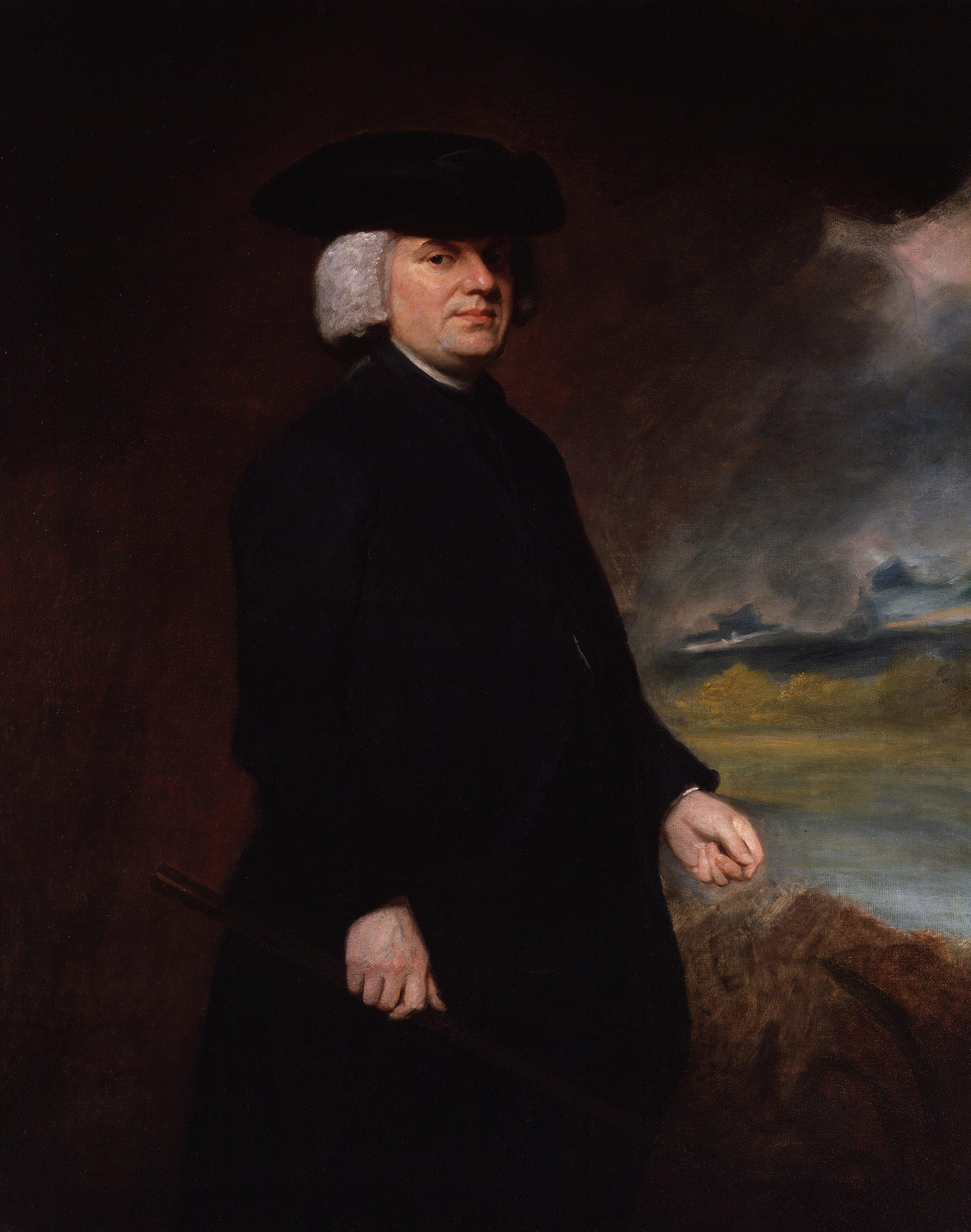 William Paley (1743-1805) is a name which echoes through history. His Natural Theology

Brief Biographical Note*
Paley went to school at Christ’s College and Cambridge. At the latter, he was awarded multiple times for his scholarship. He eventually became the Senior Dean at Christ’s College and was awarded a Doctorate of Divinity from Cambridge. Bishop Barrington of Durham granted him the rectory of Bishop Wearmouth. His life was strewn with accomplishments.
He was a utilitarian with deep Christian convictions. Throughout his life, he remained controversial. His utilitarianism was condemned, as was his critique of the often extreme defenses of property ownership. His anti-slavery was unpopular alongside his support of the American Colonies in the Revolutionary War.
The powerful nature of Paley’s works is revealed in the fact that his major work on utilitarianism, The Principles of Moral and Political Philosophy, became mandatory reading at Cambridge. His Natural Theology continues to be discussed in courses on philosophy of religion. The man was acclaimed by some within the church, who praised his defense of the faith despite others’ objections to his metaethical views.
His contributions to Christian apologetics are the focus of this piece, and we shall turn to them now.
Natural Theology
Paley’s most famous work nowadays is undoubtedly Natural Theology. In this work, he makes his well-known case for the design argument. He utilizes the analogy of a watch. If one finds a watch on a beach, one knows instantly that someone made the watch. Paley applied this same notion to life; one sees the sheer complexity and life and can infer that it, like the watch, was designed.
Many have dismissed Paley’s work here, noting that at points he relies on scientific explanations which have been discredited, while at others his examples have been explained. Yet the genius of his work is found in broader principles, which moderns should note. First, he argued that simply never having observed design in action on a biological level does not preclude any possibility of arguing for that same design (Natural Theology, 8, cited below). Second, evidence of things “going wrong” within a design does not invalidate the design of an object in and of itself. Third, higher level natural laws which may lead to order does not explain away the order itself. Fourth, when something appears to be designed, the burden of proof is upon those who assert an object is not designed.
These points seem to me to hold true to this day. I am sure none of them are uncontroversial, but Paley places his defense of this points squarely within his analysis of those artifacts which he considers to be designed (i.e. the eye and ear). A full treatment of these points thus must turn to his own arguments, but for now I would provide the following brief defenses. Regarding the first, this point seems obvious. If I have never seen someone construct a car, that does not in any way mean that I cannot conclude that someone had to have made it. The second point should be well taken within the context of the debate between Intelligent Design and Darwinian forms of evolution. The point is that simply pointing out a flaw in a design does not mean an entire object is undesigned. The third item seems correct because if something exhibits order, and that order is shown to be based around an ordering principle, the very order in and of itself has not been explained; instead, it is only the mechanism for generating that order which is observed. Finally, the fourth point is likely to be the most controversial–after all, appearances may deceive. Yet it does seem to be the case that if, a priori, something appears designed, then to conclude that something is not designed one must have defeating evidence for this appearance.
A View of the Evidences of Christianity
Paley’s Evidences (commonly known as “Evidences of Christianity”) became almost instantly famous. The work generated a number of summaries and expositions by other authors who were delighted with its style and the arguments contained therein. It is easy to see why, once one has begun a read through this apologetic treatise. Paley presents a number of arguments in favor of the Christian worldview. These evidences are largely historical in nature and include the suffering of those who spread Christianity as evidence for its truth, extrabiblical evidence for the truth of the Gospels, the authenticity of our Gospel accounts due to the early practices and beliefs of Christians, undesigned coincidences, and many more. Paley also provides a dismantling of David Hume’s argument against miracles.
It seems to me that any and all of these arguments retain the force they had in Paley’s own day. Consider the argument from the suffering of Christians. Well of course those of other faiths are willing to even die for that which they believe is true. But Paley rightly pointed out a huge difference between those of other faiths dying for their beliefs and the early eyewitnesses of the events surrounding Christ dying for their own beliefs. Namely, these people would know for certain whether that which they believed were true. That is, they either saw the resurrected Christ or they did not. If they did not, then explaining their willingness to die for this profession of faith becomes extremely difficult. However, if they did actually see that which they declared, their willingness to suffer unto death for this belief makes perfect sense. Many miss this important distinction even to this day. The rest of Paley’s arguments found in the Evidences is filled with insights similar to this.
Horae Paulinae
An argument which has largely been neglected within modern apologetic circles is that of “undesigned coincidences.” I have made an exposition of this argument already, and it should be noted that the best places to discover it are in the realm of historical apologetics. William Paley dedicated this work, Horae Paulinae
Now, the argument from undesigned coincidences takes quite a bit of work to properly outline. It is, in essence, a matter of looking through the Scriptures and finding how incidental details in one account fill in the blanks of another account. However, this description is so brief as to be simplistic. Paley himself acknowledged a number of the difficulties with describing undesigned coincidences in this way. Regarding the Pauline corpus, for example, it could be that someone invented letters from Paul but based them upon his history found in Acts. But the argument itself takes this into account and generally serves as a defeater for this notion by sheer weight of evidence. That is, the more coincidences are found, the more credulity is stretched if one wishes to assert forgery.
Paley buries the objections to undesigned coincidences in this fashion throughout the Horae Paulinae. The sheer volume of coincidences he finds, and the way they seem so clearly to be incidental, serves to dispel doubts about their genuine nature.
Other Works
Here, we have surveyed Paley’s major works, but he was a prolific writer who published sermons and of course his (in)famous work on utlitarian ethics. The preeminence of Paley as a scholar and writer is unquestionable. It is time we acknowledge how much we have to learn from those who have come before us.
Conclusion
We have seen the diverse array of arguments which Paley offered in favor of Christianity. These ranged from biological design arguments to undesigned coincidences to historical arguments in favor of the Gospels. Paley was a masterful writer whose arguments continue to influence apologists and draw ire from atheists to this day. Although the arguments have not been unscathed, I have offered a few reasons to reconsider some which have long been dismissed or forgotten. Paley’s influence endures.
I would like to dedicate this post to Tim McGrew, who introduced me to the vast field of historical apologetics. Without his bubbling delight and enthusiasm in the field, I would never have known much–if anything–about people like Paley. It is my hope and prayer that you may also be persuaded to pursue historical apologetists/apologetics. Be sure to check the links for some good starting places.
Be sure to check out the links at the end of this post as well as the resources from Paley.
Links
Like this page on Facebook: J.W. Wartick – “Always Have a Reason.” I often ask questions for readers and give links related to interests on this site.
Library of Historical Apologetics– Here is where I got started, with Tim McGrew’s phenomenal collection of works. In particular, the “annotated bibliography” will set you up with some fine works. The site features a “spotlight” on the main page for various fantastic reads. Browse and download at will. Also check out their Facebook page.
On the Shoulders of Giants: Rediscovering the lost defenses of Christianity– I provide a number of links as well as an annotated list of historical apologetics works which are great jumping off points for learning more about the vast array of arguments which have largely been forgotten within the realm of apologetic argument. I consider this one of the most important posts on this site.
Forgotten Arguments for Christianity: Undesigned Coincidences- The argument stated– Here I outline the argument from undesigned coincidences and explain how it can be used within apologetics.
Sources
William Paley, Evidences of Christianity
—-, Natural Theology (Oxford World’s Classics)
—-, Horae Paulinae
*I am indebted to the discussion of Paley’s life found in the introduction of the Oxford Classic’s edition of Paley’s Natural Theology, which I have cited above.
SDG.
——
The preceding post is the property of J.W. Wartick (apart from citations, which are the property of their respective owners, and works of art as credited) and should not be reproduced in part or in whole without the expressed consent of the author. All content on this site is the property of J.W. Wartick and is made available for individual and personal usage. If you cite from these documents, whether for personal or professional purposes, please give appropriate citation with both the name of the author (J.W. Wartick) and a link to the original URL. If you’d like to repost a post, you may do so, provided you show less than half of the original post on your own site and link to the original post for the rest. You must also appropriately cite the post as noted above. This blog is protected by Creative Commons licensing. By viewing any part of this site, you are agreeing to this usage policy.
Debate Review: Fazale Rana vs. Michael Ruse on “The Origin of Life: Evolution vs. Design”
 Fazale Rana recently debated Michael Ruse on the topic of the origin of life. Essentially, the question of the debate was whether the origin of life is best explained by naturalism or design. Here, I will provide brief comments on the debate.
Please note I make no claims to being a scientist and I am fully aware that I evaluate this debate as a lay person.
Michael Ruse Opening
Michael Ruse was careful to note that he is not keen on saying design is not possible. Rather, his claim is that naturalism is the most plausible explanation for the origins of life.
Ruse’s argued that design is implausible. Specifically, he noted that if design is the hypothesis put forward, there are any number of ways that one might consider that hypothesis. Is the designer a natural being within the universe or a supernatural being like God? Is there only one designer, or was there a group of designers (and he notes that a group of designers seems more plausible because automobiles require many designers to bring them about)? Finally, he raised the issue of bad design choices. He asked why, if there were a “hands-on” designer, would that designer not grant immunity to HIV and the like.
Ruse also argued that one can fall into the fallacy of selective attention- if one focuses upon only one example in isolation, then one might come to a conclusion that certain laws/theories may not be correct. But placing these same problems in context shows that they can be explained against “the background of our knowledge.”
Finally, Ruse ended with a number of examples for how problems which were seemingly insoluble were explained by naturalistic means. He also argued that one of the popular arguments for design, the flagellum, has so many different varieties (and is sometimes found to be a vestigial organ), and so cannot be shown to be designed.
Fazale Rana Opening
The problems which must be accounted for within an origins of life model are numerous. One must account for self-replication, the emergence of metabolism, the formation of protocells, the synthesis of prebiotic materials, the formation of life’s building blocks, and more.
Rana then turned to some primary models used by researchers to explain origin of life (hereafter OOL). First, there was the replicator-first model, which was problematic because in order for a molecule to be a self-replicator, it must be a homopolymer. But the complexity of the chemical environment on early earth rendered the generation of a homopolymer on the early earth essentially impossible. Next, the metabolism-first model runs into problem due to the chemical networks which have to be in place for metabolism. But the mineral surfaces proposed for the catalytic systems for these proto-metabolic systems cannot serve as such; Leslie Orgel held that this would have to be a “near miracle” and Rana argues that it is virtually impossible. Finally, the membrane-first model requires different steps with exacting conditions such that the model is self-defeating.
Rana argued positively that OOL requires an intelligent agent in order to occur. The reason is because the only way that any of these models can be generated is through the work on OOL in a lab. Thus, they can only be shown to be proof-of-principle and the chemistry breaks down when applied to the early earth. The fact that information is found in the cell is another evidence Rana presented for design. The systems found in enzymes with DNA function as, effectively, Turing machines. Moreover, the way that DNA finds and eliminates mistakes is machine-like as well. The fact that the needed component for success in lab experiments was intelligence hinted, according to Rana, at positive evidence for design.
Finally, Rana argued that due to the “fundamental intractable problems” with naturalistic models for the OOL and the fact that the conditions needed for the OOL and the processes required to bring it about have only been demonstrated as in-principle possible with intelligent agents manipulating the process.
First Cross Examination
At this point, Ruse and Rana engaged in a dialogue. Ruse first challenged Rana to show how the OOL model based on design could actually be based upon Genesis, as he quoted from Rana’s book (written with Hugh Ross), Origins of Life. He pointed out a few difficulties with using the Genesis account in this manner. Rana answered by putting forth his view of the Genesis account as an account of the origins of life on earth–a view which sees the Genesis account as corresponding with the scientific account (concordism). Yet the Genesis account is itself written from the perspective of a hypothetical observer found on the face of the earth rather than a perspective above the earth.
Rana asked Ruse for his thoughts on how much impact philosophy has on the debate over the OOL. He noted that it may be a presupposition of naturalism which lends itself to interpreting the OOL. Ruse answered by saying it is a good point and that philosophy cannot be denied a role in the discussion. But the question is not simply one of “gut commitments” and that one has to also take into account the scientific evidence and a “pragmatic reason” for holding to naturalism: naturalism works. It continually explains problems, even if it takes time.
Ruse Rebuttal
The difficulty with the OOL debate is that it is too easy to take things out of context in order to show how many problems there are with a model. He argued that it is “peculiar” to take the results of a group of researchers and yet somehow go “flatly” against the “overall interpretation that each and every one of these people” would have taken from the research.
Despite all the difficulties, Ruse argued, researchers are starting, slowly, to get some view of how to explain the OOL. He pointed to some successes within the OOL sciences to show how eventually we may discover a naturalistic explanation.
Rana Rebuttal
Rana began with the notion of a creation model. He argued that models are not always drawn from the data, but rather models and theories are constructed from a number of different points.
Regarding the science itself, Rana noted that there is no established source of prebiotic materials on the early earth. The popular theories for how these materials might be generated fail for a number of reasons.
The argument, Rana said, is not a god-of-the-gaps argument. Instead, it is an observation of the breadth of scientific evidence which shows that in-principle experiments have been successful, but when applied to the scenarios for the early earth, the only way for success to be achieved is through intelligent agency (scientists in a lab manipulating the conditions).
 Second Cross Examination
Rana asked Ruse to respond to the notion that OOL research is similar to literary criticism in that all the different theories continue to be debated but none have come into dominance or can be established over the others. Ruse responded by noting that OOL research does have some “just so” stories but that science has taken seriously the criticisms and come towards the possibility of answering some of the questions.
Ruse asked why God would not intervene for things like cancer. Rana answered by noting that in the broad scope of a model with intelligent agency, poor design is no problem. But because Rana believes it is the God of the Bible, he says it may be a legitimate criticism of the design position. However, things which appear to be bad designs can turn out later to have some reason for the way they are used. Moreover, once a creator has put in place designs, they are subjected to the laws of nature and so they could become decayed or break down.
Ruse Closing Argument
Ruse argued that when one takes a “Biblical position” one is “not doing science any more.” If one wants to assert that the science points to miracles, then Ruse said he would argue that the nature of our experience is not “blank” in relation to the OOL, but rather that the previous successes of naturalism means we should fall back upon naturalism regarding the OOL because it has worked in so many other areas. Thus, the problem with the OOL is not with the problems themselves but rather with our own ability to solve the problems.
Rana Closing Argument
The OOL and complexity of the cell require an intelligent agency in order to account for the OOL on earth, Rana maintaned. The problems with naturalistic accounts appear to be intractable, and the role of intelligent agency in lab work cannot be ignored because that same agency is what leads to the allegedly naturalistic successes. The information found in biological systems also give evidence for design.
Finally, methodological naturalism turns science into a game to be played in which the goal is always to find a naturalistic explanation, even if none is forthcoming. Instead, science should be, in practice, open to the possibility of agency within the natural world. Ruse’s argument is essentially an appeal to the future in which the notion is just that one day the answers will come forth.
Analysis
First, I would note how pleased I was with the nature of this dialogue. Unlike some other debates, Ruse and Rana were largely cordial and even amiable towards each other. It is clear that they each had respect for the other’s work and arguments.
The debate itself was very interesting. Fazale Rana continually went back to the science and pointed out the difficulties which remained, while Ruse seemed to continually appeal to the overall success of the naturalistic paradigm. Regarding Ruse’s position, I think it was perhaps disingenuous to conflate naturalism with science, particularly considering that very point was largely at the center of the debate. Is it indeed the case that we must be methodological naturalists? It seems that even Ruse agreed that our answer to this question will largely shape one’s interpretation of the problems and reactions to the problems brought up.
Regarding the science itself: Ruse brought up several successes which scientific research has yielded, but it seemed clear that none of these offered evidence which countered Rana’s arguments of the intractable problems for the OOL. Rana did an excellent job showing how the models which are in vogue right now for the OOL all fail on a number of levels to account naturalistically for the OOL.
Moreover, the fact that current research does rotate around the actions of intelligent agents. Given that such intelligent agents are necessary to bring about even the in-principle results for the OOL, it seems that Rana’s argument that this hints at an intelligent agent in the overall OOL schema was largely successful. It seems to me to count as positive evidence for design.
Overall, I have to say this was a great debate. I think one’s conclusions regarding the outcome of the debate largely will come down to a matter of worldview.
Links
Be sure to check out my extensive writings on the origins debate within Christianity.
The debate can be found here. It is worth a watch/listen due to the complexity of the issues involved. Or you could just watch it here:
Be sure to check out the Reasons to Believe web site, which is the organization Fazale Rana is part of.
SDG.
——
The preceding post is the property of J.W. Wartick (apart from citations, which are the property of their respective owners, and works of art as credited) and should not be reproduced in part or in whole without the expressed consent of the author. All content on this site is the property of J.W. Wartick and is made available for individual and personal usage. If you cite from these documents, whether for personal or professional purposes, please give appropriate citation with both the name of the author (J.W. Wartick) and a link to the original URL. If you’d like to repost a post, you may do so, provided you show less than half of the original post on your own site and link to the original post for the rest. You must also appropriately cite the post as noted above. This blog is protected by Creative Commons licensing. By viewing any part of this site, you are agreeing to this usage policy.


