Archive for
Book Review: Is There a God? by Richard Swinburne
 The purpose of Is There a God?
ITG starts off with a chapter aptly titled “God.” In this chapter (modeled after his longer work, The Coherence of Theism), Swinburne outlines the properties and concept of God. It should be noted that Swinburne’s view of God differs from classical theism in two major ways. First, Swinburne’s conception of God does not involve knowledge of the future. His reasoning is that it is logically impossible to know that which does not yet exist (the future), so God is omniscient, but does not know the future. Going into great detail for an argument against that notion would take me too far away from this review, but suffice to say that I find the argument wrong for at least two reasons: 1) There are many coherent ways to envision the future as possible knowledge; 2) A timeless view of God would definitely entail foreknowledge, because all time would be equally present to such a deity. Second, Swinburne’s view of God differs in that he believes God’s existence is contingent, not necessary (he does believe that God is necessary in the sense that his existence does not cease–the necessity/contingence is the difference between modern and Aristotelian contingency–thanks to Tim McGrew and Chris Reese for pointing this out). Again, I disagree, but I find Swinburne’s view coherent.
Swinburne then turns in chapter two to the nature of explanation and argues that we often take personal explanations as valid even within scientific inquiry. Further, he puts much weight upon the simplicity of a theory, which leads into his third chapter, which argues for the simplicity of theism as an explanation for much of our known data. These chapters sum up his work in The Existence of God.
Swinburne then turns to other arguments for the existence of God, such as the cosmological argument and the teleological argument. In chapter 6, he provides a theodicy–an explanation of evil on theism. While I’ve read some pretty harsh critiques of Swinburne’s view on the problem of evil in the past, I found his argument here very compelling, personal, and interesting. His argument is largely a “greater good” type of argument–evils allow for things like heroism–but it is the most compelling version of such a theodicy I have read. I’m still not sure about whether I would incorporate this argument into my own apologetic, but I find Swinburne’s account compelling. (More on this topic can be found in his Providence and the Problem of Evil.)
The last chapter of ITG deals with Swinburne’s discussion of miracles and the argument from religious experience. Swinburne has been hugely influential in the field of arguing for the existence of God from religious experience, and this chapter sums up his argument. He argues that “we ought to believe that things are as they seem to be (in the epistemic sense) unless and until we have evidence that we are mistaken” (115). He then goes on to apply this to theistic experiences and concludes that “the overwhelming testimony of so many millions of people to occasional experiences of God must… be taken as tipping the balance of evidence decisively in favor of the existence of God” (120). (Swinburne’s arguments here are developed in his book, The Existence of God.)
I find two downsides to ITG. First, the concise nature of the work means that those interested in his arguments will need to go beyond the book to fully explore the issues. However, this is barely a downside because that is exactly what the book is meant to be: an introduction.
The second is that Swinburne doesn’t offer a very comprehensive “Guide to Further Reading” in his chapter of the same title. For example, about the question for the existence of God, Swinburne only offers two books arguing against God’s existence for further reading. Furthermore, the two books he suggests are heavy philosophical texts not at all comparable to ITG. I would have liked to see Swinburne offer some suggestions for equally philosophical explorations on the positive side of the theistic question. (I recommend the Blackwell Companion to Natural Theology edited by William Lane Craig and J.P. Moreland and God and Necessity by Stephen Parrish as two “heavier” books on the side of theism.)
Richard Swinburne’s Is There a God?
———
The preceding post is the property of J.W. Wartick (apart from citations, which are the property of their respective owners) and should not be reproduced in part or in whole without the expressed consent of the author. All content on this site is the property of J.W. Wartick and is made available for individual and personal usage. If you cite from these documents, whether for personal or professional purposes, please give appropriate citation and provide a link to the original URL. By viewing any part of this site, you are agreeing to this usage policy.
Harry Potter: A Christian Youth Perspective
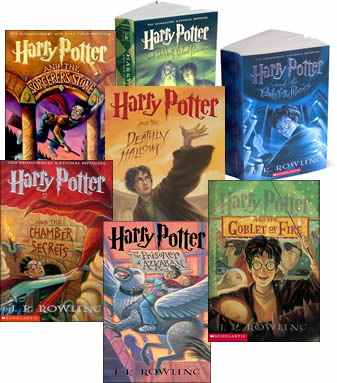 There Will be Spoilers Throughout This Post for the Harry Potter Series.
Alright, maybe I’m stretching it when I call myself a “youth” (I’m 23 now), but I grew up with Harry Potter. Harry was my age when the books came out, and I’ve followed them throughout.
The popularity of the Harry Potter books is undeniable. Few in my generation don’t at least know about the series. The movies are consistently blockbusters, and surprisingly well made.
Christian parents rightly wonder whether these books–which are filled with sorcery, witchcraft, curses, hexes, and the like–are suitable for their children. Let me preface the rest of my discussion with my conclusion: the Harry Potter books are enjoyable literature which will build vocabulary, expand minds, and get children excited about reading.
Synopsis
The series follows Harry Potter through 7 years of his life, starting when he is 11. It is set in modern day England. There are two worlds in the series: the world of “muggles”–those who can’t use magic–and the world of wizards. The wizards go to great lengths to keep their world a secret from any “muggles” who are unrelated to wizards (or in important positions like the Prime Minister). Thus, when the series starts, Harry Potter knows nothing of his wizarding past, having been raised by his aunt and uncle, who hate everything having to do with wizards.
Despite his lack of knowledge about the world of wizards, Harry Potter is himself hugely famous to wizards. He is known as the “Boy Who Lived” because when he was but a baby, an evil wizard known as Lord Voldemort (frequently referred to as “You-Know-Who” or “He-Who-Must-Not-Be-Named”) attempted to kill him and failed. Harry’s parents were killed in the scuffle, but when Voldemort tried to kill Harry, the killing curse rebounded and killed Voldemort instead. Thus, Harry is seen by many as the defeater of the greatest evil wizard of all time. Everyone knows his name; there is a monument to him at his old home; he has a lightning-bolt shaped scar which clearly identifies him, and he knows nothing about this.
Then his life changes when, at age 11, he is invited to attend Hogwarts, a school for wizards. Thereafter, the books follow Harry’s growth as a wizard with his friends, as well as the rumors of and eventual rise to power of Voldemort. It culminates in the final book, The Deathly Hallows, when Harry races against time with his friends to destroy Voldemort. (For a more in-depth synopsis, check out the page here. Check out the links for each book’s plot synopsis on the same page.)
Analysis
The question which has been asked repeatedly within the Christian community is “Are these books appropriate for my children?”
I started reading Harry Potter when I was 11 years old. As each book came out, I devoured it immediately (except for a brief hiatus before book 5). The books do have very scary, and even disturbing, moments. Voldemort is an evil wizard, and he is portrayed as such. He orchestrates murders and he and his cohorts murder with an attitude of nonchalance. The books also have many scenes of “kids being kids”. Harry and his best friend, Ron, often cheat off their mutual friend Hermione in order to complete their homework. Ron’s older brothers are pranksters of the highest level, whose very lives are dedicated to perfecting their antics. Rivalry between youths is also portrayed, as Hogwarts features four “Houses” which compete for top honors at the end of each year. The books also pull no punches in the realm of “magic”; the children are engaged in hexes, curses, charms, astrology, and the like.
Suggestions for Parents
So what should a Christian parent do with this series? It is impossible to issue a blanket statement that will apply to all parents. Instead, I want to offer several suggestions and comments.
First, there are few books which will keep children and youths reading as well as the Harry Potter Series. It has helped to increase literacy in a generation from which appreciation for books seems to be disappearing. (See the interesting article here for some insight on this phenomenon.)
Second, the Harry Potter books distinguish between good and evil to an extent that much other literature does not. There is no doubt that Voldemort is evil and that Harry and friends are the “good guys.” However, this leads me to the third point: the series acknowledges that no human is perfect. Everyone, from Harry’s father to Dumbledore (headmaster of Hogwarts) has things in their past they regret. I don’t think this is a fault of the series (though some people do–arguing that this diminishes the distinction between good and evil); rather, it brings to light something we–as Christian in particular–acknowledge is true: all people are sinners in need of salvation (this is not a theme developed in the books).
Fourth, despite the use of magic of all kinds, there remains a clear distinction between acceptable practice and unacceptable practice. Some have feared that Harry Potter would increase the interest in witchcraft and wizardry in youths. I personally think this is ludicrous. But that leads me to the fifth point.
Fifth, you as parents are responsible for teaching your children the difference between reality and fiction. My parents did a fantastic job on this. Reading Harry Potter never made me want to explore witchcraft, alchemy, or astrology. I knew such things were to be avoided. That is, I could distinguish between reality and unreality. I think that too often, Christian parents in particular underestimate the power of youths to make this distinction. Yet few parents would object to their children reading Star Wars. Perhaps it is the use of “witch” and “wizard” which makes parents leery. But, in my opinion as a Christian who grew up reading Harry Potter, there is no need to fear… unless children have not been taught to realize a difference between fact and fiction.
Sixth, parents need to be informed. When their children are interested in something like Harry Potter, it is too often that parents read only the negative sources. What better way to judge whether something is appropriate for your children than by reading the book yourself?
Questions
Kenneth Samples (cited below) argues that there are three major questions for parents to ask about Harry Potter (and other books). First: “How can Christian parents test their decisions in terms of Scripture, conscience, and reason?” Christian parents should always turn to these sources to figure out whether something is appropriate for their children.
Second: “Is it appropriate to use dark and occult images in fantasy literature to convey a narrative in fantasy literature?” Samples notes that C.S. Lewis and J.R.R. Tolkien both use these images to convey their message. Are these appropriate usages? (I think yes, but the key here is that there is no quick and easy answer for everyone.)
Third: “Does the book use these images at literary devices to propel the broader story, or, rather to promote occult involvement?” Samples argues this is a critical question. If the Harry Potter books simply use the occult images as a literary device, then it seems like there is no problem. The Harry Potter books do seem to be in the former category rather than the latter.
Fourth, “What is the overarching worldview reflected in the books and how does it compare or contrast with the Christian worldview?” This can spur discussion on books and series that aren’t even intended to convey the Christian worldview.
Conclusion
I said earlier that there is no fast and easy way to say “yea” or “nay” for all parents to a series like Harry Potter. I hope that my comments will help concerned parents figure out where to stand on the series. I want to make my own view absolutely clear, here at the close. I think the Harry Potter books are fantastic. They feature memorable characters and exciting plots. Not only that, but they get kids interested in reading. They build vocabulary (I remember personally grabbing a dictionary once in a while when I was younger and reading Harry Potter). The books distinguish between good and evil while maintaining the reality no one is perfect. They will spur discussion. Ultimately, I recommend Harry Potter to parents, but with the qualifier that parents have taught their children about fact and fiction and that they are willing to engage their children in discussion, which may (probably does) require reading the books themselves.
Source
Samples, Kenneth. “To Read or Not to Read: Harry Potter and the Philosopher’s Response.” Straight Thinking Podcast. 10/20/2009.
———
The preceding post is the property of J.W. Wartick (apart from citations, which are the property of their respective owners) and should not be reproduced in part or in whole without the expressed consent of the author. All content on this site is the property of J.W. Wartick and is made available for individual and personal usage. If you cite from these documents, whether for personal or professional purposes, please give appropriate citation and provide a link to the original URL. By viewing any part of this site, you are agreeing to this usage policy.
Devotion for an Apologist/Philosopher: Ecclesiastes
 There are so many verses, chapters, and books in the Bible which resonate with me as a Christian philosopher/apologist. Ecclesiastes ranks near the top, however, due to its wonderfully philosophical message and style. The underlying theme of Ecclesiastes is that without God, everything is meaningless.
“‘Meaningless! Meaningless!’
says the Teacher.
‘Utterly meaningless!
Everything is meaningless.’… What has been is what will be, and what has been done is what will be done, and there is nothing new under the sun.” (1:2, 9).
The book starts with the idea that there is “nothing new under the sun.” The theme of “under the sun” is important to note. Consistently, “under the sun” is used to refer to “on earth.” It is in stark contrast to the “permanence of heaven” (TLSB). The theme contrasting life here on earth with heaven does not become apparent until very late in the book, so we too shall leave it until the end.
Solomon continues to explore the idea that that which we do “under the sun” is utterly meaningless. “For in much wisdom is much vexation, and he who increases knowledge increases sorrow” (1:18). The more we know, the more we sorrow. We can see themes like this in atheists like Albert Camus or Sartre, whose exploration of a world without God lead them to question whether suicide may be the only valid option.
“For what happens to the children of man and what happens to the beasts is the same; as one dies, so dies the other. They all have the same breath, and man has no advantage over the beasts, for all is vanity [also translated “meaningless”]. All go to one place. All are from the dust, and to dust all return” (3:19-20). The Teacher/Preacher goes on to contemplate our end: “Who knows whether the spirit of man goes upward and the spirit of the beast goes down into the earth? …Who can bring [man] to see what will be after him?” (3:21, 22b). It is death itself which makes life meaningless. Who knows what happens after death? Everything “appears utterly futile” (Waltke).
However, the Preacher/Teacher does not want us to collapse into despair. Without God, under the sun, all is meaningless. But with God, there is hope, joy, and meaning. This theme is sown in chapter 5 (verses 2-3; 7; and 19-20). Yet before fully developing this theme, Solomon returns to a life (and death) under the sun.
The existential life under the sun is absurd. “For the living know that they will die, but the dead know nothing, and they have no more reward, for the memory of them is forgotten. Their love and their hate and their envy have already perished, and forever they have no more share in all that is done under the sun” (9:5-6). Again the theme is “under the sun”. Without God, the life under the sun is meaning. We die, we pass away forever, we know not what comes after death, and even our actions pass away from under the sun. We no longer have a “share” in what is done under the sun.
The theme repeats throughout the book. “Under the sun”, all is meaningless, there is nothing new, and life itself passes away. Even a constant search for pleasure can only be meaningless.
Yet the conclusion to Ecclesiastes radically re-imagines the book. Solomon’s point so far has been that “you cannot make sense of life” (Waltke). Life under the sun is meaningless, futile, and vain. Existentially, the more we know, the more despair we can find. The more we explore life “under the sun,” the more we realize that it will be extinguished, and our actions will no longer impact that life.
The story does not end there, however. “The end of the matter; all has been heard. Fear God and keep his commandments, for this is the whole duty of man. For God will bring every deed into judgment, with every secret thing, whether good or evil” (12:13-14). The final verses of the book turn the meaning of the entire work about. The Preacher/Teacher comes to the conclusion: without God, all is meaningless; with God, there is good and evil, there is judgment, and there is duty. Rather than striving for nothing, we should strive for God. Rather than despair and futility; there is duty and good. Without God, life is meaningless; with God, there is meaning.
Sources:
Bruce Waltke, “Understanding the Old Testament.” Institute of Theological Studies. 2009.
The Lutheran Study Bible. (St. Louis, MO: Concordia Publishing House, 2009).
The picture is from The Lutheran Study Bible.
———
The preceding post is the property of J.W. Wartick (apart from citations, which are the property of their respective owners) and should not be reproduced in part or in whole without the expressed consent of the author. All content on this site is the property of J.W. Wartick and is made available for individual and personal usage. If you cite from these documents, whether for personal or professional purposes, please give appropriate citation and provide a link to the original URL. By viewing any part of this site, you are agreeing to this usage policy.
Enriching your Mind in Apologetics
 (Yes, I know the picture is Brain Coral. I don’t like how brains look, so I put coral in the picture instead. I think you can make the connection.)
My own development as a Christian apologist and philosopher has been bolstered by a number of practices, many of which were learned from others. I wanted to share many of these resources for learning about and growing in faith. Mostly, the idea is to provide resources to others who desire to learn more about Christ. (You’ll find many of the links I use link directly to Apologetics 315. I highly recommend this site!)
Podcasts– Listening to others reflecting on elements related to apologetics and philosophy of religion is an awesome practice. I recommend downloading podcasts and listening to them on the way to work or school. Even with 15 minutes a day dedicated to listening to a podcast, you’ll be surprised by how much you can learn. Some fantastic podcasts can be found at Apologetics 315’s list of “The Best 16 Apologetics Podcasts.”
Blogs– Seek out other people who are discussing apologetics and writing on the issue. Finding other blogs and reading them will help you clarify important issues as well as finding new approaches to the same problems. Check out my “Blogroll” on the side of this page for some of my recommended blogs. Also, check out Apologetics 315’s list.
New Challenges– Always seek out new ideas and things to explore. Often, when you are researching a topic, you can get bogged down. When this happens, pick up a different topic and read a book on it. It will often feel like a breath of fresh air and give you a break. Then, you can return to the area you were reading before.
For example, I was reading several books on historical Christianity and apologetics related to Christ recently, to the point that I was getting a bit tired of it. So, I decided to read a random book from my shelf and read a book called Time and Eternity by Brian Leftow. This was a book about God’s relationship to time. In it, Leftow argued for a timeless view of God (in contrast to William Lane Craig’s Time and Eternity, in which he argues God is temporal post creation). It was a wonderful break and it got me interested in a new area.
You’ll be surprised by how picking up books you may not even think look interesting will lead you to new avenues for discovery in your apologetics research. There is no shortage of topics, but some major areas you could explore are (I’ve included some issues which are not Christian specifically, but that it would be good to have background knowledge about): theistic arguments for the existence of God, the problem of evil, God’s relationship to time, God’s attributes, the Incarnation, the Trinity, theistic metaethics, panentheism, atheism, epistemology, metaphysics, reformed epistemology, Thomistic philosophy, Platonism/neoplatonism, Augustine, Church Fathers various doctrines which are non-essential, and many, many more. Simple searches on amazon for these topics will turn up multiple books of interest.
Read the Bible– It seems like an obvious point, but I’m guilty of forgetting it too often to count: read your Bible. While researching topics related to God and Christ, it is all too easy to forget to read the Bible itself. I cannot underscore how important it is to get into Scripture daily. You’ll be surprised at the things you notice as you read Scripture alongside other studies. Your research into other fields will heighten the interest of Scripture as you find passages which speak to your areas. Not only that, but the Holy Spirit works through the Bible to strengthen faith. It is imperative that you continue to open the Bible, take notes, and meditate on God’s Word.
Kamal Saleem: A Muslim Cries Out to Jesus
Check out this awesome video of a former Muslim’s religious experience of Christ our Lord:
Pro-Life Resources
 Abortion is killing millions of children a year. We need to stand together to speak for those who cannot. Biola University recently had a seminar called “Ethics at the Edge of Life” during which they had several speakers come to make the case for life. They’ve offered this fantastic resource free online. I cannot stress how awesome this is. It is available in video and audio. Please take the time to download this programs and listen to them, as they will equip you for making the case for life. I listened to them on my way to and from work for about a week and a half, and I gained so much practical knowledge. Ethics at the Edge of Life: Video //// Audio.
Another fantastic resource is the Life Training Institute. There are free articles which will give you useful arguments against abortion, as well as educate you on the issue itself. For just one great article, check out “Are Embryos Constructed or Do They Develop?” Also available are the lecture notes from “Ethics at the Edge of Life” for free.
There are tons of great websites out there. LifeNews.com features news stories related to right-to-life issues. National Right to Life has news stories as well as several resources. Americans United for Life is one of my favorite sites. I recommend subscribing as their e-mails keep you updated with news and information about the legislation having to do with abortion.
Don’t forget to check out the many great books on the topic. Two of my favorites are Pro Life Answers to Pro Choice Arguments by Randy Alcorn and The Case for Life by Scott Klusendorf.
Life: Defining the Beginning by the End- A great article on the question of when life begins.
The case against abortion: Medical Testimony– a series of quotes from textbooks, pro-choice advocates (including Peter Singer), and others showing that life begins at conception.
Does the case for pro-life rest only on religious foundations? No, it doesn’t. Check out a fascinating article on the topic, here.
Also, stop by my page which features all the pro-life posts I’ve written. It is accessible here.
The Case for Christianity in 15 Minutes (or less)
 Recently, the need for defending Christianity in a short time period has come to light. I was in a discussion with some acquaintances and was asked to outline why I believe what I believe, but we were on a time crunch so I only had about 15 minutes. Thankfully, I have had access to some wonderful resources that allowed me to memorize some quick, but useful arguments.
This post is intended to provide other Christians with a case for their beliefs that they can memorize and share with others. Note that the study cannot stop here. Most people will not be convinced by the basics outlined here. The goal of this post is to provide a springboard for discussion and keep people engaged in the idea that God exists and Jesus is Lord. Each section is intended to flow directly into the next. I encourage my fellow Christians to memorize a “case for faith” in a manner like this, so they may be prepared with a reason for the hope within them (1 Peter 3:15).
The arguments are necessarily short and simple due to time constraints, but they offer a short defense that will, hopefully, spur further conversation (again, don’t forget to do more research!). Greg Koukl says we don’t need to convince someone right away–we just need to “put a rock in their shoe” so that we can keep the discussion going later. As always, the most effective apologetic is a prayerful, Christ-reflecting life. May the Holy Spirit guide you all.
1. God Exists (7 minutes)
There are many reasons to believe God exists, let me share a few:
Kalam Cosmological Argument
1) Everything that began to exist has a cause
2) The universe Began to exist
3) Therefore the universe has a cause.
It seems intuitively obvious that 1) is true. Things don’t just pop into and out of existence. 2) follows from modern scientific discoveries like the Big Bang, which implies a single cosmological beginning. 3) follows via modus ponens (the most basic form of argument) from 1 and 2. This argument shows a transcendent cause of the universe. The cause must also be personal because [it] brought the universe into existence at some point, which requires a choice. Choices can only be made by persons, so this entity is personal. (See William Lane Craig in “On Guard”, linked below, for more.)
[For more reading on the Kalam Cosmological Argument see my posts linked below.]
The Moral Argument
4) If there are objective moral values, then God exists
5) There are objective moral values
6) Therefore, God exists.
“Objective moral values” here means that moral values are true regardless of what anyone thinks. For example, “murder is wrong” would be wrong even if every single human being thought murder was the way to achieve greatest happiness and encouraged it as an extracurricular activity for teenagers. But the only way to hold that objective moral values exist is to grant God’s existence, because objective laws require an objective lawgiver.
Without God, however, morals reduce to “I don’t like that.” It seems ludicrous to believe that murder is wrong just because we don’t like it. It is something actually wrong about murder that makes it wrong. That which makes it wrong is, again, the commands of the Lawgiver: God. People have a sense of moral objectivity built into them, which also suggests both the existence of objective morals and a God who created in us this conscience. (See Craig “On Guard” and C.S. Lewis, “Mere Christianity”.)
2. Christianity is Unique (3 minutes)
Religions are not all the same:
1) Many religions have contradictory truth claims. (Some forms of Buddhism say: There is no God; Christianity argues: There is a God; Hinduism states: there are many gods)
2) Even among theistic religions, there are contradictory claims (Christianity: Jesus is God; Judaism: Jesus is not God; Islam: Mohammed is prophet; Christianity: Mohammed is not a prophet; Judaism: Mohammed is not a prophet; Islam: Jesus is not God; etc.).
3) The Law of Noncontradiction (actual contradictions like “square circles” or “married bachelors” cannot exist and are not real) shows us that therefore, these religions cannot all be true.
4) Christianity is unique in that its central religious claim is a historical one: that the person Jesus Christ died and rose again from the dead. This is a historical event which can be investigated just like any other historical event. Yet exploration of this event leads to the conclusion that…
3. Jesus is God (5 minutes)
1) The Gospels are reliable. They demonstrate many criteria for historical truth: multiple attestation (four Gospels telling the same story, but with enough significant differences to demonstrate they didn’t copy off each other), principle of embarrassment (the authors of the Gospels included details which would be embarrassing either to themselves or culturally, such as the fact that women were the first witnesses to the risen Christ in a culture in which women were not trusted), the writers died for their belief in the historical events (while many religious believers die for their beliefs, it seems unfathomable that the Christian Gospel writers would willingly die gruesome deaths for things they made up–which is what alternative theories argue), etc. (See Strobel, “Case for Christ”)
2) Jesus made divine claims “I and the Father are one” John 10:30; “Before Abraham was, I am” John 8:58; etc.
3) The miracle of the resurrection is God’s confirmation of Jesus’ divine claims. If the Gospels are reliable (per 1), then Jesus is divine.
Conclusions
There is good evidence to think that God exists. There are even other arguments that could be presented, such as the teleological, ontological, transcendental, argument from religious experience, and more. We can also see that not all religions can be true. Furthermore, there are good reasons to think the Gospels are reliable and that Jesus claimed to be God and had His claims authenticated by God Himself in Jesus’ resurrection.
Remember, this is not even close to a full defense of Christianity. It is simply a condensed, easy to remember defense designed to be ready at a moment’s notice for when the Holy Spirit leads people into our paths. We need to do more research, offer more arguments, and continue to witness as the Holy Spirit works through our testimony. This defense is by no means a total apologetic; it is meant only as an introduction to spur further conversation. Always have a reason.
Later Edit:
Some have objected to this post on various grounds, most of which are reducible to my arguments not being developed enough. I emphasize once more, this is supposed to be used for a 15-minute defense of the faith, not an entire survey of the field. See my links for more reading, and continue to investigate for yourself.
Further Reading
If you are interested in further reading on these topics, I suggest:
1) On my site, check out the posts on the existence of God: here. Specifically, for the Kalam Cosmological argument:
The Kalam Cosmological Argument
Dawkins and Oppy vs. Theism: Defending the Kalam Cosmological Argument
“The Multiverse Created Itself” and “Who made God after all?”- The Kalam Cosmological Argument
The Leibnizian Cosmological Argument (not developed in this post).
2) On Guard
3) The Case for Christ
4) Mere Christianity
———
The preceding post is the property of J.W. Wartick (apart from citations, which are the property of their respective owners) and should not be reproduced in part or in whole without the expressed consent of the author. All content on this site is the property of J.W. Wartick and is made available for individual and personal usage. If you cite from these documents, whether for personal or professional purposes, please give appropriate citation and provide a link to the original URL. By viewing any part of this site, you are agreeing to this usage policy.
“Black Swan”: A Christian Analysis
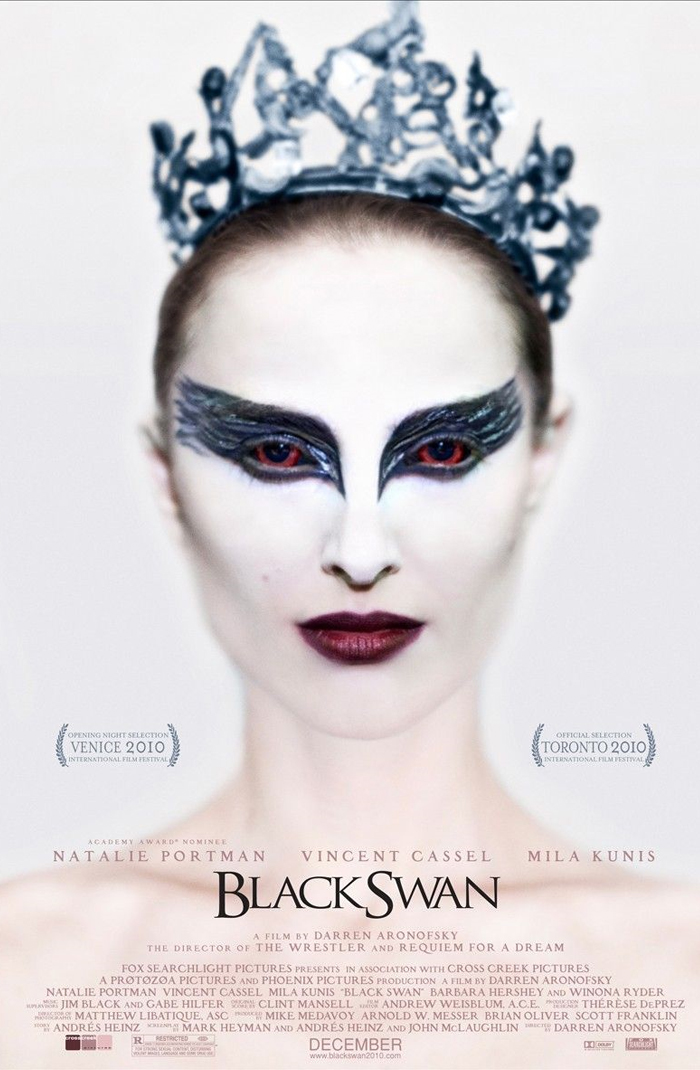 “Black Swan” is, in a word, “disturbing.” There is no doubt that the film is well made, and that Natalie Portman pulls off a stunning performance. Rather than reviewing it as a movie worth seeing, I thought I’d comment on it from a Christian perspective. In what follows, there will be spoilers.
What kind of thoughts can the Christian take away from a movie like “Black Swan”? I think the most obvious point is that the Christian can reflect on the nature of sin. What will things of this world drive us to? In her pursuit of perfection, Nina (Natalie Portman) is driven to the depths of her soul’s darkness. She is lead to violent fantasies (it’s unclear as to whether much of the violence is real or not) and to sexual depravity. It all culminates in her self-destruction, sacrificing her life for the “perfect” performance of “Swan Lake.”
I think we can see similar themes in our own lives as Christians. We often pursue worldly passions–among them a well-paying career; a sexual sin; an addiction; or the like–rather than focusing on that which matters: our Lord. Yet Christians even have this very idea built into the fabric of their belief system: we are sinners, with the capacity for great evil within us. Indeed, we are “originally sinful” and “totally depraved”, by nature we are sinful and unclean. “Black Swan” poignantly portrays this. An innocent girl is driven to the depths of hell in her pursuit of the world. It’s maddening, it’s horrifying, it’s disturbing. Despite this, in a way, the story draws us in. We can relate to the obsession with the world in ways that should scare us. Perhaps that’s why I found “Black Swan” so frightening. It wasn’t a horror movie by any means–it has its thrills and chills–but mostly, the fear is of the reality that could be. Could we become the “Black Swan” ourselves?
Now, I’m not suggesting “Black Swan” is a Christian film. It has sin of almost every imaginable kind portrayed, sometimes graphically. My point is that Christians can take away a message from the movie. The pursuit of the world will lead only to darkness… a “perfection” which can only destroy.
———
The preceding post is the property of J.W. Wartick (apart from citations, which are the property of their respective owners) and should not be reproduced in part or in whole without the expressed consent of the author. All content on this site is the property of J.W. Wartick and is made available for individual and personal usage. If you cite from these documents, whether for personal or professional purposes, please give appropriate citation and provide a link to the original URL. By viewing any part of this site, you are agreeing to this usage policy.
The Life Dialogue: Old Earth Creationism 4
 This is part of a series of posts on the “Life Dialogue/Origins Debate” within Christianity. View other posts in the series here.
The obvious point of contention between Old and Young Earth Creationism (hereafter OEC and YEC) is the age of the Earth/Universe. Hugh Ross argues powerfully for an old universe from both a theological and scientific perspective in A Matter of Days: Resolving a Creation Controversy.
The argument against the YEC position (derived from A Matter of Days) runs as follows:
1) The most coherent YEC position to explain the appearance of age in the universe is to hold that the universe appears to be old, but is not old in fact. (YECs often hold that God created light already traveling to earth, created Earth already to the point it could sustain life, etc.)
2) Scripture states that God does not lie. God is not a deceiver.
3) Scripture states that nature provides an accurate record of reality, though not a complete record.
4) 1) Scientific evidence (nature) demonstrates the universe is about 14 billion years old, as opposed to the 10,000(ish) years YECs grant.
5) Therefore, the universe is actually old. This follows from the accurate evidence of nature combined with 2) that God doesn’t deceive. If the universe is, in fact, 10,000 years (or so) old, then God has deceived humanity by making it in such a way that it appears to be much older than it is.
Premise 1) seems to definitely be the case. First, because the universe, according to the most modern science, is anywhere between 13-16 billion years old. Second, while YEC potentially has theories to explain why earth looks so old without relying on it being created already aged to a certain point (i.e. hydroplate theory), this does nothing to explain the background cosmic radiation; how we can see light from stars that are too far away to be seen yet were the universe 10,000 years old, etc. It therefore seems as though the only way to explain the apparent age of the universe is to argue that it is just that: apparent only. On this theory, God created the earth universe enough to support life, about 10,000 years ago.
Premise 2) doesn’t really need a defense (but if desired: Romans 3:4; Numbers 23:19; Deuteronomy 32:4; 1 Samuel 15:29; Titus 1:1-2).
Premise 3) can be seen in things like Psalm 19:1-4a:
“The heavens declare the glory of God;
the skies proclaim the work of his hands.
Day after day they pour forth speech;
night after night they reveal knowledge.
They have no speech, they use no words;
no sound is heard from them.
Yet their voice goes out into all the earth,
their words to the ends of the world.”
Premise 4) is at least implicitly accepted by YECs because they argue that even though science shows the universe is very old, it is not actually that old. It is worth noting that some YECs would claim that “real” and “unbiased” science would not lead to the conclusion that the universe is very old. There is little one can do to counter this claim other than argue that were that true, the YEC account would be able to present a fully testable, verifiable scientific model that shows that things like the background cosmic radiation are false.
Finally, the conclusion seems to follow from the preceding argument. God told us nature is an accurate record; He also created the universe (on YEC) in such a way that it appears to be billions of years old, but is not actually that old. Therefore, He created a universe that would deceive us into thinking, falsely, that the universe is old. But, God does not lie, so this cannot be true. Therefore, the universe is old.
I find this argument very convincing. It underscores my main problem with the YEC position: namely, that the best evidence does show the universe is old, and so God would be a deceiver were He to make it thusly.
SDG.
——
The preceding post is the property of J.W. Wartick (apart from citations, which are the property of their respective owners) and should not be reproduced in part or in whole without the expressed consent of the author. All content on this site is the property of J.W. Wartick and is made available for individual and personal usage. If you cite from these documents, whether for personal or professional purposes, please give appropriate citation and provide a link to the original URL. By viewing any part of this site, you are agreeing to this usage policy.
Book Review: New Proofs for the Existence of God by Robert Spitzer
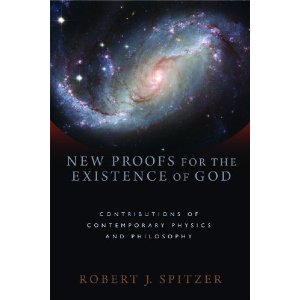
Robert Spitzer’s New Proofs for the Existence of God (hereafter NPEG) presents in rigorous detail, five arguments for the existence of God, a section discussing the plausibility of multiverse/string universe scenarios, and some philosophical discussion on methodology.
Before continuing the review, I should note that the “New” in NPEG is nuanced. Spitzer notes this himself (my guess is that it was a marketing technique. “New” refers to the evidence from cosmology and further research in philosophy which lend new power for these arguments.
Chapter 1 presents a cosmological argument. Spitzer cogently argues that “(1) If there is a reasonable likelihood of a beginning of the universe… and (2) if it is apriori true that ‘from nothing, only nothing comes,’ then it is reasonably likely that the universe came from something which is not physical reality” (Spitzer, 45). This conclusion is supported by explorations of current cosmological theories about the origins of the universe.
Chapter 2 presents the teleological argument, which Spitzer bases on the universal constants. The argument leads to the conclusion that “the odds against an anthropic condition occurring are astronomically high, making any life form… exceedingly improbable.” It is a probabilistic argument, the likes of which I defend in my article Past, Probability, and Teleology (Hope’s Reason 2011-1).
Following chapter 2 is a chapter which discusses the possibilities of inflationary cosmology and the string multiverse written by Bruce Gordon. It is extremely technical and will provide readers with cogent arguments against the possibility of a multiverse scenario circumventing the previous arguments.
Chapter 3 presents Spitzer’s metaphysical argument for the existence of God, which is full of sound argumentation along with some interesting Thomistic Philosophy wherein he discusses God’s simplicity in the most coherent way I have read. I greatly encourage readers to look into this chapter, if only for the discussion of this oft-neglected doctrine.
Spitzer follows this with Chapter 4’s metaphysical argument derived from Bernard Lonergan’s Insight, which is a subtle version of the argument from reason. This chapter was particularly good because it focuses on a little-used type of arguments for the existence of God–that if our universe is intelligible, that can only be explained by God’s existence.
Chapter 5 is an argument from contingency similar to the Leibnizian cosmological argument.
Chapter 6 engages the question of method in philosophy along with whether atheism is actually rational. I was intially put off by the title of this chapter (“Methodological Considerations and the Impossibility of Disproving God”), but happened throughout the book, I was pleasantly surprised by the rigorous arguments and enlightening conclusions Spitzer laid out.
Finally, the last two chapters outline some more considerations about the universe and the relation of humans and God.
NPEG was a surprising read for me. I went in with neutral expectations, and those were blown away. Spitzer’s knowledge of the topics in the work runs deep, and his writing style is clear and cohesive. It is genuinely exciting to read. Readers will be challenged by the arguments for the existence of God, and engaged in the details and philosophical explanations of these arguments. I highly recommend this work to those interested in advanced books on arguments for God’s existence.
——
The preceding post is the property of J.W. Wartick (apart from citations, which are the property of their respective owners) and should not be reproduced in part or in whole without the expressed consent of the author. All content on this site is the property of J.W. Wartick and is made available for individual and personal usage. If you cite from these documents, whether for personal or professional purposes, please give appropriate citation and provide a link to the original URL. By viewing any part of this site, you are agreeing to this usage policy.

 J.W. Wartick - Reconstructing Faith