J.W. Wartick
Book Review: “Think Christianly” by Jonathan Morrow
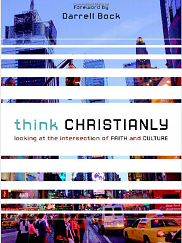 Jonathan Morrow’s new book, Think Christianly
Central to the work is the notion that “Due to the unprecedented influence and availability of constant media… the thoughts, attitudes, perceptions, convictions, values, and lifestyles of those inside the church are rapidly growing indistinguishable from… those outside the church” (19). The key is to see how to help Christians “think Christianly” about every aspect of life. The Christian life is not “Sunday only” or “in church only” but rather it is an every day, every second, every interaction life. Morrow, throughout the book, seeks to touch upon nearly every area of Christian interactions with culture, providing brief introductions along with recommendations for a way forward in each area.
Part one of Think Christianly focuses on our own culture and the need to equip the next generation to interact with the issues brought up around them. Morrow provides a survey of ways people try to avoid interacting with Christianity (54ff) and suggests a threefold way to engage with our youths so they do not fall victim to the challenges to our faith. This threefold engagement is composed of 1) mentors, “people to learn from and imitate in the faith” (57); 2) peers, “people to run the race with and to spur us on” (57); and 3) a robust Christian worldview, a challenge to youths to explore what they believe and why it matters (58). Conjoined, these help provide a valuable base for youths to explore their faith among their peers and mentors who can guide them towards resources and answer questions.
Part two provides ways to integrate the Christian worldview into every aspect of one’s life. Chapter four discusses three worldviews- naturalism, postmodernism, and Christian theism. These are the worldviews pervasive currently in western cultures, and Morrow provides several ways to interact with the competing views and analyze them. Chapter five provides ways to “cultivate a thoughtful faith” and chapter six provides some ways to be confident about engagement (along with a helpful discussion of forgiveness and breaking away from anger on pages 98-99). Part Two continues with a couple chapters about living like Jesus, which are extremely insightful–we need to be sure we think of Jesus as who He was and is: the Lord of all professions, master of all crafts. Finally, part two wraps up with what may be the most important chapter of the book: “Can We Do That in Church?” Morrow argues that we must see “The local church” as “God’s vehicle to reach the world with the good news… it is also the primary place where Christians are to be equipped for the ministry” (130). By utilizing some small portion in time in church to equip believers to engage, Christian leaders can radically change the perception of Christianity as a “Sunday only” venture. If believers do not get equipped, where will they be equipped? The truth is they’ll “google it” and find people without good credentials or intentions and learn from them instead (not saying there’s nothing good online–plenty of scholars and wonderful teachers are out there, but sifting through the muck can be difficult). This chapter, I think, is the most important in the whole book and provides a number of insights that church leaders must take to heart.
Part three provides a number of areas in which Christians need to engage and ways to engage with them. For example, taking the Bible seriously is a top priority and Christians need to know how to interact with the text. Of particular importance are the chapters on sex–which talks about porn addiction and same-sex attraction; and Christianity in the public square.
Morrow has peppered the book with brief interviews of leading Christian thinkers on a number of topics. While short, these interviews provide a number of great insights and will lead readers to explore many issues in greater detail. They range from “Leveraging the Internet to Make God Known” (with Randall Niles) to “Jesus Among World Religions” (with Craig Hazen), and beyond. Another helpful aspect are the lists of resources for further study, included at the end of each chapter. These include a list of books, DVDs, and websites for interested readers to explore.
There are few books that span as broadly as Think Christianly while also giving solid background discussions of each topic touched. Morrow continually provides valuable insights at a basic level which Christians can apply right now to start to “Think Christianly” about every aspect of life. If our churches and the members therein embrace many of the suggestions found in Morrow’s important book, we will be able to grow and positively impact the world in a major way. The book comes very highly recommended–it is the kind of book anyone involved in the church must have on their shelf and seek to apply to their lives.
I received a review copy of the book from Zondervan publishers. My thanks to Zondervan for the opportunity to review the book. I was not asked to write anything positive or negative about the book.
Think Christianly
Shells and the Biomass of Earth: A serious problem for young earth creationists
 Imagine an earth covered with 15 creatures per square foot. And no, these creatures are not merely bacteria; rather, they are animals which can produce shells. The sheer amount of biomass would be so great that none of the creatures could survive. Their food would all be gone and their habitat insustainable. Over at Naturalis Historia, the Natural Historian has written a compelling article about how just the fossilized shells in one portion of the Midwest lead to extreme problems for the Young Earth position.
The author of that post did a brief survey of fossils over a 300×500 mile section of the Midwest from West Virginia to Eastern Missouri and from southern Kentucky to the middle of Indiana and Ohio. Utilizing samples and several calculations which were based off of these samples, he decided to try to calculate how thick a layer would be of fossils if just this area (totally covered in fossils) were spread out over the surface of the entire planet. He was able to conclude that “15 shells per square foot are estimated…” over the surface of the earth just from this sampling. Readers should note that in his article he utilized the lower end on his estimates in order to avoid tilting the scale in favor of an old earth position.
What is the point of this discussion? Who cares? Well this fact actually presents young earth creationism (YEC) with a few major difficulties:
…even 15 shells trying to live within the space of a square foot at the same time would have trouble. One also has to consider several other things:
1) Not all the surface of the earth was ocean before the flood, if we say that 50% of the surface was land then that would mean there were 30 shells per square foot in the ocean.
2) In addition, most organisms that produced these shells likely could only live in shallow water along coasts not in the deep ocean so unless the whole ocean were very shallow (and I think some claim that it was, although that presents some other very perplexing problems) then that would also dramatically reduce the space in which these shells could have grown and died.
3) The shells are not sorted at all by size, as very small (<1cm) to large (>4cm) shells are always found mixed with one another.
Each of these is presents a different difficulty with YEC. For, as the author noted, the shells he surveyed is only one small sample of untold amounts of these deposits across the surface of the earth (see below for my own samples and some analysis). Now if YEC is correct, then all of these creatures would have had to live over the course of around 10,000 years (or fewer). Think about that for a moment. I know from personal experience that the area covered with these shells is about twice as large as estimated in the numbers already referenced above, and so we are then talking about 30 creatures per square foot over the surface of the earth. But then consider that these types of formations can be found across America and across the earth. I have no way to estimate the numbers, but ultimately we’re talking about a simply astounding amount of life living on the surface of the earth in that short of a time span. It would be physically impossible for the sheer weight of living creatures to survive at the same time. If the Earth were only about 10,000 years old, then we would have been knee deep or even buried in shell-producing creatures over the course of our lives.
Not only that, but these creatures would have been competing for resources like food and air (think about how much oxygen these creatures would have sucked up all at once!). And again, it’s not like the entire surface of the earth would have been habitable–these creatures live only in shallow waters. It doesn’t seem unreasonable to think that if all these creatures lived over the course of 10,000 years then the oceans would have overflowed with them.

The image I have linked to the right shows a pair of stones discovered in limestone in Kansas. There were literally dozens of feet of fossils just like these as far as the eye could see in the Castle Rock formation in Kansas. One could just walk up and pick a rock up off the ground and it would be like the picture to the right. There are places one can’t walk without stepping on large numbers of fossils. The picture that is at the beginning of this post is a picture I took while in this formation. It is not just the author of the article above who has observed the seemingly unending supply of fossils throughout the Midwest. I myself have observed limestone formations with fossils like these across Kansas for hours and hours of interstate. Not only that, but I grew up in northwest Indiana and observed massive limestone formations there as well. Here in Minnesota, one can also observe limestone along cutouts of the highway and elsewhere. One can go to areas along the Mississippi here in Minnesota and pick up fossilized shells along the riverbed.
So imagine that the estimates listed above by the Natural Historian are correct on the low end. Now imagine that all of Kansas is covered with these shells–I can attest to it. Imagine further that more portions of the Midwest are covered with other types of limestone which also would have added to the biomass of earth. Again, the numbers are staggering.
How in the world did all of this biomass get here within a few (10?) thousand years? That is the question which young earth positions must deal with. Note that the argument and evidence in this post do not rely upon any dating system, any background knowledge, or other scientific dating systems YECs tend to denigrate. Note that the argument only shows what is observable and asks a question: how did it get here? YECs would have to come up with some way to plausibly explain how all these creatures could have had their lives condensed into about 10,000 years.
God is not a liar (Numbers 23:19). The natural world attests to Him (Psalm 19). These conjoined Biblical points tell us that when we go outside and observe that the life we can observe in the past could not have all lived within 10,000 years, then it did not. Those who claim otherwise seemingly must either introduce a third option (some plausible explanation for these creatures’ lives–and note that it must be more plausible than the argument that they lived and died at the same rate they do now and that the world is simply old enough to have had that much life and death over the course of time) or they fall victim to a dilemma involving the cited verses: either the natural world does not attest to the Truth or God is actively deceiving us. The bottom line is that this is just one more hole in the Young Earth position. YEC is, simply put, false.
Appendix 1: A response to one objection
There have already been a few responses to this post on places other than this site. One response argued that the samples which I and/or Natural Historian took were not representative of the fossil record. Here is my brief response:
Take a trip through the Midwest sometime and look at the cuts through the highways. Every single time you pass through one in Kansas it is absolutely filled with limestone and fossil-rich rock. The same happens through most of Missouri, Illinois, Indiana, etc. I could literally walk up to a wall of shells and pull out a huge sampling of them.
Now suppose this isn’t representative. Suppose that it just so happened, at random, that the roads were set up in such a way that they only hit the most fossil-rich deposits out there. What does that mean?
Not very much. We can observe these same deposits all over the world. The sheer amount of these deposits means that we could very easily produce the number of fossils Natural Historian estimates over just the Midwest.
Again, to clarify, I’m saying let’s assume that Natural Historian overestimated several thousand(milliion?)-fold and so the number of fossils he estimates for the midwest can only be gathered if we collect them from all over the earth, and only from those highway cuts or other points of exposure where such deposits have observed (again, making the extreme assumption that only those places which have happened to get hit by highways or erosion are those with these deposits). But in that case, we can still gather enough fossils to say the entire surface of the earth could be covered by about 15 fossils per square foot.
But wait–these fossils don’t occur in deep oceans or on land. They only occur in shallow oceans. Suddenly we’re up to about 30 per square foot if we assume they occurred in water anywhere (including riverbeds, deep oceans, and the like). But eliminate the places these types of fossils do not occur and the number of fossils increases even more.
Suddenly we find that the exact problem I raised above remains a problem–even if we only take those fossils which are exposed now (and again note that this is a huge underestimate and requires extreme blind faith that there are no other fossils under the ground anywhere, not to mention the fact that there may be even more fossils that are exposed which could drive that number up exponentially). There has been simply too much life on earth to maintain a young earth position.
SDG.
——
The preceding post is the property of J.W. Wartick (apart from citations, which are the property of their respective owners) and should not be reproduced in part or in whole without the expressed consent of the author. All content on this site is the property of J.W. Wartick and is made available for individual and personal usage. If you cite from these documents, whether for personal or professional purposes, please give appropriate citation with both the name of the author (J.W. Wartick) and a link to the original URL. If you’d like to repost a post, you may do so, provided you show less than half of the original post on your own site and link to the original post for the rest. You must also appropriately cite the post as noted above. This blog is protected by Creative Commons licensing. By viewing any part of this site, you are agreeing to this usage policy.
Really Recommended Posts 4/26/2012
 There are a ton of great Christian blogs out there. Here I’ve highlighted only a few great posts. Check out my blogroll for more excellent blogs! This week I’ve featured posts discussing Christian Memes (one extremely important post!), how some secondary issues can be extremely important in apologetics, a beautiful sculpture and a discussion about it, an apologetic comic, Richard Carrier, and more.
By the way, as you read these posts I’d like to know what you think of them, so feel free to drop a comment here or at the posts themselves and let bloggers know you’re reading. Our best encouragement is you!
What Memes Mean: Avoiding Scumbag Apologetics– I have seen this same problem occurring in many places. I really appreciated this relevant post about the use of memes (often pictures with captions) and Christianity.
Debate in Apologetics: Secondary Issues of Primary Importance– This thoughtful post notes how some issues, like Young Earth Creationism, can potentially be harmful to the faith and the defense of the faith.
‘Heart-rending’: Young Slovakian sculptor captures post-abortion pain, mercy, and forgiveness– Beautiful artwork and pro-life discussion as we remember that it is not just one innocent life harmed by abortion.
Web Traffic for Reformed and Creationist Sites– A post which provides some insights into how people on the internet are consuming theology.
Constitution of the Divine Foot-in-the-Door Resistance Army– No Apologies Allowed constantly puts out great comics which allow for Christian engagement. This one is no different. Thought-provoking and insightful.
Compassion Wins: A Longtime Atheist Becomes Christian– Demonstrating a life like Jesus’ can be the best witness.
Richard Carrier on the Resurrection: Part 2– A lengthy and engaging post which shows some of the problems with Richard Carrier’s attacks on Christianity and miracles.
Engaging Culture: A brief guide for movies
There has been much furor recently over the release of the Hunger Games movie. My own discussion of that movie has drawn a number of comments from Christian visitors, both good and bad (and I appreciate the candor!). One theme that has reverberated throughout the discussion is the appropriateness of Christians watching violent movies or even considering using them to try to engage with the culture at large. There are no easy answers to these questions, but in this post I seek to provide a brief guide for Christians who hope to use movies to engage with the culture at large.
Appropriate?
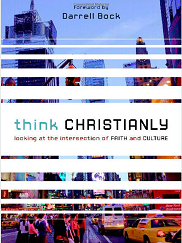 Perhaps the most contentious issue that was brought up in my own discussions of the Hunger Games was the appropriateness of viewing violent movies and even using them to engage with others. Jonathan Morrow, in his important book Think Christianly, provides an excellent discussion of the topic at hand. He prefaces his remarks with the comment that “the Bible would probably get… an NC-17 rating in [some areas like the end of Judges]…” Yet it is important to note that “The Bible does not use evil for exploitation” but rather “always records evil and sinful behavior and the consequences that come with them” (193). Violence in a work does not necessarily exclude it from the Christians’ sphere of engagement.
Morrow provides a number of useful questions for Christians to consider when looking at a movie. Here are a few samples (see p. 194):
- Does it endorse evil…?
- Does it incite us to evil acts?
- Is the evil gratuitous?
These are the types of questions Christians must ask as they consider a movie. Now, it is clear that Christians won’t always agree on the answers to these questions. What some consider gratuitous might be something someone else considers necessary for a plot. But violence of itself does not mean a Christian cannot engage with a movie. In particular, some movies use violence in order to point out the horrors which follow from it. This is, in fact, Biblical. Throughout the Bible, violence is depicted along with its consequences, yet it is clear that in all God is in control (see, for example, the Joseph narrative). As Christians interact with movies that have violence, they can focus the discussion on the consequences of humanity’s sinfulness and the need for a savior.
Engaging With the Movies
Morrow suggests a three-layered approach to movies: examine the form of the film (this involves engaging with the artistic elements such as music, cinematography, and the like); observe the content of the film (what is the message the director is putting forward? who is the hero/villain [these characters generally convey that which the director wants to show as good or bad]); note the function of the film (what is the film’s purpose? does it portray sinful behavior in a positive light?) [191].
These questions allow one to proceed to the level of engagement with the culture. If a film is inappropriate, it is not enough to simply dismiss it as a horrible, immoral movie. Rather, one can engage thoughtfully with those who want to discuss the movie. “Why did you enjoy the movie?”; “What kind of message do you think the movie tried to put forward?”; “Do you agree with the central theme of the film?”–these are the types of questions Christians can ask in order to engage with the culture. Note that none of these questions comes across as antagonistic or angry. Rather, they come across as interested and thoughtful. Whether one has seen a movie or not, one can easily engage in a dialog which can lead to some interesting discussions.
The brief overview I’ve given here is merely a guide. Interested readers should check out Morrow’s book (linked below).
A Case Study: The Hunger Games
 I’ve already discussed The Hunger Games at length in both the film and book versions, so I won’t repeat that discussion. Here, let me just apply what we see above. There are a few minor spoilers below.
What is the form of the film? -Generally, it seems to be a blockbuster movie with grandiose special effects and stirring musical scores. The visuals often dazzle with bright colors in the capitol but they are very subdued in some parts, particularly in the districts which are under the oppressive rule of the capitol.
What is the film’s content? -In my post on the movie, I argued that the content largely serves to direct the audience’s attention inward: we are, in a sense, the capitol. We are the ones who actively participate in activities to give ourselves comfort while there is great suffering around us. The violence in the movie is there, but it is portrayed in a way which does not glorify it. It is the people of the capitol who glorify the violence, and it is the people of the capitol who are the confused villains.
What is the function of the film? -Again, it seems to be a social commentary on the evils we bring about here. The decadence of the capitol is our own indulgence; the violence going on in the Games are the evils of the world. I see the film as a stirring commentary on social injustice.
But what if you think the violence is too much? What if you think I’m just wrong about this particular film? Should you jettison it altogether? I think not. Instead, I suggest you turn to the questions above. Ask: “Why did you like the Hunger Games?”; “Do you think the film glorifies violence, why or why not?”; “What current problems do you think relate to the film?”
Conclusion
Christians are called to engage the culture around them in a transforming fashion (1 Cor 9:19-23). Engaging with popular films is just one way to engage with the culture. As popular movies come out, it is important for Christians to know the relevant issues they raise and be ready to comment on them as they come up. If we can more effectively open discussions with people about these highly relevant topics, we can help show Christianity is an extremely powerful worldview that touches upon every aspect of our lives in a positive way.
Source
Jonathan Morrow, Think Christianly: Looking at the Intersection of Faith and Culture
Out until 4/23
I will not be around to approve comments/respond until April 23rd. I’ll be in California for a class related to my M.A. studies.
My apologies in advance for the delay in approving comments/responding.
Crossing the Most Dangerous Line: How some bioethicists undermine humanity
Our point is only that there is nothing bad about death or killing other than disability and disabling. (Sinnott-Armstrong and Miller, cited below)
The authors also do not agree with the term euthanasia for this practice [after birth abortions] as the best interest of the person who would be killed is not necessarily the primary reason his or her life is being terminated. In other words, it may be in the parents’ best interest to terminate the life, not the newborn’s. (Klimas, emphasis mine, cited below)
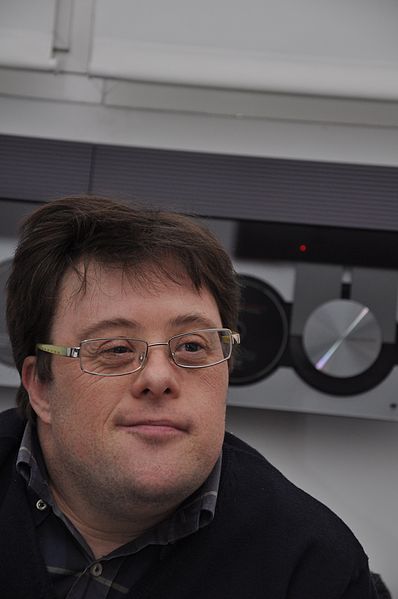
These are not quotes from a dystopic sci-fi epic; these are quotes from a journal article about murder and a news story about bioethics. The disturbing reality is that there are a number of people working in the field of bioethics today whose positions undermine basic human rights.
Murder as Causing Disability
Why is murder wrong?
There are a number of answers generally given to this question which generally focus on the wrongness of ending life or terminating consciousness. However, a recent article by Walter Sinnott-Armstrong and Franklin Miller denigrates this position as “traditionalist” (note the subtle choice of the word to create an opposition: “traditionalists” are opposed to what? apparently they are opposed to “innovation” “reality” and the like; they are stuck in their mores and these bioethicists must free us from the stone age). They argue that it is causing disability which makes murder wrong; not the wrongness of killing itself.
Murder is wrong, on their view, because it causes “total disabling.” The authors draw out a thought experiment in which a woman, Betty, is incapable of controlling her thoughts, has no motor control, and the like. Essentially, she is completely disabled and cannot do anything, has no awareness of her actions, and the like. Then, the authors ask:
In this case, is Betty any better off totally disabled than dead? If so, then death must involve the loss of something valuable beyond the loss of all abilities forever. If not, then death does not involve the loss of anything valuable beyond what is lost in total disability. Death is still distinct from total disability, but it is no worse.
It is fascinating to see that the authors apparently take this to be a decisive blow to the “traditionalist” position. They write, “We see nothing to make Betty’s death worse than her total disability. This intuition seems to be widely shared, since many people dread death no more than and for the same reasons that they would dread total disability.”
Yet there is something fairly obvious that is just waiting to be pointed out: namely, that Betty’s death does “involve the loss of something valuable beyond the loss of all abilities forever”–what it involves losing is one’s life.
Yes, that’s right, some people make the apparently not-so-obvious claim that life itself is valuable. See, articles like this by Sinnott-Armstrong and Miller don’t interact with their opponents’ positions as much as they try to claim they have refuted them; rather, they simply assume their opponents are wrong. But these authors seem to have anticipated this point (despite their total rejection of the alternative in their thought experiment–they use the experiment as though it seals their case and then only later, once the reader has been led to believe they are absolutely correct, do they deal with this objection). They write:
Of course, opponents will claim that life is sacred or that killing her violates God’s commandment, but why would God forbid us (or have any reason to forbid us) to do something that does not make Betty worse off? Similarly, secular theorists might claim that life has sanctity or intrinsic value (cf Dworkin), but why is life valuable in this extreme case when it includes no ability (or pleasure, as we are still assuming)?
But this is the end of their response! After these lines they turn to attempting to justify their consequentialist assumptions. Surely, however, this is an extremely insufficient response. Nothing in this response undermines the position that life is valuable. Rather, they just ask a question: why is life valuable? But of course the authors are the ones making the claim here. They are claiming life itself is not valuable. If that’s the case, the burden of proof is upon them to show that their position is correct. And note that the way they try to justify this position is by simply assuming their position is correct. They ask why God would forbid something that doesn’t make Betty any worse off… but the point the “traditionalist” is making is that it does make Betty worse off because killing her deprives her of life! There is a subtle question begging occurring throughout the article because the authors simply can’t seem to fathom that life is valuable in itself. Instead, they assert that what is valuable is ability and then sift all moral statements through that assumption.
One who reflects upon this position should be not just appalled but also outraged and fearful. Why? Well Sinnott-Armstrong and Miller, by suggesting that what makes killing wrong is the causation of disabilities, imply that disabilities significantly reduce the value or worth of persons. Consider this: the authors repeatedly point out that it is not the deprivation of life that harms Betty, but rather the causing total disability. The grounding of Betty’s value is therefore based upon her abilities. If that is the case, then as Betty suffers disabilities, her value is decreased. Suppose Betty goes from being totally “able” with nothing wrong to becoming paralyzed. Does that mean she is less valuable? “Traditionalists” like me would say no, she is no less valuable. However, the authors of this article have grounded human value on ability. Again, it is the deprivation of capabilities which is wrong with murder, not the deprivation of life on their view. A consequences of this position is that the more “disabled” one becomes, the less valuable they become. Such a position is rightfully horrifying, but it is exactly what such a position entails. If humans’ value is grounded not simply in their being, then whatever standard one grounds this value will imply a sliding scale. Sinnott-Armstrong and Miller suggest that abilities ground value; therefore a disabled child is less valuable than one who is not; a man with Down Syndrome is less valuable than one who does not have it. These are the horrifying implications of their view.
One wonders if it is worth embracing such a position when it entails such blatantly immoral consequences. When one notices that the argument produced therein is based simply upon begging the question and assuming that life itself is not valuable, one finds little reason to commend this position.
Killing Our Children
Bioethicists have not stopped at the line crossed above, however. Recently another pair of bioethicists, Alberto Giubilini and Francesca Minerva, have argued for what they are terming “after-birth abortions.” In layman’s terms, they’re arguing for murdering one’s own children.
What could possibly ground this? Well, these bioethicists argue that, “Both a fetus and a newborn certainly are human beings and potential persons, but neither is a ‘person’ in the sense of ‘subject of a moral right to life’… Merely being human is not in itself a reason for ascribing someone a right to life.”
What exactly constitutes something which could justify killing a newborn? Again, “The circumstances… where after-birth abortion should be considered acceptable include instances where the newborn would be putting the well-being of the family at risk, even if it had the potential for an ‘acceptable’ life.” The authors go on to cite Down Syndrome as an example of these circumstances. Honestly, there is nothing to distinguish this form Eugenics. Let’s kill off those we deem unsuitable for life. It’s abhorrent.
I predicted this very consequence of the pro-choice position not too long ago. Pro-abortion arguments which aim to redefine what it means to be a “person” lead inevitably to infanticide. Fortunately, most pro-choice advocates do not realize this consequence of their position and still find infanticide and the like abhorrent. But those who have carefully reflected on the topic–bioethicists who research the issues involved–have come to realize that if an unborn human being is not worth being called a person, then it is hard to see why a newly born human being is a person either.
Bioethics: A brief reflection
The two case studies provided in this post provide examples for why it is so important to defend a proper view of the value of persons and worth. Once we start to define worth as things which can become a sliding scale (abilities vs. disabilities); once we allow that human beings are worthless if in one location (the womb) but valuable in another (outside the womb); once we seek to redefine terms in order to win a debate; that is when our world will collapse around us. These bioethicists are literally trying to say that it is permissible to kill people if they are totally disabled; they are literally telling us that a child with Down Syndrome might have a life worth living, but is such a strain on their family that the family should be allowed to kill their own child. I wish I were making these things up. These are our times: times in which we’ve allowed people to redefine rights and values in order to allow us to kill our children; times in which the people writing our ethics books argue that murder isn’t wrong because it takes a life but because it disables someone; times in which we can read discussions in medical journals about permitting the killing our own infants because they have certain defects.
God help us.
Sources
Walter Sinnott-Armstrong and Franklin Miller, “What Makes Killing Wrong?” Journal of Medical Ethics, January 2012. Accessible here: http://jme.bmj.com/content/early/2012/01/19/medethics-2011-100351.full
Liz Klimas, “Ethicists Argue for Acceptance of After-Birth Abortions” The Blaze, February 27, 2012, accessible here: http://www.theblaze.com/stories/ethicists-argue-in-favor-of-after-birth-abortions-as-newborns-are-not-persons/.
Picture credit: http://commons.wikimedia.org/wiki/File:Pinedap.JPG
SDG.
——
The preceding post is the property of J.W. Wartick (apart from citations, which are the property of their respective owners) and should not be reproduced in part or in whole without the expressed consent of the author. All content on this site is the property of J.W. Wartick and is made available for individual and personal usage. If you cite from these documents, whether for personal or professional purposes, please give appropriate citation with both the name of the author (J.W. Wartick) and a link to the original URL. If you’d like to repost a post, you may do so, provided you show less than half of the original post on your own site and link to the original post for the rest. You must also appropriately cite the post as noted above. This blog is protected by Creative Commons licensing. By viewing any part of this site, you are agreeing to this usage policy.
Is Christ Risen?
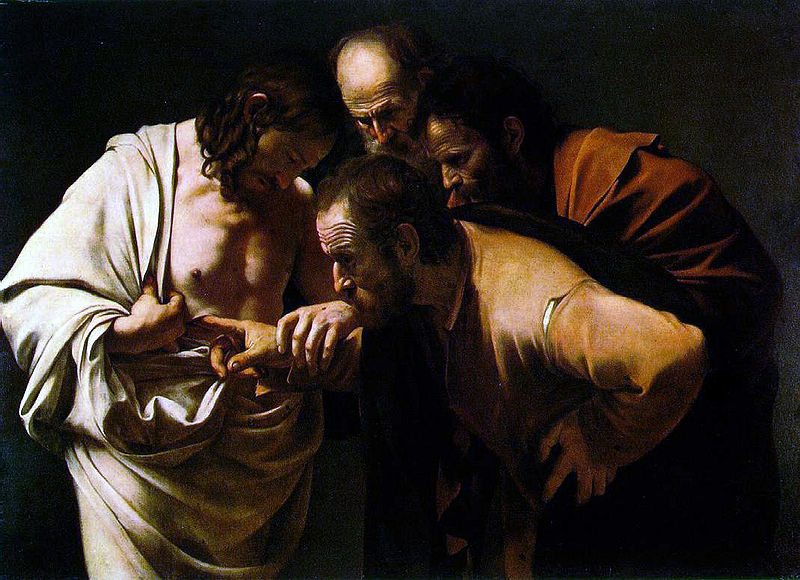 Did Jesus rise from the dead?
Now I want you to step back for a moment and think of your immediate response to that question.
Was it “Yes!” Well, why do you think so?
Was it “No!” Again, why?
I mean this very seriously. Read the question again, and now reflect on your answer. Does it come from a well-informed position or does it flow from your presuppositions or worldview? Why do you think Jesus rose or did not rise from the dead? Does your belief come from a careful study of the texts and the critical debate on the topic? Have you read sources from both sides of the debate, have you listened to top scholars in dialog about the topic?
Is it even important?
This one is for the atheists and skeptics out there: look at the picture I have posted on the top left. What feelings does it provoke within you? Disgust? Skepticism? Laughter? Joy?
Why do you think that is?
Christians, I ask you the same question.
What is the point of me taking this space to write all of this? I want everyone to be aware of the fact that when they consider the question I asked to start this post–“Did Jesus rise from the dead?”–they are influenced profoundly by their worldview and their starting point.
No, I want you to consider the evidence–both atheists and Christians. Christians, because it is your solemn duty to discern the truth of the resurrection (1 Corinthians 15:14-19); atheists, because you owe it to yourself to follow the evidence where it leads.
I’m not going to make a sustained argument here. Rather, I encourage you to investigate the topic yourself. A good starting point is this podcast, which argues from the “minimal facts” approach. A summary of the usage of this method can be found here.
Is Christ risen? That’s a question we all must answer, but let us not answer it based on dogma, on presuppositions, or on a dismissal of the evidence. Let us engage with the facts and formulate a hypothesis. Let us investigate the historicity of the event and follow the evidence where it leads.
I know that my redeemer lives,
and that in the end he will stand on the earth.
And after my skin has been destroyed,
yet in my flesh I will see God;
I myself will see him
with my own eyes—I, and not another.
How my heart yearns within me! (Job 19:25-27)
The Argument from Religious Experience: Some thoughts on method and usefulness
 The argument from religious experience (hereafter referred to as “argument from RE”) has seen a resurgence in scholarly work. Keith Yandell, Richard Swinburne, Jerome Gellman, Kai-man Kwan, Caroline Franks-Davis, Paul Moser, and others have contributed to the current discussion about the topic.
One thing which has disappointed me on more than one occasion is the dismissive attitude that some Christian apologists show towards the argument from religious experience.
What reasons are there for apologists to adopt such a stance? Well it seems possible that some of them simply haven’t studied the argument enough to consider its plausibility. I admit that before interacting with the argument, I was skeptical of the possibility for its having any value. But I want to suggest another possibility: apologists tend to favor arguments which can be presented and defended in a debate format or which are useful in short conversations with others. I’m not suggesting this as an attack on my fellow Christians, merely as an observation. And this is not a bad thing; it is indeed greatly useful to have arguments which can be presented quickly and defended easily when one is trying to present a case for Christianity to others.
The problem is the argument from RE requires a great deal of epistemological background in order to get to the meat of it. The authors listed above each develop a robust epistemology to go with their argument. This seems to put a limit on the usefulness of the argument; if it must be conjoined with a broad discussion of epistemology, then how can one present it in such a way that those who aren’t professional philosophers (or at least interested in the topic) can understand? It is to this question I hope to present an answer.
Background Information
Formulations of the Argument
There are two primary ways the argument from RE can be formulated (Caroline Franks Davis suggests a number of ways the argument can presented in The Evidential Force of Religious Experience, 67-92). The first is the personal argument; the second is the public argument. Now I have seen very few versions of the former in the literature. The personal argument is essentially an argument from RE which centers not on trying to demonstrate the existence of God to others, but rather upon justifying one’s own belief that such an experience is genuine. In other words, the personal argument from RE focuses upon defending one’s own conviction that a religious experience is veridical.
Paul Moser, in his work The Evidence for God, suggests one possible way to formulate this argument [he does not refer to it in the same terminology as I use here]:
1. Necessarily, if a human person is offered and receives the transformative gift, then this is the result of the authoritative power of… God
2. I have been offered, and have willingly received, the transformative gift.
3. Therefore, God exists (200, cited below).
This argument is one example of what I would call the personal argument from RE. It focuses on one’s own experience and uses that to justify one’s belief in God. [It seems Moser could be arguing for this as a public argument as well, but a discussion of this would take us too far afield.]
A public argument from RE is generally formulated to establish the belief in God (or at least a transcendent reality), just as other theistic arguments are intended. It will best function as part of a “cumulative case” for the existence of God. One example of an argument of this sort can be found in Jerome Gellman, Experience of God and the Rationality of Theistic Belief:
If a person, S, has an experience, E, in which it seems (phenomenally) to be of a particular object, O… then everything else being equal, the best explanation of S’s having E is that S has experienced O… rather than something else or nothing at all (46, cited below).
Readers familiar with the literature on RE will note the similarities between this and Richard Swinburne’s principle of credulity. The basic idea is that if someone has an experience, then they are justified in believing they had that experience, provided they have no (epistemic) defeaters for that experience.
Brief Epistemological Inquiry
I’ve already noted the intricate ties the argument from RE has with epistemology, and a quick introduction to the argument would be remiss without at least noting this in more explicit detail. The core of establishing the argument from RE is to undermine methodological/metaphysical naturalism. Thus, a robust defense of the argument from RE will feature building up a case for an epistemological stance in which theistic explanations are not ruled out a priori.
A second step in this epistemological background is to establish a set of criteria with which one can judge and evaluate individual religious experiences. Caroline Franks Davis’ study (cited below) is a particularly amazing look into this tactic; she explores a number of possible defeaters and criteria for investigating REs. These range any where from hallucinogenic drugs to the multiplicity of religious experience.
The Force of the Evidence
One concern I had when I was exploring the argument from RE is that it would not have very much force. Upon investigating the topic, however, I can’t help but think the force of the argument is quite strong. Swinburne seems correct when he writes, “[T]he overwhelming testimony of so many millions of people to occasional experience of God must… be taken as tipping the balance of evidence decisively in favour of the existence of God” (Swinburne, Is There a God?, 120, cited below). The important thing to remember is that an overwhelming number of people from all stations of life and cultures have had experiences that they deem to be “spiritual” or hinting at “transcendence.” Denying universally all of these experiences as genuine would seem to require an enormous amount of counter-evidence.
A Suggested Version for Quick Discussion
So what to do with this background knowledge? It seems to me it is possible to at least sketch out a version of the argument from RE for a brief discussion, with a defense. Further reading is provided below.
The Argument Stated
1. Generally, when someone has an experience of something, they are within their rational limits to believe the experience is genuine.
2. Across all socio-historical contexts, people have had experiences of a transcendent realm.
3. Therefore, it is rational to believe there is a transcendent realm.
The argument made more explicit
The reason I suggest this as the way to use the argument from RE in a brief discussion is because it can more easily form part of a cumulative case and requires less epistemological work to justify it. The first premise is, in general, a principle of rationality. While there are many who have attacked Swinburne’s principle of credulity, it does seem that we generally affirm it. If I experience x, then, provided I have no reasons to think otherwise, I should believe that x exists/was real/etc.
The second premise is the result of numerous studies, some of which are cited in the works cited below. To deny this nearly universal experience is simply to deny empirical evidence. People like William James have observed this transcultural experience of the transcendent for hundreds of years.
Thus, it seems that we are justified in being open to the existence of things beyond the mundane, everyday objects we observe in the physical reality. If people from all times and places have had experiences of things beyond this everyday existence, then it does not seem irrational to remain at least open to the possibility of such things existing.
The conclusion may come as something of a letdown for some theists. But I would like to reiterate that this is a version of the argument intended for use in a brief conversation. There are versions of the argument in the cited literature below which defend theism specifically and engage in synthesis of these experiences into the theistic fold. What I’m trying to do here is make the argument part of the apologist’s arsenal. If we can use the argument merely to open one up to the reality of the transcendent, then perhaps they will be more open other theistic arguments. As part of a cumulative case, one can’t help but shudder under the overwhelming weight of millions of experiences.
Conclusion
The argument from religious experience has enjoyed a resurgence in scholarly popularity. A number of books from publishers like Oxford University Press, Cornell, and Continuum have reopened the argument to the scholarly world. It is high time that Christian apologists put in the work needed to utilize these arguments in everyday, accessible apologetics. The argument formulated above is just one way to do this, and Christians would do well to explore the argument further. The experience of God is something not to be taken lightly; Christians throughout our history have had such experiences and been moved into intimate relationships with God. We should celebrate these experiences, while also realizing their evidential value.
Further Reading and Works Cited
The following books are all ones I have read on the topic but do not present a comprehensive look at literature on the subject.
Caroline Franks Davis, The Evidential Force of Religious Experience
Jerome Gellman, Experience of God and the Rationality of Theistic Belief
Paul Moser, The Evidence for God
Richard Swinburne, Is There a God?
There are a number of other fantastic books on the topic as well. Swinburne’s The Existence of God
William Alston’s Perceiving God
Keith Yandell’s The Epistemology of Religious Experience
Kai-man Kwan’s Rainbow of Experiences, Critical Trust, and God
Nelson Pike provides a unique look at the phenomenology of RE and a synthesis of theistic and monistic experiences in his work Mystic Union
SDG.
——
The preceding post is the property of J.W. Wartick (apart from citations, which are the property of their respective owners) and should not be reproduced in part or in whole without the expressed consent of the author. All content on this site is the property of J.W. Wartick and is made available for individual and personal usage. If you cite from these documents, whether for personal or professional purposes, please give appropriate citation with both the name of the author (J.W. Wartick) and a link to the original URL. If you’d like to repost a post, you may do so, provided you show less than half of the original post on your own site and link to the original post for the rest. You must also appropriately cite the post as noted above. This blog is protected by Creative Commons licensing. By viewing any part of this site, you are agreeing to this usage policy.
Book Review: “Learning to Jump Again” by Anthony Weber
 Anthony Weber’s work, Learning to Jump Again, is part memoir of a lost father, part philosophical treatise on the problem of suffering. The focus throughout is Weber’s father and the issues with mourning, suffering, and heroism his life and death brought up.
The book starts with “the Journal”–a series of entries from Weber’s journal during the time surrounding the death of his father. As one who is very close to his father, these entries truly struck home. There were many moments where this reader just lost it in tears. Weber does not hold back, at all. His father was suffering from jaundice due to cancer. He writes, “A friend stopped by that weekend to borrow some tools, and I stammered through an explanation of why my visiting father was yellow… He [the friend] knew that after the fall comes winter, and after the chill comes the cold, and he was mercifully silent” (2).
Weber does not restrict the period of mourning or the discussion thereof to the months immediately surrounding his father’s death; rather, the Journal contains entries as far as eight years (and later) after his father’s death. Christians reading the book are forced to the realization that it is not easy to struggle through these issues. When a beloved father dies, it is not something that passes with the seasons. Even eight years later, he wrote of his withholding himself from his wife and children, and the realization that came with it that he must trust in God, “even if I don’t always understand him” (76-78).
Yet the journal section is not merely a reflection. Weber shares lessons and thoughts he has on mourning, God, and the reality of pain in the world throughout his memoirs. He notes that too many people know about God without knowing God (72-73); refers to the experiences of wrestling God (45); and contrasts the ways and beliefs of “the flesh” with that of reality (33). Throughout this section, there is much for readers to take away.
The second part of the book focuses on the issues behind suffering and the Christian worldview. Weber’s discussion is an admirably easy-to-read introduction to many of the philosophical issues surrounding the problem of evil and other issues. In particular, his discussions of emotions, dreams, and prayer in particular offered a number of insights that readers will be interested in reading more about. Weber included a lot of resources for interested readers to explore, so the book serves as a valuable resource in that regard as well. His discussion of the problem of pain does an excellent job introducing difficult notions like distinguishing between types of the problem of evil (122ff). His discussion of the various possible routes theists can take to discuss the problem of evil is also brief but informative.
Throughout the book there are numerous quotes from various authors. Many of these are novelists such as J.R.R. Tolkien, Dean Koontz, Shakespeare, and C.S. Lewis. Others are from people like Helen Keller, Phillip Yancey, and Scripture. These quotes are often profound and fit the context perfectly. As a reader, this reviewer admits to frequently skimming past quotes when I see them in texts, particularly when they are out of context, but with Learning to Jump Again, the quotes all draw out new emotions, thoughts, and ideas very well. They add to, rather than distract from, the text.
Learning to Jump Again was a bit of a surprise for me. The section of the book that was a memoir served poignantly to draw readers into the heart of a mourning man. But it did not leave readers with that; rather, Weber constantly struggled with issues that Christians at all stages must deal with. Further, the philosophical section which encompassed the latter part of the book is an excellent survey of a number of issues. Many will benefit from the insights Weber provides. The book tugs at the heart strings and gets the mind working. Readers who have already extensively explored the issues of the latter part of the book will benefit from viewing the issues in the context of a memoir. Those who have not will benefit greatly from the discussion throughout the book. I recommend it very highly.
SDG.
——
The preceding post is the property of J.W. Wartick (apart from citations, which are the property of their respective owners) and should not be reproduced in part or in whole without the expressed consent of the author. All content on this site is the property of J.W. Wartick and is made available for individual and personal usage. If you cite from these documents, whether for personal or professional purposes, please give appropriate citation with both the name of the author (J.W. Wartick) and a link to the original URL. If you’d like to repost a post, you may do so, provided you show less than half of the original post on your own site and link to the original post for the rest. You must also appropriately cite the post as noted above. This blog is protected by Creative Commons licensing. By viewing any part of this site, you are agreeing to this usage policy.
Naturalis Historia: Is Young Earth Creationism True?
I recently came upon what is, in my opinion, the finest collection of essays challenging the scientific aspects of Young Earth Creationism to date. The blog, Naturalis Historia features a broad spectrum of posts offering challenges to Young Earth perspectives from a scientific viewpoint. I can’t recommend the blog highly enough. Below are a few links with brief summaries of the contents.
An Ancient and Alien Forest Reconstructed– the recent finds of several fossilized forests have revealed alien landscapes not similar to our own forests in any way. In fact, many of these ancient forests lack any kind of flowering plant whatsoever. If the biodiversity found across all of fossil history is compressed into a young earth timespan, the possibility of explaining these anomalous forests without contemporary features becomes extremely difficult for young earthers. Another forest found in New York exacerbates the problem.
The impact craters from various meteorites presents another difficulty for YEC. Dating these craters puts them well beyond the allowances of a young earth perspective, but the young earth explanations stretch credibility beyond the breaking point.
What of dinosaur eggs? The fact is that these eggs are found across the various strata. Now most YECs I have read argue that the large amounts of sediment across the earth were deposited by the Flood. If that is the case, then how did these dinosaur nests appear across various layers. Natural Historian put forward this challenge in the post, “Juvenile Dinosaur Fossils In a Nest…” One current YEC explanation is that the dinosaurs moved on top of the sediment as it was deposited and laid their eggs on the various layers, which were then covered as the rains continued to fall. The problem is that discoveries have now been made of juveniles in these nests, which would mean they would have had to hatch and grow before being buried by the Flood. Again, this truly stretches credulity beyond the breaking point.
What is the point of linking to these posts and challenging YEC? I am a devout Christian and I’ve struggled with the issues involved in this debate myself. I’ve written extensively on the topics involved and I continually seek to read and understand more about the debate. So why have I been focusing on rebutting YEC? The more I’ve read on the topics involved, the more I’ve realized that YEC truly does undermine the Christian faith. I’m not suggesting those who defend YEC are actively seeking to discredit Christianity; no, I think that YECs generally have their hearts in the right place–they are seeking to defend what they view as the only possible Biblical position against attack. The problem is that when one investigates the scientific evidence, one finds that if one ties Christianity to YEC, it simply cannot hold up to a deep investigation. The issues above are just a number of peripheral problems with YEC, and I don’t see any feasible answers forthcoming on just those topics. There are a great many to be found over at Naturalis Historia, as well as across the web. We must not marry Christianity to positions that are indefensible.



