Current Events
“Childhood’s End” – Utopia, God, and Science

SyFy, the channel once known as SciFi (it should still be!) recently aired a TV miniseries adaptation of Arthur C. Clarke’s book, Childhood’s End. Here, I will examine the miniseries from a Christian worldview perspective. There will be SPOILERS in what follows.
Utopia? A transhuman “hope”
In the first part, dimensions of religion are found in the wings. Why didn’t God fix everything if these aliens can come along and fix everything for us? Where was God during all those wars and atrocities? Yet as the story progresses, it is clear that not is all as it seems. Where is Karellen, the alien who seems so godlike in his powers, when people are scared, sad, and afraid? Why do the children start to change, and what does it all mean? Why is Karellen so unwilling to let humans know about him?
Karellen and the Overlords are working for the Overmind to “change the world…” They follow its bidding and do what it says in order to reshape reality in the image that the Overmind desires. The Overmind claims to be “the collective consciousness of this universe” and, more simply, “all.” The Overmind takes the children of humanity to transform them into part of the collective consciousness of itself. So where is God? In the world of “Childhood’s End,” the Overmind plays the part of God, but a pantheistic type of being which is itself clearly not all powerful. Indeed, to call the Overmind pantheistic is itself a bit of an overstatement, as it can only bring certain people to itself and do so in certain ways.
The message of Childhood’s End is one of transhumanism- it is the end of humanity and humankind’s evolution towards some higher state of existence. It seems at points that this is supposed to be presented as something that is a great good, though perhaps with some sorrow. Yet What does this mean for humans? Ultimately, this transhuman hope–really the only hope that a pervasively atheistic worldview could offer–is the death of humanity. Earth is destroyed, in the end. Humanity is gone. All that is left of us is a beautiful piece of music, that whoever passes by will be able to hear.
The utopia that seems to be described as the Overlords come is a fiction. Thankfully, it is not the real world. The hope that we have can be found in Christ and the resurrection.
God and Science
The second part of the miniseries starts with the song “Imagine” in the background as the utopic state of Earth is described. One of the lines that comes through in the song is the line “and no religion too!” Yet the voiceover is by the young scientist, who is bemoaning the death of the sciences–they are no longer needed. Initially, it seems the implication is that if we just get rid of all the silliness of religion and stop trying to pursue useless knowledge in science, we would find ourselves in a utopia.
Another scene juxtaposes a character effectively praying to Karellan, the alien, while another goes into a church. Churches have largely been abandoned, for what use is religion in a world in which there is no injustice? It is intriguing to see the connections made between religion and science made throughout here. It seems that both science and religion are cast aside as people find suffering no longer exists. There are a number of ways this suggestion could be taken.
First, it could be taken as an assertion that science and faith are seeking answers to the same questions, though with different approaches. Faith is asking “why is there suffering?” and looking to God for answers; science is attempting to fix various problems such as disease through a direct approach. Yet this brief sketch oversimplifies things. After all, people expect prayers to be effective, and often think of scientific discoveries as being answers to those prayers.
Second, it could be taken as a broader commentary on the futility of either religion or science. If we could just solve all our problems, why try to figure out how they work? Again, this answer is too simplistic.
Instead, it seems a third option is more likely: the value of faith and the value of scientific exploration in and of themselves as ways to provide answers for what we observe in the universe. These answers may often overlap–and they do–but that doesn’t make them useless or invalid.
Faith
“Faith is on its last legs, only we don’t see it, because they give us ice cream,” says a man who is keeping a church clean.
“There is no such thing as evil,” a character snaps to a religious individual.
“I’m not sure God every helped anyone… only the Overlords answered.” Sandwiched between these two statements is an accusation that God gave us diseases and then sent more once we discovered how to cure some.
“All the world’s religions cannot be right… you know that… Your faith, beautiful and poetic… has no place now.”
What is particularly interesting about “Childhood’s End” is that all the people who are taken to be quacks–they are ridiculous, silly, superstitious, paranoid–turn out to be right, at least in part. The Overlords did come to change everything, but not in the positive, benign way they presented themselves. Instead, they came to reshape humanity in the image they desired. It led to the destruction of all humanity. One character may assert there is no such thing as evil, but that flies in the face of the injustice that the Overlords allegedly came to destroy.
The miniseries, whether intentionally or not, offers a view of the world which is both bleak and profound. It is bleak because it takes away all our hope. Even that which seems to offer hope ultimately destroys us. But it is profound in that it presents that world as fiction. It is not the world in which we live, which has hope, and in which we do not need to destroy ourselves. The price that humanity was asked to pay in “Childhood’s End” was paid in reality by God.
Conclusion
Ultimately, “Childhood’s End” is a story of humanity. It is a story of humanity giving in to deceiving itself. Humans sought an easy way to peace, freedom, and justice, and what they received instead was the death of humanity. The story itself does not have any final hope, apart from the hope that some transcendent humanity would live on. In reality, humanity does have the hope provided in Jesus Christ, our savior. It is interesting that the hope humans trusted in in Childhood’s End was something outside of themselves, and indeed the true hope for humanity is not found in ourselves, but in the Incarnate God, Christ.
Links
Be sure to check out the page for this site on Facebook and Twitter for discussion of posts, links to other pages of interest, random talk about theology/philosophy/apologetics/movies and more!
Eclectic Theist– My other interests site is full of science fiction, fantasy, food, sports, and more random thoughts. Come on by and take a look!
SDG.
——
The preceding post is the property of J.W. Wartick (apart from quotations, which are the property of their respective owners, and works of art as credited; images are often freely available to the public and J.W. Wartick makes no claims of owning rights to the images unless he makes that explicit) and should not be reproduced in part or in whole without the expressed consent of the author. All content on this site is the property of J.W. Wartick and is made available for individual and personal usage. If you cite from these documents, whether for personal or professional purposes, please give appropriate citation with both the name of the author (J.W. Wartick) and a link to the original URL. If you’d like to repost a post, you may do so, provided you show less than half of the original post on your own site and link to the original post for the rest. You must also appropriately cite the post as noted above. This blog is protected by Creative Commons licensing. By viewing any part of this site, you are agreeing to this usage policy.
Star Wars: The Force Awakens- a Christian perspective
 I have read over 100 Star Wars books and watched all the movies dozens of times (probably well over 100 for each of the original trilogy). In other words, I’m a Star Wars fan. I absolutely loved The Force Awakens. It was fantastic. It was wonderful. It was Star Wars. I’m also a devout Christian. Here, I will evaluate the movie from a Christian perspective.
SPOILER WARNING: There will be SPOILERS in what follows. I want to make that as clear as possible. Read no further if you don’t want to read SPOILERS. I’m serious. Big ones. Are we clear? Read on if you have seen the movie, or don’t care about spoilers. I’m sure the comments will also have spoilers.
The Force
One of the most pervasive images of the Star Wars universe is that of the Force. Wait, imagery? Of the Force? Well, you can’t see the Force!
Yep, that’s right. We can see Jedi or Sith using the Force. We can see the effects it has on people, and its power. But we cannot see the Force. One might say it’s just a bunch of hokey religions (thanks, Han). But in The Force Awakens, Han Solo admits what he has known for a while: the Force is real.
What is interesting about this admission is how much people of all varieties have been attracted to the notion of the Force and the Star Wars universe in general. In reality, the Force is a metaphysical concept. It goes beyond the mundane, physical universe and reaches for something more. The drive for that “something more” is pervasive in humanity, I think. Inwardly, we know that the world is not limited to those things we can see through direct observation. Thus, we are drawn to even fictional portrayals of a deeper reality such as the Force. Like Han, we may talk the talk, but when push comes to shove, there is more to our world than meets the eye.
Family, Darkness, and Natural Consequences
Exodus 34:7 reads, in part, “[God] does not leave the guilty unpunished; he punishes the children and their children for the sin of the parents to the third and fourth generation” (NIV).
Many see this as a kind of vindictive verse. In fact, it is an example of human choices bringing about consequences. One of the things I have learned since becoming a parent (and I’m still learning) is that natural consequences are the most effective way to teach my son. If he stands on a chair, he gets removed from the chair until he is willing to sit instead of stand. The verse above shows how our actions and choices have natural consequences.
Anakin Skywalker’s choices have impacted his family in profound, terrible ways. Sure, he saved Luke at the end of Return of the Jedi, and he was reunited with the Force. But think about what his choices visited upon his children: they had to be separated at birth and whisked into hiding. Vader even cut off his son’s hand!
In The Force Awakens, we see those consequences being visited upon the next generation as well. Kylo Ren, Han and Leia’s son, appears to be trying to follow his grandfather’s footsteps. But instead of trying to follow them back towards the Light side of the Force, he is attempting to complete the Dark work of his grandfather’s alter ego, Darth Vader. Can a more poignant reminder of the punishment that can be carried on from generation to generation be given?
In the world we live in, we can see these same systems of injustice bringing punishment on one generation after another. World War II was, in part, brought about by crippling economic hardships imposed after World War I. Systemic racism continues in the United States, demeaning not just those against whom racism is directed, but also bringing darkness onto those who engage in it.
The passage from Exodus above can be read simplistically, but when taken in perspective like this, it is immensely profound. The poignancy of that statement: that the actions we take now can bring about punishment on our children, and their children… should lead us to consider what it is we are doing. Kylo Ren wasn’t created in a vacuum.
Redemption
The Force Awakens also points ahead to a hopeful reality, one which resonates with the Christian worldview. Han and Leia each believe that there remains good in Kylo Ren–Ben–still. Han risks his life on that evaluation and even sacrifices himself for it. Though we don’t see this coming to fruition, the seeds of hope are there. Will Ren follow his grandfather’s Dark choices to a logical end, or will he be brought back to the Light?
The movie ends with Luke Skywalker and Rey on a remote planet. This guru-like setting is also reminiscent of the Desert Fathers of the ancient Christian church (though ironically in a very watery setting!). Will redemption and hope be brought forth once more through Rey? That remains to be seen, but the seeds have been planted. Han’s willingness to believe in goodness in his son is the same kind of willingness we need to have when we confront evil. Yes, we need to be prepared to stand up against evil, but we also need to realize that we were yet sinners when Christ saved us. The “other” is like we were, lost to sin and in need of redemption.
Conclusion
Go see The Force Awakens. Be prepared to celebrate the joys of Star Wars again, but also to think. It’s a fun, delightful movie that is overlaid with much darkness. Yet, in the midst of all that darkness there is hope.
Let me know your own thoughts on the movie in the comments. I’d love to hear what you thought of the film.
Links
Be sure to check out the page for this site on Facebook and Twitter for discussion of posts, links to other pages of interest, random talk about theology/philosophy/apologetics/movies and more!
Read more movie reflections (scroll down for more).
Eclectic Theist– Follow my “other interests” blog for discussion of sci fi, fantasy, movies, sports, food, and much, much more.
SDG.
——
The preceding post is the property of J.W. Wartick (apart from quotations, which are the property of their respective owners, and works of art as credited; images are often freely available to the public and J.W. Wartick makes no claims of owning rights to the images unless he makes that explicit) and should not be reproduced in part or in whole without the expressed consent of the author. All content on this site is the property of J.W. Wartick and is made available for individual and personal usage. If you cite from these documents, whether for personal or professional purposes, please give appropriate citation with both the name of the author (J.W. Wartick) and a link to the original URL. If you’d like to repost a post, you may do so, provided you show less than half of the original post on your own site and link to the original post for the rest. You must also appropriately cite the post as noted above. This blog is protected by Creative Commons licensing. By viewing any part of this site, you are agreeing to this usage policy.
“The Martian” – Hope, Humanity, and God- a Christian look at the film
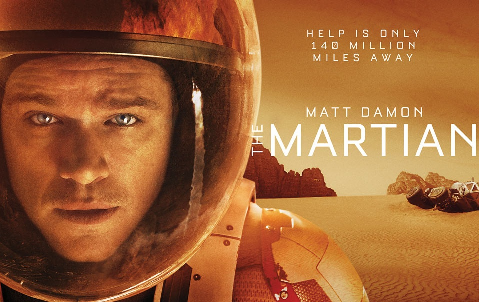 The Martian is receiving some excellent reviews from critics, and for good reason. It is a stirring story about humanity and our capacities and drive to survive. Here we will look at the worldview htemes found in the film. There will be SPOILERS in what follows. I will not be summarizing the plot, but a summary can be found here.
Hope and Humanity
A major theme of the movie is that of hope. Mark Watney, the astronaut left behind on Mars, becomes the center of hope of the entire world. All eyes were following as he continued to fight against the unforgiving Red Planet. When the mission to rescue him finally comes to a climax, there is a scene of people around the globe watching in anticipation and hope. They celebrate merely hearing his voice.
I can’t help but think about the hope of the shepherd in a certain story told be a Jew in Galilee, in which the celebration over but one lost sheep was immense. There is an inter-connectedness that humans experience as we seek to help others and exult in the triumphs even of strangers in need.
Perhaps the central theme in the movie is that of the very, well, human-ness of humanity. We need companionship, and the poignancy of that is found throughout the film. Mark fights against the loneliness he feels by fighting one problem after another. But simply hearing someone’s voice is enough to send him celebrating, and when the rest of his mission team come to rescue him–and he can hear his commander’s voice for the first time, the overwhelming sensation of emotion he feels leads him to tears.
Humanity was not made to be alone.
God?
By no means does this film offer much related to worldview issues about God, but there are a few moments worth mentioning. The first is when Mark has to whittle a crucifix in order to get some material to burn for making water. He looks at the figure of Christ on it and says that he thinks that Jesus wouldn’t mind him using it to save his life. Though this never develops beyond a joke, it is interesting to see how it ultimately is a kind of salvation through the cross–this time in a very literal sense.
Prayer is hinted at when the head of NASA asks the head of the Mars projects whether he believes in God. The answer that came was unexpected: with a Baptist mother and Hindu father, “I believe in several.” The response? “We need all the help we can get.” Again, this joking moment does reveal a hint of truth: that God is the one who provides help. Of course, not the many gods of Hinduism, but the true God is the one who saves.
Conclusion
“The Martian” is a great film. It explores the human need more than most films ever even touch on. These needs reflect deeply ingrained desires that mesh well with the Christian worldview. Only in Christ can we ultimately find the consummation of hope.
Links
Be sure to check out the page for this site on Facebook and Twitter for discussion of posts, links to other pages of interest, random talk about theology/philosophy/apologetics/movies and more!
Andy Weir’s “The Martian” A Christian Look at the Book: Humanity, Community, and Hope– I look at the the worldview themes found throughout the book on which the film was based.
Also see my other looks into movies (scroll down for more).
SDG.
——
The preceding post is the property of J.W. Wartick (apart from quotations, which are the property of their respective owners, and works of art as credited; images are often freely available to the public and J.W. Wartick makes no claims of owning rights to the images unless he makes that explicit) and should not be reproduced in part or in whole without the expressed consent of the author. All content on this site is the property of J.W. Wartick and is made available for individual and personal usage. If you cite from these documents, whether for personal or professional purposes, please give appropriate citation with both the name of the author (J.W. Wartick) and a link to the original URL. If you’d like to repost a post, you may do so, provided you show less than half of the original post on your own site and link to the original post for the rest. You must also appropriately cite the post as noted above. This blog is protected by Creative Commons licensing. By viewing any part of this site, you are agreeing to this usage policy.
Andy Weir’s “The Martian”- A Christian Look at the Book: Humanity, Community, and Hope
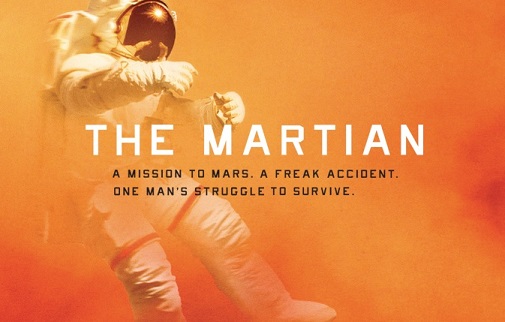 There is a lot of buzz surrounding Andy Weir’s novel, The Martian. It’s being made into a movie staring Matt Damon. Here, we will look at the book from a worldview perspective. There will be major SPOILERS in what follows.
The Value of a Human
One of the objections raised in the novel to moving missions around to try to save Mark is the sheer cost of the expedition. Why spend millions or even billions of dollars trying to save just one person, particularly when there are so many others who could be saved?
Towards the end, Mark himself is reflecting on this and he writes “The cost of my survival must have been hundreds of millions of dollars. All to save one dorky botanist. Why bother? …[T]hey did it because every human being has a basic instinct to help each other out. It might not seem that way sometimes, but it’s true… Yes, there are [expletive]s who just don’t care, but they’re massively outnumbered by the people who do. And because of that, I had billions of people on my side.”
The appeal to basic goodness of humanity is not without a number of assumptions. For example, how is it that the basic goodness of humanity is established? It isn’t just assumed–the evidence cited is that the overwhelming majority of people have basic instinct built into them to help others. But I wonder whether that evidence is drawn more from the extraordinary circumstances Mark found himself in than from the reality of human nature. It is a fact that women are taught in this country (the United States) to shout “fire” rather than “rape” if they are under assault, because people will answer more readily to cries to help fight a fire than they will try to intervene in an assault. The circumstances often determine how willing we are to go the extra mile to help others.
Thus, the conclusion seems a bit naive. Yes, the world pulled together in this work of fiction to help a man stranded on Mars–and I suspect that all kinds of red tape would, in fact, be cut if this ever happened–but that cannot be applied universally to every situation. The fact that there is so much human suffering happening right now–visible human suffering that can be seen in places that are, for example, attacked by IS, or wracked by storms, and the like–without humanity pulling together to stop it suggests that this notion of universal good will towards all is not as powerful as was suggested.
On the other hand, from a Christian perspective, each and every human life is precious, not because we have some inherent need to help others (though that could arguably be there), but because we share human nature, a nature given to us by God to be the image of God in this universe. Humans are valuable simply because they are humans, and we have an obligation to help those in need.
Humans and Others
It is not explored very deeply, but there is a sense throughout the book that humans are made to be with others. Mark feels a profound sense of loneliness when he realizes he is stuck on Mars, but he ultimately gets to work on trying to survive as quickly as possible. This work helps to distract him from his sense of loss, but at times throughout the book it crops up again. The sense of loneliness is at times crushing for him, but he is always able to get himself moving again, perhaps because he continually has hope that the loneliness will be squashed by being rescued or at least getting contact with Earth.
Humans are made to be people in community. I think this again reflects the Christian concept of the image of God. As God is Triune and in community (speaking here rather metaphorically, of course), we are made to be in community as well. Moreover, God created man but then realized “it is not good for man to be alone” and created a woman. These profound words are often explored from various angles, but I wonder whether they don’t also speak to us from a sense of loneliness. We are not meant to be alone but rather to exist in community. Our existential longing and loneliness ultimately points beyond ourselves to a higher reality–in which we may experience communion with God.
Conclusion
The Martian is an entertaining read. It doesn’t raise as many worldview questions as some other science fiction works do, but it does ask us to consider the value of humanity and shared experience. I’d recommend reading it, but be aware of a large amount of swearing.
Links
Be sure to check out the page for this site on Facebook and Twitter for discussion of posts, links to other pages of interest, random talk about theology/philosophy/apologetics/movies and more!
Popular Books– Read through my other posts on popular books–science fiction, fantasy, and more! (Scroll down for more.)
SDG.
——
The preceding post is the property of J.W. Wartick (apart from quotations, which are the property of their respective owners, and works of art as credited; images are often freely available to the public and J.W. Wartick makes no claims of owning rights to the images unless he makes that explicit) and should not be reproduced in part or in whole without the expressed consent of the author. All content on this site is the property of J.W. Wartick and is made available for individual and personal usage. If you cite from these documents, whether for personal or professional purposes, please give appropriate citation with both the name of the author (J.W. Wartick) and a link to the original URL. If you’d like to repost a post, you may do so, provided you show less than half of the original post on your own site and link to the original post for the rest. You must also appropriately cite the post as noted above. This blog is protected by Creative Commons licensing. By viewing any part of this site, you are agreeing to this usage policy.
“The Sojourner in your Land” – A Christian perspective on immigration and refugees

A Public Domain image of Syrian Refugees. Accessible: https://commons.wikimedia.org/wiki/File:Syrian_refugee_of_the_Syrian_civil_war.jpg
The issue of immigration has been turned into a political meme. Refugees flee from Syria and other nations in the wake of violence. There are some who treat the plight of the refugee and immigrant, however, as a blight to be extinguished. What does the Bible have to tell us about these issues? A great deal. Here I will briefly draw out a few ways the Bible discusses these topics.
All Humans Share Equal Dignity
The Bible makes it extremely clear that all humans share the image of God (Genesis 2), and that the divisions we make of nation and race have no place in the body of Christ (Galatians 3:28).
The Sojourner in Your Land
The Old Testament has much to say regarding sojourners or exiles. There is no comment about the legality of the sojourner or exile, but rather the focus is on the plight of those who flee from their own lands.
“When a stranger sojourns with you in your land, you shall not do him wrong. You shall treat the stranger who sojourns with you as the native among you, and you shall love him as yourself, for you were strangers in the land of Egypt: I am the Lord your God.” – Leviticus 19:33-34 (ESV)
The argument might be made that these are specific commands to a specific people: the Israelites. After all, we read the reasoning: for you were strangers in the land of Egypt. We were never in Egypt! we might cry. The teaching, however, seems to be binding and universal.To point out that the latter part does not apply to Christians is like the teachers of the Law saying they were slaves to no one, despite being Abraham’s descendants (John 8:33).
Moreover, when we consider a verse like Exodus 22:21- ““You shall not wrong a sojourner or oppress him, for you were sojourners in the land of Egypt” (ESV), we note that the reasoning provided is not necessary for the command. You shall not wrong or oppress a sojourner; next clause: here’s a reason why. But the command itself stands whether or not the reason given directly applies to us or not. Of course, even if you don’t buy into this reasoning, there are plenty of verses that simply command us to care for the sojourner.
Malachi 3:5 states “Then I will draw near to you for judgment. I will be a swift witness against the sorcerers, against the adulterers, against those who swear falsely, against those who oppress the hired worker in his wages, the widow and the fatherless, against those who thrust aside the sojourner, and do not fear me, says the Lord of hosts.”
God issues dire warnings “against those who thrust aside the sojourner.”
The letter to the Hebrews applies this from a New Testament perspective: “Do not neglect to show hospitality to strangers, for thereby some have entertained angels unawares.” (13:2).
Commands to help the needy and poor are found throughout Scripture, such as in Proverbs: “Open your mouth for the mute, for the rights of all who are destitute. Open your mouth, judge righteously, defend the rights of the poor and needy.” (31:8-9)
It would be difficult to discount that “illegal immigrants” are often among the poor and needy, or that refugees could not be counted among that number.
Hope for all nations is preached throughout the Bible, calling people from all directions to God.
An Eschatological Perspective
Christians are told by Peter that we are all exiles in this world (1 Peter 2:11). We are in this world, and not of it. Such verses speaking of the nature of Christians as exiles on earth tie the thread, and bring us full circle. The reasoning that applied to the Israelites because they were sojourners in Egypt applies to us, because we are sojourners on Earth. Care for the poor and needy, do not turn aside the sojourner, for we are exiles as they are.
Drawing Conclusions
Christians have no wiggle room: the plight of the sojourner, the refugee, and/or the exile are not to be ignored. We are to care for them as we would be cared for. How exactly does this play out in a practical fashion? That is up for some debate. However, any perspective cannot be called Christian which ignores the Bible’s clear teaching and command to care for others.
It is also clear that there is nowhere in the Bible where provisions are made for some of the arguments commonly used in the political sphere. For example, there is no exception stating that if people do not want to pay higher taxes, they are allowed to turn aside the sojourner. Neither does it prescribe a specific system for providing assistance, or say that a specific form of government should be established to do so. One thing that is excluded explicitly would be any demeaning of others made in the image of God. One thing that is required is that we do care for those in need.
We are called to help the sojourner. Whether that is the refugee from Syria, the young neighbor boy who ran away from an abusive home, or an “illegal” seeking to escape from systemic poverty: no exceptions are made. We as Christians should remember that we, too, are exiles seeking scraps from the Master’s table.
Grace and peace.
Links
Be sure to check out the page for this site on Facebook and Twitter for discussion of posts, links to other pages of interest, random talk about theology/philosophy/apologetics/movies and more!
SDG.
——
The preceding post is the property of J.W. Wartick (apart from quotations, which are the property of their respective owners, and works of art as credited; images are often freely available to the public and J.W. Wartick makes no claims of owning rights to the images unless he makes that explicit) and should not be reproduced in part or in whole without the expressed consent of the author. All content on this site is the property of J.W. Wartick and is made available for individual and personal usage. If you cite from these documents, whether for personal or professional purposes, please give appropriate citation with both the name of the author (J.W. Wartick) and a link to the original URL. If you’d like to repost a post, you may do so, provided you show less than half of the original post on your own site and link to the original post for the rest. You must also appropriately cite the post as noted above. This blog is protected by Creative Commons licensing. By viewing any part of this site, you are agreeing to this usage policy.
A World of Darkness and War- “Eisenhorn” by Dan Abnett
 Innocence Proves Nothing.
The world of Warhammer 40,000 (hereafter WH40k) is one that has few entry points for the uninitiated. Dan Abnett’s Eisenhorn Trilogy is one such entry point. I reviewed the omnibus on my general interests blog. Here we will be exploring some themes in the trilogy from a worldview perspective. There will be SPOILERS in what follows.
The Darkness
The world of WH40k is ostensibly one set in our very far future. The major tagline for the universe is “In the grim dark future, there is only war.” Confronted by this darkness, readers sometimes struggle to find light. But the light found in the universe is that of relationships: friendships and loyalty. Another light is the fight against the Warp and the forces of Chaos. Christians are similarly called to fight against evil and destroy it. The way that struggle plays out is hotly debated, but Eisenhorn is a kind of call to fight against evil where it is visible.
Puritan or Radical?
There are different sects of the Imperial Inquisition in the WH40k universe and the major way to divide them is along lines of Puritanism or radicalism. Largely, this comes down to whether an Inquisitor would use elements or even knowledge of “Chaos” in order to fight Chaos or whether they would not. This notion of Puritan/Radical is found throughout the Eisenhorn trilogy.
These lines of separation are relevant because in some ways they are paralleled in Christian thought. How literally is the Bible to be taken? How separated from the world should Christians be? What insights can be allowed for in other faith traditions? These are just a few questions that parallel this complex line that is brought to light by Abnett.
Interestingly, the way that Eisenhorn himself develops as a character points to how these might become a false dichotomy. He begins to realize that some of the insights from the Radical side have merit, and began to shift towards a more moderate position. One wonders whether we too often become bogged down in our conservative/liberal divisions to see how the “other side” might have some helpful insights.
War Against Chaos
In the WH40k universe, demons are manifested in the flesh, the forces of darkness work through psychic powers (psykers), aliens worship evil deities, and more. Through the realism of these elements, the universe is put forward as one in which evils are, at times, much easier to identify than the evils we find in our world. Christians have differing views about spiritual warfare (read the link in those words for a brief exploration of a few), but I think we too often pretend that there are no real evils out there or that they can be reduced purely to the evils of the human heart.
Conclusion
The world of WH40k is dark, but the way it portrays evil and the battle against it serves up not only a compelling narrative but one which has some points of contact with Christianity. Ultimately, WH40k ends up left in darkness, but Christianity has the one Story which offers ultimate hope; that found in Christ as victor over death and the devil.
Links
Be sure to check out the page for this site on Facebook and Twitter for discussion of posts, links to other pages of interest, random talk about theology/philosophy/apologetics/movies and more!
Book Reviews– There are plenty more book reviews to read! Read like crazy! (Scroll down for more, and click at bottom for even more!)
Source
Dan Abnett, Eisenhorn (Black Library, 2005).
SDG.
——
The preceding post is the property of J.W. Wartick (apart from quotations, which are the property of their respective owners, and works of art as credited; images are often freely available to the public and J.W. Wartick makes no claims of owning rights to the images unless he makes that explicit) and should not be reproduced in part or in whole without the expressed consent of the author. All content on this site is the property of J.W. Wartick and is made available for individual and personal usage. If you cite from these documents, whether for personal or professional purposes, please give appropriate citation with both the name of the author (J.W. Wartick) and a link to the original URL. If you’d like to repost a post, you may do so, provided you show less than half of the original post on your own site and link to the original post for the rest. You must also appropriately cite the post as noted above. This blog is protected by Creative Commons licensing. By viewing any part of this site, you are agreeing to this usage policy.
Egalitarian Music?
 I often find myself cringing at the lyrics that pass for contemporary Christian music as I listen to the radio (which, admittedly, I rarely do). From songs like “Courageous,” which makes it sound like only men can have courage… or at least that only they were “made to be” that way; to those like “Lead Me,” which encourages co-dependence in relationships, I find myself wondering if there are any egalitarian Christian musicians out there making music that shares that message. I know of none.
Anyone know of any?
The question, of course, is whether the concept of gender “roles” even needs to be an issue for egalitarian musicians. Moreover, how might an egalitarian theme be put forward meaningfully through music? I’m interested to know if anyone has thoughts on this.
Of course, all of this may just be another displayed symptom of the problem I’ve mentioned before with having a distinct genre of “Christian” music over and against other types of music.
Links
Be sure to check out the page for this site on Facebook and Twitter for discussion of posts, links to other pages of interest, random talk about theology/philosophy/apologetics/movies and more!
Christian Discernment Regarding Music: A reflection and response– Here I react to a post encouraging discernment when thinking about the category of Christian music.
On Christian Music– I reflect on the category of “Christian Music” and whether it is even a functionally helpful tool.
Engaging Culture: Demon Hunter’s “Extremist” and the Apologetic Task– I discuss the latest album from Demon Hunter and how music may act as an apologetic endeavor.
SDG.
“Avatar”- A Christian reflection on the film
 I’ll admit it up front: I love the movie “Avatar.” I know that admission will immediately garner scoffers and the like, but I’d like to take this opportunity to look over some of the themes in the film to show why I like it so much. There will be SPOILERS in what follows.
A Concern for Social Justice
First, it must be admitted that there is a strong concern for social justice throughout the film. This concern is borne out in three ways:
1) The disabled- Jake Sully is wheelchair-bound, and this leads to some overt thematic elements related to this. Other characters make offhand remarks over his state. “That’s just wrong”–presumably referring to sending someone with such a disability to Pandora; Jake refuses help from others and relies on his military background to keep himself motivated to do whatever anyone else can. In the extended edition of the film, Jake is also bodily thrown out of a bar early on, which highlights his feelings of injustice and helplessness, while also showing compassion demonstrated by his character. Jake’s veteran benefits can’t pay for a “new set” of legs, so he looks to Pandora for a fresh start.
From these portrayals, one may draw two primary areas of discussion. First, the ultimate solution to Jake’s status is transcendence into the Avatar body. His state is ultimately not one he can overcome himself but one which is ultimately reliant upon others–even deity (see next section). Second, there is some concern here for those with disabilities: we should neither treat them as deficient nor should we ignore the possibility of increasing the well-being of those in such situations.
2) The Environment- Some may not consider notions of concern for the environment a “social justice” issue. However, it should be clear that impact upon an environment definitely brings about societal change. If a group lives in a jungle, razing that jungle to the ground will have profound impact on that people group. Although the portrayal in the film is very straightforward (perhaps even simplistic), the concern for how destruction of an environment can lead to societal ills is certainly portrayed. In the Bible, we are given the command to care for creation. This should translate into a concern for societal well-being as well.
3) The “Other”- The Na’vi (interestingly similar to the Hebrew word for “prophet”) are the “other” in the film. From the human persepctive, they are a strange people. They have a seemingly paganistic nature worship along with inherent pantheism. They prefer to live in trees and tribal communities than building roads and buildings. The way in which the humans interact with the “Other” is ultimately a question of major concern and conflict. By downplaying the needs and disrespecting the culture of the “Other,” humans fail to learn from them and perhaps come to mutual understanding and a better relationship. Rather, the “Other” is seen as one to exploit for one’s own ends. For some discussion of how the “Other” is used in religious contexts, see my post on “The Myth of Religion.”
Deity- Or, Avatar is not Pantheistic
One aspect of the film I have heard other Christians complain about is that the religion of the Na’vi is pantheistic. However, it seems clear that Eywa is no friend to pantheism. Indeed, this “goddess” is far from the pantheistic all-in-all. Rather, it turns out in the climactic battle near the film’s end that Eywa “had heard” Jake’s prayer and in fact answers in rather extraordinary fashion. Eywa (again, interestingly similar to the name of the LORD in Hebrew) turns out to be not so much a pantheistic, monistic One as a theistic deity capable of activity within the natural realm.
Thus, the ultimate reality of the film is that there is such a thing as deity interfacing with the prayers of persons and with power to answer them. This is not to say the film is entirely friendly to Christian theism. For example, one line Jake Sully says to Eywa is that the inhabitants of Earth “killed their Earth-Mother.” Surely this is not an affirmation of theistic faith but rather hints at a kind of pantheon of deities for each planet! Well, not so fast: Jake says this before he even knows that Eywa is truly a deity capable of activity on the planet. He is trying to describe the situation in his doubt, and his prayer is that of a skeptic trying to make sure he’s covered all his bases. The answer of the extent of Eywa’s rule over Pandora (or beyond?) is left unanswered.
Again, I am not trying to suggest that Eywa should be identified with Christian theism. Rather, within the context of the film, it is clear that a deity exists and acts within the “real world.” I think it must be admitted that this is a far cry from the outlook of many films which are either anti-theistic or generally ignore the question of deity altogether.
Conclusion
“Avatar” is a film that’s worth talking about for more than its beauty. Although many mock it for its emulation of some story tropes (Pocahontas in space!), there are more thoughtful elements in the film worth discussing. In particular, the question of divine activity is poignantly brought to the forefront. Moreover, the themes of social justice brought forward call into question our own assumptions about what is the best way to address various needs and issues.
What I’ve written here is only the beginning of possible discussions. A whole slew of topics remained untouched (what of mind/body connections and the use of the Avatars themselves?; what of the use of mercenaries?; what kind of criminal justice system could one have in a corporate run entity like this?; etc.), so I’d love to read your own thoughts on the film.
Links
Be sure to check out the page for this site on Facebook and Twitter for discussion of posts, links to other pages of interest, random talk about theology/philosophy/apologetics/movies and more!
Escaping to Pandora– J. Warner Wallace notes other issues of apologetic importance of the movie “Avatar.” He specifically focuses on the real hope in heaven and the transcendent.
Caring for Creation: A discussion among evangelicals– I write about creation care from a number of perspectives offered at a recent panel of prominent evangelical thinkers in this area.
Also see my other looks into movies (scroll down for more).
SDG.
——
The preceding post is the property of J.W. Wartick (apart from quotations, which are the property of their respective owners, and works of art as credited; images are often freely available to the public and J.W. Wartick makes no claims of owning rights to the images unless he makes that explicit) and should not be reproduced in part or in whole without the expressed consent of the author. All content on this site is the property of J.W. Wartick and is made available for individual and personal usage. If you cite from these documents, whether for personal or professional purposes, please give appropriate citation with both the name of the author (J.W. Wartick) and a link to the original URL. If you’d like to repost a post, you may do so, provided you show less than half of the original post on your own site and link to the original post for the rest. You must also appropriately cite the post as noted above. This blog is protected by Creative Commons licensing. By viewing any part of this site, you are agreeing to this usage policy.
Really Recommended Posts 8/7/15 – Planned Parenthood Edition

A Pro-Life Demonstration at the Supreme Court. Courtesy Wikimedia Commons.
I think it is an appropriate time to present a series of posts on Planned Parenthood and the wrongs that are being perpetuated within our midst. Thus, I have accumulated some resources from all over for your to browse and become more informed on regarding Planned Parenthood, abortion, and related issues. Please read and share these posts. We can no longer be silent: we must speak up for those who are unable to speak up for themselves.
Meet the Filmmaker Exposing Planned Parenthood– An interview with David Daleiden, the founder of the Center for Medical Process, the group that has released a number of videos exposing Planned Parenthood executives discussing the use of fetal body parts. A quote from the article: “All we had to do was say two things. Number one, that we supported their work. And number two, that we wanted to buy their fetal body parts. Those were the magic words. And they were willing to bend over backwards to accommodate that.”
Considering the “Planned Parenthood’s Abortion is only 3% of what it does” Defense– It has been parroted time and again: abortion is only 3% of what Planned Parenthood does! Therefore… what? When you look at the numbers, that 3% is pretty significant. Not only that, but the argument itself is quite faulty as an excuse.
Planned Parenthood Videos: Is this a Wilberforce Moment for the Church?– William Wilberforce was a defender of human rights who helped to get slavery outlawed across the British Empire. One of his strategies was to show people slave ships so that they couldn’t pretend not to know what was happening. The Planned Parenthood videos have shown only some of the horrors of abortion. We need to stand up, not look away, and refuse to allow it to continue.
The Faqs: What You Should Know about the Planned Parenthood Defunding Vote– This post discusses the vote to defund Planned Parenthood in light of various questions that arose around it, including why the Republican majority leader would vote against it (hint: it’s not because he’s in favor of abortion).
The ‘Ick Factor’ And The Planned Parenthood Videos– Is the response to the Planned Parenthood videos really just a gut “ick factor” reaction? Is it instead based on something more concrete?
“Keep Your Eye on the Ball”– A refutation of one of Planned Parenthood’s responses to the videos that are being released. It points to some of the absurdities being circulated in defense of Planned Parenthood.
Should You Be Outraged with Planned Parenthood Today? (Flowchart)– A flowchart that asks whether we should still be upset with Planned Parenthood over their abortion practices.
A Voice for the Voiceless– Sarah Bessey, author of Jesus Feminist, argues that feminists ought to speak up against abortion, particularly in light of the recent videos.
Now We Know Her– A personal story about a family prepared to abort their child should any defects have been spotted. This post demonstrates some of the inconsistency in the pro-choice reasoning, but does so in a winsome and personal fashion.
Silence in the Face of Evil (Comic) – Dietrich Bonhoeffer, a Lutheran pastor who was martyred by the Nazis for his resistance, argued that silence in the face of evil was itself an act: not to act is to act. Here’s a little quote from him alongside a comic.
My Own Posts
Whose Body Parts Are They?– I ask a simple question in light of the Planned Parenthood videos: whose body parts are they?
Abortion, the Violinist Analogy, and Body Parts– A common argument for the moral permissiveness of abortion is the violinist analogy. Here, I analyze that in light of the Planned Parenthood videos.
Planned Parenthood Does Much Good– I analyze the argument that Planned Parenthood does much good and whether that should matter.
Planned Parenthood Does Much Good
 One of the most common reactions to the Planned Parenthood videos has been the positive response and defense that largely consists of: “But they do good things for people too.”
Well, yes, they do.
It kind of reminds me of Monty Python’s Life of Brian. One of my favorite scenes is the one in which they’re planning a revolt against Rome and one persons asks “What have the Romans ever done for us?” The responses begin to pour in: they’ve built roads, aqueducts, improved education and public health, and more. It’s quite a funny scene.
The humor fades if you examine historical accounts of the destruction of Jerusalem in AD 70 (as described by Josephus), for just one example. Families starved to death–whole households. The Temple–the center of the Jewish cosmos–was torn apart and defiled. Before that destruction, of course, there were other “minor” skirmishes and slaughters. The Romans imposed a governor over the area and a military garrison in Jerusalem.
What have the Romans done for us, indeed?
We can envision a host of ravenous pro-life faceless hordes crying out in their foolish ignorance: “What has Planned Parenthood ever done for us?”
A host of responses could–and have–been offered. Who has not seen the people sharing images of themselves as someone who benefited directly or indirectly from the healthcare Planned Parenthood provides? They provide health support during pregnancy, sexual education, birth control, and more. The stories can and do pour in. We can imagine a Monty Python spoof happening that parallels the scenario: the dithering pro-life horde is silenced by the constant stream of stories from those who have benefited from Planned Parenthood.
Then, the facts start to confront us. We see videos that show the broken apart body of the unborn being picked apart. Then, we realize that hundreds of thousands of these procedures happen each year in the United States. Skulls are crushed, but those performing the operation are doing it in such a way that the organs will–hopefully–be intact. These unborn body parts, themselves part of a clearly separate individual from the mother, are then donated for a price to research.
Suddenly, the humor fades. Our smiles are washed away. What price did Jerusalem pay for those aqueducts, education, and public order? Infants starved to death; slaughter until the soldiers “tired of killing.” What price do we pay Planned Parenthood for that birth control, those health screenings, and the other care they provide? You can watch the videos yourself and see the tiny hands and feet cut apart and distributed.
#StandwithPP, indeed.
Links
Be sure to check out the page for this site on Facebook and Twitter for discussion of posts, links to other pages of interest, random talk about theology/philosophy/apologetics/movies and more!
SDG.
——
The preceding post is the property of J.W. Wartick (apart from citations, which are the property of their respective owners, and works of art as credited) and should not be reproduced in part or in whole without the expressed consent of the author. All content on this site is the property of J.W. Wartick and is made available for individual and personal usage. If you cite from these documents, whether for personal or professional purposes, please give appropriate citation with both the name of the author (J.W. Wartick) and a link to the original URL. If you’d like to repost a post, you may do so, provided you show less than half of the original post on your own site and link to the original post for the rest. You must also appropriately cite the post as noted above. This blog is protected by Creative Commons licensing. By viewing any part of this site, you are agreeing to this usage policy.

 J.W. Wartick - Reconstructing Faith
