Christianity and Science
Sunday Quote!- Questioning Exegesis Through Discovery?
Every Sunday, I will share a quote from something I’ve been reading. The hope is for you, dear reader, to share your thoughts on the quote and related issues and perhaps pick up some reading material along the way!
Questioning Exegesis Through Discovery?
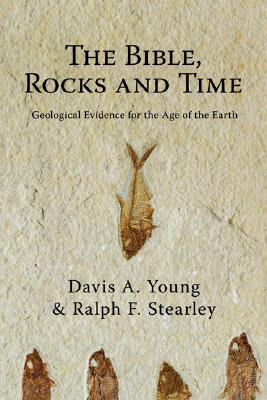
One area that evangelical theologians must weigh is the notion that exegesis should line up with reality. Thus, how might one balance an interpretation between some apparent readings and the findings of certain scientific discoveries? Must they even be balanced at all? Davis Young and Ralph Stearley’s magisterial work on the age of the Earth, The Bible, Rocks and Time, provides an interesting historical background for how discoveries led to the questioning of exegesis of certain texts:
[In the 17th Century…] foundations were gradually being laid for questioning the accepted opinion about the age of the Earth [that being a few thousand years]. Advances in the study of fossils and rock strata were both necessary before such questioning would come about… (47, cited below)
Thus, historically, there has been an interplay between scientific discovery and exegesis of key texts of Scripture. Without certain scientific advances, received opinion on certain features of the natural world remain unquestioned. However, once scientific advances made it possible, these opinions were challenged and often abandoned in the face of extrabiblical evidence. The book provides a great overview for how the interplay between discovery and exegesis played out.
What are your thoughts? Should new discoveries be allowed to challenge received interpretations? How might we best deal with discoveries in the natural world which apparently clash with our reading of the text?
Links
Be sure to check out the page for this site on Facebook and Twitter for discussion of posts, links to other pages of interest, random talk about theology/philosophy/apologetics/movies and more!
Sunday Quote– If you want to read more Sunday Quotes and join the discussion, check them out! (Scroll down for more)
Source
Davis A. Young and Ralph F. Stearley, The Bible, Rocks and Time (Downers Grove, IL: InterVarsity Press, 2008).
Sunday Quote!- Reframe the Origins Debate?
 Every Sunday, I will share a quote from something I’ve been reading. The hope is for you, dear reader, to share your thoughts on the quote and related issues and perhaps pick up some reading material along the way!
Reframe the Origins Debate?
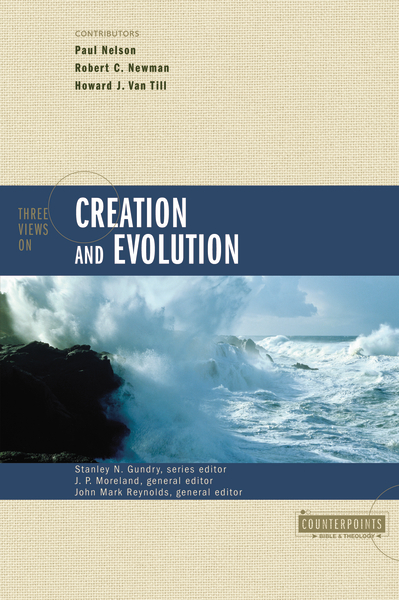
I have been going through a number of books in the Zondervan Counterpoints series and completed Three Views on Creation and Evolution
Is the creation’s formational economy sufficiently robust (that is to say, is it equipped with all the necessary capabilities) to make it possible for the creation to organize and transform itself from elementary forms of matter into the full array of physical structures and life-forms that have existed in the course of time? (Van Till 185-186, cited below)
Howard J. Van Till is a theistic evolutionist (he does not like the term–or at least did not at the publication of this book), and he views that position as a “fully gifted creation”–one in which God, on creating, imbued creation with the capacities to develop naturally over the course of time. This is the “economy of creation” in which–according to Van Till–God created without the need for continual intervention.
Now, so far as this reframing is concerned, it seems to me that Van Till, in attempting to avoid the either/or dichotomy between creation and evolution, went a bit to the other extreme. Putting a word like “robust” in there suggests that anyone who would disagree is clearly questioning the capacity of the Creator in creating. However, I do think there is something to the notion that we do need to rethink exactly where the lines form in the origins debate. I have written on the various options for Christian origins positions and I think that we need to be aware of the fact there is more to it than even “three views” could begin to outline.
Regarding the question itself: what do you think? Do we need to outline the origins debate with different terms so that we can avoid a false dichotomy? Moreover, do you think that creation is indeed set up in such a way?
Links
Be sure to check out the page for this site on Facebook and Twitter for discussion of posts, links to other pages of interest, random talk about theology/philosophy/apologetics/movies and more!
What options are there in the origins debate? – A Taxonomy of Christian Origins Positions– I clarify the breadth of options available for Christians who want to interact on various levels with models of origins. I think this post is extremely important because it gives readers a chance to see the various positions explained briefly.
Sunday Quote– If you want to read more Sunday Quotes and join the discussion, check them out! (Scroll down for more)
Source
Howard J. Van Till, “The Fully Gifted Creation: ‘Theistic Evolution'” in Three Views on Creation and Evolution
SDG.
Dinosaurs, Noah’s Flood, and Creationism- An ecological challenge
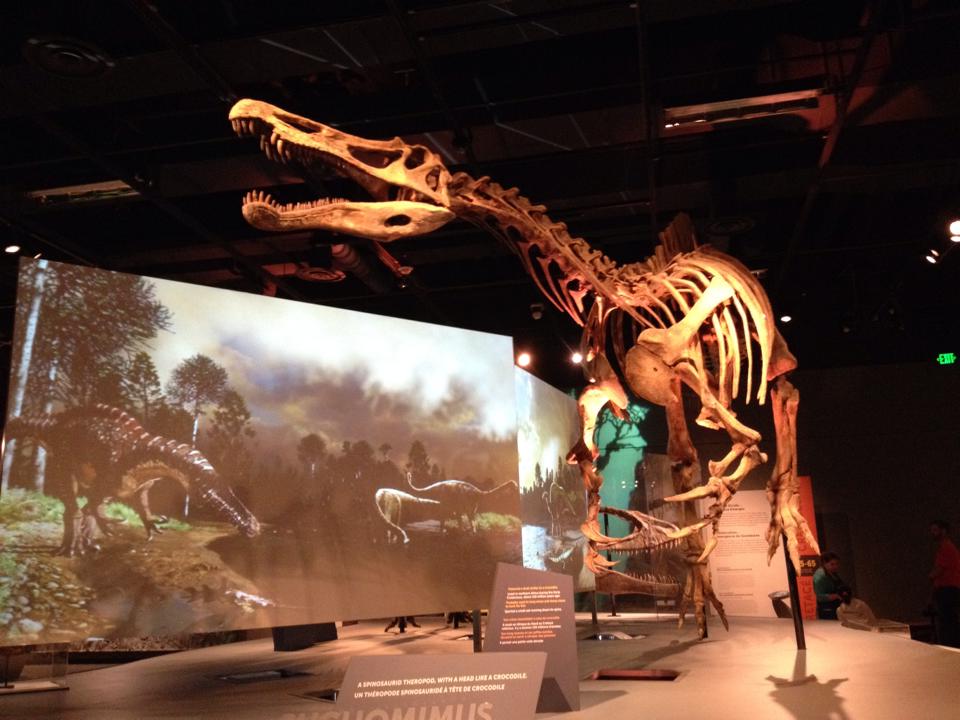 I recently visited the Science Museum of Minnesota to check out the exhibit “Ultimate Dinosaurs” which features a number of dinosaurs which aren’t typically displayed in North America. I heard one other museum-goer talking about how they always thought that dinosaurs just were dinosaurs–that they were the same all over the Earth. But they weren’t! In fact, there is great diversity in the types of dinosaurs found in different parts of the world. Some are found all over North America; others are restricted to small parts of Africa or South America.
That got me thinking on creationism. A standard young earth creationist account of the history of the world would state that dinosaur fossils are found where they lay because the Flood put them there. Many YEC accounts are catastrophic in nature, arguing that the Flood recreated the surface of the Earth and left most or all of the layers of sediment we now observe. The dinosaurs (and other creatures) we find were swept up in the Flood and then laid down once the water had settled.
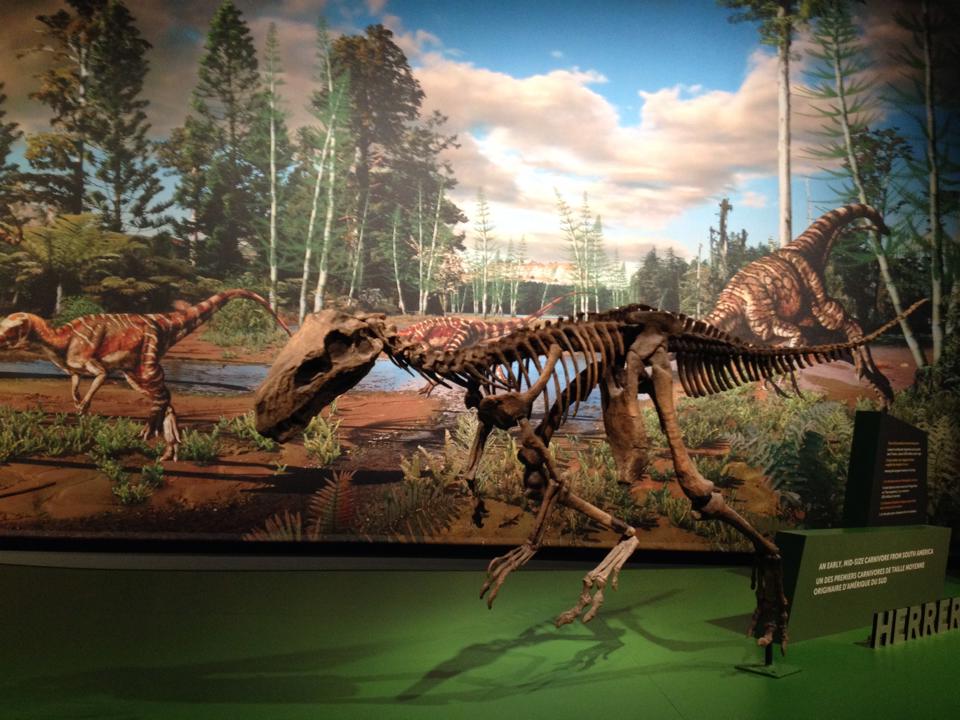
Pictured above and left, there is a fossil of a Suchomimus. Suchomimus was a fish-eating dinosaur which has only been found in Niger, Africa. According to standard scientific explanations, it lived in the Early Cretaceous period, about 121-112 million years ago. According to a young earth creationist account, this dinosaur died either during the Flood or migrated to the location it was found after the Flood. Either way, this was no more than a few thousand years ago. Pictured below and to the right, there is a fossil of a Tyrannosaurus Rex. It lived in the Late Cretaceous period, about 66-67 million years ago and ranged across what is now North America. Again, a young earth creationist account would have it dying during the flood or going extinct afterwards.
 The Young Earth Creationist Explanation- A problem?
The young earth creationist (YEC) account is once more generally based upon the notion that the Noachian Deluge deposited these fossils where they are now found. The Flood is to explain how these fossils ended up in their present locations.
The fact that dinosaurs are found in different parts of the planet–and only in those parts–suggests an interesting problem for YECs: How is it that such a catastrophic event managed to destroy the surface of the Earth and then remake it through layers while creating the illusion of localized ecosystems at different points in history?
Such a challenge should not simply be dismissed. YEC literature sometimes suggests that the fossilized ecosystems which are proposed in different parts of the world at different (millions of years ago) times are merely products of the Flood depositing the fossils where they now lay. For example, according to YEC literature, many scientists believe that there was an ancient sea over North America merely because the Flood happened to deposit a bunch of mosasaur fossils and other marine life in a certain layer of the sediment it laid down.
The observed evidence, however, goes against this notion. Consider the Suchomimus (pictured above, left) once more. It has been found only in a localized area in what is now Africa. It is nearly certain it was a fish eater. This notion is not a mere product of accidental laying down of fish fossils near and around where Suchomimus has been found. Instead, it is based upon observational evidence. First, its large claws seem perfectly adapted to snagging large lungfish along the shore (large lungfish fossils have been found in the same area). Second, its narrow skull lined with extremely pointy teeth suggest a fishy diet, as it is once more adapted to eating them. Third, and most telling, fish fossils have been found with tooth marks from Suchomimus on their bones.
So what? How does this bring up a problem for YEC? Well, to put it simply, it demonstrates that the localized ecosystem found near and around Suchomimus is not a mere random product of fossils being jumbled together and then deposited during the Flood. Instead, predator and prey are found in a localized environment with other fossil specimens that fit neatly into the same ecosystem. But on the YEC account, how could this happen? Surely it would be an astounding happening if an entire ecosystem were swept away by the Flood, jumbled up with others along with sediment and the like, subjected to tidal waves across the surface, and then neatly deposited in a localized area, preserving that same ecosystem.
 A Possible Alternative
Some YECs (such as Kurt Wise) have instead suggested that the Flood did not destroy the whole surface of the Earth but was rather providentially brought about by God along with catastrophic plate tectonics. On this scenario, water rapidly rose and covered the face of the Earth, bringing with it sediment and the like which rapidly buried such localized ecologies.
Setting aside difficulties with such a scenario related to the means by which it would have allegedly occurred, it should be clear that this explanation is at least somewhat more palatable. It doesn’t turn ecosystems into mere fictions. However, this scenario doesn’t solve everything. For example, why are there separate and distinct ecosystems, one atop the other, in the same place? Going to North America, Tyrannosaurus Rex has been found across much of what is now North America. Again, we find prey with T-Rex tooth marks in their bones and the like. We have preserved ecosystems from this time. But different places (like the inland sea I discussed here) feature what appears to be a marine environment. Moreover, different layers, like those exposed through glaciation in the upper Midwest, show entirely different (and seemingly more primitive) marine lief. This raises a number of issues, most of which are relevant for any alleged Flood scenario.
First, if the Flood was a sudden event which covered the face of the Earth and thus preserved ecosystems in place, how did it manage to kill off and bury so much marine life? It seems like it must have been gentle enough to preserve the fossil evidence, so why did the marine life not simply swim away and get scattered across other layers as it died? Second, how do we have distinct and separate ecosystems preserved in different layers, one atop the other? Again, the suggestion was that ecosystems were preserved in place–so why do some places have different ecosystems above one another? Third, why are the types of sediment laid down distinct for each ecosystem? If the sediment was all due to one event, then why does the sediment type match the ecosystems which it buries?
 The Balance of Evidence
At this point, I think we must remember that we may evaluate such claims from a number of angles. First, the YEC explanations seem very ad hoc–that is, they are invented by adjusting the Flood scenario (or some other device like distant starlight moving faster)–in order to explain away the difficulties rather than pursuing the evidence. It is reactionary rather than investigative. [I edited this line after some insight from a comment below.]
Second, realistically, which portions of the YEC explanation might be found in the Bible, if any? Having read the accounts of the Flood and Creation many times, I have to say I have never once spotted a place wherein it discusses the distribution of dinosaurs, the way the Flood laid down sediment, or any number of things put forward by YECs.
Third, when YECs and others are offering alternative scientific explanations–i.e. an explanation for “how did this [dinosaur] get here?”–they must deal with the fact that we’re looking for the most likely explanation. As I discussed in another post on dinosaurs and creationism, the proposed alternative YEC explanation is very clearly more complex and less likely than that of the one already offered–that the dinosaurs simply existed at different times and/or in different places over the course of history. We should be honest in our evaluations of evidence and look to see which explanation is more likely. Remember, we should be investigating the evidence while trying to stay free of any a priori assumptions about what must have happened and instead look at the evidence to see which explanation best fits. As I pointed out in the post linked above, proposing a global catastrophic Flood as the alternative hypothesis demands an enormous burden of proof.
Links
Be sure to check out the page for this site on Facebook and Twitter for discussion of posts, links to other pages of interest, random talk about theology/philosophy/apologetics/movies and more!
“Oceans of Kansas,” Unexpected Fossils, and Young Earth Creationism– I discuss the alleged findings out out-of-sequences fossils in the fossil record and how YEC explanations fail to show they are attributable to a global catastrophic Flood.
What options are there in the origins debate? – A Taxonomy of Christian Origins Positions– I clarify the breadth of options available for Christians who want to interact on various levels with models of origins. I think this post is extremely important because it gives readers a chance to see the various positions explained briefly.
The photographs in this post were taken by me at the Science Museum of Minnesota with permission. Any use of these pictures should be only with express, written consent. The map is an image created by BBC and I do not claim any rights over it but use it through fair use.
SDG.
——
The preceding post is the property of J.W. Wartick (apart from quotations, which are the property of their respective owners, and works of art as credited; images are often freely available to the public and J.W. Wartick makes no claims of owning rights to the images unless he makes that explicit) and should not be reproduced in part or in whole without the expressed consent of the author. All content on this site is the property of J.W. Wartick and is made available for individual and personal usage. If you cite from these documents, whether for personal or professional purposes, please give appropriate citation with both the name of the author (J.W. Wartick) and a link to the original URL. If you’d like to repost a post, you may do so, provided you show less than half of the original post on your own site and link to the original post for the rest. You must also appropriately cite the post as noted above. This blog is protected by Creative Commons licensing. By viewing any part of this site, you are agreeing to this usage policy.
Really Recommended Posts 4/11/14- submission, creationism, and apologetics!
 I’m really itching for a game of Ultimate Frisbee. Seriously, can the snow please melt? Anyway, this week I’m presenting for your reading pleasure a slew of high quality posts on the (non-)tasks of the apologist, submission, “street epistemology,” presuppositionalism, and young earth creationism. How’s that for a lineup? Let me know your thoughts in the comments! I love to read what you think. Have a link to share? Drop it here with your own thoughts on it, and I may include it next time!
What an Apologist’s Job is NOT– Melissa Cain Travis offers some extremely sound advice on things to avoid as an apologist. This is a very practical post and a most read for those of us involved in apologetics. Read it!
On Submitting to One Another– What does it mean to submit? How does the notion of submission to one another play out in the church? Check out this thoughtful post by Paul D. Adams on these topics.
On Interacting with Street Epistemologists– Nick Peters has spent some time interacting with “street epistemologists” trained by atheist Peter Boghossian. Here, he shares some of his insights gained from this task. If you’re unfamiliar with the Boghossian, I highly recommend you check out “Peter Boghossian, Atheist Tactician.”
Picture Charades: Do you know your presuppositional apologists?– A fun activity of identifying key presuppositional thinkers. I take an integrative approach to apologetics, so I think it is important to read evidentialists, presuppositionalists, classical apologists, and yes, even fideists.
An Ancient and Alien Forest Reconstructed: A Challenge for young earth creationism– How might the forests of the past present difficulties for young earth creationism? Well, read the post to find out! It’s well worth it.
A Solar System and Cosmos Filled With Life? – A reflection upon Ben Bova’s “Farside” and “New Earth”

Ben Bova’s contributions to science fiction are monumental. A six-tme Hugo Award winner (!!), he is established as one of the most successful and entertaining authors of our time. I have quite enjoyed a number of his works, though I have at times been critical of his portrayal of religion. Bova’s major series, the “Grand Tour,” follows human exploration of the solar system (and at some points, beyond). The series is constructed in such a way as to not require readers to follow it chronologically. They are interlinked and interrelated, but not interdependent. Here, we’ll look at two recent books in this series which look at the discovery of an Earth-like planet. There will, of course, be major plot SPOILERS for both books in what follows.
Farside
After telescopes on Earth discover an Earth-sized planet relatively local to our own Solar System (ten light years away), the race is on to learn more about this planet. Farside portrays the struggles of a number of people in their efforts to build an observation base on the dark side of the moon. Jason Uhlrich seeks his Nobel Prize in his attempts to be the first to observe and chart the planet.
Life has already been found within the Solar System, and now two rivals rush to be the first to discover it in the great beyond of the stars. What is interesting is to note some of the assumptions that go into Bova’s characterization of life beyond Earth. First, one primary assumption seems to be that where there is water, there must be life. Second, life should be expected in all corners of the universe.
These assumptions are the subjects of much debate within the scientific community around the possibility of life on other planets and the origin of life. Regarding the former, there are those who do believe that life will be found in abundance throughout the universe. After all, given that we exist, life cannot be all that improbable, right? The other primary way of thinking is to argue that life is, in fact, quite rare in the universe and our own existence is a wonderfully improbable jackpot win.
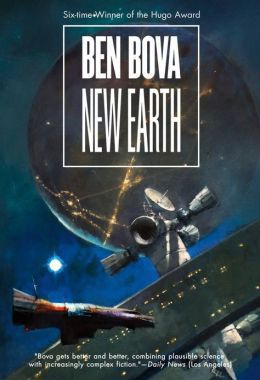 New Earth
New Earth picks up some time after the events of Farside. Humanity has sent an expedition to “New Earth.” Upon arrival, there is a great mystery: “New Earth” is eerily like Earth itself. It turns out that a machine known as a “predecessor” has created the planet and grown these human-like aliens as a way to break it to humanity that there is, in fact, more intelligent life “out there.” Moreover, there is a catastrophic event coming towards the whole arm of the Milky Way which will wipe out these intelligent species, and humanity needs to help preserve themselves and the other species.
Though skeptical, ultimately all the members of the expedition are convinced, and the book ends with the message reaching Earth and the gearing up to proceed on this mission given by the Predecessor.
Reflection
There are, of course, any number of things that one could nitpick regarding the plausibility of the scenarios Bova envisions (one would be the rewiring of Uhlrich’s brain to “see” via hearing and touch… how does that work?), but here we’ll focus on two aspects of the work: the plausibility of life outside Earth and the mythos of the benevolent alien.
In Farside, readers who haven’t surveyed the body of Bova’s work discover that the Solar System itself teems with life: life once flourished on Mars, and its vestiges remain; on Jupiter, creatures soar in the skies; life is found elsewhere throughout the System. Bova’s vision of the origin of life seems to be that if there’s water, there may be life. Yet one has to wonder about the plausibility of life forming on a planet like Jupiter. How might biochemical interactions with delicate balances of material be maintained for long? What of the distance to the sun? The origin of life requires all kinds of factors to be “just right” and it simply is not enough to fudge the numbers by saying “It could have happened this way.” To develop a hypothesis around ad hoc assumptions is faulty.
Intelligent life, as explicated in New Earth, is even more problematic. It is easier to have single celled organisms than to have the complexity needed for intelligence. Even granting a naturalistic scenario, the conditions must be even more tuned for life and allow for the nurturing of that life for extremely long periods of time. The universe is indeed huge beyond belief but one has to wonder if even that immensity is enough to repeat the conditions which occur on Earth.
Of course, in the end, one must acknowledge that these are tales of science fiction, not proposals about how science fact might be. There is a certain sense of awe and wonder involved in considering whether life could exist all over the Solar System. It seems to me, however, that if that is the case, it probably got there by means of Earth–blown off the surface of our planet by an asteroid and traveled through space to Mars and possibly beyond.
Another major theme found in both books is what I dubbed the “Myth of the Benevolent Alien.” There is a kind of pervasive battle in science fiction between the notions that aliens want us dead or that aliens are going to be ultimately some kind of saviors of humankind. New Earth brings this benevolence front and center: some unknown life form created these “Predecessors” to find and aid intelligent life. It’s a scenario filled with wonder and hope. But it’s also a scenario which I’ve found time and again in materialistic literature.
The way this story goes: wherever possible, life is certain. It’s a kind of appeal to a fantasy of a godless universe wherein it may be possible to find hope and meaning in the stars. As one character (I believe it is Grant) said in Farside: Ad astra! (To the stars!). Second, the actual inherent implausibility of life both leads to this longing (we don’t want to be alone) and to a search for meaning (how did we get here?). My own answer is that theism provides a more plausible explanation of both the longing for meaning, meaning itself, and the way in which life arose. Interestingly, however, the atheistic accusation that theists are engaged in wishful thinking is perhaps mirrored through various declarations made by naturalists themselves (see the post linked above and in the links below).
Bova’s novels thus serve as a way forward in this discussion. By illustrating our longing and loneliness through the fulfillment of our desires (the discovery of life and the notion that we are not alone), Bova grants readers their wishes. However, we ultimately come to realize that these are indeed just wishes. Perhaps, one day, a “New Earth” will be discovered. But even if that happens, it will not be enough to satisfy our loneliness, nor will it answer our ultimate questions. Theism is the ultimate antidote to loneliness, the ultimate answer for our questions.
Links
Be sure to check out the page for this site on Facebook and Twitter for discussion of posts, links to other pages of interest, random talk about theology/philosophy/apologetics/movies and more!
Materialists: Where is hope? Look to the stars!– I analyze one aspect of materialism: the way that some look to hope in the “beyond” of the outer limits of the universe. Hope, for materialists, may come from the stars. Our salvation may lay beyond our solar system, in benevolent aliens who will bring great change and advances to us.
Our Spooky Universe: Fine-Tuning and God- The incredible circumstances which allow for life to exist and thrive on Earth are the cause for not merely fictional speculation, but actual reflection upon our place in the universe and how it might relate to the transcendent. Check out this post which surveys the evidence for the existence of God found in “fine-tuning.”
Sources
Ben Bova, Farside (New York: Tor, 2013).
Ben Bova, New Earth (New York: Tor, 2013).
SDG.
——
The preceding post is the property of J.W. Wartick (apart from quotations, which are the property of their respective owners, and works of art as credited; images are often freely available to the public and J.W. Wartick makes no claims of owning rights to the images unless he makes that explicit) and should not be reproduced in part or in whole without the expressed consent of the author. All content on this site is the property of J.W. Wartick and is made available for individual and personal usage. If you cite from these documents, whether for personal or professional purposes, please give appropriate citation with both the name of the author (J.W. Wartick) and a link to the original URL. If you’d like to repost a post, you may do so, provided you show less than half of the original post on your own site and link to the original post for the rest. You must also appropriately cite the post as noted above. This blog is protected by Creative Commons licensing. By viewing any part of this site, you are agreeing to this usage policy.
Really Recommended Posts 3/28/14- Nature and Scripture, Tolkien’s Beowulf, oneness in Christ, and more!
I have a nice range of posts set up for you. First, we look at the “God’s Not Dead” flick. Then, Tolkien’s translation of Beowulf! From there we survey the interrelationship between nature and Scripture, men and women as images of God, and young earth creationism and animal mimicry. I hope you enjoy them. As always, drop a comment here to let me know what you thought!
An Apologist Reviews “God’s Not Dead”– The movie “God’s Not Dead” is drawing a lot of interest from Christians. How does it hold up with it’s seeming purpose: to show that God is not dead? Check out this review by Nick Peters, a Christian apologist.
JRR Tolkien’s Translation of Beowulf: Bring on the Monsters– A translation from Tolkien of Beowulf may seem pretty ho-hum. After all, there are already English translations! But the book is going to be published not only with the translation, but also Tolkien’s notes and a couple essays. This is, of course, not to mention Tolkien is a renowned scholar of linguistics and so his translation is undoubtedly fantastic. I wait with barely contained glee for this one. Check out this post for reasons to get excited about the book!
Are Nature and Scripture Compatible?– Here, Luke Nix analyzes a number of ways to evaluate nature and Scripture alongside each other. The post has helpful flow charts to visualize this reasoning throughout. I highly recommend the read.
Male and Female: One Image, One Purpose– Men and women are both made in the image of God. What does that mean? How does it play out in our view of men and women? Check out this post by Mimi Haddad on the topic.
The “Good Creation” – Mimicry, Design, and Young Earth Creationism– How do creatures which mimic others (or the environment) reflect upon God’s creation? Check out this post which analyzes the question against the backdrop of young earth creationism.
What options are there in the origins debate? – A Taxonomy of Christian Origins Positions
 The origins debate within Christianity is often viewed through the lens of a very narrow spectrum. Most recently, this was demonstrated in the debate between Ken Ham and Bill Nye. I also demonstrated this recently by answering questions for old earth creationists (see the first and second parts): some people tend to see the only options available for Christians as either young earth creationism (the earth was made in six 24 hour days 6-10 thousand years ago) or theistic evolutionism (God set it up, then evolution accounts for diversification). These perspectives, though showing a few of those available to Christians, do not actually reflect the whole realm of possibilities for Christians.
More thoughtful Christians tend to think of the perspectives as threefold. There are theistic evolutionists, young earth creationists, and then in between there is a kind of amorphous glob of people who hold to an “old earth” without expressing it in strictly evolutionary terms. Here, we’ll explore this amorphous glob (as well as the extremes) to show that there really is a range of options. I’m writing this mainly to clarify for many some of the difficulties in commenting on creation issues without such a taxonomy.
Gerald Rau’s Mapping the Origins Debate
If I could recommend one book to anyone who is going to get involved in creation issues, I would have to say I’d recommend Gerald Rau’s Mapping the Origins Debate: Six Models of the Beginning of Everything
Rau’s Taxonomy
Rau divided the major positions on the origins debate into a sixfold division (see Rau, 41):
Naturalistic Evolution- On this view, there is no God and no purpose in origins. The process for the origin of species and its diversity is “spontaneous.”
Nonteleological Evolution- On this view, there is a creator, but there remains no intervention in the natural process which yield life and its diversity. Thus, the “conditions necessary for life” were “established at creation.” However, evolution is still without purpose and the creator did not specify its parameters.
Planned Evolution- On this view, there is a creator who had a purpose for life and its origin. This purpose is through a “perfect creation” which “naturally fulfills God’s purposes.” Thus, the purpose which the creator had was essentially front-loaded in at the moment of creation. There is no direction during the process.
Directed Evolution- On this view, there is a creator with a purpose for the diversity of life. Unlike the previous view, the creator doesn’t merely front-load design and purpose but rather intervenes throughout the course of history to bring about purpose: “changes in universe and life” are “subtly directed over time.”
Old-Earth Creation- On this view, the process by which the diversity of species came about is not through directed evolution but rather through creation over time: “major body plans” are “created over millions of years.” New diversity of life is through God’s direct creative act.
Young-Earth creation- on this view, “each ‘kind'” is “created in one week, within the last 10,000 years. All diversity of life is due to God’s creative act; any changes since then are only among the “kinds” represented on the ark.
 A Larger Picture
Rau’s division of these groups is extremely helpful because he hits on the major positions represented within the spectrum. Of course the only options which are available to Christians are those which do not exclude God from the picture. Thus all but naturalistic evolution remain open to the believer. Now, the debate over how these might fit into the teaching of the Bible is not what I’m trying to dive into here. Instead, I’m simply pointing out there is diversity of views greater than the YEC/Theistic Evolutionism divide. One can see from the above that even within theistic evolutionism there is some diversity. Does evolution take place nonteleologically or did God plan it from the beginning? Perhaps God directed evolution along the way. There also is the option of Old Earth Creationism which shares many features with young earth creationism but radically diverges from the latter in many respects.
However, the spectrum opens up even more than Rau’s taxonomy depicts. The views he discusses focus primarily upon the science; that is, they are distinctions among views on the specifics of a scientific account of origins. Other views may be listed which may be distinguished by the reading of the Bible. Now, there is of course much overlap between these and Rau’s list, but I wanted to highlight a few views of interest.
First, there are interpreters like John Sailhamer in his book Genesis Unbound
Second, John Walton’s view reads the creation account within the Ancient Near Eastern context and so he views Genesis not as a literal creation account but rather as an account showing how God is enthroned over the entire creation as King. Again, such a view would be amenable to the spectrum of views possible for a Christian as I noted.
It is worth noting that either of these is distinct from the spectrum Rau lists. They are distinct because they do not require commitment to any of the creation models. Thus, for Collins, Sailhamer, and Walton, one may simply remain open to the evidence rather than filtering the evidence through specific readings of the Genesis text. Of course, one could hold to this view and remain a young earth creationist; but none of these readings explicitly forces someone to hold to any position on the actual means of creation and speciation.
Third, there are positions related to the scientific origins which would further subdivide Rau’s categories as dilineated above. For example, young earth creationists often hold that the Global Flood can account for the fossil record and stratification. But some YECs have historically held that the Flood would have been tranquil and essentially had no impact on the Earth. Other YECs simply hold that the universe and the Earth have an appearance of age because God would have known at what age it would have needed to be in order to sustain life. There is much diversity about the mechanisms related to the Flood as well. Similarly, Old Earth Creationists exist upon a spectrum, though Rau’s principles about what unites them are correct. However, OECs are often confused with other views along the spectrum such as directed evolution. Strictly speaking, an Old Earth Creationist will not hold to the notion that speciation occurs on such a broad scale through evolution.
Conclusion
I have utilized Rau’s work to demonstrate there is a spectrum of beliefs related to the origins debate. The spectrum, I have argued, is even broader than Rau showed. Within each category he listed, there may be subdivisions. Moreover, there are some views which eschew attempts to dilineate the scientific truths but simply ascribe to reading the text. These latter views would fit with essentially any along the spectrum of beliefs so long as God is involved.
The purpose of this post is not to sow confusion for those interested in the topic of origins. Rather, it is to demonstrate that there really are more options on the table than either Young Earth Creationism or Theistic Evolutionism. Within either of those views there is much diversity, and there is a whole range in-between. Thus, let us hope that when we discuss origins we avoid falsely portraying the positions as being so limited that we fail to account for the range. Hopefully, this taxonomy will prove helpful.
Links
Be sure to check out the page for this site on Facebook and Twitter for discussion of posts, links to other pages of interest, random talk about theology/philosophy/apologetics/movies and more!
Source
Gerald Rau, Mapping the Origins Debate: Six Models of the Beginning of Everything
SDG.
——
The preceding post is the property of J.W. Wartick (apart from quotations, which are the property of their respective owners, and works of art as credited; images are often freely available to the public and J.W. Wartick makes no claims of owning rights to the images unless he makes that explicit) and should not be reproduced in part or in whole without the expressed consent of the author. All content on this site is the property of J.W. Wartick and is made available for individual and personal usage. If you cite from these documents, whether for personal or professional purposes, please give appropriate citation with both the name of the author (J.W. Wartick) and a link to the original URL. If you’d like to repost a post, you may do so, provided you show less than half of the original post on your own site and link to the original post for the rest. You must also appropriately cite the post as noted above. This blog is protected by Creative Commons licensing. By viewing any part of this site, you are agreeing to this usage policy.
Lawrence Krauss vs. John Lennox on science and faith
 I’ve been catching up on my podcasts and I recently listened to a dialogue between an atheist, Lawrence Krauss, and a theist, John Lennox on questions about science and faith. It was on the Unbelievable? program (something I strongly suggest you listen to weekly) [listen here]. Thus, it was less a debate than it was a moderated discussion. Here, I’ll only focus on a couple questions that came up in their dialogue.
How and Why
According to Lawrence Krauss, science cannot answer “Why” questions but only “how” questions. Lennox brought up the example of a Ford motor car sitting on a driveway [I added this last bit for clarity]. He argued that one can explain the “how” it got there but there still remains the question of “why” it was made. Thus, the “why” questions remain “real” questions whether or not science is capable of investigating them. Interestingly, Krauss took a different tact than I expected in his rebuttal: he argued that the “why” question (at least in the Lennox case) is reducible to a “how” question. That is, one could explain how Henry Ford designed it, had it built, and then someone bought it and drove it to where it is sitting.
But of course redefining terms does little to address the actual questions at hand. Lennox was keen to show that questions about “why” are indeed meaningful. It seems that Krauss’ only response is to either say “no they’re not” or redefine actual “why” questions into “how” questions and argue there still are no “why” questions. The move is not very subtle, nor is it successful.
Purpose in the Universe?
Krauss made several comments regarding purpose in the universe. First, he seemed to suggest that in order to assert the universe has purpose, one must know what that purpose is. Second, he argued that the universe is indeed quite wasteful if it were intelligent designed with purpose. Third–in response to Lennox’s statement that Krauss and other cosmologists admit that for life to exist there would have had to be several generations of stars (to produce enough carbon for carbon-based life)–he alleged that there could be all sorts of other life forms we don’t know about. I’ll address these each briefly in turn.
First, it seems clear that if one wants to suggest the universe has a purpose, one does not have to know what the purpose is. We can see this all the time in our own interactions with the world. Suppose I see a pile of blocks on the floor in an office building stacked in piles of various heights and arranged by color. I can immediately recognize that there must have been some purpose behind it–for the arrangement by color is quite telling–but I may not be able to pinpoint the exact reason. Perhaps some five-year-old was amusing herself by stacking blocks by color. Perhaps an adult was making art by stacking them in that way–a kind of reminiscence on childhood. There could be any number of other reasons. But the fact that I don’t know the reason doesn’t mean there is no reason. Similarly, I may claim the universe has a purpose even without claiming to know what said purpose is.
Second, Krauss seems to make the error that if the universe were designed for humans, that would have to be the only purpose involved in the entire universe. I’ve addressed this claim in some detail elsewhere, so for now I’ll just say that Krauss’ mistake lies in assuming that if there is a purpose behind the universe it must be the only purpose.
Third, Krauss missed the point of Lennox’s rebuttal. For the life we are dealing with is clearly carbon based. For Krauss to stretch the question to possible scenarios of non-carbon based life is to miss the thrust of his own argument. He was asking for purpose in this universe; he was not asking for purpose in any possible universe. Thus, his statement is off base. Moreover, I tend to agree with scientists like Iris Fry and the like who agree that it is implausible to suggest life could be based on silicon or other things apart from carbon. That is a debate that would take us far afield, so I’ll leave it at that.
Science Doesn’t Care About Philosophy
Lennox, towards the end of the discussion, pointed out that Krauss’ claim to define nothing as something is nonsense. Krauss’ response? He jettisoned philosophy immediately: “Science doesn’t care about philosophy,” he said [he may have said “Scientists don’t…” but after listening to it a few times, I couldn’t tell which he said]. If you don’t see a problem with this, you should. First, the statement itself is philosophical. Second, any number of claims he made throughout his discussion with Lennox were philosophically grounded. Third, science depends upon philosophy to operate. Fourth, as I’ve demonstrated elsewhere, Krauss’ own work is directly dependent upon philosophy.
Documents Aren’t Evidence
Krauss said that documents don’t count as evidence. His assertion was based upon the notion that a book like The Great Gatsby is a document, but it is not taken as factually true. Apart from purely begging the question regarding the genre of the Bible alongside The Great Gatsby, Krauss is also severely mistaken in his claim that documents aren’t evidence. According to Krauss’ claim, we should essentially dissolve our government, because our system of government is based upon a document: the Constitution. But the Constitution cannot count as evidence for anything! So this begs the question: why should we go to it to see whether or not Lawrence Krauss should have freedom to express his vitriol against religious people?
The problem is that Krauss is just wrong here. Documents do count as evidence. One needs to acknowledge the genre, intent, etc. regarding a document, but for Krauss to utterly dismiss documents as evidence is absurd. One may ask whether Krauss wrote any books. He could, presumably, produce documents to show that he did indeed write books. But on his own standard of proof, he hasn’t presented any evidence whatsoever. Thus, on Krauss’ definition of evidence, I conclude that Krauss has never written anything.
Conclusion
There is much more that I could interact with in regards to this conversation between Krauss and Lennox, but I’ll leave it for now with the comments I have. I suggest readers go listen to the dialogue themselves. It seems to me clear that Krauss continues to flounder in areas outside his expertise. He misused the notion of an “appeal to authority” when he applied it regarding Lennox’s citation of Nagel, he continued to make errors regarding non sequitors, he dismissed his own books as evidence that he wrote anything, and his comments on purpose betray a lack of reflection on the topic. Krauss continues to show that he is basically ignorant of even the implications of his own claims.
Links
Be sure to check out the page for this site on Facebook and Twitter for discussion of posts, links to other pages of interest, random talk about theology/philosophy/apologetics/movies and more!
Shoulders of Giants? -Philosophy and Science in Context, or “Krauss Jumps off!”– I argue that Krauss is mistaken to claim that philosophers know nothing. I further argue that Krauss’ own work is dependent upon philosophy, so he ironically (ignorantly?) dismisses the very basis for his work.
William Lane Craig vs. Lawrence Krauss- Thoughts and links– I summarize and analyze a debate between Lawrence Krauss and the Christian philosopher and theologian William Lane Craig. I think this debate was devastating to Krauss’ positions regarding his atheism.
Follow this link to access the audio for the dialogue between Lennox and Krauss.
SDG.
——
The preceding post is the property of J.W. Wartick (apart from quotations, which are the property of their respective owners, and works of art as credited; images are often freely available to the public and J.W. Wartick makes no claims of owning rights to the images unless he makes that explicit) and should not be reproduced in part or in whole without the expressed consent of the author. All content on this site is the property of J.W. Wartick and is made available for individual and personal usage. If you cite from these documents, whether for personal or professional purposes, please give appropriate citation with both the name of the author (J.W. Wartick) and a link to the original URL. If you’d like to repost a post, you may do so, provided you show less than half of the original post on your own site and link to the original post for the rest. You must also appropriately cite the post as noted above. This blog is protected by Creative Commons licensing. By viewing any part of this site, you are agreeing to this usage policy
Back-Alley Abortions, Apologetics, Male Hierarchy, and more! – Really Recommended Posts 10/18/13
 I have given you, dear reader, this edition of “Really Recommended Posts” which is simply bulging at the seams with great content. Herein, you shall discover the myth of the back alley abortion, an analysis of male rule, sociology and religion’s impact on society, Augustine and the creation/evolution debate, and more! Check ’em out. Let me know what you think!
Is Male Rule a Biblical Ideal?– Here, Mimi Haddad confronts some of the common arguments for male rule in the church and home. These arguments include the fact that Jesus was male, that the 12 disciples were male, etc.
Sociologist Rodney Stark discusses whether religion is good for society– A highly interesting post in which a sociologist takes on claims that religion could be bad for society. Looking into the actual statistics and facts of the matter makes an extraordinary difference to one’s perception.
Pro-Choice “Facts”: Illegal Abortion Deaths– One of the very common arguments for abortion is that we need to keep such things safe. After all, if women will get abortions anyway, we should try to keep them safe. This article examines the myth of the back-alley abortion and exposes it for what it is: a fraud.
The dangers of apologetics– My wife linked me to this article which I think makes some extremely valuable points regarding the nature and practice of apologetics. I particularly liked that the author did not throw apologetics out the window but rather offered pieces of advice for apologists and what to avoid as an apologist. What are your thoughts?
Augustine’s Origin of Species– Within the creation/evolution debate, many continue to allege that one cannot consistently be a Christian and hold to certain views of the age of the universe or the origin of species. Here, Alister McGrath analyzes these claims alongside the wonderful Christian theologian, Augustine.
Signs that the New Atheist Movement May be Collapsing– A post which examines the intellectual collapse of the New Atheism. I think the most fascinating point is the third, that New Atheists are suppressing intellectual dialogue.
John Loftus Exits in Infamy– Speaking of the New Atheists, David Marshall analyzes his own recent dialogue with John Loftus, a[n] [in]famous atheist. The way the dialogue proceeded is highly telling.
Answering “More Questions for Old Earth Creationists”

One of my primary areas of interest revolves around the debate over origins, specifically within Christianity. Is the universe “young” (~6-10k years) or “old” (about 13.79 billion years)? How do we look at creation texts in the Bible? What do they teach us?
Last week, I wrote on an article in which a young earth creationist on a radio show I enjoy asked a number of questions of old earth creationists. I noted that many of these questions were off-base because they don’t actually address something that is an issue for old earth creationists. For those who follow this debate within Christianity, I want to make it clear that it is extremely important to accurately represent your opponents’ views. It is all well and good to engage in dialogue with and critical examination of other views, but in doing so you should represent those other views accurately.
Pastor Todd Wilken recently wrote a follow up to the article I responded to last week. The first thing of note is that Wilken does nothing to expound on his previous questions. The assumption seems to be that they are left unanswered. But, as I demonstrated before, Wilken’s questions for “old earth creationists” were wildly off-base in a number of ways. The question is, has Wilken now (as he notes, more than a decade later) come to an understanding of the distinctions between views on origins? Do his questions reflect this?
Old Earth Creationism?
One immediate hint at an answer to my questions here is found in the introduction to his paper. He writes:
The Old-Earth Creationist wants to keep the idea of a Creator. But, he also wants to accommodate the latest theory of the age of the Universe, about 15 billion years. The Old-Earth Creationist wants to keep the Genesis Creation account. But, rather than read that account as a record of seven consecutive days of God’s miraculous creation, the Old-Earth Creationist wants to read it as a record of those 15 billion years. Thus the name “Old Earth Creationist.”
There are a number of distortions which already hint that Wilken has not attempted to understand the view he opposes. First, the number of “15 billion years.” Certainly, that date was accurate… many years ago. As the old earth creationist think-tank Reasons to Believe notes (the link will immediately begin playing audio), however, direct measurements place the age at around 13.79 billion years of age. To be fair, Wilken may just be rounding up. However, he says it is the “latest theory.” His number does not reflect that.
More importantly, Wilken misrepresents what old earth creationists think of the text. This is very serious problem. He writes, “…rather than read that account as a record of seven consecutive days of God’s miraculous creation, the Old-Earth Creationist wants to read it as a record of those 15 billion years.” In the broadest sense this may be correct (other than the number), but old earth creationists (hereafter OECs/OEC) such as Hugh Ross specifically read the account as seven days. The question, of course, is what the days are. But Wilken begins his definition of OEC with this question-begging statement. Before even attempting to interact with the view he criticizes, he misrepresents their position.
After this introduction, though, Wilken confidently states that his previous article–which, as I argued, totally misrepresents old earth creationists–was so powerful that it demonstrated that “[The OEC] is reading into that text considerations outside the text. He must go outside the text of Genesis, and of Scripture as a whole to support his 15 billion year reading of the Genesis account.” I demonstrated beyond a reasonable doubt that at least some of Wilken’s questions don’t actually address OEC at all. He quite seriously had no idea what the positions were for OECs related to human origins, the actual dating of processes, and the like. Yet he continues to allege that he has somehow single-handedly demonstrated the project of OEC (which he doesn’t seem to understand) is unbiblical.
The Questions
I skipped through the next section of Wilken’s paper, in which he basically just argues that OECs cannot be exegetically consistent. What I want to jump to is Wilken’s questions once more. They reflect what he must think OECs actually believe, so if his questions once more show that he is mistaken, I think it is fair to say that Wilken cannot fairly think that he has done anything to refute OEC. Unfortunately for him, his questions do portray exactly that: he again demonstrates that he has little understanding of what OECs actually believe. I will write his questions here in bold/italics. The wording is exactly the same as in the paper. I do not take credit for anything he wrote. My responses will be immediately after each question.
1. How do you reconcile the sequence of events recorded in the Genesis account with the prevailing theories of the formation of the Universe –In particular, the formation of the Earth first before the rest of the Universe, including the Sun, Moon and stars; and the assertion that the early Earth had both liquid water and plant life before the formation of the Sun?
My mouth literally dropped open as I read this question. Why? Well, the fact is that this question is the one that OECs have directly addressed time and again. There is no attempt by Wilken whatsoever to acknowledge that many OECs have written, nor does he attempt to engage with or refute these interpretations.
That said, Wilken’s question here shows that he is spot-on in understanding that this is a project for OEC. But the fact that he asks the question makes me wonder whether he has ever even interacted with any of those works which answer the question. Representative is Hugh Ross’ work, A Matter of Days
2. What does the numbering of the days in the Genesis account signify, if not six, discrete, sequential days or time periods?
As I continued to read the article, my impression that Wilken is unaware of even the most basic tenets of OEC increased. Here is another major blunder. Nearly every major OEC of whom I am aware holds that the days of creation are six discrete time periods. So why even bother to ask this question? The answer for most OECs would be “I don’t know, because they are six discrete time periods.” Once more, Wilken betrays a lack of study in this area.
3. How should the six days of Creation in the Genesis account be rearranged to better reflect the actual events of the Universe’s 15 billion year history?
Again, OECs don’t rearrange the days. Framework theorists do–depending on what is meant by “rearrange”–but the vast majority of OECs today do not hold to the framework view. They hold to the “day-age” view. So again, Wilken shows he is not interacting with OEC.
4. How should the sequence of events within those individual days be rearranged to better reflect the actual events of the Universe’s 15 billion year history?
See above. OECs would answer almost unanimously: “They shouldn’t.”
 5. If the six days of the Genesis account are really six parts of the Universe’s 15 billion year history, how long was the seventh day described in Genesis 2:1-4?
OECs tend to note that the 7th day seems to be continuing. Creation is done, and God is no longer creating. Therefore, the 7th day has continued into the present. I am willing to see someone show any OECs who hold different views on this. I suspect there are at least some who may hold the 7th day is 24 hours or has ended at some point in the past, but those OECs of whom I am aware would say the 7th day continues.
6. To what specifically does the seventh day of Genesis 2:1-4 correspond in the Universe’s 15 billion year history?
The end of God’s creative activity. God is no longer creating distinct species ex nihilo.
7. What is the real chronological relationship between the events describing [sic] in Genesis, chapter one (the six days of Creation), and Genesis chapter two (the specific creation of man)? Is the second chapter a reiteration of the sixth day, focusing on man, or it is a event separate from and subsequent to the six days described in the first chapter?
Great care must be exercised in answering this question. I am trying to answer broadly from the consensus of OECs I have read. I realize there are a number of views OECs hold on these specific questions. I will answer what I think is the majority opinion, but feel free to comment and share other opinions. Genesis chapter two is a reiteration of the sixth day, zooming in on the creation of humankind. It is not a separate event.
8. What is the real chronological relationship between the events describing [sic] in Genesis, chapter one, and Genesis chapter three? Does the Fall described in the third chapter involve the same particular individuals created in chapter two? Are they the same particular individuals created in chapter one?
I admit that the first sentence of this question confuses me. I’m not entirely sure what Wilken is asking, so I will not try to answer it. The second question can easily be answered: “Yes.” OECs, again, hold to the special creation of Adam and Eve. They do not deny this. The insinuations of these questions that OECs hold some other view of human origins is startling, because it is so off-base. Regarding the third question, again the answer is “Yes.” As I noted in my previous response to Wilken’s other article, one of the distinguishing features of OEC is precisely that OECs hold to the special creation of Adam and Eve. It is telling that Wilken seems to be ignorant to this point. Gerald Rau in his work Mapping the Origins Debate explicitly cites this as an area in which young earth creationists and old earth creationists agree (as I noted in my previous response). Wilken seems to be unaware of his agreement with the side he so adamantly opposes (and misrepresents) on this issue.
9.Where in the entire book of Genesis is the transition to “real time”? What in the text itself specifically marks this transition?
I would note the subtle stacking the deck in this question. What is meant by “real time”? After all, we don’t have, in the rest of the Bible, a counting of days. It’s not as though, on the young earth view, one can reference the first week and then simply start adding individual days. The Bible has no running clock in it counting off days and weeks. So Wilken’s term of “real time” seems disingenuous or confused. I am not sure what is meant by the term. Presumably, Wilken means for it to connect to the young earth view of seven 24 hour days as “real time” and the rest of the Bible also using days to mean 24 hours. But again, this is mistaken, because the Bible doesn’t continue to count off days.
As for the transition, it is hard to answer because I’m not sure what the transition is supposed to be between. From “real time” to what? What is meant by “real time”? Would not several billion years be “time” and if it is time, is it not “real”?
10. When the word “day” means something other than 24 hours in Scripture, it most often means a period of less than 24 hours. Why ignore this possibility regarding the Genesis account?
OECs do not ignore this possibility. In fact, they frequently cite Augustine, who held (at one point) that God created the universe in an instant. Why do OECs cite this ultra-young earth interpretation? Because YECs tend to present church history as though everyone throughout history agrees with their interpretation of 7 24-hour days. They don’t. So the possibility is not ignored.
Conclusion
So we return, finally, to the question: Does Wilken’s paper reflect actual knowledge of the distinctions between views on origins? Frankly, the answer is no. It honestly seems to me that Wilken is either blissfully unaware of the actual positions of old earth creationists or he is intentionally misrepresenting them. This seems to be reinforced by the fact that he never once cites any major old earth creationist when representing the position. Instead, he simply reports what he thinks OEC is. But then he goes on to misrepresent OEC and confuse categories. I find this deeply troubling.
The surprising thing is that Wilken has actually demonstrated how much his own view agrees with OEC. In asking questions to try to distinguish himself from OEC, he shows that he and OECs agree on the sequence of days, the days representing distinct time periods, human origins, and a few other minor areas. Unfortunately, Wilken has continued–apparently for over a decade–to misrepresent old earth creationists. I call on him to stop doing so. Read some items from Reasons to Believe. Read Gerald Rau’s book, Mapping the Origins Debate so that one can make the distinctions between differing groups. But stop misrepresenting the views one may oppose. That is disingenuous, and it doesn’t help readers or listeners.
Source
Todd Wilken, “More Questions for Old Earth Creationists” Issues, Etc. Journal (Fall 2013). Accessible here: http://issuesetc.org/podcast/FALL2013.pdf.
SDG.
——
The preceding post is the property of J.W. Wartick (apart from quotations, which are the property of their respective owners, and works of art as credited; images are often freely available to the public and J.W. Wartick makes no claims of owning rights to the images unless he makes that explicit) and should not be reproduced in part or in whole without the expressed consent of the author. All content on this site is the property of J.W. Wartick and is made available for individual and personal usage. If you cite from these documents, whether for personal or professional purposes, please give appropriate citation with both the name of the author (J.W. Wartick) and a link to the original URL. If you’d like to repost a post, you may do so, provided you show less than half of the original post on your own site and link to the original post for the rest. You must also appropriately cite the post as noted above. This blog is protected by Creative Commons licensing. By viewing any part of this site, you are agreeing to this usage policy.

 J.W. Wartick - Reconstructing Faith