creationism
Really Recommended Posts 8/22/14- Osteen, apologetics, creationism, and more!
 I have put together what I consider a very strong list of topics for you this go-round. Here, we have Acts, Osteen, Creationism, apologetics (x2), and C.S. Lewis. Check out the posts, and let me know what you think in the comments below!
Finally: A simple timeline of Acts– This tremendously helpful post provides a timeline of acts which shows when different people were traveling together and where they were at various points throughout the book. It is a great way to keep track of the goings-on in the book. Be sure to follow The Overview Bible, as they constantly have fantastic posts.
A Diluvialist Response to Buckland’s Kirkdale Cave Hyena Den– Flood geology has been around for a little while, and here, Joel Duff describes how early diluvialists-young earth flood geologists-initially reacted to some major important finds.
The Guide to Online Decorum for Christian Apologists– How, then, shall we live? This is a question to ask yourself, no matter your situation. Here, Pastor Matt Rawlings discusses how Christian apologists should interact in online settings.
C.S. Lewis’ (really) 10 Best Books– From Christian philosopher David Marshall, we have this list of C.S. Lewis’ 10 best books. Some might be obvious, some might surprise you. Regardless, it’s time to get some extra reading!
Osteen and Peter (Comic)– A poignant pictorial contrast between prosperity “gospel” and Christian life.
5 Things I Hate about Apologetics– Doing apologetics does present some pitfalls regarding faith and life. Check out this post related to these possible difficulties.
Really Recommended Posts 8/15/14- Christians and Romans, Bible Measurements, Robin Williams, and more!
Here I have another go-round the web as we survey a posts on creationism, early Christianity, measurement in the Bible, interactions between men and women, and Robin Williams. Let me know what you thought of the posts in the comments, and be sure to leave a comment on those whose posts you enjoyed!
Book Plunge: “The Christians as the Romans Saw Them”– Nick Peters reviews a book which seems to be really interesting, because it is about how the Romans viewed the Christians in the early periods of Christian development. The topic should be of interest for those interested in apologetics, church history, history, and sociology.
All the biblical units of measurement– the “Overview Bible” has become one of my favorite sites. It’s value lies in both clear examples and posts but also in its generally denominationally neutral approach to the Bible. In other words, it’s a great site for general Bible knowledge. Here, there is a chart with every single biblical unit of measurement and a modern equivalent. It’s enormously helpful!
5 Ways Married Men Can Act Like Adults Around Women, Single or Not– This post has some satire in it as the author is responding to the notion that men are somehow incapable of controlling themselves around women.
NH Notes- Bent Rock on Display: The Sidelong Hill road cut– how might rocks bend? Must we attribute such bent rocks to the biblical Flood? Check out this post which has some great pictures and discussion of these topics. See my debate review between a young earth and old earth Christian in which this very topic came up.
Robin Williams, Matt Walsh, and Choice– Stephen Bedard offers some very good insight into Christianity and mental illness, along with a response to Matt Walsh’s comments about how Robin Williams’ suicide may be reduced to a choice.
On the Death of Robin Williams-A great reflection on Christianity, mental illness, and hope in the midst of suffering. Check out this thoughtful post.
Young Earth Creationism Does Not Have Historical Pedigree
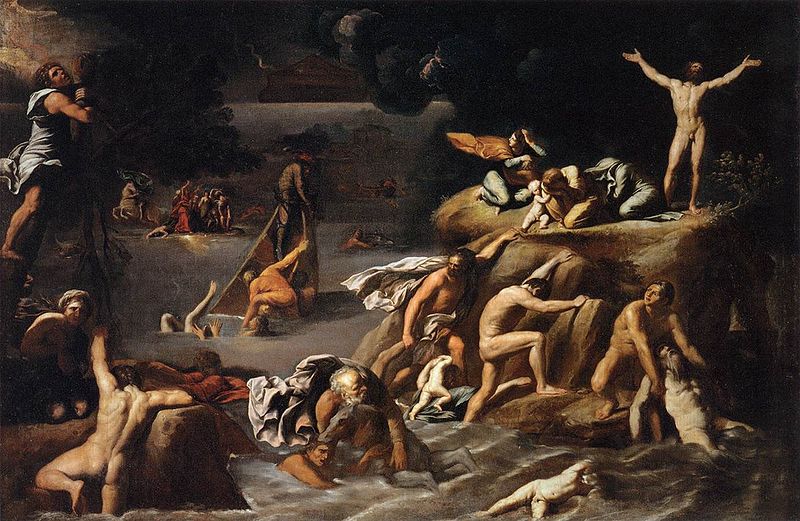
Young Earth Creationists often claim that their view has been the position of the church since its earliest period. Here, I will challenge that notion and argue that, instead, modern creationism is unrecognizable in historic Christianity. Thus, my contention is simple:
Modern young earth creationism has no historical pedigree.
It is impossible to go through a comprehensive survey of early Christian teaching on creation, so my discussion here will be necessarily brief. Further reading may be found in the sources cited, below. I note that if someone wants to contradict my contention, above, they must present evidence showing that the claims about Flood Geology, etc. are all present in early church writings, or indeed any church writings before around 1600.
Now, it is a simple fact that for much of church history, theologians held that the Earth was only a few thousand years old. Do not take this sentence out of context. Recall that we’re talking about modern young earth creationism, not just a belief that the Earth is young. To say that because, for example, some church fathers held the world was a few thousand years old and allege that proves they held to modern creationism is a blatant historical anachronism for several reasons.
First, the reason many of these early teachers of the church held to this view is because their view of overall history was such that the 6 days of creation should match up with 6 “days” of thousand year periods of all of history, culminating in the second coming. The literature on this is quite easy to find, but here are a few choice examples:
“the Lord will finish all things in six thousand years, for a day is with Him a Thousand years… in six days, that is, in six thousand years, all things will be finished…” – Epistle to Barnabas, (quoted in Young and Stearley)
“for in as many days as this world was made, in so many thousand years shall it be concluded.”- Irenaeus (quoted in ibid, 35)
“[Because] in six days God made all things, it follows that 6000 years must be fulfilled.” – Hippolytus (quoted in ibid, 35)
These quotes could be (and are, in the literature) multiplied. The simple fact is that the earliest interpretation of the Genesis text was yes, that it took place in 6 days, but also that those 6 days were important because they outlined the 6000 years of all of Earth’s history, which would end in a seventh day rest of 1000 more years.
Does that sound like modern young earth creationism to you? It shouldn’t. I don’t know of any modern creationist who holds that the Earth should have already ended because it is more than 6000 years old now, or that the days in Genesis correspond strictly to days of 1000 year lengths that define the history of creation.
Second, even the early thinkers who resonate most closely with modern young earth creationism would not have recognized it as it exists now. Early flood theories often had the water simply get placed on earth miraculously and then destroyed by God, held to a “tranquil flood” theory in which the global flood didn’t make any impact on the surface of the planet, held that fossils weren’t actual vestiges of previously living organisms (an interesting piece of geological history), and the like.
 Why is it that YECs take these writers out of their historical contexts? It would be easy to say it is due to a project of quote-mining to find support for one’s view in the past–and I’m sure this is part of it–but perhaps a lot of it is just mere ignorance. The volumes of writings we have from the church fathers, for example, would take years to read, and lifetimes to become well-versed in. Many haven’t even been translated. Thus, it is more expedient to simply find the quote that supports one’s view and use it.
But that’s not at all how we should construct historical theology. The fact is that the constant parade of claims made by YECs that their position is that of the early church is only possible because of a lifting of quotes from church fathers out of their context in order to support the position. Moreover, the people quoted themselves, though they would support the notion of a “young earth” would do so for theological reasons tied to their view of the whole of human history–one which I know of no modern YEC buying into. To cite them as supporting modern YEC, then, is a kind of baptism-by-decontextualization. Only by ignoring the very reasons the early church held their views and the theological worldview that the early church operated under can a YEC find support for their view.
An analogy might be helpful here. To say that the early church agrees with modern young earth creationists would be like saying the early church agrees with modern modalists. Why? Because, after all, many modern modalists claim to be able to uphold the Apostles’ Creed, which, after all, never speaks of distinction of persons in an explicit enough way so as to exclude modalism. Thus, a modalist could say “Our view is from the Apostles’ Creed.” Now of course this is an extreme example, and one could argue at length as to whether the modalist is actually agreeing with the historic Creed, however, the point is that simply finding a single point of doctrine with which one agrees does not mean that one holds to an historic Christian view. It is instead to treat a system of doctrine as something which may be broken apart piecemeal into individual affirmations and then find one of these affirmations with which one agrees. But that doesn’t show one agrees to the system, only to one decontextualized part.
Thus, the best a modern YEC can claim is that the early church also felt the Earth was only a few thousand years old. But to leave it at that is disingenuous, because it paints a picture as though the early church believed this for the same reasons the modern YEC does, but that is not the case. Or perhaps instead it is to, as noted above, just break apart doctrinal systems into component parts and just pick what suits oneself. In either case, it is a mistaken way to approach the question.
The reason the early church held to the young earth was because, as noted above, of their view of the history of the Earth corresponding to 6 days of 1000 years each, not because of alleged geological evidence for a global, catastrophic flood. Although some of the early writers did not hold to this 6 – 1000 paradigm, it is very clear from their writings that there was absolutely no familiarity with the kind of “the Flood did it” reasoning which is so pervasive in YEC today. Modern creationism is founded upon Flood Geology, an absolutely foreign concept to the earliest church teachings.
Indeed, the notion that the early church would have even recognized modern YEC is a bit absurd. Modern YECs use the Noachian Deluge to explain the fossil record, stratification, and the like. But up until John Ray’s time period in the late 1600s, it had been assumed fossils were simply tricks of the rock, not vestiges of once-living organisms (for some interesting reading on this history, check out this post on John Ray). Thus, someone living earlier would simply not have understood what was meant by saying fossils were due to the Flood, let alone knowing what fossils even refer to! Moreover, stratification as a studied feature of geology didn’t really begin in earnest until the 1800s. Again, to then attribute Flood theories back to the early church is wrongheaded.
The Bottom Line
To put what we’ve reviewed above all together: modern young earth creationism does agree with the historical church broadly on the age of the Earth. That’s it. But the categories of thought in which the church has historically envisioned the history of the universe–the very context which YECs try to link their views–have no points of contact with modern creationism. Indeed, they would have been baffling to the early church because these points of contact with Flood Geology simply do not exist. The reasons the early church believed in a “young earth” were linked to their own faulty reading of Scriptures, and an eschatology not shared by modern YECs. In short, Modern Young Earth Creationism has no historical pedigree.
The Young Earth Challenge, Restored
‘Ah!’ one might exclaim. ‘That means that, at least, the early church held to the notion that the Earth was young.’
Well yes, it does mean that. But that hardly justifies belief in modern YEC. Modern YEC is an invention intended to unify the geologic record with an interpretation of the Bible. It is itself an entire system. This interpretation, which leads to speculation about the way the flood formed the geologic record, is not found in the early church. If you disagree, find it for me. Demonstrate that, say, Irenaeus when he wrote about the entire history of the Earth as corresponding to 6 days of 1000 years each, was actually speaking of how Noah’s Flood shaped the geology of the planet in order to layer sediment one atop the other. If one cannot do this, they should not claim to garner support for YEC from the early church.
Once more, YEC has no historical pedigree.
Links
Be sure to check out the page for this site on Facebook and Twitter for discussion of posts, links to other pages of interest, random talk about theology/philosophy/apologetics/movies and more!
“Oceans of Kansas,” Unexpected Fossils, and Young Earth Creationism– I discuss the alleged findings out out-of-sequences fossils in the fossil record and how YEC explanations fail to show they are attributable to a global catastrophic Flood.
What options are there in the origins debate? – A Taxonomy of Christian Origins Positions– I clarify the breadth of options available for Christians who want to interact on various levels with models of origins. I think this post is extremely important because it gives readers a chance to see the various positions explained briefly.
Source and Further Reading
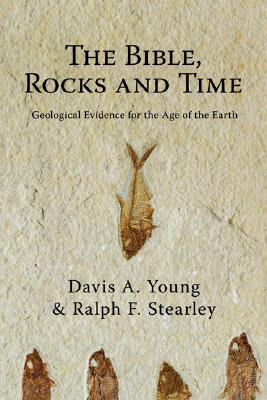
Davis A. Young and Ralph F. Stearley, The Bible, Rocks and Time: Geological Evidence for the Age of the Earth
Stanley L. Jaki, Genesis 1 Through the Ages (New York: Thomas Moore Press, 1992).
SDG.
——
The preceding post is the property of J.W. Wartick (apart from quotations, which are the property of their respective owners, and works of art as credited; images are often freely available to the public and J.W. Wartick makes no claims of owning rights to the images unless he makes that explicit) and should not be reproduced in part or in whole without the expressed consent of the author. All content on this site is the property of J.W. Wartick and is made available for individual and personal usage. If you cite from these documents, whether for personal or professional purposes, please give appropriate citation with both the name of the author (J.W. Wartick) and a link to the original URL. If you’d like to repost a post, you may do so, provided you show less than half of the original post on your own site and link to the original post for the rest. You must also appropriately cite the post as noted above. This blog is protected by Creative Commons licensing. By viewing any part of this site, you are agreeing to this usage policy.
Sunday Quote!- Questioning Exegesis Through Discovery?
Every Sunday, I will share a quote from something I’ve been reading. The hope is for you, dear reader, to share your thoughts on the quote and related issues and perhaps pick up some reading material along the way!
Questioning Exegesis Through Discovery?
One area that evangelical theologians must weigh is the notion that exegesis should line up with reality. Thus, how might one balance an interpretation between some apparent readings and the findings of certain scientific discoveries? Must they even be balanced at all? Davis Young and Ralph Stearley’s magisterial work on the age of the Earth, The Bible, Rocks and Time, provides an interesting historical background for how discoveries led to the questioning of exegesis of certain texts:
[In the 17th Century…] foundations were gradually being laid for questioning the accepted opinion about the age of the Earth [that being a few thousand years]. Advances in the study of fossils and rock strata were both necessary before such questioning would come about… (47, cited below)
Thus, historically, there has been an interplay between scientific discovery and exegesis of key texts of Scripture. Without certain scientific advances, received opinion on certain features of the natural world remain unquestioned. However, once scientific advances made it possible, these opinions were challenged and often abandoned in the face of extrabiblical evidence. The book provides a great overview for how the interplay between discovery and exegesis played out.
What are your thoughts? Should new discoveries be allowed to challenge received interpretations? How might we best deal with discoveries in the natural world which apparently clash with our reading of the text?
Links
Be sure to check out the page for this site on Facebook and Twitter for discussion of posts, links to other pages of interest, random talk about theology/philosophy/apologetics/movies and more!
Sunday Quote– If you want to read more Sunday Quotes and join the discussion, check them out! (Scroll down for more)
Source
Davis A. Young and Ralph F. Stearley, The Bible, Rocks and Time (Downers Grove, IL: InterVarsity Press, 2008).
Really Recommended Posts 8/8/14- 666 and the Beast, Evidentialism, Pascal, and more!
 I have set up another round of great posts for your reading pleasure, dear readers! Check out posts on eschatology, egalitarianism, apologetics, creationism, and more! Let me know if you liked a post in the comments below, and if you liked theirs, be sure to let them know! Comments keep us going! This edition is an “owl post” because I’m watching Harry Potter while I write this.
The Mark of the Beast Demystified; or, “I’ve got 666 problems but the rapture ain’t one of them”– A post which discusses the various interpretations of the “Mark of the Beast” among various eschatological views. A very good read!
Different but Equal? Giving Words their Real Meaning– What is entailed by a position which suggests that men and women have different but equal roles in marriage and the church (and society)? Check out this evaluation of the position.
Why I’m a Christian Evidentialist– J. Warner Wallace explains the benefits of an apologetic method like evidentialism and the reasons he chose this method over any other. It’s a fascinating post with some solid insights. While you’re at it, why not answer the “Question of the Week” about your own favorite apologetic method?
Ken Ham’s Ark Adventure to Usher in a Modern Reformation?– Ken Ham of Answers in Genesis was recently in the news for his views on aliens, but he’s also been working to build Noah’s Ark, kind of. Check out this post which analyzes Ham’s comments about this project and the history of creationism.
Betting on Pascal’s Wager, Kind of– Pastor Matt Rawlings explains Pascal’s Wager in a brief, basic way. I recently also outlined and defended a version of the Wager, which I think has more credence than many people grant it.
Ken Ham Rescinds Alien Damnation?
 I wrote very recently about Ken Ham declaring aliens eternally doomed. Now, however, Ken Ham is claiming that headlines like my post (or those declaring aliens are going to hell) are mistaken. I just want to briefly look at this claim. In his most recent blog article, he states:
So, “is there intelligent life in outer space?” After reading the Huffington Post article and the other items on secular websites responding to my article, my answer is this: “there doesn’t seem to be much intelligent life left here on earth—let alone to find any in outer space!”
Well, that’s all well and good, but I’m curious as to how someone could say that I would be mistaken for thinking that this would somehow make invalid the analysis I made of his site regarding aliens being doomed. But it seems Ham is responding by simply saying that there are no intelligent beings elsewhere, and so we are supposed to conclude that that somehow means aliens would not be doomed (because there are none). But that doesn’t really meet the analysis of some of those who are critiquing Ham’s position.
What it comes down to is Ken Ham’s own words:
You see, the Bible makes it clear that Adam’s sin affected the whole universe. This means that any aliens would also be affected by Adam’s sin, but because they are not Adam’s descendants, they can’t have salvation.
Thus, according to Ken Ham himself, if aliens do exist, “they can’t have salvation.” I’m not sure exactly what distinction is to be made between this and going to hell, but it seems that Ham’s only answer is that there are no aliens, so this doesn’t apply. Again, that doesn’t meet the critique I’ve already leveled against his view.
But, perhaps I’m mistaken and Ham is merely trying to assert that only certain headlines are mistaken. He cites these specifically: “Creationist Ken Ham Says Aliens Will Go To Hell So Let’s Stop Looking For Them”; “Creationist Ken Ham: Aliens are going to hell so just stop looking for them.” I think it’s fair to say that these headlines are not exactly accurate representations of Ham’s view. Instead, Ham seems to be saying 1) Aliens don’t exist; 2) Because they don’t exist, we shouldn’t bother to spend time looking for them; 3) a theological reason for thinking they don’t exist is that they “can’t have salvation.”
It is point 3 which I took issue with in my post, but the headlines Ham cites seem to combine all 3 points into one without any clarity. Thus, I appreciate Ham clarifying his position. The points I brought up in my critique, however, still stand.
Links
Be sure to check out the page for this site on Facebook and Twitter for discussion of posts, links to other pages of interest, random talk about theology/philosophy/apologetics/movies and more!
Ken Ham Declares Aliens Eternally Doomed– I analyze Ken Ham’s statements about aliens and the possibility for their salvation.
Alien life: Theological reflections on life on other planets– I engage in some [highly] speculative theology related to the possibility of aliens.
Did God Create the Universe for Humans?-Some Thoughts on God’s purposes for creating– I argue that God’s purposes in creating are needlessly limited when people object that God created the universe [only] for humankind.
Aliens that believe in God: The theological speculations of Robert Sawyer’s “Calculating God”– I reflect on a science fiction book, Calculating God, which has aliens that believe in God.
SDG.
——
The preceding post is the property of J.W. Wartick (apart from quotations, which are the property of their respective owners, and works of art as credited; images are often freely available to the public and J.W. Wartick makes no claims of owning rights to the images unless he makes that explicit) and should not be reproduced in part or in whole without the expressed consent of the author. All content on this site is the property of J.W. Wartick and is made available for individual and personal usage. If you cite from these documents, whether for personal or professional purposes, please give appropriate citation with both the name of the author (J.W. Wartick) and a link to the original URL. If you’d like to repost a post, you may do so, provided you show less than half of the original post on your own site and link to the original post for the rest. You must also appropriately cite the post as noted above. This blog is protected by Creative Commons licensing. By viewing any part of this site, you are agreeing to this usage policy.
Ken Ham Declares Aliens Eternally Doomed
 Ken Ham, a prominent young earth creationist and the founder of Answers in Genesis, recently lamented on his blog about the money being spent on the search for extraterrestrial life in space. Interestingly, part of his objection was that aliens probably don’t exist because they would not be saved:
I do believe there can’t be other intelligent beings in outer space because of the meaning of the gospel. You see, the Bible makes it clear that Adam’s sin affected the whole universe. This means that any aliens would also be affected by Adam’s sin, but because they are not Adam’s descendants, they can’t have salvation.
That’s correct: according to Ken Ham, we can speculate about whether aliens may or may not exist (though both he and I agree that we think it is very improbable), but we can know for sure that aliens cannot be saved. Keep this in mind through the rest of my post: Ken Ham did not say that aliens may not be saved, but rather that they “can’t” be saved.
Space and Cost
Ken Ham was concerned with the notion that we’re spending so much money on space travel: “I’m shocked at the countless hundreds of millions of dollars that have been spent over the years in the desperate and fruitless search for extraterrestrial life.”
I would first point out that the money being thrown at this is hardly exclusively dedicated to the search for ET. Rather, much of it goes to new technology like new telescopes, listening devices, etc. which actually bring benefits for the rest of society. Thus, the money is not being spent in a “fruitless” fashion.
One might come back and say: “What if all that money was instead spent on feeding the hungry, clothing the needy, etc.?” I think that’s a valid point and it is one with some initial force. One wonders, though, about the notion of division of effort. There is a real sense in which not all of human effort may be directed towards one end. As a Christian, I certainly desire to aid those in need, but I would not say that means every dollar I spend should be directed towards that end. There are other evils than need in the world (such as abortion) to direct effort towards, and there are also other goods to promote (evangelization would be one I would list). As such, my activity must be divided. Similarly, on a national level, there are numerous ends to pursue, and an argument which reduces national spending to a single issue is simplistic.
I’m open to disagreement here and would love to hear from those who are either pro-space exploration or con. I lean pro- but I think there is some force to arguments against.
 Doomed Aliens
The thrust of Ken Ham’s post, however, was that aliens would not be saved. He acknowledged that “[T]he Bible doesn’t say whether there is or is not animal or plant life in outer space.” Given his nod to the fact that the Bible is clearly not concerned with the broader universe, it is then shocking to find that Ham asserted without qualifications that “[aliens] can’t have salvation.” I wonder: where is that found in the Bible? Where might I find the notion that: “If aliens exist, they can’t have salvation” implied in the Bible?
Ham’s argument was an implicit one: because “The Earth was created for human life” (an example of the single-end fallacy regarding God’s creation which I discussed elsewhere), and “Adam’s sin affected the whole universe. This means that any aliens would also be affected by Adam’s sin, but because they are not Adam’s descendants, they can’t have salvation.”
The argument depends upon a number of hidden and explicit premises. First, one must ask in what way Adam’s sin affected the whole universe. Does that mean that intelligent aliens instantly became cursed and condemned by the Fall? It seems Ham’s argument depends upon that premise, but there is surely no bibical data to back that up. Rather, Ham is assuming that the Fall means that any other life in the universe would necessarily be sinful and in a state of rebellion against God. Although the Bible speaks of humans being in rebellion against God, and it speaks of “all creation groan”ing awaiting for God’s coming to reconcile all things, it is surely a massive inference to leap from that to the notion that any aliens anywhere are eternally doomed.
Second, the argument assumes that God did not or would not (can not!?) mediate between other sentient beings and God. Surely it is a major assumption to state that God would not operate in a certain fashion about speculative aliens who have speculatively been included in the Fall and are speculatively doomed for eternity! For Ham to turn around and just assert that God would not save these aliens (or again, perhaps cannot, because he states that they “can’t have salvation), is a major theological error.
Third, and perhaps most importantly, the question of how Ham reconciles his first premise with his premise that “because [aliens] are not Adam’s descendants, they can’t have salvation.” After all, the same proof-texts which may be cited to try to imply that all of creation groans under the Fall (Romans 8) could also be taken, when read with the same presumptions, to mean that aliens will be saved or at least have hope of salvation: “For the creation was subjected to frustration, not by its own choice, but by the will of the one who subjected it, in hope the creation itself will be liberated from its bondage to decay and brought into the freedom and glory of the children of God [Romans 8:20-21 NIV].”
Thus, Ham’s argument has a faulty conclusion: if it is true that all of the universe fell through Adam and is therefore doomed, then it equally follows that, according to the same text, it will all be saved through Jesus as the new Adam (not universalism, but rather the “hope of salvation”). There are no grounds for Ham’s assumptions.
Conclusion
Ken Ham has overstated his case to the extreme. Although he may have some force to his argument about the needless spending of money on various space exploration projects (and again, I think these aren’t needless but that perhaps his side has some a priori power), he has committed some major blunders when it comes to speaking of the possibility of alien salvation.
As always, I’d love to have your thoughts in the comments. What do you think about Ham’s statements? Be sure to check out his blog post to get his side of the argument.
Links
Be sure to check out the page for this site on Facebook and Twitter for discussion of posts, links to other pages of interest, random talk about theology/philosophy/apologetics/movies and more!
Alien life: Theological reflections on life on other planets– I engage in some [highly] speculative theology related to the possibility of aliens.
Did God Create the Universe for Humans?-Some Thoughts on God’s purposes for creating– I argue that God’s purposes in creating are needlessly limited when people object that God created the universe [only] for humankind.
Aliens that believe in God: The theological speculations of Robert Sawyer’s “Calculating God”– I reflect on a science fiction book, Calculating God, which has aliens that believe in God.
SDG.
——
The preceding post is the property of J.W. Wartick (apart from quotations, which are the property of their respective owners, and works of art as credited; images are often freely available to the public and J.W. Wartick makes no claims of owning rights to the images unless he makes that explicit) and should not be reproduced in part or in whole without the expressed consent of the author. All content on this site is the property of J.W. Wartick and is made available for individual and personal usage. If you cite from these documents, whether for personal or professional purposes, please give appropriate citation with both the name of the author (J.W. Wartick) and a link to the original URL. If you’d like to repost a post, you may do so, provided you show less than half of the original post on your own site and link to the original post for the rest. You must also appropriately cite the post as noted above. This blog is protected by Creative Commons licensing. By viewing any part of this site, you are agreeing to this usage policy.
Sunday Quote!- Creationism and Foundationalism
 Every Sunday, I will share a quote from something I’ve been reading. The hope is for you, dear reader, to share your thoughts on the quote and related issues and perhaps pick up some reading material along the way!
Creationism and Foundationalism
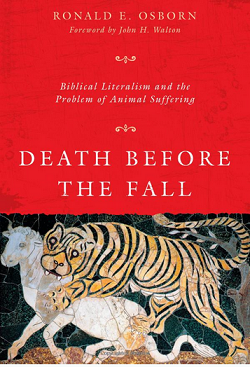
Creationism (particularly the young earth variety) is a topic I’m very interested in, so I read Osborn’s book Death Before the Fall: Biblical Literalism and the Problem of Animal Suffering with great eagerness. I recently reviewed the book, so you can check that out for my thought on the work as a whole. Here, Osborn is arguing that creationism relies upon modernist notions of epistemic foundationalism (essentially, a view that our knowledge must be based upon some irrefutable or simply necessarily assumed bedrock belief)*:
Creationists have posited a… source of absolute certainty… the firm foundation or base of universal and infallible knowledge on which all truth is said to rest is a “plain” reading of Scripture alone, with particular emphasis on the first verses of the book of Genesis…
Creationism is… not merely indubitable. It is incorrigible–it canot be undermined or altered by any new information… It is impervious to the weight of empirical and historical evidence. (44, 46, cited below)
Here is one of the great insights of Osborn’s book: that Creationism is an epistemology. That is, it is a way of knowing as opposed to simply a position on what is to be known. I have found this to be the case in many discussions with young earth creationists. There simply is no such thing as evidence which can challenge the position. Rather, all things which purport to be said challenges are often seen as either deceptions of secular scientists or results of anti-Bible presuppositions. I think this is a very problematic position.
What are your thoughts? Is YEC falsifiable–is it possible for it to be false? Does YEC turn into a way of knowing?
Links
Be sure to check out the page for this site on Facebook and Twitter for discussion of posts, links to other pages of interest, random talk about theology/philosophy/apologetics/movies and more!
Sunday Quote– If you want to read more Sunday Quotes and join the discussion, check them out! (Scroll down for more)
Book Review: “Death Before the Fall” by Ronald Osborn– I review Osborn’s book, outlining its contents while also providing some comments on its value.
Source
Ronald Osborn, Death Before the Fall: Biblical Literalism and the Problem of Animal Suffering (Downers Grove, IL: InterVarsit, 2014).
*Yes, this is simplified. Want to dig in? Check out this article on the topic.
SDG.
Book Review: “Death Before the Fall” by Ronald Osborn
I eagerly anticipated the release of Ronald Osborn’s book, Death Before the Fall: Biblical Literalism and the Problem of Animal Suffering
The first part occupies the bulk of the book (100/179 pages of text). In it, Osborn first offers his interpretation of the creation account in Genesis 1. His take on it is that is fairly open to being taken in a number of ways. For example, having creatures come forth “from the earth” may be direct special creation, or a linguistic device aimed at describing the “open” status of creation–its ability to change and self-correct (see esp. 27-28).
After laying out the interpretation, Osborn sets out to show how “literalism” is a mistaken hermeneutic. He argues that literalism has been brought to the forefront due to Enlightenment ways of thinking. That is, biblical literalists are influenced by modernism and their readings tend to be highly reliant on that kind of rationalist epistemology (42ff). A major difficulty with literalism, he notes, is that it seems to ultimately lead to fideism: one’s view of what the “plain sense” reading of the Bible is must be taken as normative for all areas of inquiry (44; 45-46). Another difficulty is that literalism tends to actually go far beyond what the text says in order to defend a preferred interpretation of the text (56-57).
Scientific creationism, Osborn argues, is flawed because it isn’t a “progressive research program” but rather a “degenerative” one. That is, scientific creationism is simply adjusted in an ad hoc way to meet new challenges rather than predicting them (63ff). He rounds out this first part with a discussion of how literalism ultimately leads to circling the wagons and an “enclave mentality,” alongside various representatives of historical interpretation of Genesis–Barth, Calvin, Augustine, and Maimonides.
The second part focuses on animal suffering and approaches it from a number of angles. He begins the section with three difficulties with a “literalist” view of animal suffering and the Fall. Briefly, these are the notion that a flawless creation as put forward by some seems to simply be the winding up of a watch; that God is made to be a deceiver; and difficulties with how the curse is to be applied to animals (126ff). These are presented briefly but cogently and each offers a unique challenge to typical creationist readings of the text. Next, Osborn turns to explanations other than the Fall as reasons animals suffer. He turns to the book of Job and argues both that God may have created nature with predation and death and also that God’s answer to Job out of the whirlwind may be applied to animal suffering (154-155). Moreover, God’s choosing to participate in the world in the Incarnation helps to consummate all creation and bring it to completion (165).
A difficulty with the book is the sustained polemic against literalism/YEC. At times, Osborn shares great insights in the movement. Moreover, pointed criticism is surely needed in some form. Unfortunately, after some helpful introductory comments, he seems to degenerate into posturing against those with whom he disagrees. For example, after admitting that Gnosticism is rather ill-defined, he nevertheless goes on to compare literalism to Gnosticism and simply state that they each share certain features in common (86ff). I like to call this the “Gnostic fallacy” in which someone declares the ‘other’ to be a Gnostic in order to refute them. As Osborn himself notes, Gnosticism is hard to pin down, which also means it is very easy to twist various teachings into lining up with Gnosticism. I think this is honestly one example. [See comments for Osborn’s clarifying comments on this section.]
This section is understandable, and it is easy for someone like Osborn–a former YEC (like myself)–to want to lash out against these formerly held, and sometimes damaging, beliefs, but it is not a very helpful. I suspect it will alienate any readers he would perhaps hope to engage in dialogue, which leaves one wondering about the audience for the book.
Another difficulty with Osborn’s sustained critique of “literalism” is that he never provides much insight into how and/or when texts are to be read literally. That is, would the Gospels need to be read literally when they speak of Jesus dying on the cross and rising again? Osborn clearly affirms this, but doesn’t provide mechanisms which distinguish between “literalism” and simply proper exegesis which would allow for and engage with literal readings of the texts.
One further problem is that the book, despite purporting to be about Death Before the Fall, only briefly addresses this issue. The book really doesn’t provide anything more than most basic non-young earth literature does when it comes to the issue. As such, it is difficult to determine exactly how useful the book is when compared to other works.
Ultimately, Death Before the Fall: Biblical Literalism and the Problem of Animal Suffering
Readers who are interested in the topic of animal suffering and death before the fall are better served to pick up Michael Murray’s excellent and enthralling book, Nature Red in Tooth and Claw: Theism and the Problem of Animal Suffering
Links
Be sure to check out the page for this site on Facebook and Twitter for discussion of posts, links to other pages of interest, random talk about theology/philosophy/apologetics/movies and more!
Sunday Quote!- Do Trilobites Yield a Greater Good?– I discuss a very minor point in Murray’s work which shows how diverse its threads are for thinking on this topic.
Source
Ronald Osborn, Death Before the Fall: Biblical Literalism and the Problem of Animal Suffering (Downers Grove, IL: InterVarsit, 2014).
SDG.
——
The preceding post is the property of J.W. Wartick (apart from quotations, which are the property of their respective owners, and works of art as credited; images are often freely available to the public and J.W. Wartick makes no claims of owning rights to the images unless he makes that explicit) and should not be reproduced in part or in whole without the expressed consent of the author. All content on this site is the property of J.W. Wartick and is made available for individual and personal usage. If you cite from these documents, whether for personal or professional purposes, please give appropriate citation with both the name of the author (J.W. Wartick) and a link to the original URL. If you’d like to repost a post, you may do so, provided you show less than half of the original post on your own site and link to the original post for the rest. You must also appropriately cite the post as noted above. This blog is protected by Creative Commons licensing. By viewing any part of this site, you are agreeing to this usage policy.
Sunday Quote!- Reframe the Origins Debate?
 Every Sunday, I will share a quote from something I’ve been reading. The hope is for you, dear reader, to share your thoughts on the quote and related issues and perhaps pick up some reading material along the way!
Reframe the Origins Debate?
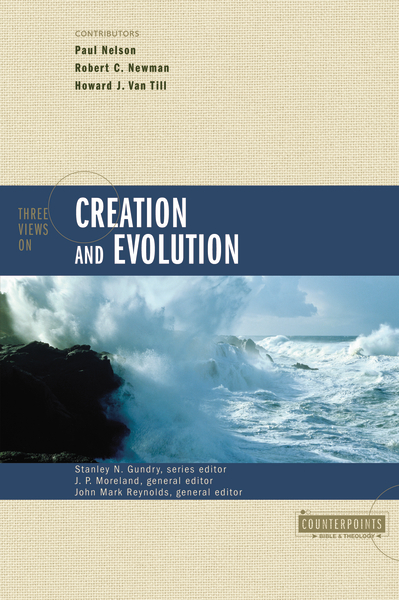
I have been going through a number of books in the Zondervan Counterpoints series and completed Three Views on Creation and Evolution
Is the creation’s formational economy sufficiently robust (that is to say, is it equipped with all the necessary capabilities) to make it possible for the creation to organize and transform itself from elementary forms of matter into the full array of physical structures and life-forms that have existed in the course of time? (Van Till 185-186, cited below)
Howard J. Van Till is a theistic evolutionist (he does not like the term–or at least did not at the publication of this book), and he views that position as a “fully gifted creation”–one in which God, on creating, imbued creation with the capacities to develop naturally over the course of time. This is the “economy of creation” in which–according to Van Till–God created without the need for continual intervention.
Now, so far as this reframing is concerned, it seems to me that Van Till, in attempting to avoid the either/or dichotomy between creation and evolution, went a bit to the other extreme. Putting a word like “robust” in there suggests that anyone who would disagree is clearly questioning the capacity of the Creator in creating. However, I do think there is something to the notion that we do need to rethink exactly where the lines form in the origins debate. I have written on the various options for Christian origins positions and I think that we need to be aware of the fact there is more to it than even “three views” could begin to outline.
Regarding the question itself: what do you think? Do we need to outline the origins debate with different terms so that we can avoid a false dichotomy? Moreover, do you think that creation is indeed set up in such a way?
Links
Be sure to check out the page for this site on Facebook and Twitter for discussion of posts, links to other pages of interest, random talk about theology/philosophy/apologetics/movies and more!
What options are there in the origins debate? – A Taxonomy of Christian Origins Positions– I clarify the breadth of options available for Christians who want to interact on various levels with models of origins. I think this post is extremely important because it gives readers a chance to see the various positions explained briefly.
Sunday Quote– If you want to read more Sunday Quotes and join the discussion, check them out! (Scroll down for more)
Source
Howard J. Van Till, “The Fully Gifted Creation: ‘Theistic Evolution'” in Three Views on Creation and Evolution
SDG.

 J.W. Wartick - Reconstructing Faith