Every Sunday, I will share a quote from something I’ve been reading. The hope is for you, dear reader, to share your thoughts on the quote and related issues and perhaps pick up some reading material along the way!
The Measure of Art
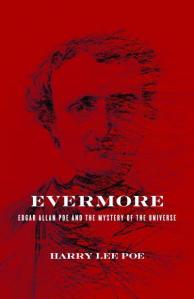
I’m a fan of Edgar Allan Poe, but I can fairly say I never understood him until I read Evermore: Edgar Allan Poe and the Mystery of the Universe by Harry Lee Poe (yes, a cousin of Edgar’s). I was rereading this delightful book when I came upon an interesting quote about Edgar Allan Poe’s view of what makes art worthwhile:
[Poe] insisted on measuring a work of art, not by its size or by the effort it took to produce it, but “by the object it fulfills, by the impression it makes”… [not] “by the time it took to fulfill the object, or by the extent of ‘sustained effort’ which becomes necessary to produce the impression.” Poe believed that every story succeeded as a story to the extent that it created an effect upon the reader. (62)
For Poe, the measure of art was the impression it left upon the viewer (or reader, or hearer, or…). What do you think of this notion? What do you think qualifies as “the measure of art”? Have you read Poe? If so, how does his work “measure” for you?
Be sure to check out the review of this book.
Links
Be sure to check out the page for this site on Facebook and Twitter for discussion of posts, links to other pages of interest, random talk about theology/philosophy/apologetics/movies and more!
Evermore: Edgar Allan Poe and the Mystery of the Universe by Harry Lee Poe– I reviewed this fascinating book at this link. Check it out to see what other insights you can get from this work.
Sunday Quote– If you want to read more Sunday Quotes and join the discussion, check them out! (Scroll down for more)
Source
Harry Lee Poe, Evermore: Edgar Allan Poe and the Mystery of the Universe (Waco, TX: Baylor, 2012).
SDG.
 Each Week on Saturday, I’ll be asking a “Question of the Week.” I’d love your input and discussion! Ask a good question in the comments and it may show up as the next week’s question! I may answer the questions in the comments myself.
Obscure Theological Topics
The picture on the left (which I took and then added a question mark with my mad paint skills) is perhaps more appropriate this week than most, because some people may be scratching their heads:
What’s your favorite obscure theological topic? Why? What relevance does it have in the broader scheme of things?
Theology is an area of thought that has existed since the beginning of humanity. As such, there are a lot of topics to focus on (understatement). Think about some that interest you. I think a lot of my readers are probably interested in some cool stuff, and I want to know about it! Here are some examples of “obscure” theological topics: aliens and Christian theology or King James Onlyism. What are some you’re interested in? How do you apply what you’ve looked into in that area to a broader schematic of Christian theology?
Links
Be sure to check out the page for this site on Facebook and Twitter for discussion of posts, links to other pages of interest, random talk about theology/philosophy/apologetics/movies and more.
Question of the Week– Check out other questions and give me some answers!
SDG.
 Once in a while, you read a book and you set it down on your chest after finishing it, just contemplating what happened. You are forced to think in new categories, to explore new dimensions. All You Need Is Kill
 was a book like that for me. Here, we’ll explore some of the major themes in the work that inspired the film “Edge of Tomorrow.” Check out my look at the film. There are SPOILERS in what follows. I’ll not sum up the plot, but a summary may be found here.
Truth and Taste
Right at halfway through the book, Sakurazaka shifts the focus from the main character, Keiji Kiriya, to Rita Vrataski, the American special forces operative who is known as the “Valkyrie” or “Full Metal *****.” There’s a photographer attached to her unit, who realizes the importance of taste and imagery in the matter of truth:
“Great lighting. Days like today can make even a steel-and-rivets airplane look like a da Vinci…”
“I take great pride in the role I play conveying the truths of this war to the public. Of course, 90 percent of the truth is lighting.” (100, cited below)
The somewhat cynical comments echo with our society which is obsessed with appearances. Models are photoshopped, a good logo keeps products in our memories, and a photo is able to shift entire perceptions of a conflict or event. The notion that 90% of truth may be determined by lighting certainly cannot refer to objective truth, but as far as perceived truth goes, it may be on-target in its emphasis on the way imagery can be manipulated to change our perceptions of truth. It is something to guard against.
Later, the same cameraman notes that a picture of a corpse may inspire revulsion or lawsuits, but “on the homepage of the New York Times, it could win you a Pulitzer Prize” (102). Again, these lines speak to the need to be wary of how our perceptions can shape reality as we see it. A self-critical attitude may help prevent some of the pull that someone may exert over us simply by shifting the perspective or lighting just a bit. I’m not calling for a shunning of imagery or anything of the sort–instead, I’m merely pointing out we need to be aware of how the way we view things visually may impact our beliefs, and be aware of the way that visuals may be manipulated.
The Shifting Sand of Human Experience
Keiji, as he experiences the looping of time, begins to contemplate the notion that humanity really is fleeting:
“Our lives should be written in stone. Paper is too temporary–too easy to rewrite.” (85)
The human condition is at the forefront in All You Need Is Kill because there is an urgency throughout the entire novel–how does Keiji end the loops, how might he escape the cycle, how could he end the threat to humanity? Put against the stark backdrop of extinction, Keiji’s reflection on human nature is poignant: humanity fades away. Our stories may be rewritten. If the alien race wins, there could be nothing left. Keiji longs for an experience of transcendence, a way to continue beyond the day-to-day activity of existing. He looks to be written in stone, but even that is not enough.
All You Need Is… Sacrifice
Ultimately, the only way to end the cycle is through sacrifice. Here is where the novel differs most radically from the film it inspired. Keiji is forced to kill Rita in order to break the loop. He must destroy that which he loves in order to save all of humanity. In a moving scene, Rita forces Keiji into battle with her in order to make him destroy her. As she dies from a mortal blow, she speaks to Keiji’s sacrifice:
“The Keiji Kiriya I know wouldn’t sacrifice the human race for himself.”
Keiji is forced to watch her die, realizing that it was the only way to save the human race. It is a sacrifice of the one for the many: a prioritization of the group over the individual. Though it is not explicitly a matter of self-sacrifice, in a way Keiji did just that: he gave up that which he loved most in order to save all of humankind. It is a theme which echoes powerfully with the Christian tradition.
Conclusion
All You Need Is Kill is a masterful piece of military science fiction. It is vulgar–often very vulgar–but it is also filled with themes that cause reflection and deep thought. It’s the kind of novel that sticks with you afterwards, forcing you to think on it. It challenges paradigms which you know hold sway. For the Christian, it teaches a theme of individual sacrifice being valued over individual satisfaction. To borrow from Anthony Weber in his overview, one may find echoes of John 15:13- “Greater love has no one than this, to lay down one’s life for one’s friends.”
Links
Be sure to check out the page for this site on Facebook and Twitter for discussion of posts, links to other pages of interest, random talk about theology/philosophy/apologetics/movies and more!
“Edge of Tomorrow” – Sacrifice, Brutality, and Choice– I explore a number of themes found in the film based on this book. The two are very different, but reflect much of the same imagery.
All You Need Is Kill/Edge of Tomorrow– Anthony Weber looks over a number of themes in the book from a Christian perspective. If you read the book (or are planning to), check out this look in addition to the one you just read by me! Follow his site, because it is fantastic.
Source
Hiroshi Sakurazaka, All You Need Is Kill (San Francisco: Haikasoru, 2004).
SDG.
——
The preceding post is the property of J.W. Wartick (apart from quotations, which are the property of their respective owners, and works of art as credited; images are often freely available to the public and J.W. Wartick makes no claims of owning rights to the images unless he makes that explicit) and should not be reproduced in part or in whole without the expressed consent of the author. All content on this site is the property of J.W. Wartick and is made available for individual and personal usage. If you cite from these documents, whether for personal or professional purposes, please give appropriate citation with both the name of the author (J.W. Wartick) and a link to the original URL. If you’d like to repost a post, you may do so, provided you show less than half of the original post on your own site and link to the original post for the rest. You must also appropriately cite the post as noted above. This blog is protected by Creative Commons licensing. By viewing any part of this site, you are agreeing to this usage policy.
 Yeah, I said it. The Kalam Cosmological Argument is in vogue, and for good reason. It’s an extremely powerful argument for the existence of God, the first Cause. Nothing I say here should be taken as a condemnation of the Kalam. However, I don’t think it is the most powerful argument for theism. In fact, I don’t think it’s even close. The Argument from Religious Experience wins that prize, and it is a landslide.
Is it so powerful?
The obvious question is this: what makes the Argument from Religious Experience (hereafter ARE) so powerful? Here are just a few reasons:
1. The ARE is malleable and may be used as an argument for a) merely the existence of the transcendent–anything beyond the physical world; b) theism specifically c) Christianity specifically.
2. The ARE does not rely upon anything more than things we already do in everyday life, such as trusting that people are reporting the truth.
3. The ARE has evidence backed from millions of persons across the world and time.
4. It is possible, though not at all certain, to have personal confirmation of the ARE.
Why Not ARE?
Okay, well if it’s so strong, why don’t more apologists use the argument? There are a number of reasons, and some are basic: they haven’t read about the argument in much popular apologetic literature and so are unfamiliar with the argument, they know of it but are unsure of how to formulate it in a helpful way, or they simply haven’t thought about how powerful the argument is. Another reason may be (as I suggested elsewhere) that apologists prefer arguments that are useful in debate formats.
To be honest, though, I think the primary reason is because the ARE has almost an inherent strangeness to it. There is a kind of spiritualism about the argument itself which might turn off apologists who would prefer a purely deductive argument. If one wants to talk about a religious “experience,” there is a kind of feeling to that phrase which an argument like the Kalam does not share. Just admitting that there is a category of religious experience itself admits to a kind of transcendence, and I think that apologists–I include myself in this category–are overly cautious about spirituality. So let’s get over it and start using this powerful argument, okay?
What is the ARE?
As I noted in point 1 in favor of the ARE’s strength above, the argument itself is malleable and may be formulated in different ways (for some examples, see my post on the usefulness of the argument). Here’s a way to formulate it to merely defend a transcendent reality:
1. Generally, when someone has an experience of something, they are within their rational limits to believe the experience is genuine.
2. Across all socio-historical contexts, people have had experiences they purport to be of a transcendent realm.*
3. Therefore, it is rational to believe there is a transcendent realm.
Just consider this for a second. The argument leaves a few spaces to fill in for the sake of making it deductively valid, but we’ll just look at how it stands now. Suppose that 2 is true. In that case, one who wants to deny the ARE’s strength would have to say that all of the experiences of these people have been in error. Frankly, when it comes down to it, that’s a pretty big claim, because reports of religious experience really do come from all times and places.
The argument, though, can be narrowed to defend theism specifically or even Christianity. For more on this, see my post talking about its strength as it narrows.
Now point 2 above suggested the ARE doesn’t rely on anything more than what we do in everyday life. I am speaking, of course, of the principle of credulity: the notion that when x appears to someone in way s, it is rational [barring some epistemic defeater]** to believe that x is s (or some other formulation). Moreover, we also trust the principle of testimony: when person x tells us that y occurred, it is prima facie rational to believe y. When you read a news story and someone says they saw a woman running from the scene of a crime, it is rational to believe them. Similarly, when millions say they have experienced a transcendent realm, prima facie it is rational to believe them.
 The Knock Down Objection?
The most common objection is the objection from competing religions. That is, if person x has an experience that purports to prove Christianity, and person y has an experience of the truth of Buddhism, what then? Often it is suggested that x and y’s testimony would just cancel each other out. But of course that’s not the case in any other area of experience. If I am a witness in court testifying about a murder, and I say I saw a tall dark male commit the crime, while another witness says they saw a short pale male, does each testimony cancel the other? Well, suppose the criminal was of average male height and fairly tan. To me, a short very pale man, he would appear tall and dark. To someone who is taller than I and of darker skin, the person would appear short and pale.
The point is that even with religious experience, different facets may be recognized even were the experience the same. Now much more nuance needs to go into this argument, but I think cogent answers have been provided in the relevant literature. The point is that even the most common and strongest objection to the ARE really isn’t that powerful in the end, particularly when weighed against the cumulative force of religious experience.
Conclusion
I readily admit this post has only very briefly touched on issues which could each take entire volumes to discuss. There is so much more to consider, and so many avenues to explore, but I think my overall point stands: The ARE is the strongest argument for theism. Fellow apologists, I suggest you research the argument (see the suggested reading list at the end of this post and also check out my other posts below) and use it! Let’s integrate it into our defense of the faith. Let me know your own thoughts below.
Links
Be sure to check out the page for this site on Facebook and Twitter for discussion of posts, links to other pages of interest, random talk about theology/philosophy/apologetics/movies and more!
The Argument from Religious Experience: Some thoughts on method and usefulness– a post which puts forward an easy-to-use version of the ARE and discusses its importance in apologetic endeavors.
The Argument from Religious Experience: A look at its strength– I evaluate the different ways the ARE may be presented and discuss how strong the argument may be considered across different formulations.
The image above to the left was a photo taken by me and I claim all rights noted below. The image to the right is from Wiki Commons.
*[thanks to a commentator for correcting this error- see comments]
**In the interest of shortening this post, I glossed over tightening of the principle of credulity and have added this clause to make it more clear.
SDG.
——
The preceding post is the property of J.W. Wartick (apart from quotations, which are the property of their respective owners, and works of art as credited; images are often freely available to the public and J.W. Wartick makes no claims of owning rights to the images unless he makes that explicit) and should not be reproduced in part or in whole without the expressed consent of the author. All content on this site is the property of J.W. Wartick and is made available for individual and personal usage. If you cite from these documents, whether for personal or professional purposes, please give appropriate citation with both the name of the author (J.W. Wartick) and a link to the original URL. If you’d like to repost a post, you may do so, provided you show less than half of the original post on your own site and link to the original post for the rest. You must also appropriately cite the post as noted above. This blog is protected by Creative Commons licensing. By viewing any part of this site, you are agreeing to this usage policy.
 Every Sunday, I will share a quote from something I’ve been reading. The hope is for you, dear reader, to share your thoughts on the quote and related issues and perhaps pick up some reading material along the way!
Can Randomness have Purpose?
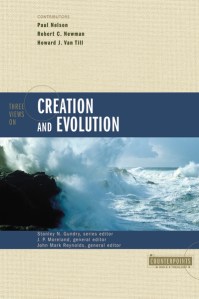
The concept of chance or randomness and its relation to God’s purpose and sovereignty is one which is very interesting to me. It has applications all kinds of direct theological applications. While reading Three Views on Creation and Evolution , I came upon an application related to the origins debate within Christianity. Howard J. Van Till, who was writing in support of theistic evolutionism, considered the possibility that God could have purpose even through the process of evolution:
While we’re on the issue of purpose, let’s look briefly at a common misunderstanding–that randomness rules out purpose. It is often claimed that randomness [which]… prevail[s] in the fundamental processes and events of biotic evolution rules out the possibility… [of] any preestablished purpose… Suppose there were a perfectly honest gambling casino in which no game was rigged–every[thing]… was authentically random. Does that rule out the possibility that the outcome of the casino operation cannot possibly be the expression of some preestablished purchase? Clearly not. In fact, the operators of the casino depend on that very randomness in their computation of the payout rates to insure that they will have gained a handsome profit… (168, cited below).
Apart from the strangely worded question he asked, Van Till’s point is that there may be purpose even with randomness: a truly random casino can still be oriented toward the purpose of making money. Thus, Van Till reasons, God could have done the same thing with the entirety of creation.
Now, I think this is an interesting claim, and I also think there is some plausibility to it. However, there does seem to be a significant disanalogy as well: the casino operators don’t care about the outcome of the random games, because their overall outcome is to have monetary gain. Presumably, however, God would care about the outcome of the randomness. Just having any creatures come from evolutionary processes would not seem to fit God’s plan as established in Genesis (creation, fall, redemption, consummation). Instead, there would have to be creatures capable of participating in that plan. Of course, Van Till might simply reply by saying that God would have known the outcome ahead of time and so that’s not at issue (or some similar response).
What do you think of the notion that chance or randomness may have purpose? If not, why not? If so, do you think this may be applied to evolution as Van Till does? What other applications do you think this may have?
Links
Be sure to check out the page for this site on Facebook and Twitter for discussion of posts, links to other pages of interest, random talk about theology/philosophy/apologetics/movies and more!
Sunday Quote– If you want to read more Sunday Quotes and join the discussion, check them out! (Scroll down for more)
Source
Howard J. Van Till, “The Fully Gifted Creation: ‘Theistic Evolution'” in Three Views on Creation and Evolution edited by J.P. Moreland & John Mark Reynolds (Grand Rapids, MI: Zondervan, 1999).
SDG.
 Each Week on Saturday, I’ll be asking a “Question of the Week.” I’d love your input and discussion! Ask a good question in the comments and it may show up as the next week’s question! I may answer the questions in the comments myself.
Wagering much?
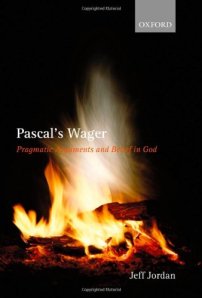
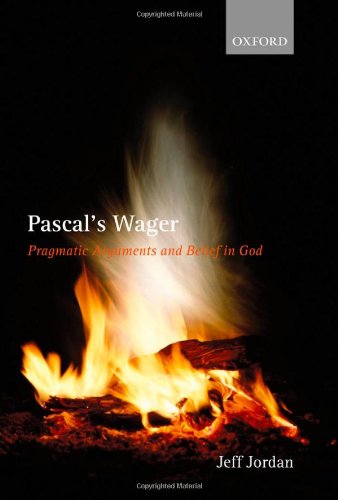
Okay, the title may be a little deceptive. I’m talking about Pascal’s Wager! I recently finished Pascal’s Wager: Pragmatic Arguments and Belief in God by Jeff Jordan (and loved it- posts coming… eventually). That got me thinking quite a bit on Pascal’s Wager, of course! It also made me wonder why I haven’t really heard much about it in apologetic circles. Thus, the question:
What do you think of Pascal’s Wager as an argument for Christian theism (or bare theism)? Why? How much have you studied it?
I am, of course, a bit biased having just read a book I thought was phenomenal arguing that the argument is sound. Let’s hear what you have to think in the comments! I might chime in as well!
Links
Be sure to check out the page for this site on Facebook and Twitter for discussion of posts, links to other pages of interest, random talk about theology/philosophy/apologetics/movies and more.
Question of the Week– Check out other questions and give me some answers!
SDG.

The Poverty of Nations: A Sustainable Solution is an ambitious book. Wayne Grudem (theologian) and Barry Asmus (economist) claim to put forward a list of 78 traits which, if incorporated at a national level, will bring about a solution to poverty. The book is an economic and moral/biblical treatise aimed at stamping out poverty through the production of goods and the integration of morality into global economic practice. Here, I’ll analyze it from its two primary thrusts: economic and moral. Then, we’ll discuss some of the issues involved in a book of this scope.
It is worth noting up front that I have a BS in Social Studies and had numerous classes on economics and international economics at a college level. This doesn’t make me an expert, but I think it allows me to take a decently accurate look at economic theories.*
Economics
The first half of the book focuses on issues of economics on a national level. Specifically, they endorse the free market as a way to bring prosperity to all nations. Their argument is based upon historical observations about how nations have gotten out of poverty and become prosperous.
Thus, the authors argue that fair trade and open borders (with low or no tariffs and the like) will drive the market to balance itself out and also increase the overall prosperity of people from various nations. Moreover, it will provide a means by which lesser-developed countries can utilize their comparative advantages to produce things that other countries are willing to pay a higher price such that they do not need to produce them. Demand drives the market, and the freer a market, the more demand is able to do so. The reason it is beneficial to allow demand to drive the market is because it allows for people to genuinely respond to others wants and constantly produce newer, better goods in more efficient ways, thus increasing the wealth across the board.
I should note that, by necessity, this is merely the briefest overview of this section of the book. Those who read The Poverty of Nations are essentially getting a fully realized introduction to international economics. In fact, the economic portion of the book is quite strong in many ways (though some issues with the complexity are noted below).
Biblical/Moral Issues
Like the economics portion, this half of the book has much to commend it. Though basic, much of the instruction is vital and important to realize as necessary for economic success. For example, government curtailing of bribery is important for an economic system to become more successful. Another, more complex example would be the notion that tariffs decrease the productivity of international trade and artificially increase prices.
The problem with much of the focus on the moral background to the “Free Market” is that Grudem and Asmus seem to assume or assert more often than they provide evidence. It’s easy for someone like me from a relatively free market system who favors open markets to nod along to how a free market encourages integrity because of the repeated transactions between the same persons and the like, but then a statement like this is made:
When people are held responsible by the voluntary personal interactions of the free market, they are typically more responsible. (Kindle Loc. 3784)**
Statements like this are frequently made, but after reading along and perhaps agreeing largely, one is forced to wonder about things like: “Where is the empirical evidence to show that this is actually the case?”; “To whom or to what are people more responsible to?”; “How are we capable of making judgments like this across incredibly complex systems like the economic practice of states, regions, nations, and the world?” The particular statement made above offers no empirical support for its claim, nor do the authors explore the complexities of simply stating that “people… are typically more responsible” in a free market. This statement, and others like it, leave me scratching my head and asking for the evidence. Certainly it is possibly true or perhaps it is true, but why think it without anything more than an assertion?
Another difficulty with this section is that throughout, the specific examples given are taken to be the biblical approach to economics. Now, I think one could fairly say that the Bible condemns bribery, but what of more complex issues like whether it actually endorses a free market? One constant refrain in the book is the use of Genesis 1:28 (“fill the earth and subdue it”) to support various things, from use of natural resources (which are rather shockingly claimed to be essentially unlimited: “[I]t is highly unlikely that any resources will be used up in the foreseeable future… we keep discovering huge new reserves of resources and inventing more creative ways to access them” (6606-6617)–but of course where are the huge new reserves of forests? fresh water? etc.?) to drive people to invent and make new things (3405), to making products from the earth specifically (1169), to move beyond subsistence farming (4207), and more.
One is forced to wonder whether the verse actually means all these things or if, perhaps, the Bible is simply under-determined when it comes to economic policy. I do genuinely wonder whether the Bible is to be treated as an economics textbook, which it often seems to be in this book. Quotes like these are scattered throughout, often in seemingly random fashion in the economics portion. The question is whether this really may be seen as a systematic treatment of the Bible on economy, or whether it may perhaps instead be mining the text to try to support claims about economy which are not really found therein. Not that these are unbiblical points; merely that they perhaps are not the focus or intention of the texts.
Complexities
The book seems to oversimplify on some aspects. It is common practice to use examples which allow an economist to shift just one aspect in order to demonstrate a theory.* That said, at times the examples used in The Poverty of Nations are often a bit too simplistic to believe. For example, at one point a thought experiment asks whether simply taking money from a group of wealthy elites would solve the existing issue of poverty. Although it seemed clear that simply attempting to redistribute wealth didn’t solve the problem, the proposed solution–the book’s solution–was to produce more goods. But it seems to me that if a number of elites were controlling the wealth in a country, just producing more goods would continue to line the pockets of those elite rather than specifically helping the poor.
Examples like this abound throughout the book, as simple solutions are offered to extremely complex issues. Economics is a wonderfully complex topic, but as the authors themselves note at the beginning, it is one which is hard to study due to the human factor in it. Despite the professed efforts to avoid such simplification (Kindle location 2115, for example), the book often does seem to suggest a one-size-fits-all approach to solving economic problems.
That said, at other times the authors do a great job of speaking directly to the complexities of the issue. For example, their discussion of colonialism was marvelous and ably pointed out both the potential benefits and cons of those endeavors on our present world situation. It was a great way to survey a complex issue without trying to identify any one factor. Portions of the book like this make the places where it is simplistic stand out even more, however.
A final issue is that of audience: Asmus and Grudem claim the book is primarily written for leaders of impoverished nations, which–apart from coming off as a bit imperialistic–doesn’t actually seem to be the likely readership. The authors note others as possible audience, but I wonder whether we may end up with several people walking around with this as their only interaction with economic theory and assuming they are able to fix the world’s problems through this oft-simplified economics instruction.
Conclusion
The Poverty of Nations: A Sustainable Solution is at times brilliant, but at others frustrating. It is well-worth a read for Christians interested in economics and attempting to strike at the core of poverty through effective legislation and whole-nation solutions. It does provide a very useful introduction to international economics, and gives some very good ways forward for those wishing to engage on this topic. However, readers should go in with some caution: the simplification at times means that readers should not take this as the final word on this topic, nor should they assume by reading the book they are suddenly equipped to run national-level economic programs.
Links
Be sure to check out the page for this site on Facebook and Twitter for discussion of posts, links to other pages of interest, random talk about theology/philosophy/apologetics/movies and more!
Sunday Quote!- A biblical answer to economic woes?– I discuss a quote from a section of The Poverty of Nations and whether it is true that the Bible may contain specific economic practice.
Source
Wayne Grudem and Barry Asmus, The Poverty of Nations: A Sustainable Solution (Wheaton, IL: Crossway, 2013).
*I was a Social Studies major in college and so took a number of economics classes. I am making no claim to be an expert, but rather educated laity in this area.
**All references are to kindle locations.
Disclaimer: I received a review copy of the book through Crossway. I was not obligated by the publisher to give any specific type of feedback whatsoever.
SDG.
——
The preceding post is the property of J.W. Wartick (apart from quotations, which are the property of their respective owners, and works of art as credited; images are often freely available to the public and J.W. Wartick makes no claims of owning rights to the images unless he makes that explicit) and should not be reproduced in part or in whole without the expressed consent of the author. All content on this site is the property of J.W. Wartick and is made available for individual and personal usage. If you cite from these documents, whether for personal or professional purposes, please give appropriate citation with both the name of the author (J.W. Wartick) and a link to the original URL. If you’d like to repost a post, you may do so, provided you show less than half of the original post on your own site and link to the original post for the rest. You must also appropriately cite the post as noted above. This blog is protected by Creative Commons licensing. By viewing any part of this site, you are agreeing to this usage policy.
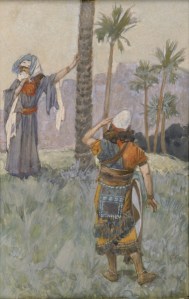
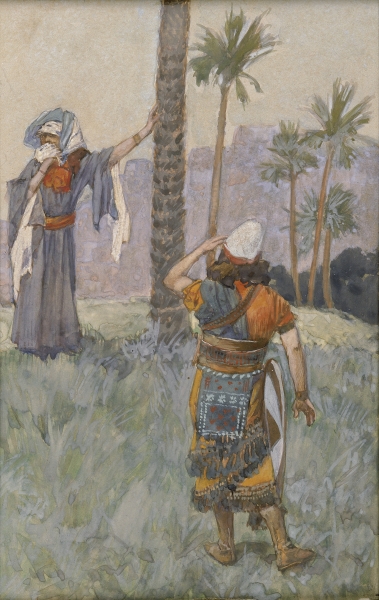
Deborah, leading the people of Israel
There are some who advocate a notion of “Biblical Manhood and Womanhood” with strict definitions of what roles men and women should occupy. Representative is John Piper, a leading voice in the movement named “Recovering Biblical Manhood and Womanhood.” In his essay “A Vision of Biblical Complementarity: Manhood and Womanhood Defined According to the Bible,” Piper writes about “biblical” manhood:
When my father came home he was clearly the head of the house… (32, cited below)
[W]hen there is no bread on the table, it is the man who should feel the main pressure to do something to get it there… a man will feel his personhood compromised if he… becomes dependent over the long haul… on his wife’s income. (42)
Shockingly, Piper even goes so far as to say that:
“[E]ven where a Christian wife may have to stand with Christ against the sinful will of her husband, she can still have a spirit of submission–a disposition to yield” (47).
Piper alleges that biblical womanhood follows this pattern:
A mature woman is glad when a respectful, caring, upright man… provides a pattern of appropriate initiatives in their relationship. (48)
[She is to follow] Biblical submission[, which] for the wife is the divine calling to honor and affirm her husband’s leadership and help carry it through… (53)
From Piper, we learn that “biblical” womanhood is to yield, to be led, not to be the head of the home, be provided for, indeed even to avoid situations in which a woman is closely leading a man in the office (52).
Proverbs 31 destroys this concept of what a “biblical” woman should be. In this astonishing passage, we read that the ideal woman:
1. Takes care when selecting products to purchase (31:13)
2. Brings food to her family (31:14)
3. Provides for her family (31:15)
4. Appraises and purchases land (31:16)
5. Brings profitable gain (31:18)
6. Works with tools of various trades (31:18)
7. Helps the poor and needy (31:20)
8. Crafts goods to be used by the family (31:22)
9. Crafts goods to sell and is shrewd in selling them (31:24; 18)
10. Speaks and instructs with wisdom (31:26)
11. Watches over the ways of the household (31:27)
12. Above all, she fears the Lord (31:30)
Now remember, this is an “ideal” and of course no woman could be or do all of these things. This passage illustrates aspects of what a biblical woman would be.
Recall, though, the roles that have been defined for women by some complementarians–people who hold a view in which man and woman occupy different roles in the home and church, with men as leaders. Which of these are found in the description of woman in Proverbs 31? Let’s just do a quick comparison of a few (Piper citations from above):
Piper: [I]t is the man who should feel the main pressure to do something to get [bread on the table]
Bible: “[The ideal wife/woman] gets up while it is still night; she provides food for her family...” (31:15a)
Do women not share the pressure in putting bread on the table when the Bible describes ideal womanhood as a provider of food for her family without excluding the husband?
Piper: When my father came home he was clearly the head of the house…
Bible: “She watches over the affairs of her household…”(31:27a)
Does watching over the affairs of the household have an unwritten, unspoken clause that excludes men?
Piper: [A] man will feel his personhood compromised if he… becomes dependent over the long haul… on his wife’s income.
Bible: “She considers a field and buys it; out of her earnings she plants a vineyard… She sees that her trading is profitable, and her lamp does not go out at night.” (31:16; 18)
Does the wife/woman’s managing money, earning it, buying fields, ensuring profit, and staying up late into the night focusing on this profitable gain compromise her husband’s personhood?
Also interesting are the things that are not said. It doesn’t say the ideal woman yields to her husband when he does wrong, she rather brings him good, not harm (31:12). Sin is a harmful cycle, and to say women are to rebuke it, but yield because a man is the leader is perpetuating that cycle.
The question, then, becomes this: where are those like Piper, who make the statements quoted above getting their ideas from? Is Proverbs 31 biblical womanhood when it contradicts these notions, or are the Scriptural quotes above instead to be defined as the properly biblical womanhood?
The question is ‘how do we define Biblical Womanhood’? The answer: A buyer, seller, purveyor, manufacturer, innovator, leader, provider, entrepreneur, and above all, one of God.
You ask “What is Biblical womanhood?” I’ll tell you: Proverbs 31.
Links
Be sure to check out the page for this site on Facebook and Twitter for discussion of posts, links to other pages of interest, random talk about theology/philosophy/apologetics/movies and more!
Check out my posts on egalitarianism – the belief that men and women are equally qualified and called in the church and home (scroll down for more).
On the Femnization of the Church– It is frequently alleged that the church is being “feminized” and that this is a bad thing. Check out this post, wherein I analyze this notion from a few different angles.
Source
John Piper, “A Vision of Biblical Complementarity: Manhood and Womanhood Defined According to the Bible” in Recovering Biblical Manhood and Womanhood edited by Piper and Grudem (Wheaton, IL: Crossway, 2006).
SDG.
——
The preceding post is the property of J.W. Wartick (apart from quotations, which are the property of their respective owners, and works of art as credited; images are often freely available to the public and J.W. Wartick makes no claims of owning rights to the images unless he makes that explicit) and should not be reproduced in part or in whole without the expressed consent of the author. All content on this site is the property of J.W. Wartick and is made available for individual and personal usage. If you cite from these documents, whether for personal or professional purposes, please give appropriate citation with both the name of the author (J.W. Wartick) and a link to the original URL. If you’d like to repost a post, you may do so, provided you show less than half of the original post on your own site and link to the original post for the rest. You must also appropriately cite the post as noted above. This blog is protected by Creative Commons licensing. By viewing any part of this site, you are agreeing to this usage policy.
 Every Sunday, I will share a quote from something I’ve been reading. The hope is for you, dear reader, to share your thoughts on the quote and related issues and perhaps pick up some reading material along the way!
Heresy as the Historical Loser?
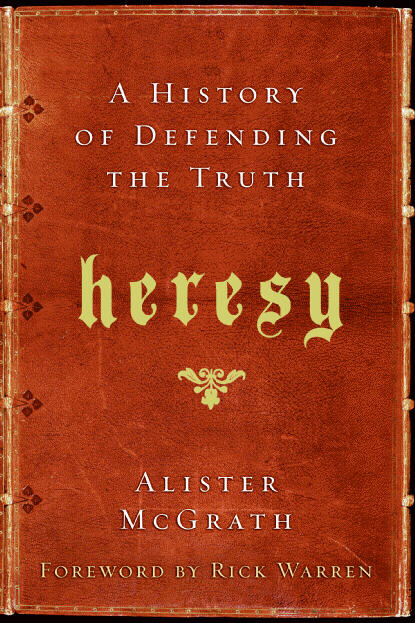
Alister McGrath’s book, Heresy: A History of Defending the Truth was a great read when I read it around two years ago, so I decided to reread it and get my notes in computer form. Almost immediately I began to discover reasons I enjoyed it so much. For example, McGrath notes that heresy has garnered much excitement and interest of late. Many see ancient heresies as something worth reconsidering, perhaps in light of losing by chance. He writes:
In this view, the distinction between heresy and orthodoxy is arbitrary, a matter of historical accident. Orthodoxy designates ideas that won, heresy those that lost. (3, cited below)
The rest of the book is dedicated to the history of heresy and how it interacted with orthodoxy. What do you think, though, of this notion that the distinction between heresy and orthodoxy is arbitrary? Could it be that orthodoxy is merely a historical accident? McGrath, of course, argues that it is not.
Links
Be sure to check out the page for this site on Facebook and Twitter for discussion of posts, links to other pages of interest, random talk about theology/philosophy/apologetics/movies and more!
Sunday Quote– If you want to read more Sunday Quotes and join the discussion, check them out! (Scroll down for more)
Book Review: “Heresy: A History of Defending the Truth” by Alister McGrath– Check out my review of McGrath’s book.
Source
Alister McGrath, Heresy: A History of Defending the Truth (New York: HarperOne, 2009).
SDG.
My favorite movie of the year so far.
Each Week on Saturday, I’ll be asking a “Question of the Week.” I’d love your input and discussion! Ask a good question in the comments and it may show up as the next week’s question! I may answer the questions in the comments myself.
Movies of 2014
I realized recently that I haven’t been to as many movies this year as I went to last year. However, it does seem that the movies I have gone to see have been awesome. Early in the year I saw the appropriately-timed Frozen, which I felt had some great themes in it to go with its fantastic music. Then, I went with a friend to see “Lone Survivor,” which I am pleased to report showed greater complexity than many war movies or commentary on the war in Iraq. Then, I saw “Captain America: The Winter Soldier,” which may have been the greatest superhero movie other than the Dark Knight trilogy. I loved its moral commentary.
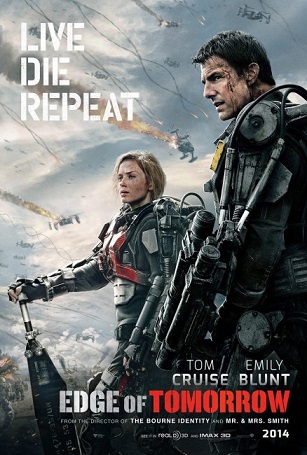
Finally, I went to go see “Edge of Tomorrow” and “X-Men: Days of Future Past” back-to-back last weekend. The X-Men flick was fantastic and brought up, again, questions of morality. “Edge of Tomorrow,” I would say, is my favorite movie of the pack so far. It was just so good and it helps that it was a genuine sci-fi epic. “Edge of Tomorrow” brings up a number of topics like sacrifice and choice which aren’t always explored in movies, let alone blockbuster action flicks.
As for the question this week:
What movies have I missed that you would consider a “must see”? Let me know in the comments!
This post was adapted from my “other interests” site, which you may want to check out- Eclectic Theist.
Links
Be sure to check out the page for this site on Facebook and Twitter for discussion of posts, links to other pages of interest, random talk about theology/philosophy/apologetics/movies and more.
Question of the Week– Check out other questions and give me some answers!
SDG.






 J.W. Wartick - Reconstructing Faith