science
Sunday Quote!- Does Science Limit Exegesis?
 Every Sunday, I will share a quote from something I’ve been reading. The hope is for you, dear reader, to share your thoughts on the quote and related issues and perhaps pick up some reading material along the way!
Does Science Limit Exegesis?
I’ve been rereading The Bible, Rocks and Time: Geological Evidence for the Age of the Earth
[T]he claims advanced in favor of a young Earth or Flood geology remain unacceptable to the scientific community. Thus their claims should also be unacceptable within the church, which… ought to be committed to truth and reality–for the simple reason that the young-Earth creationist claims lack scientific credibility. (161)
Now I think this is a pretty obviously controversial claim for a few reasons. First, the immediate question is how broad Davis and Stearley are intending this to be. After all, one might say that God creating the universe is “unacceptable” depending how one defines the scientific community. Of course, they do qualify the statement by noting that what they mean is that the evidence young earth creationists put forward can often, in principle, be tested for; and when tested, it fails muster. In this sense, I think that one might say the statement is acceptable.
Second, one may object to this noting that science often changes consensus, so what is “unacceptable” today becomes in vogue tomorrow. A problem with this claim is that it flies in the face of the real, overwhelming evidence for an ancient Earth. I’ve examined this and many other arguments YECs put forth in my post on YEC arguments.
Third, one might wonder exactly how Davis and Stearley think science and exegesis are supposed to interact. Though this is a far cry from the purpose of their book, statements like these beg the question of whether science really does limit exegesis.
What are your thoughts?
Links
Be sure to check out the page for this site on Facebook and Twitter for discussion of posts, links to other pages of interest, random talk about theology/philosophy/apologetics/movies and more!
Answering Common Young Earth Creationist Arguments– I evaluate a number of arguments for young earth creationism. There are a large number of biblical, philosophical, and scientific arguments briefly answered here.
What options are there in the origins debate? – A Taxonomy of Christian Origins Positions– I clarify the breadth of options available for Christians who want to interact on various levels with models of origins. I think this post is extremely important because it gives readers a chance to see the various positions explained briefly.
Source
Davis A. Young and Ralph F. Stearley, The Bible, Rocks and Time: Geological Evidence for the Age of the Earth
Sunday Quote!- The War Between Science and Religion
 Every Sunday, I will share a quote from something I’ve been reading. The hope is for you, dear reader, to share your thoughts on the quote and related issues and perhaps pick up some reading material along the way!
The War Between Science and Religion
I recently finished reading Imaginative Apologetics: Theology, Philosophy, and the Catholic Tradition. I have a review of the book coming in some time, but for now I’ll say it was an uneven experience. Lots of high points; many low points. One high point was Alister McGrath’s discussion of science and religion and the alleged war between the two:
This conflict is often expressed more generally in terms of the phrase ‘science and religion’, which unhelpfully reifies both notions, attributing concrete identity to abstractions. Science and religion are not well-delimited entities, whose essence can be defined; they are shaped by the interaction of social, cultural and intellectual factors, so that both notions are shaped by factors that vary from one cultural location to another… the historical evidence suggests that it was actually [two 19th century works not by Darwin] which crystallized a growing public perception of tension and hostility between science and religion. (144, 145)
I think this quote is particularly thought-provoking due to its two pronged approach to the “science vs. religion” mentality. First, I think McGrath is certainly correct to note that the reification of the terms is unhelpful, to say the least. People often say things like “science says ___” or “religion says ___.” Such statements turn either science or religion into separately existing, distinct entities which somehow make proclamations. In other words, they remove either concept from the people putting for the concepts under the umbrella terms “science” or “religion.” I find this unhelpful, and as McGrath later notes, only use the terms out of convention.
Second, exploring the historical origins of an idea like the “war” thesis between science and religion often has astonishing results. One finds, often, that one’s assumptions are challenged and even overthrown by the evidence.
What do you think? What other concepts might we unintentionally reify through our use of terms? How might we seek to avoid doing this?
Links
Be sure to check out the page for this site on Facebook and Twitter for discussion of posts, links to other pages of interest, random talk about theology/philosophy/apologetics/movies and more!
Source
Alister McGrath, “The Natural Sciences and Apologetics” in Imaginative Apologetics: Theology, Philosophy, and the Catholic Tradition
A Solar System and Cosmos Filled With Life? – A reflection upon Ben Bova’s “Farside” and “New Earth”
Ben Bova’s contributions to science fiction are monumental. A six-tme Hugo Award winner (!!), he is established as one of the most successful and entertaining authors of our time. I have quite enjoyed a number of his works, though I have at times been critical of his portrayal of religion. Bova’s major series, the “Grand Tour,” follows human exploration of the solar system (and at some points, beyond). The series is constructed in such a way as to not require readers to follow it chronologically. They are interlinked and interrelated, but not interdependent. Here, we’ll look at two recent books in this series which look at the discovery of an Earth-like planet. There will, of course, be major plot SPOILERS for both books in what follows.
Farside
After telescopes on Earth discover an Earth-sized planet relatively local to our own Solar System (ten light years away), the race is on to learn more about this planet. Farside portrays the struggles of a number of people in their efforts to build an observation base on the dark side of the moon. Jason Uhlrich seeks his Nobel Prize in his attempts to be the first to observe and chart the planet.
Life has already been found within the Solar System, and now two rivals rush to be the first to discover it in the great beyond of the stars. What is interesting is to note some of the assumptions that go into Bova’s characterization of life beyond Earth. First, one primary assumption seems to be that where there is water, there must be life. Second, life should be expected in all corners of the universe.
These assumptions are the subjects of much debate within the scientific community around the possibility of life on other planets and the origin of life. Regarding the former, there are those who do believe that life will be found in abundance throughout the universe. After all, given that we exist, life cannot be all that improbable, right? The other primary way of thinking is to argue that life is, in fact, quite rare in the universe and our own existence is a wonderfully improbable jackpot win.
 New Earth
New Earth picks up some time after the events of Farside. Humanity has sent an expedition to “New Earth.” Upon arrival, there is a great mystery: “New Earth” is eerily like Earth itself. It turns out that a machine known as a “predecessor” has created the planet and grown these human-like aliens as a way to break it to humanity that there is, in fact, more intelligent life “out there.” Moreover, there is a catastrophic event coming towards the whole arm of the Milky Way which will wipe out these intelligent species, and humanity needs to help preserve themselves and the other species.
Though skeptical, ultimately all the members of the expedition are convinced, and the book ends with the message reaching Earth and the gearing up to proceed on this mission given by the Predecessor.
Reflection
There are, of course, any number of things that one could nitpick regarding the plausibility of the scenarios Bova envisions (one would be the rewiring of Uhlrich’s brain to “see” via hearing and touch… how does that work?), but here we’ll focus on two aspects of the work: the plausibility of life outside Earth and the mythos of the benevolent alien.
In Farside, readers who haven’t surveyed the body of Bova’s work discover that the Solar System itself teems with life: life once flourished on Mars, and its vestiges remain; on Jupiter, creatures soar in the skies; life is found elsewhere throughout the System. Bova’s vision of the origin of life seems to be that if there’s water, there may be life. Yet one has to wonder about the plausibility of life forming on a planet like Jupiter. How might biochemical interactions with delicate balances of material be maintained for long? What of the distance to the sun? The origin of life requires all kinds of factors to be “just right” and it simply is not enough to fudge the numbers by saying “It could have happened this way.” To develop a hypothesis around ad hoc assumptions is faulty.
Intelligent life, as explicated in New Earth, is even more problematic. It is easier to have single celled organisms than to have the complexity needed for intelligence. Even granting a naturalistic scenario, the conditions must be even more tuned for life and allow for the nurturing of that life for extremely long periods of time. The universe is indeed huge beyond belief but one has to wonder if even that immensity is enough to repeat the conditions which occur on Earth.
Of course, in the end, one must acknowledge that these are tales of science fiction, not proposals about how science fact might be. There is a certain sense of awe and wonder involved in considering whether life could exist all over the Solar System. It seems to me, however, that if that is the case, it probably got there by means of Earth–blown off the surface of our planet by an asteroid and traveled through space to Mars and possibly beyond.
Another major theme found in both books is what I dubbed the “Myth of the Benevolent Alien.” There is a kind of pervasive battle in science fiction between the notions that aliens want us dead or that aliens are going to be ultimately some kind of saviors of humankind. New Earth brings this benevolence front and center: some unknown life form created these “Predecessors” to find and aid intelligent life. It’s a scenario filled with wonder and hope. But it’s also a scenario which I’ve found time and again in materialistic literature.
The way this story goes: wherever possible, life is certain. It’s a kind of appeal to a fantasy of a godless universe wherein it may be possible to find hope and meaning in the stars. As one character (I believe it is Grant) said in Farside: Ad astra! (To the stars!). Second, the actual inherent implausibility of life both leads to this longing (we don’t want to be alone) and to a search for meaning (how did we get here?). My own answer is that theism provides a more plausible explanation of both the longing for meaning, meaning itself, and the way in which life arose. Interestingly, however, the atheistic accusation that theists are engaged in wishful thinking is perhaps mirrored through various declarations made by naturalists themselves (see the post linked above and in the links below).
Bova’s novels thus serve as a way forward in this discussion. By illustrating our longing and loneliness through the fulfillment of our desires (the discovery of life and the notion that we are not alone), Bova grants readers their wishes. However, we ultimately come to realize that these are indeed just wishes. Perhaps, one day, a “New Earth” will be discovered. But even if that happens, it will not be enough to satisfy our loneliness, nor will it answer our ultimate questions. Theism is the ultimate antidote to loneliness, the ultimate answer for our questions.
Links
Be sure to check out the page for this site on Facebook and Twitter for discussion of posts, links to other pages of interest, random talk about theology/philosophy/apologetics/movies and more!
Materialists: Where is hope? Look to the stars!– I analyze one aspect of materialism: the way that some look to hope in the “beyond” of the outer limits of the universe. Hope, for materialists, may come from the stars. Our salvation may lay beyond our solar system, in benevolent aliens who will bring great change and advances to us.
Our Spooky Universe: Fine-Tuning and God- The incredible circumstances which allow for life to exist and thrive on Earth are the cause for not merely fictional speculation, but actual reflection upon our place in the universe and how it might relate to the transcendent. Check out this post which surveys the evidence for the existence of God found in “fine-tuning.”
Sources
Ben Bova, Farside (New York: Tor, 2013).
Ben Bova, New Earth (New York: Tor, 2013).
SDG.
——
The preceding post is the property of J.W. Wartick (apart from quotations, which are the property of their respective owners, and works of art as credited; images are often freely available to the public and J.W. Wartick makes no claims of owning rights to the images unless he makes that explicit) and should not be reproduced in part or in whole without the expressed consent of the author. All content on this site is the property of J.W. Wartick and is made available for individual and personal usage. If you cite from these documents, whether for personal or professional purposes, please give appropriate citation with both the name of the author (J.W. Wartick) and a link to the original URL. If you’d like to repost a post, you may do so, provided you show less than half of the original post on your own site and link to the original post for the rest. You must also appropriately cite the post as noted above. This blog is protected by Creative Commons licensing. By viewing any part of this site, you are agreeing to this usage policy.
What options are there in the origins debate? – A Taxonomy of Christian Origins Positions
 The origins debate within Christianity is often viewed through the lens of a very narrow spectrum. Most recently, this was demonstrated in the debate between Ken Ham and Bill Nye. I also demonstrated this recently by answering questions for old earth creationists (see the first and second parts): some people tend to see the only options available for Christians as either young earth creationism (the earth was made in six 24 hour days 6-10 thousand years ago) or theistic evolutionism (God set it up, then evolution accounts for diversification). These perspectives, though showing a few of those available to Christians, do not actually reflect the whole realm of possibilities for Christians.
More thoughtful Christians tend to think of the perspectives as threefold. There are theistic evolutionists, young earth creationists, and then in between there is a kind of amorphous glob of people who hold to an “old earth” without expressing it in strictly evolutionary terms. Here, we’ll explore this amorphous glob (as well as the extremes) to show that there really is a range of options. I’m writing this mainly to clarify for many some of the difficulties in commenting on creation issues without such a taxonomy.
Gerald Rau’s Mapping the Origins Debate
If I could recommend one book to anyone who is going to get involved in creation issues, I would have to say I’d recommend Gerald Rau’s Mapping the Origins Debate: Six Models of the Beginning of Everything
Rau’s Taxonomy
Rau divided the major positions on the origins debate into a sixfold division (see Rau, 41):
Naturalistic Evolution- On this view, there is no God and no purpose in origins. The process for the origin of species and its diversity is “spontaneous.”
Nonteleological Evolution- On this view, there is a creator, but there remains no intervention in the natural process which yield life and its diversity. Thus, the “conditions necessary for life” were “established at creation.” However, evolution is still without purpose and the creator did not specify its parameters.
Planned Evolution- On this view, there is a creator who had a purpose for life and its origin. This purpose is through a “perfect creation” which “naturally fulfills God’s purposes.” Thus, the purpose which the creator had was essentially front-loaded in at the moment of creation. There is no direction during the process.
Directed Evolution- On this view, there is a creator with a purpose for the diversity of life. Unlike the previous view, the creator doesn’t merely front-load design and purpose but rather intervenes throughout the course of history to bring about purpose: “changes in universe and life” are “subtly directed over time.”
Old-Earth Creation- On this view, the process by which the diversity of species came about is not through directed evolution but rather through creation over time: “major body plans” are “created over millions of years.” New diversity of life is through God’s direct creative act.
Young-Earth creation- on this view, “each ‘kind'” is “created in one week, within the last 10,000 years. All diversity of life is due to God’s creative act; any changes since then are only among the “kinds” represented on the ark.
 A Larger Picture
Rau’s division of these groups is extremely helpful because he hits on the major positions represented within the spectrum. Of course the only options which are available to Christians are those which do not exclude God from the picture. Thus all but naturalistic evolution remain open to the believer. Now, the debate over how these might fit into the teaching of the Bible is not what I’m trying to dive into here. Instead, I’m simply pointing out there is diversity of views greater than the YEC/Theistic Evolutionism divide. One can see from the above that even within theistic evolutionism there is some diversity. Does evolution take place nonteleologically or did God plan it from the beginning? Perhaps God directed evolution along the way. There also is the option of Old Earth Creationism which shares many features with young earth creationism but radically diverges from the latter in many respects.
However, the spectrum opens up even more than Rau’s taxonomy depicts. The views he discusses focus primarily upon the science; that is, they are distinctions among views on the specifics of a scientific account of origins. Other views may be listed which may be distinguished by the reading of the Bible. Now, there is of course much overlap between these and Rau’s list, but I wanted to highlight a few views of interest.
First, there are interpreters like John Sailhamer in his book Genesis Unbound
Second, John Walton’s view reads the creation account within the Ancient Near Eastern context and so he views Genesis not as a literal creation account but rather as an account showing how God is enthroned over the entire creation as King. Again, such a view would be amenable to the spectrum of views possible for a Christian as I noted.
It is worth noting that either of these is distinct from the spectrum Rau lists. They are distinct because they do not require commitment to any of the creation models. Thus, for Collins, Sailhamer, and Walton, one may simply remain open to the evidence rather than filtering the evidence through specific readings of the Genesis text. Of course, one could hold to this view and remain a young earth creationist; but none of these readings explicitly forces someone to hold to any position on the actual means of creation and speciation.
Third, there are positions related to the scientific origins which would further subdivide Rau’s categories as dilineated above. For example, young earth creationists often hold that the Global Flood can account for the fossil record and stratification. But some YECs have historically held that the Flood would have been tranquil and essentially had no impact on the Earth. Other YECs simply hold that the universe and the Earth have an appearance of age because God would have known at what age it would have needed to be in order to sustain life. There is much diversity about the mechanisms related to the Flood as well. Similarly, Old Earth Creationists exist upon a spectrum, though Rau’s principles about what unites them are correct. However, OECs are often confused with other views along the spectrum such as directed evolution. Strictly speaking, an Old Earth Creationist will not hold to the notion that speciation occurs on such a broad scale through evolution.
Conclusion
I have utilized Rau’s work to demonstrate there is a spectrum of beliefs related to the origins debate. The spectrum, I have argued, is even broader than Rau showed. Within each category he listed, there may be subdivisions. Moreover, there are some views which eschew attempts to dilineate the scientific truths but simply ascribe to reading the text. These latter views would fit with essentially any along the spectrum of beliefs so long as God is involved.
The purpose of this post is not to sow confusion for those interested in the topic of origins. Rather, it is to demonstrate that there really are more options on the table than either Young Earth Creationism or Theistic Evolutionism. Within either of those views there is much diversity, and there is a whole range in-between. Thus, let us hope that when we discuss origins we avoid falsely portraying the positions as being so limited that we fail to account for the range. Hopefully, this taxonomy will prove helpful.
Links
Be sure to check out the page for this site on Facebook and Twitter for discussion of posts, links to other pages of interest, random talk about theology/philosophy/apologetics/movies and more!
Source
Gerald Rau, Mapping the Origins Debate: Six Models of the Beginning of Everything
SDG.
——
The preceding post is the property of J.W. Wartick (apart from quotations, which are the property of their respective owners, and works of art as credited; images are often freely available to the public and J.W. Wartick makes no claims of owning rights to the images unless he makes that explicit) and should not be reproduced in part or in whole without the expressed consent of the author. All content on this site is the property of J.W. Wartick and is made available for individual and personal usage. If you cite from these documents, whether for personal or professional purposes, please give appropriate citation with both the name of the author (J.W. Wartick) and a link to the original URL. If you’d like to repost a post, you may do so, provided you show less than half of the original post on your own site and link to the original post for the rest. You must also appropriately cite the post as noted above. This blog is protected by Creative Commons licensing. By viewing any part of this site, you are agreeing to this usage policy.
Lawrence Krauss vs. John Lennox on science and faith
 I’ve been catching up on my podcasts and I recently listened to a dialogue between an atheist, Lawrence Krauss, and a theist, John Lennox on questions about science and faith. It was on the Unbelievable? program (something I strongly suggest you listen to weekly) [listen here]. Thus, it was less a debate than it was a moderated discussion. Here, I’ll only focus on a couple questions that came up in their dialogue.
How and Why
According to Lawrence Krauss, science cannot answer “Why” questions but only “how” questions. Lennox brought up the example of a Ford motor car sitting on a driveway [I added this last bit for clarity]. He argued that one can explain the “how” it got there but there still remains the question of “why” it was made. Thus, the “why” questions remain “real” questions whether or not science is capable of investigating them. Interestingly, Krauss took a different tact than I expected in his rebuttal: he argued that the “why” question (at least in the Lennox case) is reducible to a “how” question. That is, one could explain how Henry Ford designed it, had it built, and then someone bought it and drove it to where it is sitting.
But of course redefining terms does little to address the actual questions at hand. Lennox was keen to show that questions about “why” are indeed meaningful. It seems that Krauss’ only response is to either say “no they’re not” or redefine actual “why” questions into “how” questions and argue there still are no “why” questions. The move is not very subtle, nor is it successful.
Purpose in the Universe?
Krauss made several comments regarding purpose in the universe. First, he seemed to suggest that in order to assert the universe has purpose, one must know what that purpose is. Second, he argued that the universe is indeed quite wasteful if it were intelligent designed with purpose. Third–in response to Lennox’s statement that Krauss and other cosmologists admit that for life to exist there would have had to be several generations of stars (to produce enough carbon for carbon-based life)–he alleged that there could be all sorts of other life forms we don’t know about. I’ll address these each briefly in turn.
First, it seems clear that if one wants to suggest the universe has a purpose, one does not have to know what the purpose is. We can see this all the time in our own interactions with the world. Suppose I see a pile of blocks on the floor in an office building stacked in piles of various heights and arranged by color. I can immediately recognize that there must have been some purpose behind it–for the arrangement by color is quite telling–but I may not be able to pinpoint the exact reason. Perhaps some five-year-old was amusing herself by stacking blocks by color. Perhaps an adult was making art by stacking them in that way–a kind of reminiscence on childhood. There could be any number of other reasons. But the fact that I don’t know the reason doesn’t mean there is no reason. Similarly, I may claim the universe has a purpose even without claiming to know what said purpose is.
Second, Krauss seems to make the error that if the universe were designed for humans, that would have to be the only purpose involved in the entire universe. I’ve addressed this claim in some detail elsewhere, so for now I’ll just say that Krauss’ mistake lies in assuming that if there is a purpose behind the universe it must be the only purpose.
Third, Krauss missed the point of Lennox’s rebuttal. For the life we are dealing with is clearly carbon based. For Krauss to stretch the question to possible scenarios of non-carbon based life is to miss the thrust of his own argument. He was asking for purpose in this universe; he was not asking for purpose in any possible universe. Thus, his statement is off base. Moreover, I tend to agree with scientists like Iris Fry and the like who agree that it is implausible to suggest life could be based on silicon or other things apart from carbon. That is a debate that would take us far afield, so I’ll leave it at that.
Science Doesn’t Care About Philosophy
Lennox, towards the end of the discussion, pointed out that Krauss’ claim to define nothing as something is nonsense. Krauss’ response? He jettisoned philosophy immediately: “Science doesn’t care about philosophy,” he said [he may have said “Scientists don’t…” but after listening to it a few times, I couldn’t tell which he said]. If you don’t see a problem with this, you should. First, the statement itself is philosophical. Second, any number of claims he made throughout his discussion with Lennox were philosophically grounded. Third, science depends upon philosophy to operate. Fourth, as I’ve demonstrated elsewhere, Krauss’ own work is directly dependent upon philosophy.
Documents Aren’t Evidence
Krauss said that documents don’t count as evidence. His assertion was based upon the notion that a book like The Great Gatsby is a document, but it is not taken as factually true. Apart from purely begging the question regarding the genre of the Bible alongside The Great Gatsby, Krauss is also severely mistaken in his claim that documents aren’t evidence. According to Krauss’ claim, we should essentially dissolve our government, because our system of government is based upon a document: the Constitution. But the Constitution cannot count as evidence for anything! So this begs the question: why should we go to it to see whether or not Lawrence Krauss should have freedom to express his vitriol against religious people?
The problem is that Krauss is just wrong here. Documents do count as evidence. One needs to acknowledge the genre, intent, etc. regarding a document, but for Krauss to utterly dismiss documents as evidence is absurd. One may ask whether Krauss wrote any books. He could, presumably, produce documents to show that he did indeed write books. But on his own standard of proof, he hasn’t presented any evidence whatsoever. Thus, on Krauss’ definition of evidence, I conclude that Krauss has never written anything.
Conclusion
There is much more that I could interact with in regards to this conversation between Krauss and Lennox, but I’ll leave it for now with the comments I have. I suggest readers go listen to the dialogue themselves. It seems to me clear that Krauss continues to flounder in areas outside his expertise. He misused the notion of an “appeal to authority” when he applied it regarding Lennox’s citation of Nagel, he continued to make errors regarding non sequitors, he dismissed his own books as evidence that he wrote anything, and his comments on purpose betray a lack of reflection on the topic. Krauss continues to show that he is basically ignorant of even the implications of his own claims.
Links
Be sure to check out the page for this site on Facebook and Twitter for discussion of posts, links to other pages of interest, random talk about theology/philosophy/apologetics/movies and more!
Shoulders of Giants? -Philosophy and Science in Context, or “Krauss Jumps off!”– I argue that Krauss is mistaken to claim that philosophers know nothing. I further argue that Krauss’ own work is dependent upon philosophy, so he ironically (ignorantly?) dismisses the very basis for his work.
William Lane Craig vs. Lawrence Krauss- Thoughts and links– I summarize and analyze a debate between Lawrence Krauss and the Christian philosopher and theologian William Lane Craig. I think this debate was devastating to Krauss’ positions regarding his atheism.
Follow this link to access the audio for the dialogue between Lennox and Krauss.
SDG.
——
The preceding post is the property of J.W. Wartick (apart from quotations, which are the property of their respective owners, and works of art as credited; images are often freely available to the public and J.W. Wartick makes no claims of owning rights to the images unless he makes that explicit) and should not be reproduced in part or in whole without the expressed consent of the author. All content on this site is the property of J.W. Wartick and is made available for individual and personal usage. If you cite from these documents, whether for personal or professional purposes, please give appropriate citation with both the name of the author (J.W. Wartick) and a link to the original URL. If you’d like to repost a post, you may do so, provided you show less than half of the original post on your own site and link to the original post for the rest. You must also appropriately cite the post as noted above. This blog is protected by Creative Commons licensing. By viewing any part of this site, you are agreeing to this usage policy
Resource Review: “Flight: The Genius of Birds”
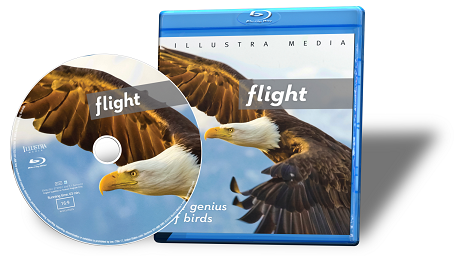 “Flight: The Genius of Birds
The Complexity of Birds
The film traces the incredible development of birds from single cells into babies and the way in which their bodies must work in order to achieve flight. One of the people interviewed in the film notes that flight is not an incremental phenomenon; the entire body must be set up in order to accomplish it. The way feet work, the shape of the wing, the structure of muscles, and the weight of bones are all factors which must come into play in order to make up an animal capable of flight.
Hummingbirds
“Flight” presents a number of different birds as case studies the complexity which the systems that make up a bird show. Hummingbirds’ flight muscles comprise, on average, 43% of the bird’s body mass. This allows the birds to have an enormous amount of precision in order to move in the ways that they can, such as hovering, moving backwards, laterally, etc. The hummingbird generates lift both on the back and the front strokes of their wings. This capability is grounded in the shoulder joints found in the bones which are at the bases of the wings. The hummingbird’s heart must beat at an enormous rate, which means that it also must eat quite a bit in order to sustain the energy level required for the bird’s metabolism and constant movement. The hummingbird’s tongue is particularly interesting, for it has a number of functions on it which allow it to draw up nectar far more efficiently than had been thought.
European Starlings
These starlings, sometimes flying in groups in the hundreds of thousands, move in a stirring, beautiful way, seeming to shift as if they comprised one organism. The way that these birds continue flying without running into each other is by monitoring those starlings which are closest to each other. Rather than monitoring the entire formation, they simply move when those around them move, which lends itself to the movement of a flock as one kind of organism. Their movements must take place within very minuscule spans of time in order to maintain the formation. They follow air flows to minimize the turbulence they encounter, and their formation also serves as a defense mechanism.
Arctic Terns
Arctic terns have the longest migration of any animal on earth. They cross the planet from pole-to-pole to seek out nesting and feeding grounds. From the North Atlantic, they head south, eventually splitting as half go along the African coast while the other half goes along the coast of Brazil. In the south, near Antartica, they feast upon small fish before heading back north. They must arrive back near Greenland and other areas in the north for a nesting period of about 8 weeks. Then, as winter sets in in the north, they head back south.
How did the complexity arise?
The film here presents an argument that a materialist must use Darwinian evolution to explain the unique functions of flight. No design may be invoked in order to explain these things in a materialistic worldview. Dinosaurs were the precursors of birds, and natural selection selected for those dinosaurs which began to develop better means by which to avoid predators and catch prey.
The Feather
One feather may contain around a million individual parts, from the shaft to the individual strands, barbs, which compose the feather, and each of these are made up of barbules. These are constructed in such a way as to interlock with each other. Yet the feather is but one of the many factors which must go into the mechanisms required for flight.
Other Mechanisms
Other than those already noted (muscles, bones, etc.), birds require a navigational system which allows them to migrate and follow food. They must have instincts to cue and direct their movements across continents and even oceans. One could see how these latter functions came into play in the case study of the Arctic Terns.
Natural Selection?
The film makes the argument that natural selection cannot account for the mechanisms required for flight. The primary problem presented by “Flight” is the “lack of foresight.” Natural selection cannot look ahead and select for various factors in order to put them together into an integrated whole. The argument is that the multiple and independent functions needed in order to get a functional bird which would have some chance at survival is impossible to get to by means of a process which is blind.
Evaluation
First, I have to say that there were moments I found myself with my mouth hanging open and the gorgeous imagery in “Flight.” This was particularly the case following the starlings’ movements, the icy regions the terns flew through, and the overall imagery related to the hummingbirds.
The use of particular case studies over the middle section of the film was particularly effective at showing the problems which may come up when trying to describe certain characteristics and behaviors which birds exemplify that cannot be explained so easily by naturalistic mechanisms.
The film also did a good job of noting that there are presuppositions when it comes to the scientific enterprise. Given naturalism, neo-Darwinism is the only game in town. However, as was asked repeatedly throughout the film, if one is capable of acknowledging design and intelligence when it comes to certain things, why should one preclude the possibility of an intelligent agent when it comes to higher orders?
One problem with the film can be found in the format. It is necessarily short, making only the briefest points and only touching upon those things which it discusses. I suspect that those who hold to a naturalistic worldview will be largely unimpressed, while those who hold to the possibility of intelligent agency in biology will see it as backing their own positions. However, those who may be on the fence will see that there are reasons to ask questions.
Overall, “Flight: The Genius of Birds
Disclosure
I was sent a copy of Flight: The Genius of Birds
SDG.
——
The preceding post is the property of J.W. Wartick (apart from citations, which are the property of their respective owners, and works of art as credited) and should not be reproduced in part or in whole without the expressed consent of the author. All content on this site is the property of J.W. Wartick and is made available for individual and personal usage. If you cite from these documents, whether for personal or professional purposes, please give appropriate citation with both the name of the author (J.W. Wartick) and a link to the original URL. If you’d like to repost a post, you may do so, provided you show less than half of the original post on your own site and link to the original post for the rest. You must also appropriately cite the post as noted above. This blog is protected by Creative Commons licensing. By viewing any part of this site, you are agreeing to this usage policy.
Debate Review: Fazale Rana vs. Michael Ruse on “The Origin of Life: Evolution vs. Design”
 Fazale Rana recently debated Michael Ruse on the topic of the origin of life. Essentially, the question of the debate was whether the origin of life is best explained by naturalism or design. Here, I will provide brief comments on the debate.
Please note I make no claims to being a scientist and I am fully aware that I evaluate this debate as a lay person.
Michael Ruse Opening
Michael Ruse was careful to note that he is not keen on saying design is not possible. Rather, his claim is that naturalism is the most plausible explanation for the origins of life.
Ruse’s argued that design is implausible. Specifically, he noted that if design is the hypothesis put forward, there are any number of ways that one might consider that hypothesis. Is the designer a natural being within the universe or a supernatural being like God? Is there only one designer, or was there a group of designers (and he notes that a group of designers seems more plausible because automobiles require many designers to bring them about)? Finally, he raised the issue of bad design choices. He asked why, if there were a “hands-on” designer, would that designer not grant immunity to HIV and the like.
Ruse also argued that one can fall into the fallacy of selective attention- if one focuses upon only one example in isolation, then one might come to a conclusion that certain laws/theories may not be correct. But placing these same problems in context shows that they can be explained against “the background of our knowledge.”
Finally, Ruse ended with a number of examples for how problems which were seemingly insoluble were explained by naturalistic means. He also argued that one of the popular arguments for design, the flagellum, has so many different varieties (and is sometimes found to be a vestigial organ), and so cannot be shown to be designed.
Fazale Rana Opening
The problems which must be accounted for within an origins of life model are numerous. One must account for self-replication, the emergence of metabolism, the formation of protocells, the synthesis of prebiotic materials, the formation of life’s building blocks, and more.
Rana then turned to some primary models used by researchers to explain origin of life (hereafter OOL). First, there was the replicator-first model, which was problematic because in order for a molecule to be a self-replicator, it must be a homopolymer. But the complexity of the chemical environment on early earth rendered the generation of a homopolymer on the early earth essentially impossible. Next, the metabolism-first model runs into problem due to the chemical networks which have to be in place for metabolism. But the mineral surfaces proposed for the catalytic systems for these proto-metabolic systems cannot serve as such; Leslie Orgel held that this would have to be a “near miracle” and Rana argues that it is virtually impossible. Finally, the membrane-first model requires different steps with exacting conditions such that the model is self-defeating.
Rana argued positively that OOL requires an intelligent agent in order to occur. The reason is because the only way that any of these models can be generated is through the work on OOL in a lab. Thus, they can only be shown to be proof-of-principle and the chemistry breaks down when applied to the early earth. The fact that information is found in the cell is another evidence Rana presented for design. The systems found in enzymes with DNA function as, effectively, Turing machines. Moreover, the way that DNA finds and eliminates mistakes is machine-like as well. The fact that the needed component for success in lab experiments was intelligence hinted, according to Rana, at positive evidence for design.
Finally, Rana argued that due to the “fundamental intractable problems” with naturalistic models for the OOL and the fact that the conditions needed for the OOL and the processes required to bring it about have only been demonstrated as in-principle possible with intelligent agents manipulating the process.
First Cross Examination
At this point, Ruse and Rana engaged in a dialogue. Ruse first challenged Rana to show how the OOL model based on design could actually be based upon Genesis, as he quoted from Rana’s book (written with Hugh Ross), Origins of Life. He pointed out a few difficulties with using the Genesis account in this manner. Rana answered by putting forth his view of the Genesis account as an account of the origins of life on earth–a view which sees the Genesis account as corresponding with the scientific account (concordism). Yet the Genesis account is itself written from the perspective of a hypothetical observer found on the face of the earth rather than a perspective above the earth.
Rana asked Ruse for his thoughts on how much impact philosophy has on the debate over the OOL. He noted that it may be a presupposition of naturalism which lends itself to interpreting the OOL. Ruse answered by saying it is a good point and that philosophy cannot be denied a role in the discussion. But the question is not simply one of “gut commitments” and that one has to also take into account the scientific evidence and a “pragmatic reason” for holding to naturalism: naturalism works. It continually explains problems, even if it takes time.
Ruse Rebuttal
The difficulty with the OOL debate is that it is too easy to take things out of context in order to show how many problems there are with a model. He argued that it is “peculiar” to take the results of a group of researchers and yet somehow go “flatly” against the “overall interpretation that each and every one of these people” would have taken from the research.
Despite all the difficulties, Ruse argued, researchers are starting, slowly, to get some view of how to explain the OOL. He pointed to some successes within the OOL sciences to show how eventually we may discover a naturalistic explanation.
Rana Rebuttal
Rana began with the notion of a creation model. He argued that models are not always drawn from the data, but rather models and theories are constructed from a number of different points.
Regarding the science itself, Rana noted that there is no established source of prebiotic materials on the early earth. The popular theories for how these materials might be generated fail for a number of reasons.
The argument, Rana said, is not a god-of-the-gaps argument. Instead, it is an observation of the breadth of scientific evidence which shows that in-principle experiments have been successful, but when applied to the scenarios for the early earth, the only way for success to be achieved is through intelligent agency (scientists in a lab manipulating the conditions).
 Second Cross Examination
Rana asked Ruse to respond to the notion that OOL research is similar to literary criticism in that all the different theories continue to be debated but none have come into dominance or can be established over the others. Ruse responded by noting that OOL research does have some “just so” stories but that science has taken seriously the criticisms and come towards the possibility of answering some of the questions.
Ruse asked why God would not intervene for things like cancer. Rana answered by noting that in the broad scope of a model with intelligent agency, poor design is no problem. But because Rana believes it is the God of the Bible, he says it may be a legitimate criticism of the design position. However, things which appear to be bad designs can turn out later to have some reason for the way they are used. Moreover, once a creator has put in place designs, they are subjected to the laws of nature and so they could become decayed or break down.
Ruse Closing Argument
Ruse argued that when one takes a “Biblical position” one is “not doing science any more.” If one wants to assert that the science points to miracles, then Ruse said he would argue that the nature of our experience is not “blank” in relation to the OOL, but rather that the previous successes of naturalism means we should fall back upon naturalism regarding the OOL because it has worked in so many other areas. Thus, the problem with the OOL is not with the problems themselves but rather with our own ability to solve the problems.
Rana Closing Argument
The OOL and complexity of the cell require an intelligent agency in order to account for the OOL on earth, Rana maintaned. The problems with naturalistic accounts appear to be intractable, and the role of intelligent agency in lab work cannot be ignored because that same agency is what leads to the allegedly naturalistic successes. The information found in biological systems also give evidence for design.
Finally, methodological naturalism turns science into a game to be played in which the goal is always to find a naturalistic explanation, even if none is forthcoming. Instead, science should be, in practice, open to the possibility of agency within the natural world. Ruse’s argument is essentially an appeal to the future in which the notion is just that one day the answers will come forth.
Analysis
First, I would note how pleased I was with the nature of this dialogue. Unlike some other debates, Ruse and Rana were largely cordial and even amiable towards each other. It is clear that they each had respect for the other’s work and arguments.
The debate itself was very interesting. Fazale Rana continually went back to the science and pointed out the difficulties which remained, while Ruse seemed to continually appeal to the overall success of the naturalistic paradigm. Regarding Ruse’s position, I think it was perhaps disingenuous to conflate naturalism with science, particularly considering that very point was largely at the center of the debate. Is it indeed the case that we must be methodological naturalists? It seems that even Ruse agreed that our answer to this question will largely shape one’s interpretation of the problems and reactions to the problems brought up.
Regarding the science itself: Ruse brought up several successes which scientific research has yielded, but it seemed clear that none of these offered evidence which countered Rana’s arguments of the intractable problems for the OOL. Rana did an excellent job showing how the models which are in vogue right now for the OOL all fail on a number of levels to account naturalistically for the OOL.
Moreover, the fact that current research does rotate around the actions of intelligent agents. Given that such intelligent agents are necessary to bring about even the in-principle results for the OOL, it seems that Rana’s argument that this hints at an intelligent agent in the overall OOL schema was largely successful. It seems to me to count as positive evidence for design.
Overall, I have to say this was a great debate. I think one’s conclusions regarding the outcome of the debate largely will come down to a matter of worldview.
Links
Be sure to check out my extensive writings on the origins debate within Christianity.
The debate can be found here. It is worth a watch/listen due to the complexity of the issues involved. Or you could just watch it here:
Be sure to check out the Reasons to Believe web site, which is the organization Fazale Rana is part of.
SDG.
——
The preceding post is the property of J.W. Wartick (apart from citations, which are the property of their respective owners, and works of art as credited) and should not be reproduced in part or in whole without the expressed consent of the author. All content on this site is the property of J.W. Wartick and is made available for individual and personal usage. If you cite from these documents, whether for personal or professional purposes, please give appropriate citation with both the name of the author (J.W. Wartick) and a link to the original URL. If you’d like to repost a post, you may do so, provided you show less than half of the original post on your own site and link to the original post for the rest. You must also appropriately cite the post as noted above. This blog is protected by Creative Commons licensing. By viewing any part of this site, you are agreeing to this usage policy.
Really Recommended Posts 2/22/13
 I have to say, the posts for this week are really the cream of the crop. Make sure you follow the blogs I link to here, because they are constantly amazing. We look at The Mortal Instruments, Richard Carrier and the Jesus Myth, the power of prayer, how pornography can destroy the brain, science fiction, and a fun interview!
Empires and Mangers: The Mortal Instruments– What’s all the buzz about surrounding the upcoming movie and the books called “The Mortal Instruments?” Anthony Weber analyzes the series in this fantastic post. I haven’t read the books and I was still fascinated. Do check this one out, as it will be all over culturally. Also, follow this blog because the posts are consistently at this quality. It’s a must-read every time.
Does Richard Carrier Exist?– A fun but rigorous look at whether Richard Carrier exists. Why? Richard Carrier is best known for his denial that a historical Jesus ever existed. Here, Glenn Andrew Peoples and Tim McGrew partnered to use Carrier’s methods on him, to devastating results.
C.S. Lewis on the efficacy of prayer– Have you ever heard the objection that prayer doesn’t work? Matt Rodgers takes on this argument through C.S. Lewis, the eminent Christian writer and theologian.
The Effects of Porn on the Mail Brain– This is a scary, uncomfortable post. The topic is pretty self-explanatory. Pornography is devastating. Let us pray for those under its chains and continue to work against it.
Grand Blog Tarkin– Have fun with this one. It is a blog dedicated to looking at the social and military themes in science fiction and fantasy. I cannot describe how nerd-awesome this is (just a hint: if you get the title, you’d love it… even if you don’t, you’ll still love it). You must check it out.
Mike Robinson interviews J.W. Wartick– A bit of a plug here: check out Mike Robinson interviewing me on his (great!) blog. I’d love your comments.
Gregg Davidson vs. Andrew Snelling on the Age of the Earth
 I was recently at the Evangelical Philosophical Society conference (see my thoughts on every talk I attended) and one of the sessions was a debate between Gregg Davidson of Solid Rock Lectures and Andrew Snelling of Answers in Genesis on “Scripture, Geology & the Age of the Earth.” A number of readers requested more information on this talk, and I found it very interesting myself. Here, I’ll touch on the highlights of this dialogue as well as my own thoughts.
Davidson- A Biblical Worldview and an Ancient Earth
Gregg Davidson, a geologist who authored When Faith and Science Collide
Another problem is that YECs fail to recognize that their position itself is an interpretation of Scripture. Their view is not Scripture itself. There is a tendency in debates about theology to view one’s own position as what the Bible teaches, but that fails to take into account the possibility of fallible human interpretation.
Davidson argued for an approach to Scripture that takes note of the fact that God often deigns to make use of “the knowledge of the day to communicate truths about the nature of God.” As an example, he referenced Jesus saying that the mustard seed is the smallest seed of all the plants on earth, despite the fact that it is not (Mark 4:30-32). The point was not the size of the seed, but rather the power of faith. Thus,we must be careful not to make Scripture teaching something it does not claim for itself. He pressed that to read into the Genesis text specific dates and time periods is to make the text teach something that it is not claiming.
Turning to the science, Davidson noted that there are any number of evidences for an ancient earth, but that he chose to focus upon just one area from a number of evidences in order to show how interdisciplinary and cross-confirmed the age of the earth is. He focused upon the Hawaiian Islands and their formation and age. There are multiple, independent ways to investigate the age of these islands. The islands were formed by a hot spot–a place where magma shoots up from underneath the crust and bubbles to the surface. This eventually would form islands when enough of the lava cooled and hardened. The islands are on a moving continental plate and so as they move away from the hot spot, the expectation is the islands get progressively older. Thus, in a series of 3 islands arranged thusly: 3-2-1-0 (0 being the hot spot), 3 would be the oldest island.
Davidson first noted the ages that were found by testing the age of the volcanic rock with radiometric dating. These ages yielded millions of years. Now of course most young earth creationists hold that radiometric dating methods are deeply flawed, but Davidson noted that this procedure can be tested for accuracy with independent methods. Before turning to that, he showed a picture of what the estimate for the movement per year of the plate over the hot spot would be based solely upon the radiometric dating. Basically, this works by just taking the distance of 3-2-1 and measuring how far each is from the hot spot, then dividing the radiometric date by that distance to see how far the islands move per year. The estimate yielded movement of 2.6-3.6 inches per year.
Recent technology has allowed us to utilize Global Positioning Systems (GPS) to actually measure the rate that the islands are moving. These measurements yield approximately 3.1 inches per year, which is exactly in the middle of the estimate given by the radiometric dating. Given the measured rate, scientists can extrapolate how many millions of years old the islands are based upon their distance from the hot spot. It’s kind of an inverse way to get the date. They simply divide the measured distance of the islands from the hot spot by the measured rate of movement per year. Of course, this way of measuring is not dependent in any way upon radiometric dating. Thus, there are two independent sources showing the date in millions of years for the Hawaiian Islands.
The coral growth around the Islands was a third confirmation of the ancient age of these formations. This argument was more complex than the first two. Basically, it seemed the argument was that because different corals form closer to the surface, we can look at the coral reefs formed around the islands as they are farther out and see how much the coral has moved up the island as it subducted (moved under the water with the continental plate). Thus, as the islands move farther away, and therefore sink into the water, the coral that can only survive at certain depths is submerged too far for it to get adequate sunlight, and it dies. One can then measure radiometrically the age of rings of corals. When one measures the coral on the islands, they can correlate that with the ages of the corals and the islands themselves. This measurement also lined up with the previous two.
Davidson concluded that the problem with the YEC paradigm is that they will often focus upon rebutting multiple, independent claims. While this may work for each claim individually, the problem is that all of these types of evidence add up to form one cohesive picture. When they are cross-referenced and they all hit on the same age or date range, they all show the same predictions of distance, and the like, it becomes extremely implausible to say that every single way to find the age of the earth is faulty. They form a full picture. Furthermore, Davidson critiqued YECs for often presenting a selective picture of the evidence–only showing the evidence which favors their position.
Snelling- A Biblical and Geological Defense of a Young Earth and the Global Flood
Andrew Snelling is a well-known proponent of YEC, the author of Earth’s Catastrophic Past
Snelling began by offering the common argument that Jesus taught the global flood and young earth creationism. He argued that the Hebrew word used in Genesis 7:17 is only used for this event, which hints at the incredible devastation.
 Furthermore, the language in Genesis states that the mountains were covered. Snelling’s slideshow had the image shown here on the right, which is becoming pervasive in discussions about the extent of the Flood. The argument is that if the Flood were local, it makes a mockery of the Biblical text. (See a different perspective on this issue with Hugh Ross’ “In the Days of Noah.”)
Snelling outlined several things we should look for if there was a global flood. Among these expectations are:
1) Marine fossils in strata for terrestrial creatures- Snelling named a number of places these could be found. This is an expectation because the Flood covered the whole earth, so the creatures should all be mixed together.
2) Rapid burial of creatures and plants- Snelling noted a number of places where fossils show rapid burial. This is expected because the Flood would have suddenly come upon these creatures.
3) Fossil graveyards- The Flood would have killed huge numbers of animals, so we should expect to find huge fossil graveyards, which we do.
4) Evidence that the ocean flooded the continents- if the Flood were global, we would expect to find its sedimentation upon the continents, and we do.
He argued that these are all evidenced in Earth’s catastrophic past, and he pointed to the Grand Canyon as evidence for a number of these evidences.
Snelling also looked at various geological features he said were evidences for a global flood and a young earth. Among these were several layers of sedimentary rock which are bent. He argued that this can only occur when the rock is liquefied like cement–otherwise it cracks–so this sedimentation had to happen during the Flood.
Discussion- Q+A
Next, there was a dialogue between Snelling and Davidson in the form of them asking each other questions. The highlights were a few specific questions:
Davidson asked Snelling about the Grand Canyon: specifically, he noted that the terrestrial fossils were found in similar strata, but never in the same layers, which instead suggests an ebbing and flowing of the water; not a global flood. Furthermore, he pointed out the lack of any pollinating plants in an entire mile of sediment. He asked how Snelling’s account lines up with this data. Snelling responded by arguing that the fossils are indeed mixed together and that we even find footprints in the wrong layers. He argued that due to “devastating tsunamis” which would have swept the earth, some of this could be undone and/or specific types of creatures/plants might have been swept out of the layers.
Snelling gave a brief outline of problems with radiometric dating giving divergent ages and asked Davidson to comment on the difficulties he pointed out with radiometric dating. He argued that often, old earth proponents and “secularists” simply assume an age for the rock and interpret the tests to get that age. Davidson responded noting that he worked with radiometric labs for quite some time and that there is mixing in the chemicals which can be accounted for. He showed a picture showing how some of this can work and how labs have to account for certain elements contaminating the rocks. However, he pointed out there is a margin of error to account for some of these difficulties.
 Davidson then brought up a slide with images of bent rocks. One was a “bench” at a graveyard in which the middle had sagged despite being made of stone. He argued that with enough pressure/time rock can sag under its own weight or (as the picture showed) even no weight at all. Given this evidence, he asked why bent rocks should count in favor of YEC. Snelling responded by saying that hard rock can be bent by pressure but that if the pressure is sufficient the rock will crack. He continued to emphasize that in the Grand Canyon one can observe rocks bending without fracture.
Evaluation
I have to say I was struck by how much this interaction turned on the scientific aspects of the debate. I had thought that Snelling would focus more upon an attack of Davidson’s interpretation of Scripture, and while he did some of that, the majority of his responses were related to scientific arguments. Davidson followed suit and kept hammering examples that showed how the YEC interpretations Snelling gave of various natural phenomena failed.
Davidson’s scientific presentation in his paper was extremely strong. It would be very hard to explain away the fact that three completely independent methods for dating the islands lined up so clearly to point towards an ancient earth. If I had been on the border between young earth or old earth going in, I would have come out as convinced of an old earth. I actually did go in as one who holds to an old earth, having been convinced by the evidence a few years ago, and I came away utterly convinced that YEC is false.
Snelling’s talk was a great defense of the YEC position, but it demonstrated the flaws that Davidson was quick to capitalize on. I was really impressed by the fact that Davidson had a number of slides ready to respond to both Snelling’s presentation and his questions. Davidson’s critique of the “bent rocks” was particularly devastating.
Davidson’s critique of YEC: that they focus upon independently repudiating various dating methods, came to fruition in this discussion. He really showed how the YEC paradigm is utterly dependent upon a selective presentation of data at the exclusion of pieces that do not fit.
One thing I would have liked to see was more debate over the Flood and the Bible passages in general. I was surprised by how much the talk focused on the science–though that was extremely interesting.
Let me know your thoughts on the topic. Have you any insights on any of these issues?
Links
I have written on other talks that I attended at the ETS/EPS Conference in 2012. Specifically, check out my post on Caring for Creation: A discussion among evangelicals. I have also written briefly on every talk I attended. See my post on the ETS/EPS Conference 2012.
There are a great many posts on creation issues on my site. You can access them by checking out my page on the Origins Debate.
Naturalis Historia is a site that focuses primarily on the scientific evidence for an old earth. I highly recommend it.
For the theological aspects of the debate (and also more of the scientific discussion), check out The GeoChristian as well as Geocreationism, two fantastic sites.
Finally, for a comprehensive Biblical and scientific old earth view, see Reasons to Believe.
SDG.
——
The preceding post is the property of J.W. Wartick (apart from citations, which are the property of their respective owners, and works of art as credited) and should not be reproduced in part or in whole without the expressed consent of the author. All content on this site is the property of J.W. Wartick and is made available for individual and personal usage. If you cite from these documents, whether for personal or professional purposes, please give appropriate citation with both the name of the author (J.W. Wartick) and a link to the original URL. If you’d like to repost a post, you may do so, provided you show less than half of the original post on your own site and link to the original post for the rest. You must also appropriately cite the post as noted above. This blog is protected by Creative Commons licensing. By viewing any part of this site, you are agreeing to this usage policy.
Caring for Creation: A discussion among evangelicals
 I recently had the wonderful opportunity to attend the Evangelical Philosophical Society annual meeting (check out my thoughts on the whole thing). The theme of the meeting was “Caring for Creation” and although I generally went to other talks with topics that interested me more, I did get the chance to listen to a talk by Douglas Moo, “Biblical Theology and Creation Care” followed by a panel discussion on caring for creation. The talk by Moo was one of the best papers I attended, and the panel discussion afterwards was both informative and contentious. Readers, I hope you’ll look through the whole thing and engage in some dialogue here. This is an extremely interesting topic and I’d love to read your thoughts on it. I’ll start here by summarizing the highlights of Moo’s paper. Then I’ll look at the panel discussion.
Douglas Moo- “Biblical Theology and Creation Care”
The thrust of Moo’s argument was twofold: first, to outline a “Biblical Theology” and apply that to the notion of stewardship; second, to hint at a strategy going forward for evangelicals interacting with creation care.
There are three ways to look at the texts in regards to creation care: resistance (a pattern which allows one specific interpretation or approach to trump all others and therefore forces all texts into a certain paradigm); recovery (look at different texts and incorporate a broad view that supports an ecological interpretation); and revisionism (adopt a constructive and creative approach that makes meaning from the text while recognizing broad continuity with the text). Moo noted difficulties with all three of these and endorsed a kind of recovery/revisionist approach which “sees the ‘Green'” in the texts while also not forcing texts to be about environmentalism in every case. Furthermore, a sparseness of texts does not necessarily entail that no theology can be drawn from a topic. Instead, there are enough verses which can address creation care to paint in broad strokes.
From this approach, Moo argued that there is a pattern of fulfillment in the New Testament which does not abrogate the Old Testament teachings on creation care but rather incorporates them into the whole world. We are called, Moo argued, to see our authority over the earth as not our own but as Christ’s as Creator.
Moo argued that we must not ignore God’s broad interpretation of “neighbor.” God’s view of neighbor includes not just your friends and your enemies but also those yet unborn. Our culture can be a positive influence in some ways by informing how we can prioritize our work in caring for creation. Furthermore, the concerns of our surrounding culture can inform the directions theology must take. For example, he noted that it was no accident that theologians turned to investigating texts in light of personhood debates in the 1970s with the abortion movement: culture can inform the direction that theology needs to explore, thus giving a more robust theology for coming generations. “When faced with challenges or large scale movements, the church rightly turns to the Bible to see what it may say on that issue.”
Moo then turned to the created world. We are able to learn truths about the world through scientific research. Moo argued that “truth discovered by scientists in the natural world” can inform our worldview because they are viewing the evidence left behind from Creation. It is not scientific theory vs. scientific fact or science vs. the Bible. Instead, Christians must see truth as both interpretations of the science as well as interpretations of the Bible. “We cannot dictate Scripture by science but… current scientific data should not be dismissed unless there is an extremely solid Biblical ground that contradicts this data.” Yes, science changes, but so do interpretations. Sometimes science can inform us of a faulty interpretation of the text. It can cause us to turn to the text to look for a better understanding of both special and natural revelation.
 Moo argued that there is a broad scientific consensus regarding climate change. It is happening and it is at least partially caused by humans. Not all scientists are saying the exact same thing in regards to climate change, but the broad consensus is that it is at least partially anthropogenic.–caused by humans.
Thus, Moo argued, “Biblical theologians have no basis as laity in science to reject what science is telling us on this topic [global warming].” The Bible informs us of the disastrous effects humans can have on the earth, from the fall to Israel’s continued rebellions, which brought harm to the earth itself. Similarly, our own modern rebellions can lead to horrifying effects on the earth.
Moo concluded with a call to Christian philosophers and theologians–and more generally, to Christians at large. “We should be at the forefront of confronting” climate change. We must be concerned with caring for creation.
Panel Discussion
The panel discussion after Moo’s talk quickly became contentious. E. Calvin Beisner began by arguing that we must not lose the distinction between scientific models and reality. He noted that a scientific consensus does not necessarily mean reality, and that dissenting scientists were often those whose careers couldn’t be threatened by loss of livelihood. He generally expressed skepticism over the extent of humanity’s causing climate change.
After Beisner’s general response, the moderator began a Q+A session in which all the panelists- Moo, Beisner, Russell Moore, and Richard Bauckham would be allowed to respond to each question. The first question asked about the political nature of the discussion. All the panelists generally agreed that the discussion goes beyond politics and into interdisciplinary studies of geology, climatology, philosophy, theology, and beyond.
Next, “What can churches do to enhance creation care?” Moo argued that it needs to become an agenda item that churches regularly touch upon. He also said there are a number of easy ways to reduce one’s climate impact that can be incorporated in one’s daily routines. Bauckham expressed a desire for every church to have a ‘care of creation’ group which would inform their church on issues involved in creation care. Beisner also advocated easy things that can be incorporated into one’s life to take care of creation. Moore was concerned with a tangible connection to creation–he advocated getting people out into nature for walks and camping and a fuller understanding of God’s creation.
The next question related to the facts that each would say are agreed upon by all panelists despite their some contradictory opinions. It seemed that across the board they agreed that some climate change is happening. Moo noted that it is easy to find someone to disagree with any fact, but that doesn’t undermine truth.
Another question that came up was where the panelists thought creation care should rank in regards to a priority for Christians. The general view expressed across the board was that there is no easy way to say this should be a number one concern or where it fell in line with other major concerns like abortion, evangelism, and the like. Instead, all the scholars seemed to say that it is people’s duty to be informed on this topic and to do what they can.
 Interestingly, the question: “What are areas of agreement with the other panelists?” was the one that generated the most controversy. It started off well enough with the panelists noting actual areas of agreement. However, once the moderator (whose name I didn’t catch) noted the problem of the West’s excessive consumption, the discussion became heated. Beisner followed this comment with a rather lengthy argument that we need to move past the current scenario of reducing CO2 as a brute cure to the problem. He argued that this could be disastrous to the developing world. The developing world often is still using wood for fuel and to try to prevent them from using coal and other carbon-dioxide producing fuels would not only slow their development but also possibly cause deaths now due to inadequate heating, poor quality water, and the like. He made note of a few studies to this effect and argued that we can’t reduce climate change at the cost of humans who are here now struggling to get enough food and water to survive. He noted one study which showed that the more money spent on reducing climate change, the less the per capita income in the developing world becomes. Thus, he expressed concern for the people on earth now who might suffer from these measures.
Moo then noted truth in what Beisner was saying–we need to be aware of the harm we can cause and see if certain methods of prevention have a cost too high–but dissented from Beisner in arguing that we must also take into account sustainability and future generations, even if that may not make for the ideal “now” for everyone.
Bauckham really turned up the heat when he started his response by saying “Remember Galileo.” He noted that Galileo was initally condemned due to Scripture, but his example shows how trying to “predict from Scripture what science must observe is extremely dangerous.” He said that we need to stop playing “silly games with pseudoscience” [clearly aimed at Beisner’s use of arguments against the consensus Moo and the others argued was in place] and step outside of the Amero-centric view of the world. Regarding the developing world, he responded to Beisner by saying that whole nations are afraid of being consumed by the oceans, which is of course of utmost concern. He expressed worry that Christians in other countries saw Christians in the U.S. as disregarding the ecological crises of our time. Finally, he made a jab at Beisner saying that denying anthropogenic climate change is to the scientific community like denying the existence of Jesus would be to the panel.
Beisner immediately responded, saying that Bauckham had been disingenuous and that he felt the language used was troubling. He argued that the supposed consensus is not a true consensus and that there is debate among experts related to the extent of anthropogenic climate change.
Moore closed this part of the discussion by noting that it is easy to attack each other but that there is a general agreement: things need to change. He advocated change on a local level, with everyone trying to carry a bit of the load for a “full reform of culture.”
Conclusion
There were a number of themes I took away from this discussion. First, I think Moo is spot on when he notes that Biblical theologians have no right to tell scientists what their data is. Moo’s presentation has reverberations for other issues, such as the age of the earth. Not only that, but his general notion of culture driving theology and vice versa was a very interesting concept of which people should take note. Finally, his call to Christians to be at the forefront of confronting climate change and being good stewards of Creation must be taken to heart.
Despite the generally contentious nature of the panel discussion, it remains the case that all the panelists advocated a need to care for creation. The debate was over how that must take place. Clearly, the notion of anthropogenic global warming was a hot topic, but again all the panelists agreed that we need to be doing better than we are now.
What do you think of all these discussions? What can we do? What should we do? Let’s hear it!
Image
The third image is credited to: http://commons.wikimedia.org/wiki/File:Forest_in_Yakushima_30.jpg.
SDG.
——
The preceding post is the property of J.W. Wartick (apart from citations, which are the property of their respective owners, and works of art as credited) and should not be reproduced in part or in whole without the expressed consent of the author. All content on this site is the property of J.W. Wartick and is made available for individual and personal usage. If you cite from these documents, whether for personal or professional purposes, please give appropriate citation with both the name of the author (J.W. Wartick) and a link to the original URL. If you’d like to repost a post, you may do so, provided you show less than half of the original post on your own site and link to the original post for the rest. You must also appropriately cite the post as noted above. This blog is protected by Creative Commons licensing. By viewing any part of this site, you are agreeing to this usage policy.

 J.W. Wartick - Reconstructing Faith
