theism
Does good always eliminate evil?
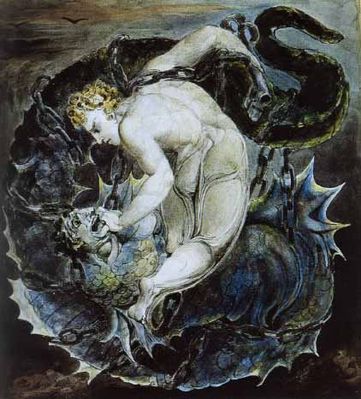 One of the key components of the composition of the problem of evil (at least its logical variety)* is the notion that good will eliminate evil. The late J.L. Mackie put it this way:
A wholly good omnipotent being would eliminate evil completely; if there really are evils, then there cannot be any such being. (Mackie, 150, cited below)
Simply put, this statement and any like it seem fairly obviously false if made without any rather major qualifications. After all, it seems clear that the total elimination of evil is not actually a logically necessary end for a good being, even an all-good, all-powerful being.
C. Stephen Evans presented a case to show that Mackie’s statement (and those like it) are simply mistaken. He noted that the principle that good must eliminate evil seems to be blatantly false without a number of qualifications. He argued that there are some evils which good beings will allow in order to bring about a greater good. The analogy he used was that of parents not allowing their children to ride in automobiles. After all, this would ensure that they would never be involved in the evil of a car crash, but surely it would also prevent greater goods of interaction with friends, learning to drive and the responsibility that comes with, and more (127). However, Evans was quick to note that a deity is by no means directly analogous to a human parent. The resources God would have to prevent evil are infinitely greater than that of a human parent.
In the case of God, however, God cannot bring about the logically impossible. Rather than going for a full-on theodicy (an account of why evils exist), Evans argued that certain goods are impossible to achieve without some evil. Thus, courage necessitates some kind of suffering (128). He did not argue that this notion alone provides a comprehensive theodicy; but for our purposes it is enough. It seems clear that the notion that good must eliminate evil is not only unsupported by argument (it is an a priori assumption), but also patently false. That is, we have evidence that at least some evil must be allowed in order for some good to be brought about.
I want to be clear about my thesis in this post: I am not claiming to have a comprehensive explanation for all evil everywhere. My claim is rather that good does not, by necessity, eliminate evil. That’s all. I believe that I have established this thesis. If so, then Mackie’s argument (and those like it) fail.
*The logical problem of evil is basically an argument that there is a contradiction in theistic belief related to God’s power and goodness and the existence of evil.
Links
Be sure to check out the page for this site on Facebook and Twitter for discussion of posts, links to other pages of interest, random talk about theology/philosophy/apologetics/movies and more!
Sources
C. Stephen Evans, Faith Beyond Reason: A Kierkegaardian Account (Reason & Religion)
J.L. Mackie, The Miracle of Theism (New York: Oxford, 1982).
SDG.
——
The preceding post is the property of J.W. Wartick (apart from quotations, which are the property of their respective owners, and works of art as credited; images are often freely available to the public and J.W. Wartick makes no claims of owning rights to the images unless he makes that explicit) and should not be reproduced in part or in whole without the expressed consent of the author. All content on this site is the property of J.W. Wartick and is made available for individual and personal usage. If you cite from these documents, whether for personal or professional purposes, please give appropriate citation with both the name of the author (J.W. Wartick) and a link to the original URL. If you’d like to repost a post, you may do so, provided you show less than half of the original post on your own site and link to the original post for the rest. You must also appropriately cite the post as noted above. This blog is protected by Creative Commons licensing. By viewing any part of this site, you are agreeing to this usage policy.
“The Knower and the Known” by Stephen Parrish, Part 2
 Stephen Parrish’s The Knower and the Known
Thought and Consciousness
What does it mean to have a thought? Parrish notes several aspects which go into the very act of knowing. There must be an object of knowledge; there must be a subject to consider the object; there must be consciousness in order to apprehend concepts and aboutness; there must be a relationship between subject and object and consciousness; there must be understanding of that relationship; and finally there must be a view of the world in which all of this can occur.
Consciousness itself is an extremely complex notion which involves phenomenality: the actual experience of thought; intentionality: the turning of one’s thoughts to consider an object; subjectivity: an agent which is itself the subject of the thought; and rationality: the capacity to order thoughts in such a way as to make sense of them. (206-213).
Consciousness has certain phenomenal properties. That is, when we consider our own thoughts, there is a distinct feeling to them which allows us to differentiate them from simple sense perceptions. There is an aspect of inentionality or attending-to our thoughts which is itself irreducible. Moreover, we are able to comprehend things which are themselves non-physical, such as the nature of a logical argument like modus ponens (226-228).
Consciousness must somehow interact with the physical world. If one is a physicalist, it becomes a matter of reducing consciousness to purely physical explanations, eliminating consciousness, or offering a brute relationship between consciousness and the physical world.
Qualia are also extremely important when considering consciousness. How is it that we are able to see objects as objects with certain properties? What process allows for individual particles/rays of light to manifest themselves in phenomenal consciousness in such a way as to provide a coherent picture of an object? Moreover, “there is more to recognizing qualia than just having color in one’s sensory field; there is also our attention to said qualia, the judgments we make about them, the objects that they represent, and also our memory of them–and these factors can make all of the difference” (257).
Subjectivity is also extremely important to forming a theory of consciousness. It seems that subjects are, in fact, irreducible. For the physicalist, the concept of a subject is extremely difficult. After all, a subject at t1 is going to be different from that subject at t2 in a number of highly relevant physical ways. Their neurons are firing differently from t1 to t2. How is it that subjectivity is maintained. The substance dualist holds that subjectivity is maintained through unity of consciousness which may not be reduced to the physical (291). The unity is preserved through intentionality but more thoroughly through rationality. The use of reason is one of the primary ways to offer continuity of the self. For the subject, S, at t3 is considering both thoughts at t1 and t2 in order to come to a conclusion at t4. Reason itself has aspects of intentionality which cannot be accounted for on a physicalist view of reality, for a physical object is capable of performing mathematical computations but not understanding the aboutness inherent in those computations (266-267).
Our Minds in the World
Parrish grounds his understanding of consciousness in a theistic worldview. There are numerous difficulties with an account of substance dualism which seem to only be soluble on a theistic interpretation. One of these is the problem of the interaction between body and mind. If God exists, then it seems inherently possible that a deity would be capable of forming the world in such a way that mind could interact with body. Parrish addresses several objections to the notion that an immaterial being could interact with a physical universe while also making an argument for non-physical selfs apart from God interacting in the universe (324ff).
The match of our minds with the world is something which must be accounted for. Parrish notes that if we ground ideal objects in an immaterial being like God, the difficulties with such objects existence and subsistence may be solved. Moreover, the glorious match of our mental life with reality is also explained, for a rational being is the source of all which we observe. If that is the case, then we no longer must appeal to simple brute fact to attempt to explain the phenomena of consciousness; instead, we may note that it is exactly as one might expect given theism (337ff).
And Then There was More…
Parrish concludes the work with a brief comparison of physicalism and substance dualism across multiple questions related to consciousness and the physical world. Finally, there are two appendices which address free will/agency and the theory of panpsychism, respectively.
Conclusion
In Part 1 of this review I outlined Parrish’s discussion of physicalism. Here, we have seen the structure of his substance dualism. It seems to me that Parrish’s deconstruction of physicalism is quite powerful. In particular, I noted that he makes a strong argument that physicalist theories ultimately boil down into either epiphenomenalism or mysterianism, neither of which is plausible. Moreover, his use of numerous examples and thought experiments throughout makes the work easier to comprehend while also providing a solid basis for grounding further discussions in philosophy of mind. Finally, the vast amount of research and documentation Parrish provides makes the work invaluable as a reference for physicalist writings alongside its clear value as a thorough critique of those same works.
The second major section, in which Parrish outlines his view of a theistic dualist ontology, is equally important. He provides a large amount of background for understanding how to put together various aspects of consciousness while also noting that, on theism, these observed phenomena cohere within an ontology, while on physicalism they are generally either discredited or ignored. The one thing the work may lack is a bit of cohesion in the section on substance dualism. Parrish has given a broad vision for how to hold a dualist ontology, but sometimes leaves it up to the reader to put the pieces together. The pieces are there, but not always assembled. I should note, however, that even here Parrish has provided an invaluable resource for those who wish to argue for a dualist vision of philosophy of mind.
I have already noted that Parrish’s The Knower and the Known is a tour de force in the realm of analyzing physicalist theories. However, the work is much more than a simple refutation of physicalism. Alongside that critique, Parrish has laid out the groundwork for substance dualism as a cogent alternative. Simply put, it is a must read for anyone with any interest in philosophy of mind. Comprehensive in scope, exhaustively documented, and interesting to read, The Knower and the Known is a must-have.
Source
Stephen Parrish, The Knower and the Known
SDG.
——
The preceding post is the property of J.W. Wartick (apart from citations, which are the property of their respective owners, and works of art as credited) and should not be reproduced in part or in whole without the expressed consent of the author. All content on this site is the property of J.W. Wartick and is made available for individual and personal usage. If you cite from these documents, whether for personal or professional purposes, please give appropriate citation with both the name of the author (J.W. Wartick) and a link to the original URL. If you’d like to repost a post, you may do so, provided you show less than half of the original post on your own site and link to the original post for the rest. You must also appropriately cite the post as noted above. This blog is protected by Creative Commons licensing. By viewing any part of this site, you are agreeing to this usage policy.
Debate Review: Fazale Rana vs. Michael Ruse on “The Origin of Life: Evolution vs. Design”
 Fazale Rana recently debated Michael Ruse on the topic of the origin of life. Essentially, the question of the debate was whether the origin of life is best explained by naturalism or design. Here, I will provide brief comments on the debate.
Please note I make no claims to being a scientist and I am fully aware that I evaluate this debate as a lay person.
Michael Ruse Opening
Michael Ruse was careful to note that he is not keen on saying design is not possible. Rather, his claim is that naturalism is the most plausible explanation for the origins of life.
Ruse’s argued that design is implausible. Specifically, he noted that if design is the hypothesis put forward, there are any number of ways that one might consider that hypothesis. Is the designer a natural being within the universe or a supernatural being like God? Is there only one designer, or was there a group of designers (and he notes that a group of designers seems more plausible because automobiles require many designers to bring them about)? Finally, he raised the issue of bad design choices. He asked why, if there were a “hands-on” designer, would that designer not grant immunity to HIV and the like.
Ruse also argued that one can fall into the fallacy of selective attention- if one focuses upon only one example in isolation, then one might come to a conclusion that certain laws/theories may not be correct. But placing these same problems in context shows that they can be explained against “the background of our knowledge.”
Finally, Ruse ended with a number of examples for how problems which were seemingly insoluble were explained by naturalistic means. He also argued that one of the popular arguments for design, the flagellum, has so many different varieties (and is sometimes found to be a vestigial organ), and so cannot be shown to be designed.
Fazale Rana Opening
The problems which must be accounted for within an origins of life model are numerous. One must account for self-replication, the emergence of metabolism, the formation of protocells, the synthesis of prebiotic materials, the formation of life’s building blocks, and more.
Rana then turned to some primary models used by researchers to explain origin of life (hereafter OOL). First, there was the replicator-first model, which was problematic because in order for a molecule to be a self-replicator, it must be a homopolymer. But the complexity of the chemical environment on early earth rendered the generation of a homopolymer on the early earth essentially impossible. Next, the metabolism-first model runs into problem due to the chemical networks which have to be in place for metabolism. But the mineral surfaces proposed for the catalytic systems for these proto-metabolic systems cannot serve as such; Leslie Orgel held that this would have to be a “near miracle” and Rana argues that it is virtually impossible. Finally, the membrane-first model requires different steps with exacting conditions such that the model is self-defeating.
Rana argued positively that OOL requires an intelligent agent in order to occur. The reason is because the only way that any of these models can be generated is through the work on OOL in a lab. Thus, they can only be shown to be proof-of-principle and the chemistry breaks down when applied to the early earth. The fact that information is found in the cell is another evidence Rana presented for design. The systems found in enzymes with DNA function as, effectively, Turing machines. Moreover, the way that DNA finds and eliminates mistakes is machine-like as well. The fact that the needed component for success in lab experiments was intelligence hinted, according to Rana, at positive evidence for design.
Finally, Rana argued that due to the “fundamental intractable problems” with naturalistic models for the OOL and the fact that the conditions needed for the OOL and the processes required to bring it about have only been demonstrated as in-principle possible with intelligent agents manipulating the process.
First Cross Examination
At this point, Ruse and Rana engaged in a dialogue. Ruse first challenged Rana to show how the OOL model based on design could actually be based upon Genesis, as he quoted from Rana’s book (written with Hugh Ross), Origins of Life. He pointed out a few difficulties with using the Genesis account in this manner. Rana answered by putting forth his view of the Genesis account as an account of the origins of life on earth–a view which sees the Genesis account as corresponding with the scientific account (concordism). Yet the Genesis account is itself written from the perspective of a hypothetical observer found on the face of the earth rather than a perspective above the earth.
Rana asked Ruse for his thoughts on how much impact philosophy has on the debate over the OOL. He noted that it may be a presupposition of naturalism which lends itself to interpreting the OOL. Ruse answered by saying it is a good point and that philosophy cannot be denied a role in the discussion. But the question is not simply one of “gut commitments” and that one has to also take into account the scientific evidence and a “pragmatic reason” for holding to naturalism: naturalism works. It continually explains problems, even if it takes time.
Ruse Rebuttal
The difficulty with the OOL debate is that it is too easy to take things out of context in order to show how many problems there are with a model. He argued that it is “peculiar” to take the results of a group of researchers and yet somehow go “flatly” against the “overall interpretation that each and every one of these people” would have taken from the research.
Despite all the difficulties, Ruse argued, researchers are starting, slowly, to get some view of how to explain the OOL. He pointed to some successes within the OOL sciences to show how eventually we may discover a naturalistic explanation.
Rana Rebuttal
Rana began with the notion of a creation model. He argued that models are not always drawn from the data, but rather models and theories are constructed from a number of different points.
Regarding the science itself, Rana noted that there is no established source of prebiotic materials on the early earth. The popular theories for how these materials might be generated fail for a number of reasons.
The argument, Rana said, is not a god-of-the-gaps argument. Instead, it is an observation of the breadth of scientific evidence which shows that in-principle experiments have been successful, but when applied to the scenarios for the early earth, the only way for success to be achieved is through intelligent agency (scientists in a lab manipulating the conditions).
 Second Cross Examination
Rana asked Ruse to respond to the notion that OOL research is similar to literary criticism in that all the different theories continue to be debated but none have come into dominance or can be established over the others. Ruse responded by noting that OOL research does have some “just so” stories but that science has taken seriously the criticisms and come towards the possibility of answering some of the questions.
Ruse asked why God would not intervene for things like cancer. Rana answered by noting that in the broad scope of a model with intelligent agency, poor design is no problem. But because Rana believes it is the God of the Bible, he says it may be a legitimate criticism of the design position. However, things which appear to be bad designs can turn out later to have some reason for the way they are used. Moreover, once a creator has put in place designs, they are subjected to the laws of nature and so they could become decayed or break down.
Ruse Closing Argument
Ruse argued that when one takes a “Biblical position” one is “not doing science any more.” If one wants to assert that the science points to miracles, then Ruse said he would argue that the nature of our experience is not “blank” in relation to the OOL, but rather that the previous successes of naturalism means we should fall back upon naturalism regarding the OOL because it has worked in so many other areas. Thus, the problem with the OOL is not with the problems themselves but rather with our own ability to solve the problems.
Rana Closing Argument
The OOL and complexity of the cell require an intelligent agency in order to account for the OOL on earth, Rana maintaned. The problems with naturalistic accounts appear to be intractable, and the role of intelligent agency in lab work cannot be ignored because that same agency is what leads to the allegedly naturalistic successes. The information found in biological systems also give evidence for design.
Finally, methodological naturalism turns science into a game to be played in which the goal is always to find a naturalistic explanation, even if none is forthcoming. Instead, science should be, in practice, open to the possibility of agency within the natural world. Ruse’s argument is essentially an appeal to the future in which the notion is just that one day the answers will come forth.
Analysis
First, I would note how pleased I was with the nature of this dialogue. Unlike some other debates, Ruse and Rana were largely cordial and even amiable towards each other. It is clear that they each had respect for the other’s work and arguments.
The debate itself was very interesting. Fazale Rana continually went back to the science and pointed out the difficulties which remained, while Ruse seemed to continually appeal to the overall success of the naturalistic paradigm. Regarding Ruse’s position, I think it was perhaps disingenuous to conflate naturalism with science, particularly considering that very point was largely at the center of the debate. Is it indeed the case that we must be methodological naturalists? It seems that even Ruse agreed that our answer to this question will largely shape one’s interpretation of the problems and reactions to the problems brought up.
Regarding the science itself: Ruse brought up several successes which scientific research has yielded, but it seemed clear that none of these offered evidence which countered Rana’s arguments of the intractable problems for the OOL. Rana did an excellent job showing how the models which are in vogue right now for the OOL all fail on a number of levels to account naturalistically for the OOL.
Moreover, the fact that current research does rotate around the actions of intelligent agents. Given that such intelligent agents are necessary to bring about even the in-principle results for the OOL, it seems that Rana’s argument that this hints at an intelligent agent in the overall OOL schema was largely successful. It seems to me to count as positive evidence for design.
Overall, I have to say this was a great debate. I think one’s conclusions regarding the outcome of the debate largely will come down to a matter of worldview.
Links
Be sure to check out my extensive writings on the origins debate within Christianity.
The debate can be found here. It is worth a watch/listen due to the complexity of the issues involved. Or you could just watch it here:
Be sure to check out the Reasons to Believe web site, which is the organization Fazale Rana is part of.
SDG.
——
The preceding post is the property of J.W. Wartick (apart from citations, which are the property of their respective owners, and works of art as credited) and should not be reproduced in part or in whole without the expressed consent of the author. All content on this site is the property of J.W. Wartick and is made available for individual and personal usage. If you cite from these documents, whether for personal or professional purposes, please give appropriate citation with both the name of the author (J.W. Wartick) and a link to the original URL. If you’d like to repost a post, you may do so, provided you show less than half of the original post on your own site and link to the original post for the rest. You must also appropriately cite the post as noted above. This blog is protected by Creative Commons licensing. By viewing any part of this site, you are agreeing to this usage policy.
Analogical Language, Doctrine of God, and the World
In God’s world, everything is, after all, comparable to everything else. Granted, we tend to wince a bit when something we love or admire is compared to what we consider an unworthy object… Everything is related to everything else. There is nothing that ‘has nothing to do with’ anything else… To criticize a metaphor as such is to engage in criticism at the word-level, rather than the sentence-level, which is an illegitimate practice. (John Frame, The Doctrine of the Knowledge of God, cited below, 231-232)

One of the most interesting discussions in theology is the use of language about God and the world. Much ink has been spilled in writing about this topic, because it is of critical importance. If human language is incapable of meaning anything in relation to God, then we can say literally nothing about God. There is also much discussion over the relation of different things in creation to other things. Are there bits of creation which are absolutely unique?
Creation
It does not seem to be the case that any part of the created world is sui generis in the sense that it is absolutely unique from anything else in creation. Consider anything you like which exists. It is easy to draw parallels. A flower and an automobile are both made of matter; a lake and a grove each contain water. The analogies may take a while to think up, but they are there.
God and Analogy
Conversely, we find great difficulty when we try to relate creation back to God. We think of analogies for the Trinity and discover they all fall into one variety of Trinitarian heresy or another. The problem is because although creation gives us evidence for a creator, creation is not the creator. Using analogies to try to compare the deepest mysteries of God to the natural world is theologically dangerous. However, using analogies to discuss God is not always impossible. Indeed, the Bible is filled with analogies regarding God: God is like a rock, a mother hen, a fortress, and the like. Thus, it is possible in principle to compare the created world with the creator. The problems come when we try to turn the relations of the Godhead into relations of the natural order. So it is necessary to remember that though we can speak analogically of God, we should be careful in choosing what we are speaking of. To speak analogically of the Trinity to things such as the states of water invites heretical understandings of the Trinity.
Another difficulty is when we read human relationships back onto the Trinity as well. One error which has unfortunately become quite common is to look at the terms “Father” and “Son” and assume that these names for the divine persons must mean that the relationship between these persons in the Godhead entails eternal subordination. Such thinking is extremely anthropomorphic. It reads human relationships back onto God. Again, creation is not the creator. Human relationships should not be our model for the doctrine of God. One should never govern the doctrine of God by human analogy, and to eternally subordinate one of the persons of the Trinity introduces hierarchy into the Godhead and invites multiple theological mistakes.
Doctrine of God, therefore, should always be the guide. Analogies should flow from God to creation rather than from creation to God. Thus, we should say “God is like x”; not “x is like God.” Semantically, these two sentences are fairly equivalent. My point is that prioritizing God in such language helps us to focus on the necessity of prioritizing God’s reality over our own. When we speak analogously of God, we must remember that we are not saying God is like creation in that an aspect of creation is Godlike or somehow an exact replica of an attribute of God. Instead, when we speak analogously of God, we must speak from God to us.
Talk About God
God is the being which is absolutely unique. There is no one like God (2 Samuel 7:22; 1 Chronicles 17:20; Jeremiah 10:7). But does this mean that we are incapable of talking about God? Indeed, some theologians have favored the notion that we can only speak analogically of God. For example, when we say God is loving, what is meant by that phrase is not that God is loving in the sense that we are loving, but rather that God is something like loving is for us. However, this notion seems to me to be just as mistaken as attempting to describe Trinitarian mysteries in naturalistic forms. For if God cannot be known other than analogically, then we have no true knowledge of God. The claims of those who argue we can only speak analogically of God leads to a state of affairs in which we know nothing of God. After all, when I make the claim that “God loves us” my claim, on this view, is reducible to: “God loves us, but this love is qualified in some unknown [and unknowable!] sense.” For if we were able to know what it means to say “God loves us” that is itself univocal and not analogical. Thus, those who claim that we can only speak analogically of God eliminate the possibility of knowing anything at all about God.
Think on this for a moment with me. Suppose the claim is correct. We can only know God analogically. Thus, God is “like” something loving, but not actually something loving in the sense we mean when we say loving. If we say that God is Just, we cannot mean it in any sense which we know to be true univocally. The difficulty rating only increases when we consider those properties exclusive to God. We claim that God is omnipotent–all powerful. But on the view that we can only speak analogically or metaphorically of God, God is all-powerful, but only “like” having power in the sense that we conceive of when we think of power. God doesn’t actually have the capacity to do anything which is logically possible, for that is merely conceiving of power within the realms of human language; no, God, on this view, has omnipotence*, which is omnipotence + something that we cannot know. Thus, such an assertion undermines all knowledge of God.
Therefore, we must admit that talk about God has some sense of univocity to it. When the Bible teaches that God is just, that concept of justice is univocal in some sense with our own. We can understand some truths about God.
Once we have established this point, it is again extremely important to realize that the flow of such truths is from God to us and not vice-versa. God’s justice is the perfect form of what we understand to be just. God’s love is perfect love, which our human love can only imitate. Yet in that imitation, we have some understanding of what it is like to be loving. Thus, we can know God without knowing everything about God.
To Sum Up
Religious language is one of the areas of philosophical theology which is often just assumed. I think it is to our own discredit that we avoid such discussions. I have shown how misunderstandings of religious language can lead to theological errors which can be fairly easily avoided. The way we can avoid such errors, I have charged, is to remember that language about God should always flow from God to us. God is perfect, and our language about God should never be used to limit that perfection. Thus, we cannot limit God to human relationships or human understandings of deity. On the other hand, we should not be so pessimistic of our possibility of knowing God that we undermine any possibility of speaking truthfully of our Lord.
Links
Like this page on Facebook: J.W. Wartick – “Always Have a Reason”
Source
John Frame, The Doctrine of the Knowledge of God
SDG.
——
The preceding post is the property of J.W. Wartick (apart from citations, which are the property of their respective owners, and works of art as credited) and should not be reproduced in part or in whole without the expressed consent of the author. All content on this site is the property of J.W. Wartick and is made available for individual and personal usage. If you cite from these documents, whether for personal or professional purposes, please give appropriate citation with both the name of the author (J.W. Wartick) and a link to the original URL. If you’d like to repost a post, you may do so, provided you show less than half of the original post on your own site and link to the original post for the rest. You must also appropriately cite the post as noted above. This blog is protected by Creative Commons licensing. By viewing any part of this site, you are agreeing to this usage policy.
Review of “Love Wins” by Rob Bell: Chapter 4
 I have been reviewing Rob Bell’s book, Love Wins, with a particular interest in his theological views and how he argues for those views. I have not read the book before, so each review is fresh: I am writing these having just completed the chapter the post is on. This week, I look at Chapter 4: “Does God Get what God Wants?”
Chapter 4
Outline
Bell starts the chapter by surveying a number of statements from church’s web sites regarding hell. These statements range from the unsaved being separated from God forever to eternal conscious torment. He seems to be pointing readers towards a kind of discontinuity between these statements and the statements about God’s power and love:
I point out these parallel claims: that God is mighty, powerful, and “in control” and that millions of people will spend forever apart from this God… even though it’s written in the Bible that “God wants all people to be saved and to come to a knowledge of the truth” [1 Timothy 2:4- seems to be NIV]
…How great is God? Great enough to achieve what God sets out to do… but in this, the fate of billions of people, not totally great. Sort of great. A little great. (97-98)
Bell asks a poignant question: “Will all people be saved, or will God not get what God wants?” (98). He then goes through a number of verses focused around God’s love. He notes the parables in Luke 15 about people pursuing their desires and concludes, “The God that Jesus teaches us about doesn’t give up until everything that was lost is found. This God simply doesn’t give up. Ever” (101).
Bell turns to the reason that many people think God may fail in his desire to save everyone. From the perspective of those who advocate the views he outlined at the beginning of the chapter, “love, by its very nature, is freedom… God has to respect our freedom to choose to the very end” (103). However, Bell argues that “We aren’t fixed, static beings–we change and morph as life unfolds.”
Tied into this notion of the unfixed nature of our lives, he seems to hold that it is possible that people can choose to come to Christ after they die. He asks, “why limit that chance [the chance to come to Christ] to a one-off immediately after death? And so they expand the possibilities… [The chance is given for] as long as it takes, in other words” (106-107).
Bell then traces this notion through Clement of Alexandria, Origen, Gregory of Nyssa, and Eusebius. He goes so far as to cite Augustine saying “‘very many’ believed in the ultimate reconciliation of all people to God” (108).
He argues that “central to their trust that all would be reconciled was the belief that untold masses of people suffering forever doesn’t bring God glory” (ibid). Moreover, he argues that “At the center of the Christian tradition since the first church have been a number who insist that history is not tragic, hell is not forever…” (109). He notes that “serious, orthodox followers of Jesus have answered these questions [about hell and salvation] in a number of ways” (ibid).
Next, Bell turns to an analysis of the book of Revelation. he notes that the book ends with notion that the gates of the city “never shut” and infers that “gates are for keeping people in and keeping people out. If the gates are never shut, then people are free to come and go” (114-115).
Bell ends the chapter with what seems like a poetic inference. He goes into prose and concludes that: “[Love] always leaves room for the other to decide. God says yes, we can have what we want, because love wins” (119).
Analysis
There is much to discuss in this chapter. First, it is important to note that Bell has done much to cause reflection upon the subject of hell. It is something that we as a group of believers need to be thinking on. Too often, the subject is cast aside. Bell has done admirably in bringing the topic to the table.
Moreover, Bell is correct to note that confusion can be caused by simply throwing statements on hell “out there” in a void. It is important to contextualize statements about heaven and hell and make clear what is meant by the phrases that are used in the discussion.
Bell seemingly just assumes that there will be more chances to “accept Christ” in the afterlife. His discussion of the possibility of people changing after death implies this perspective, but he has done nothing to establish it. Perhaps he will do so in a later chapter, at which point we will evaluate his argument for that perspective. Indeed, thus far his argument seems to be a kind of straw man: he asserts the notion that people are changeable beings even in the afterlife as a counterpoint to those who hold that people will continue to choose evil in the hereafter as though this choice is the reason people hold to the eternal hell view. Yet this is not the case; many who hold this position do argue that people will continue to choose evil, but the reason that people are condemned to hell is because they rejected the God, whose existence and power are obvious (Romans 1) in their lives. No one has an excuse (Romans 1:20).
Bell’s utilization of church fathers is problematic. I can’t help but think there is a subtle twisting of some of their views to fit his position. In particular, he cites Augustine as “acknowledging” that “very many” believed in “ultimate reconciliation of all people” (107-108). Yet Augustine himself categorically denies and denounces this position. In fact, almost the entirety of Book XXI of The City of God
I hate to beat a dead horse here, but let’s look what Augustine says (The City of God
Origen was even more indulgent; for he believed that even the devil himself and his angels, after suffering those more severe and prolonged pains which their sins deserved, should be delivered from their torments, and associated with the holy angels. But the Church, not without reason, condemned him for this and other errors…
So we see that Augustine, far from being anywhere near Origen’s view on the topic, endorses the Church’s condemnation of Origen as a heretic in this regard. Yet where does Bell reveal this? Where does Bell interact with historical theology? No, he seems perfectly content to throw out a bunch of names out of context together and let readers make their own assumptions. I realize this is a popular level book, but I can’t help but be very worried about Bell’s style here. It is very misleading. Maybe he does note later in the book that Origen was condemned as a heretic for this view, and that Augustine endorses this condemnation, but considering Bell seemingly endorses Origen’s view, I very much doubt that he will reveal that it was condemned by the Church.
More damning is the fact that Bell is able to, seemingly seriously, say that “At the center of the Christian tradition since the first church have been a number who insist that history is not tragic, hell is not forever…” (109). I admit that I agree in one sense–there have been many universalists throughout church history. However, that view was condemned as heretical. Augustine upholds that condemnation in The City of God
Here again we see one of Bell’s biggest methodological problems: he simply introduces a notion, argues that there are diverse views, and then assumes that they are all equally legitimate. but this is simply mistaken. Multiplication of viewpoints does not mean they are equally valid. Furthermore, Bell’s lack of interaction with historical theology on this point, when he himself is the one who introduces several of the church fathers, is questionable at best. Moreover, he says these teachers were “orthodox” when in fact Origen specifically was far from orthodox in his beliefs, as even a cursory study of Origen would reveal. Origen lived at a time before certain views were made explicit, yes, so he in a sense gets a pass in that his theology was intentionally exploratory. However, many of his views were later condemned, including the one Bell endorses. For Bell to turn around and use Origen to support his diversity of orthodox views on the topic is seemingly dishonest.
Moreover, one must wonder about Bell’s analysis of the meaning of the gates of heaven as open. Instead of looking at this passage in context, in which the notion of a city with open gates would imply a city unthreatened by outsiders because all enemies were defeated (which fits much better into the book of Revelation), Bell states explicitly “If gates are never shut, then people are free to come and go” (115). Think on this for a moment. What Bell has stated here undermines the notion of security of salvation. Now I do not hold to the doctrine of eternal security; however, I do affirm that once people are saved and in the New Creation in heaven, they are not about to change their status. They aren’t “going” anywhere. Bell’s view here undermines the assurance of salvation. His view of “love winning” also serves to illustrate this point, for if there is “always room for the other to decide” we must ask: is there always room to choose hell? Can “love win” by letting us walk away from the eternal salvation we are promised in Christ?*
Conclusion
I admit I have been highly critical in this chapter. I have tried throughout so far to find positive things to say about Bell’s work, and as I noted, Bell does well in this chapter to center discussion around the hard questions.
However, there are numerous problems with Bell’s work in this chapter. His use of the church fathers is highly problematic. I won’t rehearse the arguments again (see above). Oddly, his view also seems to imply that we have absolute autonomy and the ability to simply walk out of heaven whenever we wish. That in itself is another great difficulty, for it undermines the assurance of salvation we have in Christ: “I give them eternal life, and they shall never perish; no one will snatch them out of my hand” (John 10:28).
Bell continues to use the method of argumentation in which he simply notes diverse views on a topic and concludes that all are somehow equally at the table or equally valid.
Next week, we will look at Chapter 5: Dying to Live.
*My thanks to my wife for this point.
Links
The book: Rob Bell, Love Wins
Review of “Love Wins” by Rob Bell: Preface and Chapter 1– I discuss the preface and chapter 1 of Love Wins.
Review of “Love Wins” by Rob Bell: Chapter 2– I review chapter 2.
Review of “Love Wins” by Rob Bell: Chapter 3– I look at Chapter 3: Hell.
Review of “Love Wins” by Rob Bell: Chapter 5– I analyze chapter 5.
Love Wins Critique– I found this to be a very informative series critiquing the book. For all the posts in the series, check out this post.
Should we condemn Rob Bell?– a pretty excellent response to Bell’s book and whether we should condemn different doctrines. Also check out his video on “Is Love Wins Biblical?“
Source
Rob Bell, Love Wins
SDG.
——
The preceding post is the property of J.W. Wartick (apart from citations, which are the property of their respective owners, and works of art as credited) and should not be reproduced in part or in whole without the expressed consent of the author. All content on this site is the property of J.W. Wartick and is made available for individual and personal usage. If you cite from these documents, whether for personal or professional purposes, please give appropriate citation with both the name of the author (J.W. Wartick) and a link to the original URL. If you’d like to repost a post, you may do so, provided you show less than half of the original post on your own site and link to the original post for the rest. You must also appropriately cite the post as noted above. This blog is protected by Creative Commons licensing. By viewing any part of this site, you are agreeing to this usage policy.
Aliens that believe in God: The theological speculations of Robert Sawyer’s “Calculating God”
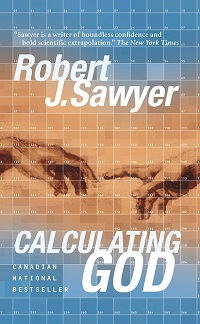 The interplay between worldviews and science fiction is very strong. In any writing, an author’s viewpoint will show through, but I think that it is particularly true in sci-fi. For in science fiction, the author is most frequently presenting a view of the world as it should be or as it should not be. The speculative future can be used as a foil through which the reader views reality in a new way. Often, science fiction will touch upon theological issues.
Robert Sawyer’s Calculating God
Fine Tuning
The most immediately striking and pervasive theme of Calculating God is that aliens show up on earth, and they believe in God. In fact, they take the existence of God to be a scientific certainty. The main character of the book, a paleontologist named Tom Jericho, is very skeptical throughout. Here’s the kicker, though, the aliens have been convinced of the existence of God through the evidence–specifically, the fine-tuning argument. Said argument is presented throughout the course of the book in interactions between Tom and Hollus, an alien paleontologist.
What is surprising is how much depth the book goes into while exploring the argument. Yes, Sawyer does fudge the argument a bit by allowing the aliens the possibility of a grand unified theory of science as well as a few other fictionalized aspects of the argument, but overall the fine-tuning argument he presents is very similar to the modern fine-tuning argument.
Not only that, but the characters Sawyer created go to great lengths to explore objections to and defenses of the fine tuning argument. For example, there is a discussion on p. 144ff (mass market paperback edition) in which Hollus and Tom discuss some objections to fine tuning. Tom is arguing against the probability of God:
“All the actions you ascribe to God could have been the doing of advanced aliens” [said Tom].
“There are… problems with your argument,” said Hollus, politely. “[E]ven if you dispense with the need for a god in recent events–events of the last few billion years; events after other conscious observers had emerged in this universe–you have done nothing to dispense with the relative strengths of the five fundamental forces [its science fiction, so there is an extra force], who designed the thermal and other properties of water, and so on. And therefore what you are doing is contrary to the razor of Occam you spoke of: you are increasing, not reducing the number of entities that have influenced your existence…”
The book is replete with debates like this, and the inevitable conclusion is that, shock of all shocks, God exists. I don’t say that sarcastically, I mean that I was genuinely surprised that the book affirmed God exists. But what kind of God?
God Exists… but?
It should be clear that in Calculating God, God is nowhere near the God of classical theism. In fact, one could almost argue that what Sawyer has offered here is a materialistic supplanting of God. The “god” of this work is essentially a super-powerful alien which is capable of swallowing the enormous energy output of a supernova, while also capable of designing our biology and fixing the constants of the universe during the early stages of the Big Bang.
God’s action is described purely in non-transcendent language. For example, the aliens confirm that god caused ice ages and mass extinctions on all the planets with intelligent life. The way this was accomplished was a matter of some speculation–perhaps God generated a dust cloud by using particles from across the galaxy to shield the planets from light and lower the temperature, or perhaps God redirected an asteroid or two to send them hurtling at the planets with life that needed a ‘jump start’ of evolution (146ff).
So why think that this is an image of god supplanting the classical theistic God? Well, clearly many who use the teleological argument are intending for it to point towards a creator God. What Sawyer has offered is a more naturalistic explanations of these events. Yes, there is a ‘god’ in the sense of a being capable of tampering with the very fabric of our universe, but that ‘god’ is itself trapped within the spatio-temporal boundaries of the known universe. In fact, god is said to subsist by recreating itself via a kind of reproductive method and passing one generation through a Big Crunch (think of a bouncing universe model).
Now what?
Calculating God offers a unique look at theology from a science fiction perspective. The fine tuning argument is presented in full force–even enhanced by some fudging of the science–and it leads to the inevitable conclusion that god exists. Yet this ‘god’ is not at all amenable to the god of Christianity or classical theism. So what should we do with this book?
Well, it is important to note that it is a work of fiction. The author clearly adds in some extra ‘fluff’ to make the fine tuning argument more powerful than it is (and I think it is quite powerful as it stands). And really Sawyer’s shoehorning in of a materialistic entity that is able to fiddle with physics boils down to hand-waving. Again, it is fiction, but it is important to note that Sawyer’s attempt to supplant the God of classical theism simply doesn’t work. Think of it this way: how would a purely physical being, however powerful, manage to transcend the physical universe in such a way as to literally rewrite the laws of physics? Extremely interesting science fiction? Yes. Compelling argument? No.
So where are we left? Sawyer does present the fine tuning argument in a way that is quite compelling, even when one strips away all the layers of fiction over it. It seems to me that, at a minimum, readers are left with a rock in their shoe: how do we explain away all this fine tuning without going beyond the cosmos? Sawyer’s own proffered answer, while entertaining fiction, remains that: fiction.
Other Issues
I have not yet even begun to delve into the depths of Sawyer’s Calculating God. The book covers an extremely broad array of topics related to science and faith as well as the secular-religious [false] dichotomy. For example, he discusses abortion in a few places, and I think the view the characters favor is very inconsistent. There is also some clear portrayal of the religious “other” as only a fundamentalist who seeks to halt scientific advancements. Yes, Sawyer panders to Christians in a few places, but the overall look at religious persons seems to be fairly negative (apart from Tom’s wife). I wish I could do justice to each of these topics, so I think I may follow this post up with another touching on more. For now…
Conclusion
Ultimately, Sawyer’s work is a simply phenomenal read. The amount of scientific, ethical, and religious issues upon which it touches is stunning, and readers will be forced to deal with the argument. Sawyer has done an excellent job using fiction for what I think it is called to do: inspire, entice, and force thought. Readers will be uncomfortable. The work will challenge people to really think about the arguments, and to think about the offered solutions.
Links
I have discussed the use of science fiction in showing how religious persons act. Check out Religious Dialogue: A case study in science fiction with Bova and Weber.
What would it mean if we discovered life? I have reflected on the possibility: Alien Life: Theological reflections on life on other planets.
Our Spooky Universe– I make the case for the intelligent design argument for the existence of God, which is heavily used throughout Calculating God.
Check out my other looks at popular level books. (Scroll down to see more!)
Source
Robert Sawyer, Calculating God
SDG.
——
The preceding post is the property of J.W. Wartick (apart from citations, which are the property of their respective owners, and works of art as credited) and should not be reproduced in part or in whole without the expressed consent of the author. All content on this site is the property of J.W. Wartick and is made available for individual and personal usage. If you cite from these documents, whether for personal or professional purposes, please give appropriate citation with both the name of the author (J.W. Wartick) and a link to the original URL. If you’d like to repost a post, you may do so, provided you show less than half of the original post on your own site and link to the original post for the rest. You must also appropriately cite the post as noted above. This blog is protected by Creative Commons licensing. By viewing any part of this site, you are agreeing to this usage policy.
“Is Faith in God Reasonable?” Brief Debate Review: Alex Rosenberg vs. William Lane Craig
 Recently, the atheist Alex Rosenberg debated the theist William Lane Craig. The meat started to happen in the rebuttals, so I will focus on those. For a full review, check out Wintery Knight’s excellent summary.
Craig’s First Rebuttal
Craig pointed out the extreme implausibility of the naturalistic worldview in contrast to theism. He outlined several ways in which naturalism fails as an explanation of reality and cited Rosenberg’s work several times throughout this discussion. He argued that mental states have an “aboutness” which naturalism cannot explain.Then, he pointed out the profound difficulty naturalism has with locating truth and meaning within the worldview. He asserted that libertarian free will and purpose are incompatible with naturalism. Finally, the concept of the “self” and the first-person awareness cannot be explained by naturalism.
Rosenberg’s First Rebuttal
Alex Rosenberg: He focused on this question quite a bit in his rebuttal: “How is it possible for one chunk of manner to be ‘about’ some other piece of matter?” Yet after saying that this, he asserted that this debate over naturalism has nothing to do with the topic of the debate: “Is Faith in God Reasonable?”
He then turned to a discussion of the problem of evil. “If God is omnibenevolent, omniscience, and omnipotent, then the suffering of animals and humans needs desperately to be explained… Nobody has yet to offer a satisfactory explanation… Dr. Craig needs to tell us how [God] had to have the holocaust!”
He also argued that different religious books are false, so there is no reason to trust the New Testament.
Rosenberg said if Craig could provide an explanation for this, then he would become a Christian.
Craig 2nd Rebuttal
Craig immediately exclaimed his excitement over Rosenberg’s possibility of becoming a Christian, arguing that the logical problem of evil, which Rosenberg seemed to be using, has been largely abandoned due to its immense problems. In order to make this argument, the atheist assumes that if God is all powerful than he can create any world he wants, but this is not necessarily true. It is logically impossible for God to make someone freely do something. The atheist would have to prove that there is a world with as much free good in this world but without as much free evil. It seems this premise is impossible to prove. Thus, the logical problem of evil has largely been dropped.
Craig pointed out the fact that Rosenberg was simply mistaken about the importance of metaphysical naturalism. If metaphysical naturalism is false, then it seems clear that theism is that much more plausible.
Craig also once again pointed out that discrediting things like the Book of Mormon or the Qur’an does nothing to undermine the truth of the New Testament documents.
Rosenberg Final Rebuttal
Rosenberg continued to attack Craig as well as the format of the debate. He asserted that Craig was merely repeating himself. Then he commented that the format of a debate does not work to discuss questions like those at hand. One honestly is forced to wonder why Rosenberg chose to engage in the debate, if such were his opinions. Rosenberg attacked Craig’s arguments for “giving philosophy a bad name” and said he would be “embarrassed” to outline Craig’s defense of his arguments.
He did get into some actual comments on the arguments, however. He argued that some things can come into being from “nothing at all,” specifically alpha particles.
Finally, he got to the problem of evil. Here I continued to be confused over whether Rosenberg was sure which variety of the problem of evil he was presenting. He continued to utilize the evidential problem of evil as though it were the same as the logical problem of evil. He was confusing his arguments, mixing necessity with contingency. There is little to comment on here, because it was so confused.
Regarding the New Testament, Rosenberg essentially argued that we cannot know how corrupt the New Testament is.
Craig Closing
Craig turned once more to Rosenberg’s construction of the problem of evil. He pointed out that Rosenberg was mistaken about free will as well as the nature of the God’s creation. He pointed out that the holocaust was not necessary. Instead, he noted that the onus is upon Rosenberg to show that God could have actualized a world with as much good as there is in this world while simultaneously showing there would be less evil, which is of course beyond the ken of the atheist (or the theist).
Craig pointed out that we can confirm that New Testament sources we have go back to within 5 years of the actual events. Furthermore, Rosenberg was mistaken in saying that the New Testament documents were written in Aramaic. They were written in Greek.
Rosenberg Closing
Rosenberg used his closing to present an “obvious” argument for atheism. He argued that science has no need of the God hypothesis and that there is no basis “to invoke God for explanatory or any other purpose” in science. Thus, science has no reason to accept the existence of God. I find it interesting that he chose to save this argument for the point when he couldn’t be rebutted on the argument. Perhaps that is due to the extreme weakness of the argument. Only be equating science with knowledge could this argument have any relevance. This is not to mention that he is mistaken on this, but to show that he is mistaken would take us too far afield. Interested readers can view the links at the end of this post.
Rosenberg closed with “advice from an atheist.” His advice was to tell theists to not demand that their faith be reasonable. He continued with a discussion saying that theists should say “I believe because it is absurd.” He essentially asserted that theists cannot be reasonable. Honestly, this was just an insult. I admit I was not surprised by this comment by the end of the debate, as Rosenberg’s general strategy had seemed to be to denigrate, rather than interact with, theism.
Comments
I was honestly stunned by Rosenberg’s assertion that substance dualism or a debate over naturalism had nothing to do with faith in God. It seems quite obvious that such things are indeed germane to the discussion. If substance dualism is true, then theism has a much better account than non-theistic worldviews. If naturalism is false, the plausibility of theism increases greatly.
In the Q+A following the debate, someone asked Rosenberg why they should believe anything he said in the debate if he himself doesn’t believe in true. Rosenberg basically answered by saying that he’s just rearranging the brain in a way to meet truth… but of course he already denied that we can know what truth is. It’s just a certain way of orienting the matter in one’s brain! Ridiculous. I’m sorry, but it is ridiculous.
Regarding the debate itself, there were a number of non-scientific ways that people voted on the results of the debate. A formal panel awarded Craig the victory 4-2. The local (Purdue) voting on the debate 303-1390 Craig won. Online vote favored Craig 734-59. In other words, Craig crushed Rosenberg. I agree wholeheartedly. Let me know your thoughts. Comment below!
One awesome line from the debate came from Craig: “The purpose of life is not happiness. The purpose of life is knowledge of God.”
An awesome tweet: “Rosenberg apparently knows not only what God could have done but what would have been best for us for all eternity.” @ThnkngChristian
Links
Wintery Knight provided a simply fantastic summary of the debate.
Glenn Andrew Peoples has a post on quantum events in relation to the cosmological argument which is very relevant to this debate.
Shoulders of Giants?- Philosophy and Science in Context, or, “Lawrence Krauss Jumps off!”– I write on the relationship of science to philosophy as well as Christianity.
Science: “Thanks Christianity!”– Does Christianity say anything about science?
Did God Create the Universe for Humans? – Some thoughts on God’s purposes for creating
 I have read on more than one occasion an atheist making the argument that goes something like this: if humans are the most important creation, why did God create such a vast universe? The argument is that God really wasted a lot of space if the universe was created for us. Another way I’ve seen this argument is as follows: the universe is full of galaxies that are even beyond our capacity to ever observe. Why, if God created the universe for us, is there so much here that is worthless to us? Furthermore, why is so much of the universe hostile to human life? Humans can’t live in overwhelming majority of the universe. Why is it so hostile if it were created for us?
A different discussion with an atheist was touched off when they asserted that the Bible states humans are the most important creation, so why create so much of the universe outside of our power to observe?
I’m going to offer an explanation which may come as something of a surprise: there is nothing in the Bible which makes it explicit that humans are the most important creation. I would go so far as to say that anyone who claims that is reading an unjustified anthropocentric worldview onto the text.
Perhaps the most commonly cited explanation for why we should think humans are the center of creation is the Genesis creation account, and specifically Genesis 1:27-28:
So God created mankind in his own image,
in the image of God he created them;
male and female he created them.God blessed them and said to them, “Be fruitful and increase in number; fill the earth and subdue it. Rule over the fish in the sea and the birds in the sky and over every living creature that moves on the ground.” (NIV)
But again, where in this text does it suggest that humans are the most important creation? It does show that we were made in God’s image, but it does not say that because of that, we are more important than anything else in creation. Too often people read into texts what they think it says, as opposed to reading what the text actually says. Again, I simply ask this: where in the text does it say that humans are the most important part of all of creation? As a friend pointed out, one could easily say the sun is the most important part of creation, because without it, we would not all be alive. But either view is equally unsupported by the Bible.
Another rationale that is used from this passage is the notion that humans are to have dominion over or rule over the earth (verse 28). But again, how does it follow from this that humans are more important? The problem is that we have a skewed view of importance. For us, very often, we think importance is equal to power. When someone has power, they are more important than someone without power. But such notions of power and hierarchy are extrabiblical ideas which we have read onto the text.
In fact, it seems that the Bible says we are not the greatest of all creation. Psalm 8:5 references humans and says that “You [God] have made them [humans] a little lower than the angels and crowned them with glory and honor.” So yes, humans are “crowned” with glory, but they are also ” a little lower than the angels.” It seems the Bible says that we may not be the greatest things to walk the universe. [I should note that the Bible may, in fact, note that humans are the most important part of all creation, but were I to grant this, my reasoning below still holds.]
But some people remain dissatisfied by this explanation, and claim that Christians very often do claim that humans are the crown of all creation or that the universe was made for us. Here, I suggest that once again, people have been thinking very anthropocentrically. In fact, they have limited God to the point of making God incapable of even having the same range of possibilities that humans have. The assumption built into this argument is that God created for the sole purpose of humanity. But just like other persons, it is possible for God to have more than one end in taking an action. Thus, even if we grant that humans were the most important creation–in contrast to the above argument–it still does not follow that the universe is exclusively for humans. God can have different ends.
Think about it this way: when you take an action, you very often have more than one end in mind. For example, you may get in your car to go to a local shopping store so that you can go to the grocery store and also because you want to stop and look at books at the bookstore. Here, you have taken an action (gotten into the car and taken it somewhere) with more than one end in mind. Similarly, God can create with more than one end in mind. Even if humans are the greatest of all creation (which I deny), it is also possible that God also created for other reasons. For example, God may have created gratuitous galaxies because they are beautiful. I can’t help but look at the stars and have my heart stop. The beauty of creation is extraordinary. It cannot be described in words. Perhaps this was one end God had in mind, along with the creation of humans. There are a number of other reasons God could have created apart from humans, so it seems to me that the objection here is short-sighted.
Only by creating God not just in our own image, but in an image less than our own, can we come up with an objection to the existence of such a God based upon the vastness of the universe, or its hostility to life.
Links
Beauty is a powerful reason to favor the Christian worldview. Check out this excellent post on the topic over at Well Spent Journey: Christianity and High Beauty (With Pictures!).
More Planets Than Stars – Exoplanets and Our Little Blue Ball– Naturalis Historia features a simply superb post on the possibilities of other life/planets like ours. It also briefly addresses the issue I have discussed in this post. I recommend checking it out.
From Divine Engineer to Divine Architect– Over at Faithful Thinkers, Luke Nix wrote about a similar topic. His post explores the notion of God as an architect, transcending the either/or dichotomy created by some about God’s purpose for creation.
I have reflected on what life on other planets might mean for Christianity: Theological Reflections on Life on Other Planets.
SDG.
——
The preceding post is the property of J.W. Wartick (apart from citations, which are the property of their respective owners, and works of art as credited) and should not be reproduced in part or in whole without the expressed consent of the author. All content on this site is the property of J.W. Wartick and is made available for individual and personal usage. If you cite from these documents, whether for personal or professional purposes, please give appropriate citation with both the name of the author (J.W. Wartick) and a link to the original URL. If you’d like to repost a post, you may do so, provided you show less than half of the original post on your own site and link to the original post for the rest. You must also appropriately cite the post as noted above. This blog is protected by Creative Commons licensing. By viewing any part of this site, you are agreeing to this usage policy.
Forgotten Arguments for Christianity: Undesigned Coincidences- The argument stated
 The argument from undesigned coincidences is one of the forgotten arguments for Christianity. It has seen a very recent resurgence through the work of some Christian apologists, such as the philosopher Timothy McGrew. The core of the argument is an investigation of the Bible. When one examines the Scriptures, one finds a number of historical, factual claims which either overlap and confirm others made independently or fill in gaps that authors familiar with current events at the time of the writings would have assumed their readers knew about. These coincidences are therefore undesigned–they are unintentional–but they show that the authors who wrote the books which contain them were telling historical truths.
The Argument Outlined
The argument from undesigned coincinces is not an argument which can be contemplated and accepted or dismissed within minutes or even a few hours of study. The argument must be analyzed by investigating individual instances of the undesigned coincidences for oneself and feeling the weight of the evidence begin to burden the mind.
The argument is an inductive argument. Basically, it argues for the conclusion that the Bible is historically accurate. However, it can be used to argue more specifically towards the conclusion that the miraculous accounts in the Bible did in fact happen.
John James Blunt, an early (1794-1855) proponent of the argument from undesigned coincidences, uses the argument as a challenge:
In our argument we defy people to sit down together, or transmit their writings one to another, and produce the like [undesigned coincidences]. Truths known independently to each of them, must at the bottom of documents having such discrepancies and such agreements as these in question. (J.J. Blunt, kindle location 89, cited below)
It would be hard to make the argument more succinct than this. The argument is built from an ever-growing number of independently observed statements throughout the Bible which coincidentally prove, confirm, or fill in historical gaps of other passages. Therefore, it can feature a huge number of steps, each one an additional piece of evidence. Because of this, it is most easily stated as a challenge. Once you have considered the massive weight of the evidence from untold numbers of undesigned coincidences, can you really maintain your skepticism of the historicity of the Bible?
The argument is used not just to establish the credibility of the Gospels but can be used for a number of other claims about the historicity of Christianity: “The argument deduced from coincidence without design has further claims, because… it establishes the authors of several books of Scripture as independent witnesses to the facts they relate; and this, whether they consulted each other’s writings or not; for the coincidences, if good for anything, are such as could not result from combination, mutual understanding, or arrangement” (Blunt, Kindle Location 78).
Undesigned Coincidences- What are they?
Tim McGrew explains the notion of an undesigned coincidence:
How can we say, no, really there are marks of authenticity [in the Bible]… We should look not for parallel passages in the same words but for what are called undesigned coincidences… Sometimes two works written by different authors incidentally touch on the same point in a manner that cannot be written off as copying or having a copy made from some third source… The two records interlock like the pieces of a jigsaw puzzle. [McGrew, cited below]
Undesigned coincidences overlap and interlock with each other. It is perhaps easiest to explain the concept through an example [I owe this example to Jonathan McLatchie in his post “Undesigned Coincidences: The Ring of Truth”:
Luke 23:1-4:
Then their whole assembly rose up and brought Him before Pilate. They began to accuse Him, saying, “We found this man subverting our nation, opposing payment of taxes to Caesar, and saying that He Himself is the Messiah, a King.”
So Pilate asked Him, “Are You the King of the Jews?”
He answered him, “You have said it.”
Pilate then told the chief priests and the crowds, “I find no grounds for charging this man.”
Wait, what? Isn’t it Pilate’s job to make sure the Jews do not revolt against Caesar? This guy just basically said he was king!
But then compare that to John 18:33-38:
Then Pilate went back into the headquarters, summoned Jesus, and said to Him, “Are You the King of the Jews?”
Jesus answered, “Are you asking this on your own, or have others told you about Me?”
“I’m not a Jew, am I?” Pilate replied. “Your own nation and the chief priests handed You over to me. What have You done?”
“My kingdom is not of this world,” said Jesus. “If My kingdom were of this world, My servants would fight, so that I wouldn’t be handed over to the Jews. As it is, My kingdom does not have its origin here.”
“You are a king then?” Pilate asked.
“You say that I’m a king,” Jesus replied. “I was born for this, and I have come into the world for this: to testify to the truth. Everyone who is of the truth listens to My voice.”
“What is truth?” said Pilate.
After he had said this, he went out to the Jews again and told them, “I find no grounds for charging Him.
John’s telling of the story therefore fills in the gap in Luke’s story. In Luke, there is no reason Pilate would not find grounds for charging Jesus. Only by reading the story in John does one discover that Pilate wanted to let Jesus go because Jesus had explained that his Kingdom was not an earthly kingdom.
If one looks again at these texts in context, one will find that in John, there is no explanation for why Pilate would think Jesus claimed to be a king anyway–it is just out of left field. But turning back to Luke, there is a scene in which the Jews accuse Jesus of claiming to be a king to Pilate. So there is, in these passages, a back-and-forth confirmation. You have to read them both to get the whole picture, and these kinds of details are not the types of things people could plan for.
This is just one example, but they can be multiplied almost beyond comprehension. The way they work is, as McGrew said, like interlocking pieces of a puzzle.
What about Miracles?
The argument can even be used to make a stronger claim. Again, see Blunt, “[I]n several instances the probable truth of a miracle is involved in the coincidences… [W]hen we see the writers of Scriptures clearly telling the truth in those cases where we have the means of checking their accounts… it is reasonable to believe that they are telling the truth in those cases where we have not the means of checking them…” (Kindle Location 89).
Thus, the argument from undesigned coincidences is not a religiously neutral argument. It can also be used to support the truths of miracles. The way this argument works is very subtle. It is not reducible to only the claim that because the Scriptures seem reliable on historical matters due to the undesigned coincidences, we should trust them on the miraculous. Rather, the fact is that the “probable truth of the miracle is involved in the coincidences” (Blunt, 89). “[W]here the natural and supernatural are in close combination, the truth of the former must at least be thought to add to the credibility of the latter” (ibid, 531). The miraculous is sometimes so intertwined with the historical that the confirmation of the historical cannot help but be evidence for the miraculous. Thus, the argument from undesigned coincidences provides a direct argument for the truth of the miraculous.
Conclusion: There’s more where that came from
I have written this post with the intended purpose only to show what the argument from undesigned coincidences looks like. We have seen that it is an inductive argument that is based upon a vast number of examples of varying weight. Furthermore, unlike many historical arguments for Christianity, the argument from undesigned coincidences offers a direct argument for the truth of miracles. I have not addressed possible objections to these arguments. Instead, I leave those for a later post. The next post in this series will outline a few principles of undesigned coincidences.
In closing, it is perhaps best to close with the words of another pre-1900 proponent of the argument:
[S]ince we decide many important worldly matters upon the mere preponderance of evidence and arguments, why should we not adopt the same principles here? It is not necessary in order to recommend the Gospel story for our adoption to insist that it be proved to a mathematical demonstration, and beyond the cavils of every doubter, or of every unreasonable skeptic. Why not adopt that conclusion which has the higher degree of probability rather than the opposite? [Bennett, Kindle Location 59, cited below]
Links
If you want to learn more about forgotten arguments for Christianity, check out my post “On the Shoulders of Giants: Rediscovering the lost defenses of Christianity.”
Tim McGrew has offered a number of other talks on the topic. Please check them out for more discussion of this argument. McGrew on Evidence4Faith. Another lecture by McGrew on undesigned coincidences. Check out McGrew’s interview with Apologetics 315.
Another great post on “undesigned coincidences” can be found at the Christian Apologetics Alliance blog: “The Ring of Truth.”
Cross Examined has a number of coincidences to examine in their post on undesigned coincidences.
Sources
The image is public domain. {{PD-1923}}
John James Blunt, Undesigned Coincidences in the Writings of both the Old and New Testament, New York, 1847.
Edmund Bennett, The Four Gospels from a Lawyer’s Standpoint, New York, 1893.
Timothy McGrew, “Undesigned Coincidences”- this talk can be accessed free of charge here.
William Paley, Evidences of Christianity, New York, 1794; 1865.
SDG.
——
The preceding post is the property of J.W. Wartick (apart from citations, which are the property of their respective owners, and works of art as credited) and should not be reproduced in part or in whole without the expressed consent of the author. All content on this site is the property of J.W. Wartick and is made available for individual and personal usage. If you cite from these documents, whether for personal or professional purposes, please give appropriate citation with both the name of the author (J.W. Wartick) and a link to the original URL. If you’d like to repost a post, you may do so, provided you show less than half of the original post on your own site and link to the original post for the rest. You must also appropriately cite the post as noted above. This blog is protected by Creative Commons licensing. By viewing any part of this site, you are agreeing to this usage policy.
Resource Review: “RTB Live! ‘Beyond the Cosmos’ with Hugh Ross”
 Reasons to Believe is a science-faith think tank that seeks to show that Christianity is a profound source of knowledge. They come out with a number of resources from podcasts to articles to books. One such resource is their “RTB Live!” video series which explores a number of topics on science and Christianity by varied lecturers. I recently had the opportunity to watch “Beyond the Cosmos” which is the third in the series.
Hugh Ross presents this lecture which largely focuses on integrating science and Christian doctrine. He prefaces his comments by letting the audience know that he’s not necessarily suggesting that the ideas he presents are the way things happened, but rather that they show that certain Christian doctrines are possible in light of scientific findings.
God, according to Christianity, is “transcendental.” Ross refers to this as “transdimensional.” He begins his presentation by saying that given that God is beyond the dimensions, a number of interesting scientific findings about dimensions can show how God could bring about certain actions.
Ross discusses the Biblical portrait of God as both transcendent and immanent. God is beyond the universe, but is “everywhere within the universe” and capable of interacting with God. He outlines a number of Bible verses to show these doctrinal truths.
He then moves on to general relativity. General relativity has been confirmed to an amazing degree by big bang cosmology as well as other evidence. Rather than going into detail on this section–which should be familiar to those interested in such a topic–the rest of this review will focus upon the theological implications Ross draws out from current cosmology.
One of the central questions people ask is “If God created the cosmos, who made God?” Ross notes “everybody asks that question!” However, he argues that “these spacetime theorems give us an answer to that question… What these theorems tell us is that there is cause and effect going on before the universe comes into existence.” Ross argues that these cause and effects are due to a causal agent which is itself outside of space and time.
Because God is not confined to linear time, Ross argues, God has access to “at least a plane of time.” It’s hard to convey Ross’ argument here because he utilizes a drawing to depict what he’s saying. But basically if one sees two timelines running independently, they are on the same plane. God could see this plane and therefore interact with all the timelines.
Ross goes on to use a very interesting illustration of “Mr. and Mrs. Flat.” He uses paper cutouts of a male and a female that are two dimensional figures. Now because they are 2D, they exist on a plane. But God, being transcendental, could, in a sense, “poke a finger” through that plane and God would be experienced as a circle (the finger). God could also poke three fingers through the plane and be experienced as three circles. Furthermore, God could see Mr. and Mrs. Flat in their entirety, even though they would appear as straight lines to each other.
This thought illustration was intended to show how God, having access to all dimensions–indeed, being beyond them–could interact with all of spacetime and know what’s happening.
Similarly, because God has access to limitless dimensionality, He could listen to every single prayer on earth by utilizing each point in a “timeline” as an infinite timeline running perpindicular to that moment of time. Thus, God could spend infinite time listening to each prayer.
The atonement is often raised as an objection to Christianity because some ask how God could pay for the sins of the whole world by just suffering for a few hours on a cross. Ross points out that, just as God can expand any single moment of time into an infinite timeline to listen to prayer, so too could Christ have suffered on the cross for a potentially infinite period of time.
Reasons to Believe, as an organization, strives to show that the Christian faith can be put to the test. Ross pointed out several testable predictions that their model brings to the table:
- Evidence for a single cosmic beginning will increase.
- Evidence for finite past time will grow.
- Evidence for general relativity describing cosmic beginnings will increase.
- The grip of spacetime theories will become more “relentless”.
- The case for a transcendent creator will grow stronger.
- The evidence for other miraculous events will increase.
These 6 testable predictions are not strictly hypotheses that could be used in a lab and some criticism from skeptics could come at Ross from this angle. However, it seems clear in the context of the video that Ross was painting in broad strokes here. From his writings, one could see that he parses these 6 predictions into much more precise hypotheses.There are a number of other theological issues Ross touches upon, and as someone who is constantly involved in grappling with these questions, I couldn’t help but have my mind expanded and think on how some of these ideas could affect my perception of Christianity. There do seem to be a number of ways that science can provide possibilities for several Christian doctrines.
Finally, it would be remiss to review a resource like this without commenting on the visuals presented by Ross. There weren’t any extremely flashy slides or demonstrations. Rather, Ross used a whiteboard to illustrate a few things and brought a few objects (some balls, Mr. and Mrs. Flat, etc.) to demonstrate some points. What was interesting was the way he used them. In particular, the aforementioned Mr. and Mrs. Flat was very interesting.
The video was extremely thought-provoking and certainly would be a good watch for a study group on science and religion. As someone who specializes more in the realm of philosophy, I would say that a few of Ross’ ideas have larger implications than is illustrated in the video. For example, it seemed as though the way Ross described God’s interactions in time would entail something like William Lane Craig’s view that God is timeless sans creation and temporal subsequent to Creation. However, from some of Ross’ writings, I am fairly sure he holds that God is in fact “still” timeless (a view I share). Thus, one would have to take the views he puts forth here as perhaps more speculation than reality. Such a discussion over whether God is timeless or in time was beyond the scope of the video, but I think the video could be used to bring up discussions like it.
Overall I enjoyed the video very much. As usual, Hugh Ross was a thought-provoking speaker whose ability to combine his knowledge of astrophysics with theology is often startling. The video would be perfect for a small group and could go hand-in-hand with Ross’ book of the same name (Beyond the Cosmos). Furthermore, the video could be used for a higher-level apologetics group in order to discuss some implications for God and time or science and faith. It is highly recommended.
Disclaimer: I was given this DVD to review by Reasons to Believe. I was not asked for a positive review, nor was I asked to focus upon any particular content. My thanks go to RTB for the video.
SDG.
——
The preceding post is the property of J.W. Wartick (apart from citations, which are the property of their respective owners) and should not be reproduced in part or in whole without the expressed consent of the author. All content on this site is the property of J.W. Wartick and is made available for individual and personal usage. If you cite from these documents, whether for personal or professional purposes, please give appropriate citation with both the name of the author (J.W. Wartick) and a link to the original URL. If you’d like to repost a post, you may do so, provided you show less than half of the original post on your own site and link to the original post for the rest. You must also appropriately cite the post as noted above. This blog is protected by Creative Commons licensing. By viewing any part of this site, you are agreeing to this usage policy.

 J.W. Wartick - Reconstructing Faith
