apologetics
Sunday Quote! – Do Trilobites Yield a Greater Good?
 Every Sunday, I will share a quote from something I’ve been reading. The hope is for you, dear reader, to share your thoughts on the quote and related issues and perhaps pick up some reading material along the way!
Trilobites Yield a Greater Good
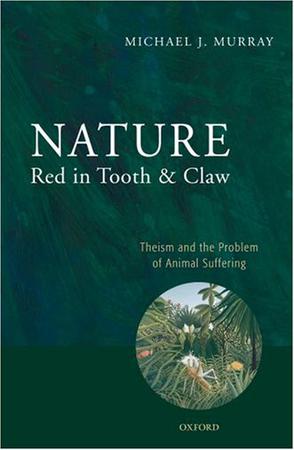
Recently, I finished reading Nature Red in Tooth and Claw
The purpose of that low organism [the trilobite] is by no means exhaustively explained when we have taken a measure of the sensational happiness he derived from his monotonous existence… But a far higher purpose is served in the adaptation of his complicated organism and of the position of his tomb in a sedimentary deposit to arrest the attention and direct the reasoning of a scientific observer. The pleasure of one lofty thought is worth more… than a whole heard of sensational pleasures. (142, cited below)
There is much to unpack in this quote, but for simplicity’s sake we’ll just examine one facet. Wright asserted that the final cause–the ultimate purpose–of a trilobite is not merely found in its own existence, but also in its existing to “arrest the attention and direct the reasoning” of a more highly developed organism. Indeed, Wright argued that the learning the life (and death) of the trilobite brought to the scientific observer was a far greater good than the life the trilobite lived of sensational pleasures.
A number of issues would need to be addressed before a fuller theodicy could be developed from this point. First, not every trilobite was able to convey its life to the good of a scientific observer. Second, is the good of scientific observation really better than sensational life of the trilobite?
Of course, I personally think the point by Wright is interesting and compelling to a point–but to develop that argument would take as much space as Murray dedicates to it. My final observation would be that Wright’s argument was not intended as the final word on the subject. It is but one among many facets of a greater good theodicy or a conjoined theodicy with other varieties of approaches to the problem of evil. Nature Red in Tooth and Claw
Links
Be sure to check out the page for this site on Facebook and Twitter for discussion of posts, links to other pages of interest, random talk about theology/philosophy/apologetics/movies and more!
Animal Pain Re-Visited– Over at Reasonable Faith, Michael Murray defends some theses of his book that I discussed above.
Source
Michael J. Murray, Nature Red in Tooth and Claw: Theism and the Problem of Animal Suffering
“Divergent” by Veronica Roth – A Christian review of the book
 Veronica Roth’s Divergent
Factions/Divergence
In the world of Divergent, Factions are the way of order. The people of the city of Chicago came together after a cataclysmic event (left largely unexplained in the book) to try to restore order. The thought was that they would split people into various Factions which each held to a certain primary guiding principle to combat evil and wrongdoing. For example, the Candor Faction felt that lies were the primary way in which evil entered the world. Deception was how anger and hatred could be brought into the world again, with dire consequences. Other factions-Abnegation, Erudite, Amity, and Dauntless-follow a similar structure of thought: each is constructed around the notion that a specific weakness led to the destruction of the world.
However, Tris, the main character of the book, is Divergent- she does not fit well into any one faction. Those who are divergent are considered dangerous because they are not as fully in line with the thinking of a faction, which makes it harder for them to be conditioned behaviorally to fit into any of the differing paradigms. Thus, they are not only dangerous to the system, but also dangerous to life: they might ruin the system which has protected those inside it.
The notion that humans would divide into different groups which each see a certain facet of human nature as dangerous for the thriving of the species is intriguing. It did seem a bit of a stretch for me to believe that people would willingly divide up into such factions and focus on nothing but those aspects of the human psyche, but it helped to drive the plot and it is perhaps more believable in light of Roth’s statement (through Tris, of course) that each faction began to mock even the good aspects of the others. For example, those who were in Dauntless like Tris would often mock the perceived need for Tris to take an extra step to care for others; or they would laugh at the difficulties with telling lies some people had (“You should have been from Candor!”).
Human nature in Divergent is shown to be more complex through those who are themselves divergent. They see beyond the narrow limits of each individual faction and are therefore immune to the conditioning others succumb to.
Family
Throughout the book, Tris repeats the mantra: Faction before Family. However, the mantra does not play out in reality. Instead, Tris find herself continually longing for her family and the familiarity of her former faction. Although she also finds herself becoming loyal to her new faction, the Dauntless, Tris is ultimately saved by the reunification (however brief) of her family.
The theme is rather poignant, for it suggests there is something to the notion that the family is the proper realm of interaction. It’s not that everyone has a perfect family in the “real world,” rather, the point is that in an ideal situation, everyone would have a support structure within a family. This support structure would be a place for ultimate refuge.
Choice
The book’s cover focuses on choice: it is one choice that defines who you are forever, it says. That choice, of course, is which faction to join. But when push comes to shove, so to speak, towards the end of the book, it turns out that a whole series of choices define you, not just which faction you want to belong to. It is not one choice that defines Tris and the others; it is the choices they make in times of crises, alongside those choices they’ve made throughout their lives, which ultimately determines who they are.
The concept of choice in the book resonates alongside the notion of divergence. After all, the Divergent are those who cannot be neatly categorized into any of the factions. Their choices, it seems, have a bit more freedom, or at least freedom from conditioning. I can’t help but think of the choice made in Eden that led to the Fall. Before that fateful choice, humans had a very wide range of choices available to them; afterwards, humans became bound to sin and much more narrow in their vision. In seeking freedom, we became bound; in trying to open more opportunities, we limited them.
Conclusion
Divergent is a very interesting book written by a woman who professes her Christian faith. The book is very dark at times and there are many more themes I could explore. The interest in “choice” and “divergence” related to human nature and sin is fascinating to me. I’m interested to hear your own thoughts on the issue, so be sure to leave a comment below!
Links
Divergent– Anthony Weber over at Empires and Mangers, one of my favorite sites (and one you should follow!), reviewed the YA Book Divergent. He examined it from a worldview perspective. The book is being made into a major motion picture and has been hailed by some as the “next Hunger Games.” That means we’re going to run into it everywhere. What questions can we bring to the table? There are SPOILERS in this linked post.
Be sure to check out my other looks into popular books (scroll down for more posts).
Source
Veronica Roth, Divergent
SDG.
——
The preceding post is the property of J.W. Wartick (apart from quotations, which are the property of their respective owners, and works of art as credited; images are often freely available to the public and J.W. Wartick makes no claims of owning rights to the images unless he makes that explicit) and should not be reproduced in part or in whole without the expressed consent of the author. All content on this site is the property of J.W. Wartick and is made available for individual and personal usage. If you cite from these documents, whether for personal or professional purposes, please give appropriate citation with both the name of the author (J.W. Wartick) and a link to the original URL. If you’d like to repost a post, you may do so, provided you show less than half of the original post on your own site and link to the original post for the rest. You must also appropriately cite the post as noted above. This blog is protected by Creative Commons licensing. By viewing any part of this site, you are agreeing to this usage policy.
Does good always eliminate evil?
 One of the key components of the composition of the problem of evil (at least its logical variety)* is the notion that good will eliminate evil. The late J.L. Mackie put it this way:
A wholly good omnipotent being would eliminate evil completely; if there really are evils, then there cannot be any such being. (Mackie, 150, cited below)
Simply put, this statement and any like it seem fairly obviously false if made without any rather major qualifications. After all, it seems clear that the total elimination of evil is not actually a logically necessary end for a good being, even an all-good, all-powerful being.
C. Stephen Evans presented a case to show that Mackie’s statement (and those like it) are simply mistaken. He noted that the principle that good must eliminate evil seems to be blatantly false without a number of qualifications. He argued that there are some evils which good beings will allow in order to bring about a greater good. The analogy he used was that of parents not allowing their children to ride in automobiles. After all, this would ensure that they would never be involved in the evil of a car crash, but surely it would also prevent greater goods of interaction with friends, learning to drive and the responsibility that comes with, and more (127). However, Evans was quick to note that a deity is by no means directly analogous to a human parent. The resources God would have to prevent evil are infinitely greater than that of a human parent.
In the case of God, however, God cannot bring about the logically impossible. Rather than going for a full-on theodicy (an account of why evils exist), Evans argued that certain goods are impossible to achieve without some evil. Thus, courage necessitates some kind of suffering (128). He did not argue that this notion alone provides a comprehensive theodicy; but for our purposes it is enough. It seems clear that the notion that good must eliminate evil is not only unsupported by argument (it is an a priori assumption), but also patently false. That is, we have evidence that at least some evil must be allowed in order for some good to be brought about.
I want to be clear about my thesis in this post: I am not claiming to have a comprehensive explanation for all evil everywhere. My claim is rather that good does not, by necessity, eliminate evil. That’s all. I believe that I have established this thesis. If so, then Mackie’s argument (and those like it) fail.
*The logical problem of evil is basically an argument that there is a contradiction in theistic belief related to God’s power and goodness and the existence of evil.
Links
Be sure to check out the page for this site on Facebook and Twitter for discussion of posts, links to other pages of interest, random talk about theology/philosophy/apologetics/movies and more!
Sources
C. Stephen Evans, Faith Beyond Reason: A Kierkegaardian Account (Reason & Religion)
J.L. Mackie, The Miracle of Theism (New York: Oxford, 1982).
SDG.
——
The preceding post is the property of J.W. Wartick (apart from quotations, which are the property of their respective owners, and works of art as credited; images are often freely available to the public and J.W. Wartick makes no claims of owning rights to the images unless he makes that explicit) and should not be reproduced in part or in whole without the expressed consent of the author. All content on this site is the property of J.W. Wartick and is made available for individual and personal usage. If you cite from these documents, whether for personal or professional purposes, please give appropriate citation with both the name of the author (J.W. Wartick) and a link to the original URL. If you’d like to repost a post, you may do so, provided you show less than half of the original post on your own site and link to the original post for the rest. You must also appropriately cite the post as noted above. This blog is protected by Creative Commons licensing. By viewing any part of this site, you are agreeing to this usage policy.
Sigmund Freud, Totemism, and the origin of religion- Who cares about facts?
It is amazing, even before Freud’s psychoanalyticial theories were discredited as such, that this idea was ever accepted as anything but an utterly groundless fabrication. (134, cited below)

Oddly, a challenge I still sometimes see to Christianity (and indeed religion in general), is the notion that somehow it is merely cosmic project of some strange psychological phenomena. Although the idea didn’t originate with Freud, his theories seem to be the most popular. Freud’s idea for how religion came to be was essentially a wish-fulfillment of his own: he turned humanity’s religion into a kind of Oedipus complex.
For Freud, religion clearly often involved a father figure. Thus, he reasoned, religion must have come about over some conflict with a father figure which later caused guilt and the lifting up of a kind of father in the sky- God. The conflict, he proposed, came about due to the notion that the dominant male was the only one allowed sexual access to the women in the primitive family (I’m not making this up!). Winfried Corduan’s latest book, In the Beginning God: A Fresh Look at the Case for Original Monotheism, analyzed a number of aspects of origin of religion theories which are relevant to this thesis. Freud’s theory does not survive empirical analysis.
First, Freud’s notion of shared sexuality and group sex among alleged primitive societies was a popular theory at the time, but one utterly unfounded and based upon essentially no observable evidence. Corduan noted the notion of group marriage was largely derived from presuppositions about how the origin of religion and social institutions “must have happened” (114-115). The theory itself was put forth by L.H. Morgan and not based upon observation but rather “his support of evolution and Marxist-like social theories in which he construed ordinary social conventions… as late inventions in human history” (116). Some anthropologists in the field bought into the theory and thus allowed their observations to be directed by the theory, rather than using their contradictory observations to revise the theory. In fact, their theory-driven research resulted in confusion over the actual social constructs which they were observing (116ff).
Second, Freud’s analysis of the way religion developed is itself mistaken. The climax of Freud’s story is the cannibalistic totem feast upon the Father figure as a way to honor the Father and begin the worship thereof. But Freud’s story is again bereft of observational evidence. Freud acutally used the concept of the totem feast to try to discredit Christianity with its teachings on the Lord’s Supper (communion/Eucharist). However, totem feasts are, themselves, extremely rare in totemistic societies (133-134). Totem feasts were observed in only a few societies, but then–as Corduan noted was often the case–the irregular was applied generally and so reporting on the various societies began to rely upon the rarity rather than the norm (if indeed a “norm” can ever be said to apply to wildly diverse practices). Moreover, there is simply no record whatsoever of a cannibalistic totem feast. The very notion was invented by Freud to discredit Christianity.
Freud’s generalized application of an extremely rare and unusual practice to a theory made up through psychoanalysis of peoples who left no record and no longer exist is unfounded. His use of his theory to attempt to discredit Christianity seems to actually teach us more about Freud’s psyche than the actual origins of Christian practice.
Anyway, I’m finding this book highly informative. I highly recommend it. I have found it to be extremely thought-provoking. It is interesting to see how many things we have simply assumed to be true about the origins of religion stem from unchallenged (and unsupported) theories proposed around a hundred years ago. Perhaps it is time to revisit these theories. So far as Freud goes, it seems his bell has tolled.
Links
Be sure to check out the page for this site on Facebook and Twitter for discussion of posts, links to other pages of interest, random talk about theology/philosophy/apologetics/movies and more!
Source
Winfried Corduan, In the Beginning God: A Fresh Look at the Case for Original Monotheism
SDG.
——
The preceding post is the property of J.W. Wartick (apart from quotations, which are the property of their respective owners, and works of art as credited; images are often freely available to the public and J.W. Wartick makes no claims of owning rights to the images unless he makes that explicit) and should not be reproduced in part or in whole without the expressed consent of the author. All content on this site is the property of J.W. Wartick and is made available for individual and personal usage. If you cite from these documents, whether for personal or professional purposes, please give appropriate citation with both the name of the author (J.W. Wartick) and a link to the original URL. If you’d like to repost a post, you may do so, provided you show less than half of the original post on your own site and link to the original post for the rest. You must also appropriately cite the post as noted above. This blog is protected by Creative Commons licensing. By viewing any part of this site, you are agreeing to this usage policy.
Book Review: “What’s Your Worldview” by James N. Anderson
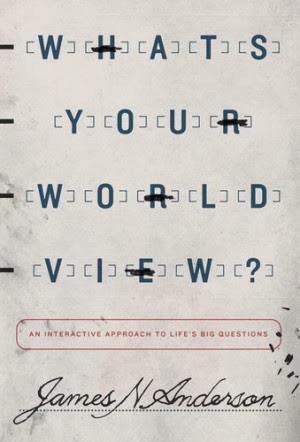 When I first learned about What’s Your Worldview?: An Interactive Approach to Life’s Big Questions
The book’s format is set up such that it outlines something (like what it means to say there is objective truth), then asks whether you believe in it. If you choose yes, you flip to one page; if no, you flip to another. Ultimately, your answers will land you in a worldview. Each worldview has a few pages of brief discussion on how it views reality and what problems might arise with that worldview.
I decided to indeed choose my own adventure and start out reading it from an atheist’s perspective. I figured that would give me a good look into the approach. I quickly realized that answering the questions in such a way got me to “dead ends.” If I said “No” to whether I believed in objective truth, I flipped to the worldview of “Relativism,” had the view explained and some major issues brought up. The end. Full stop. Or is it?
Anderson encouraged readers to go back to the previous question after any worldview evaluation if they didn’t like the conclusions drawn. Thus, continuing the example of relativism, he argued that it is self-defeating: after all, if all truth is relative, is that itself a relative truth? If so, why should I hold to it? Back to the questions! The book encourages such flipping back and forth. It encourages engagement in a way many apologetics books do not.
There is, however, one major drawback to the approach. That is, because it is a book about worldviews, and because it is only just over 100 pages long, there’s not a lot of meat to the discussion. If you’re looking for major critiques and interactions with response-rebuttal-counterpoint on various worldviews, this is not the book you’re looking for. Alongside that, there is a real danger of oversimplification. For example, in the “worldview” section on “nihilism,” it was stated that nihilism is “the view that there are no objective values” (Kindle location 1022). Properly speaking, this only refers to moral nihilism, not nihilism as a full system, which would entail a whole system of “nothings”: no meaning, no objective values, possibly even no reality one can access, etc. Due to the short length, much nuance to each worldview must be lost. Possible objections to Anderson’s brief critiques abound, and readers may be left thinking their own view was perhaps a bit too blithely dismissed.
Of course the length could just as easily be seen as an advantage. One can very easily pick it up and read it in an afternoon; one could hand it to an interested neighbor; it lends itself to use in a brief study period (youth group? adult forum?). These are all advantages. Readers just need to be aware of some disadvantages as well.
I was also very impressed by the depth of insight Anderson gave to rival theist worldviews. Once one answers that there is at least “a” deity, the book still has many more questions to peruse: do you think there is only one?; is Jesus God?; did God communicate with humans? If so, was this communication open?; etc. I found these to be fun to flip through and very informative and on-point. This isn’t an apologetics book that focuses purely on the existence of God; it is, really, a book on worldviews: complete totalities. That said, remember it is not intended to be comprehensive, by any means.
What’s Your Worldview is a really fun apologetics book. The fact that I’m able to write that shows how unique it is. I don’t know of any other book in the same format. It’s refreshing and handy. That said, at times it does feel just like those old “Choose Your Own Adventure” books; you come to the end too quickly. It was a conscious decision on the part of the author/publisher to keep it light and easy to read. And, to that extent, they succeeded. I just found myself wanting a little more. However, I do think this would be an excellent book to pick up and hand off to a friend or relative who may have doubts or may want to explore the beliefs of various worldviews. Just remember the caveat: the book may raise more questions than it answers; so be prepared to have some reasons for the hope within (1 Peter 3:15).
Links
Be sure to check out the page for this site on Facebook and Twitter for discussion of posts, links to other pages of interest, random talk about theology/philosophy/apologetics/movies and more!
Source
James N. Anderson, What’s Your Worldview?: An Interactive Approach to Life’s Big Questions
I received a review copy of the book through Crossway. I was not obligated by the publisher to give any specific type of feedback whatsoever.
SDG.
——
The preceding post is the property of J.W. Wartick (apart from quotations, which are the property of their respective owners, and works of art as credited; images are often freely available to the public and J.W. Wartick makes no claims of owning rights to the images unless he makes that explicit) and should not be reproduced in part or in whole without the expressed consent of the author. All content on this site is the property of J.W. Wartick and is made available for individual and personal usage. If you cite from these documents, whether for personal or professional purposes, please give appropriate citation with both the name of the author (J.W. Wartick) and a link to the original URL. If you’d like to repost a post, you may do so, provided you show less than half of the original post on your own site and link to the original post for the rest. You must also appropriately cite the post as noted above. This blog is protected by Creative Commons licensing. By viewing any part of this site, you are agreeing to this usage policy.
Sunday Quote! – Is Atheism Wishful Thinking?
 Every Sunday, I will share a quote from something I’ve been reading. The hope is for you, dear reader, to share your thoughts on the quote and related issues and perhaps pick up some reading material along the way!
Atheism as Wish Fulfillment
I’ve been reading through Edward Feser’s The Last Superstition: A Refutation of the New Atheism. Feser is a Thomistic philosopher (one who follows in the tradition of Thomas Aquinas) and so he approaches these questions from a slightly different perspective than that of other theists who have responded to the challenge of the New Atheism. I’ve only just begun the book, but I found this quote juicy:
It is true that a fear of death, a craving for cosmic justice, and a desire to see our lives as meaningful can lead us to want to believe that we have immortal souls specially created by a God who will reward or punish us for our deeds in this life. But it is no less true that a desire to be free of traditional moral standards, and a fear of certain (real or imagined) political and social consequences of the truth of religious belief, can also lead us to want to believe that we are just clever animals with no purpose to our lives other than the purposes we choose to give them, and that there is no cosmic judge who will punish us for disobeying an objective moral law. Atheism, like religion, can often rest more on a will to believe than on dispassionate rational arguments. – Edward Feser, The Last Superstition, 10
Feser’s point is that atheists are just as capable of allowing their desires to cloud judgment when it comes to matters of philosophical judgments as are theists. Everyone has desires; the question is what the evidence is to support those desires. What do you think of this quote? How would you respond to those who assert that religious people are merely seeking wish fulfillment?
Links
Be sure to check out the page for this site on Facebook and Twitter for discussion of posts, links to other pages of interest, random talk about theology/philosophy/apologetics/movies and more!
Guest Post: “The Presumption of Popular Atheism” by David Glass– In this post, David Glass, himself an able response-man to the New Atheism, highlights one primary argument atheists make regarding theism: that theists have all the burden of proof on their side.
SDG.
Ken Ham vs. Bill Nye- An analysis of a lose-lose debate
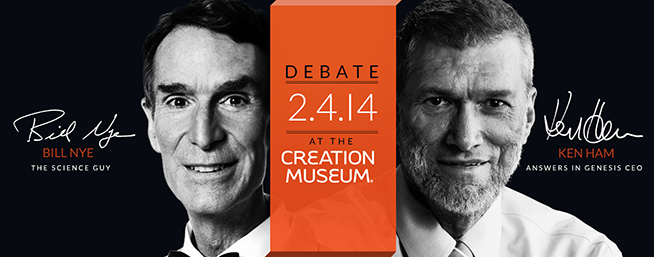 Today, Ken Ham, a young earth creationist, debated against Bill Nye an agnostic famous for “The Science Guy” program, on the topic: “Is creation a viable model of origins in today’s scientific era?” The debate was watched by over 500,000 people and generated a huge amount of interest. Here, I’ll review the debate section by section. Then, I’ll offer some thoughts on the content as well as a concluding summary. If you watched the debate, you may want to just skip down to the Analysis section. The debate may be watched here for a limited time (skip to 13 minutes in to start debate).
Ken Ham Opening
Ham began by noting that many prominent scientists argue that scientists should not debate creationists. He wondered aloud whether that might be because creationism is indeed a viable model and some don’t want that to be shown. He then showed a video of a creationist who was a specialist in science and an inventor, noting that creationism is not mutually exclusive from science.
The three primary points Ham focused on were 1) the definitions of terms; 2) interpretation of the evidence; and 3) the age of the universe is not observational science. Regarding the first, Ham noted that science means knowledge and so evolutionists cannot claim to be doing science. Regarding the second, he argued that both creationists and evolutionists observe the same evidence; they simply interpret that evidence differently. Regarding the third, Ham observed that “We weren’t there” at the beginning of the Earth and so we can’t know through observational science what happened.
Bill Nye Opening
Nye noted that the primary contention of the topic was to see whether the creation model lined up with the evidence. Thus, we must compare Ken Ham’s creation model to the “mainstream” model of science (his word). There are, he contended, major difficulties with Ham’s model, including the fossils found in layers in the Grand Canyon. He noted that there is “not a single place” where fossils of one type cross over with fossils of a different type or era. Yet, on a creation model, one would expect vast amounts of mixing. Thus, the creation model fails to account for the observational evidence.
Nye also noted that there are “billions of people ” who are religious and do not hold to creation science.
Ham Presentation
Ham again emphasized the importance of defining terms. He then presented a few more videos of creationists who are active scientists in various fields. One, a Stuart Burgess [I think I typed that correctly] claimed that he knew many colleagues who expressed interest in creationism but were afraid for their careers.
Non-Christians, Ham alleged, are borrowing from the Christian worldview in order to do science. The reason for this is because their own worldview cannot account for the laws of logic, the uniformity of nature, or the laws of nature. He asked Nye to explain how to account for these aspects of reality without God.
The past cannot be observed directly, he said, and concluded that we can’t be certain that the present is like the past. Thus, we must only deal with the observed facts that we can see now. On this point, the disagreements are over the interpretation of the evidence. That is, there is a set of evidence that both people like Nye and Ham approach. According to Ham, it is their worldviews which color their interpretation of the evidence such that they use the same evidence and get entirely contradictory conclusions.
The diversity of species which is observed is only, Ham argued, difference in “kind.” Thus, it cannot be used as evidence for evolution. The word “evolution” has been “hijacked” and used as evidence for unobservable phenomena extrapolated from that which is observed. The various species demonstrate a “creation orchard” as opposed to an “evolutionary tree.” One may observe different creatures, like dogs, each stemming from an a common origin, but none of these are traceable back to common descent, rather they exhibit discontinuity in the fossil record.
There is a major difference, Ham alleged, between “observational sciences” which looks at the things we can see in repeatable events now and “historical sciences” which extrapolates from the evidence gathered what happened in the past. We can never truly have “knowledge” regarding the historical sciences.
Nye Presentation
Nye began his presentation by noting that the debate took place in Kentucky and “here… we’re standing on layer upon layer upon layer of limestone.” The limestone is made of fossils of creatures which lived entire lives (twenty or more years in many cases) and then died, piled up on top of each other, and formed the limestone underneath much of the state. The amount of time needed for this is much longer than just a few thousand years.
Nye also turned to evidence from ice cores, which would require 170 winter/summer cycles per year for at least a thousand years to generate the current amount of ice built up. In California, there are trees which are extremely ancient, and some trees are even older, possibly as old as 9000 or more years old. Apart from the difficulty of the age of these trees, one must also wonder how they survived a catastrophic flood.
When looking at a place like the Grand Canyon, one never finds lower layer animals mixed with higher level animals. One should expect to find these given a flood. Nye challenged Ham to present just one evidence of the mixing of fossils of different eras together; he said it would be a major blow to the majority sciences.
If the flood explains animal life and its survival, one should observe the migration of animals across the earth in the fossil record; thus a Kangaroo should be found not just in Australia but along the way from wherever the Ark rested. However, these finds are not observed. Finally, the Big Bang has multiple lines of evidence which confirm it as the origin of the universe.
Ham Rebuttal
Ham argued that we can’t observe the age of the Earth. No science can measure it through observational evidence; rather it falls under historical sciences. One should add the genealogies in the Genesis account in order to find the age of the Earth. Whenever a scientist talks about the past, “we’ve got a problem” because they are not speaking from observation: they were not there.
Various radiometric dating methods turn up radically divergent ages for artifacts from the same time period and layer of rocks. The only infallible interpreter of the evidence is God, who provided a record in the Bible.
Nye Rebuttal
Rocks are able to slide in such a way as to interpose different dated objects next to each other.
Nye noted that Ham kept saying we “can’t observe the past,” but that is exactly what is done in astronomy: no observation of stars is not observing the past. Indeed, it takes a certain amount of time for the light to get to Earth from these various stars. The notion that lions and the like ate vegetables is, he argued, preposterous. Perhaps, he asserted, the difficulty is with Ham’s interpretation of the biblical text.
Nye then compared the transmission of the text of the Bible to the telephone game.
Ham Counter-Rebuttal
Ham again pressed that natural laws only work within a biblical worldview. There only needed to be about 1000 kinds represented aboard the ark in order to represent all the current species. Bears have sharp teeth yet eat vegetables.
Nye Counter-Rebuttal
Nye asserted that Ham’s view fails to address fundamental questions like the layers of ice. The notion that there were even fewer “kinds” (about 1000) means that the problem for Ham is even greater: the species would have had to evolve at extremely rapid rates, sometimes even several species a day, in order to account for all the differences of species today.
Q+A
I’ll not cover every single question, instead, I wanted to make note of two major things that came up in the Q+A session.
First, Nye’s answer to any question which challenged him on things like where the matter for the Big Bang came from was to assert that it’s a great mystery and we should find out one day. Second, Ham’s response to any question which (even hypothetically) asked him to consider the possibility that he would be wrong was to assert that such a situation was impossible. In other words, he presupposed he was correct and held to the impossibility that he could be wrong.
Analysis
Ken Ham
Ken Ham’s position was based upon his presuppositional apologetic. He continued to press that it is one’s worldview which colors the interpretation of evidence. The facts, he argued, remained the same for either side. It was what they brought to the facts that led to the radically different interpretations.
There is something to be said for this; it is surely true that we do have assumptions we bring to the table when interpreting the evidence. However, apart from the problem that Ham’s presuppositional approach with creationism is unjustified, Ham failed to deal with facts which really do shoot major holes in his theory. For example, it simply is true that, as Nye noted, when we observe the stars or distant galaxies, we are observing the past. Ham was just wrong on this regard. Moreover, other observational evidence (though not directly showing the past) does demonstrate that the Earth cannot be so young as Ham supposes. Furthermore, his hard and fast distinction between historical sciences and observational sciences is more of a rhetorical device than anything.
Ham’s position, I would argue, fails to account for the evidence which Nye raised (along with a number of other difficulties). Moreover, he continued to paint a picture of the Bible which rejects any but his own interpretation. In other words, he presented a false dichotomy: either young earth creationism or compromise with naturalism. However, I did appreciate Ham’s focus on the Gospel message. It was refreshing to have him present a call to belief in Jesus Christ as Lord and savior in front of such a massive audience.
Bill Nye
Nye did an okay job of trying to show that there may be more to the debate than simply creationism-or-bust for Christianity. Indeed, he actually went so far as to say there is “no conflict” between science and faith. Instead, he argued that Ham’s position is the one which generates such a conflict. His rebuttals provided some major reasons to think that Ham’s creationism could not account for the evidence. In particular, the difficulties presented by the proliferation of species after the flood and the fossil record were solid evidences.
However, Nye’s presentations had a couple difficulties. First, he failed to account for polystrate fossils: the very thing he challenged Ham to present. There really are such things as fossils which are found out of sequence (thanks to ElijiahT and SkepticismFirst on Twitter for this). That’s not to say they prove young earth creationism. Far from it. So Nye seems to have been mistaken on this point. Second, he presented the Big Bang theory as though Fred Hoyle somehow came up with the hypothesis, yet Hoyle is well known for denying the Big Bang. Third, the notion that the interpretation, translation, and transmission of the Bible through time is anything like the telephone game is a tiresome and simply mistaken metaphor.
Both
Both men were extremely respectful and I appreciated their candor. Each had several good points; each had some major flaws in their positions. The dialogue as a whole was interesting and helpful.
Conclusion
Readers by now should realize that I have to confess my title is a bit misleading. I was impressed by the tone of both speakers, though I thought they each made major gaffes alongside some decent points. The bottom line is that I find it unfortunate that we were exposed to a false dichotomy: either creationism or naturalism. There is more to the story. As far as “who won” the debate, I would argue that because of this false dichotomy, neither truly won. However, it seemed to me Ham had a more cohesive 30 presentation. That is, his presentation stayed more focused. Nye’s presentation jumped around quite a bit and had less directness to it. So far as “debate tactics” are concerned, one might chalk that up to a win for Ham. However, Nye successfully dismantled Ham’s presentation in the rebuttal periods. Thus, one was left with the impression that Ham’s view was indeed based upon his presupposition of its truth, while Nye was more open to the evidence. Again, I think both are wrong in many areas, but I hope that Nye’s tearing down of Ham’s position will not demonstrate to some that Christianity is false. As Nye noted, it may instead be Ham’s interpretation which is wrong.
There was much more to cover here than I could get to, so please do leave a comment to continue the discussion.
Links
Be sure to check out the page for this site on Facebook and Twitter for discussion of posts, links to other pages of interest, random talk about theology/philosophy/apologetics/movies and more!
Naturalis Historia– This site is maintained by a biologist who presents a number of serious difficulties for young earth creationism.
Gregg Davidson vs. Andrew Snelling on the Age of the Earth– I attended a debate between an old earth and young earth creationist (the latter from Answers in Genesis like Ken Ham). Check out my overview of the debate as well as my analysis.
Debate Review: Fazale Rana vs. Michael Ruse on “The Origin of Life: Evolution vs. Design”– Theist Fazale Rana debated atheist Michael Ruse on the origin of life. I found this a highly informative and respectful debate.
Reasons to Believe– a science-faith think tank from an old-earth perspective.
Other Reviews of the Debate
Ken Ham vs. Bill Nye post-debate analysis– The GeoChristian has a brief overview of the debate with a focus on what each got right or wrong.
Ken Ham vs. Bill Nye: The Aftermath– Luke Nix over at Faithful Thinkers has another thoughtful review. His post focuses much more on the topic of the debate as opposed to a broad overview. Highly recommended.
Ken Ham vs. Bill Nye: The Debate of the Decade?- Interested in what led up to this debate? Check out my previous post on the topic in which I urged Christians to write on this debate and also traced, briefly, the controversy leading up to this debate.
The image used in this post is was retrieved at Christianity Today and I believe it’s origin is with Answers in Genesis. I use it under fair use to critique the views. I make no claims to owning the rights to the image, and I believe the image, as well as “The Creation Museum” are copyright of Answers in Genesis.
SDG.
——
The preceding post is the property of J.W. Wartick (apart from quotations, which are the property of their respective owners, and works of art as credited; images are often freely available to the public and J.W. Wartick makes no claims of owning rights to the images unless he makes that explicit) and should not be reproduced in part or in whole without the expressed consent of the author. All content on this site is the property of J.W. Wartick and is made available for individual and personal usage. If you cite from these documents, whether for personal or professional purposes, please give appropriate citation with both the name of the author (J.W. Wartick) and a link to the original URL. If you’d like to repost a post, you may do so, provided you show less than half of the original post on your own site and link to the original post for the rest. You must also appropriately cite the post as noted above. This blog is protected by Creative Commons licensing. By viewing any part of this site, you are agreeing to this usage policy.
Lawrence Krauss vs. John Lennox on science and faith
 I’ve been catching up on my podcasts and I recently listened to a dialogue between an atheist, Lawrence Krauss, and a theist, John Lennox on questions about science and faith. It was on the Unbelievable? program (something I strongly suggest you listen to weekly) [listen here]. Thus, it was less a debate than it was a moderated discussion. Here, I’ll only focus on a couple questions that came up in their dialogue.
How and Why
According to Lawrence Krauss, science cannot answer “Why” questions but only “how” questions. Lennox brought up the example of a Ford motor car sitting on a driveway [I added this last bit for clarity]. He argued that one can explain the “how” it got there but there still remains the question of “why” it was made. Thus, the “why” questions remain “real” questions whether or not science is capable of investigating them. Interestingly, Krauss took a different tact than I expected in his rebuttal: he argued that the “why” question (at least in the Lennox case) is reducible to a “how” question. That is, one could explain how Henry Ford designed it, had it built, and then someone bought it and drove it to where it is sitting.
But of course redefining terms does little to address the actual questions at hand. Lennox was keen to show that questions about “why” are indeed meaningful. It seems that Krauss’ only response is to either say “no they’re not” or redefine actual “why” questions into “how” questions and argue there still are no “why” questions. The move is not very subtle, nor is it successful.
Purpose in the Universe?
Krauss made several comments regarding purpose in the universe. First, he seemed to suggest that in order to assert the universe has purpose, one must know what that purpose is. Second, he argued that the universe is indeed quite wasteful if it were intelligent designed with purpose. Third–in response to Lennox’s statement that Krauss and other cosmologists admit that for life to exist there would have had to be several generations of stars (to produce enough carbon for carbon-based life)–he alleged that there could be all sorts of other life forms we don’t know about. I’ll address these each briefly in turn.
First, it seems clear that if one wants to suggest the universe has a purpose, one does not have to know what the purpose is. We can see this all the time in our own interactions with the world. Suppose I see a pile of blocks on the floor in an office building stacked in piles of various heights and arranged by color. I can immediately recognize that there must have been some purpose behind it–for the arrangement by color is quite telling–but I may not be able to pinpoint the exact reason. Perhaps some five-year-old was amusing herself by stacking blocks by color. Perhaps an adult was making art by stacking them in that way–a kind of reminiscence on childhood. There could be any number of other reasons. But the fact that I don’t know the reason doesn’t mean there is no reason. Similarly, I may claim the universe has a purpose even without claiming to know what said purpose is.
Second, Krauss seems to make the error that if the universe were designed for humans, that would have to be the only purpose involved in the entire universe. I’ve addressed this claim in some detail elsewhere, so for now I’ll just say that Krauss’ mistake lies in assuming that if there is a purpose behind the universe it must be the only purpose.
Third, Krauss missed the point of Lennox’s rebuttal. For the life we are dealing with is clearly carbon based. For Krauss to stretch the question to possible scenarios of non-carbon based life is to miss the thrust of his own argument. He was asking for purpose in this universe; he was not asking for purpose in any possible universe. Thus, his statement is off base. Moreover, I tend to agree with scientists like Iris Fry and the like who agree that it is implausible to suggest life could be based on silicon or other things apart from carbon. That is a debate that would take us far afield, so I’ll leave it at that.
Science Doesn’t Care About Philosophy
Lennox, towards the end of the discussion, pointed out that Krauss’ claim to define nothing as something is nonsense. Krauss’ response? He jettisoned philosophy immediately: “Science doesn’t care about philosophy,” he said [he may have said “Scientists don’t…” but after listening to it a few times, I couldn’t tell which he said]. If you don’t see a problem with this, you should. First, the statement itself is philosophical. Second, any number of claims he made throughout his discussion with Lennox were philosophically grounded. Third, science depends upon philosophy to operate. Fourth, as I’ve demonstrated elsewhere, Krauss’ own work is directly dependent upon philosophy.
Documents Aren’t Evidence
Krauss said that documents don’t count as evidence. His assertion was based upon the notion that a book like The Great Gatsby is a document, but it is not taken as factually true. Apart from purely begging the question regarding the genre of the Bible alongside The Great Gatsby, Krauss is also severely mistaken in his claim that documents aren’t evidence. According to Krauss’ claim, we should essentially dissolve our government, because our system of government is based upon a document: the Constitution. But the Constitution cannot count as evidence for anything! So this begs the question: why should we go to it to see whether or not Lawrence Krauss should have freedom to express his vitriol against religious people?
The problem is that Krauss is just wrong here. Documents do count as evidence. One needs to acknowledge the genre, intent, etc. regarding a document, but for Krauss to utterly dismiss documents as evidence is absurd. One may ask whether Krauss wrote any books. He could, presumably, produce documents to show that he did indeed write books. But on his own standard of proof, he hasn’t presented any evidence whatsoever. Thus, on Krauss’ definition of evidence, I conclude that Krauss has never written anything.
Conclusion
There is much more that I could interact with in regards to this conversation between Krauss and Lennox, but I’ll leave it for now with the comments I have. I suggest readers go listen to the dialogue themselves. It seems to me clear that Krauss continues to flounder in areas outside his expertise. He misused the notion of an “appeal to authority” when he applied it regarding Lennox’s citation of Nagel, he continued to make errors regarding non sequitors, he dismissed his own books as evidence that he wrote anything, and his comments on purpose betray a lack of reflection on the topic. Krauss continues to show that he is basically ignorant of even the implications of his own claims.
Links
Be sure to check out the page for this site on Facebook and Twitter for discussion of posts, links to other pages of interest, random talk about theology/philosophy/apologetics/movies and more!
Shoulders of Giants? -Philosophy and Science in Context, or “Krauss Jumps off!”– I argue that Krauss is mistaken to claim that philosophers know nothing. I further argue that Krauss’ own work is dependent upon philosophy, so he ironically (ignorantly?) dismisses the very basis for his work.
William Lane Craig vs. Lawrence Krauss- Thoughts and links– I summarize and analyze a debate between Lawrence Krauss and the Christian philosopher and theologian William Lane Craig. I think this debate was devastating to Krauss’ positions regarding his atheism.
Follow this link to access the audio for the dialogue between Lennox and Krauss.
SDG.
——
The preceding post is the property of J.W. Wartick (apart from quotations, which are the property of their respective owners, and works of art as credited; images are often freely available to the public and J.W. Wartick makes no claims of owning rights to the images unless he makes that explicit) and should not be reproduced in part or in whole without the expressed consent of the author. All content on this site is the property of J.W. Wartick and is made available for individual and personal usage. If you cite from these documents, whether for personal or professional purposes, please give appropriate citation with both the name of the author (J.W. Wartick) and a link to the original URL. If you’d like to repost a post, you may do so, provided you show less than half of the original post on your own site and link to the original post for the rest. You must also appropriately cite the post as noted above. This blog is protected by Creative Commons licensing. By viewing any part of this site, you are agreeing to this usage policy
“Peter Boghossian, Atheist Tactician”- A brief look at the e-book by Tom Gilson
 I recently downloaded Tom Gilson’s evaluation of Peter Boghossian’s epistemology for my Kindle. The work is witty but also to the point. Gilson launched a full-on attack against Boghossian’s mission to create atheists. The best parts of the book–and let me be clear, I think the entire work is essential reading–were his critique of Boghossian’s view of faith and his appeal to Christians regarding the importance of the topic.
Gilson makes it clear how important it is to provide a reasoned answer to Boghossian’s view. However, he goes much further than that; he notes that Boghossian’s mission is specifically to destroy the faith of Christians. For any Christian, this should be a disturbing thing to hear. Unlike many other atheists, Boghossian seems to have a plan: he’s going to actively work to proselytize Christians for atheism. He may be called an atheist missionary. Gilson called Christians to see this as a serious threat for Christianity. It’s not that Christianity doesn’t have the resources to answer Boghossian’s arguments; instead, it is that we have not equipped ourselves to do so. The average Christian-in-the-pew is basically incapable of refuting Boghossian-esque reasoning, and so will, possibly, have their faith seriously challenged by arguments which are basically vacuous.
Part of Boghossian’s mission, Gilson notes, is to redefine the meaning of faith. For Boghossian, faith should always be understood as “pretending to know what one does not know” (kindle location 118). Gilson notes that not only would such a redefinition be catastrophic for people of faith [of “pretending to know…”], but it is also a completely invented definition with no basis in reality. That is, Boghossian sems to be pretending to know what he doesn’t know. On his own definition, he is very faithful.
Why think that Boghossian’s definition is wrong? Gilson offers a number of points. Among them is the fact that the redefinition of the term cannot account for its usage among the faithful. Gilson shows how the redefined “faith” would lead to an absurd meaning for any number of texts in the Bible. Not only that, but he also cites a number of Christian thinkers to demonstrate that the usage of “faith” is much more grounded in evidence and true belief than it is grounded in a “pretend” world. By the time Gilson has finished dismantling Boghossian’s usage, it becomes clear that the latter is truly living in his own fantasy. The problem is that if Christians do not equip themselves to combat it, the dream may become reality.
There are a number of other excellent portions of this quick read, such as Gilson’s direct interaction with a number of Boghossian’s interviews and writings. He also approaches Boghossian’s work from several angles, providing a solid ground for the refutation of the atheistic work.
In short, I implore you to pick up and read this work by Gilson. He has done an excellent job of showing how Boghossian’s work may prove to be a challenge to Christianity. But the greater service he has done is provided a tool to equip believers to combat this challenge. Read it, spread it. Keep the faith.
Links
You may get Gilson’s e-book for free at this link [I am unsure of how long this offer will last]. You may also support the ministry of Ratio Christi by purchasing the e-book.
Be sure to check out the page for this site on Facebook and Twitter for discussion of posts, links to other pages of interest, random talk about theology/philosophy/apologetics/movies and more!
Source
Tom Gilson, Peter Boghossian, Atheist Tactician (2014).
SDG.
——
The preceding post is the property of J.W. Wartick (apart from quotations, which are the property of their respective owners, and works of art as credited; images are often freely available to the public and J.W. Wartick makes no claims of owning rights to the images unless he makes that explicit) and should not be reproduced in part or in whole without the expressed consent of the author. All content on this site is the property of J.W. Wartick and is made available for individual and personal usage. If you cite from these documents, whether for personal or professional purposes, please give appropriate citation with both the name of the author (J.W. Wartick) and a link to the original URL. If you’d like to repost a post, you may do so, provided you show less than half of the original post on your own site and link to the original post for the rest. You must also appropriately cite the post as noted above. This blog is protected by Creative Commons licensing. By viewing any part of this site, you are agreeing to this usage policy.
The Bible Is Not One Book
 I was doing some research recently for a lengthy (book length!) project I am working on and was searching Amazon for some books on Bible prophecy. I came upon a work by John Walvoord called Every Prophecy of the Bible

I was perplexed by his (a male, judging by the picture) objection to confirming the Bible as true through prophecy. He wrote, “The book basically runs off a list of biblical prophecies that have supposedly been fulfilled. Amazingly pretty much all the evidence for these so called fulfilled prophecies comes from the same book making the prophecies in the first place ie the bible.” He then proceeded to ridicule Christians who do believe this as holding to an “infantile” belief.
The Objection
Unfortunately, this is not the first time I have seen an objection like this. Put simply, the objection is that the Bible can’t confirm itself, because that would be a circular argument. In other words, one can’t use material from one part of the Bible to confirm other parts of the Bible because then one is arguing for the truth of the Bible from the Bible.
The Problem
Most people should immediately see what the problem is. Although the Bible as we have it today is a single “book” in the sense that its contents share the same binding, it is really a collection of independent works written across over a thousand years by various authors in different parts of the world. In other words, the Bible is not “one book,” at least in the sense that one needs to maintain for this objection. Thus, if there is a prophecy found in one book which we know to be earlier than a book which is later that records its fulfillment, then there seems to be at least some evidence, prima facie, for the truth of the prophecy. (Of course this would be contingent upon the historical accuracy of the books, etc., etc. but the simple fact of an alleged prophecy’s existing before its fulfillment is an interesting facet to consider.)
A friend, Anthony Weber, made an analogy: think of the Bible as a library of books. Would it not be silly to think you couldn’t pull one book of the shelf and say that it confirmed another book? Suppose each book was about history, and one made a mere mention of a topic, while another featured a more detailed description. Would we not be surprised if someone came along and objected, saying “Well, they’re in the same library, so we can’t trust them!”
Inerrancy?
Christians need to realize that this has implications for doctrine as well. For example, those who maintain inerrancy–and I strongly believe that consistent Christians should do so (see my arguments to this end and defense of the doctrine here)–may be concerned that viewing the Bible in this fashion comes in danger of breaking it up piecemeal and pitting each segment against the others. But this is not what follows at all. Instead, it is simply an acknowledgment that the Bible is a collection of works in different genres written at different times in different places which, when put together, form a coherent whole.
Concluding call for intellectual honesty
In light of what I have explored, I want to first issue a call to the atheists out there: I know that you (atheists) do not all hold to objections like this and would find someone else using this objection a bit alarming. I call you to challenge your fellow atheists to a more honest interaction with positions of faith. If you want to criticize someone else’s position, fine. But do it without completely misrepresenting them. Call out your fellow atheists when they try to put forth this kind of drivel as a serious objection to Christianity. I try to call out fellow Christians when they do the same with other views.
To my fellow Christians: be aware that objections like these are not the backbone of atheism. Frankly, I think people like “gavin” are just grasping at anything to maintain unbelief and ridicule others they choose to look down on as “infantile.” Let’s engage with people who make these objections, but if they persist, dismiss the objection as the ridiculous notion it is. Finally, if you catch yourself treating the Bible like one book without any distinction in genre, time, place, etc., stop yourself. It is important to note the Bible is united in message, but God used different people as they were “carried along by the Holy Spirit.” It wasn’t delivered all by divine dictation.
Links
Be sure to check out the page for this site on Facebook and Twitter for discussion of posts, links to other pages of interest, random talk about theology/philosophy/apologetics/movies and more!
SDG.
——
The preceding post is the property of J.W. Wartick (apart from quotations, which are the property of their respective owners, and works of art as credited; images are often freely available to the public and J.W. Wartick makes no claims of owning rights to the images unless he makes that explicit) and should not be reproduced in part or in whole without the expressed consent of the author. All content on this site is the property of J.W. Wartick and is made available for individual and personal usage. If you cite from these documents, whether for personal or professional purposes, please give appropriate citation with both the name of the author (J.W. Wartick) and a link to the original URL. If you’d like to repost a post, you may do so, provided you show less than half of the original post on your own site and link to the original post for the rest. You must also appropriately cite the post as noted above. This blog is protected by Creative Commons licensing. By viewing any part of this site, you are agreeing to this usage policy.

 J.W. Wartick - Reconstructing Faith