Current Events
“The Fires of Heaven” by Robert Jordan- A Christian (re)reads the Wheel of Time
 “The Wheel of Time” is a massive fantasy series by Robert Jordan (and, later, Brandon Sanderson) that is being developed into a television show for Amazon Prime. It’s cultural impact is huge, the series having sold more than 44 million copies. Here, we continue the series with Book 5, The Fires of Heaven. There will be SPOILERS in this post for the series.
Power Corrupts, and Politics and Religion?
In The Fires of Heaven, we are introduced to the Prophet of the Dragon, Masema. He has used Rand’s name to build himself a power base, and it is unclear yet whether he actually believes the things he says about the Dragon Reborn or not. What does seem clear is that this is a case of power corrupting. Masema goes mad over violations of protocol, he believes he has the right and the need to restrict even what people wear, how they act, and the like. His unification of religious belief and political power has become a corruption that is dangerous even for those who are trying to help Rand. In our own history, the unity of political and religious power has often played out in totalitarian ways as well, with absolute power corrupting and leading to danger for any who disagree.
The question of how the church and state ought to interact is an ancient one, and one heavily tinged by cultural referents. In the United States, it has become influenced greatly by the notion of “separation of church and state,” a dogma repeated so often it has become enshrined in the political sphere. There are many, many perspectives on the question, and my own preferred one is that of the Lutheran view of the Two Kingdoms–that the Kingdom of God is able to offer correction to the Kingdom of the World, but that the Kingdom of the World must not interfere with the Kingdom of God. Similarly, the realm of the world is generally to be left to the governance of human reason, only called upon to repent when needed.
With The Fires of Heaven, one might ask what kind of divisions of the political and religious are being suggested. There is certainly a sense of unease about Masema and his policies, but what will happen going forward? What kind of commentary might Robert Jordan be offering here?
Sacrifice
Moiraine gives her life up (maybe?) to defeat Lanfear. Birgitte nearly does the same to fight another Forsaken. Here we have the theme of sacrifice playing out rather clearly, though the implications of these sacrifices won’t be found out for some time yet. In Birgitte’s case, it leads to a linking of Birgitte with Elayne as a Warder. The theme of sacrifice hasn’t played prominently so far in the series, and it is clear Moiraine’s sacrifice is totally unexpected to Rand, who was blindsided by it.
Actions have Consequences
Balefire gets much discussion in this book, with its possibility of burning away threads of time and altering the past in unpredictable, terrifying ways. This ties into a broader sense of consequence throughout the series, in which actions have consequences that tend to be far ranging. Whether its simply walking through a town as a Ta’veran and causing weddings, accidents, and more or burning away an enemy permanently, there are serious repercussions for actions in the world. One can’t help but think of our own world, in which some of the smallest actions can have wide ranges of impact.
Conclusion
I have to say I thought The Fires of Heaven was a bit slower moving than the previous books. Despite its massive length, there also didn’t seem to me to be as much to discuss from a worldview perspective. What did you think of this novel? What worldview issues did you notice on reading it? Let me know in the comments.
Links
The Wheel of Time– Read all my posts on The Wheel of Time (scroll for more).
Be sure to check out the page for this site on Facebook and Twitter for discussion of posts, links to other pages of interest, random talk about theology/philosophy/apologetics/movies and more!
Book Reviews– There are plenty more book reviews to read! Read like crazy! (Scroll down for more, and click at bottom for even more!)
SDG.
——
The preceding post is the property of J.W. Wartick (apart from quotations, which are the property of their respective owners, and works of art as credited; images are often freely available to the public and J.W. Wartick makes no claims of owning rights to the images unless he makes that explicit) and should not be reproduced in part or in whole without the expressed consent of the author. All content on this site is the property of J.W. Wartick and is made available for individual and personal usage. If you cite from these documents, whether for personal or professional purposes, please give appropriate citation with both the name of the author (J.W. Wartick) and a link to the original URL. If you’d like to repost a post, you may do so, provided you show less than half of the original post on your own site and link to the original post for the rest. You must also appropriately cite the post as noted above. This blog is protected by Creative Commons licensing. By viewing any part of this site, you are agreeing to this usage policy.
The Death Penalty and “Just Mercy” – Bryan Stevenson’s personal look at capital punishment
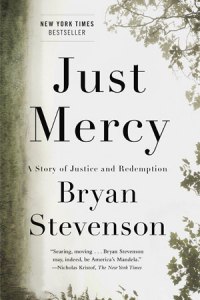 Bryan Stevenson is a lawyer who has dedicated his life’s work to challenging bias against people of color and poor people in the criminal justice system. His book, Just Mercy, is a deeply personal look at the death penalty, and one that I think many readers would at least be challenged by. I came to the book as part of a book group in which we choose one book pro- and one book con- a position and then discuss it. I used to be for the death penalty, but a deeper look at the statistics about how the death penalty is more likely to be used and carried out against people of color, the possibility of using it against innocent people, the extreme cost of the system, and the failure to make it meet standards of avoiding cruel and unusual punishment moved me against it just a few years ago. Like many topics, it is one where I felt a deeper study of the complexity of the issue led me to a different position than I once held. The book has some graphic depictions of violence in it, and I will try to avoid those in this post, but the topic itself can be emotionally jarring.
Stevenson’s book is stunning. Yes, it is emotionally jarring, but filling in the cracks between the emotional arguments are a number of real stories that have to be accepted by those who favor the death penalty as consequences of the system. For example, there are stories included in the book of the unjust way people were sentenced to death, including children. One of these stories talks about a black 14 year old accused of murder who was then put in a courtroom that was segregated (by keeping all African Americans who were not on trial or witnesses) to face trial, defended by a lawyer with political aspirations who called no witnesses for the defense. The prosecutions “only evidence was the sheriff’s testimony…” that the child had confessed. He was convicted by an all white jury and sentenced to death in the electric chair (158-159). Yes, this is an emotional story, but it begs several questions about how the criminal justice system is set up in such a way that each of these steps could have been allowed to happen. How can we accept the death penalty as a viable punishment when people are sentenced to death on such flimsy evidence and such a clearly uninterested defense? What of the racial tensions in stories like these? Do these matter when people’s lives are at stake?
Of course, executing children seems counter-intuitive in the extreme, even if the child in question commited a heinous crime. As Stevenson points out, there is an “incongruity of not allowing children to smoke, drink, vote… and a range of other behaviors because of their well-recognized lack of maturity and judgment while simultaneously treating some of the most at-risk, neglected, and impaired children exactly the same as full-grown adults in the criminal justice system” (270). Restrictions on the death penalty for children seem to be one of those areas that perhaps even those on both sides of the issue could come to agreement on.
The primary story throughout the book, though, is that of Walter McMillian, who was convicted of murder despite having dozens of witnesses who could place him at his own home at the time of the murder. The case was another in which an all-white jury was selected. He was sentenced to death based on the testimony of people who said he committed the murder, despite conflicting accounts and, again, many witnesses who saw him elsewhere. Actually, he was sentenced to life in prison, but the judge, Robert E. Lee Key, overruled the sentence and gave him capital punishment. He spent 6 years on death row before being released on lack of a case. Following this case throughout the course of the book, one is exposed to the many difficulties facing poor people of color when it comes to defending their cases. People who can afford top-tier lawyers are less likely to receive the harshest penalties. People who are white are also less likely to face capital punishment. These statistics suggest trends that need to be corrected for true justice to be accomplished.
Central to Stevenson’s book is the concept of just mercy, as the title implies. How can we have justice that also includes mercy? He hints at it when he discusses human brokenness, a passage that can serve as a way to close this look at his work: “simply punishing the broken–walking away from them or hiding them from sight–only ensures that they remain broken and we do, too. There is no wholeness outside of our reciprocal humanity” (290).
Links
Be sure to check out the page for this site on Facebook and Twitter for discussion of posts, links to other pages of interest, random talk about theology/philosophy/apologetics/movies and more!
Book Reviews– There are plenty more book reviews to read! Read like crazy! (Scroll down for more, and click at bottom for even more!)
SDG.
——
The preceding post is the property of J.W. Wartick (apart from quotations, which are the property of their respective owners, and works of art as credited; images are often freely available to the public and J.W. Wartick makes no claims of owning rights to the images unless he makes that explicit) and should not be reproduced in part or in whole without the expressed consent of the author. All content on this site is the property of J.W. Wartick and is made available for individual and personal usage. If you cite from these documents, whether for personal or professional purposes, please give appropriate citation with both the name of the author (J.W. Wartick) and a link to the original URL. If you’d like to repost a post, you may do so, provided you show less than half of the original post on your own site and link to the original post for the rest. You must also appropriately cite the post as noted above. This blog is protected by Creative Commons licensing. By viewing any part of this site, you are agreeing to this usage policy.
“The Shadow Rising” by Robert Jordan- a Christian (re)reads the Wheel of Time
 “The Wheel of Time” is a massive fantasy series by Robert Jordan (and, later, Brandon Sanderson) that is being developed into a television show for Amazon Prime. It’s cultural impact is huge, the series having sold more than 44 million copies. Here, we continue the series with Book 4, The Shadow Rising. There will be SPOILERS in this post for the series.
The Allure of Evil
Robert Jordan has already developed some strands of plot through the series in which it is clear that evil isn’t always easily identified. In The Shadow Rising, though, he takes it to another level, and does this by making a more real picture of the allure of evil. That allure is found in the person of Lanfear, who has teased Rand through the earlier works in the series and now shows herself more fully as one of the Forsaken. The ways in which evil weaves itself into our lives and being is not as easily spotted as some may think.
Trust in Security and State
Another aspect of this allure of evil is the way in which we tend to put our trust and interest in the desire for security rather than peace. I have written more extensively about this theme elsewhere, but here in The Shadow Rising we see it illustrated to perfection. Back home, Perrin finds that the people of Two Rivers have come to giving up their own peace of mind in exchange for the security and protection allegedly offered by the Children of the Light. But this protection comes at a high cost. It may mean that Trollocs don’t kill them in their beds–maybe–but it also means that they have to submit to the inquisition that comes with having the Children in town. They don’t tolerate differences of opinion; they love throwing accusations of darkfriend around. This resonates with contemporary culture as well, as we use labels like “liberal” or “fundamentalist” to deride others and silence their opinions. Moreover, in the United States, we have consistently exchanged true peace for the security that is allegedly offered by guns, by keeping the feared “other”–immigrant, asylum seeker, refugee–out of our country, and by constant arms races that seek “peace” through force. But that kind of security also comes at a stiff cost. Is it worth it?
Moreover, if we put our trust in the state or in any other powers of the world (Children of the Light, the Republican Party, the Democratic Party), we have essentially elevated those powers to the place of God. Rather than trusting in God, we trust in the idol of the state, the leader, the organization. That is indeed idolatry, and frankly is something that Dietrich Bonhoeffer, for example, called blasphemy.
Cool Moments
Okay, setting aside the theological and philosophical inquiries for a moment, how many really awesome moments happened in this book? We once again run into Verin, and series veterans will know who she is and enjoy the interaction with Perrin here. Perrin gets married!? Yeah, he does. Faile is totally perfect for him, too. Rand makes it rain in the Waste. Nynaeve fights against a Forsaken, and wins! There are just so many awesome moments here that it is hard to contain them all. Which ones were your favorites?
Links
The Wheel of Time– Read all my posts on The Wheel of Time (scroll for more).
Be sure to check out the page for this site on Facebook and Twitter for discussion of posts, links to other pages of interest, random talk about theology/philosophy/apologetics/movies and more!
Book Reviews– There are plenty more book reviews to read! Read like crazy! (Scroll down for more, and click at bottom for even more!)
SDG.
——
The preceding post is the property of J.W. Wartick (apart from quotations, which are the property of their respective owners, and works of art as credited; images are often freely available to the public and J.W. Wartick makes no claims of owning rights to the images unless he makes that explicit) and should not be reproduced in part or in whole without the expressed consent of the author. All content on this site is the property of J.W. Wartick and is made available for individual and personal usage. If you cite from these documents, whether for personal or professional purposes, please give appropriate citation with both the name of the author (J.W. Wartick) and a link to the original URL. If you’d like to repost a post, you may do so, provided you show less than half of the original post on your own site and link to the original post for the rest. You must also appropriately cite the post as noted above. This blog is protected by Creative Commons licensing. By viewing any part of this site, you are agreeing to this usage policy.
Ted Chiang’s Religious Vision and Critique in “Exhalation”
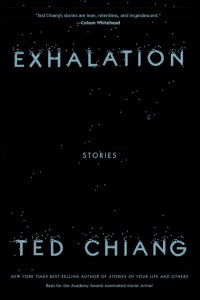 Ted Chiang is one of the more well-known names publishing science fiction and fantasy short stories today. His short story, “Stories of Your Life” was the basis for the film “Arrival” (which I discussed here). His latest collection, Exhalation: Stories is another thought-provoking, moving collection of stories that will make readers think deeply about many questions. What struck me is that, despite Chiang being an atheist, his is remarkably knowledgeable about religion and, though he challenges various religious traditions at points, he also writes stories that resonate with them. I wanted to discuss his religious vision and critique in this book. There will be SPOILERS for some of these stories ahead.
Omphalos
Readers who have done a lot of digging into the esoteric origins of young earth creationism will recognize the title of this short story a nod to one of the most obscure but also earliest examples of young earth literature, Omphalos: An Attempt to Untie the Geological Knot by Philip Henry Gosse. In Gosse’s book, written before the publication of Darwin’s On the Origin of Species, he argues that the fossil record was actually created with the appearance of age and thus doesn’t give evidence of the actual age of the earth. Gosse effectively introduced the argument of “appearance of age” into the young earth creationist repertoire of arguments for their position, and he did it before the evidence for evolution had reached the stage it has now.
In Chiang’s short story, he imagines a scientist interacting with the world that genuinely does appear to be young. In this world, fossils are found that show no evidence of prior age. Tree rings do not falsify a young earth. The evidence on the planet all gives way to yielding the result that the Earth really is young. But some evidence isn’t fixed. The multiplicity of language begins to show that it is from accident rather than by design. Moreover, some question comes into mind as to why the universe was created–was it really made for us, or for some other group of beings somewhere else? The evidence for the miraculous continues, but the purpose of the character we follow in the story begins to get called into question. This leads to the challenge that if this person was not created with a specific purpose, they are left to their own devices to find purpose, and they choose to search… for purpose.
“Omphalos” serves as a lens to question: what would it mean if the universe were not made for humans? (I don’t think it was, and wrote this article to that effect, though it has diverged some from my current views in 6 years.) Chiang’s story is a masterful look at how we might perceive the universe differently as what we think collapses around us. It also asks questions about purpose in a universe in which we don’t have our own, unique purpose. It’s a thought experiment but one that needs to challenge us.
The Merchant and the Alchemist’s Gate
The first story in the collection, “The Merchant…” is a series of smaller stories about how some different rings that allowed for time travel impacted people’s lives in a fantastic setting with explicitly Muslim religious expression. As the stories told by the merchant make the reader understand, the longing to be able to change the past and set events right to make up for mistakes is strong. But the concluding lines of the story make clear the point:
Nothing erases the past. There is repentance, there is atonement, and there is forgiveness. That is all, but that is enough. (36)
I have read this story before in another collection of Chiang’s, but it still struck me as forcefully as it did the first time. The deep yearning to change the past is found in so many of us now. But it is a longing we can’t fulfill. Yet even without magical rings that allow for time travel by passing through them, we can still find what is enough: repentance, atonement, and forgiveness.
Exhalation: Self-Destruction and Miracle
The title story of this collection, “Exhalation,” was a Hugo Award winner for best short story. In this story, there is a society of mechanical beings with brains that work based on pressure of the air. One of these beings discovers that its society is beginning to slow down in computations and the reason is due to the way they’re using their resources, pumping air from one place to another, which changes the air pressure and thus their capacities. From this, the being basically finds the second law of thermodynamics and posits that all things will eventually move towards equilibrium–dooming its society.
This short story has many intriguing threads. First, the notion of self-destruction by actions that are initially seen as good or profitable or beneficial. Clear parallels exist between this story and our own, as humanity continues to destroy the good creation of God through our own efforts to seek ease of transportation, luxury, and profit over all else.
Another startling aspect of “Exhalation” is the conclusion towards the end, that life itself is miraculous, because it manages to survive in a universe that is bent upon ultimately driving it out (the second law of thermodynamics means there will be an inevitable heat death of the universe). Life does seem to be a miracle: its diversity, persistence, the emergence of consciousness, and the very fact that life exists stand out. Though there may be natural explanations for these stages, the wonder of them cannot be totally explained in such naturalistic means. There is a sense of the miraculous in life.
Conclusion
There are many other themes found throughout this collection of stories, as well as his others. Questions about what it means to be a person; what mental life is like; how we destroy ourselves; and more. What are some themes you’ve picked up? What stories resonated with you? Check out Exhalation: Stories for some though-provoking stories.
Links
Be sure to check out the page for this site on Facebook and Twitter for discussion of posts, links to other pages of interest, random talk about theology/philosophy/apologetics/movies and more!
Book Reviews– There are plenty more book reviews to read! Read like crazy! (Scroll down for more, and click at bottom for even more!)
SDG.
——
The preceding post is the property of J.W. Wartick (apart from quotations, which are the property of their respective owners, and works of art as credited; images are often freely available to the public and J.W. Wartick makes no claims of owning rights to the images unless he makes that explicit) and should not be reproduced in part or in whole without the expressed consent of the author. All content on this site is the property of J.W. Wartick and is made available for individual and personal usage. If you cite from these documents, whether for personal or professional purposes, please give appropriate citation with both the name of the author (J.W. Wartick) and a link to the original URL. If you’d like to repost a post, you may do so, provided you show less than half of the original post on your own site and link to the original post for the rest. You must also appropriately cite the post as noted above. This blog is protected by Creative Commons licensing. By viewing any part of this site, you are agreeing to this usage policy.
“The Dragon Reborn” by Robert Jordan – A Christian (re)reads “The Wheel of Time”
 “The Wheel of Time” is a massive fantasy series by Robert Jordan (and, later, Brandon Sanderson) that is being developed into a television show for Amazon Prime. It’s cultural impact is huge, the series having sold more than 44 million copies. Here, we continue the series with Book 3, The Dragon Reborn. There will be SPOILERS in this post for the series.
The Creator, The Dark One, and the Pattern
There are extended portions in The Dragon Reborn that finally begin to draw out the relationship between the Pattern–a kind of stand-in for fate–as well as the Creator and the Dark One. The most extended discussion makes it clear that in this world, the Dark One and even the Creator are subject to the weaving of the Pattern. The Pattern itself runs along the Wheel of Time, setting a course for thousands of years, including the actions of individuals throughout the Pattern. Though the Pattern is active, weaving itself around individuals that have been picked out mysteriously as ta’veren, in the broadest sense, it is predetermined.
This leads to a kind of fatalism among the characters that many of them are constantly striving against. Rand is the most clear example, but the three ta’veren we’ve encountered–Rand, Mat, and Perrin–all work actively to try to thwart the pattern. Yet even their efforts seem to be taken into account and woven therein.
Again, even the Creator is explicitly said to be subject to the pattern, and this becomes an interesting point of worldview later in the series as speculation about the exact meaning of this abounds. Contrasted with the Christian worldview, in which God is radically free to act as God wills (though of course there is some debate about what this may mean), there is a great divide here between the world of The Wheel of Time and the real world.
The Creator
Now that we have some more insight into the notion of a Creator in “The Wheel of Time,” what is interesting is that the Creator here does not necessarily seem to be some kind of omnipotent or omniscient being. We already noted that the Creator seems bound by the Pattern, but we find here that the Creator seems to be a kind of demi-urge; an almost deistic creator who makes the world but then allows it to play out as woven by the pattern. “The Dragon Reborn” really only gives us a few hints of how this plays out, and so we will look at any other time the Creator appears to see what more is revealed.
Prophecy Fulfilled
Another dimension to all of this discussion is the notion of prophecy, which we find out from multiple Aes Sedai exists in huge amounts in the world. There are many, many prophecies of the Dragon, several of which appear to contradict. So for Rand to come and fulfill what is said to be the first step to revealing the Dragon Reborn remains yet something that some people reject. I can’t help but think about the prophecies of the Messiah in the Bible and how many yet did not believe in Jesus. Prophecy in The Wheel of Time can seem confusing and require the eyes of believers to see it. Is the same the case when it comes to Christianity? One example may be that of the virgin birth, a prophecy that was apparently fulfilled in the Old Testament (see Isaiah 7:10-17–the context shows that it was an immediate sign for Ahaz). Prophecy, it seems, is not as black and white as some would like it to be. It can take some discernment to draw out the meaning fully.
Conclusion
The Dragon Reborn is another fascinating step in the world of “The Wheel of Time.” Reflecting on its worldview, it is here we begin to find some of the greatest deviations from Christianity, particularly in its elevation of the Pattern/The Wheel over the power of the Creator and the character of the Creator. However, it is interesting to see how this notion of fatalism truly begins to play out in later books. We’ll delve into those as we go. For now, let me know your thoughts up to this point in the series!
Links
Be sure to check out the page for this site on Facebook and Twitter for discussion of posts, links to other pages of interest, random talk about theology/philosophy/apologetics/movies and more!
Book Reviews– There are plenty more book reviews to read! Read like crazy! (Scroll down for more, and click at bottom for even more!)
SDG.
——
The preceding post is the property of J.W. Wartick (apart from quotations, which are the property of their respective owners, and works of art as credited; images are often freely available to the public and J.W. Wartick makes no claims of owning rights to the images unless he makes that explicit) and should not be reproduced in part or in whole without the expressed consent of the author. All content on this site is the property of J.W. Wartick and is made available for individual and personal usage. If you cite from these documents, whether for personal or professional purposes, please give appropriate citation with both the name of the author (J.W. Wartick) and a link to the original URL. If you’d like to repost a post, you may do so, provided you show less than half of the original post on your own site and link to the original post for the rest. You must also appropriately cite the post as noted above. This blog is protected by Creative Commons licensing. By viewing any part of this site, you are agreeing to this usage policy.
Horus Heresy: “Horus Rising” and “False Gods” – the False Gods of statism and totalitarianism
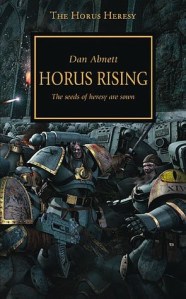 A huge series of novels set within the Warhammer 40,000 universe, the “Horus Heresy” tells the story of a massive rebellion against the Imperium of Man started by a man who was once the darling son of the Empire, Horus. Here, I want to discuss the way that the first two novels discuss religion and, in particular, the notion of “false gods” while setting it alongside false gods we face in our world today.
The Gods of Humanity
One of the background ideas in the Horus Heresy series is first introduced in the novel Horus Rising by Dan Abnett. This is the notion that the Emperor of Mankind has waged a lengthy Crusade to unite humanity, and that one of the primary aspects of this Crusade was the destruction of all religions. This theme is expanded greatly in False Gods by Graham McNeill, the second book in the series. Here, we find utter contempt from several of the main characters for those who carry along in different religious traditions. In this fictional world, it is unclear whether Christianity or any other major world religion ever existed, though a few analogues exist here and there. The main characters who express this disdain for religion, though, are also those who are pushing forward their own religionless agenda of one rule and a totalitarian state.
The False Gods of Statism and Totalitarianism
It is there–in the agenda of the totalitarian state combined with a kind of cult of statism that we find the true “false gods” in the novel False Gods. Yes, that’s a confusing sentence, but let’s parse it some. For Horus and those who follow him, the notion of the state itself has become a kind of idealized deity. There are even some who are working in this fictional world to deify the Emperor, and readers of the other fiction will know how that turns out. Horus and his ilk have worked for an ideal society, and it is one they don’t know how to stop fighting for. By making their god into the state, they ritualize violence and sanctify war. Their fall from grace, as it begins in this book, is surprising in some ways, but almost inevitable in others, due, again, to the way that violence in the name of the state has become an end for itself.
 We live in times in which statist violence is still sanctified. Whether it is dropping bombs on civilians in the name of our protection or the revision of history to make our own nation state the side that is in the “right” no matter what, the protection of the state leads to the worship of violence and the lifting up of war as an end rather than as a means (as one might argue for in Just War theory). I’ll be very interested to see if these themes continue to develop in the Horus Heresy, which can almost, so far, be seen as a critique of the worldview of the “good guys” in this fictional universe.
Links
Be sure to check out the page for this site on Facebook and Twitter for discussion of posts, links to other pages of interest, random talk about theology/philosophy/apologetics/movies and more!
Book Reviews– There are plenty more book reviews to read! Read like crazy! (Scroll down for more, and click at bottom for even more!)
SDG.
——
The preceding post is the property of J.W. Wartick (apart from quotations, which are the property of their respective owners, and works of art as credited; images are often freely available to the public and J.W. Wartick makes no claims of owning rights to the images unless he makes that explicit) and should not be reproduced in part or in whole without the expressed consent of the author. All content on this site is the property of J.W. Wartick and is made available for individual and personal usage. If you cite from these documents, whether for personal or professional purposes, please give appropriate citation with both the name of the author (J.W. Wartick) and a link to the original URL. If you’d like to repost a post, you may do so, provided you show less than half of the original post on your own site and link to the original post for the rest. You must also appropriately cite the post as noted above. This blog is protected by Creative Commons licensing. By viewing any part of this site, you are agreeing to this usage policy.
The Lutheran Church-Missouri Synod and Creationism: An Unnecessary Match
 The Lutheran Church-Missouri Synod, at their 2019 convention, re-iterated an affirmation and strengthened adherence to statements about creation and evolution made previously by Synod bodies. Res. 5-09A, according to the report from the LCMS, restates the position of earlier statements in the Synod, including a 1932 doctrinal statement that states, among other things:
We reject every doctrine which denies or limits the work of creation as taught in Scripture. In our days it is denied or limited by those who assert, ostensibly in deference to science, that the world came into existence through a process of evolution; that is, that it has, in immense periods of time, developed more or less of itself. Since no man was present when it pleased God to create the world, we must look for a reliable account of creation to God’s own record, found in God’s own book, the Bible. We accept God’s own record with full confidence and confess with Luther’s Catechism: “I believe that God has made me and all creatures.”
In effect, the Resolution (Res. 5-09A) is a significant and modern reiteration of creationism within the LCMS, specifically of young earth creationism. Thus, it also more emphatically excludes and alienates those within the Synod who do not affirm such a position and who have explored the possibility of other positions within the church.
I believe God has made me and all creatures?
There are a number of problems, of course, with such a statement. The quote provided above issues a bald appeal to Luther’s Small Catechism with the statement that “I believe God has made me and all creatures.” On the surface, this appears to be an attempt to use that quote to support direct, fiat creationism. Yet when one reads the rest of that section of the Small Catechism, one finds that the same exact section also states “[God] also gives me clothing and shoes, food and drink, house and home, wife and children, land, animals, and all I have. He richly and daily provides me with all that I need to support this body and life.” Yet the LCMS is not also passing resolutions that affirm direct, fiat action by God in the providing of our clothes, food, drink, shoes, house, and home. They’re not passing resolutions in which Synod laity is expected to affirm that God literally created their clothing and gave it to them directly. But the Catechism does make those statements in the exact same context, without any such qualification. This means that the Catechism does not exclude means when it comes to divine providence regarding these matters. God uses means to provide us with food, home, and clothing. Similarly, God may have used means when it comes to “God made me and all creatures.”
The appeal to the lack of humans being present at creation cuts both ways. No member or pastor in the LCMS was present when God created the heavens and the Earth, so how is it that they may define in more exacting detail how God created them? Indeed, they say that we ought to look at God’s own record, which explicitly states that the heavens declare God’s glory. Scientists have looked to the heavens to see direct evidence of God’s glorious creation. Such evidence, God’s “speech” from the heavens (Psalm 19), points to a universe much, much more ancient than the six- to ten-thousand years most young earth creationists affirm, especially those who are so exacting in defining days as “6 natural days” (more on that below, though).
Six Natural Days?
The Resolution (5-09A) reiterates that creation is in “6 natural days.” But the fact is that the concept of a day as 24 hours is itself a giving into cultural norms of our own time. The length of a day has changed through history, as is demonstrable from such things as the variance in Earth’s rotation, tidal forces, and more can and have changed the length of the day, either permanently or for short periods of time (read more on this phenomenon here). Now, these fluctuations are extremely minor, so the objection may be lodged that this doesn’t impact the concept of a “24 hour day” or a “natural day.” Once one does admit that minor variations are acceptable, however, it becomes much less clear why major variations or even different meanings may not be explored. After all, nothing in the Bible states that God held the Earth in a completely still, static state as the creation week continued. It may be the case that even with a “standard” or “natural” day, the actual duration of each of the 6 days of creation could have varied. So, again, the very concept itself is flawed, for it both reads into the Bible things that are not there and ignores actual observational evidence that it is wrong. In attempting to circumvent science and purely affirm Scripture, the LCMS has fallen into the trap of bringing along scientific presuppositions that are hidden in the premises of their statements, thus doubling the error by both affirming a non-scientific viewpoint and smuggling in scientific assumptions that undermine their position.
Consequences of the Position
The fact is that the LCMS attempt to “take a stand” on this issue places it squarely and officially outside of any possibility for youths or adults to reconcile the official stance of their denomination with modern science. As someone who was within the LCMS and is no longer, I can say that this is one of the reasons I left. The total disregard for any viewpoint that went against a (then unofficial) stance on the timing and/or means of creation as well as the lack of regard for science generally was a massive difficulty for me within the denomination. Making this the official stance will do nothing but exacerbate that same concern for many, many more. I distinctly recall several conversations with other LCMS people, young and old, about how the denomination’s stance on creation was a significant hurdle for them in their faith life.
This is about much larger issues than whether the LCMS will lose or gain members; it is about the actual faith lives of those within the denomination. By drawing the wagons in tighter in the circle, the LCMS pastors have rejected the duty to be pastoral to their congregants and aligned their church body with a statement that cannot be reconciled with mainstream science with mountains of data and evidence to support it. Youths will be told that not to affirm this “6 natural day” creation is to oppose the Bible, and because the LCMS has so strongly emphasized that to believe as they do just is to trust the Bible, such a rejection will lead to crises of faith. As someone who experienced this in my own life, this is deeply disturbing and disappointing. The church body has effectively taken a stance on a non-essential that will lead to many questioning essential issues.
There are many, many more issues with the stance of the LCMS here, as well. For example, in my own experience I have seen several LCMS churches utilize program materials from creationist organizations like Answers in Genesis. Yet, for all the LCMS purports to value doctrinal purity and affirm centrally Lutheran beliefs, their support for groups like Answers in Genesis shows that the Synod is far more interested in aligning with broad evangelical theology than in maintaining a distinctive Lutheranism. The use of youth materials from Answers in Genesis is troubling, not only because it stands so clearly against modern science, but because Answers in Genesis also uses its website to promote non-and even anti-Lutheran positions on things like baptism. For example, a search for “baptism” on the Answers in Genesis Website yields immediate links like this one, a sermon from Charles Spurgeon, in which he states:
the very great majority of Christian people think infant children are fit and proper subjects for this ordinance [baptism]; we, on the other hand, believe that none are fit and proper subjects for the ordinance of baptism, except those who really believe and trust in the Lord Jesus Christ as their Saviour and their King.
Yet the LCMS, an unashamedly Lutheran organization, is perfectly willing to hold hands with an organization that promotes strictly anti-Lutheran materials as top results on its website? Why? Because, again, the LCMS has fallen into the trap of valuing evangelicalism and the narrative of the “culture wars” more than it values its own adherence to Lutheran doctrine. This strong and hard stance on young earth creationism is just one of the many results of such a capitulation, but it is also one of the most vehement positions the LCMS is promoting within its churchwide body.
A Personal Appeal
The LCMS recently published a report in which it was revealed that the “2017 Confirmation Survey identified around a 1-in-3 rate of retention for individuals after confirmation” in the LCMS. This number spawned a number of discussions and responses to it. One such response, the “Executive Summary” of the survey, stated as a category that “Congregations must be safe places for young people to wrestle with life and faith in order for them to faithfully reach out to today’s culture.” Taking such a hard stance on a scientific issue that the LCMS is unwilling or unable to actively engage with (as shown by reliance on outside resources like Answers in Genesis) is the exact opposite of being a “safe place for young people to wrestle with life and faith…” It was not a safe place for me, personally, as I dealt with some of these difficult topics. I came very near to leaving the faith entirely, and it was ironically an LCMS person who said that Jesus resurrection didn’t hinge upon whether the Earth was 10,000 or 10 billion years old that helped me rethink my faith. But now, the LCMS has made even that slight possibility outside the bounds. Their statement has tied people’s faith with the age of the Earth, and that should not and must not be the foundation for any Christian faith whatsoever.
Links
Be sure to check out the page for this site on Facebook and Twitter for discussion of posts, links to other pages of interest, random talk about theology/philosophy/apologetics/movies and more!
Gregg Davidson vs. Andrew Snelling on the Age of the Earth– I attended a debate between an old earth and young earth creationist (the latter from Answers in Genesis like Ken Ham). Check out my overview of the debate as well as my analysis.
Ken Ham vs. Bill Nye- An analysis of a lose-lose debate– In-depth coverage and analysis of the famous debate between young earth creationist Ken Ham and Bill Nye the science guy.
SDG.
——
The preceding post is the property of J.W. Wartick (apart from quotations, which are the property of their respective owners, and works of art as credited; images are often freely available to the public and J.W. Wartick makes no claims of owning rights to the images unless he makes that explicit) and should not be reproduced in part or in whole without the expressed consent of the author. All content on this site is the property of J.W. Wartick and is made available for individual and personal usage. If you cite from these documents, whether for personal or professional purposes, please give appropriate citation with both the name of the author (J.W. Wartick) and a link to the original URL. If you’d like to repost a post, you may do so, provided you show less than half of the original post on your own site and link to the original post for the rest. You must also appropriately cite the post as noted above. This blog is protected by Creative Commons licensing. By viewing any part of this site, you are agreeing to this usage policy.
Book Review: “Haunted by Christ: Modern Writers and the Struggle for Faith” by Richard Harries
 Haunted by Christ is a riveting look at how modern writers dealt with lingering doubts, anger, sorrow, and the question of Christianity. Richard Harries asks readers to engage with several writers to ask them questions that might not normally be asked, and he challenges readers in ways that are intricately tied into these authors’ lives.
First, it is worth pointing out that the concept of “modern” here is being used in the technical sense, related to modernism. Harries sets this period starting with Fyodor Dostoevsky (1821-1881) and Closing in the early 20th century. The authors Harries surveys are Dostoevsky, Emily Dickinson, Gerard Manley Hopkins, Edward Thomas, T.S. Eliot, Stevie Smith, Samuel Beckett, W.H. Auden, William Golding, R.S. Thomas, Edwin Muir and George Mackay Brown, Elizabeth Jennings, Graham Greene with Flannery O’Connor, Shusaku Endo, and Evelyn Waugh, C.S. Lewis and Philip Pullman, and Marilynne Robinson. Readers familiar with the works of these authors will know they run the gamut from skeptics to devout Christians. What ties them together, in Harries reading, is that their works are “haunted” by the supernatural, and specifically through a grappling with the person of Jesus Christ.
As a reader, I was unfamiliar with many of the authors, not having read much from the modernist movement. (This line makes me want to say sorry to my English teachers.) Nevertheless, Harries gives enough biographical information on each author to understand the points he’s making. Indeed, most of the information in the book is biographical, as Harries draws out each authors’ struggle with faith and coming to terms with the person of Jesus Christ. Even the skeptics surveyed clearly interact with Christianity, even if in negative ways.
I found several chapters of particular interest. Seeing C.S. Lewis’s and Philip Pullman’s competing mythologies set alongside each other for examination was fascinating. The chapter on W.H. Auden and his quiet, almost “polite” faith drew to light the great impact culture can have on one’s perception of religion and the work of God. The chapter on Golding makes me want to read more from him, despite not enjoying The Lord of the Flies. Emily Dickinson as “smouldering volcano” was an insightful look at a phenomenally successful poet. Each chapter had something that struck me, though the book also left me wishing I did know more about the authors and their works. I suspect Harries would be pleased to know his work led me to reach out and start reading some of these other works.
The biographical way Harries writes integrates worldview questions into the writings of each author. It never felt as though he subverted their own personal narratives, however. He didn’t pull punches in describing the way a skeptic like Pullman spoke about religion. Nor did he cover up aspects of authors’ lives that some might find unappealing. It’s an honest, almost unyielding book. It made me uncomfortable at times, but in ways that challenged me to learn and understand.
Haunted by Christ is a fascinating work. Harries offers insight and vision into Christianity in ways that I hadn’t really thought of before. It made me want to read many of the authors mentioned. And it made me want to know what someone who actually was more familiar with these authors might think. Recommended.
Disclaimer: I was provided with a copy of the book for review by the publisher. I was not required to give any specific kind of feedback whatsoever.
Links
Be sure to check out the page for this site on Facebook and Twitter for discussion of posts, links to other pages of interest, random talk about theology/philosophy/apologetics/movies and more!
Book Reviews– There are plenty more book reviews to read! Read like crazy! (Scroll down for more, and click at bottom for even more!)
SDG.
——
The preceding post is the property of J.W. Wartick (apart from quotations, which are the property of their respective owners, and works of art as credited; images are often freely available to the public and J.W. Wartick makes no claims of owning rights to the images unless he makes that explicit) and should not be reproduced in part or in whole without the expressed consent of the author. All content on this site is the property of J.W. Wartick and is made available for individual and personal usage. If you cite from these documents, whether for personal or professional purposes, please give appropriate citation with both the name of the author (J.W. Wartick) and a link to the original URL. If you’d like to repost a post, you may do so, provided you show less than half of the original post on your own site and link to the original post for the rest. You must also appropriately cite the post as noted above. This blog is protected by Creative Commons licensing. By viewing any part of this site, you are agreeing to this usage policy.
Peace Must Be Dared: Dietrich Bonhoeffer’s call for true, insecure peace
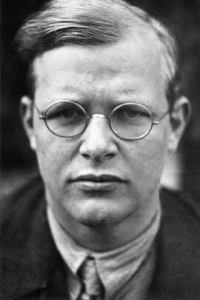 “How does peace come about? Through a system of political treaties? Through the investment of international capital in different countries? Through big banks, through money? Or through universal peaceful rearmament in order to guarantee peace? Through none of these, for the single reason that in all of them peace is confused with safety.” (DBWE 13:308)
Dietrich Bonhoeffer’s words continue to resonate prophetically into our own times. As war seems to loom around every corner, and the potential for armed conflict increases, fear mounts and we turn to our weapons and armies to bring us peace. But Bonhoeffer’s words correct this fleeing to violent means of security, and he challenges us to realize that there is a huge difference between peace and security. Arming ourselves for war does not bring peace but rather confuses the security we feel from our weapons with peace. Bonhoeffer explains:
There is no way to peace along the way of safety. For peace must be dared. It is the great venture. It can never be made safe. Peace is the opposite of security. To demand guarantees is to mistrust, and this mistrust in turn brings forth war. (DBWE 13, 308-309)
Our rush to mistrust the national “other” leads us not to peace but to confusing safety with peace. Peace, as Bonhoeffer says, must be dared. It demands vulnerability and, yes, trust of the other. And though this may seem foolish, we have been told that as we walk with Christ, we will be seen as fools to the world. God makes the supposed wisdom of the world, a wisdom which seeks security and safety, foolishness as we seek peace. Next, Bonhoeffer offers one of the most powerful calls to international peace that has perhaps ever been uttered or written:
Peace means to give oneself altogether to the law of God, wanting no security, but in faith and obedience laying the destiny of the nations in the hand of Almighty God, not trying to direct it for selfish purposes. Battles are won, not with weapons, but with God. They are won where the way leads to the cross. Which of us can say he knows what it might mean for the world if one nation should meet the aggressor, not with weapons in hand, but praying, defenseless, and for that very reason protected by “a bulwark never failing”? (DBWE 309)
These words are worth reading and re-reading and reflecting upon. Think about what Bonhoeffer is saying, particularly in context of his total corpus. He famously wrote that “When Christ calls someone, he bids them come and die” (Discipleship). But if that’s Christ’s call; if the way of the cross is a bid to come and die, do we truly, really think that Bonhoeffer is asking us to spiritualize that call to death, that call to the cross? Or is Bonhoeffer truly saying, radically, that the call from Christ is a real call for peace, a call that asks us to set aside our securities and safety and be willing, yes, to lay down our lives for the sake of our neighbor and even our enemy; a bid to come and die to know the peace that surpasses all human understanding?
Yes, it may seem foolish. Yes, it may seem unwise. But a true, radical call to peace as a call from Christ is a call to come and die. It sets aside all securities; it sets aside the fear of the other; and it asks us to truly, radically, follow where the way leads to the cross of Christ.
Peace and Security and the “Other”
Bonhoeffer’s words are relevant to more than war, too. More than once, as I’ve talked about refugee crises around the globe, people questioned me on whether it was safe to have potentially dangerous people around. Now, I vehemently disagree with any notion that the “other” is inherently violent, or that we as Christians should turn away from the passages in Scripture which so clearly state we ought to care for the sojourner in our land and the refugee. But even more, Bonhoeffer’s insight here makes clear that those who live in fear of the “other” and use that as justification for their turning away the sojourner or refugee are living by making security their goal rather than peace. Peace, Bonhoeffer states, is the opposite of security. The appeal to the security of our home forsakes love of neighbor and true, lasting peace in favor of the idolatry of security. In fear, we demand the closing of our homes, our neighborhoods, and our borders to the “other.” In fear, we blasphemously turn aside from the words of God and turn them into spiritualized texts that we use to soothe our consciousness as we watch the least of those among us get thrown into camps; get turned away; get sent to die; starve; die of thirst; and more. Our demands for peace, which we have conflated with security, have turned into a fearful rejection of the peace of God and the way of the cross.
Peace Must Be Dared
(DBWE 309, capitalization mine)
Bonhoeffer’s Context, and Ours
Bonhoeffer spoke these words during an ecumenical conference that sat in recent memory of the Great War and with the seething political forces moving towards the Second World War. He ends his demand for peace at this conference with the question: “Who knows if we shall see each other again another year?” It would be four years until Germany would take over Austria and have parts of Czechoslovakia ceded to Hitler. But Bonhoeffer issued his call for demanding peace, a call that would be ignored, as the German Christian church capitulated to the Nazis. It was a call that some may look back upon and see as naive. But in our own world, in the here and now, what wars can we prevent? What tragedies and miscarriages of justice continue for the sake of our false security-oriented “peace”? What would happen if we answered the fears of the “illegal,” the “refugee,” or the “enemy” with a call for daring peace–by praying and setting ourselves, defenseless, to fight against injustice with the power of God? What if we did dare peace?
SDG.
Links
Be sure to check out the page for this site on Facebook and Twitter for discussion of posts, links to other pages of interest, random talk about theology/philosophy/apologetics/movies and more!
Dietrich Bonhoeffer’s sermon demands we hear him today– Bonhoeffer’s prophetic words resonate in more than peace; here, find some analysis of what he said about the poor.
Dietrich Bonhoeffer– A collection of my posts on Dietrich Bonhoeffer and reviews related to him (scroll down for more).
SDG.
——
The preceding post is the property of J.W. Wartick (apart from quotations, which are the property of their respective owners, and works of art as credited; images are often freely available to the public and J.W. Wartick makes no claims of owning rights to the images unless he makes that explicit) and should not be reproduced in part or in whole without the expressed consent of the author. All content on this site is the property of J.W. Wartick and is made available for individual and personal usage. If you cite from these documents, whether for personal or professional purposes, please give appropriate citation with both the name of the author (J.W. Wartick) and a link to the original URL. If you’d like to repost a post, you may do so, provided you show less than half of the original post on your own site and link to the original post for the rest. You must also appropriately cite the post as noted above. This blog is protected by Creative Commons licensing. By viewing any part of this site, you are agreeing to this usage policy.
Disney’s “Aladdin,” A Christian view – silence, tradition, and justice
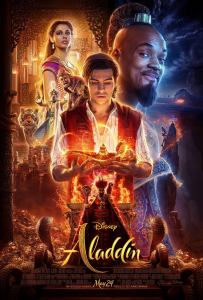 Disney’s “Aladdin” is a remake of a beloved animated classic. The film is a feast for the eyes and ears, with a few tweaks to the original that will be debated by longtime fans. I’d like to offer a reflection on the film from a worldview perspective. There will be SPOILERS, of course.
Aladdin and Temptation
One of the major themes of Aladdin is that of character. What kind of people are the characters, really? Aladdin at first appears to be nothing but a common criminal, but we quickly find that his thieving is in order to survive. He sings: “Gotta eat to live, gotta steal to eat” and, though the song presents it as a tongue-in-cheek moment (“I steal only what I can’t afford/(That’s everything)”), it already presents viewers with questions about the society in which he lives and the rightness or wrongness of his actions.
Aladdin is then faced with a huge test: what will he do with three wishes that seem to have no limits other than his imagination (or to wish for more wishes, of course)? As his relationship with Jasmine encounters a few lumps, he considers using his last wish to improve his situation even more, going against his promise to the Genie. The Genie, for his part, has acted as a moral compass throughout, asking whether Aladdin really wants to go “that way” and variations on that question multiple times. Aladdin is facing temptation, and he ultimately passes the test. After stopping Jafar, he gives Genie his freedom.
The temptation Aladdin faced was made more acute by his social situation. Coming from utter poverty, he was faced with the choice to descend into decadence and deceit in order to maintain his newfound power or to risk what he’d gained being honest. Of course, it certainly helps that he’d already saved the Kingdom multiple times.
The temptation of Christ in the desert is something I thought of as I reflected on this scene of temptation of Aladdin. In that part of Christ’s life, the deceiver offers Jesus all the power in the world if he will but bend the knee to him. But Jesus rejects this temptation, staying on a path that would ultimately lead to his death for us.
Justice
Agrabah is a Kingdom full of injustice. The streets overflow with people in need, and Princess Jasmine is touched by their plight and determined to do something about it. Her exploration of the city is not portrayed in this film as a flight of fancy, trying to escape for a day of adventure from the palace. Instead, Jasmine is trying to determine the state of her people and use that, she hopes, to rule better than she could have otherwise.
The Christian faith makes it absolutely clear that we are to care for the poor. Time and again, Jesus warns about the dangers of wealth and the fact that we cannot serve money and God. Additionally, throughout the Bible demands are made that we care for the poor and the refugee.
Jasmine’s own concern for the poor is a model of character. Placed into a position of great poverty and wealth, she seeks to understand the plight of those who are in need. The movie doesn’t go beyond a resolution that places her as Sultan, though her character leaves us in little doubt over what her actions will be.
Silence and Tradition
Jasmine is also central to the plot in another way: as a challenge to the silencing of marginalized voices and the wielding of authority to do so. She briefly hints at the concept of being told to go “speechless” early in the movie. Both her father and Jafar have repeatedly told her that women are to be silent, seen and not heard. In a climactic scene in which Jafar takes over as Sultan, she erupts into a powerful song that pushes back against this silencing of women that. She sings, in part:
I won’t be silenced
You can’t keep me quiet
Won’t tremble when you try it
All I know is I won’t go speechless
Speechless
She here makes the decision to speak up, appealing to the guards to push back against blind allegiance to tradition and authority and instead look to standards that go beyond that. Though not made explicit at all, it is clear in this scene that there is a higher standard than that of tradition or the authority vested in a seat like the Sultanate. Her wisdom challenged the tradition to show that it was mistaken.
Too often in our churches, appeals are made to authority or tradition to do the very same thing that Jafar and the Sultan tried to do to Jasmine: silence women. Instead, we are taught that there is “no man and woman” in Christ (Galatians 3:28) and that women were prophets, deacons, and apostles in the church. Like Jasmine, let us raise up women who won’t go speechless so that we can hear their wisdom as they wisely point us towards Christ.
Links
Be sure to check out the page for this site on Facebook and Twitter for discussion of posts, links to other pages of interest, random talk about theology/philosophy/apologetics/movies and more.
Engaging Culture: A brief guide for movies– I outline my approach to evaluating movies from a worldview perspective.
I have a number of ways in which I have critically engaged with culture in movies, books, and other arts in my posts on current events (scroll down for more posts).
SDG.
——
The preceding post is the property of J.W. Wartick (apart from quotations, which are the property of their respective owners, and works of art as credited; images are often freely available to the public and J.W. Wartick makes no claims of owning rights to the images unless he makes that explicit) and should not be reproduced in part or in whole without the expressed consent of the author. All content on this site is the property of J.W. Wartick and is made available for individual and personal usage. If you cite from these documents, whether for personal or professional purposes, please give appropriate citation with both the name of the author (J.W. Wartick) and a link to the original URL. If you’d like to repost a post, you may do so, provided you show less than half of the original post on your own site and link to the original post for the rest. You must also appropriately cite the post as noted above. This blog is protected by Creative Commons licensing. By viewing any part of this site, you are agreeing to this usage policy.

 J.W. Wartick - Reconstructing Faith