christian apologetics
Doubts about Evidentialism? C. Stephen Evans and a fideistic problem for evidentialists
 I’ve been reading through a few books related to apologetic methodology and epistemology of late. Most recently, I have finished Faith Beyond Reason: A Kierkegaardian Account by C. Stephen Evans. One thing that struck me in the book was a brief discussion of a possible difficulty with evidentialism as an apologetic methodology. Evidentialism is, essentially, the notion that apologetics should be based upon evidences to convince unbelievers of the truth of Christianity.* Evans himself did not direct a specific attack against the method, but some of his work could be perceived as a critique of the method. Specifically, he discussed Kierkegaard’s rejection of evidentialism:
[Kierkegaard] wants to argue that if you want something like an eternal happiness more than anything else, then it may be reasonable to commit yourself wholeheartedly to something that promises to help you obtain it, even if the chances of obtaining what you seek are not high because the objective probability that eternal happiness is truly to be gained in this way is not high either. (Evans, 108, cited below)
The thrust of this point is that one may, perhaps, rationally commit to a belief when the risk/reward is at a certain level. It’s a little similar to Pascal’s Wager, but Evans has more in mind than this: “[I]f your desire for this good is high enough… then even a very low probability would be sufficient to motivate belief” (ibid). The argument is therefore more subtle than a simple risk/reward scenario.** Instead, Evans’ point (or at least his exegetical point regarding Kierkegaard) is that one’s own desires play into commitment to beliefs, and that this is not itself an irrational thing.
Yet this point may seem a bit devastating to evidentialists. After all, evidentialists would generally hold that one should not believe without sufficient evidence, and that theistic arguments are strong enough to convince others to believe. If, however, one may grant that it may be reasonable to hold to beliefs even if there is a very low probability on the basis of one’s desire for a certain end, then it seems that evidentialism may itself be a faulty grasping for rationalistic certainty.
Within Kierkegaard’s own context, he was certainly reacting against rationalism. But evidentialism is not reducible to stark rationalism. Rather, it is a method not only of apologetics but also of epistemic investigation, depending upon one’s usage. Perhaps the evidentialist may acknowledge that one may rationally commit to a position–say, theistic belief–based upon one’s desire for that great good, but that does not preclude evidences for that belief. More importantly, the evidentialist may introduce the concept of a defeater–a belief which may serve to disprove or make another belief more improbable. Once one has been presented with defeaters, one may not rationally cling to one’s belief simply because one desires the truth of it; instead, one must either defeat the defeaters themselves or have sufficient evidence to hold to the belief in spite of possible evidence against it.
It therefore seems to me that arguments like Kierkegaard’s point does not do much to discredit evidentialism. Rather, it merely provides a possibility for people to hold beliefs in the absence of evidence either way. Once one has evidence against one’s belief, however, one should–at risk of epistemic suicide–either ground one’s belief or show that the evidence against that belief is not firmly grounded. Evans seems to acknowledge this as well, for he noted the value of evidence despite the possibility for “properly basic” belief.
Of course the question of whether one “should” think one way or another is itself highly contentious. I’ll leave that debate for another post or, even better, the comments.
*Yes, I do realize I’ve vastly oversimplified here. That’s the nature of writing shortish blog posts! For what I consider the best discussion of different apologetic methodologies, check out Faith Has Its Reasons
**I also acknowledge that Pascal’s Wager is more complex than a simple risk/reward scenario.
Source
C. Stephen Evans, Faith Beyond Reason: A Kierkegaardian Account (Reason & Religion)
Links
Be sure to check out the page for this site on Facebook and Twitter for discussion of posts, links to other pages of interest, random talk about theology/philosophy/apologetics/movies and more!
SDG.
——
The preceding post is the property of J.W. Wartick (apart from quotations, which are the property of their respective owners, and works of art as credited; images are often freely available to the public and J.W. Wartick makes no claims of owning rights to the images unless he makes that explicit) and should not be reproduced in part or in whole without the expressed consent of the author. All content on this site is the property of J.W. Wartick and is made available for individual and personal usage. If you cite from these documents, whether for personal or professional purposes, please give appropriate citation with both the name of the author (J.W. Wartick) and a link to the original URL. If you’d like to repost a post, you may do so, provided you show less than half of the original post on your own site and link to the original post for the rest. You must also appropriately cite the post as noted above. This blog is protected by Creative Commons licensing. By viewing any part of this site, you are agreeing to this usage policy.
Really Recommended Posts 4/25/14- Dean Koontz, egalitarianism, “Cosmos,” and more!
 Here, I have a list of great reads for you to browse, from Easter errors to Dean Koontz, from marriage to atheism. Check them all out, and let me know what you thought!
Five Errors to Drop from Your Easter Sermon– Check out this read on common mistakes made when talking about Easter.
Tie-Breaker– What happens when married couples come to a point where they are at an impasse? Does there need to be a marital tie-breaker grounded in notions of hierarchy of genders? Check out this thought-provoking post on the topic. For my own thoughts on the topic, check out my post “Who’s in Charge?” over at CBE.
Dean Koontz’s “Innocence”– From the author (links removed), Anthony Weber, “Dean Koontz is perhaps the most famous Christian author alive today. He has sold over 450,000,000 books, with 17,000,000 added each year. He’s sold more books than Stephen King…” That’s why you should care about the guy. Check out this look at a recent book from Koontz.
What I Needed to Hear as an Atheist (And How I Needed to Hear It)– Approach matters! Check out this fantastic post on how we may approach atheists who are wondering about the faith.
Cosmos Scrubs Religion’s Positive Influence from the History of the Scientific Revolution– The TV series “Cosmos” has seemingly purged any notion of the positive influence of religion from the history of scientific development. Check out this insightful article which explores some of this history and the way “Cosmos” has distorted it.
Threshold Belief and Evidentialism- Can evidentialism work?
 The evidentialist school of apologetics is essentially based upon the notion that the evidence for Christianity is such as to make it rationally justified to believe (and perhaps even compel one to believe). Note that evidentialists (generally) do not claim that this means the Holy Spirit plays no part in conversion or that people are fully capable to choose God.* C. Stephen Evans, in his book Faith Beyond Reason: A Kierkegaardian Account, examined evidentialism in light of Kierkegaard’s critique of the method.
One of the primary arguments Kierkegaard had against evidentialism** is that a human being is incapable of considering the whole range of facts regarding a piece of evidence and so may never be justified in holding evidential belief. Evans characterized this argument (following the terminology of Robert Adams) the “postponement argument”:
The idea… is that historical inquiry is never completed, and thus historical beliefs based on such inquiry must always be tentative. It is always possible, at least theoretically, that new evidence will emerge that will overturn any historical conviction. Thus, if religious beliefs were based on such evidence, they would have to be of this tentative character. (Evans, 108, cited below)
Now–this is key–Evans also noted that “Kierkegaard thinks, however, that religious beliefs should have a kind of finality that differs from this kind of scholarly judgment.” With these quotes in mind, we may examine what seems to be a Kierkegaardian objection to evidentialism.
The objection seems to be that faith requires a kind of certainty which may never be provided by historical inquiry; thus, historical inquiry (evidences) may not provide a justifiable grounding for faith. I think the main problem with this is that Kierkegaard seemingly insisted on an impossible level of certainty for evidence. That is, a dismissal of evidentialism based upon this reasoning seems to be only warranted because Kierkegaard has adjusted the level of evidence needed. It is true that historical inquiry may only ever provide probability, but that does not imply we are incapable of believing anything historical.
Of course, one may argue that I have missed the point Kierkegaard is trying to make. It’s not that all historical inquiry must be subjected to the standard of certainty; rather, only on matters of ultimate import must we have certainty. If this were his claim, I think one may rightly respond by questioning why that would be the case. However, it seems, according to Evans, that Kierkegaard was less concerned with a rejection of evidentialism than he was concerned with maintaining a place for the emotions and subjectivity within faith. On that count, I don’t know of any evidentialist who would argue that one cannot have subjective or emotional reasons for faith either.
Now, to return at last to the quote block above. If all that faith were based upon within an evidentialist system were historical evidences, then it seems the quote is correct regarding the tentative nature of faith. But the evidentialist claim is not that faith may only be based upon evidence. Instead, it is that the evidence is such as to justify or ground faith (some would argue it is enough to compel faith). So perhaps Kierkegaard and evidentialism are not irreconcilable after all.
Perhaps the strongest objection which may be derived from the above comments from Evans and Kierkegaard center around the notion of threshold belief. Evans very briefly hinted at this possible problem for evidentialism: basically, the notion is that for the evidentialist method to work, there must be some “threshold” for commitment to a belief. For Kierkegaard, that threshold is certainty, which is why historical evidence cannot satisfy his criterion. However, for the evidentialists themselves, the question remains as to what that threshold is. If this threshold cannot be pinned down, it may be argued, evidentialism as a system cannot work. I think that this challenge is less an arguments against evidentialism than it is an argument for epistemic uncertainty. However, diving into such an argument is beyond the realm of what I want to hit here. For now, I think that I may answer this argument by simply saying that it does not follow that 1) if we can’t pin down an exact threshold beyond which we must be convinced to commit to a belief then 2) we cannot commit to a belief. The argument is simply off target.
Notes
*I say this so as to avoid lengthy debate, one way or the other, regarding how one comes to be saved. My intent in this post is to investigate the apologetic method, not soteriological details.
**I should note that Kierkegaard should be understood within his historical context, in which he was reacting against overly rationalistic faith. Thus, his (sometimes extreme) reaction against rationalism–while overreaching–is perhaps more understandable. There is also, of course, some anachronism in this statement because “evidentialism” is being used in its specific fashion to reference the method of apologetics, while Kierkegaard was reacting against rationalism. I acknowledge this anachronism but simply point out it is for the sake of simplifying terminology in the post.
Links
Be sure to check out the page for this site on Facebook and Twitter for discussion of posts, links to other pages of interest, random talk about theology/philosophy/apologetics/movies and more!
Sources
C. Stephen Evans, Faith Beyond Reason: A Kierkegaardian Account (Reason & Religion)
SDG.
——
The preceding post is the property of J.W. Wartick (apart from quotations, which are the property of their respective owners, and works of art as credited; images are often freely available to the public and J.W. Wartick makes no claims of owning rights to the images unless he makes that explicit) and should not be reproduced in part or in whole without the expressed consent of the author. All content on this site is the property of J.W. Wartick and is made available for individual and personal usage. If you cite from these documents, whether for personal or professional purposes, please give appropriate citation with both the name of the author (J.W. Wartick) and a link to the original URL. If you’d like to repost a post, you may do so, provided you show less than half of the original post on your own site and link to the original post for the rest. You must also appropriately cite the post as noted above. This blog is protected by Creative Commons licensing. By viewing any part of this site, you are agreeing to this usage policy.
Engaging Culture: Demon Hunter’s “Extremist” and the Apologetic Task

Here, we’ll take a look at a recent album released by a favorite band of mine. Then, we’ll look at how this project relates to the broader field of apologetics.
Demon Hunter continues to release album after album, much to the delight of their fans (like me!). The heavy metal (in the spirit of nu metal/metalcore) band is formed of Christians who speak their faith through lyrics.
Musically, the album shows the range Demon Hunter has developed over time. There are a few ballads interspersed among numerous heavy riffs and screaming. The lead singer, Ryan Clark, has developed much since the first album. His voice is haunting when he sings, and his screaming continues to reverberate through the guitars and drums.
The lyrics are where the album truly shines. In “The Heart of a Graveyard,” for example, we find an existential call to awareness of the transcendent: “Tell me that your hopes and dreams don’t end in/the heart/Of a graveyard.” The cry to realize there is more to life than an ending “six feet” under is quite poignant. “I Will Fail You” is a heart-rending look into human nature: “I will fail you, of that I’m sure/I will remind you of the pain forevermore/And when my sins are just a memory, faith restored/I will fail you to the core.” The words are reminiscent of Paul’s words regarding his own failings in Romans 7:19 and present a clear call to the need for repentance. “Artificial Light” rejects the false replacements for true comfort and peace offered by a sinful world.
Overall “Extremist” is another excellent entry into Demon Hunter’s ever-growing list of hits. The music is intense, but the lyrics are truly the star in this album. From the existential need for salvation to themes of repentance and insight into human nature, Demon Hunter hit this one on all cylinders. I highly recommend the album.
So why post this review on a website dedicated to philosophy of religion, theology, and apologetics? Let’s not forget that one of the tasks of the apologist is to critically engage culture at every level. What part of reality falls outside the purview of the Christian worldview? Short answer: no part does. I want to encourage my fellow apologists to engage with the arts as much and as often as possible.
Not only that, but an album and band like this is capable of becoming an apologetic itself. I’ll never forget hearing Demon Hunter’s song “Thorns” for the first time (from an earlier album) and relating it back to the reality of the Cross and Jesus resurrection. Music like this which is lyrically fulfilling is itself an apologetic presentation. The fact that a band like Demon Hunter has the talent to headline shows at Ozzfest, among others, speaks to the appeal of the Christian worldview even in a culture which allegedly remains “checked out.” I thus also want to appeal to my fellow Christians generally: use the talents God gave you. Your worldview will come through in your writing, playing, painting, sculpting, and the like. God has uniquely gifted you to be a light to the nations.
Links
Be sure to check out the page for this site on Facebook and Twitter for discussion of posts, links to other pages of interest, random talk about theology/philosophy/apologetics/movies and more!
Engaging Culture: A Brief Guide for movies– I reflect on how Christians can engage with popular movies in order to have meaningful conversations with those around them.
Book Review: “Think Christianly” by Jonathan Morrow– Take a look at this book about how we might engage with Christianity in every aspect of our lives.
SDG.
——
The preceding post is the property of J.W. Wartick (apart from quotations, which are the property of their respective owners, and works of art as credited; images are often freely available to the public and J.W. Wartick makes no claims of owning rights to the images unless he makes that explicit) and should not be reproduced in part or in whole without the expressed consent of the author. All content on this site is the property of J.W. Wartick and is made available for individual and personal usage. If you cite from these documents, whether for personal or professional purposes, please give appropriate citation with both the name of the author (J.W. Wartick) and a link to the original URL. If you’d like to repost a post, you may do so, provided you show less than half of the original post on your own site and link to the original post for the rest. You must also appropriately cite the post as noted above. This blog is protected by Creative Commons licensing. By viewing any part of this site, you are agreeing to this usage policy.
Book Review: “Faith Founded on Fact” by John Warwick Montgomery
 John Warwick Montgomery (hereafter JWM) is about as evidentialist as they come, and Faith Founded on Fact: Essays in Evidential Apologetics
Central to JWM’s apologetic methodology is the notion that one need not presuppose the truth of the Bible in order to defend it. For him, one may make the appeal to the skeptic by going to the skeptic and battling their reasoning on their own grounds. He states his thesis succinctly:
Few non-Christians will be impressed by arguments… in which the Christian stacks the deck by first defining ‘rationality’ and ‘internal consistency’ in terms of the content of his own revelational position and then judges all other positions by that self-serving criterion. (xix, cited below)
JWM surveys various attacks on the practice of evidential apologetics and argues that they fail (28ff). Although he deals with various liberal objections to apologetics, the core of his concern is for the objections raised by those who feel as though the evidentialist approach does injustice to faith. In response, he notes that any approach which removes Jesus from historical investigation–from hard evidence capable of being explored by all–reduces Him to a “historical phantasm” and does injustice to the reality of the incarnation (34-35).
The possibility of miracles and the argument of Hume engages in “circular reasoning” for Hume’s argument relies upon “unalterable experience” which is, of course his own experience and that of those who agree with him. Moreover, the definition of miracle has been slanted in such a way as to make it either irrelevant or beyond the realm of evidence by various parties (46ff). A case study of the miracle of the resurrection provides proof that miracles may be examined with an evidentialist mentality, for any who wish to deny the notion must relegate history to a place which may never be accessed through evidence (56ff).
JWM analyzes Muslim apologetics and concludes that it provides a number of lessons for Christian apologetists. Among these is the notion that merely showing the falsity of other religions is not enough for an evidential defense (93-94), the notion that “no religion is deducible from self-evident a prioris…” (97), and mere appeal to “try out” a religion is not enough to establish its credibility (98).
One of JWM’s most famous (or infamous, depending upon your view) essays is “Once Upon an A Priori,” in which he launched a broad-spectrum attack on presuppositional apologetics as a methodology. In this essay, JWM argues that when one suggests there is no neutral epistemic ground between two positions whatsoever–as presuppositional apologists do–“Neither viewpoint can prevail, since by definition all appeal to neutral evidencve is eliminated” (115). Because there are no neutral facts, there can be no appeal to facts to make one’s case; instead, all one is able to do is argue in circles against each other… “appeal to common facts is the only preservative against philosophical solipsism and religious anarchy…” (119). Instead, Christians must, like Paul, “become all things to all” people (122) in order to make the case for Christianity.
The practice of apologetics, for JWM, is intended to break down the barriers to belief. But the evidences are so strong that they obligate belief in Christian theism. However, the work of the Spirit is the work of conversion. The “evidential facts are God’s work, and the sinner’s personal acceptance of them… is entirely the product of the Holy Spirit” (150).
After an essay appealing to Christians to continue to use mass communication to spread the Word, JWM turns to “The Fuzzification of Biblical Inerrancy.” By “fuzzification,” he means (following James Boren), “the presentation of a matter in terms that permit adjustive interpretation” (217). In its application to inerrancy, it means the constant adjustment of inerrancy to make it invulnerable to attack in often ad hoc ways. What one is left with is “inerrancy devoid of meaningful content…” (223). In order to combat this, JWM suggests explicit definitions of terms such that one has a firm grasp upon what is meant by inerrancy, rather than a constant modification of the term and meaning.
There are a few areas of disagreement I would express with JWM’s theses. First, his apparent dismissal of the practice of taking the “falsity of one religion” as proof of another (93-94). He is correct in that the falsity of any given religion does not entail the truth of any other one. However, it seems to be the case that the falsity of any one religion does entail that any which have not been proven false are inherently more probable. Second, I think his reaction against presuppositionalism has led him to reject all of its tenets a bit too vehemently. For example, it seems to me that in his rejection of the notion there can be “no neutral ground” he also seems to jettison the notion that facts are interpreted no matter what the facts are. However, at times it is difficult to distinguish whether he is making a statement in a vaccuum or against a context. In relation to “facts,” he clearly holds the facts are determinative enough to demonstrate Christianity; but he also holds that people will not accept said facts other than through God’s action. Thus, perhaps the gulf between his position and that which he rejects is not so wide.
These disagreements aside, I also have enormous respect for and agreement with much of the content of Faith Founded on Fact. JWM effectively disposed of any apologetic method which inherently ignores the value of evidentialist reasoning, and he did so through not only apologetic but also theological reasons (i.e. it turns Christ into an “historical phantasm”). Moreover, his critique of presuppositional methodology–though at times off base (as noted above), does not entirely miss the mark. In particular, his critique that presuppositionalism voids any kind of objective method for determining facts is troubling for those who have presuppositional tendencies (readers should note that I myself think presuppositionalism has some merit–see my posts on the topic).
Faith Founded on Fact, put simply, is fantastic. In this review, I have only surveyed a small number of the areas I found to be of note throughout the work. JWM is witty and clever as usual, but he also raises an enormous number of points to reflect upon whether one agrees with his views or not. He offers a number of ways to approach apologetics from an evidentialist perspective, while also offering some devastating critiques of those who would allege that evidentialism fails. The book is a must read for anyone interested in apologetics.
Links
“How Much Evidence to Justify Religious Conversion?” – John Warwick Montgomery on Conversion– I summarize and analyze an incredible lecture given by John Warwick Montgomery which I had the pleasure of attending at 2012’s Evangelical Theological Society Conference. JWM argues for an evidential view of religious conversion.
Be sure to check out the page for this site on Facebook and Twitter for discussion of posts, links to other pages of interest, random talk about theology/philosophy/apologetics/movies and more!
Source
John Warwick Montgomery, Faith Founded on Fact: Essays in Evidential Apologetics
SDG.
——
The preceding post is the property of J.W. Wartick (apart from quotations, which are the property of their respective owners, and works of art as credited; images are often freely available to the public and J.W. Wartick makes no claims of owning rights to the images unless he makes that explicit) and should not be reproduced in part or in whole without the expressed consent of the author. All content on this site is the property of J.W. Wartick and is made available for individual and personal usage. If you cite from these documents, whether for personal or professional purposes, please give appropriate citation with both the name of the author (J.W. Wartick) and a link to the original URL. If you’d like to repost a post, you may do so, provided you show less than half of the original post on your own site and link to the original post for the rest. You must also appropriately cite the post as noted above. This blog is protected by Creative Commons licensing. By viewing any part of this site, you are agreeing to this usage policy.
Really Recommended Posts 4/11/14- submission, creationism, and apologetics!
 I’m really itching for a game of Ultimate Frisbee. Seriously, can the snow please melt? Anyway, this week I’m presenting for your reading pleasure a slew of high quality posts on the (non-)tasks of the apologist, submission, “street epistemology,” presuppositionalism, and young earth creationism. How’s that for a lineup? Let me know your thoughts in the comments! I love to read what you think. Have a link to share? Drop it here with your own thoughts on it, and I may include it next time!
What an Apologist’s Job is NOT– Melissa Cain Travis offers some extremely sound advice on things to avoid as an apologist. This is a very practical post and a most read for those of us involved in apologetics. Read it!
On Submitting to One Another– What does it mean to submit? How does the notion of submission to one another play out in the church? Check out this thoughtful post by Paul D. Adams on these topics.
On Interacting with Street Epistemologists– Nick Peters has spent some time interacting with “street epistemologists” trained by atheist Peter Boghossian. Here, he shares some of his insights gained from this task. If you’re unfamiliar with the Boghossian, I highly recommend you check out “Peter Boghossian, Atheist Tactician.”
Picture Charades: Do you know your presuppositional apologists?– A fun activity of identifying key presuppositional thinkers. I take an integrative approach to apologetics, so I think it is important to read evidentialists, presuppositionalists, classical apologists, and yes, even fideists.
An Ancient and Alien Forest Reconstructed: A Challenge for young earth creationism– How might the forests of the past present difficulties for young earth creationism? Well, read the post to find out! It’s well worth it.
Really Recommended Posts 3/21/14- egalitarian marriage, the Bible and murdering children, inerrancy, and more!
 Well we got snow again here (about 3 inches). If it’s anything like last year, we’ll be seeing snow in May. Alas. Given that we’re stuck inside, I am pleased to present a number of excellent posts here for your perusal. The posts address the notion that egalitarian marriage is less satisfactory, apologetic interaction in social media, a recent meme about murdering children in the Bible, and more!
Gender Roles in Marriage (Part 1): Couples in Traditional Roles Have More Sex, Study Finds– I have seen several people sharing the results of a study in which it was found that couples in traditional roles have more sex. Some have trumpeted this as proof that traditional marriage is actually superior to egalitarian marriage. (Here, realize that “traditional marriage” is referring to a complementarian relationship wherein the man is in charge of the household.) However, apart from the problem that the number of instances of sex in a month is perhaps not the best indicator of marital stability and happiness, it seems there are other difficulties with this study and those drawing conclusions about the superiority of complementarianism. Check out this article on the topic.
How to Murder Children: Bible Style – Debunked– There’s a meme rolling around the internet about how the Bible has murdering children in it. It’s constructed without commentary and seems to be slanted towards the view that the Bible is evil. Check out this debunking of the meme (it includes the original). Very good work here, and I really think you should check it out!
What Christians can learn from skeptics– Certainly not an exhaustive list, this is actually more specifically looking at how skeptics are using Wikipedia to slant opinion on religious issues. How might Christians use this as a way to increase confidence in the faith?
Errors of Inerrancy– An interesting post on how to avoid some pitfalls when thinking of the doctrine of inerrancy. The list of errors includes both mistakes made by both critical scholarship and evangelicals regarding the text of Scripture.
One Christian Apologist’s Advice on Using (Anti-)Social Media– Some good advice here on how to become more effective via social media. Though I personally think Facebook is actually a better way to do apologetics than described in this post.
Does good always eliminate evil?
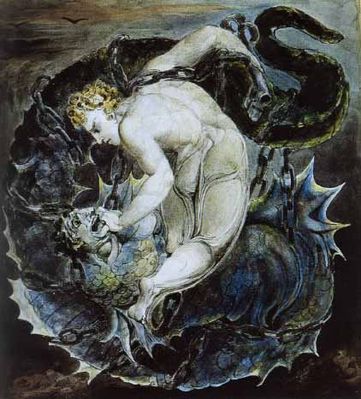 One of the key components of the composition of the problem of evil (at least its logical variety)* is the notion that good will eliminate evil. The late J.L. Mackie put it this way:
A wholly good omnipotent being would eliminate evil completely; if there really are evils, then there cannot be any such being. (Mackie, 150, cited below)
Simply put, this statement and any like it seem fairly obviously false if made without any rather major qualifications. After all, it seems clear that the total elimination of evil is not actually a logically necessary end for a good being, even an all-good, all-powerful being.
C. Stephen Evans presented a case to show that Mackie’s statement (and those like it) are simply mistaken. He noted that the principle that good must eliminate evil seems to be blatantly false without a number of qualifications. He argued that there are some evils which good beings will allow in order to bring about a greater good. The analogy he used was that of parents not allowing their children to ride in automobiles. After all, this would ensure that they would never be involved in the evil of a car crash, but surely it would also prevent greater goods of interaction with friends, learning to drive and the responsibility that comes with, and more (127). However, Evans was quick to note that a deity is by no means directly analogous to a human parent. The resources God would have to prevent evil are infinitely greater than that of a human parent.
In the case of God, however, God cannot bring about the logically impossible. Rather than going for a full-on theodicy (an account of why evils exist), Evans argued that certain goods are impossible to achieve without some evil. Thus, courage necessitates some kind of suffering (128). He did not argue that this notion alone provides a comprehensive theodicy; but for our purposes it is enough. It seems clear that the notion that good must eliminate evil is not only unsupported by argument (it is an a priori assumption), but also patently false. That is, we have evidence that at least some evil must be allowed in order for some good to be brought about.
I want to be clear about my thesis in this post: I am not claiming to have a comprehensive explanation for all evil everywhere. My claim is rather that good does not, by necessity, eliminate evil. That’s all. I believe that I have established this thesis. If so, then Mackie’s argument (and those like it) fail.
*The logical problem of evil is basically an argument that there is a contradiction in theistic belief related to God’s power and goodness and the existence of evil.
Links
Be sure to check out the page for this site on Facebook and Twitter for discussion of posts, links to other pages of interest, random talk about theology/philosophy/apologetics/movies and more!
Sources
C. Stephen Evans, Faith Beyond Reason: A Kierkegaardian Account (Reason & Religion)
J.L. Mackie, The Miracle of Theism (New York: Oxford, 1982).
SDG.
——
The preceding post is the property of J.W. Wartick (apart from quotations, which are the property of their respective owners, and works of art as credited; images are often freely available to the public and J.W. Wartick makes no claims of owning rights to the images unless he makes that explicit) and should not be reproduced in part or in whole without the expressed consent of the author. All content on this site is the property of J.W. Wartick and is made available for individual and personal usage. If you cite from these documents, whether for personal or professional purposes, please give appropriate citation with both the name of the author (J.W. Wartick) and a link to the original URL. If you’d like to repost a post, you may do so, provided you show less than half of the original post on your own site and link to the original post for the rest. You must also appropriately cite the post as noted above. This blog is protected by Creative Commons licensing. By viewing any part of this site, you are agreeing to this usage policy.
Book Review: “A Visual Defense” by Robert Velarde
 Robert Velarde’s A Visual Defense: The Case for and Against Christianity
Positives
The clear and extremely important benefit of the work is that it really does provide a way for people to envision how a number of arguments related to the truth of Christianity would look mapped out. The way that Velarde brings this out is by making a flow chart with the argument mapped out alongside objections and rebuttals.
The flow charts themselves are extremely helpful, because they really do allow one to sit with the book and use a finger to trace how the argument would work in practice. Although I was familiar with the arguments given, I felt as though I learned some things simply by seeing the arguments lined up in such a way as to follow them pictorially.
The format of the book is also very helpful. Each chapter begins with a flow chart that addresses a specific topic via an argument(s). The different parts of the flow chart have different shapes depending on whether they are the conclusion, assumption, premise, or rebuttal. These flow charts have every bubble numbered. The chapter following the flow chart simply lays out the numbers in order and explains in greater detail the conclusion, the premises, the objections, and the rebuttals. Thus, the format is highly readable and helps to draw out the flow chart more readily. I found myself flipping back to the flow chart very frequently as I read through the book.
Negatives
This book cannot really be used in isolation. One either needs another stack of books to get to the heart of many of the topics introduced or to come to the book with a working knowledge of a wide range of apologetics topics. The numbered outline of each part of the flow chart often gives only a small paragraph in defense of rather major apologetics topics. For example, the defense of the argument from religious experience comprises a page and a half and three bubbles on the flow chart (46-47). The argument itself is an area of major interest for me and, having read ten books and multiple articles on the topic, I realize it is a really massive issue. But due to the format of the book, this diminishes its value somewhat, as it seems like it would best be used as part of an apologetics class or an introduction to the issues related to the defense of the Christian faith. However, in order to do so, one would need a hefty general apologetics book(or a couple more specialized ones) to use alongside it.
I’m sure this was a conscious decision on the part of Velarde and others–the book is surely intended to be used in this fashion–but that doesn’t make the price of entry for newcomer any less.
The “visual” aspect of the visual defense could also be better integrated in the body of the work. The flow charts are extremely helpful, but it perhaps could have been even better to have a few more of them scattered about to use as defenses of various premises or other issues. I’m not a visual learner, so I admit it is hard for me to brainstorm on this, but I also think that the book could have perhaps integrated more pictures to show how the argument moves from one point to the next.
Conclusion
Robert Velarde is to be commended for taking a unique approach to introducing apologetics. The importance of providing a way for visual learners to understand these arguments in a pictorial fashion should not be understated. That said, the book essentially requires others to be read alongside it. I would imagine this book would be most useful for professors or small groups wanting to introduce the topics as opposed to a book to pick up and hand to a friend interested in apologetics. It would be a great tool to utilize in an apologetics class to introduce each major argument and then proceed into lengthier defenses of each.
Links
Be sure to check out the page for this site on Facebook and Twitter for discussion of posts, links to other pages of interest, random talk about theology/philosophy/apologetics/movies and more!
Source
Robert Velarde, A Visual Defense: The Case for and Against Christianity
I was provided with a review copy of the book from Kregel. I was in no way asked or required to offer any specific type of review. My thanks to the publisher for the review copy.
SDG.
——
The preceding post is the property of J.W. Wartick (apart from quotations, which are the property of their respective owners, and works of art as credited; images are often freely available to the public and J.W. Wartick makes no claims of owning rights to the images unless he makes that explicit) and should not be reproduced in part or in whole without the expressed consent of the author. All content on this site is the property of J.W. Wartick and is made available for individual and personal usage. If you cite from these documents, whether for personal or professional purposes, please give appropriate citation with both the name of the author (J.W. Wartick) and a link to the original URL. If you’d like to repost a post, you may do so, provided you show less than half of the original post on your own site and link to the original post for the rest. You must also appropriately cite the post as noted above. This blog is protected by Creative Commons licensing. By viewing any part of this site, you are agreeing to this usage policy.
Book Review: “What’s Your Worldview” by James N. Anderson
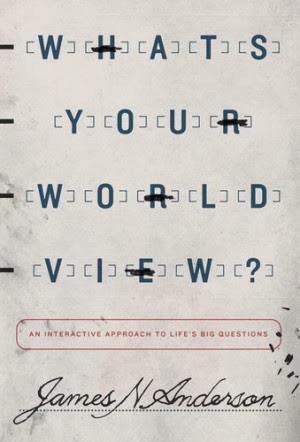 When I first learned about What’s Your Worldview?: An Interactive Approach to Life’s Big Questions
The book’s format is set up such that it outlines something (like what it means to say there is objective truth), then asks whether you believe in it. If you choose yes, you flip to one page; if no, you flip to another. Ultimately, your answers will land you in a worldview. Each worldview has a few pages of brief discussion on how it views reality and what problems might arise with that worldview.
I decided to indeed choose my own adventure and start out reading it from an atheist’s perspective. I figured that would give me a good look into the approach. I quickly realized that answering the questions in such a way got me to “dead ends.” If I said “No” to whether I believed in objective truth, I flipped to the worldview of “Relativism,” had the view explained and some major issues brought up. The end. Full stop. Or is it?
Anderson encouraged readers to go back to the previous question after any worldview evaluation if they didn’t like the conclusions drawn. Thus, continuing the example of relativism, he argued that it is self-defeating: after all, if all truth is relative, is that itself a relative truth? If so, why should I hold to it? Back to the questions! The book encourages such flipping back and forth. It encourages engagement in a way many apologetics books do not.
There is, however, one major drawback to the approach. That is, because it is a book about worldviews, and because it is only just over 100 pages long, there’s not a lot of meat to the discussion. If you’re looking for major critiques and interactions with response-rebuttal-counterpoint on various worldviews, this is not the book you’re looking for. Alongside that, there is a real danger of oversimplification. For example, in the “worldview” section on “nihilism,” it was stated that nihilism is “the view that there are no objective values” (Kindle location 1022). Properly speaking, this only refers to moral nihilism, not nihilism as a full system, which would entail a whole system of “nothings”: no meaning, no objective values, possibly even no reality one can access, etc. Due to the short length, much nuance to each worldview must be lost. Possible objections to Anderson’s brief critiques abound, and readers may be left thinking their own view was perhaps a bit too blithely dismissed.
Of course the length could just as easily be seen as an advantage. One can very easily pick it up and read it in an afternoon; one could hand it to an interested neighbor; it lends itself to use in a brief study period (youth group? adult forum?). These are all advantages. Readers just need to be aware of some disadvantages as well.
I was also very impressed by the depth of insight Anderson gave to rival theist worldviews. Once one answers that there is at least “a” deity, the book still has many more questions to peruse: do you think there is only one?; is Jesus God?; did God communicate with humans? If so, was this communication open?; etc. I found these to be fun to flip through and very informative and on-point. This isn’t an apologetics book that focuses purely on the existence of God; it is, really, a book on worldviews: complete totalities. That said, remember it is not intended to be comprehensive, by any means.
What’s Your Worldview is a really fun apologetics book. The fact that I’m able to write that shows how unique it is. I don’t know of any other book in the same format. It’s refreshing and handy. That said, at times it does feel just like those old “Choose Your Own Adventure” books; you come to the end too quickly. It was a conscious decision on the part of the author/publisher to keep it light and easy to read. And, to that extent, they succeeded. I just found myself wanting a little more. However, I do think this would be an excellent book to pick up and hand off to a friend or relative who may have doubts or may want to explore the beliefs of various worldviews. Just remember the caveat: the book may raise more questions than it answers; so be prepared to have some reasons for the hope within (1 Peter 3:15).
Links
Be sure to check out the page for this site on Facebook and Twitter for discussion of posts, links to other pages of interest, random talk about theology/philosophy/apologetics/movies and more!
Source
James N. Anderson, What’s Your Worldview?: An Interactive Approach to Life’s Big Questions
I received a review copy of the book through Crossway. I was not obligated by the publisher to give any specific type of feedback whatsoever.
SDG.
——
The preceding post is the property of J.W. Wartick (apart from quotations, which are the property of their respective owners, and works of art as credited; images are often freely available to the public and J.W. Wartick makes no claims of owning rights to the images unless he makes that explicit) and should not be reproduced in part or in whole without the expressed consent of the author. All content on this site is the property of J.W. Wartick and is made available for individual and personal usage. If you cite from these documents, whether for personal or professional purposes, please give appropriate citation with both the name of the author (J.W. Wartick) and a link to the original URL. If you’d like to repost a post, you may do so, provided you show less than half of the original post on your own site and link to the original post for the rest. You must also appropriately cite the post as noted above. This blog is protected by Creative Commons licensing. By viewing any part of this site, you are agreeing to this usage policy.

 J.W. Wartick - Reconstructing Faith